
smoking a brisket flat
intro
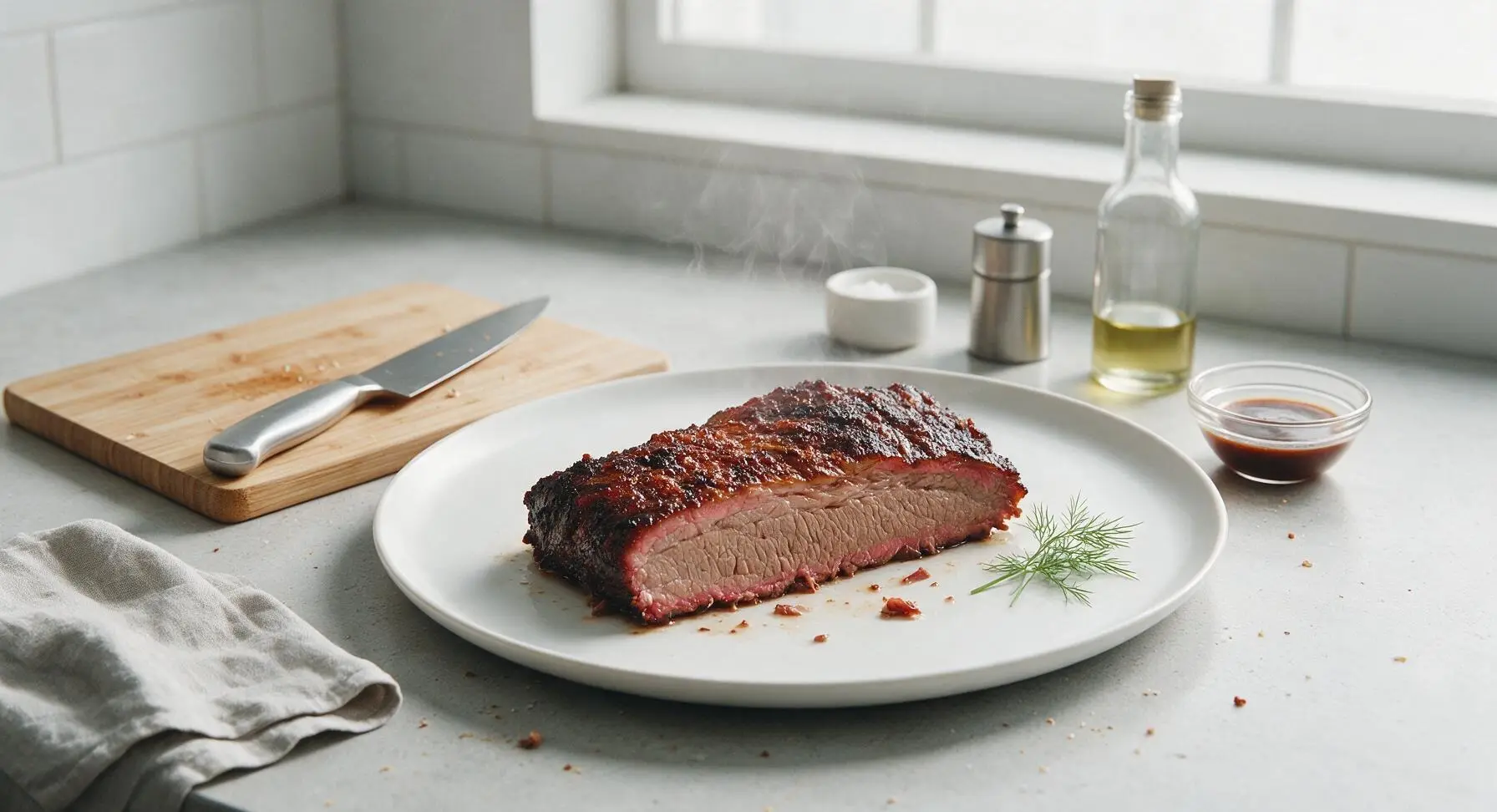
Tender, smoky brisket flat with crackling mahogany bark, a soft pink smoke ring, and melt-in-your-mouth juiciness: the iconic gold standard of low-and-slow backyard BBQ.
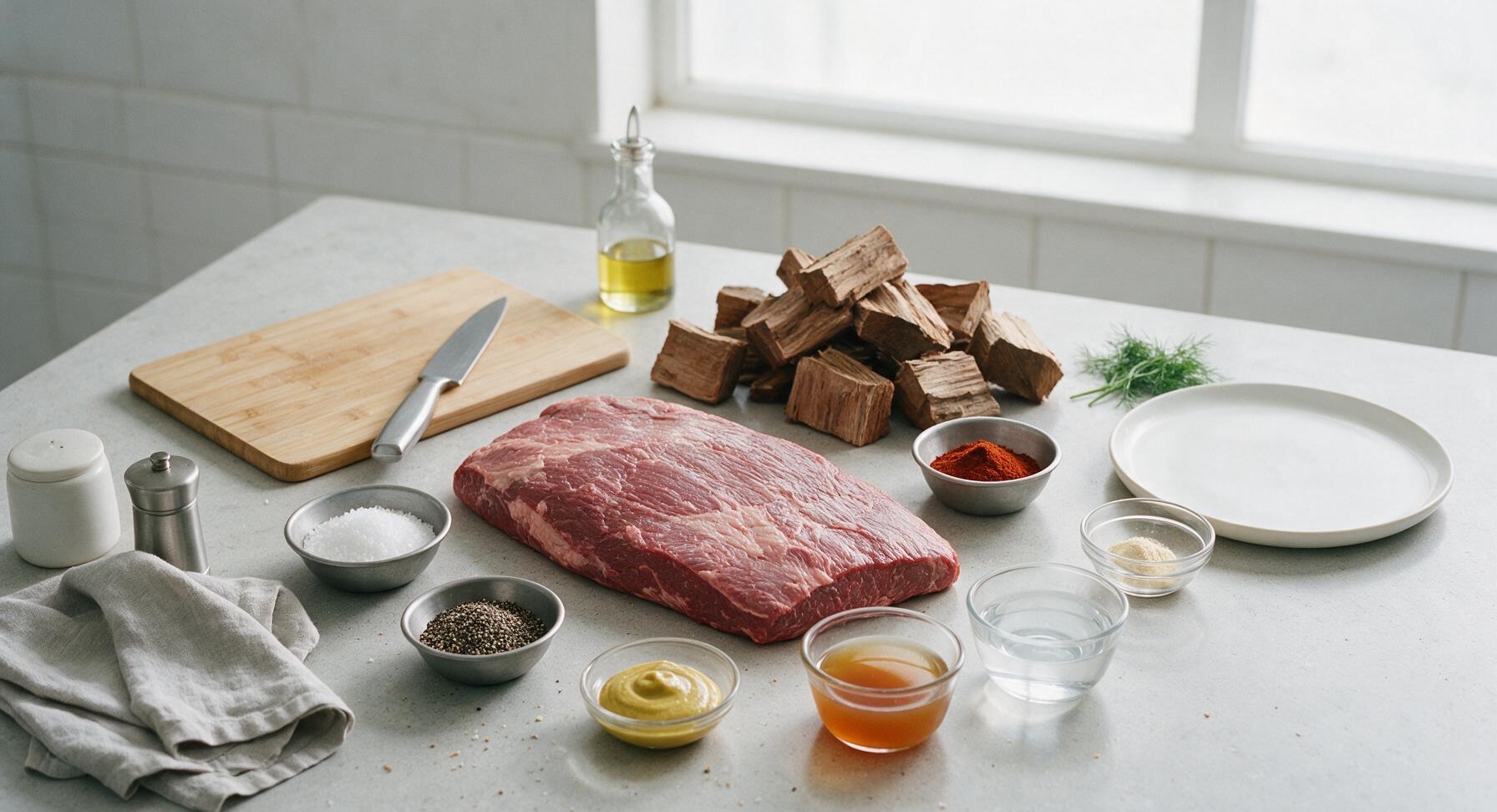
Ingredients
Steps
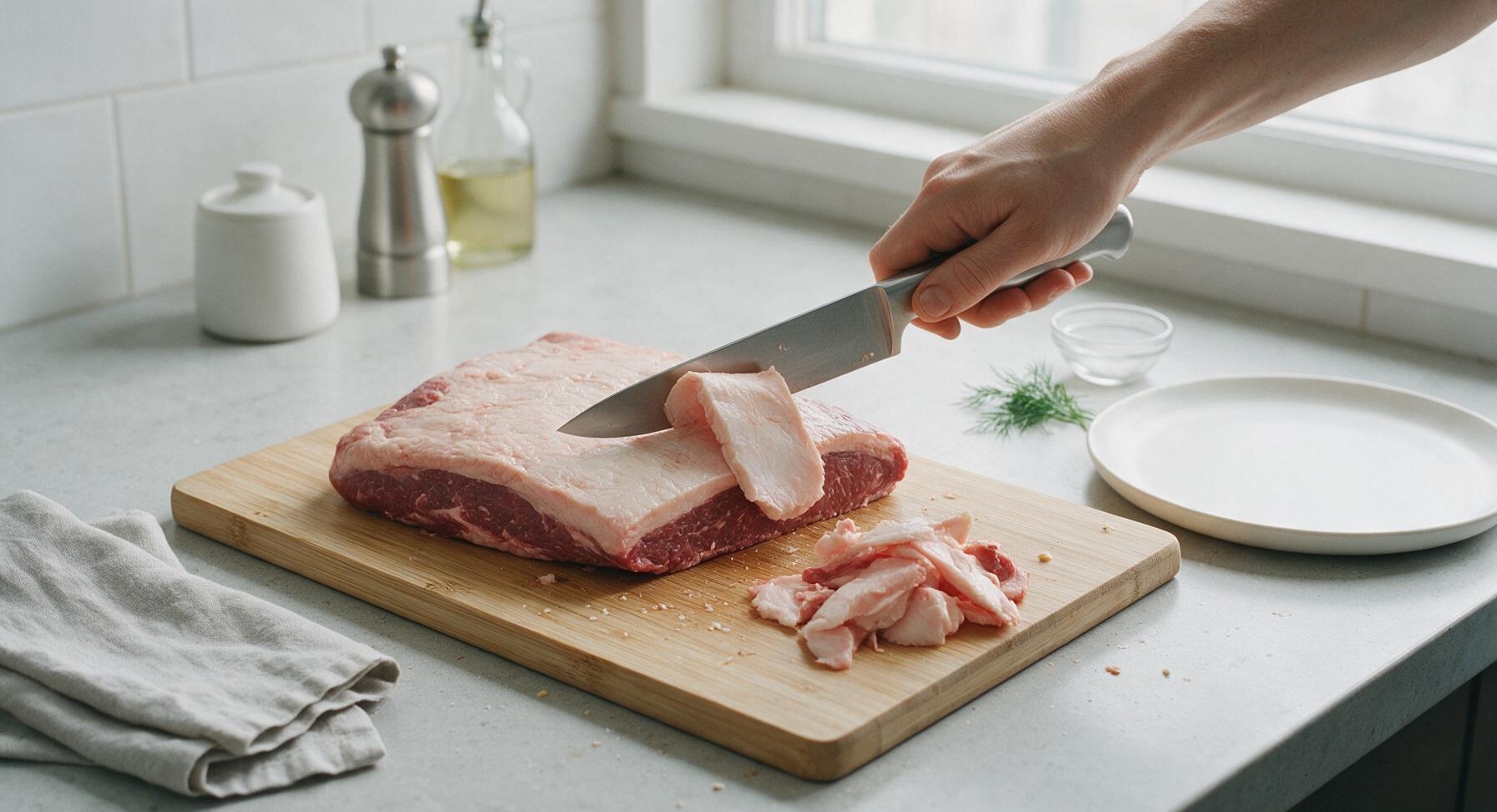
Trim the Brisket Flat
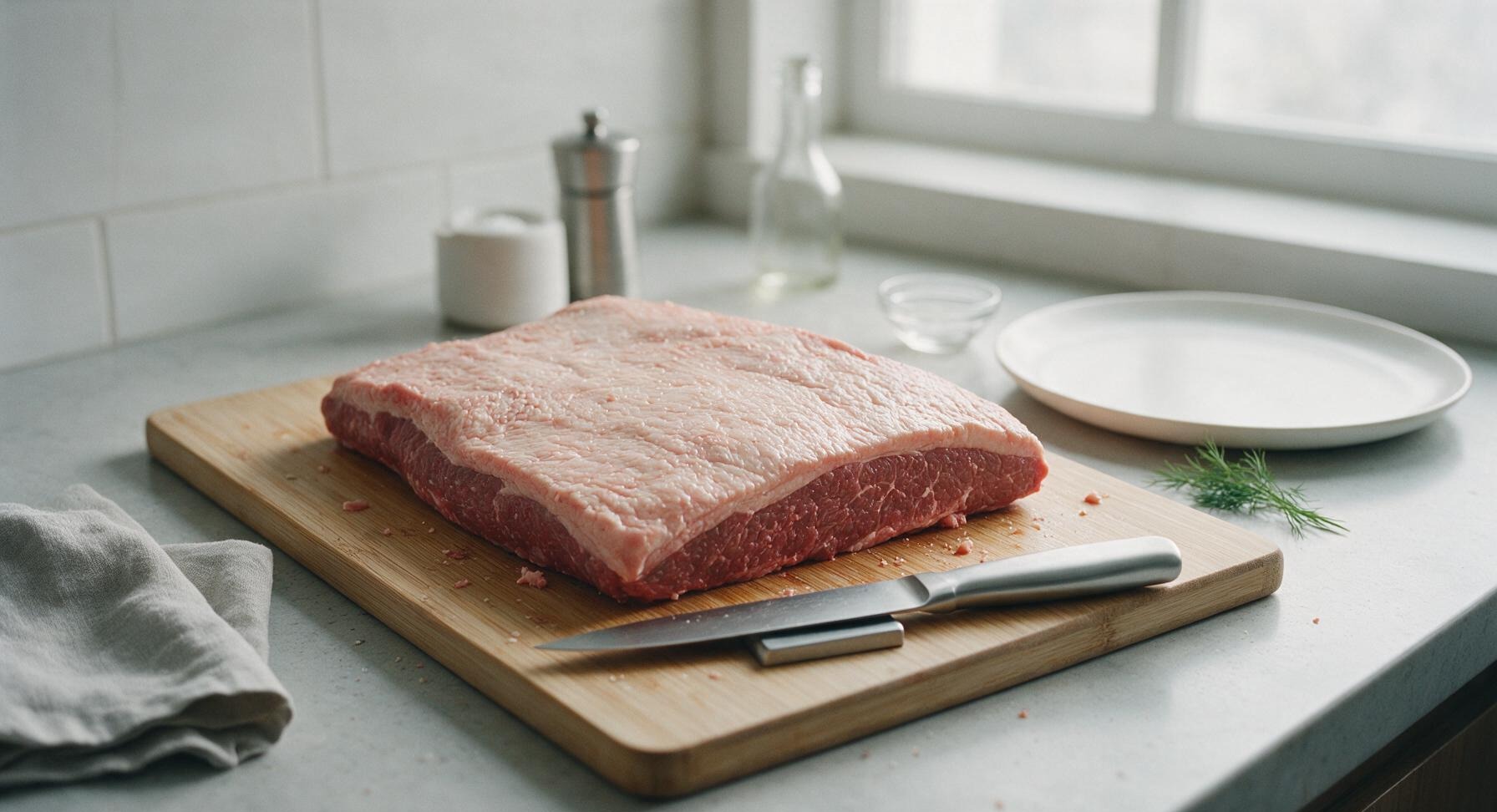
Place the raw 4lb brisket flat fat-side up on the walnut cutting board. Use the 8-inch chef knife to trim the fat cap to a uniform 1/4-inch thickness, removing any hard, waxy fat chunks and all silver skin from the meat side. Round off any sharp thin edges of the meat to prevent burning during the long cook. The finished trimmed brisket should have a smooth, even surface across fat and meat sides. This step takes approximately 15 minutes.
Coat with Binder and Rub
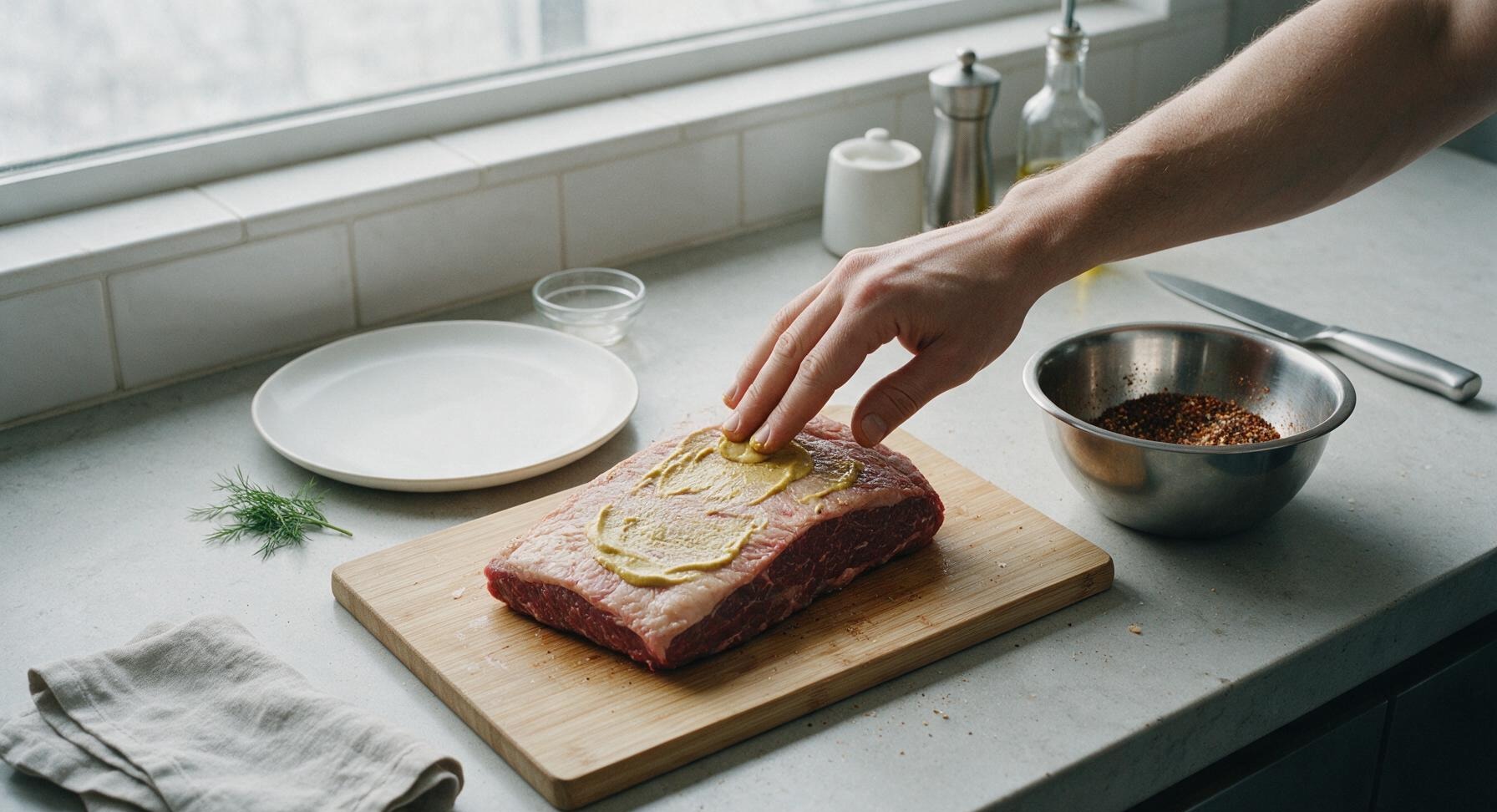
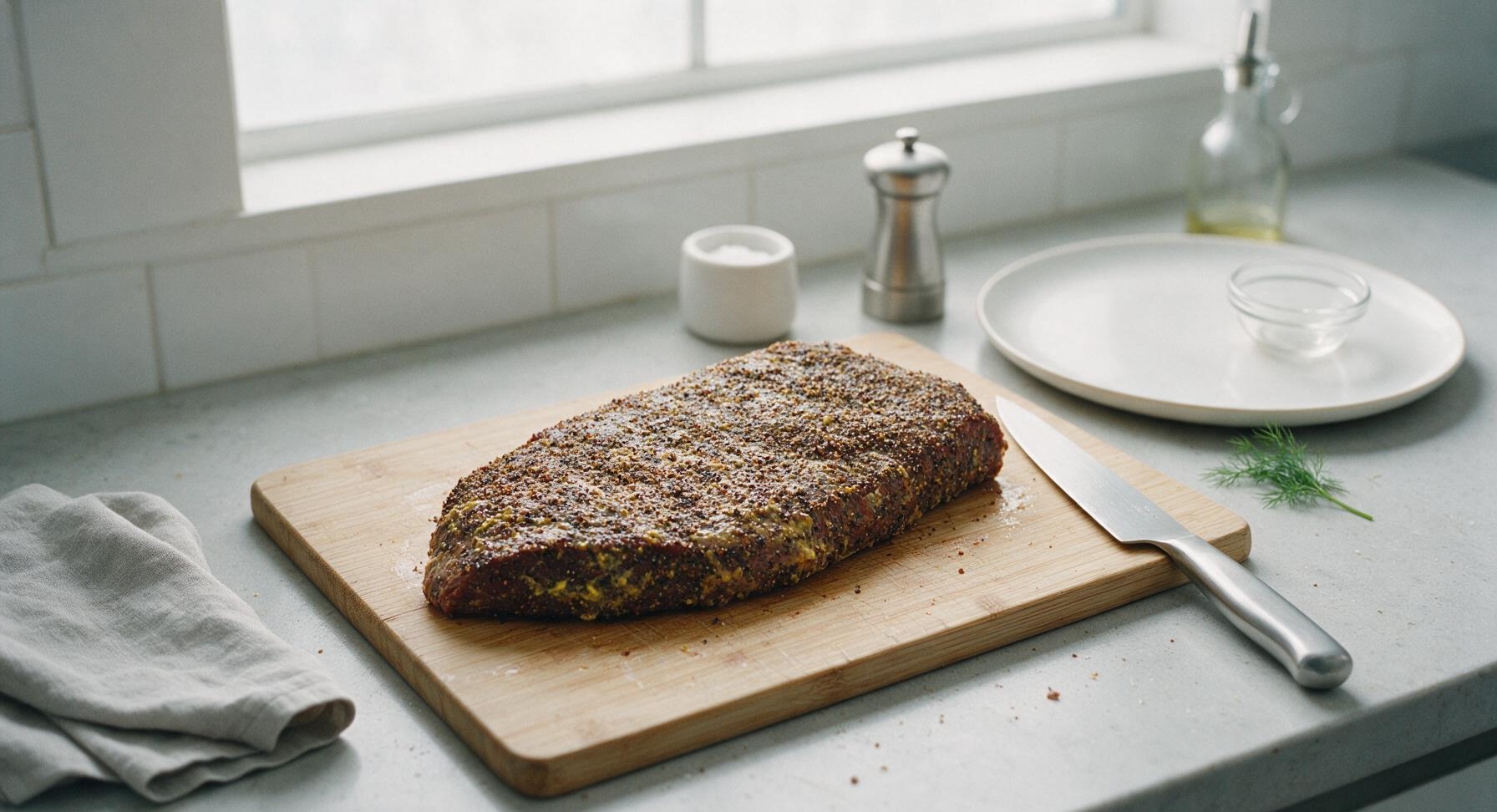
In the stainless steel mixing bowl, combine 3 tbsp coarse kosher salt, 3 tbsp freshly ground black pepper, 1 tbsp garlic powder, and 1 tsp smoked paprika, stirring with the tip of the chef knife to mix evenly. Slather the entire surface of the trimmed brisket with 2 tbsp yellow mustard, using your hand to spread it into a thin, even coat across all sides. Generously sprinkle the spice rub over every surface of the brisket, pressing gently to help the rub adhere; there should be no bare meat visible. Let the rubbed brisket rest on the cutting board for 15 minutes to allow the rub to set and form a sticky coating.
Preheat Smoker to Temp
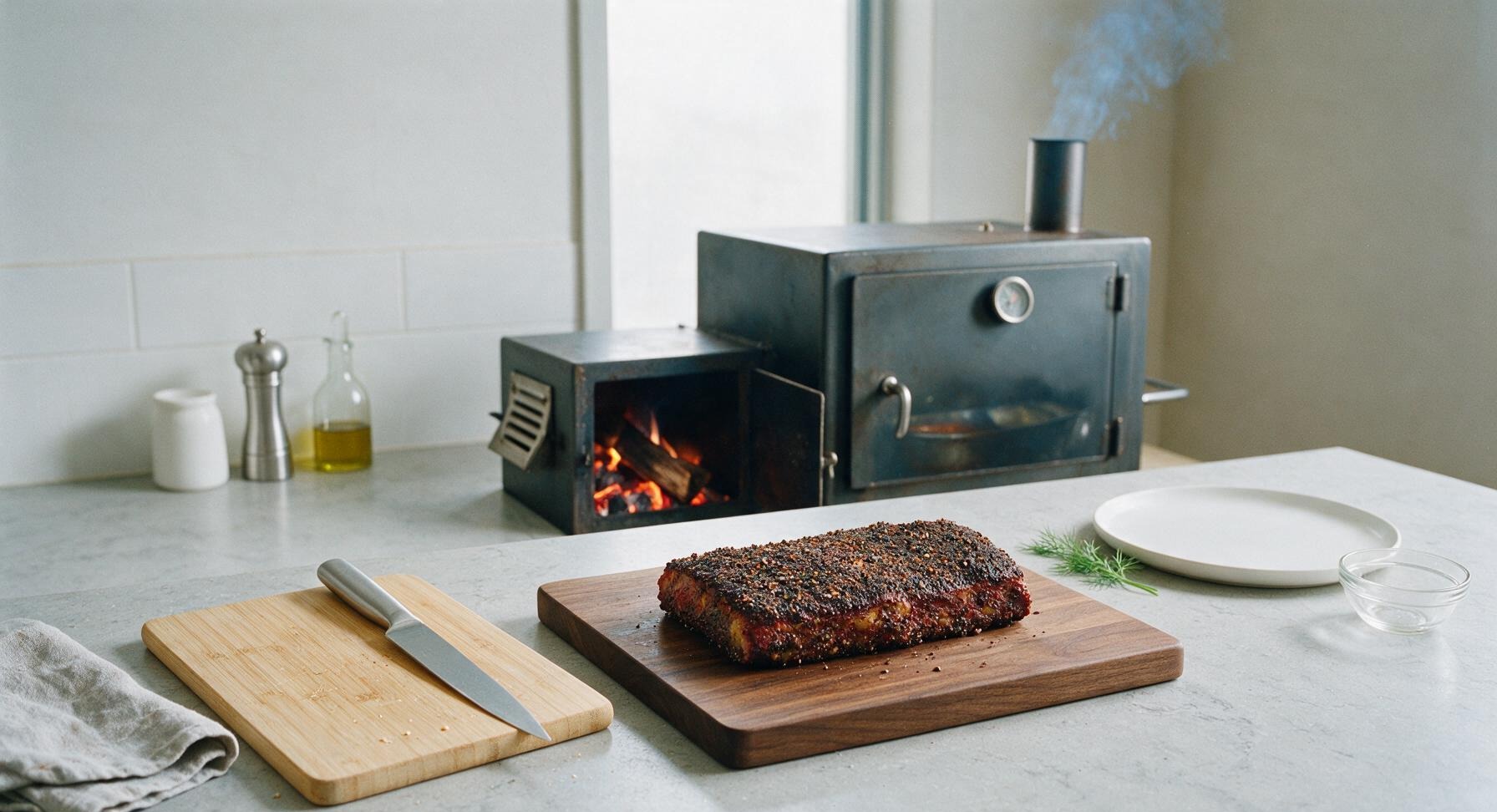
Fill the offset smoker firebox with lit charcoal and 3lbs of post oak wood chunks, adjusting the air vents to bring the smoker to a steady 225°F (107°C). Wait until the smoker produces thin, wispy blue smoke (not thick white smoke, which creates bitter flavor) before adding the brisket. Fill the smoker’s water pan with plain tap water to maintain a moist cooking environment.
Smoke Brisket Low and Slow
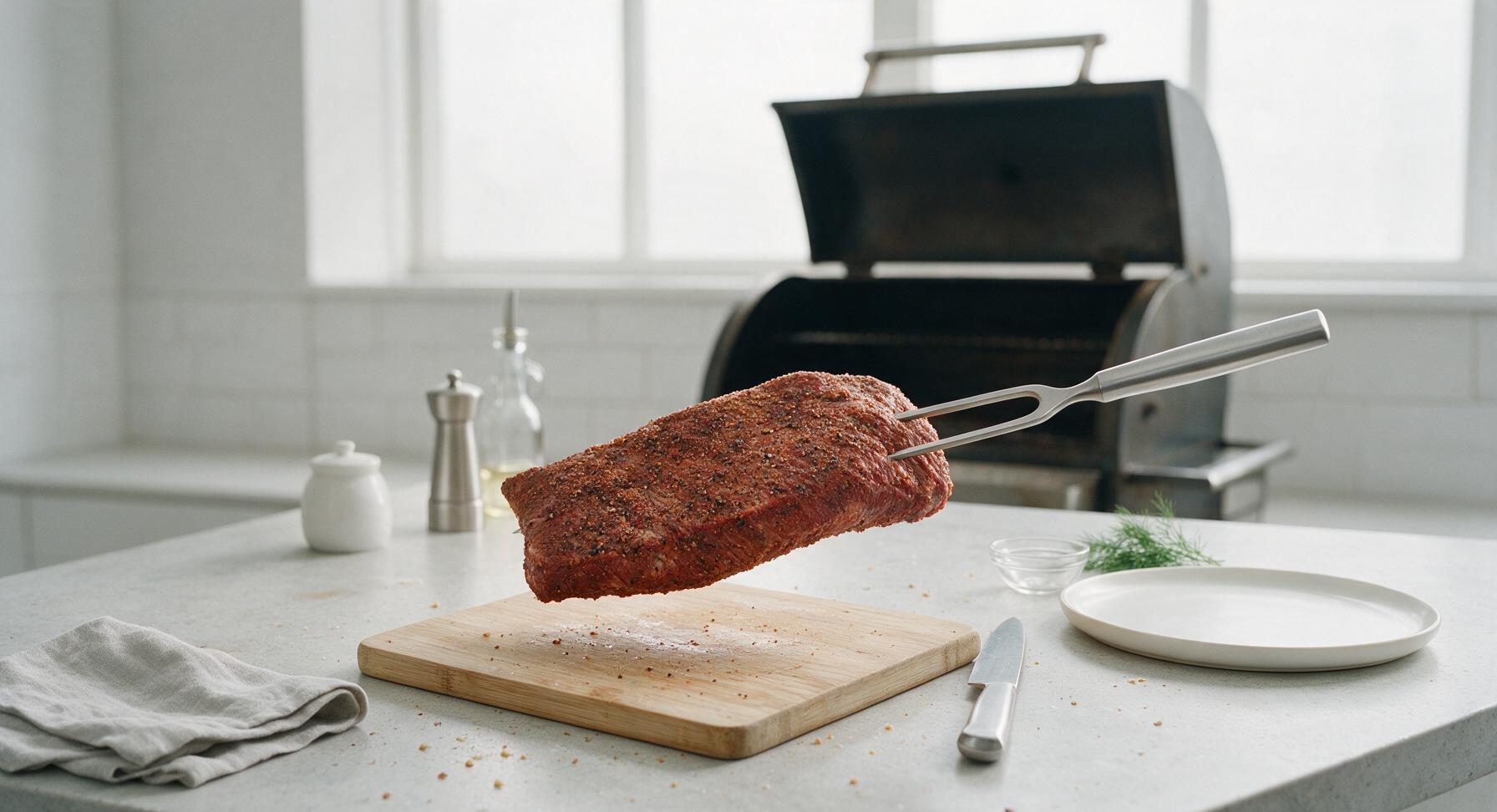
Place the rubbed brisket flat on the smoker cooking grate, fat-side up, positioned away from direct fire. Close the smoker lid and maintain a steady 225°F temperature for the first 3 hours of cook time. Every 45 minutes, open the lid briefly to spritz the brisket surface with the 50/50 apple cider vinegar and water mixture from the spray bottle to keep the surface moist and help bark form. Do not wrap the brisket during this initial phase.
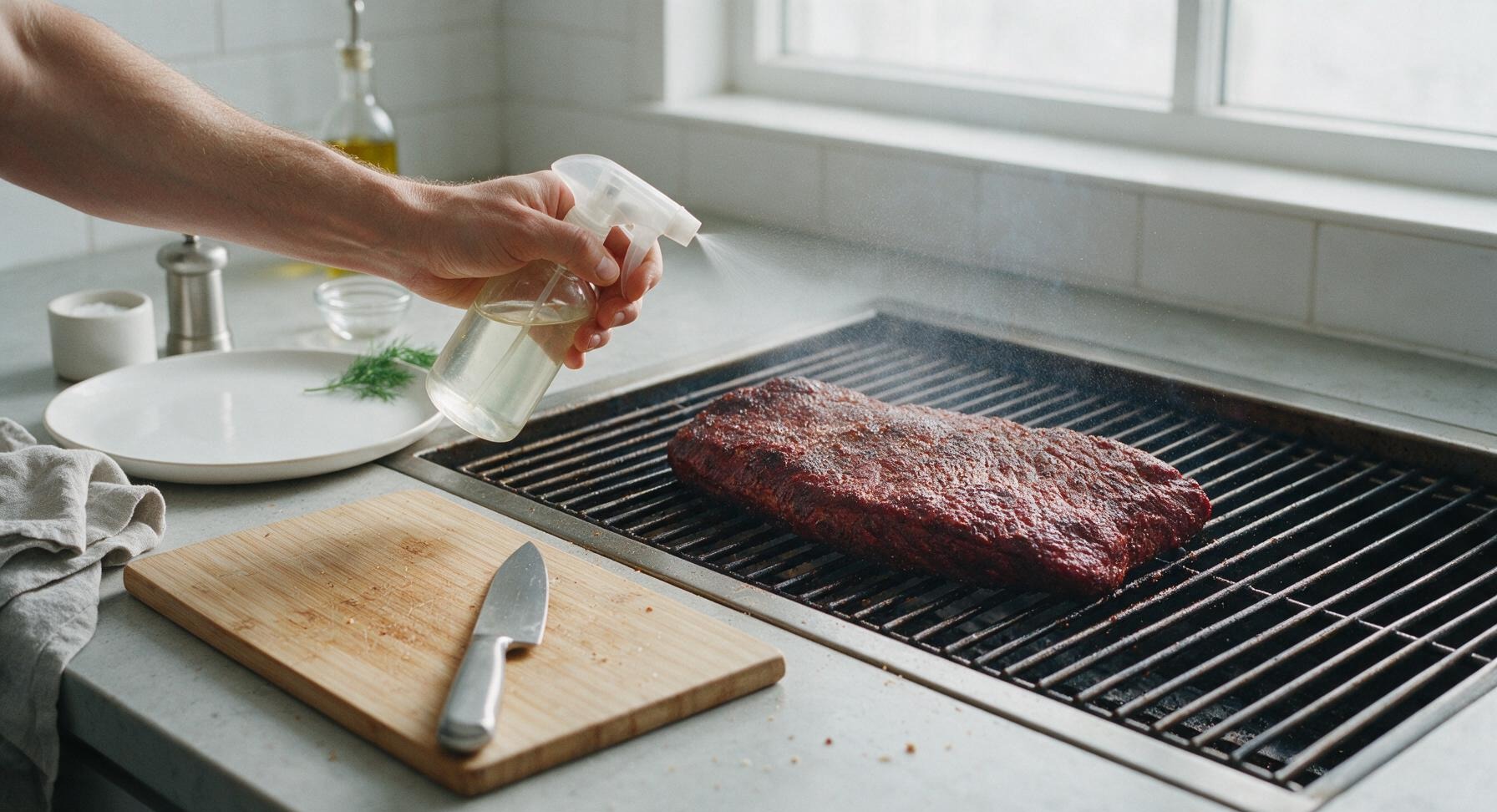
Wrap Brisket in Foil
Once the brisket reaches an internal temperature of 165°F (74°C) measured with the digital instant-read thermometer (usually after 3-3.5 hours of smoke), and the bark is a deep dark mahogany color, remove it from the smoker. Pull a double layer of heavy-duty aluminum foil from the roll on the counter, set the brisket on the foil, and wrap it tightly to seal in all steam and prevent juice leakage. Return the wrapped brisket to the smoker, maintaining 225°F temperature.
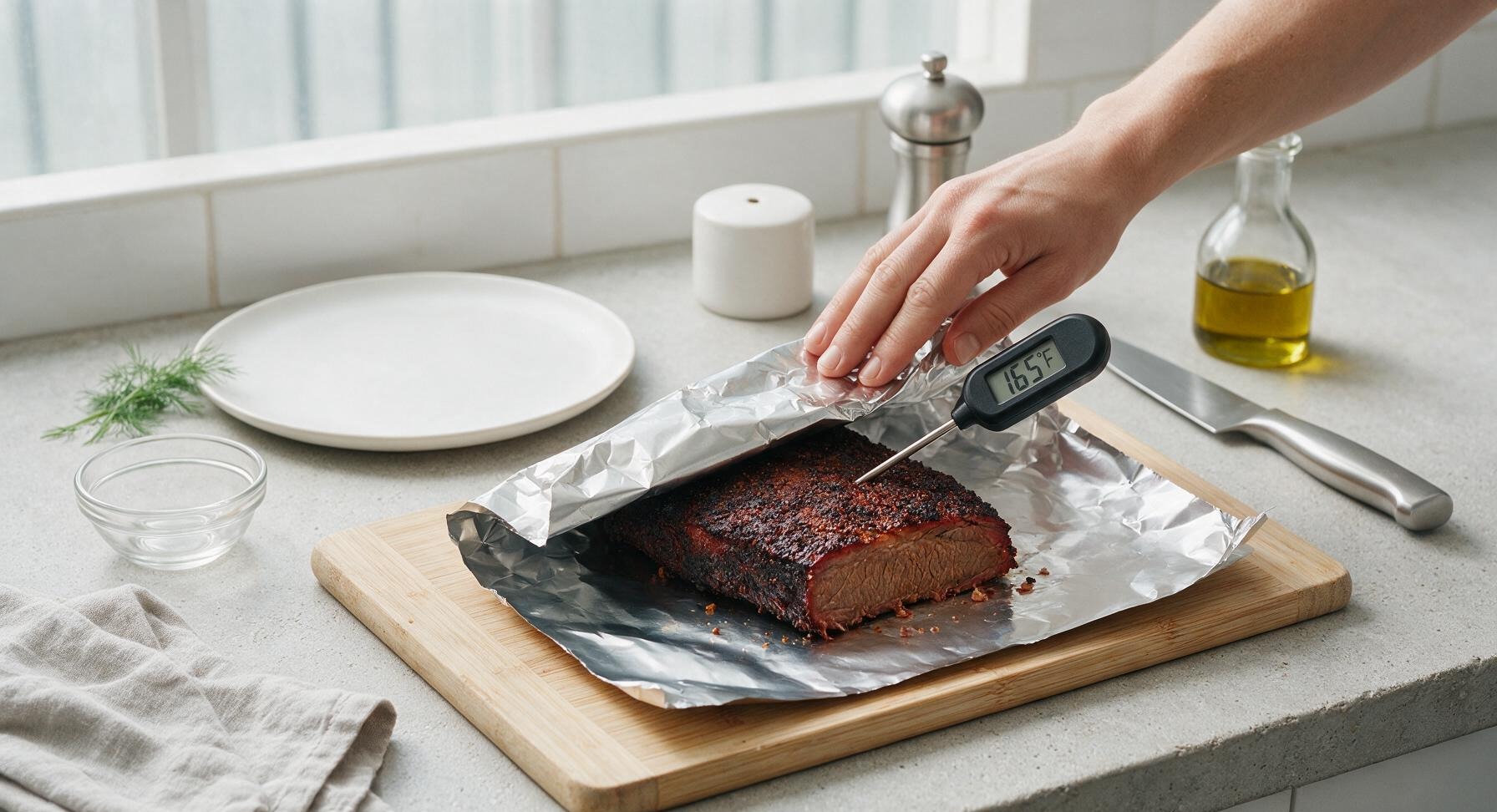
Cook to Target Temperature
Continue cooking the wrapped brisket at 225°F until the internal temperature reaches 203°F (95°C), and the thermometer probe slides into the meat with no resistance, like sticking a knife into soft butter. This usually takes an additional 2.5-3 hours, depending on brisket thickness. Do not rely solely on time; the probe tenderness test is the most accurate indicator of doneness.
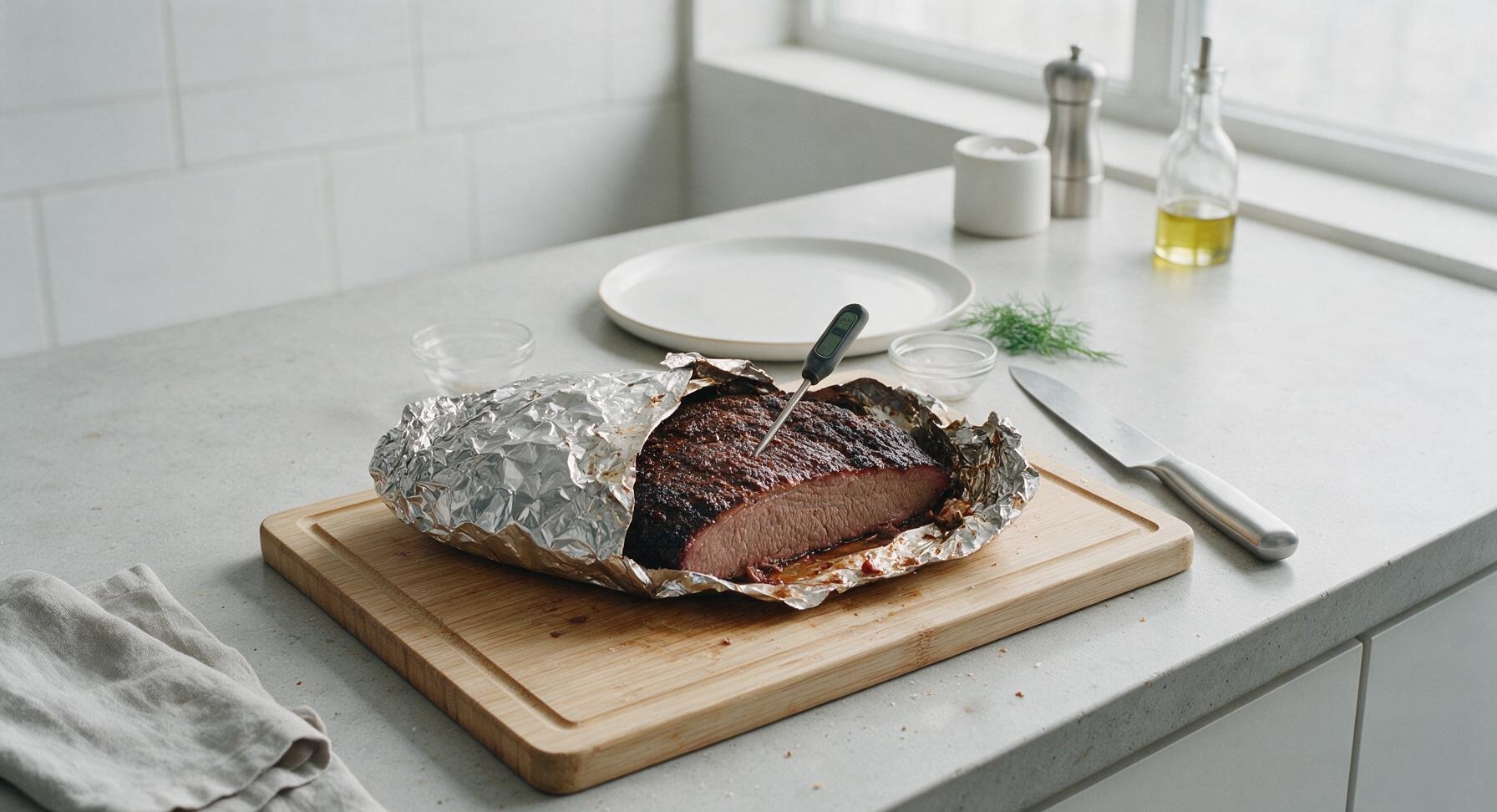
Rest Brisket Before Slicing
Remove the fully cooked brisket from the smoker, keep it wrapped in foil, and wrap the entire foil packet in the folded cream linen towel to insulate it. Let the brisket rest in a dry, warm spot (like an empty insulated cooler) for a full 1 hour to allow the muscle fibers to relax and reabsorb juices. Skipping this rest will result in dry meat that leaks all its juice when sliced.
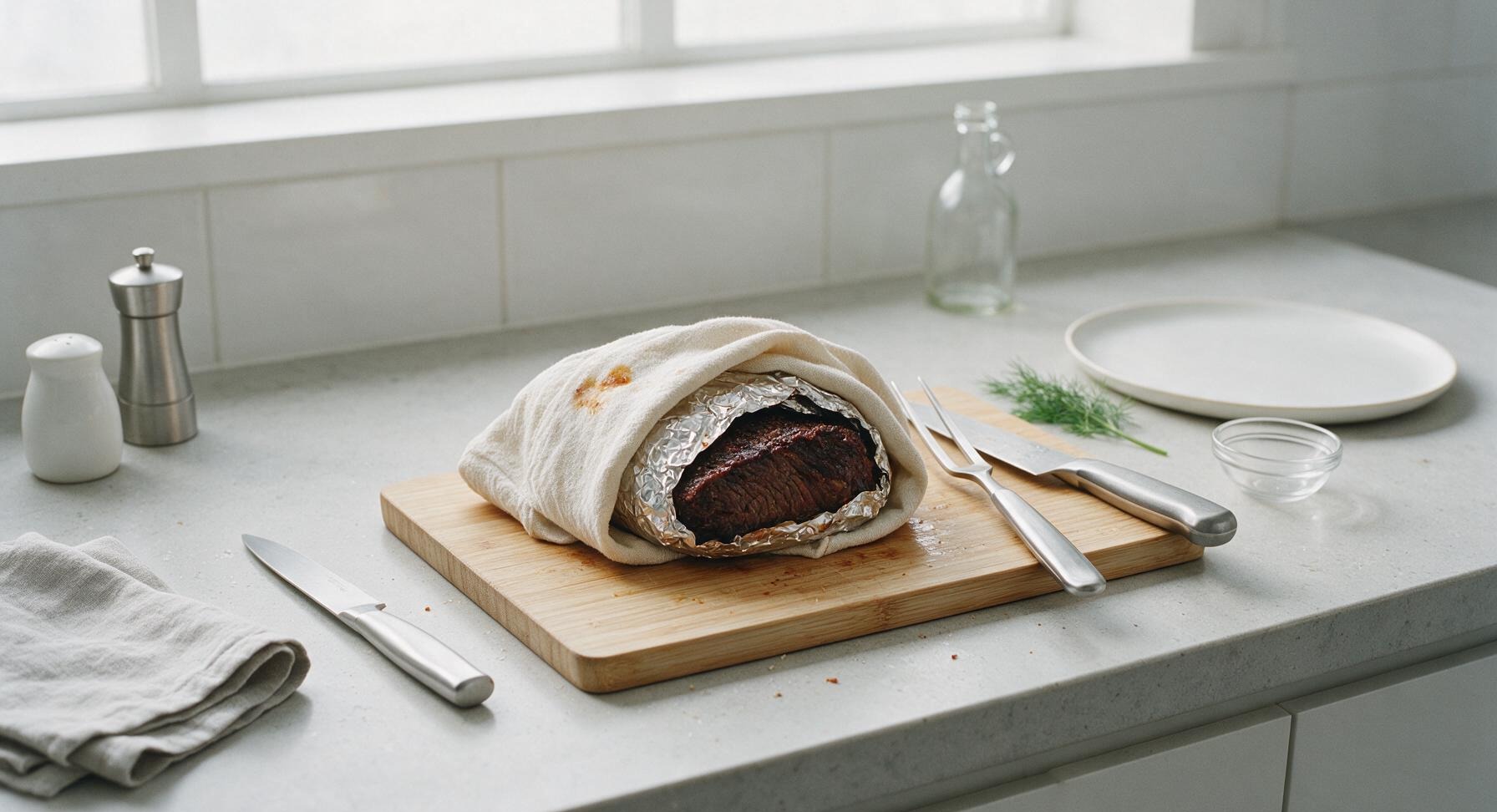
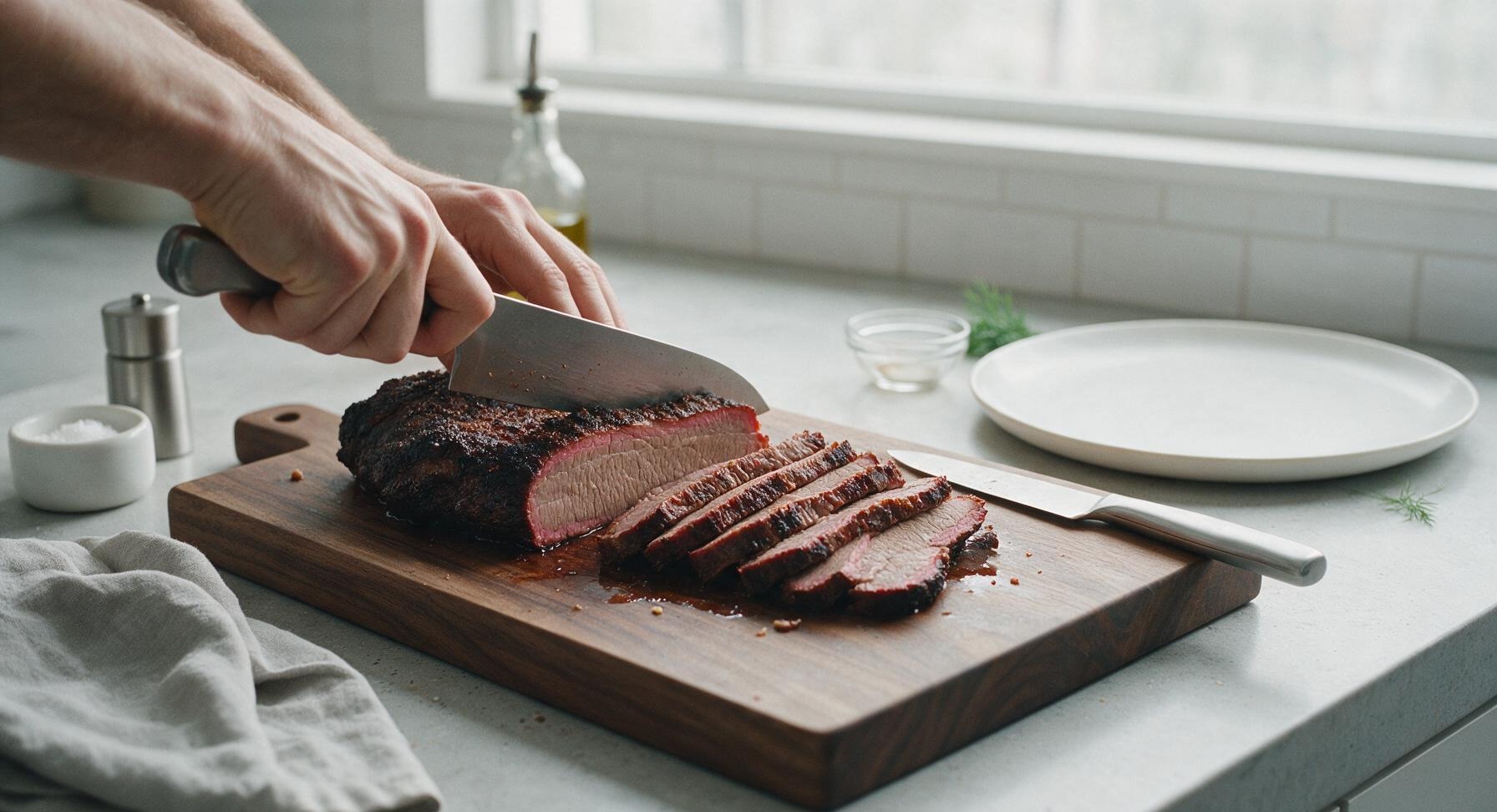
Slice Against the Grain
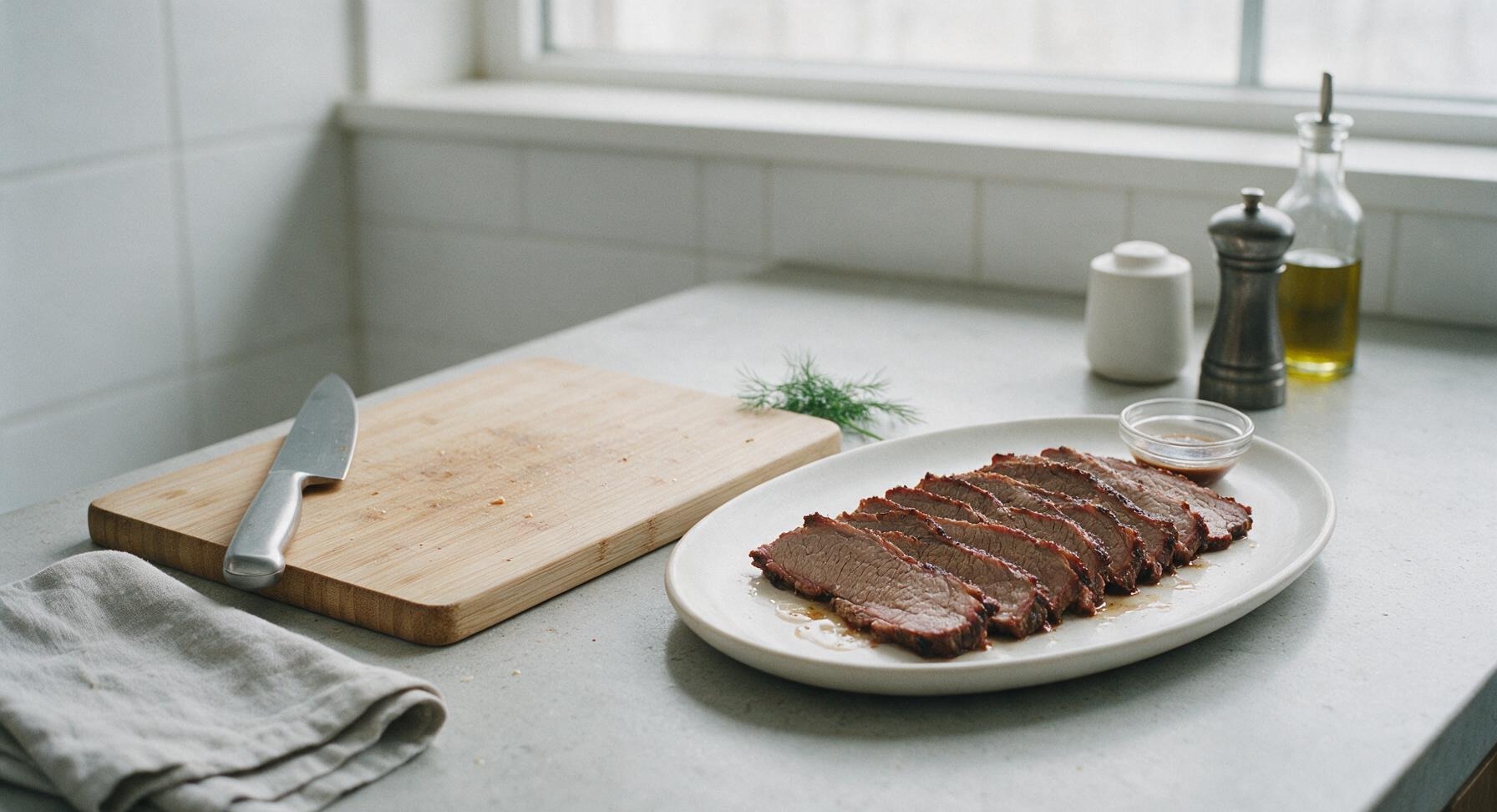
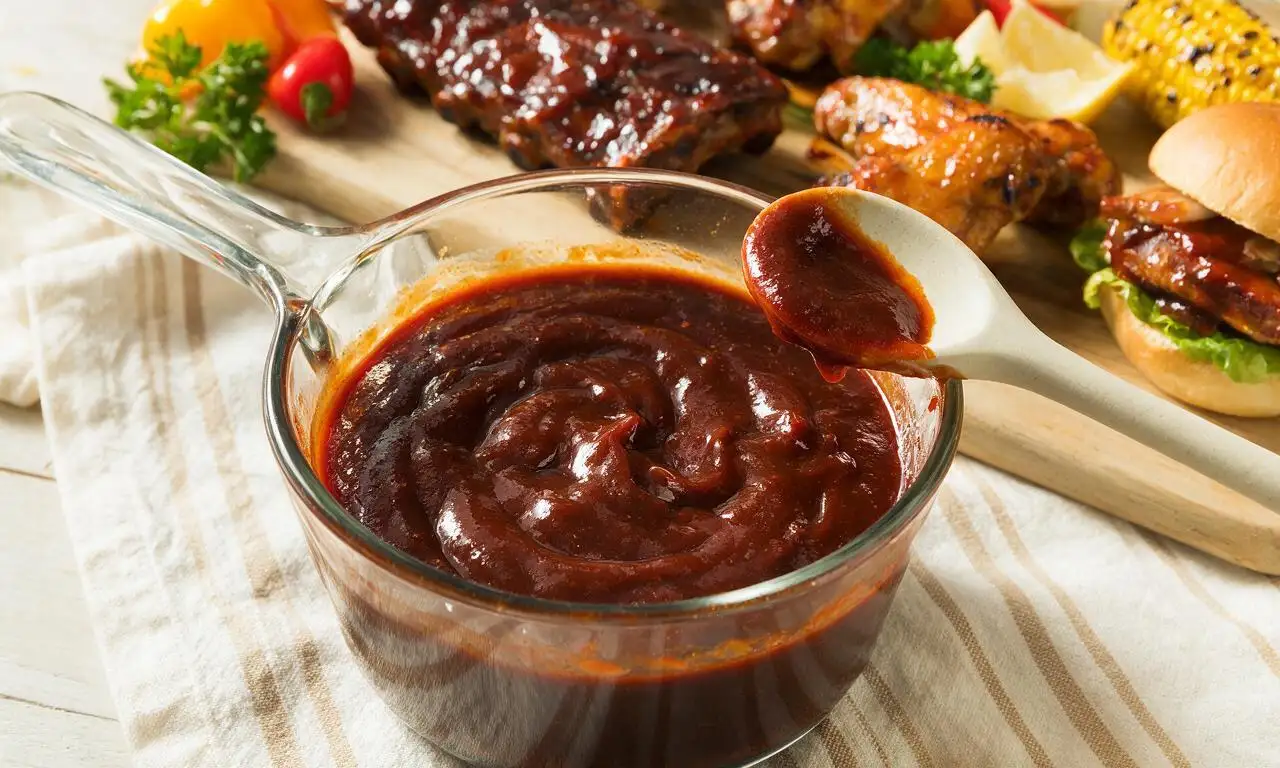
Unwrap the rested brisket, pouring any collected juices from the foil into a small dish for serving. Place the brisket on the cutting board, identify the direction of the long meat grain, and use the chef knife to slice the meat against the grain into uniform 1/4-inch thick slices. Arrange slices on the matte white oval serving platter, drizzle with reserved juices, and serve with BBQ sauce in the small ramekin on the side.
Tips
2.Trim the fat cap to an exact 1/4-inch thickness: any thicker and the hard fat will not fully render during cooking, leaving chewy, unpleasantly greasy patches on the bark; any thinner and the fat will melt away completely, leaving the meat exposed to drying heat and creating a patchy bark.
3.Never skip the 1-hour rest: wrapping the hot brisket in a towel to hold temperature while resting allows tight, heat-shocked muscle fibers to relax and reabsorb all their juicy moisture; cutting brisket immediately after cooking will cause all the juices to run out onto the board, leaving dry, tough slices.
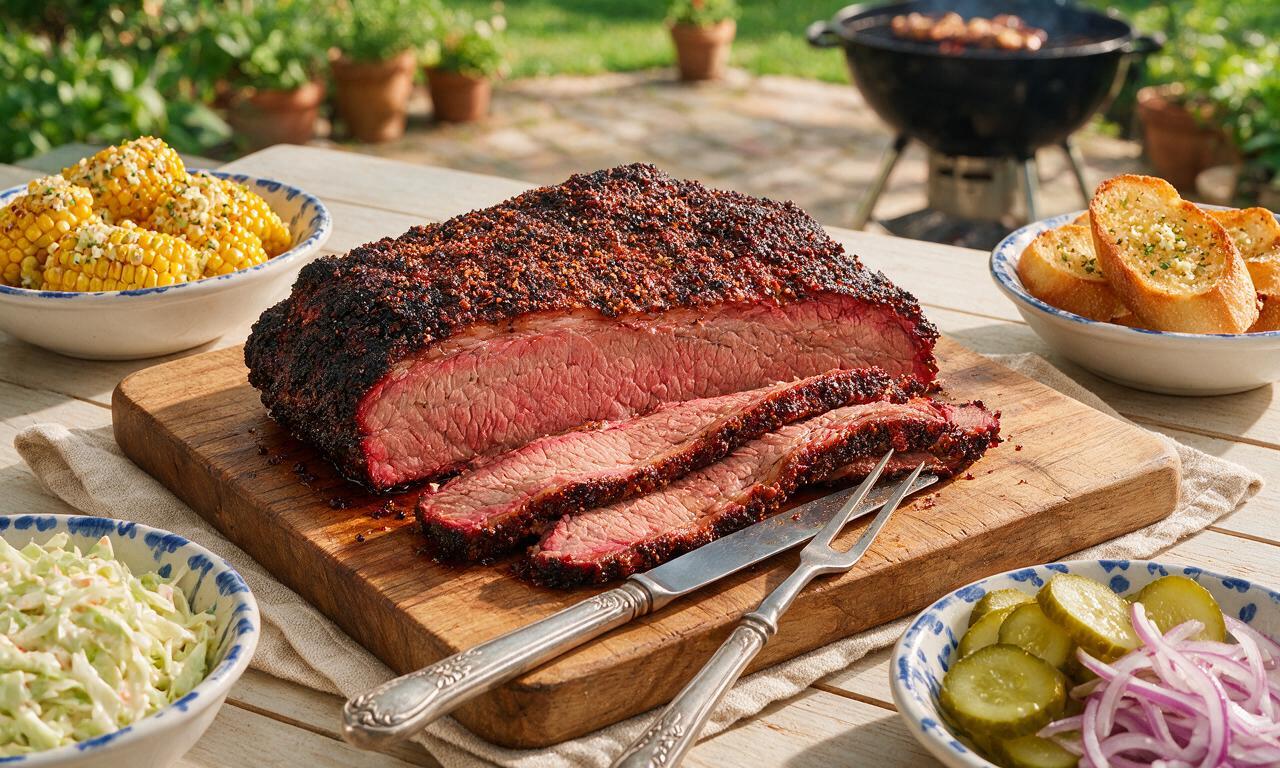
OMG y’all, this smoked Texas brisket flat recipe is a total game changer! I made it for our Sunday family dinner last weekend and even my super picky teen nephew went back for thirds. The bark came out perfectly crispy and peppery, the meat was so juicy it didn’t even need extra BBQ sauce, and the 6 hour cook time was totally manageable even as someone who’s still pretty new to using my offset smoker. 10/10 will be making this for our next neighborhood potluck next month!
This was SO good! I prepped this on Sunday for my weekly meal prep and it held up perfectly all week for lunches — I sliced it up, tossed a little bit of the reserved au jus over top, and packed portions with roasted veggies and mini mac and cheese cups for my kids’ school lunches too. My only tiny note is that I wish the guide had a little more detail on target internal temp for people who don’t have a super fancy wireless smoker thermometer? I ended up pulling mine at 203°F and it was perfect, but I was stressing about overcooking it the whole last hour of the cook!
First time ever nailing a brisket after two garbage failed attempts that turned out tough as shoe leather! Followed this recipe to the letter, used post oak for smoke like it recommended, let it rest for a full hour wrapped in butcher paper after pulling, and it sliced like absolute butter. Brought a test batch to my buddy’s college football watch party last night and everyone was hounding me for the recipe. Total home run, zero notes, will be my go-to brisket recipe from now on!