Soft Polenta (all'onda)

title 1
Soft Polenta (all'onda)
⏱️ cook time 45 minutes
🍽️ servings 4
⚡ Difficulty easy

intro

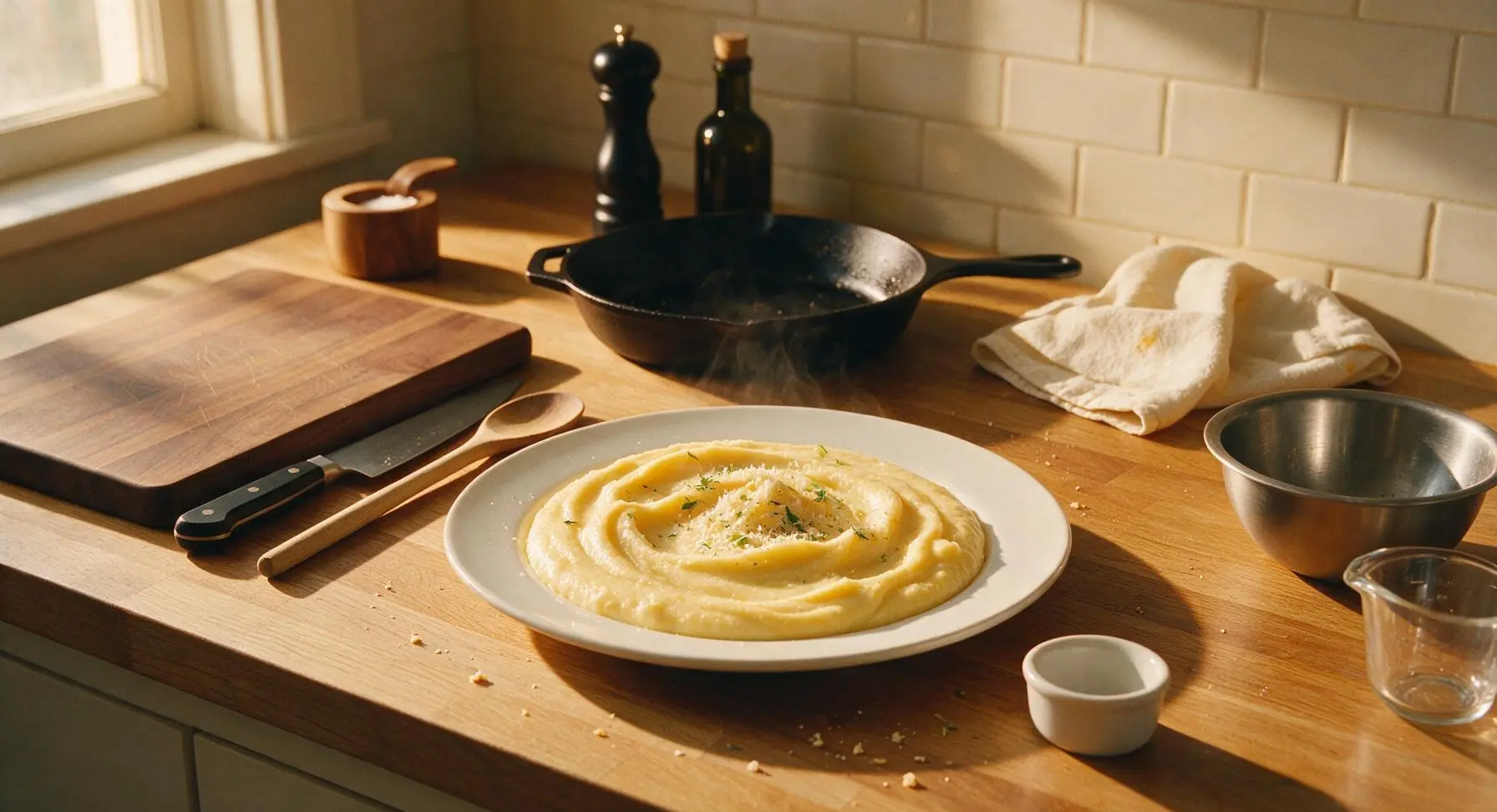
Silky, velvety soft polenta all’onda—named for the gentle waves it forms when nudged—is the classic Northern Italian comfort food, perfect for pairing with braised meats, mushrooms, or rich ragù.

Ingredients
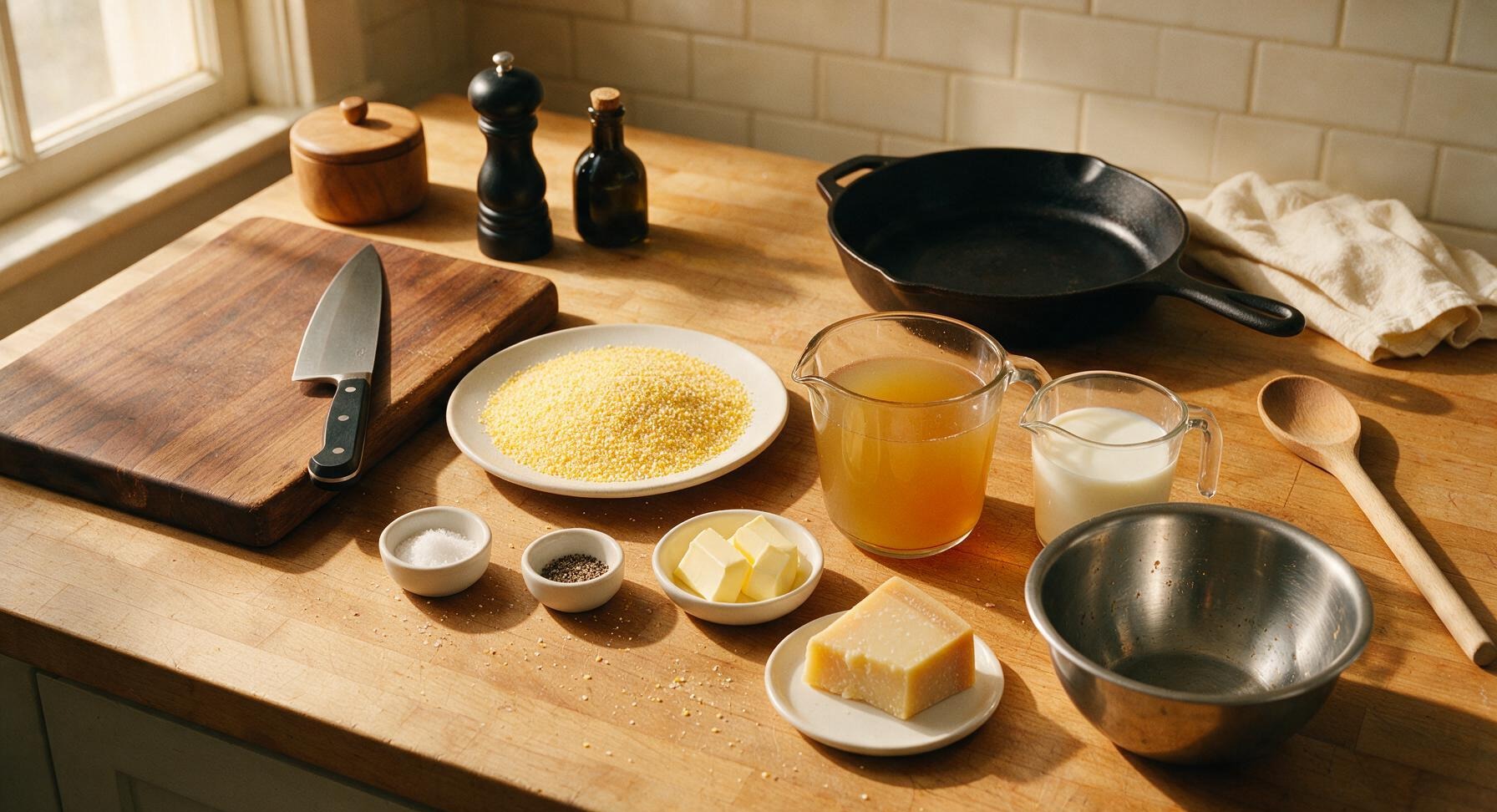
Coarse-ground yellow cornmeal (non-instant) 150g
Low-sodium chicken broth 700ml
Whole milk 300ml
Unsalted butter 40g
Parmigiano-Reggiano cheese 50g
Fine sea salt 3/4 tsp
Freshly ground black pepper 1/4 tsp

Steps

1

Grate Fresh Parmesan

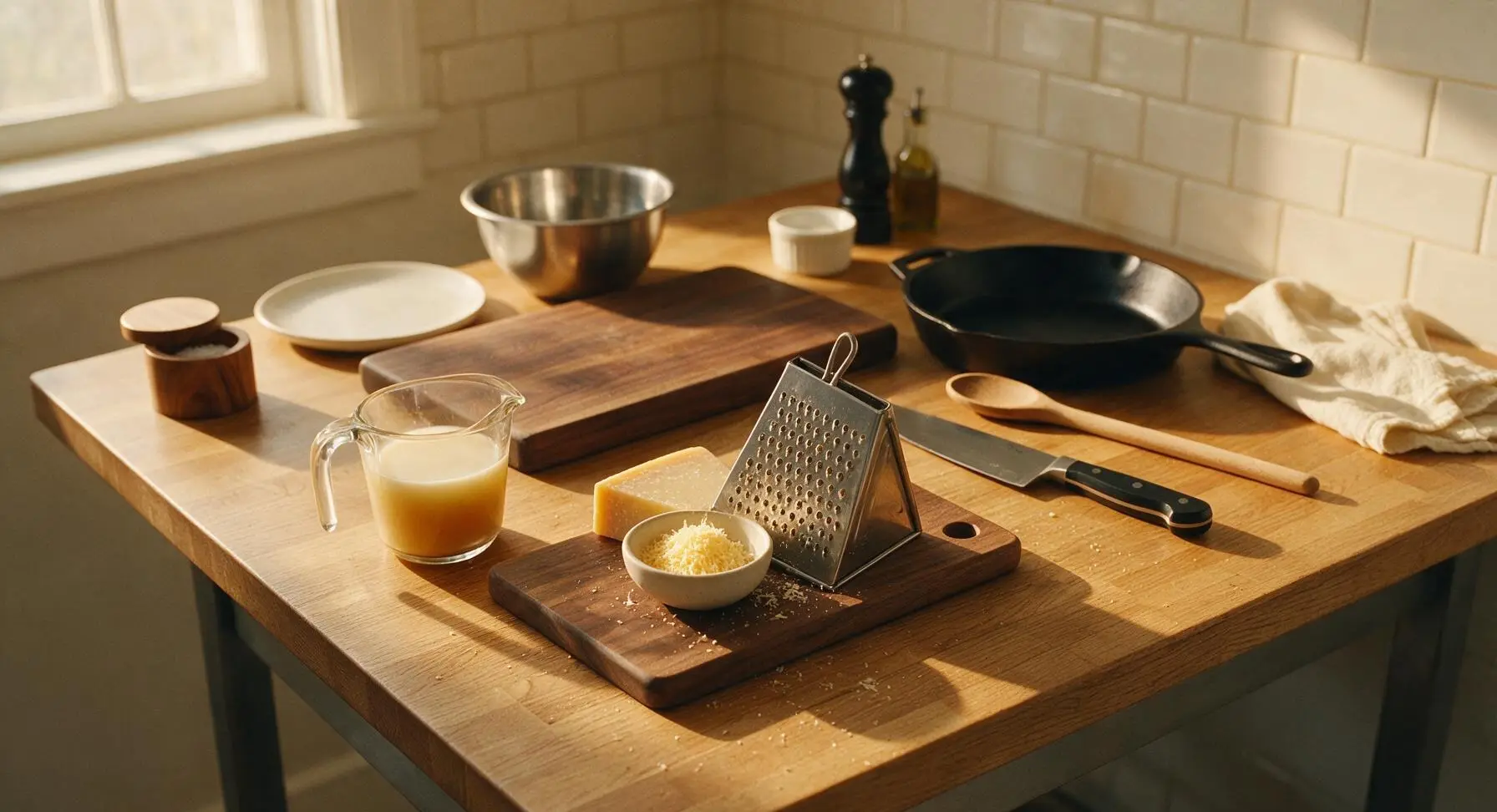
Place the 50g block of Parmigiano-Reggiano on the small honey oak cutting board. Using the fine grating side of the 4-sided stainless steel box grater, grate all of the cheese into one of the small matte white ceramic pinch bowls; set aside. Grate cheese just before use for the smoothest melt, as pre-grated cheese contains anti-caking agents that create a grainy texture.
Step 1
step1:Grate Fresh Parmesan
2

Heat the Liquid Base

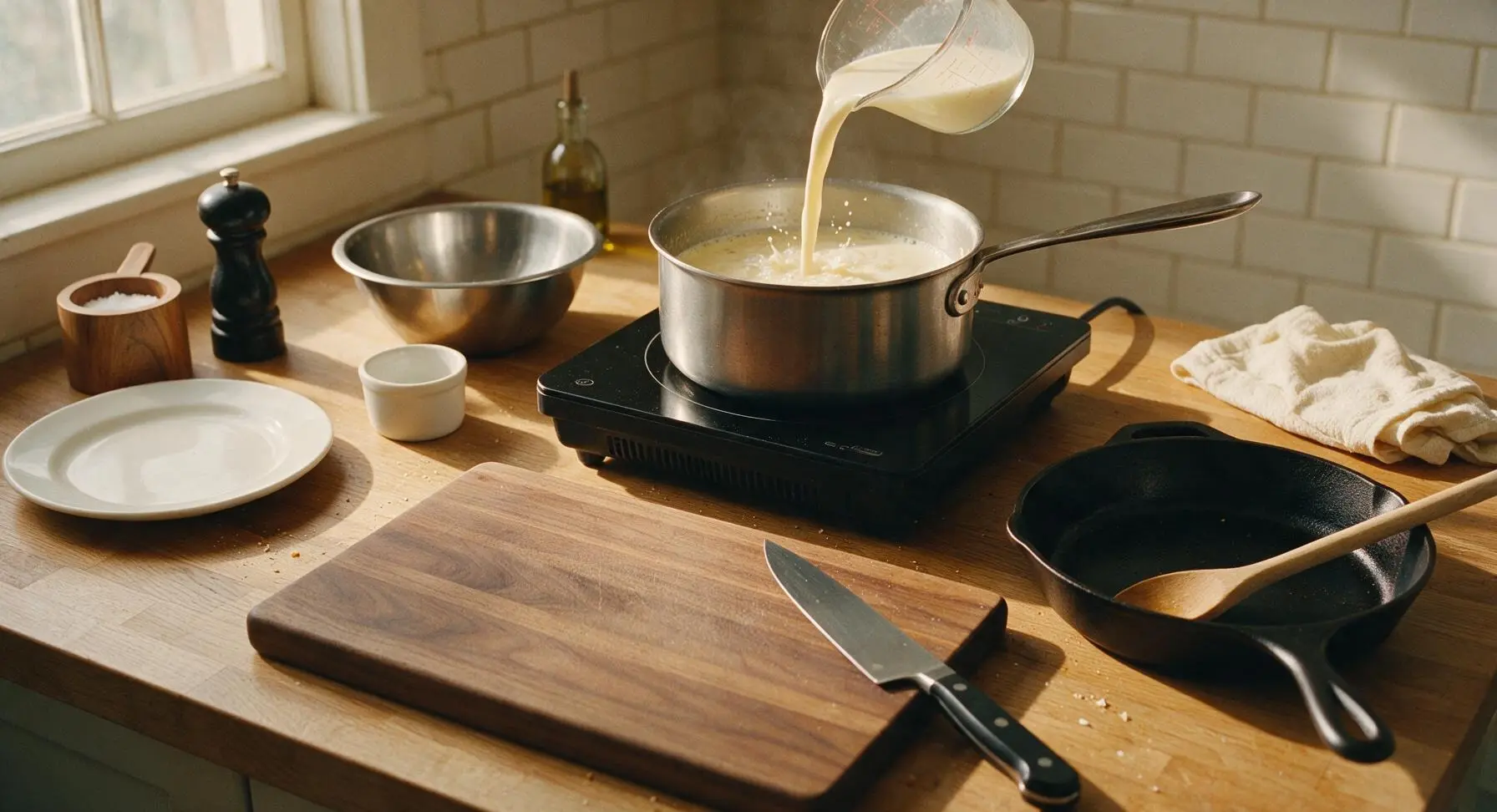
Retrieve the matte black single-burner portable induction cooktop from under the counter and place it center-back on the workspace. Set the 4L heavy-bottomed brushed stainless steel saucepan on the cooktop surface, then pour the combined 700ml low-sodium chicken broth and 300ml whole milk from the glass measuring cup into the pan. Set the cooktop to medium heat, and bring the liquid to a gentle simmer (small bubbles breaking at the surface, 85°C / 185°F), taking care not to let it boil rapidly which will scald the milk. Stir in 3/4 tsp fine sea salt until fully dissolved.
Step 2
step2:Heat the Liquid Base
3

Add Cornmeal Gradually

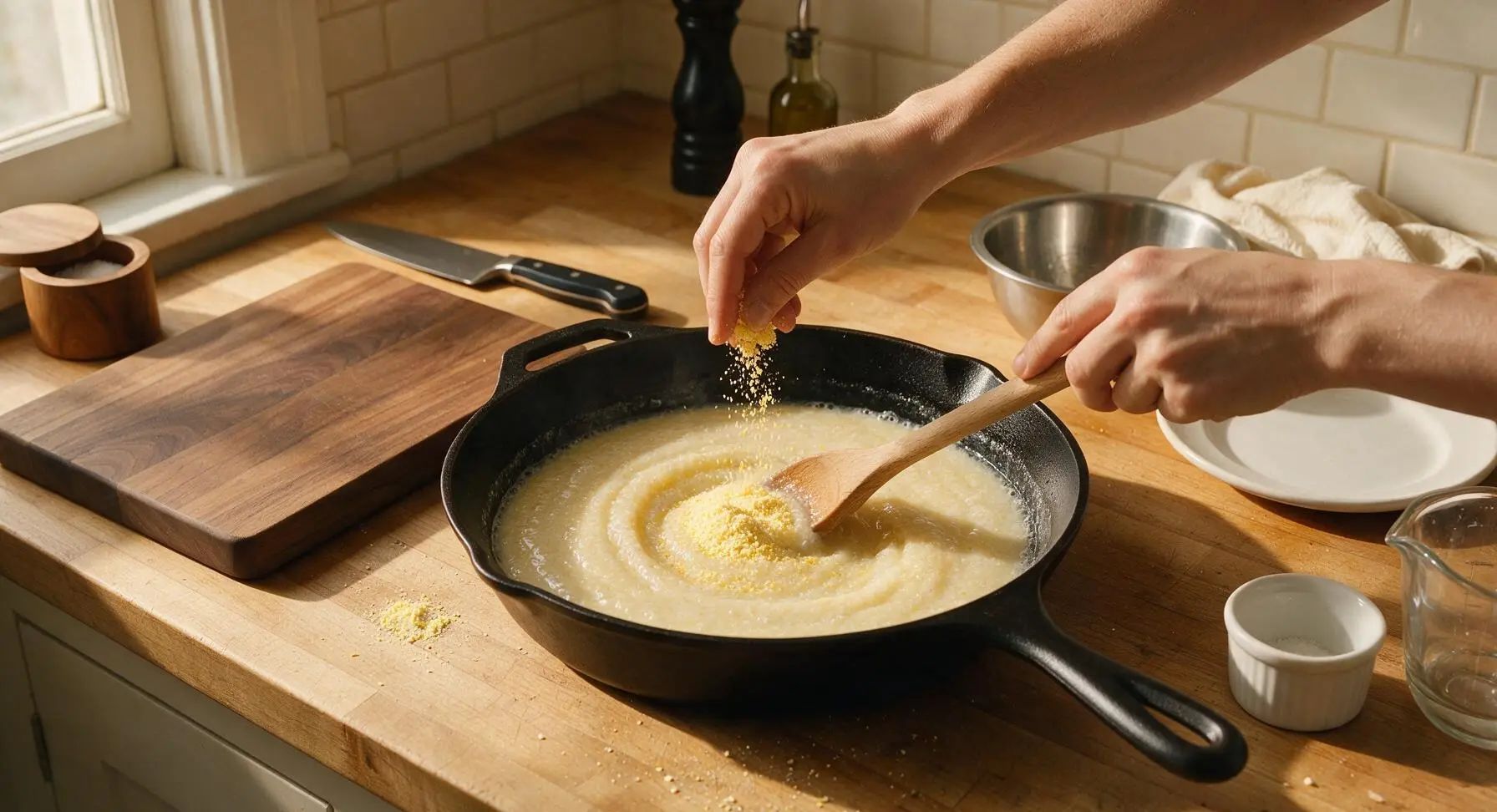
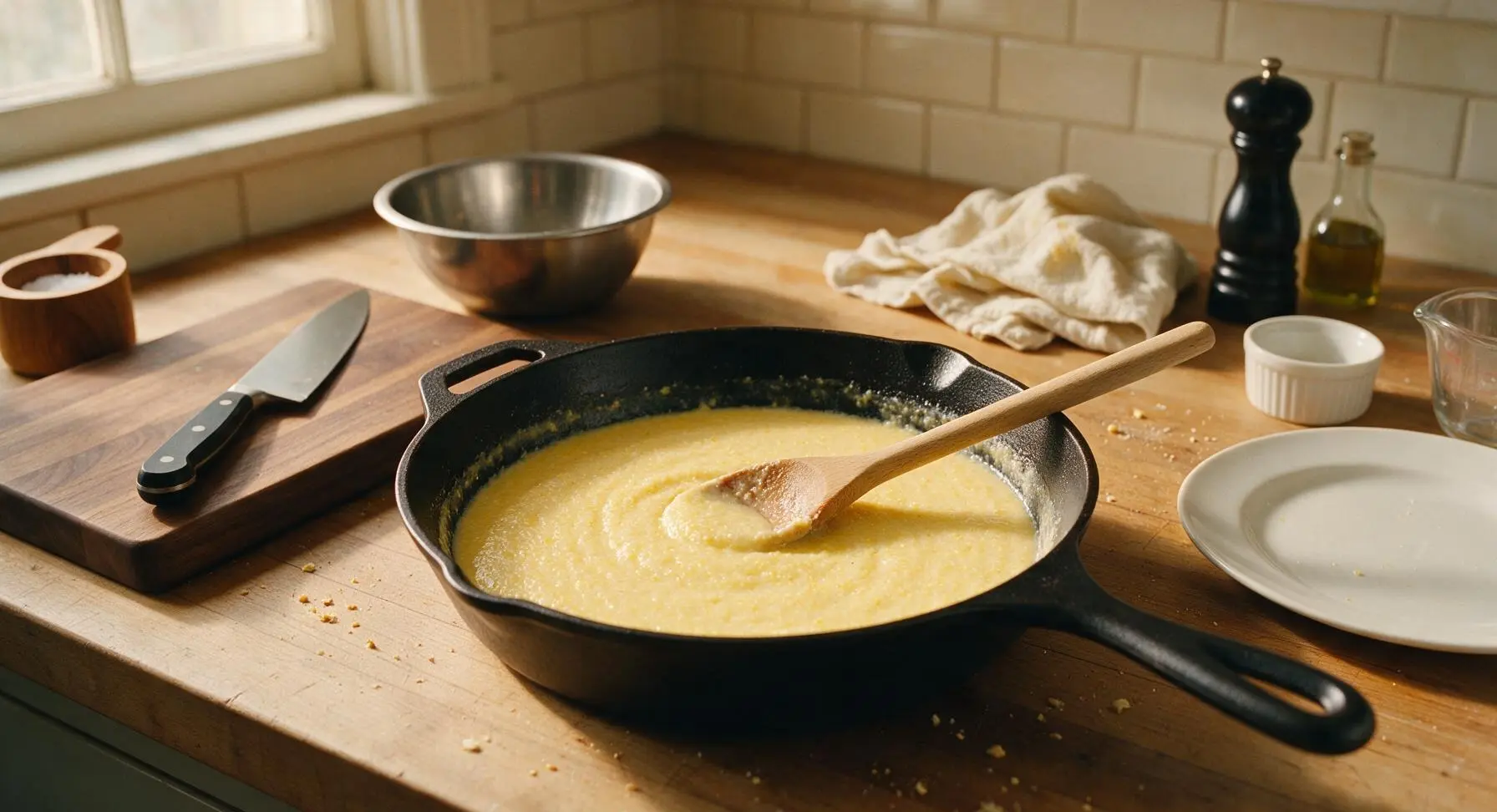
Once the liquid reaches a gentle simmer, reduce heat to medium-low to maintain a low, steady bubble. Hold the long-handled beech wood stirring spoon in one hand, and stir the liquid in a slow, wide circular motion to create a gentle vortex. With your other hand, very slowly sprinkle the 150g coarse-ground yellow cornmeal into the center of the vortex, stirring constantly as you pour to prevent dry lumps from forming. Never dump cornmeal directly into still hot liquid, as this will create hard, uncooked lumps that cannot be stirred out.
Step 3
step3:Add Cornmeal Gradually
Step 3
step3:Add Cornmeal Gradually
4

Simmer and Stir Often

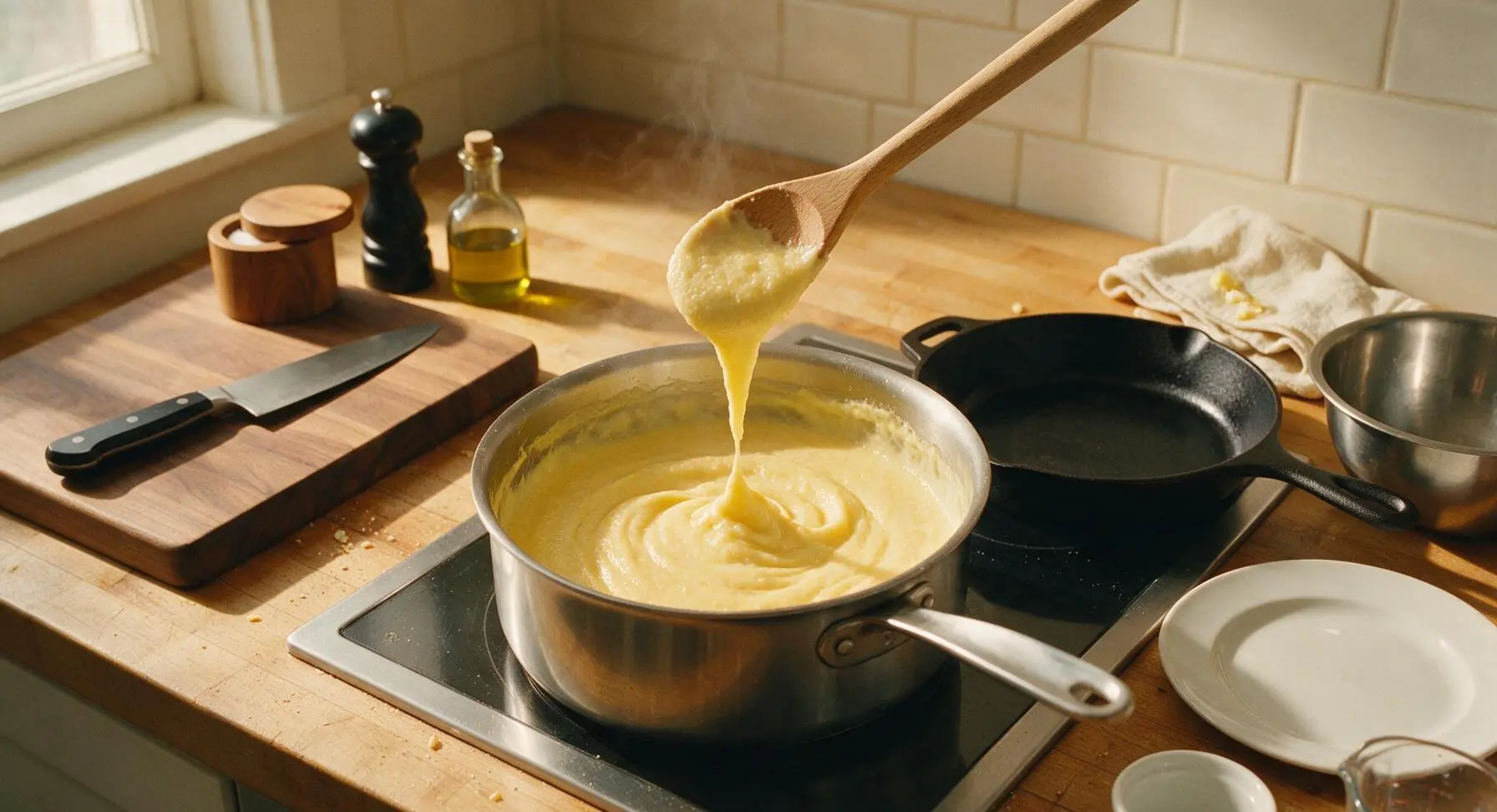
Once all cornmeal is incorporated and smooth, reduce the induction cooktop to its lowest heat setting. Cook the polenta for 40 minutes total, stirring with the beech wood spoon every 4-5 minutes, making sure to scrape the entire bottom and corners of the pan to prevent polenta from sticking or burning. The polenta will gradually thicken to a silky, pourable consistency: it should pull away slightly from the pan sides when stirred, then immediately flow back to fill the gap. If the polenta thickens too quickly, stir in 1-2 tablespoons of warm broth to maintain the soft consistency.
Step 4
step4:Simmer and Stir Often
5

Incorporate Cold Butter

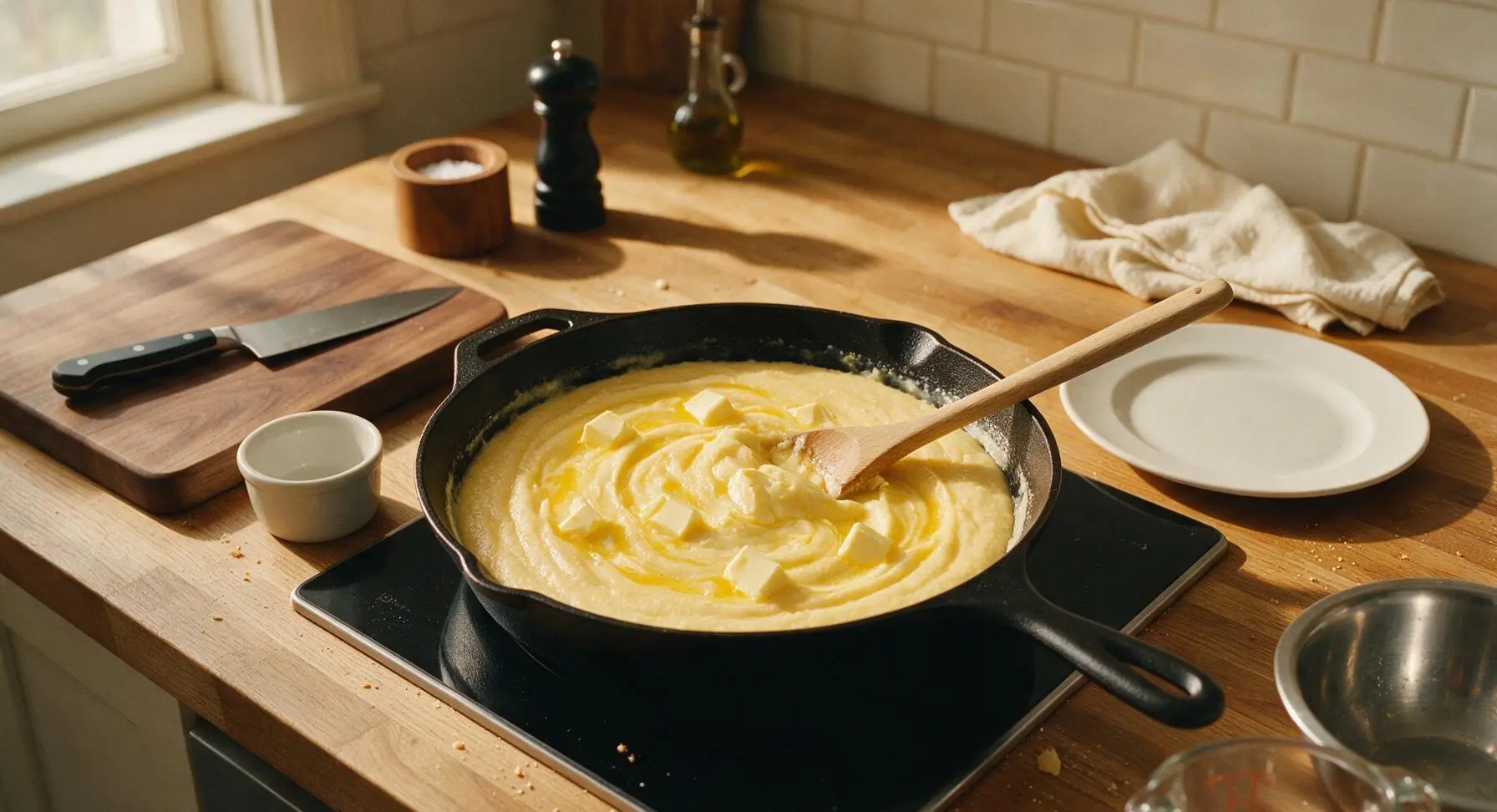
After 40 minutes of slow simmering, when the polenta smoothly coats the back of the wooden spoon, turn off the induction cooktop. Add the 40g cubed cold unsalted butter to the polenta, stirring vigorously in wide circular motions until the butter is fully melted and emulsified into the polenta, creating a glossy, shiny surface. Adding butter off heat prevents the milk fats from separating and leaving a greasy film on the polenta.
Step 5
step5:Incorporate Cold Butter
6

Stir in Grated Parm

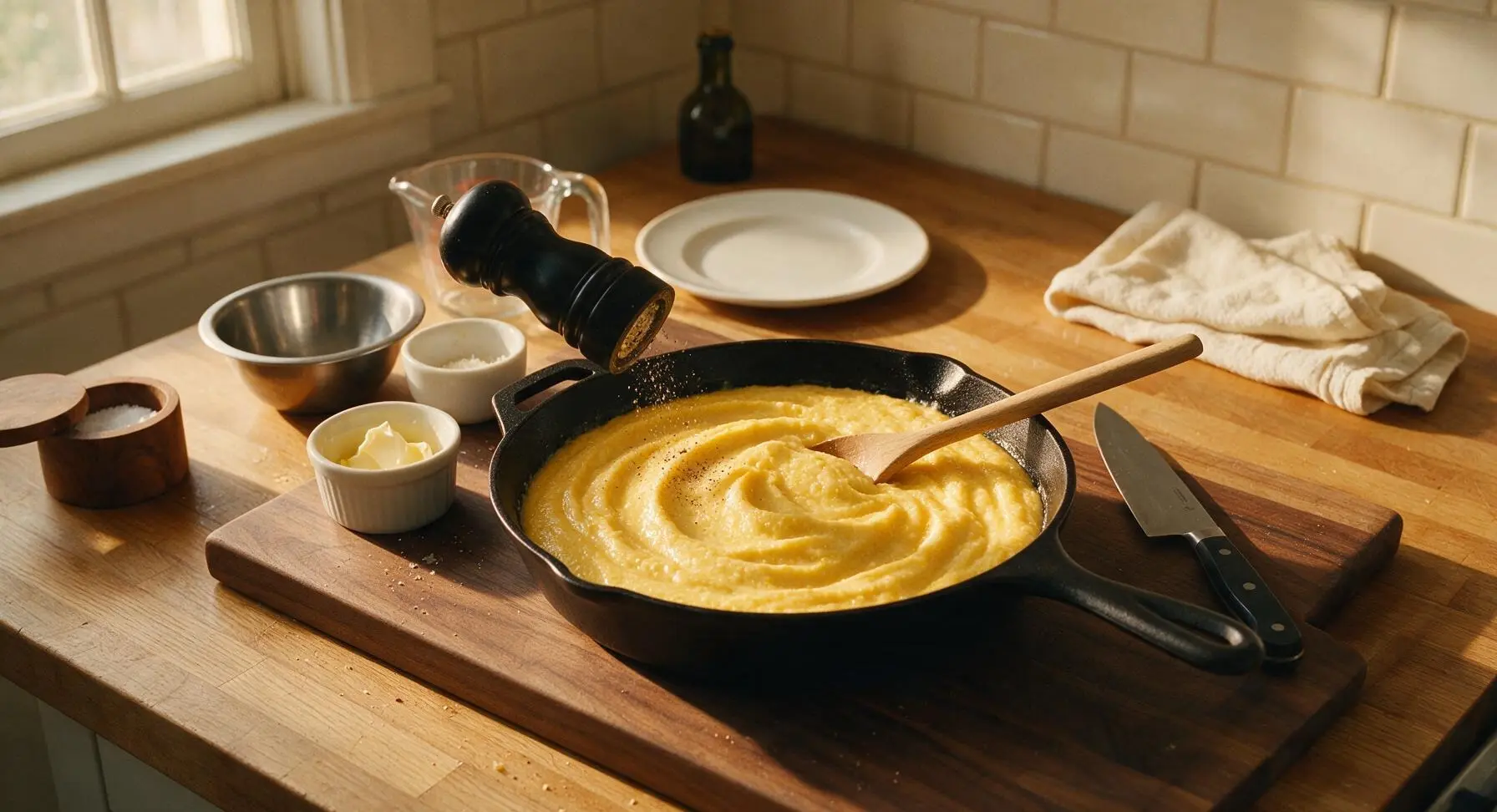
Add the 50g freshly grated Parmigiano-Reggiano from the pinch bowl to the warm polenta, along with 1/4 tsp freshly ground black pepper ground directly from the black pepper grinder. Stir continuously for 1 full minute until the cheese is fully melted and evenly incorporated, creating a rich, velvety texture. Test the consistency by gently nudging the pan: the polenta should ripple softly across the surface, the signature 'onda' (wave) texture the dish is named for.
Step 6
step6:Stir in Grated Parm
7

Rest Polenta Briefly

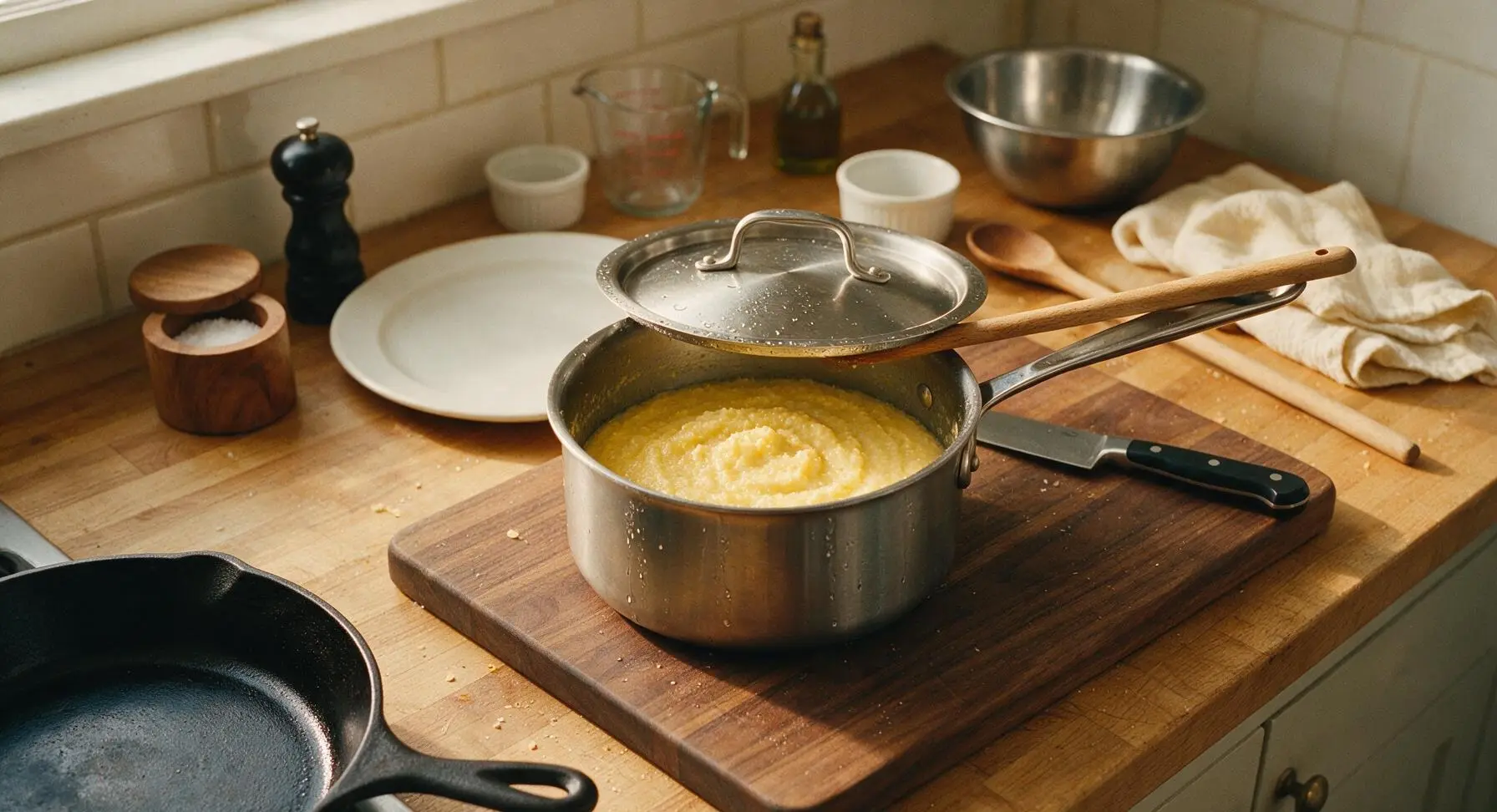
Place the matching stainless steel lid loosely on the saucepan, and let the polenta rest for 2 minutes off the heat. This short rest allows the cornmeal starch grains to fully hydrate for an even silkier texture. Do not rest the polenta longer than 5 minutes, as it will continue to thicken as it cools and become stiff enough to slice, losing the signature all'onda softness.
Step 7
step7:Rest Polenta Briefly
8

Pour into Serving Bowl

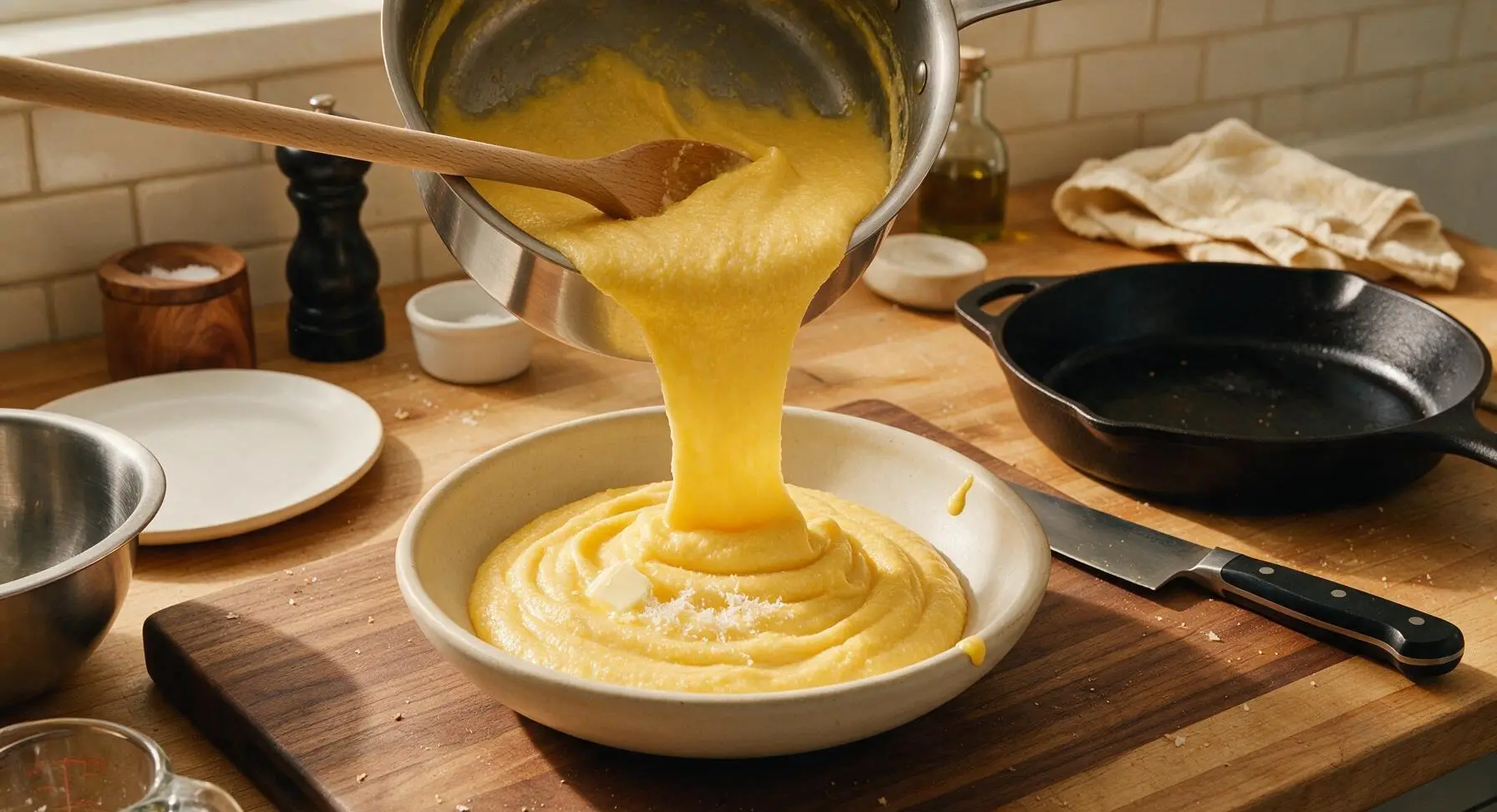
Remove the lid from the pan, and give the polenta one slow, gentle stir to loosen it. Pour the polenta directly into the shallow cream stoneware serving bowl, letting it flow naturally to form soft ripples rather than spreading it smooth with a spoon. Top with a light extra grating of parmesan and a tiny pat of butter for serving.
Step 8
step8:Pour into Serving Bowl

Tips

1.Use a 1:6.6 cornmeal-to-liquid ratio for authentic all'onda consistency: this creates soft, rippleable polenta rather than the stiff, sliceable polenta used for frying or baking. Stir in 1-2 tablespoons of warm (not cold) broth if the polenta thickens too much as it rests, as cold liquid will shock the starch and create lumps.
2.Stir every 4-5 minutes, not constantly: nonstop stirring overworks the corn starch and creates a gluey, pasty texture, while occasional stirring is enough to prevent sticking and develop a smooth, creamy mouthfeel without over-agitating the grains.
3.Add butter and cheese off the heat: introducing cold dairy to boiling polenta can cause milk fats to separate and cheese to become stringy, while off-heat mixing creates a stable, glossy emulsion that stays silky and pourable for 10-15 minutes after serving.
✨ You May Also Like

Side Dishes
🍜 India

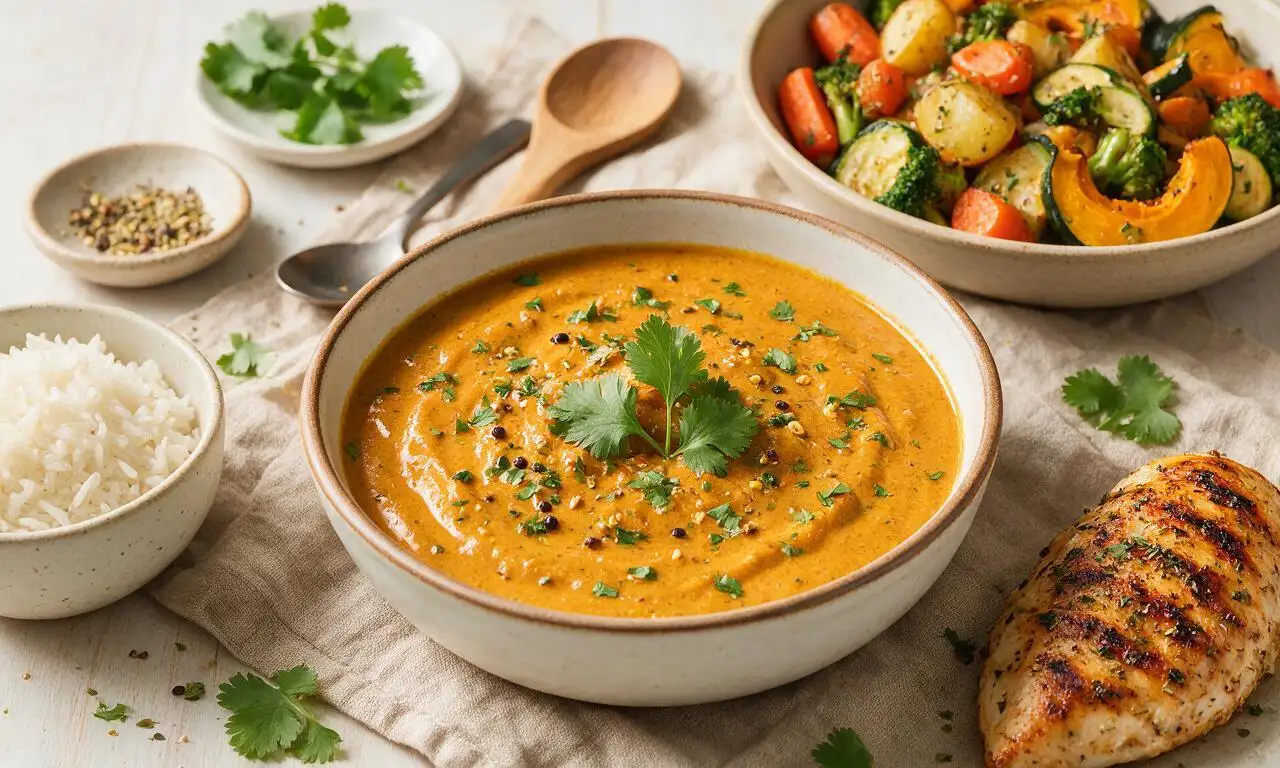
Velvety, aromatic all-purpose curry sauce perfect for tossing with roasted veggies, grilled protein, or rice for fast, cozy, flavorful meals.

⏱️ 25 minuteSide Dishes ★ 4.8
Side Dishes
🍜 Spain

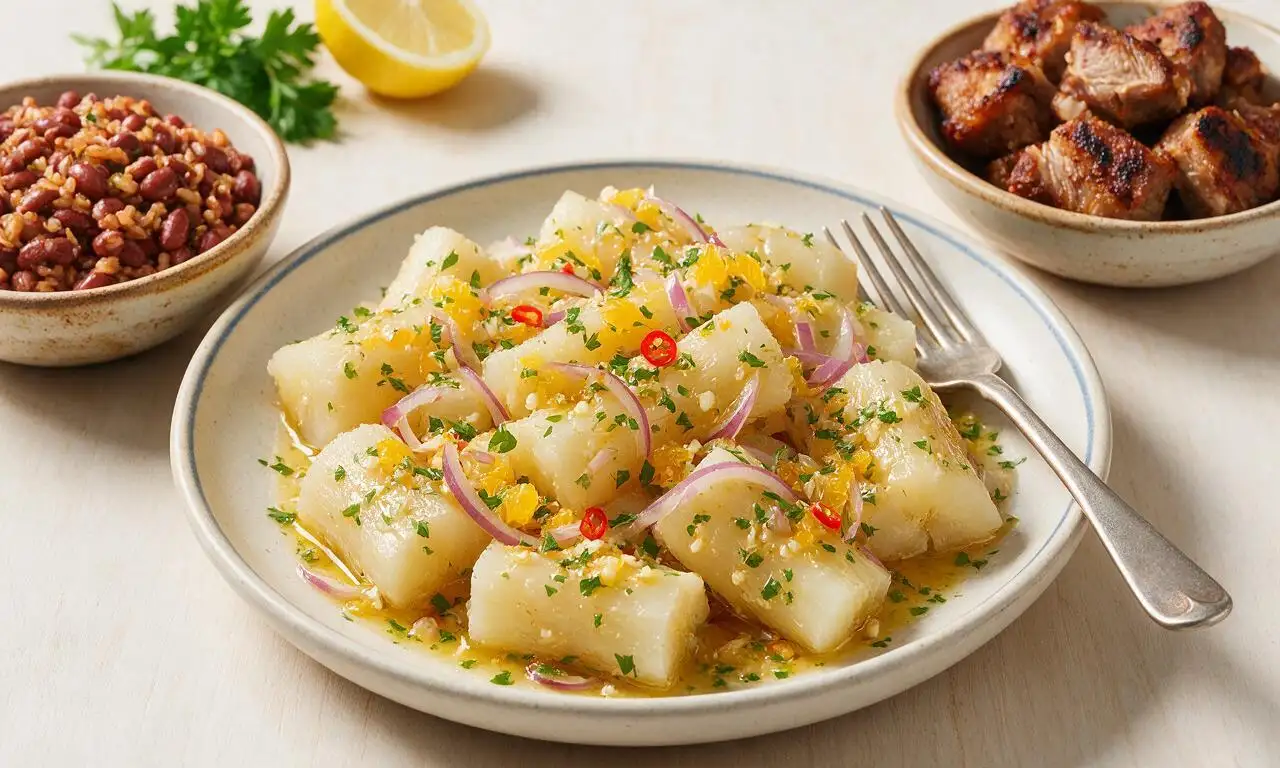
Tender, starchy boiled yuca tossed in bright, garlicky citrus mojo sauce—an iconic, zesty side that pairs beautifully with roasted pork, grilled meats, and rice and beans.

⏱️ 40 minuteSide Dishes ★ 5
Side Dishes
🍜 United States

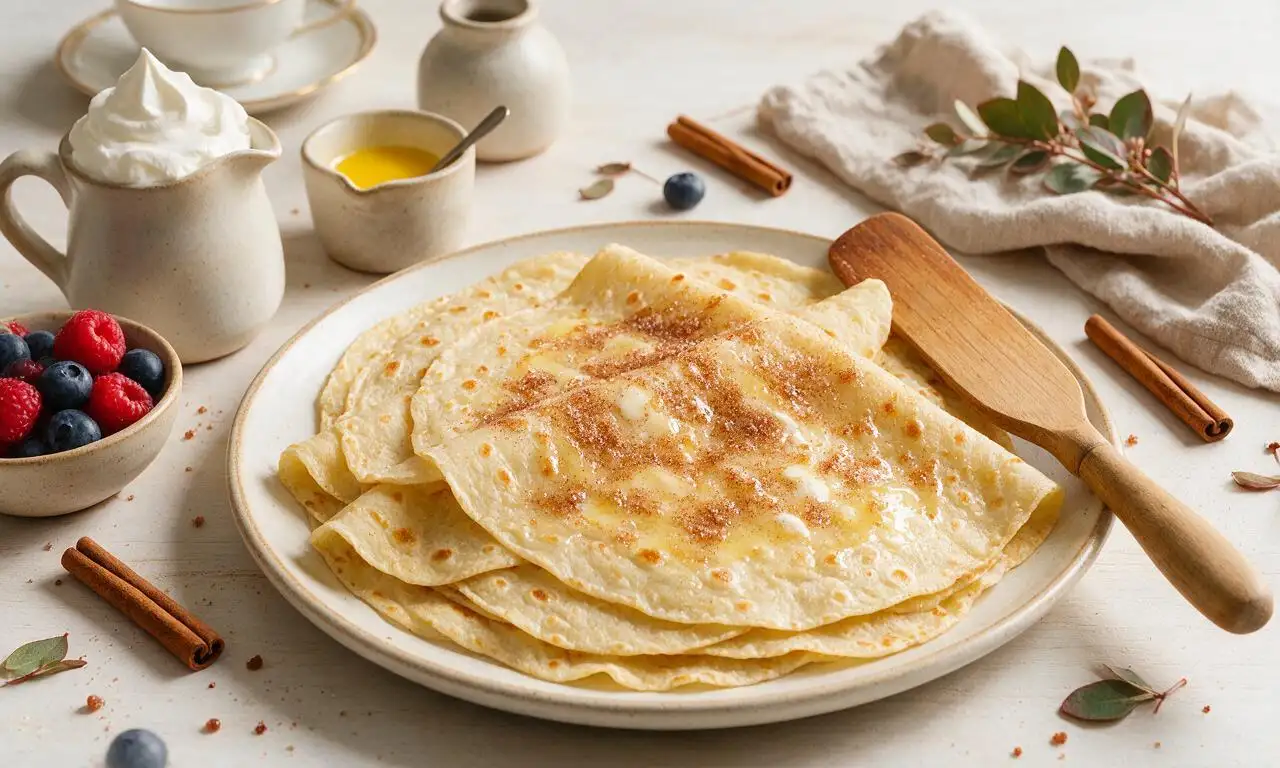
Tender, paper-thin potato flatbread, a beloved Norwegian-American Minnesota Christmas staple, griddled until softly spotted and served warm with butter.

⏱️ 1 hour 30Side Dishes ★ 4.6
Side Dishes
🍜 United States

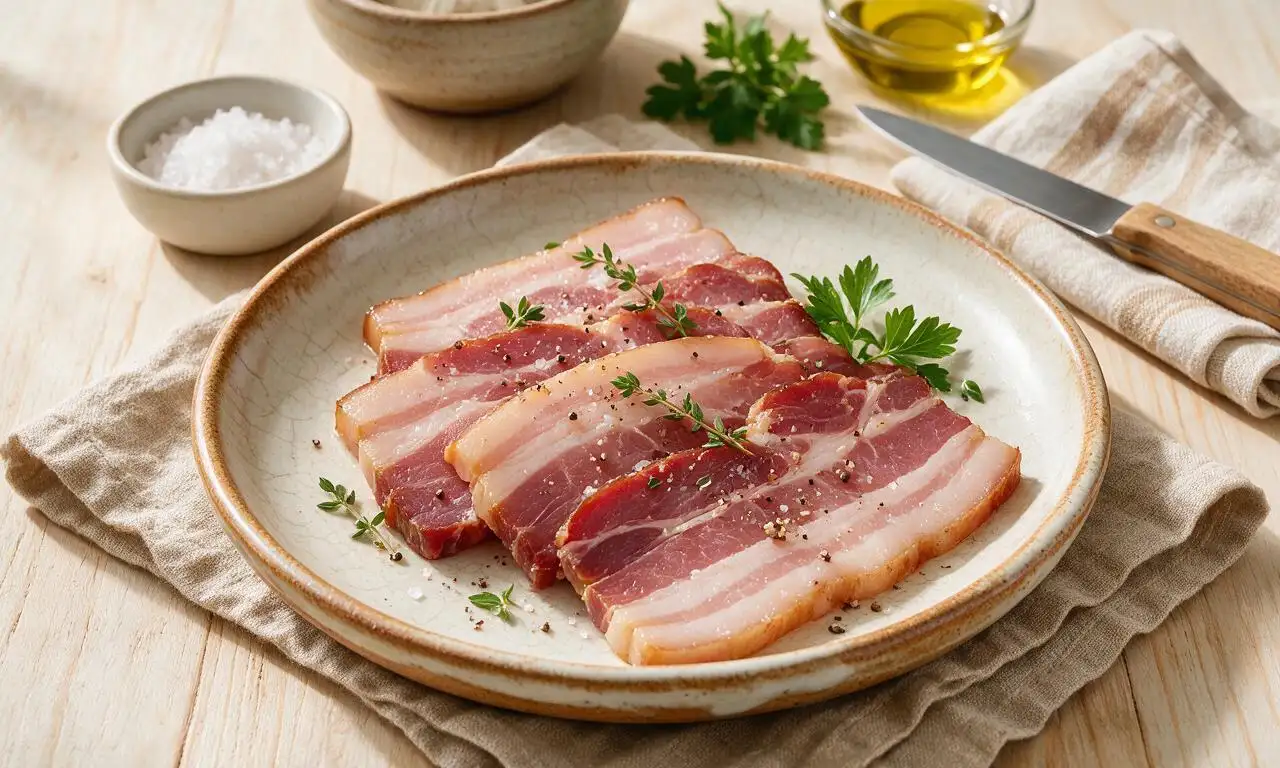
Rich, deeply savory cured salt pork, a long-lasting kitchen staple perfect for frying crispy as a side or adding umami to stews, beans, and chowders.

⏱️ 7 days (2Side Dishes ★ 4.9
Side Dishes
🍜 United States

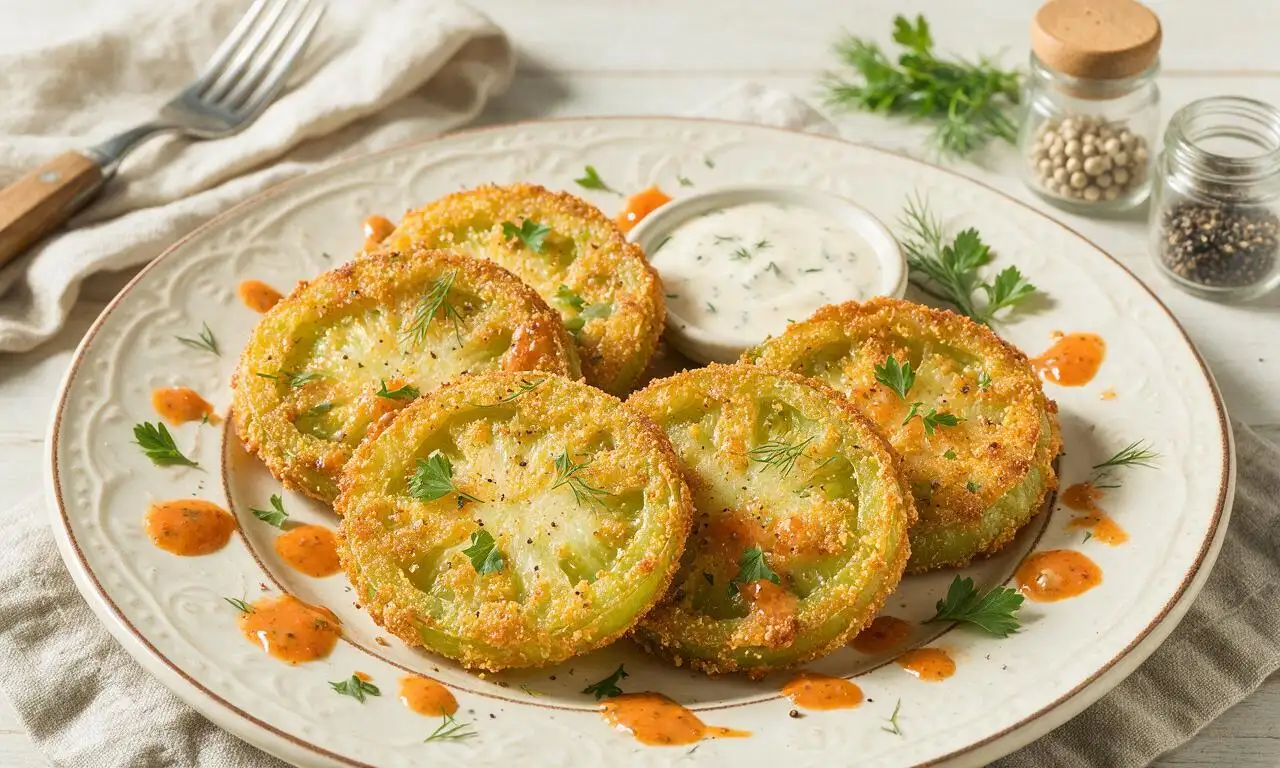
Crispy, tangy classic Southern fried green tomatoes with a crunchy cornmeal crust, served hot for a nostalgic, comforting summery bite.

⏱️ 25 minuteSide Dishes ★ 4.9
Side Dishes
🍜 United States

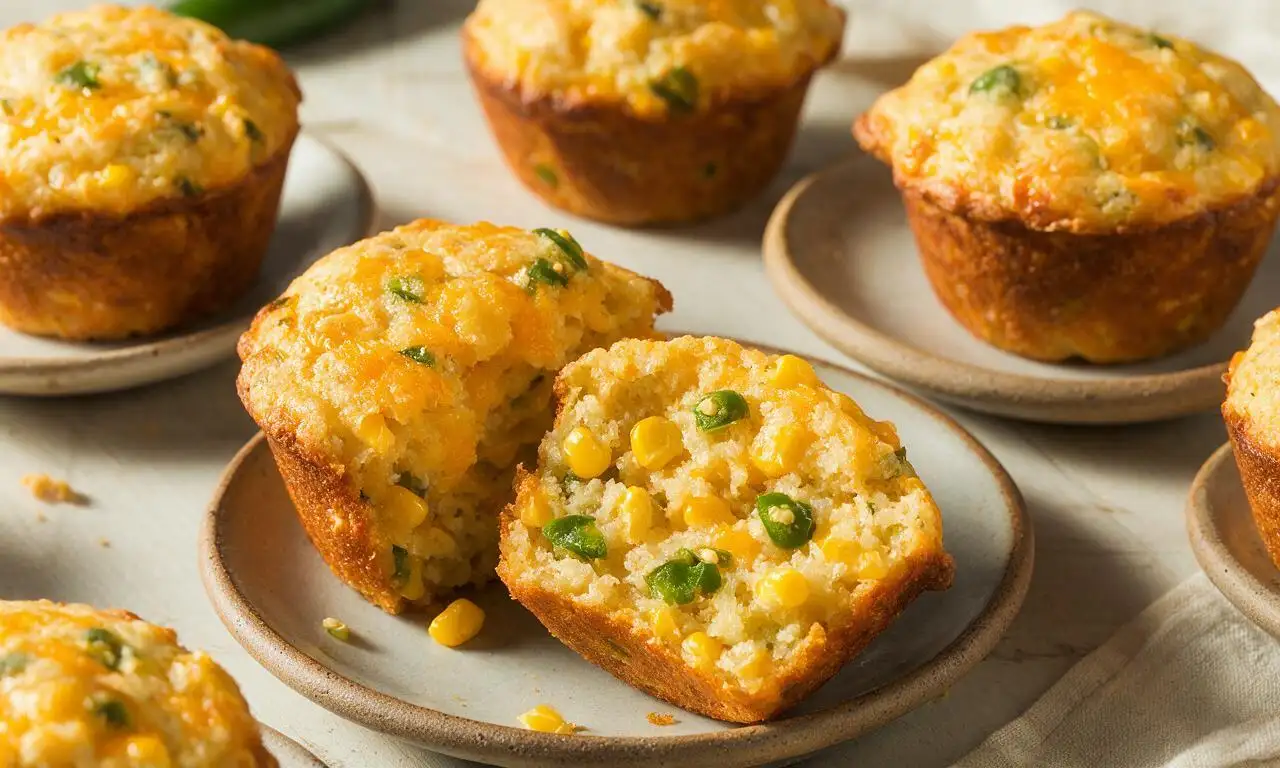
Moist, golden-crusted savory muffins with sweet corn, zesty jalapeño, and melted cheddar, perfect for pairing with smoky summer grilled fare.

⏱️ 30 minuteSide Dishes ★ 4.9

Soft Polenta (all'onda):Frequently Asked Questions

1.What does “all’onda” mean when referring to this polenta? ▾
The term translates directly to “wavy,” describing the signature soft, velvety consistency that ripples like gentle waves when you nudge the serving dish. Unlike firm, set polenta that holds a sharp, sliceable shape, this version spreads softly across a plate, designed to catch rich sauces from braised meats, mushrooms, or ragù.
2.Can I use instant cornmeal instead of coarse-ground non-instant for this recipe? ▾
I don’t recommend it for authentic all’onda texture. Instant cornmeal is pre-cooked and dried, so it breaks down too quickly, resulting in a mushy, pasty final product with none of the subtle, tender grain bite that makes soft polenta feel luxurious. Stick to coarse-ground non-instant yellow cornmeal for silky, not gluey, results.
3.Why do you use a mix of chicken broth and whole milk instead of just water? ▾
The combination builds layered, balanced flavor without making the polenta feel heavy. Low-sodium chicken broth adds savoriness and depth so the polenta doesn’t taste bland, while whole milk lends creamy, rich sweetness that keeps the texture luxuriously smooth, rather than watery or flat, as it would if made with water alone.
4.How do I prevent lumps from forming when I add the cornmeal? ▾
The trick is to add cornmeal in a thin, steady stream while whisking simmering liquid constantly, rather than dumping it all in at once. If small lumps form early on, keep whisking gently as it simmers; they’ll break down completely during cooking, leaving you with a perfectly smooth, lump-free final dish.
5.How long does this polenta actually take to cook? ▾
Plan for 25 to 30 minutes of gentle simmering once you add the cornmeal, stirring every 2 to 3 minutes to prevent it from sticking to the bottom of the pot. It’s done when the grains are completely tender, with no gritty raw bite, and it pulls away slightly from the pan sides as you stir.
6.My polenta turned out really thick and paste-like—what did I do wrong? ▾
That almost always happens from cooking it too long over too high heat, using too little liquid, or using finely ground cornmeal instead of coarse. Remember, all’onda polenta should be loose; if it thickens too much before serving, stir in a splash of warm broth or milk a tablespoon at a time to reach that soft, wavy consistency.
7.Can I make this polenta ahead of time for a dinner party? ▾
You can make it up to 2 hours ahead if you hold it properly. Transfer the cooked polenta to a double boiler set over barely simmering water, cover, and stir every 10 to 15 minutes, adding a tiny splash of warm milk or broth if it thickens too much. It will stay silky and perfect without getting gluey.
8.What’s the best pot to use for cooking polenta? ▾
Reach for a heavy-bottomed saucepan or Dutch oven for the best results. Thick, heavy bases distribute heat evenly, which prevents polenta from scorching on the pot bottom as it simmers—a common issue with thin, lightweight pans that create sharp hot spots during longer cook times.
9.Do I really need to stir polenta the entire time it cooks? ▾
You don’t need to stand over it stirring nonstop, which is a common home cook myth! You do need to give it a thorough stir every 2 to 3 minutes, making sure to scrape the bottom and corners of the pot to prevent sticking and scorching, but you can step away to prep other components between stirs.
10.Can I use vegetable broth instead of chicken broth for a vegetarian version? ▾
Absolutely, that swap works seamlessly for a vegetarian take. Just use a good-quality low-sodium vegetable broth, preferably one without strong overpowering notes like excess celery or carrot, so the sweet corn flavor and nutty Parmigiano-Reggiano still shine through as the star of the dish.
11.When do I add the butter and Parmigiano-Reggiano? ▾
Add both right after you take the polenta off the heat, once the cornmeal is fully tender and you’ve adjusted the consistency to be soft and wavy. Stir them in vigorously until the butter is fully melted and the cheese is completely incorporated, which gives that glossy, velvety finish without making the cheese grainy from overheating.
12.My polenta has a gritty, raw texture even after cooking—why? ▾
Gritty polenta usually means you didn’t simmer it long enough for the coarse corn grains to fully hydrate and soften, or you cooked it over heat that was too high, which caused the outside of grains to cook fast while the center stayed hard. Turn heat to low, add a splash more warm liquid, and simmer 5 to 10 more minutes until tender.
13.Can I use a different cheese if I don’t have Parmigiano-Reggiano? ▾
For the closest flavor and texture, swap it for Grana Padano, which has a similar nutty, salty profile and melts smoothly. Avoid soft, high-moisture cheeses like fresh mozzarella or very crumbly cheeses like feta, as they won’t melt into the polenta evenly and will throw off the signature silky consistency.
14.What are the best things to serve with this soft polenta? ▾
It pairs beautifully with rich, saucy dishes that the soft polenta can soak up: think slow-braised short ribs, mushroom ragù, classic Bolognese, sautéed bitter greens with garlic, roasted Italian sausages, or even a simple drizzle of brown butter and crispy sage for a lighter, standalone serving.
15.Should I salt the polenta, and if so, when? ▾
Yes, salt the mixed broth and milk cooking liquid before adding the cornmeal, just like you salt pasta water. Since we use low-sodium broth, this lets grains absorb seasoning evenly as they cook, rather than salting only at the end, which leaves surface-level saltiness and unbalanced, flat flavor.
16.How do I store leftover soft polenta? ▾
Let leftover polenta cool completely to room temperature, then transfer it to an airtight container and refrigerate for up to 3 days. Note that it will firm up as it chills, which is totally normal—you can loosen it back up when reheating to regain that soft all’onda consistency.
17.What’s the best way to reheat leftover polenta to get it silky again? ▾
Transfer the cold polenta to a small saucepan, add 2 to 3 tablespoons of warm milk or broth per cup of polenta, and heat over low heat, stirring frequently, until it loosens back up to that soft, wavy texture. It will take 5 to 7 minutes, and you can add a tiny extra pat of butter for richness if you’d like.
18.Is there a way to make this polenta dairy-free? ▾
You can absolutely adapt it for dairy-free diets. Swap whole milk for unsweetened plain oat milk (it has the creamiest, most neutral flavor), use a dairy-free hard aged cheese or nutritional yeast for umami in place of Parmigiano-Reggiano, and swap butter for vegan butter or good extra-virgin olive oil for a smooth finish.
19.Why does my polenta splatter so much while it cooks, and how do I stop it? ▾
Those hot, bubbling splatters happen when polenta simmers over too high heat, as the thick mixture traps steam that bursts upward unexpectedly. Turn the heat to the lowest setting once the cornmeal reaches a gentle simmer, and partially cover the pot with a lid to catch splatters while letting steam escape to prevent over-thickening.

Comments (12)

2 hours ago

OMG this polenta is SO good! I made it last night for our weekly family dinner and even my super picky 7 year old asked for seconds. I stirred in a little extra parm at the end and it was chef’s kiss. Perfect creamy texture, no lumps at all if you follow the whisking tip!

3 days ago

Was looking for a simple side to go with my smoked ribs last weekend and this hit so hard. Super easy to throw together while the smoker was running, didn’t have to babysit it too much. Will definitely be adding this to my regular cookout rotation for potlucks this summer.

1 week ago

Game changer for my weekly meal prep! I make a big batch on Sunday and pair it with roasted veggies and grilled chicken for lunches all week. It reheats like a dream with a splash of warm broth, no weird grainy texture like other polenta recipes I’ve tried. Cook time is totally accurate too, no surprises.

yesterday

Tried this for my first ever time making polenta and I was shocked how easy it was! I was always intimidated because I thought polenta was fussy, but this came out perfectly silky, just like the restaurant versions I’ve had in Little Italy. 10/10 would make again.

30 minutes ago

Quick question—can I use vegetable broth instead of chicken broth to make this vegetarian? I made it last week with chicken broth for my roommates and it was absolutely incredible, but I’m hosting a dinner party next week and a couple guests don’t eat meat, would that mess up the texture at all?

5 minutes ago

Great question! You can absolutely swap in low-sodium vegetable broth here without any texture issues — just pick a broth you love the flavor of, since that will come through in the final polenta. I recommend stirring in a tablespoon of butter at the end to add extra richness if you go the veggie route! Hope your dinner party is a hit.

2 days ago

My kids loved it! I served this with meat sauce and meatballs last night and there were zero leftovers. Only thing I did differently was add a tiny pinch of nutmeg because my grandma always did that with polenta, and it was so cozy.

yesterday

Oh the nutmeg tip is genius! I never thought to add that, I’m definitely trying that next time I make a batch. I usually do a pinch of garlic powder but nutmeg sounds next level.

5 days ago

Really solid base recipe! My only note is that I had to cook mine about 10 minutes longer than the recipe said to get that soft, all'onda consistency, maybe because my stovetop runs a little cooler? Flavor was perfect though, no complaints.

3 days ago

Thanks for the honest feedback! Stovetop heat levels can vary a ton between ranges, so it’s always smart to go by texture rather than strict cook time — you’re looking for that soft, wavy consistency that slowly spreads when you nudge the pot. So glad the flavor worked out for you!

1 week ago

SO good. I made this to go with braised short ribs for my anniversary dinner and my partner literally asked if I ordered takeout from our favorite Italian place. The texture was absolutely perfect, so creamy without being heavy. 10/10, will be making this for every special occasion from now on.

5 days ago

Wait I did short ribs with this too last month! It’s the absolute best pairing, the polenta soaks up all that braising sauce so perfectly. I’m glad yours turned out as good as mine did!

2 weeks ago

Obsessed! I brought this to a neighborhood potluck last weekend and people were asking me for the recipe left and right. I topped it with a little fried sage and brown butter and everyone went crazy for it. So easy to make for a crowd too, I doubled the batch no problem.

1 week ago

Love the brown butter and fried sage addition — that sounds absolutely delicious! So happy it was a hit at your potluck, polenta is such a great crowd-pleaser because it pairs with almost anything.

2 weeks ago

Wait a second—this is naturally gluten free? Why did I never think to make polenta before?! I’ve been looking for easy gluten free sides to swap in for pasta at our Sunday dinners and this is perfect. My whole family ate it without even noticing it wasn’t our usual buttered noodles. Win!

1 week ago

Right?! Polenta is such an underrated GF staple! I like to stir in some roasted garlic and goat cheese sometimes for extra flavor, it’s unreal.

5 days ago

So happy you found a new family favorite! You’re totally right, traditional polenta is naturally gluten free (just double check your cornmeal packaging to make sure it wasn’t processed in a facility with wheat if you’re strictly GF, to avoid cross-contamination). Great call swapping it in for pasta!

2 days ago

Made this on a weeknight after work and it was way easier than I expected! I thought 45 minutes cook time would be too long for a weeknight, but most of that is just simmering where you don’t have to stand over it, so I was able to toss a salad and bake some chicken while it cooked. Total weeknight win.

yesterday

Same! I used to think polenta was only for fancy weekend meals but the hands off simmer time makes it totally doable on busy nights. I even make it after my kid’s soccer practice now, it’s become a weekly staple.

2 hours ago

Love to hear that! A lot of people see the 45 minute cook time and write it off for weeknights, but like you said, most of that is low-effort simmer time where you can multitask the rest of your meal. So glad it worked out for your busy schedule!

5 days ago

Uh oh—my polenta came out super lumpy my first try! Did I pour the cornmeal in too fast? I was excited and dumped it all in at once instead of whisking slowly like the recipe says, oops. Flavor was still great even with lumps though, I’m gonna try again this weekend.

3 days ago

Oh I did the exact same thing my first time! You gotta stream the cornmeal in super slow while whisking nonstop, that’s the secret to no lumps. My second batch was perfectly smooth, you got this!

2 days ago

No worries at all, lumpy polenta happens to the best of us! Your instinct is exactly right — pouring the cornmeal too quickly is the number one cause of lumps. Next time, stream it in gradually while whisking constantly, and you’ll get that silky smooth texture in no time. Can’t wait to hear how your second batch turns out!