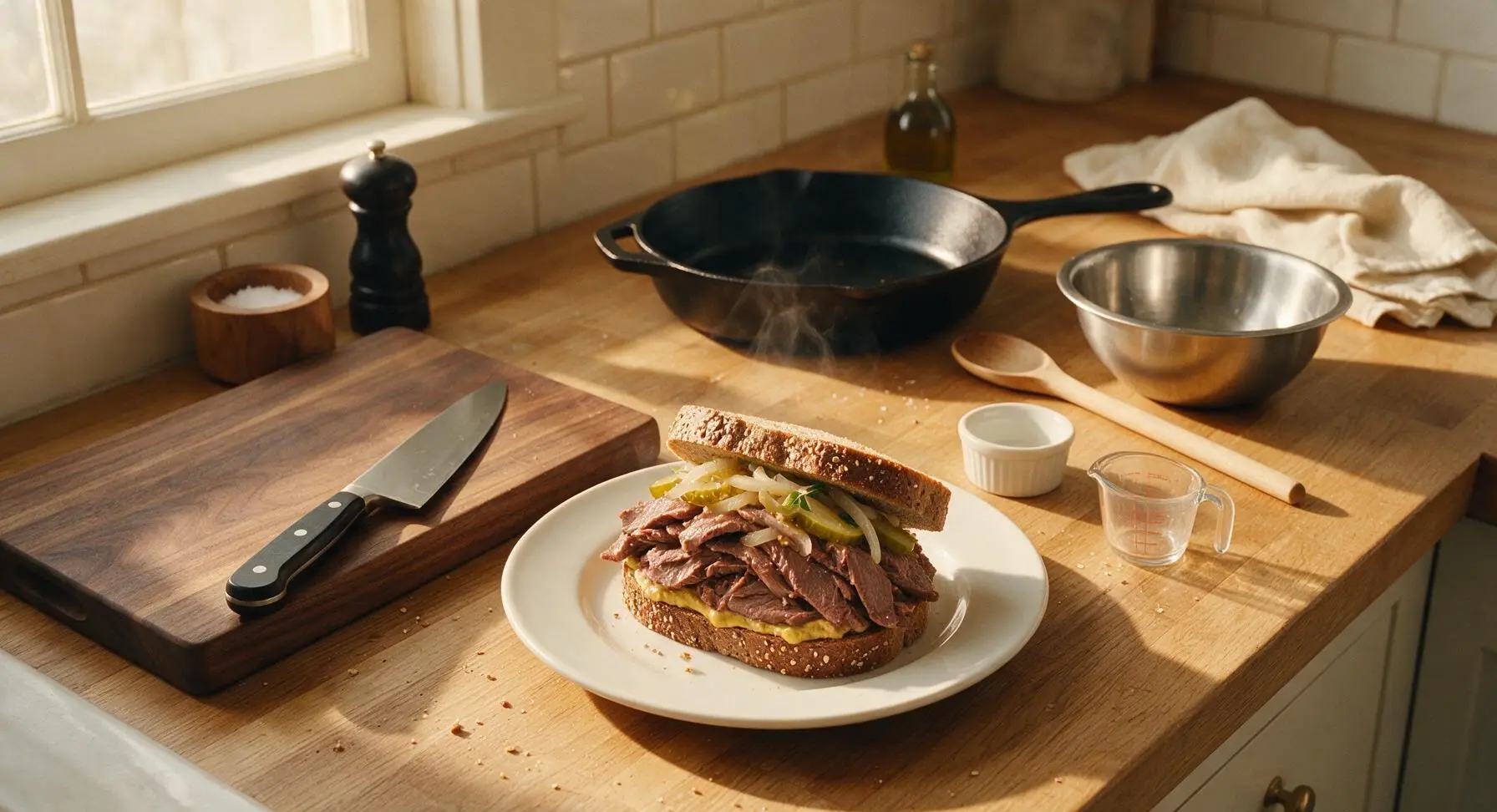
Tongue Sandwich

title 1
Tongue Sandwich
⏱️ cook time 2 hours 30 minutes
🍽️ servings 4
⚡ Difficulty medium

intro

Tender, slow-simmered beef tongue piled high on seeded rye with sharp mustard, crisp dill pickles, and sweet onion—rich, melt-in-your-mouth, the iconic hearty deli sandwich.

Ingredients
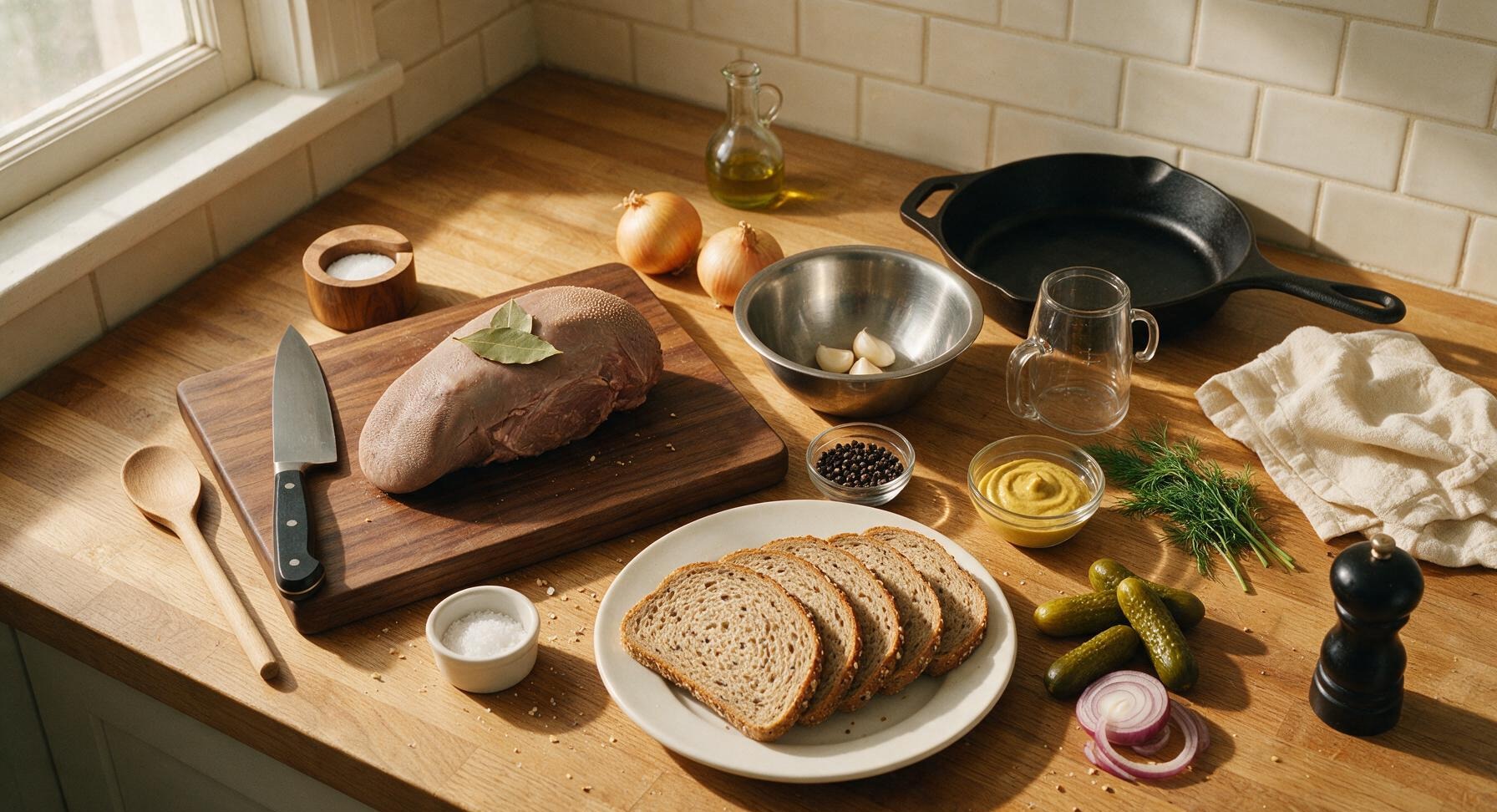
Beef tongue 1kg (2.2 lbs)
Yellow onion 2 medium
Garlic cloves 3 whole
Bay leaves 2 whole
Whole black peppercorns 1 tbsp
Kosher salt 1 tbsp
Seeded rye bread 8 slices
Spicy yellow mustard 1/2 cup
Dill pickles 4 whole
Red onion 1 small
Fresh dill 1 small bunch

Steps

1

Prep Beef Tongue

Rinse the raw beef tongue under cold running water, pat dry lightly with a corner of the fixed linen towel, and place it in the base of the 6-liter stainless steel stock pot. Use the paring knife to trim away any loose connective tissue or stray bone fragments from the surface. The tongue should sit flat in the base of the pot without propping.
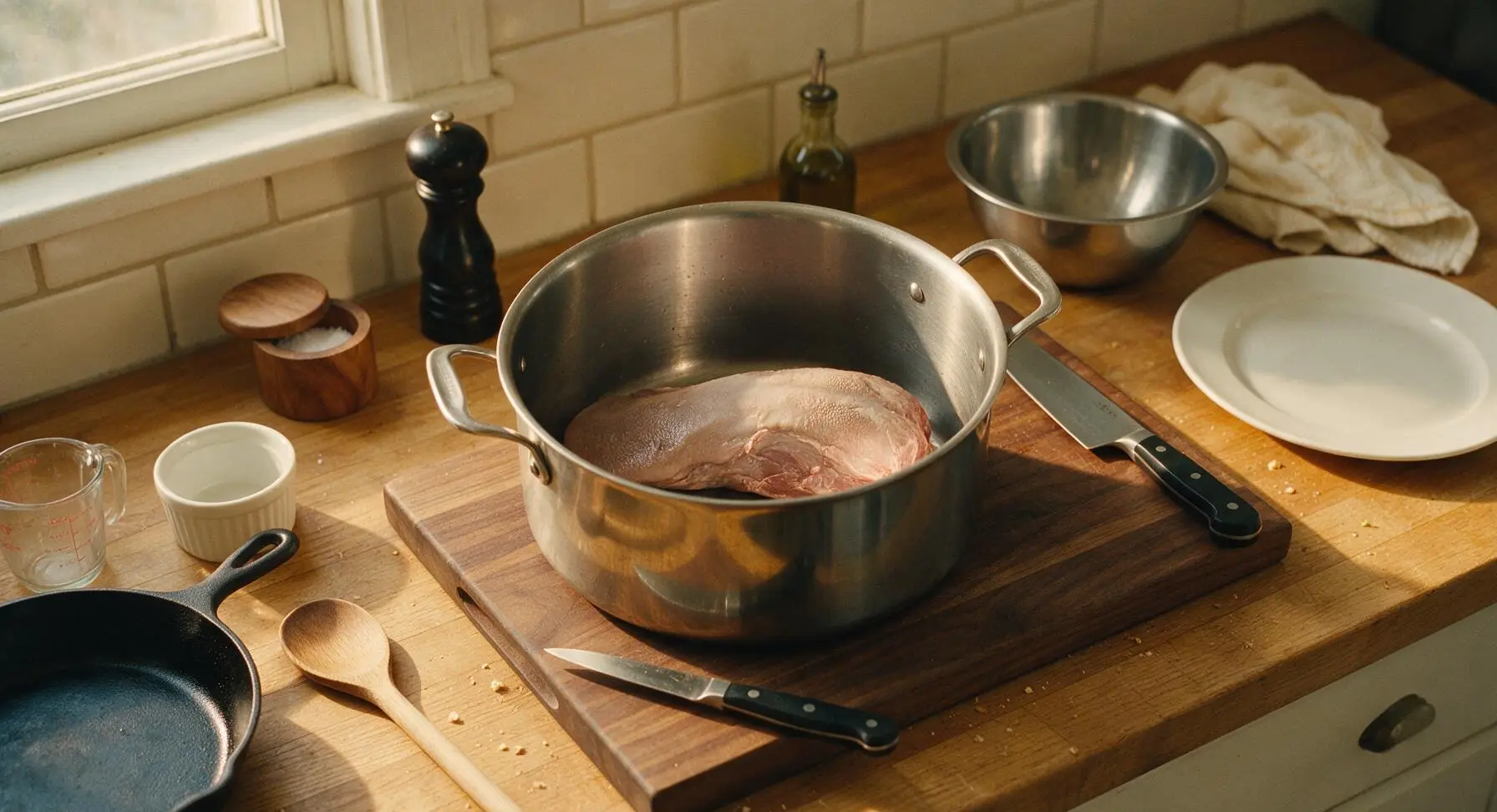
Step 1
step1:Prep Beef Tongue
2

Add Simmering Aromatics

Quarter both yellow onions (no peeling required, as papery skins add deep golden color to the broth), crush the 3 garlic cloves lightly with the flat of the chef knife, and add both to the pot with the tongue. Add the 2 bay leaves, 1 tablespoon whole black peppercorns, and 1 tablespoon kosher salt, then pour cold water over all contents until the tongue is fully submerged by 2cm of water.
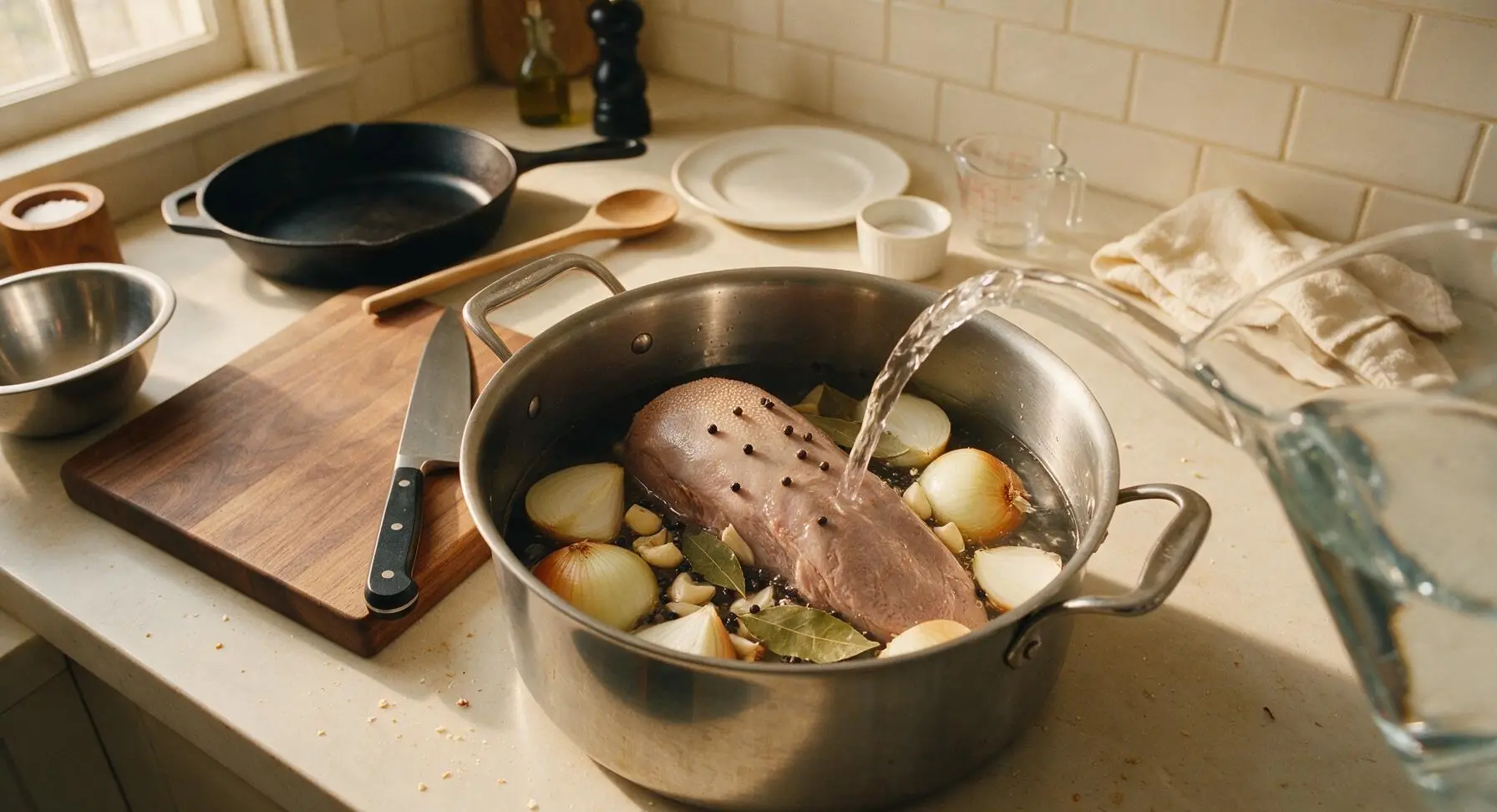
Step 2
step2:Add Simmering Aromatics
3

Slow Simmer Tongue

Place the lid securely on the stock pot, bring water to a rolling boil over medium-high heat, then reduce heat to low to maintain a gentle, steady simmer (small bubbles breaking the surface every 2-3 seconds, no violent rolling). Cook for 2 hours 30 minutes, using the slotted spoon to skim any grey foamy residue from the broth surface every 30 minutes. The tongue is fully tender when a paring knife slides into the thickest section with no resistance, as easily as inserting into soft room-temperature butter.


Step 3
step3:Slow Simmer Tongue
Step 3
step3:Slow Simmer Tongue
4

Peel Cooked Tongue

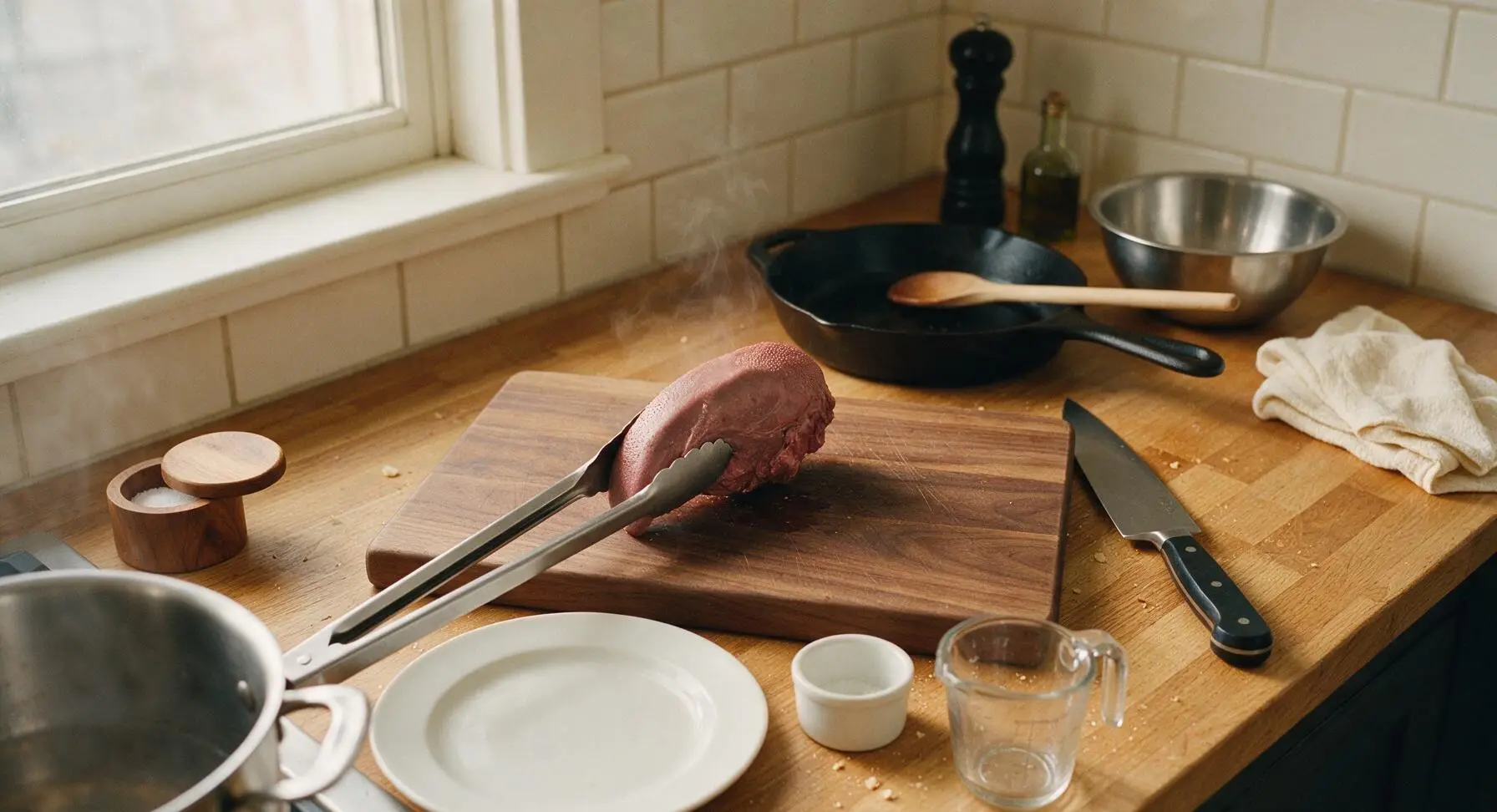
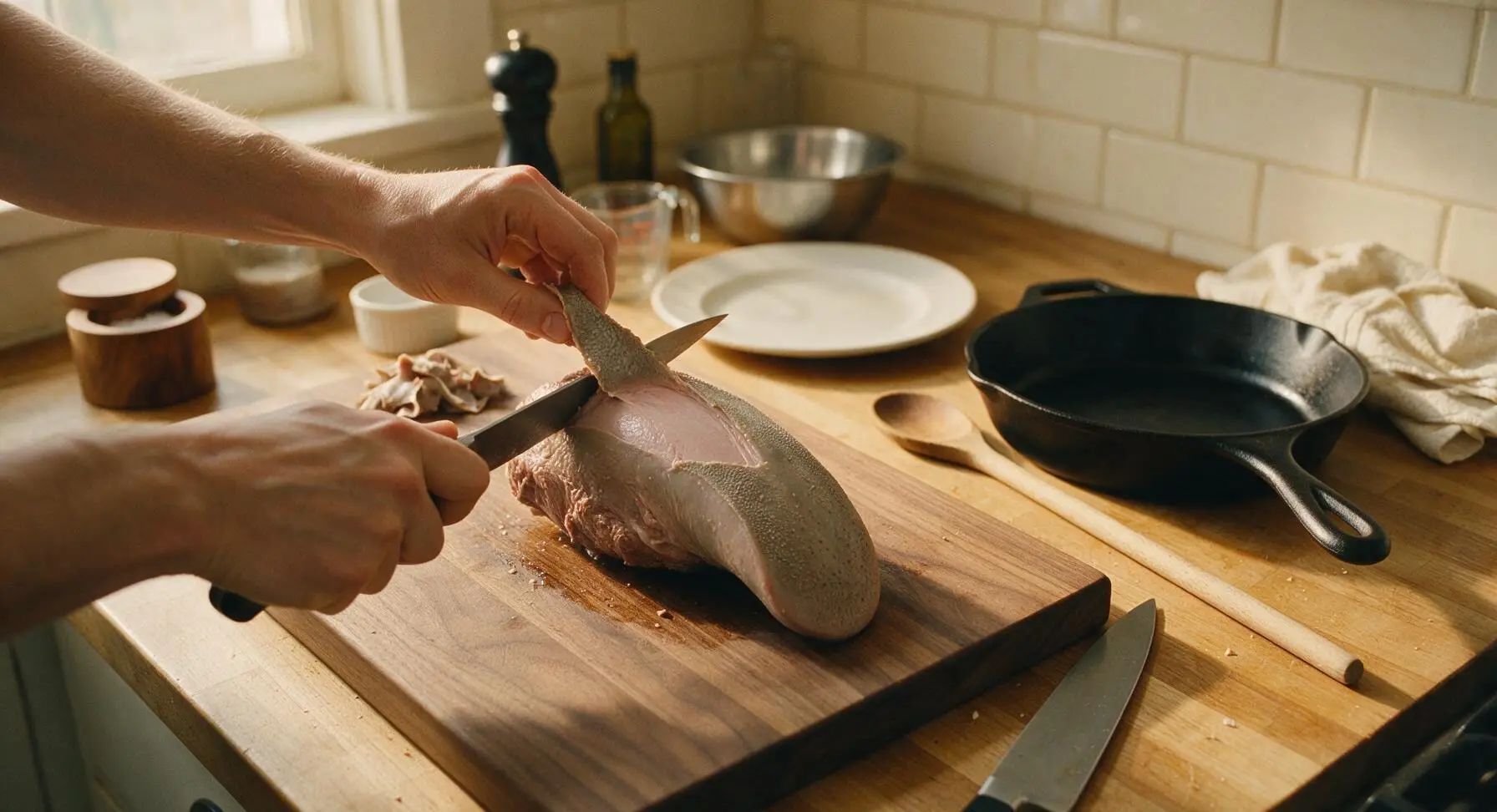
Use the stainless steel tongs to lift the fully cooked tongue from the hot broth and transfer it to the maple cutting board. Let it rest for 10 minutes until cool enough to handle (warm, not burning to touch), then use the paring knife to loosen the thick, rough greyish outer skin from the base of the tongue. Peel the skin away in large strips, discarding all tough outer membrane until only smooth, pale pink tender meat remains. Do not let the tongue cool fully, as the skin will stick tightly.
Step 4
step4:Peel Cooked Tongue
Step 4
step4:Peel Cooked Tongue
5

Slice Tongue Thinly

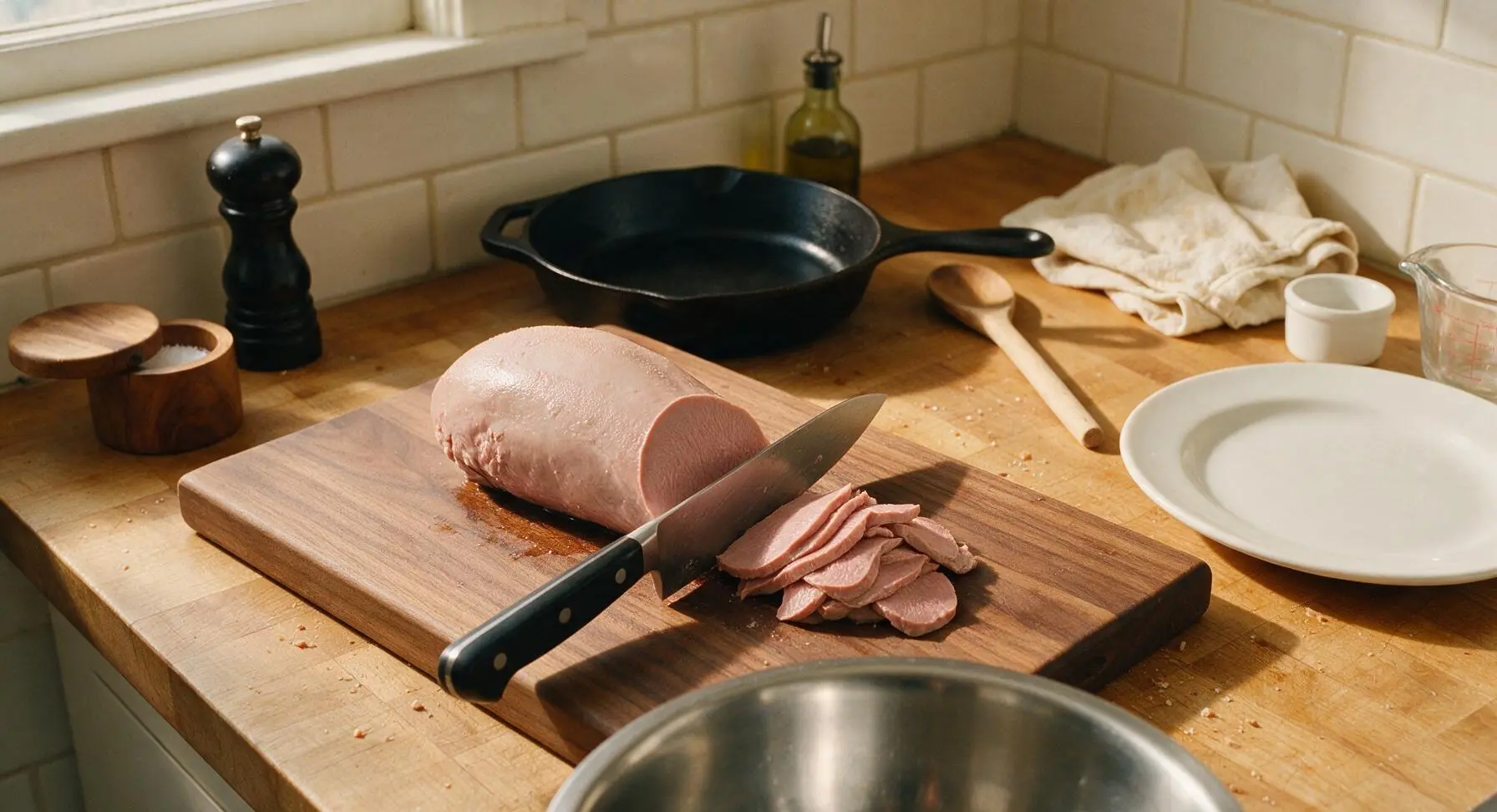
Once fully peeled, use the chef knife to slice the tongue against the grain into uniform 3mm thick slices. Discard any tough, fatty gristle from the root end of the tongue. Pile sliced meat loosely on the cutting board as you work; properly cooked slices will bend easily when lifted without breaking.
Step 5
step5:Slice Tongue Thinly
6

Prep Sandwich Toppings

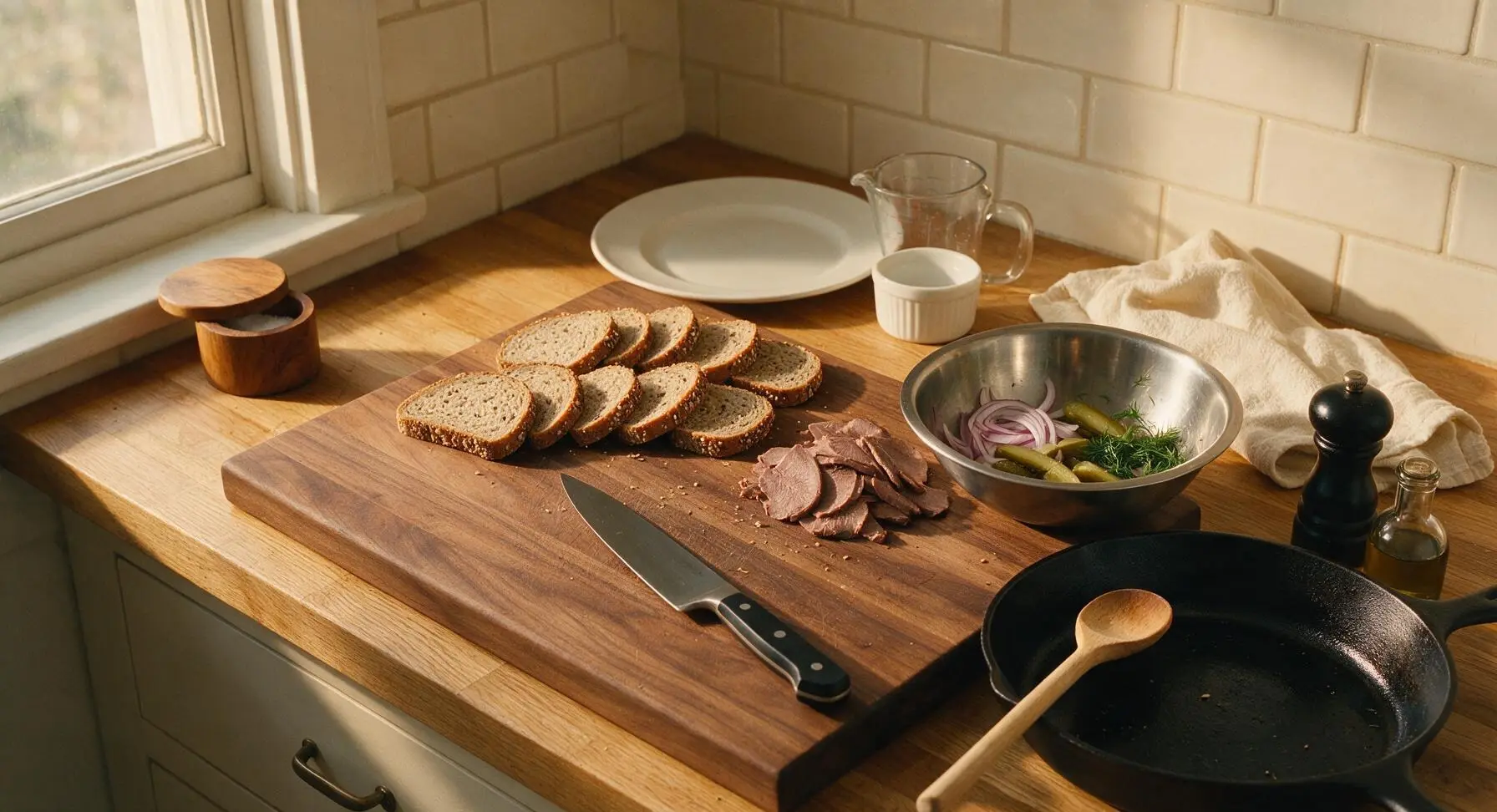
Thinly slice the small red onion into half-moons with the chef knife, and slice the whole dill pickles lengthwise into 5mm thick spears. Place sliced onion and pickles in the medium stainless steel mixing bowl, tossing lightly with a few torn sprigs of fresh dill. Lay all 8 slices of seeded rye bread in two neat rows on the clean section of the cutting board.
Step 6
step6:Prep Sandwich Toppings
7

Assemble the Sandwiches

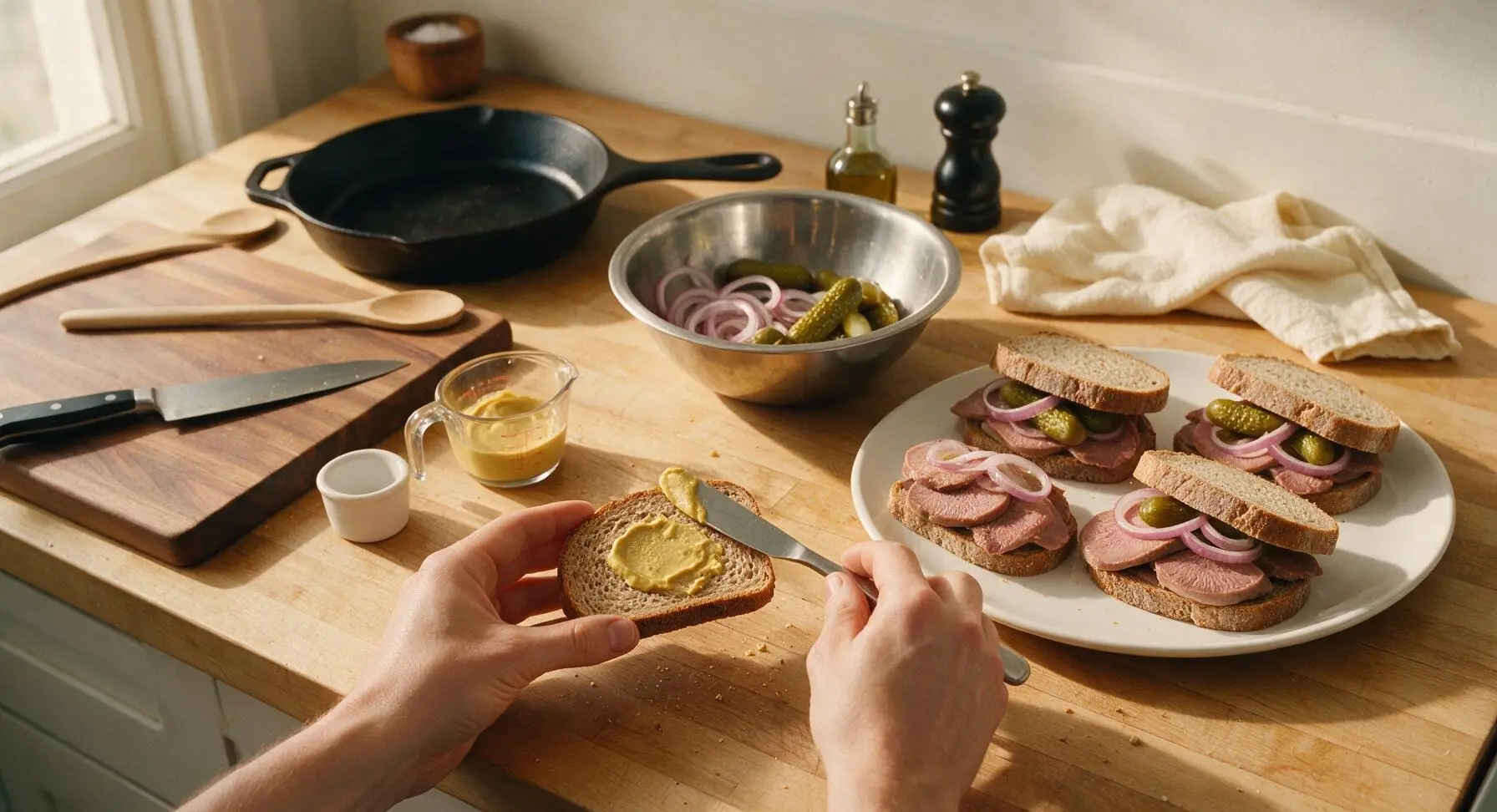
Use the butter knife to spread 1 tablespoon of spicy yellow mustard evenly across one side of every rye bread slice. Pile 120g (approximately 4-5 slices) of cooked tongue evenly across 4 of the bread slices, then top each with 3-4 thin red onion slices and 2 pickle spears. Place the remaining 4 bread slices mustard-side down on top of the fillings, pressing gently to adhere the layers.
Step 7
step7:Assemble the Sandwiches
8

Cut and Plate Sandwiches

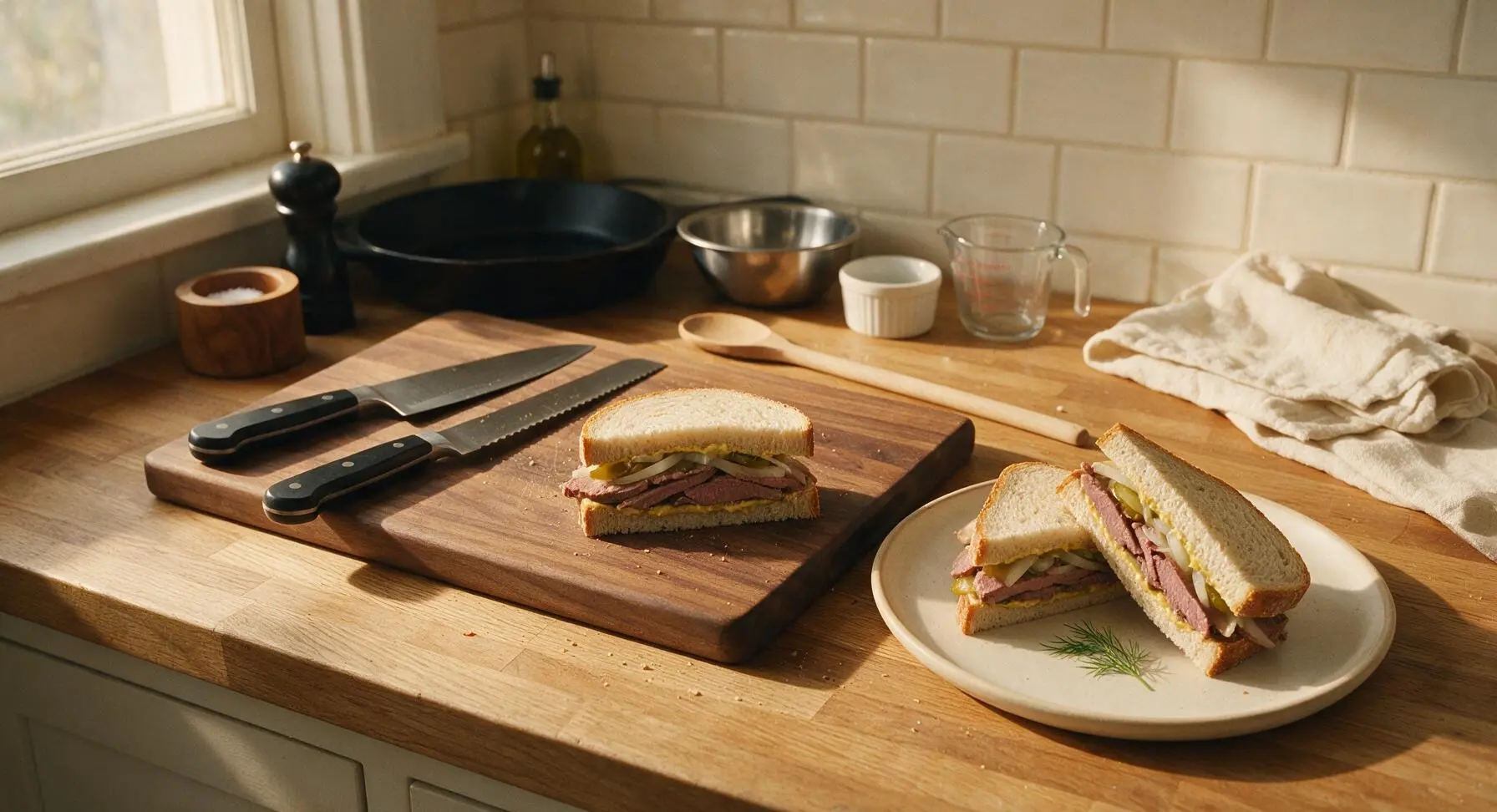
Use the serrated bread knife to cut each assembled sandwich diagonally into two equal triangular halves. Arrange two halves per serving on the matte cream ceramic dinner plates, leaning the halves slightly against each other to display the layered filling. Tuck a small sprig of fresh dill next to each sandwich for a bright garnish.
Step 8
step8:Cut and Plate Sandwiches

Tips

1.Maintain a low, gentle simmer rather than a rolling boil when cooking the tongue: Violent boiling causes muscle fibers to seize and tighten, resulting in tough, stringy meat instead of the melt-in-your-mouth texture that makes this sandwich iconic.
2.Peel the tongue while it is still warm (10 minutes out of the broth): The thick outer membrane pulls away in large, easy strips when the meat is warm; if allowed to cool completely, the membrane will adhere tightly to the meat and require tedious, time-consuming scraping to remove.
3.Strain and reserve the tongue cooking broth: The rich, deeply savory broth makes an excellent base for beef barley soup, onion gravy, or cooking rice and grains. Store strained broth in an airtight container in the fridge for up to 5 days, or freeze for up to 3 months to cut down on food waste.

✨ You May Also Like

Lunch
🍜 United States

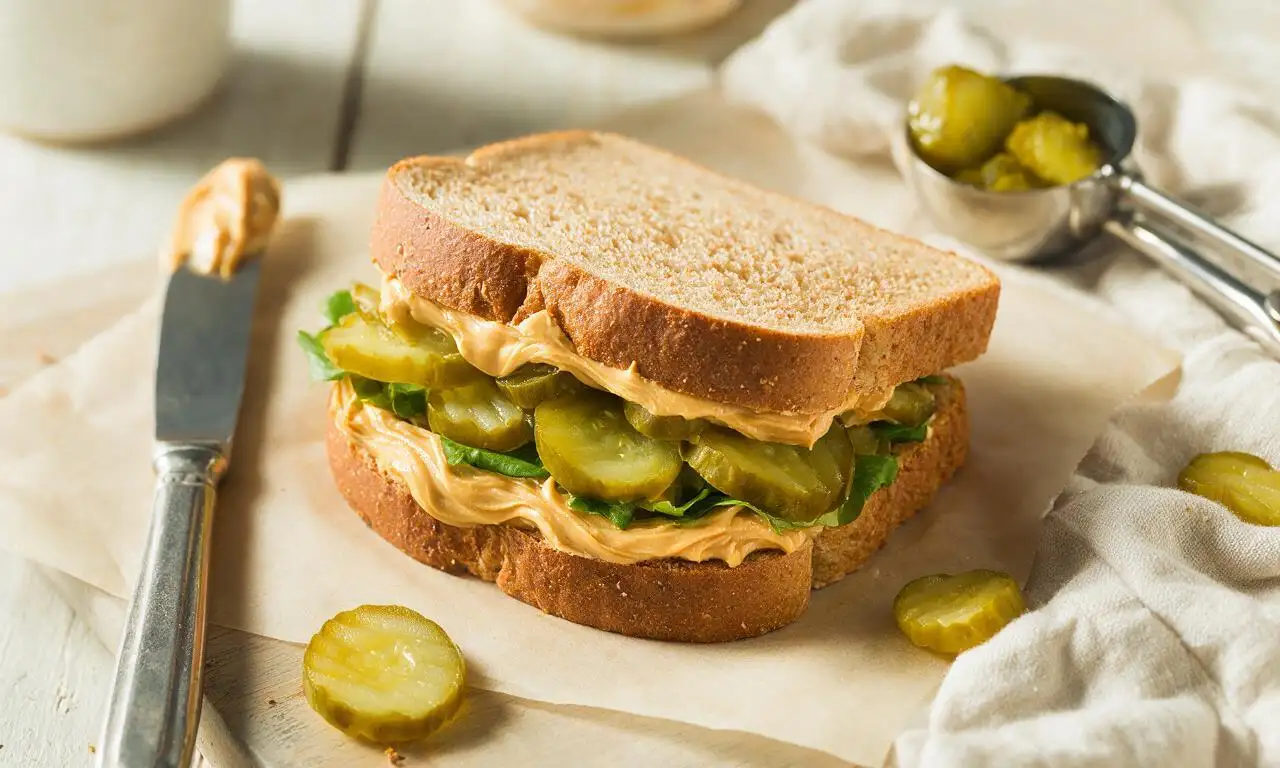
Creamy, salty, tangy nostalgic Midwestern sandwich pairing rich peanut butter with crisp briny dill pickles for a fast, satisfying no-cook meal.

⏱️ 5 minutesLunch ★ 4.6
Lunch
🍜 United States

Crispy, melty pressed sandwich layered with savory roast pork, ham, Swiss cheese, pickles, and tangy mustard: a beloved Cuban-American comfort classic.

⏱️ 25 minuteLunch ★ 4.9
Lunch
🍜 United States

Hearty, briny New Orleans pressed sandwich stacked with cured Italian meats, provolone, and zesty olive salad, served cold for bold, portable flavor.

⏱️ 1 hour 20Lunch ★ 4.7
Lunch
🍜 United States

A tangy, creamy Southern American staple, this no-cook cheesy sandwich is packed with sharp cheddar and sweet pimentos for a satisfying, portable bite.

⏱️ 1 hour 15Lunch ★ 4.8
Lunch
🍜 United States

Crispy Cajun-spiced fried shrimp piled on crusty French bread with tangy remoulade and fresh toppings, the iconic Louisiana street food sandwich.

⏱️ 35 minuteLunch ★ 4.4
Lunch
🍜 United States

Stacked, savory deli-style corned beef sandwich with melted Swiss, tangy mustard, and crisp griddled rye— a fast, hearty, satisfying classic.

⏱️ 15 minuteLunch ★ 4.9

Tongue Sandwich:Frequently Asked Questions

1.How do I tell when my slow-simmered beef tongue is perfectly tender for sandwiches? ▾
You’ll know it’s ready when you can pierce the thickest part of the tongue with a paring knife with zero resistance, usually after 2.5 to 3 hours of gentle, low simmering. The thin outer skin will also slip off easily with a light tug once it’s cool enough to handle; if it sticks, simmer 15 more minutes and retest.
2.Do I really need to peel the outer skin off the beef tongue before making sandwiches? ▾
Absolutely—that thin, rubbery outer membrane has an unpleasant chewy texture that will ruin the soft, melt-in-your-mouth feel of the finished sandwich. Peel it as soon as the tongue is cool enough to touch, right after simmering, when the skin lifts away most easily without tearing the tender meat underneath.
3.Can I use a different type of bread if I don’t have seeded rye on hand? ▾
Seeded rye is classic for a reason—its earthy, slightly sour flavor and sturdy crumb hold up to the rich, tender tongue and toppings without getting soggy. If you need a swap, go for plain rye, pumpernickel, or crusty sourdough; avoid soft white sandwich bread, which will fall apart under the weight of the fillings.
4.What kind of mustard works best for this deli-style sandwich? ▾
Stick to sharp, tangy yellow deli mustard or spicy brown mustard for the most authentic flavor. Sweet honey mustard or mild creamy dijon will clash with the delicate richness of the beef tongue instead of cutting through it. Spread it evenly on both slices of bread for consistent flavor in every bite.
5.How thick should I slice the cooked beef tongue for the sandwich? ▾
Slice the cooled, peeled tongue against the grain into 1/8 to 1/4-inch thick slices for the perfect texture. Thicker slices will feel overly heavy and chewy, while paper-thin slices won’t give you that satisfying, hearty pile of meat that makes a deli sandwich feel special. Aim for uniform slices for consistent bites.
6.Can I simmer the beef tongue ahead of time to make sandwich assembly faster? ▾
Definitely! Cooked, peeled beef tongue stores beautifully in an airtight container in the fridge for up to 4 days, which makes this a great meal prep option. Let the meat cool completely before sealing it up, and slice it cold right before building your sandwiches for the cleanest, most even cuts.
7.Why do you add onion, garlic, bay leaves, and peppercorns to the simmering water? ▾
Those aromatics infuse the mild, rich beef tongue with deep, savory flavor as it slow cooks, so you don’t end up with bland, plain meat. You don’t need a fancy stock—those four simple ingredients add enough warm, aromatic depth to make the tongue taste like it came straight from a corner deli.
8.What’s the best type of dill pickle to use for this sandwich? ▾
Reach for crisp, fermented full-sour dill pickles, not sweet bread-and-butter varieties, for the most authentic bite. Slice them into thin lengthwise planks instead of round chips so they lie flat across the meat, and pat them lightly with a paper towel before adding them to prevent excess brine from making the rye soggy.
9.My beef tongue came out tough after simmering—what went wrong? ▾
Most of the time, tough tongue happens because you simmered it at too high a rolling boil, or didn’t cook it long enough. Beef tongue needs low, gentle, constant simmering to break down its tough connective tissue into that silky, melt-in-your-mouth texture. Turn the heat down and give it extra time if it’s still chewy.
10.Should I salt the simmering water when cooking the beef tongue? ▾
Yes, add a generous handful of kosher salt to the simmering water, just like you would for pasta or boiled potatoes. The salt seasons the meat all the way through as it cooks, instead of only flavoring the surface. Taste the water first—it should be as salty as a light broth to properly season the dense meat.
11.Can I freeze leftover cooked beef tongue for later sandwiches? ▾
Absolutely! Wrap the cooled, peeled whole tongue tightly in plastic wrap and then a layer of aluminum foil, and it will keep in the freezer for up to 3 months. Thaw it in the fridge overnight before slicing, and it will have the same tender texture and rich flavor as freshly cooked for quick meals.
12.How do I prevent my sandwich from getting soggy after adding mustard and pickles? ▾
Spread a thin, even layer of mustard on both inner sides of the rye bread to create a moisture barrier between the bread and wet toppings. Pat your pickle slices dry with a paper towel to remove excess brine, and add thin sweet onion slices right before eating instead of assembling sandwiches hours ahead.
13.What’s the point of adding sweet onion to this savory sandwich? ▾
Thinly sliced sweet onion adds a bright, crisp, slightly sharp contrast that cuts through the rich, fatty tenderness of the beef tongue, balancing every bite. Use sweet yellow or Vidalia onion instead of pungent red or white onion, and slice it paper-thin so it doesn’t overpower the other flavors.
14.Do I need to brine the beef tongue before simmering it for this recipe? ▾
You don’t need a long pre-brine for this classic deli preparation! The slow simmer with aromatic onion, garlic, bay, and peppercorns, plus properly salted water, gives the meat plenty of deep, savory flavor. Pre-brining is only for cured, pickled tongue recipes, which have a tangier, totally different profile.
15.How much beef tongue do I need per sandwich? ▾
Plan for 4 to 6 ounces of cooked, peeled beef tongue per sandwich, which gives you that iconic tall, piled-high deli portion without feeling overly heavy or greasy. Remember that raw beef tongue loses about 30% of its weight during cooking and peeling, so a 3-pound raw tongue makes roughly 6 to 7 generously sized sandwiches.
16.Can I cook the beef tongue in a slow cooker instead of simmering it on the stovetop? ▾
Absolutely! Place the tongue, aromatics, salt, and enough water to cover in a slow cooker, and cook on LOW for 6 to 7 hours until it’s pierce-tender and the skin slips off easily. This totally hands-off method yields the same silky, melt-in-your-mouth texture as stovetop simmering without monitoring the pot.
17.Is it normal for beef tongue to have a slightly grayish color after cooking? ▾
That’s totally normal and nothing to worry about! Cooked beef tongue will have a pale, muted grayish-brown exterior once you peel off the outer skin, with a slightly pinker, tender interior. As long as you cooked it to the proper tender texture and stored it correctly, the color is not a sign of spoilage.
18.Are there any classic add-ons I can include without straying from the traditional recipe? ▾
A light spread of creamy horseradish mixed with a little sour cream is a beloved deli add-on that pairs beautifully with the rich tongue, as long as you don’t overdo it. You can add a few slices of ripe in-season tomato, but skip heavy add-ons like cheese or mayo that cover up the meat’s delicate flavor.
19.Should I serve this classic deli beef tongue sandwich hot or cold? ▾
Both preparations are totally classic, so it comes down to personal preference! Many delis serve it cold, with thinly sliced chilled tongue piled high on rye, but you can also warm sliced tongue briefly in a skillet with a little of its cooking liquid for a cozier bite that highlights the meat’s silky texture.

Comments (10)

2 weeks ago

OMG, I’ve been chasing that perfect old-school deli tongue sandwich since my favorite spot in Brooklyn closed last year, and this recipe is IT. The slow simmer makes the tongue so tender it practically melts, and the tip about slicing it paper-thin against the grain? Game changer. Piled it high on rye with spicy brown mustard and a dill pickle, just like they used to make it. My roommate thought I was nuts for cooking tongue at first, then he stole half the sandwich. 10/10

1 week ago

Wait how long did you simmer it for? I tried making tongue once years ago and it was so chewy I couldn’t eat it, been scared to try again!

5 days ago

So glad you loved it! The 2.5 hour simmer at a low, gentle bubble is key for that fall-apart tender texture — just make sure you don’t boil it too hard, that’s what makes it tough! Peel it while it’s still warm too, that saves so much hassle.

5 days ago

Was skeptical about making deli meat at home but this turned out way better than I expected! I added a couple bay leaves and a splash of apple cider vinegar to the simmer liquid like my grandpa used to, and it gave the meat such a nice depth. Only knock is it took a little longer than 2.5 hours for mine to get fork-tender, probably because my tongue was a little on the larger side. Served it on sourdough with coleslaw for Sunday dinner and the whole family cleaned their plates.

3 days ago

Love the apple cider vinegar addition! That’s such a great trick for cutting through the richness. And totally right — larger cuts can need an extra 20-30 minutes, just test it by sticking a fork in the thickest part, if it slides in easy it’s good to go!

3 days ago

SO good, perfect for meal prep! I made a big batch Sunday night, sliced it all up, and have been eating sandwiches all week for work lunches. Way cheaper than buying sliced tongue from the deli counter, and it tastes way fresher too. Threw a little horseradish sauce on mine today and *chef’s kiss*. Will absolutely be making this on repeat.

1 week ago

I’ve been making tongue sandwiches for over 50 years, and this recipe is spot-on. I brought a platter of these to our church potluck last Sunday and even the kids who turned their noses up at the idea came back for seconds. The tip to let it chill in the fridge for an hour before slicing? Genius, makes getting those thin, even slices so much easier. My husband said it’s better than the deli we used to go to when we were first married!

5 days ago

Did you serve them with any special spreads? I’m making these for my husband’s birthday lunch and want to make sure they’re perfect!

3 days ago

Just good old spicy brown mustard and a side of half-sour pickles, honey! Don’t overcomplicate it — the tongue has so much flavor on its own, you don’t need much else.

2 days ago

Flavor was great, but peeling the tongue was way more of a hassle than I expected lol. I think I waited too long to take the skin off after simmering, so it kept sticking and took forever. Still tasty once I got it all prepped, but next time I’m going to set a timer to peel it right after it cools down enough to handle. Also, I used white bread instead of rye because that’s what I had in the house, it worked fine!

yesterday

Ah, that peeling step is tricky for sure! It’s so much easier when the tongue is still warm — if it cools down too much, you can pop it back in the hot water for a minute to loosen the skin up again. So glad you liked the flavor even with the prep hassle!

yesterday

Made this after a long backpacking trip as a little treat for myself, and wow. Worth every minute of cook time. I picked up a fresh tongue from the local rancher out here, simmered it with onion, garlic, and peppercorns like the recipe said, and piled it high on toasted rye with Swiss, sauerkraut, and Russian dressing for a little Reuben twist. Absolute perfection. Even my dog was begging for bites while I was slicing it.

2 hours ago

Wait the Reuben twist sounds insane, did you grill the sandwich after? I’ve got a tongue simmering on the stove right now and that sounds way better than a plain cold sandwich.

30 minutes ago

That Reuben twist is brilliant! We might have to steal that idea for a future recipe variation. So stoked this hit the spot after your trip — nothing beats a hearty, satisfying sandwich after time outside!

30 minutes ago

First time ever cooking beef tongue, and I was so nervous I’d mess it up! The recipe instructions were super clear, though, and it turned out really well. My kids loved it — they kept calling it ‘mystery fancy deli meat’ and asked for seconds. The only reason I’m not giving 5 stars is I wish there was a note about what size tongue to buy, because I grabbed a huge one and had to adjust the cook time a bunch. Will definitely make again!

5 minutes ago

That’s such a great note! We’ll update the recipe card to specify a 3-3.5 lb beef tongue as the ideal size, so folks know what to look for at the grocery store. So happy your kids enjoyed it — that’s the best win we could ask for!

2 hours ago

Hosted a little deli-themed game night last weekend and made these sandwiches as the main event. Everyone was blown away! I set out a little spread with mustards, pickles, sliced onion, and Swiss cheese so people could build their own, and not a single slice of tongue was left. Multiple people asked for the recipe, which I obviously sent over. 10/10, will be my go-to for casual get-togethers from now on.

5 minutes ago

Saw this recipe on TikTok and decided to try it even though I’m a super broke college student with basically no cooking skills. Spotted the Reuben twist in the comments while I was waiting for the tongue to simmer, so I toasted mine up with Swiss and sauerkraut — so worth it! Got a tongue for super cheap at the international market near campus, simmered it in a big pot with whatever veggies I had lying around, and made sandwiches for me and my roommates. We all agreed it’s better than the sandwich shop down the street. Game changer for cheap, tasty meals.

just now

Love this! There’s no better feeling than nailing a new recipe on a college budget, right? So stoked you and your roommates enjoyed it — that makes our day!

just now

Grew up eating tongue sandwiches at my grandpa’s deli in LA, so I’m super picky about how they’re made. This recipe is exactly how he used to make it — slow simmered with simple aromatics, sliced thin, piled high on seeded rye with yellow mustard and a pickle. Took my first bite and immediately teared up a little, it tasted just like childhood. Can’t thank you enough for posting this.