1.What are the brown crusty bits in the bottom of my roasting pan, and do I really need them for gravy?
▾
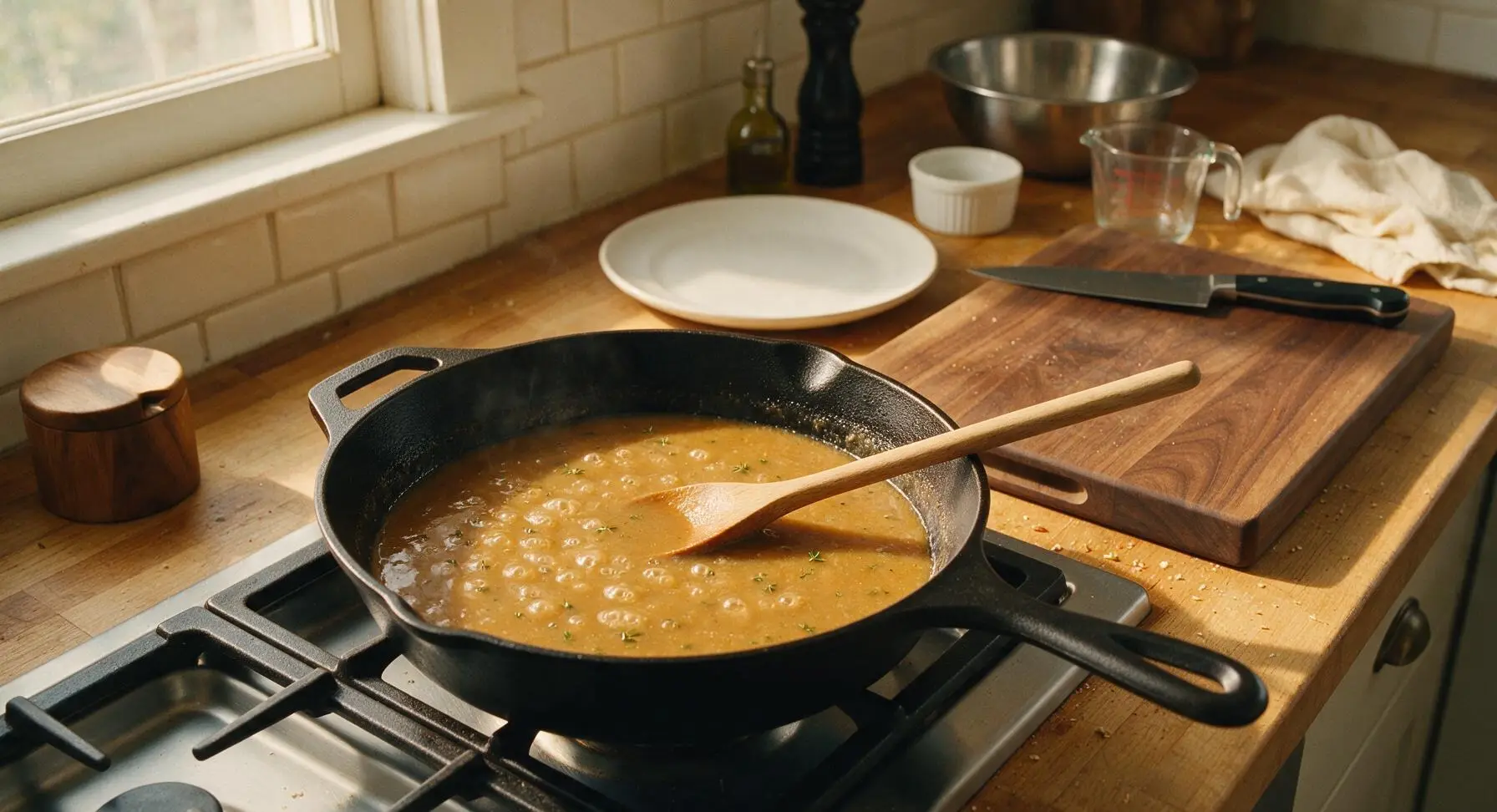
Those are called fond, and they’re non-negotiable for deep, roasty turkey flavor! They’re made of caramelized turkey juices, rendered fat, and browned meat bits that stick to the pan as the bird roasts. Deglaze the pan with a splash of white wine to lift every last bit instead of scrubbing them away—they make your gravy taste rich, not flat and one-note.
2.Can I make this gravy ahead of Thanksgiving instead of scrambling to make it last minute?
▾
Absolutely! Make the full recipe up to 3 days before your meal, hold off on adding fresh pan drippings until serving day if you prefer, and store it in an airtight container in the fridge. When you’re ready to serve, reheat gently over low stovetop heat, stir in drippings from your resting turkey, and thin with a splash of broth if needed.
3.Why does my gravy turn out lumpy every time, and how do I fix that?
▾
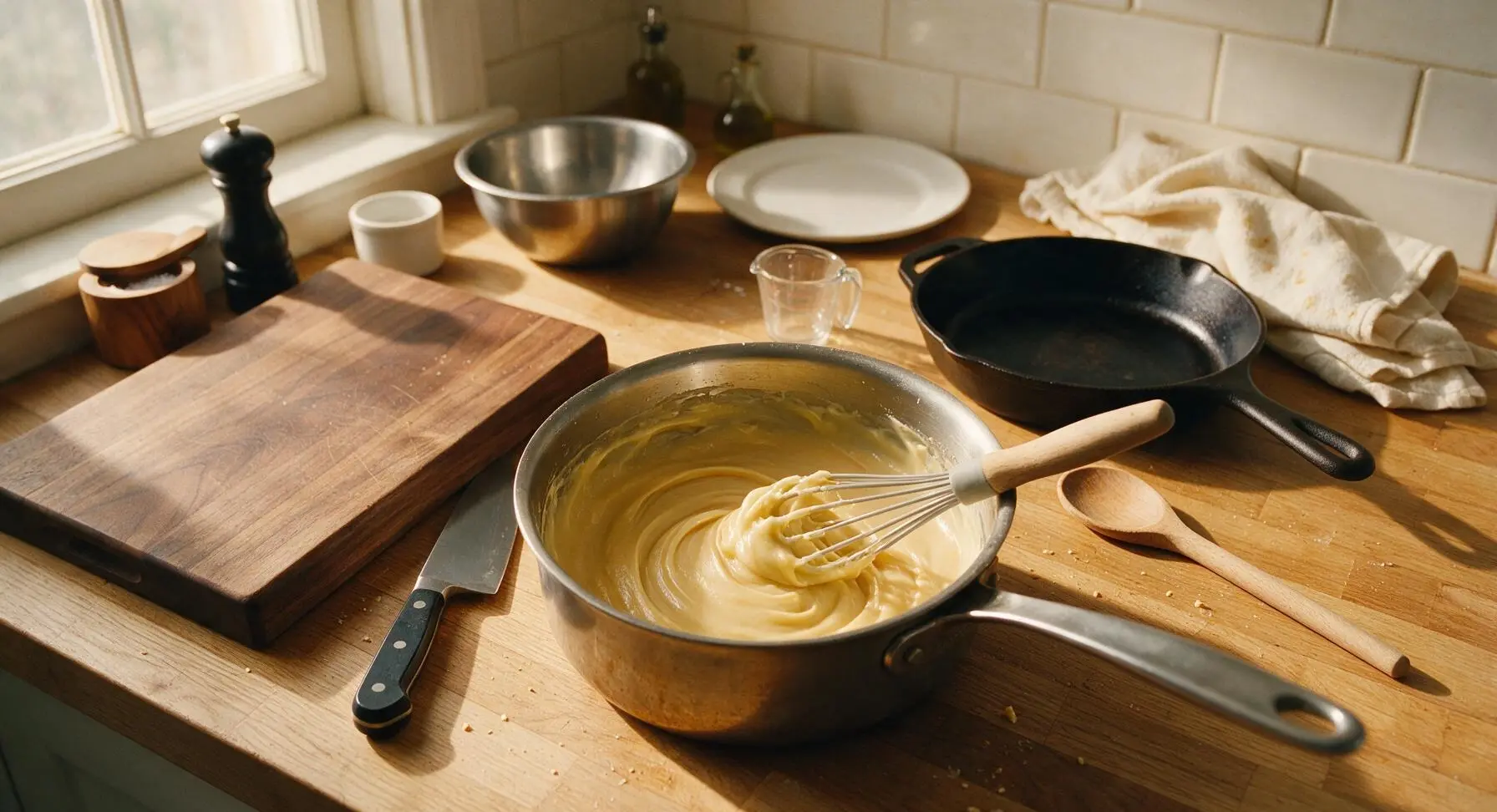
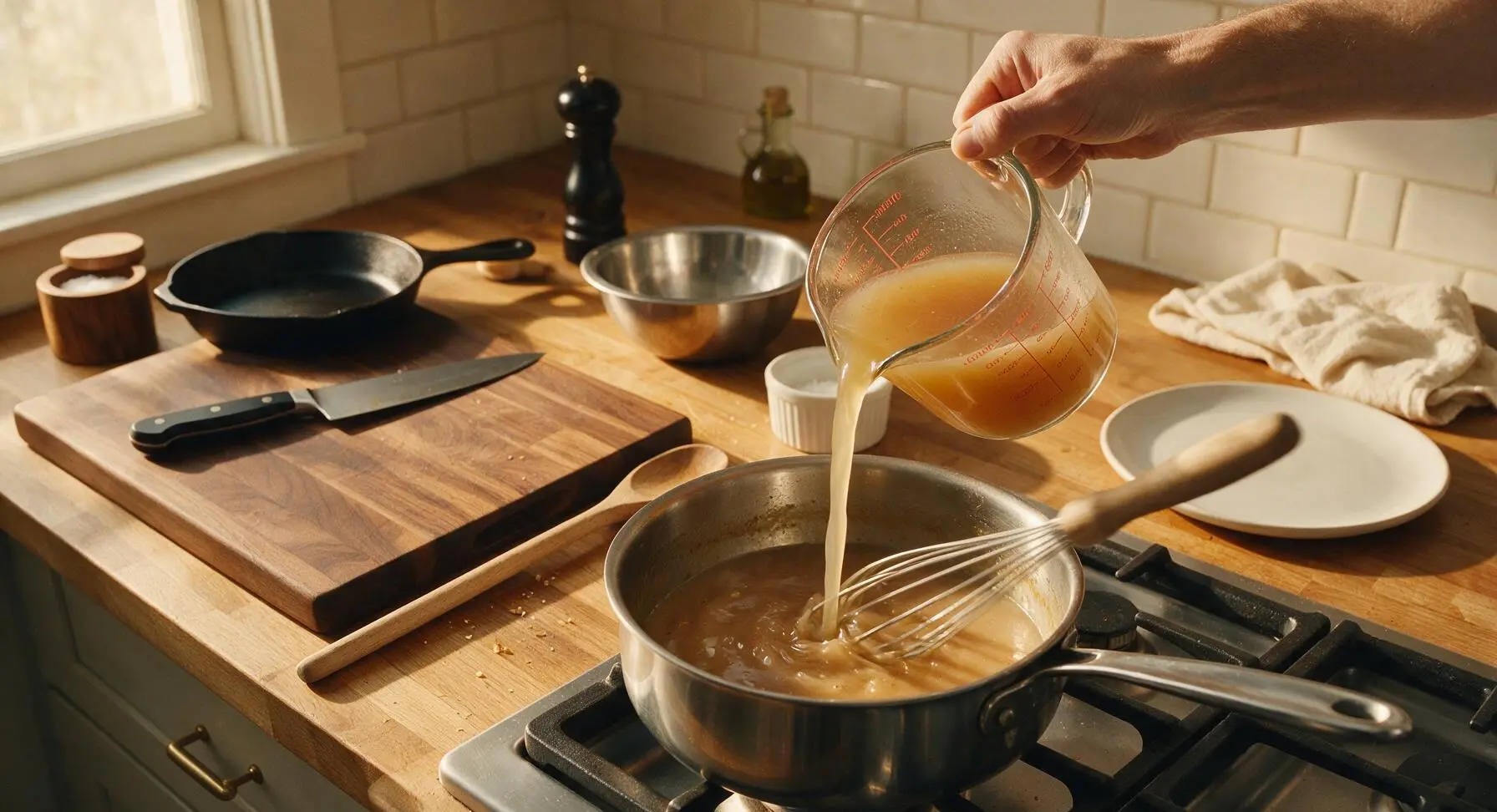
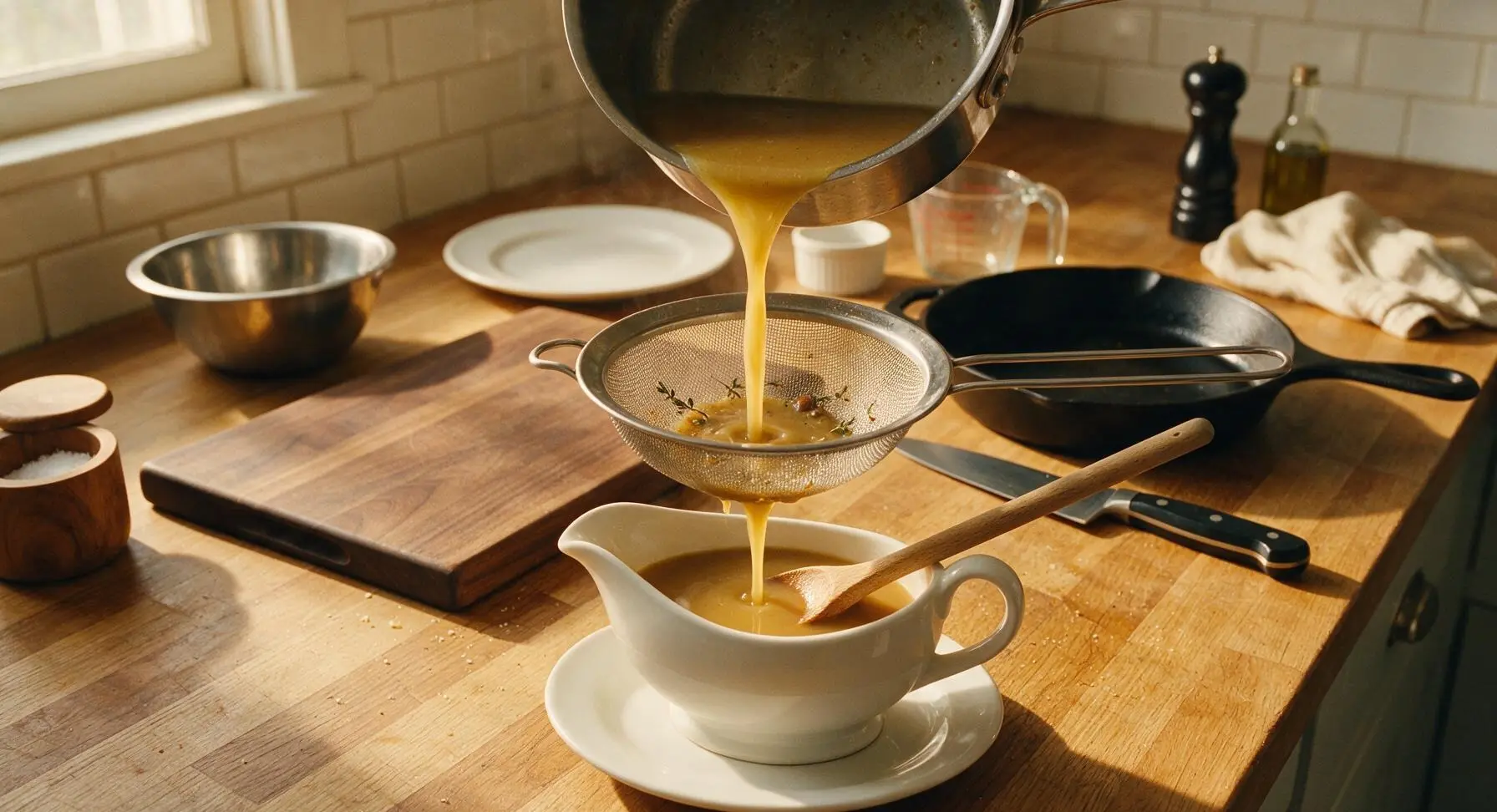
Lumps almost always come from adding cold liquid to a hot roux too quickly, or skipping consistent whisking as you pour. To avoid them, warm your turkey broth before adding it to the flour-butter roux, and stream it in slowly while whisking nonstop. If lumps still pop up, pour the gravy through a fine-mesh sieve before serving for a perfectly silky finish.
4.Is it okay to skip the dry white wine, or do I have to use it for this recipe?
▾
You can absolutely skip it with zero guilt! Dry white wine cuts through richness and adds a subtle bright, acidic note, but it’s not required. Just swap it for an equal amount of extra low-sodium turkey broth when you deglaze the pan. If you want that same bright edge without wine, add a tiny squeeze of fresh lemon juice right at the end.
5.How much fat do I need to keep from the pan drippings to make a proper roux?
▾
Aim for ¼ cup of total fat to make a stable, thick roux for roughly 4 cups of finished gravy. After pouring drippings into a fat separator, pour off the clear, golden fat from the top to measure. If you’re short, top it up with melted unsalted butter to hit that ¼ cup mark so your roux cooks evenly and thickens properly.
6.How long do I need to cook the flour and butter roux so it doesn’t taste like raw flour?
▾
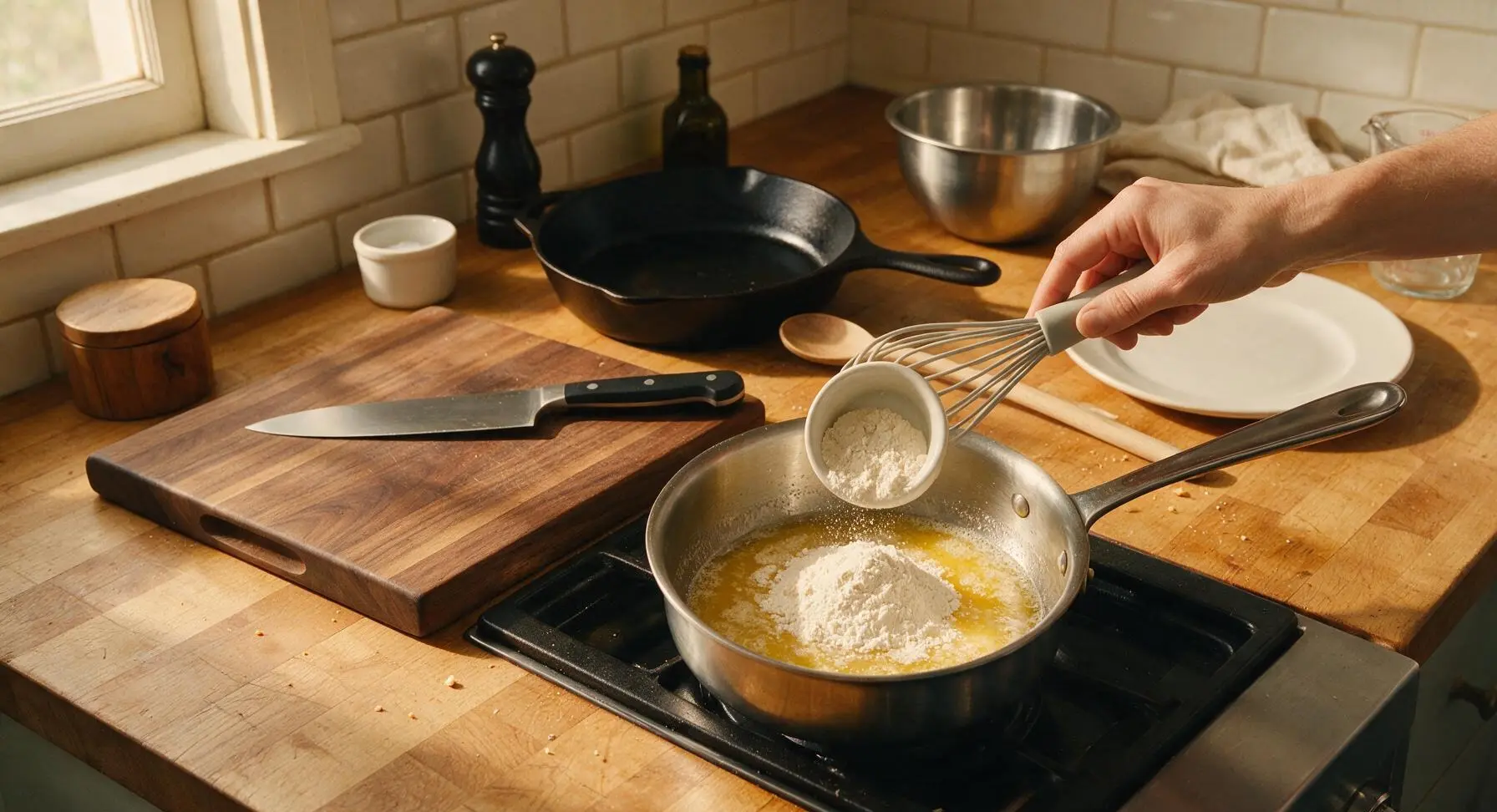
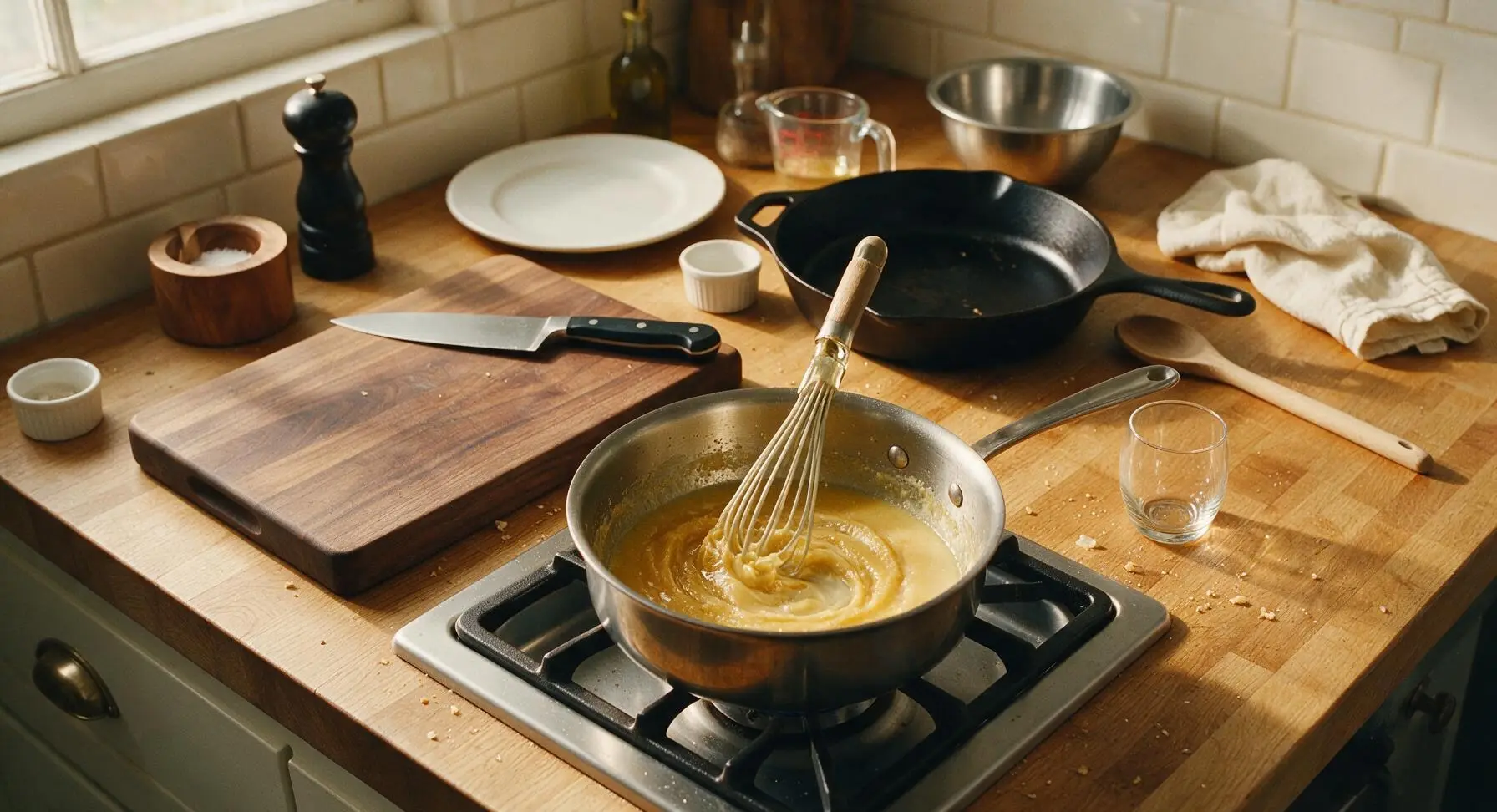
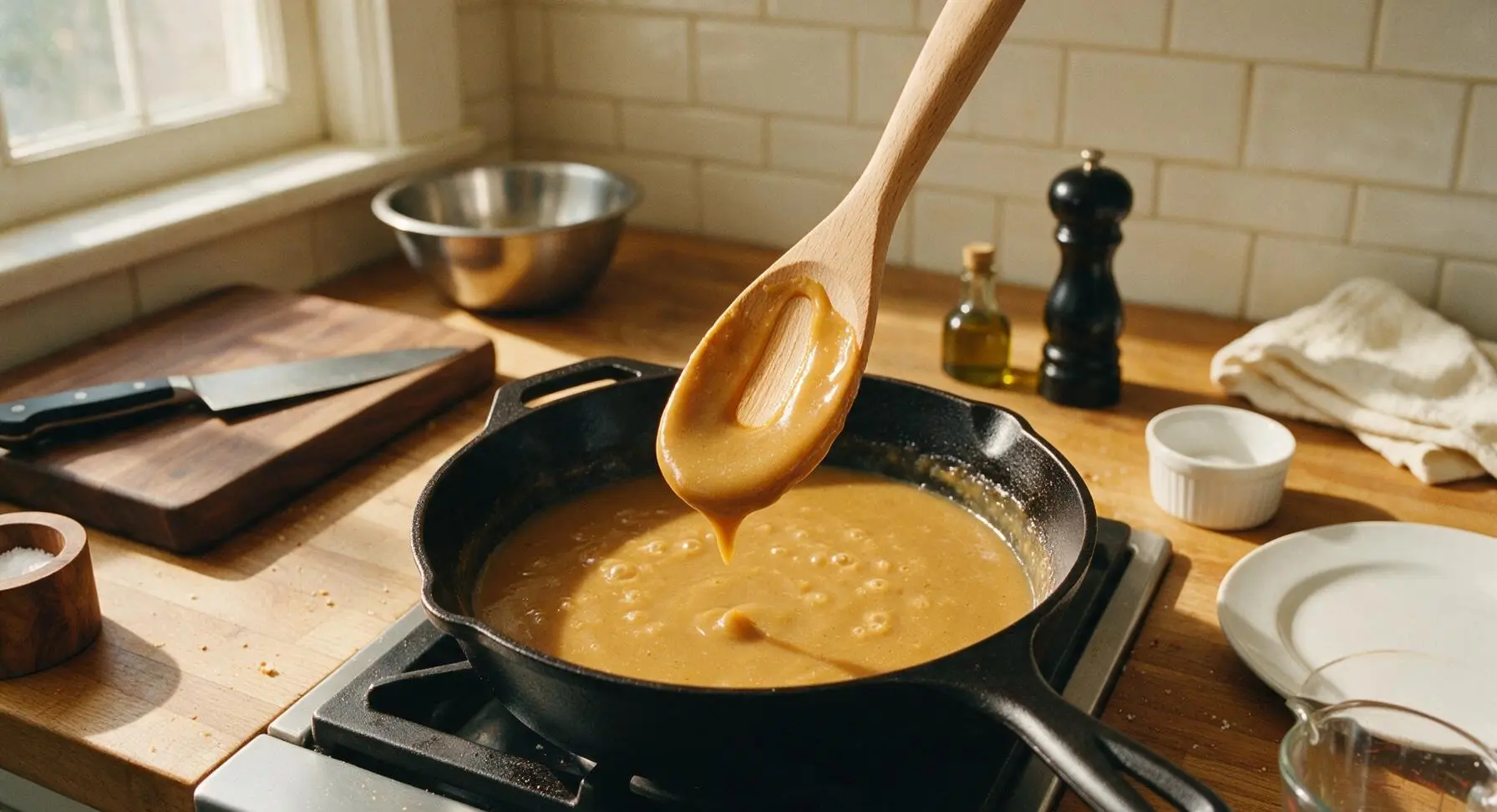
Cook your roux over medium-low heat for 3 to 4 minutes, stirring constantly, until it turns a pale golden color and smells nutty, like toasted pastry. Don’t rush this step! Undercooked roux leaves gravy with a chalky, raw flour taste, while cooking it too dark will mute that classic mild, savory turkey gravy flavor everyone expects.
7.My gravy came out way too thin—what’s the quickest way to thicken it up?
▾
First, let it simmer for 2 to 3 extra minutes, since sometimes it just needs a little more time to reduce and for the flour to fully activate. If it’s still too thin, make a quick slurry by mixing 1 tablespoon of all-purpose flour with 2 tablespoons of cold broth, whisk it into the simmering gravy, and cook 1 minute more until it hits your desired consistency.
8.What if my gravy is too thick and pasty after it cools a little?
▾
That’s totally normal, since flour-thickened sauces firm up as they cool. Fix it by whisking in small splashes of warm low-sodium turkey broth (or even reserved juices from your resting turkey) a tablespoon at a time, until it thins to that perfect silky, pourable consistency that coats the back of a spoon without clumping.
9.Do I need to use low-sodium turkey broth, or can I use regular broth?
▾
I strongly recommend low-sodium broth because pan drippings and fond are naturally pretty salty, especially if you brined or heavily seasoned your turkey before roasting. If you only have regular broth on hand, hold off on adding any extra salt until the very end, when you can taste and adjust gradually to avoid over-salting.
10.Can I use cornstarch instead of all-purpose flour to thicken this gravy?
▾
You can, but it will give you a slightly glossier, clearer gravy instead of the classic opaque, silky texture flour provides. If you go that route, skip the roux step, make a slurry of 2 tablespoons cornstarch mixed with 2 tablespoons cold water, and stir it into simmering drippings and broth until it thickens, about 1 minute. Note cornstarch-thickened gravy doesn’t reheat quite as well as flour-based versions.
11.How do I keep my gravy from forming a weird skin on top while I wait to serve dinner?
▾
That skin forms when the top layer of gravy is exposed to air and evaporates as it cools. The easiest fix is to press a piece of plastic wrap directly against the surface of the gravy (not just over the pot top) until you’re ready to serve. If holding warm for more than 20 minutes, keep it on lowest heat and give it a quick whisk every few minutes.
12.Can I freeze leftover turkey gravy for later use?
▾
Absolutely! Let the gravy cool completely, then pour it into airtight freezer-safe containers or zip-top bags, leaving ½ inch of headspace to account for expansion, and freeze for up to 3 months. Thaw it in the fridge overnight, then reheat gently over low heat, whisking often, and add a splash of broth if it separates or thickens too much.
13.What’s the best way to get all the fond off my roasting pan without hard scrubbing?
▾
Set your roasting pan directly across two stovetop burners on medium-low heat once you take the turkey out to rest. Pour in your white wine (or extra broth) and use a wooden spoon or stiff silicone spatula to scrape every browned bit off the pan bottom as the liquid simmers. The heat and liquid will lift the fond effortlessly in 1 to 2 minutes.
14.Should I season my gravy with anything other than salt and pepper?
▾
Start with a small pinch of freshly ground black pepper and taste first, since drippings and broth already carry lots of savoriness. If you want extra depth, add a tiny pinch of dried thyme or sage, a splash of Worcestershire sauce, or a quarter teaspoon of soy sauce for umami—just go light, so you don’t overpower the classic turkey flavor.
15.My gravy tastes really greasy—how do I fix that quickly?
▾
Greasiness happens when you don’t skim enough excess fat from the pan drippings before building your roux. The quick fix is to whisk in a few ice cubes: fat will solidify around the cold ice, which you can scoop right out with a spoon. For a more thorough fix, pour gravy through a fat separator, or let it sit 5 minutes so fat rises to the top to skim off before serving.
16.Do I have to use unsalted butter, or can I use salted butter for the roux?
▾
You can use salted butter if that’s all you have, but unsalted butter gives you full control over the final salt level of your gravy. Remember that pan drippings, especially from a seasoned or brined turkey, already contribute a lot of salt, so using salted butter can easily push sodium too high before you even taste it. If you use it, skip added salt until the end.
17.How much gravy should I make per person for a Thanksgiving meal?
▾
Plan for ⅓ to ½ cup of gravy per guest, which accounts for pouring over turkey, mashed potatoes, and stuffing, plus a little extra for people who go back for seconds. For a standard 8 to 10 person Thanksgiving dinner, this recipe (which makes roughly 4 cups) is perfect, but you can easily double the broth, roux, and seasonings for larger crowds.
18.Can I make this gravy if I roasted my turkey on a bed of vegetables instead of a bare pan?
▾
Definitely! The roasted veggies (like onion, carrot, and celery) will actually add extra savory depth to your gravy. Just be sure to strain out any mushy veg bits along with any stray lumps when you pour the finished gravy through a fine-mesh sieve, so you end up with a smooth, silky texture without random floating veg bits.
19.What do I do if my gravy tastes kind of flat or bland, even after I add salt?
▾
Bland gravy usually means you didn’t scrape up enough fond, or you skipped the deglazing step. First, add a tiny splash of dry white wine (or a squeeze of lemon juice) to brighten the flavor, then a tiny pinch of umami booster like Worcestershire or a light sprinkle of poultry seasoning. Taste as you go, adding small salt pinches only after adjusting those other flavors to avoid over-salting.




OMG this gravy is a total game changer! I’ve messed up turkey gravy so many Thanksgivings in a row (lumpy, bland, you name it) but this came out perfectly smooth in 15 minutes flat. My kids loved it so much they poured it over their mashed potatoes AND their rolls. 10/10 will make every year from now on!
Super easy recipe, but has anyone tried making this without pan drippings? I’m prepping turkey for a potluck next week and won’t have access to the drippings until right before serving, so I was curious if store bought turkey broth works as a stand-in.
SO good. I was stressing because my turkey finished cooking way earlier than the sides, and this gravy came together so fast I didn’t have to keep everyone waiting. Will be bookmarking this for all future holiday meals.
Does this work with a 1:1 gluten free flour blend instead of all purpose? My whole household eats gluten free and I don’t want to risk a weird texture for our Sunday family dinner.
First time ever making gravy from scratch and I was terrified it would be a disaster. Turns out it’s literally impossible to mess this up? I even forgot to add the black pepper at first and stirred it in at the end, still slapped. Put it on my frozen turkey TV dinner and it elevated the whole meal lmao
Brought this gravy to my office Friendsgiving potluck last week and people were literally asking for the recipe before they finished their first plate. I added a tiny splash of white wine while making the roux and it added such a nice bright note, highly recommend that little hack.
I’ve struggled with lumpy gravy my whole adult life, no matter how hard I whisk. This method of straining at the end if you have a few lumps? Game. Changer. I didn’t even need to strain mine, but knowing I had that safety net made the whole process so much less stressful.
Can I make this a day ahead and reheat it for Thanksgiving? I’m trying to get as much prep done the day before as possible so I don’t spend the whole holiday in the kitchen.
I added a little crumbled bacon to mine after it finished cooking and my husband said it’s the best gravy I’ve ever made. The base recipe is so solid, it’s easy to tweak with little add-ins to match your family’s taste.
I was in charge of making the turkey for my family’s dinner for the first time this year and was so worried the gravy would let the whole meal down. This recipe was so straightforward, it turned out rich and perfectly seasoned, zero lumps. My grandma even asked for the recipe, which is the highest possible compliment if you know how picky she is about her gravy.
Wondering if anyone has adjusted this for a low sodium diet? My dad has high blood pressure so we have to cut salt wherever we can, and I don’t want the gravy to turn out bland.
15 minute cook time is NOT a lie! I was running behind for our weeknight roast chicken dinner and threw this together while the potatoes were mashing, it was done before everything else was ready. Perfect for when you don’t have a ton of time to spend on sauces.
Put this on turkey, mashed potatoes, stuffing, even my morning biscuits the day after Thanksgiving. It’s so rich and flavorful, I could drink it straight from the pan tbh. No more store bought gravy packets for this household, this is the new staple.
I usually use cornstarch to thicken my gravy, so I was skeptical about the roux method here. Gave it a shot anyway and wow, the depth of flavor from cooking the flour in the butter is so much better than that flat cornstarch taste. I’m never going back!
Wait, is it normal for the roux to bubble a lot when you first add the broth? I panicked for a second that I burned it, but I kept whisking and it turned out fine. Just wanted to check that I didn’t do something wrong!
Used this gravy to make my leftover turkey pot pies after Thanksgiving and it was the perfect base. Added some mixed veggies and leftover turkey, poured it into a pie crust, baked it, and my whole family devoured it. Super versatile recipe beyond just serving it drizzled over plates.
I cooked my roux a minute longer than the recipe said to get that deep golden brown color, and it gave the gravy such a nice toasty flavor that paired so well with our smoked turkey. This recipe is such a great base to customize to your own taste.