Crispy Traditional German Schnitzel

Crispy Traditional German Schnitzel
⏱️ cook time 30 minutes
🍽️ servings 4
⚡ Difficulty easy

intro

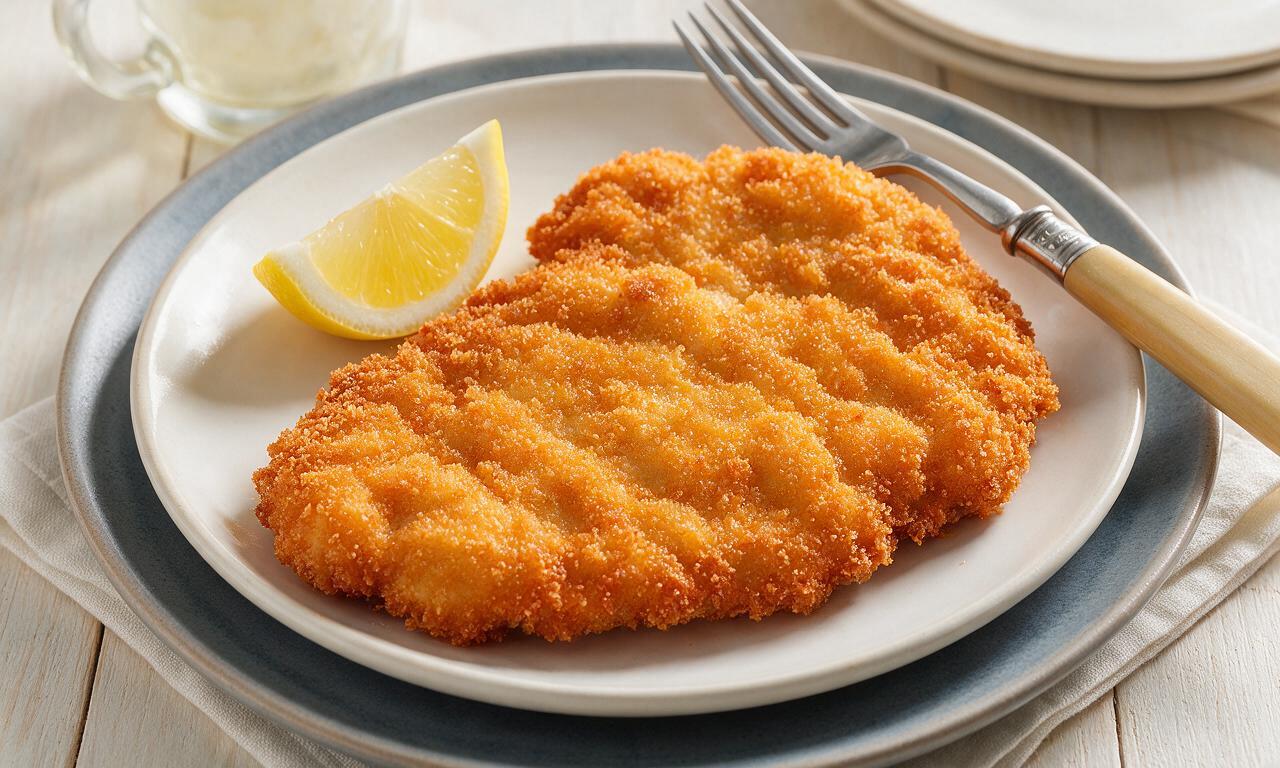
Crispy, golden pan-fried cutlets with a light, shatteringly crunchy breadcrumb coating, served with bright lemon wedges for a classic comforting German family meal.

Ingredients

Veal leg cutlets (trimmed of excess fat) 600g (4 x 150g pieces, pounded 5mm thick)
All-purpose flour 120g (1 cup)
Large eggs 2 units, beaten with 2 tbsp cold water
Fine dry white breadcrumbs 180g (1.5 cups)
Kosher salt 1 teaspoon
Freshly ground black pepper 1/2 teaspoon
Neutral canola/sunflower oil 250ml (1 cup)
Unsalted butter 60g (4 tablespoons)
Fresh lemons 2 whole (cut into 8 wedges)
Fresh flat-leaf parsley 2 tablespoons, chopped

Steps

1

Prep the veal cutlets

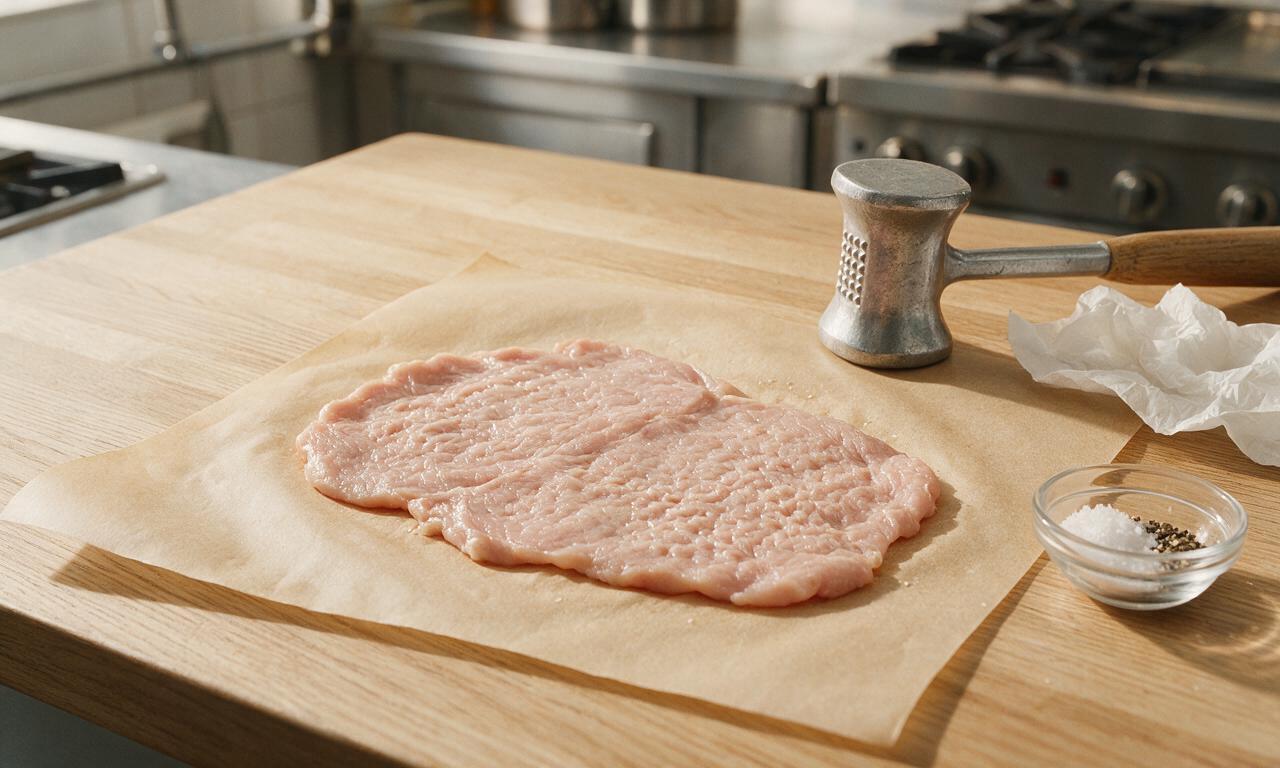
Pat 4 x 150g trimmed veal cutlets completely dry with paper towels. Place each cutlet between two sheets of plastic wrap, then use a flat meat mallet to pound evenly to a consistent 5mm (1/4 inch) thickness. Season both sides of all cutlets with 3/4 teaspoon kosher salt and 1/4 teaspoon black pepper. Let rest at room temperature for 10 minutes to allow seasoning to penetrate.
Step 1
step1:Prep the veal cutlets
2

Arrange breading station

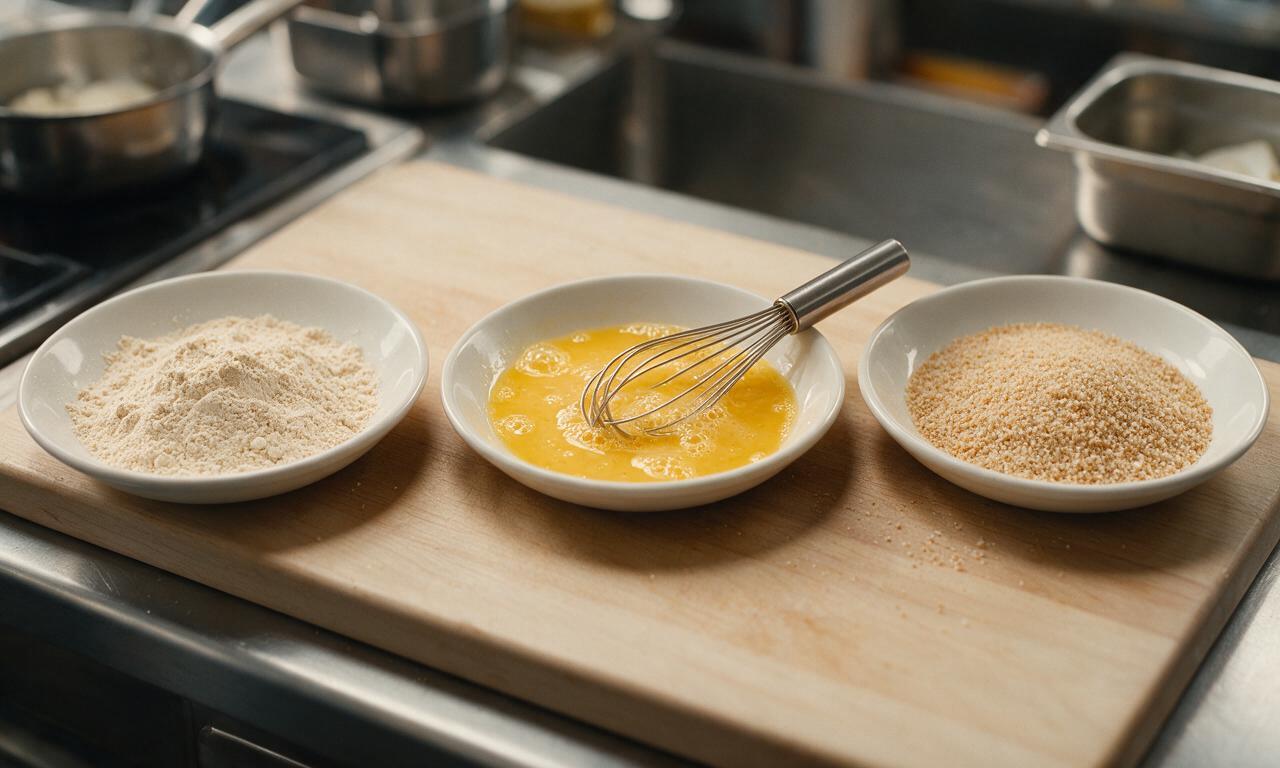
Set three shallow dishes in a straight line on your counter: the first dish holds 120g all-purpose flour mixed with the remaining 1/4 teaspoon salt and 1/4 teaspoon pepper; the second dish holds 2 beaten eggs whisked with 2 tablespoons cold water; the third dish holds 180g fine dry breadcrumbs. Do not add salt or seasoning to the breadcrumbs, as this causes them to brown too quickly during frying.
Step 2
step2:Arrange breading station
3

Bread the cutlets evenly

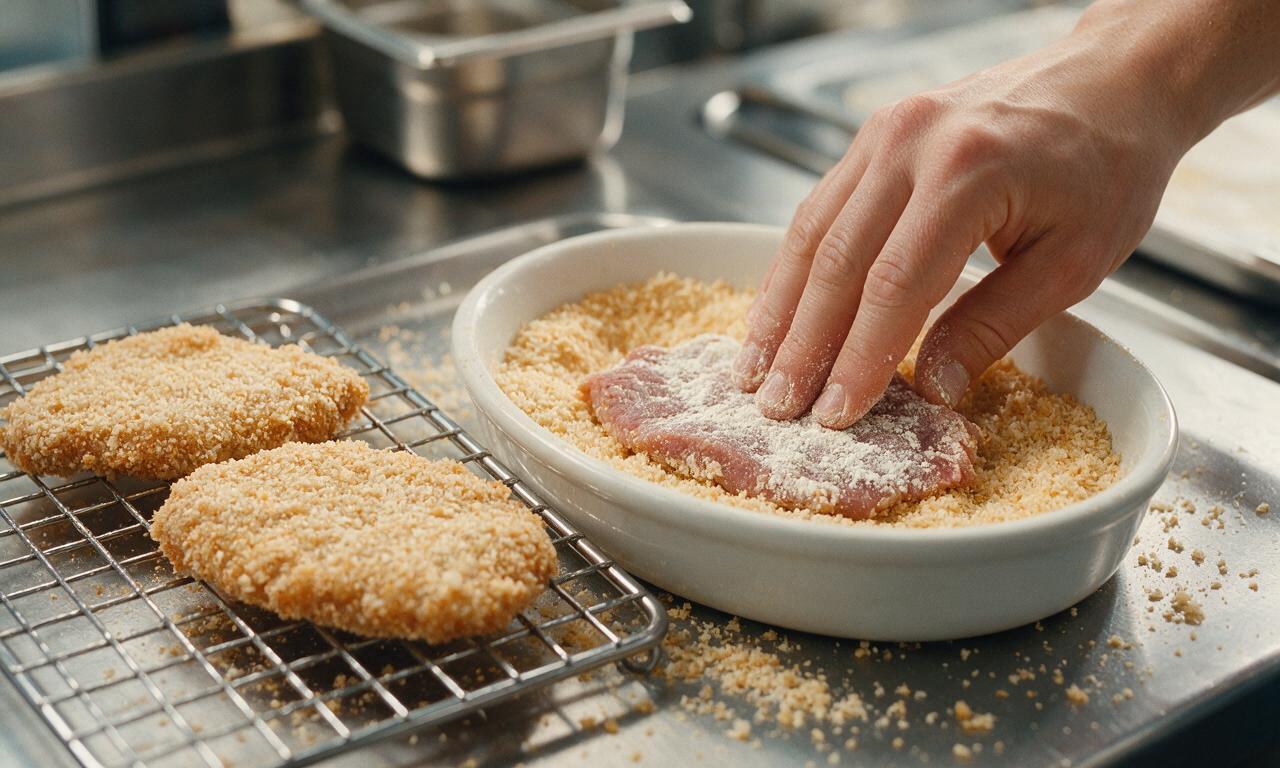
Working one cutlet at a time, dredge first in seasoned flour, shaking off all excess to leave only a thin, even coating. Next, dip fully in the egg wash, letting excess egg drip off for 2 full seconds. Finally, press the cutlet lightly into breadcrumbs to coat both sides, turning once—do not press crumbs hard into the meat, as this creates a dense coating. Place breaded cutlets on a wire rack and let rest for 5 minutes before frying to help the coating adhere.
Step 3
step3:Bread the cutlets evenly
4

Heat pan and frying fat

Place a large heavy-bottomed cast iron skillet over medium heat. Add 250ml neutral oil and 60g unsalted butter, heating until the butter fully melts and the fat mixture reaches 175C (350F). Test the temperature by dropping a single breadcrumb into the pan: it should sizzle immediately and turn light golden in 10 seconds if the heat is correct. Adjust burner heat as needed to maintain this steady temperature.
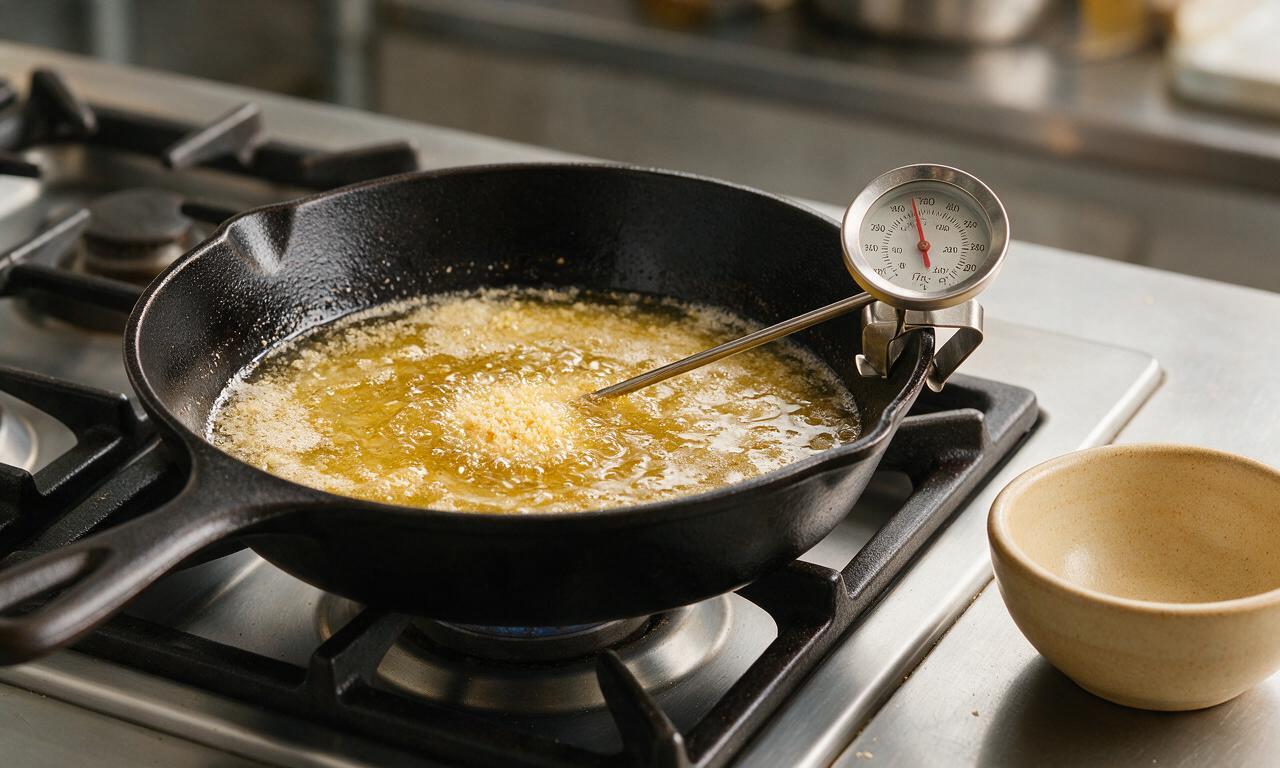
Step 4
step4:Heat pan and frying fat
5

Pan-fry schnitzel until crisp

Carefully place 1-2 cutlets in the pan at a time to avoid overcrowding, which drops oil temperature and makes crust soggy. Cook for 2-3 minutes on the first side, until the bottom is deep golden and crispy. Use tongs to gently flip the cutlet, then cook for another 1.5-2 minutes on the second side, tilting the pan occasionally to spoon hot fat over the top of the schnitzel for even, bubbly browning.
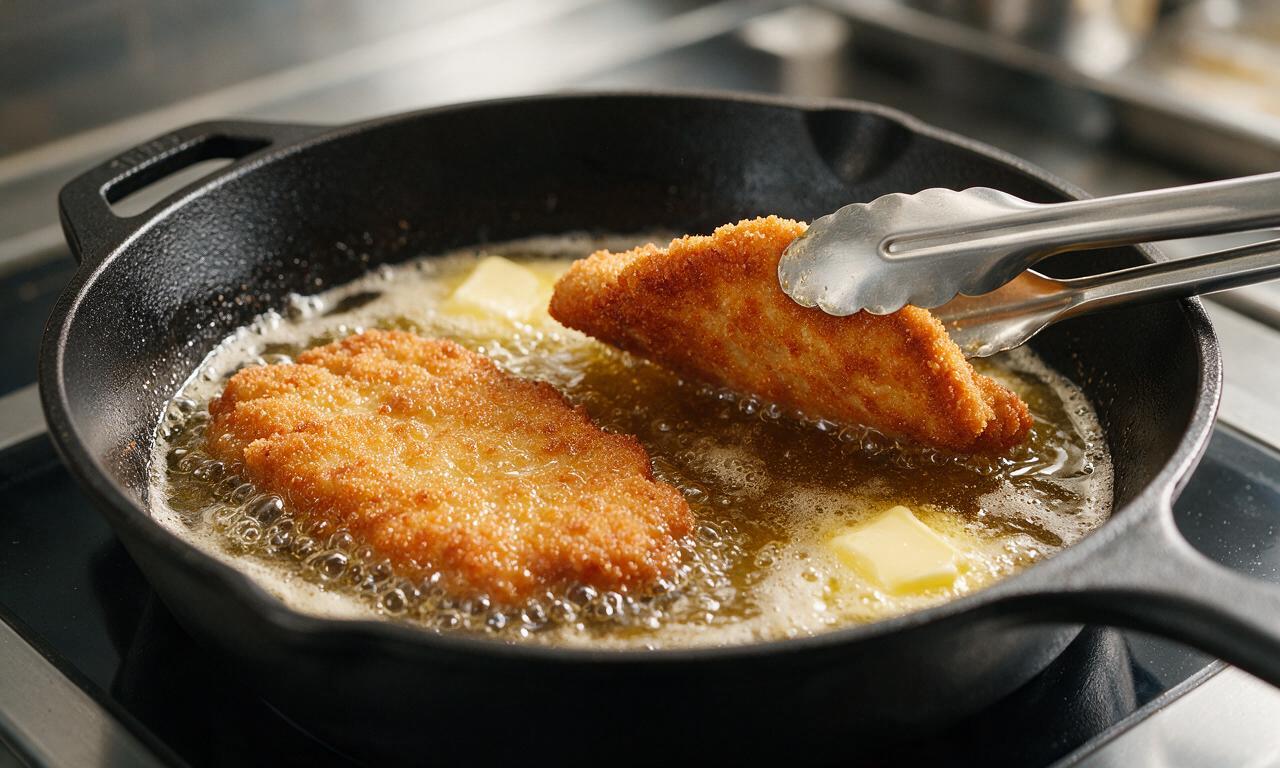
Step 5
step5:Pan-fry schnitzel until crisp
6

Drain and rest schnitzel

Once cooked, transfer schnitzel to a wire rack set over a rimmed baking sheet—do not place cooked schnitzel on paper towels, as trapped steam will make the coating soggy. Let rest for 2 minutes, then repeat the frying process with remaining cutlets, checking oil temperature between batches to avoid burning leftover breadcrumb bits.
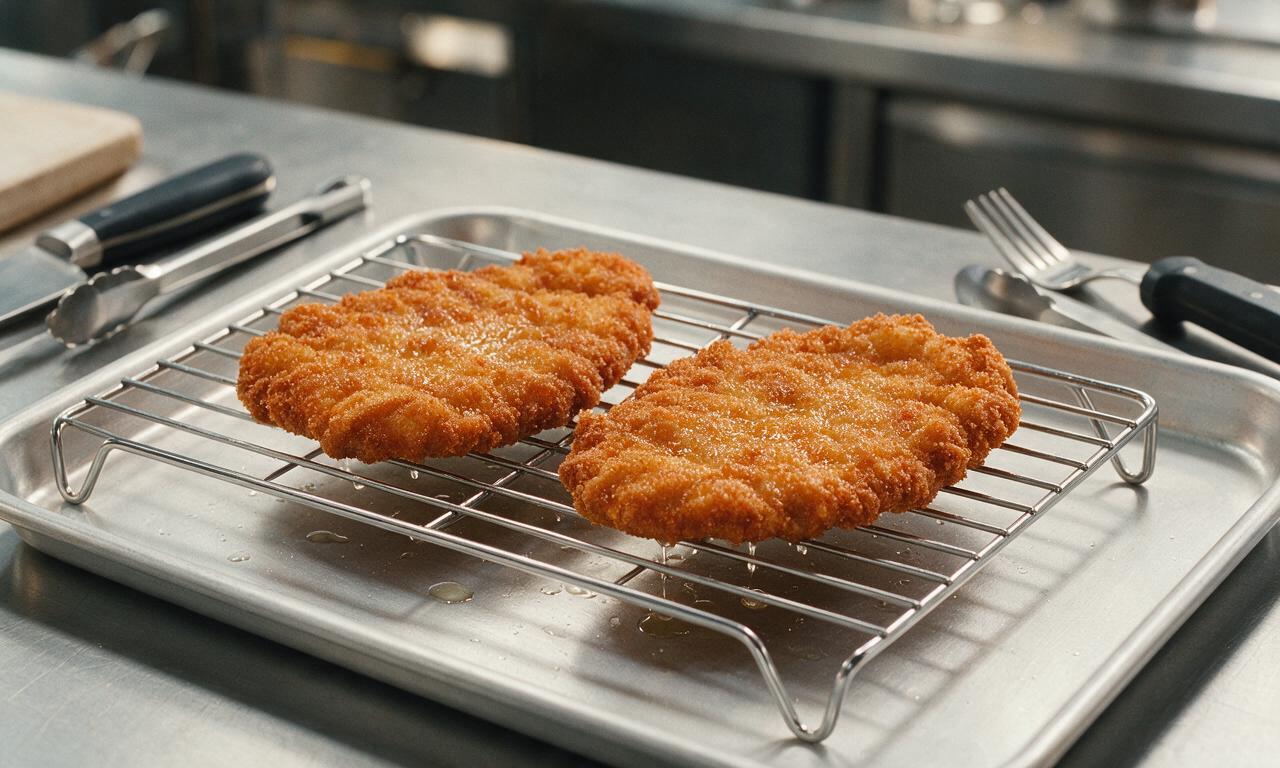
Step 6
step6:Drain and rest schnitzel
7

Plate and serve schnitzel

Arrange one schnitzel per dinner plate, garnish with a light sprinkle of chopped fresh parsley, and serve with 2 lemon wedges per plate for squeezing over top. Serve immediately while the coating is hot, shatteringly crisp, and at its best texture.
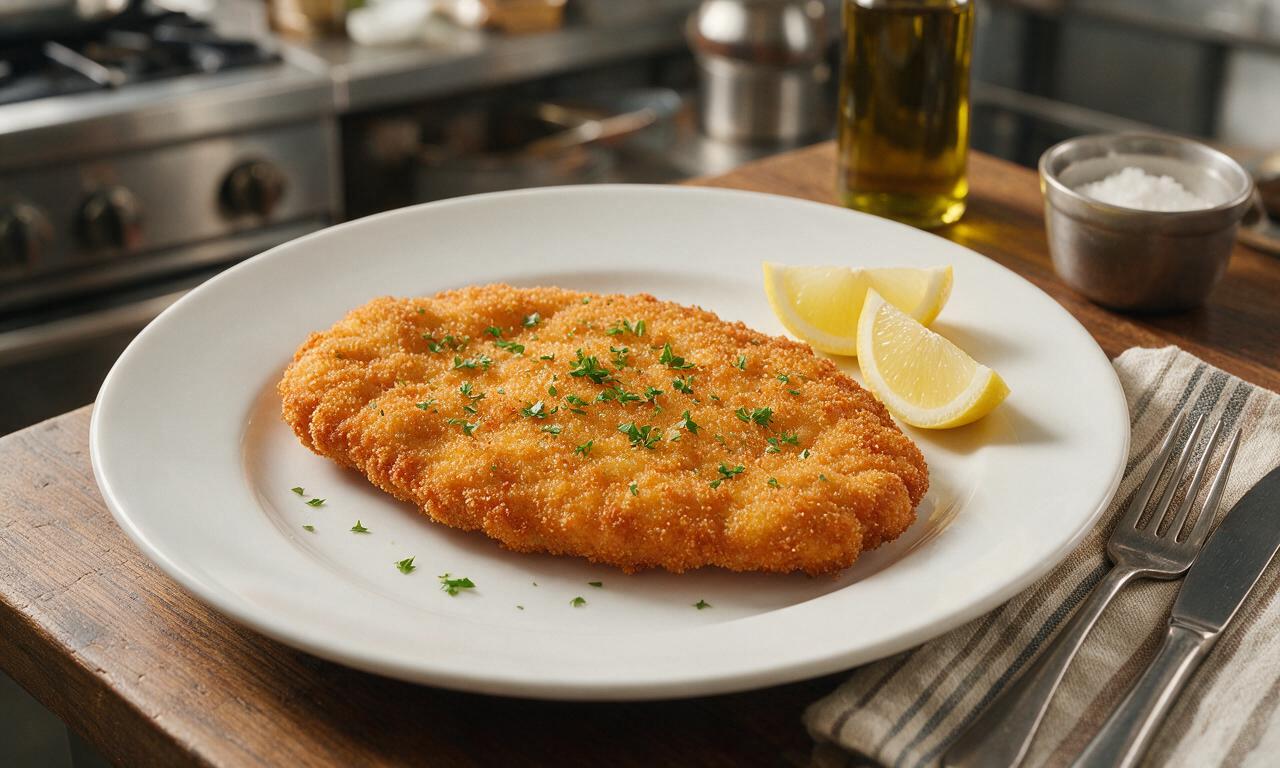
Step 7
step7:Plate and serve schnitzel

Tips

1.Avoid pressing breadcrumbs firmly into the cutlet: a loose, light coating creates the signature shatteringly crisp, airy crust, rather than a tough, dense breading that pulls away from the meat during frying.
2.Never drain hot schnitzel on paper towels: trapped steam will quickly soften the crispy coating. A raised wire rack set over a baking sheet allows air circulation to keep crust perfectly crisp as it rests.
3.If veal is unavailable, substitute boneless pork loin cutlets pounded to the same 5mm thickness; add 30 seconds of cook time per side to ensure pork reaches a safe 71C (160F) internal temperature.
✨ You May Also Like

Main Course
🍜 United Kingdom

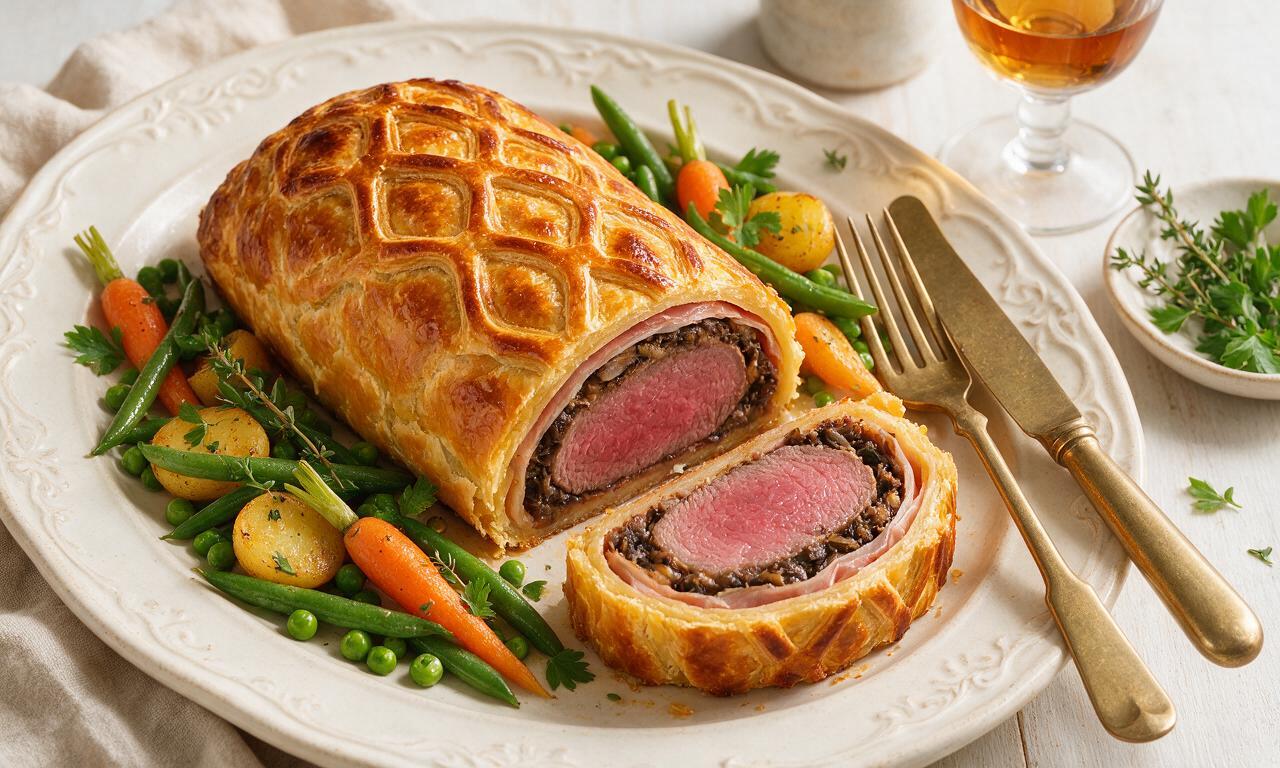
A showstopping classic of tender seared beef, savory mushroom duxelles, and crisp prosciutto wrapped in flaky golden puff pastry, baked to juicy perfection.

⏱️ 2 hours 1Main Course ★ 4.7
Main Course
🍜 India

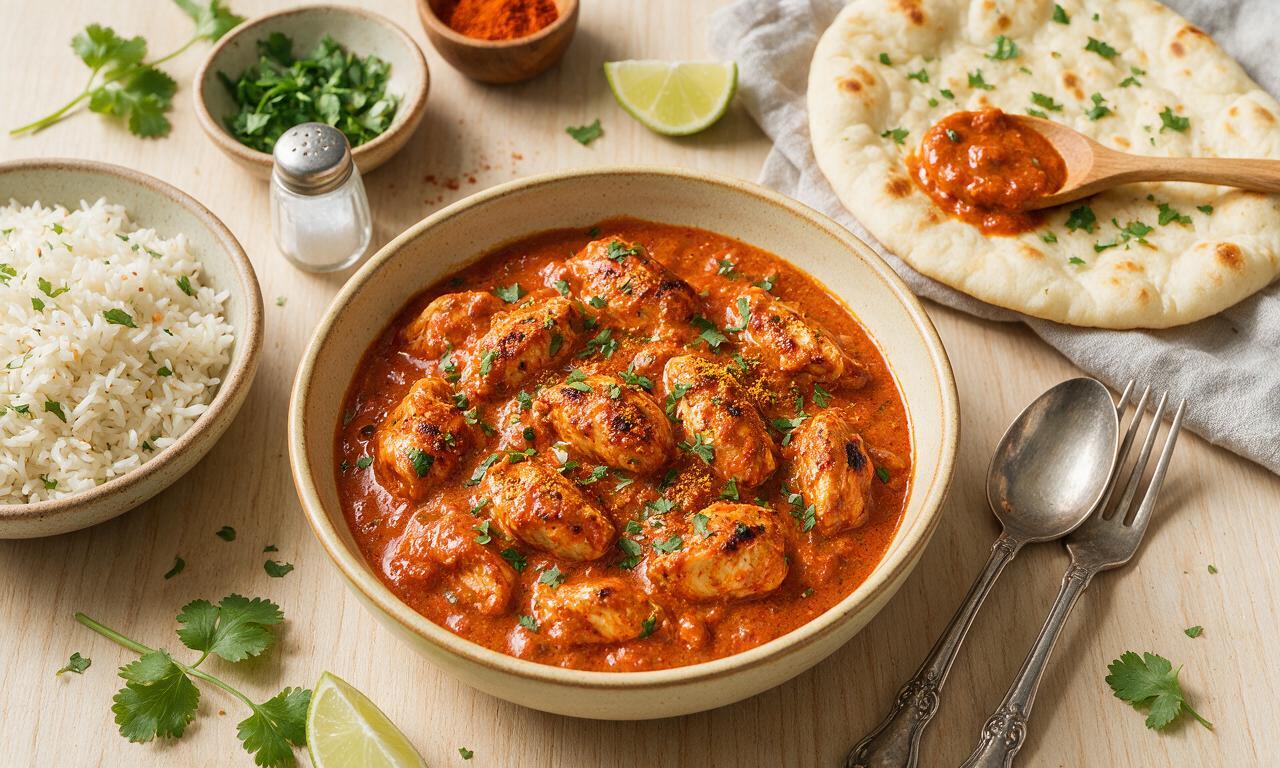
Tender charred marinated chicken simmered in a rich, spiced creamy tomato sauce, this iconic Anglo-Indian curry pairs perfectly with basmati rice or warm naan.

⏱️ 50 minuteMain Course ★ 4.8
Main Course
🍜 Thailand

Classic tangy, sweet, and savory Thai stir-fried rice noodles with shrimp, tofu, and crunchy garnishes, balancing all five core Thai flavor profiles.

⏱️ 30 minuteMain Course ★ 4.6
Main Course
🍜 United Kingdom

Crispy golden beer-battered cod and fluffy double-fried chips, served with tangy tartar sauce and malt vinegar: the timeless, beloved British pub comfort classic.

⏱️ 45 minuteMain Course ★ 4.9
Main Course
🍜 Mexico

Smoky, chile-marinated pork tacos with caramelized pineapple, fresh cilantro, and lime: a beloved classic Mexican street food perfect for casual summer gatherings.

⏱️ 1 hour 45Main Course ★ 4.7
Main Course
🍜 United States

Crunchy Fritos corn chips layered with savory beef chili and melted cheddar, topped with cool, zesty fixings for a beloved, cozy Tex-Mex comfort food.

⏱️ 35 minuteMain Course ★ 4.9

Crispy Traditional German Schnitzel:Frequently Asked Questions

1.What’s the best substitute for veal leg cutlets if I can’t find them?
Boneless, center-cut pork loin cutlets are the closest traditional swap, with a mild, tender flavor that matches the classic profile. You can also use thin boneless, skinless chicken thighs or turkey breast cutlets, just be sure to trim all silverskin and excess fat before pounding to an even 1/4-inch thickness, same as you would for veal.
2.Why does my schnitzel breading always fall off when I cook it?
Breading slips for three key reasons: your cutlets are damp when you start breading, you skip the short rest after breading, or your pan oil isn’t hot enough when you add the schnitzel. Pat cutlets completely dry first, follow the flour-egg-crumb order gently, let them rest 10 minutes to set, and make sure oil hits 350°F before frying.
3.How thin do I really need to pound the cutlets?
Aim for a perfectly even 1/4-inch thickness across the entire cutlet, with no thicker spots in the center. Thicker sections will undercook before the breading crisps, while paper-thin edges will burn quickly. Use a flat meat mallet (not a spiked tenderizer) and pound between two sheets of plastic wrap to avoid tearing the meat.
4.Can I use regular store-bought breadcrumbs, or do I need a specific type?
Stick to fine, dry white breadcrumbs made from crustless white bread for that signature light, shatteringly crisp coating, rather than coarse panko or seasoned Italian breadcrumbs. Panko makes an overly thick, textured crunch, while seasoned crumbs add unwanted herbs and cheese that don’t belong in classic schnitzel. Plain fine dry store-bought crumbs work perfectly.
5.How much oil do I need to pan-fry schnitzel properly?
You don’t need a deep fryer, but you do need enough neutral oil (like canola or sunflower) to come 1/8 to 1/4 inch up the sides of your heavy-bottomed skillet. Too little oil leaves soggy, uneven brown spots, while fully submerging cutlets makes the coating greasy. Add a splash of melted butter to the hot oil for extra nutty flavor, if you like.
6.Why do traditional recipes say you should swirl the pan while frying schnitzel?
That gentle swirling motion helps hot oil wash over the top of the cutlet as it cooks, which encourages the breading to puff up and create that signature light, separated crispy layer instead of sticking flat to the meat. Keep the pan moving in small, steady circles for the first minute on each side for that iconic, airy crust.
7.How do I keep schnitzel crispy if I’m cooking multiple batches for a group?
Never stack cooked schnitzel on a plate or paper towel, as trapped steam will turn the crisp coating soggy in minutes. Instead, set cooked cutlets on a wire rack set over a rimmed baking sheet in a 200°F oven while you finish frying remaining batches. This lets air circulate to keep the coating crisp and the meat warm without overcooking.
8.Do I season the breading, or just season the meat?
Season every single layer, not just the meat! Lightly salt the cutlets right before breading, add a pinch of kosher salt to the flour and beaten eggs, and toss a small pinch into the breadcrumbs too. If you only season the meat, the coating will taste bland no matter how good its texture is. Skip extra spices to keep the flavor classic.
9.Can I prep schnitzel ahead of time, or does it have to be cooked right after breading?
You can bread cutlets up to 4 hours ahead of cooking, as long as you store them in a single layer on a wire rack in the fridge, uncovered. Don’t stack them or wrap them tightly in plastic, as trapped moisture will make the breading gummy. I don’t recommend breading them further ahead, as crumbs will turn soggy from the meat’s natural moisture.
10.What’s the difference between traditional German schnitzel and Wiener schnitzel?
Wiener schnitzel is a protected term in Germany and Austria, legally required to be made with veal. The general term “German schnitzel” refers to the same crispy breaded, pan-fried cutlet made with veal, pork, or other proteins, using the classic three-step breading method. Both are traditionally served simply with lemon wedges, no heavy sauces.
11.Why shouldn’t I press the breadcrumbs firmly into the cutlet when breading?
Pressing crumbs too tight creates a dense, hard crust that won’t puff up and get that light, shattery texture schnitzel is famous for. Instead, dip the floured, egg-washed cutlet in crumbs and pat very gently just to make sure crumbs adhere evenly with no bare spots. Loose, evenly applied crumbs fry up into that perfect light, crispy coating.
12.How long does schnitzel take to cook so I don’t overcook the delicate veal?
When your oil holds steady at 350°F, each 1/4-inch thick cutlet only takes 2 to 3 minutes per side to turn deep golden brown and crisp. Aim for an internal temperature of 145°F for veal or pork, 165°F for chicken. Don’t overcrowd the pan, which drops oil temp and leads to greasy schnitzel—cook 1 to 2 cutlets at a time.
13.What are the classic side dishes to serve with this traditional schnitzel?
Stick to simple, bright sides that don’t overpower the mild, crispy cutlet. Traditional options include tangy German potato salad, buttered spaetzle, crisp dill cucumber salad, or simple boiled potatoes tossed with parsley and butter. Always serve with thick lemon wedges for squeezing—skip heavy creamy sauces or gravy for the most authentic meal.

Comments (9)

just now

As someone who burns literally everything I fry, I was shocked how easy this was! I used a candy thermometer to keep the oil temp right and it came out golden and crispy on the first try, no burnt bits, no raw middle. Served it with a quick dill sour cream dip and it was *chef’s kiss*. Definitely adding this to my regular dinner rotation.

30 minutes ago

Made this for my boyfriend’s birthday since he’s been missing his Oma’s schnitzel, and he said it tasted exactly like home! I was so nervous I’d mess it up but the step by step instructions were so clear, even a cooking newbie like me could pull it off. 10/10, will be making this for every special occasion from now on.

just now

Aww that’s so sweet! Did you serve it with anything special to go with it? I’m making this for my partner’s birthday next month and need side ideas!

2 hours ago

I’ve tried three different schnitzel recipes in the last month and none of them got that shatteringly crisp crust this one promises! Quick question — can I make this with chicken breast instead of pork? My husband doesn’t eat pork and I want to make this for our anniversary dinner next week. Also, does the oil temp matter that much? My last batch had the crust slide right off mid-fry.

30 minutes ago

I made it with thin pounded chicken last week and it worked amazing! Just make sure you really press the breadcrumbs into the cutlet so they stick, I didn’t have any issues with crust falling off at all.

5 minutes ago

Great questions, Mia! Chicken works perfectly as a substitute — just pound it to an even 1/4 inch thickness just like you would pork. Keep your oil at a steady 350°F and make sure you don’t overcrowd the pan, that’s the most common reason crust falls off! Hope you two love the anniversary dinner.

yesterday

Took me a minute to get the hang of the breading station order but once I did, this was so straightforward. I seasoned the flour with a little extra paprika and garlic powder because I like a little extra kick, turned out fantastic. Way better than the frozen schnitzel I used to buy at the grocery store, will never go back.

2 days ago

OMG this schnitzel was SO good! I made it for Sunday family dinner last night and even my super picky 7 year old asked for seconds. The crust stayed perfectly crispy even when I topped it with a little lemon juice, total game changer. I was worried it’d be too fussy for a weeknight but 30 minutes is totally doable!

yesterday

So glad your picky eater loved it, Sarah! A quick squeeze of fresh lemon is our favorite traditional topping too — pro tip, wait to squeeze it right before eating to keep that crust extra crisp next time you make it on a busy weeknight!

3 days ago

Super easy recipe, came out great on my first try! I used panko instead of regular breadcrumbs because that’s what I had in the pantry, still got that perfect crispy crunch. Served it with buttered spaetzle and red cabbage for a full German feast, felt like I was back at the beer garden in Munich.

5 days ago

I’ve been making schnitzel for my family for 40 years and I have to say, this recipe is spot on to the traditional version my German mother taught me! The tip to not press down on the schnitzel while it’s frying is so important, that’s how you get that puffy, crispy crust everyone loves. My grandkids devoured a whole platter of these when they came to visit last Sunday.

3 days ago

Wait you don’t press down on it while frying? I’ve always squished it with my spatula, no wonder my crust never gets that puffy look! Can’t wait to try that trick this weekend.

2 days ago

This means so much coming from someone who’s been making schnitzel for decades, Barb! That no-pressing trick is one so many people miss, it makes all the difference for that perfect light, crisp crust. So glad your grandkids loved it!

1 week ago

Took this to my neighborhood potluck last weekend and people were begging for the recipe! I pounded the pork a little thinner than the recipe said just because I like extra crispy bits, and it turned out perfect. Only thing I’ll change next time is making a double batch — it was gone in 10 minutes flat.

5 days ago

Wait how thin did you pound it? I’m nervous I’ll make it too thin and it’ll tear when I fry it!

2 weeks ago

Meal prep win! I prepped the breaded cutlets on Sunday and kept them in the fridge for 3 days, fried them up quick on weeknights and they were still perfectly crispy. Saved me so much time on busy soccer practice nights, my kids loved it. We serve them with fries and a side of apple sauce, chef’s kiss.

1 week ago

So smart to prep ahead, Jen! Just a quick heads up that if you freeze the breaded, uncooked cutlets they’ll keep for up to 3 months for even easier weeknight meals — no need to thaw before frying, just add an extra minute or two to the cook time.