1.What cut of pork works best for traditional crispy schnitzel?
▾
Boneless pork loin, fully trimmed of excess fat and tough silver skin, is the classic, most authentic pick. Aim for cuts that pound down to a uniform ¼-inch thickness; any thicker and they won’t cook evenly before the breading burns, any thinner and they’ll dry out fast. Lean, trimmed boneless center-cut pork chops work as a solid substitute if loin is hard to find.
2.How do I keep the breading from falling off my schnitzel while frying?
▾
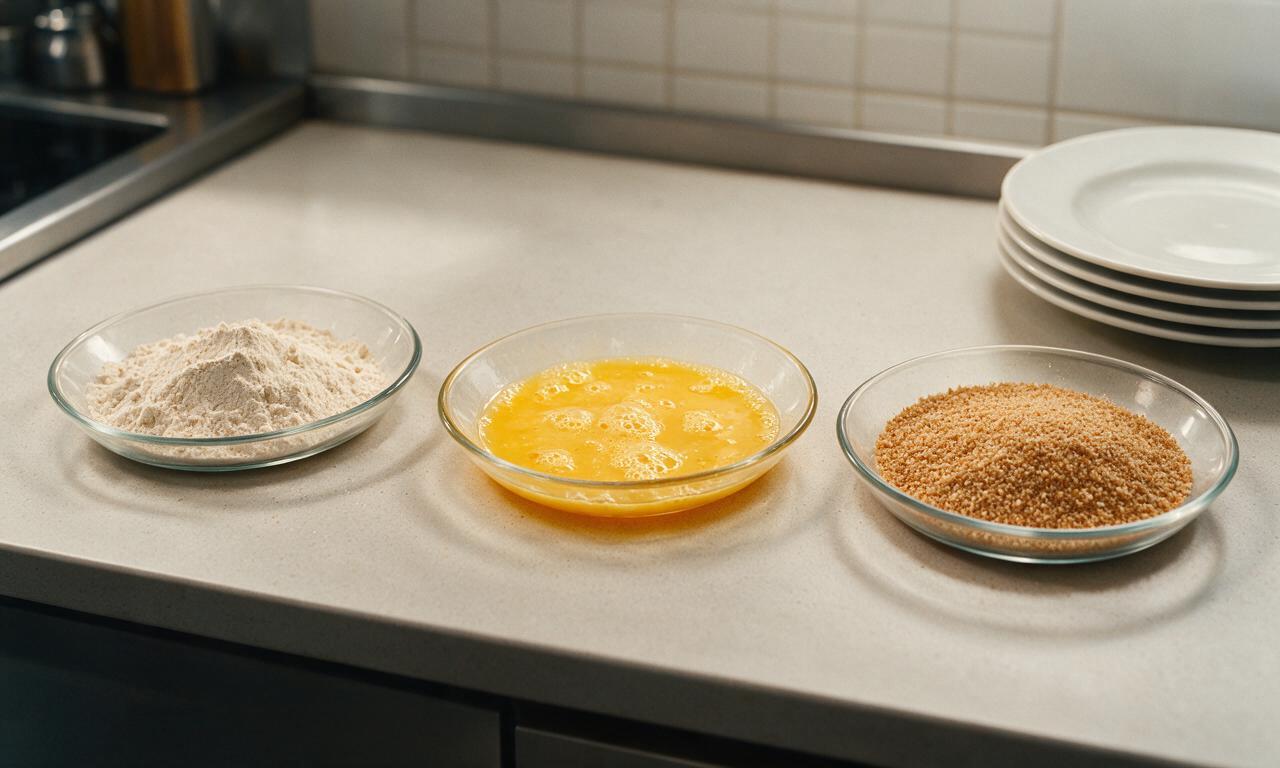
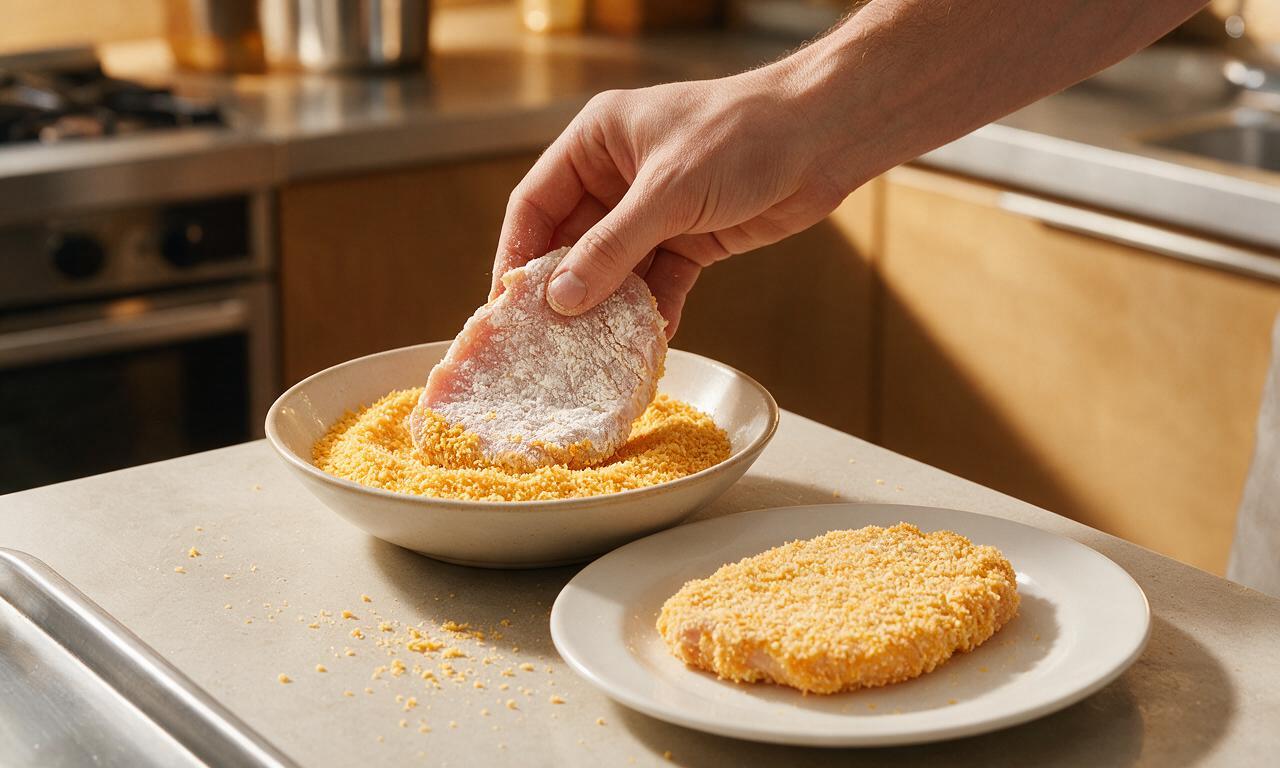
Start by patting pork completely dry with paper towels before you start breading, then follow the three-step station in order: light flour dredge (shake off all excess), full egg dip, then firm press into breadcrumbs. Let coated cutlets rest 5 minutes before frying to let the coating set, which prevents sliding or flaking as they cook.
3.Why does my schnitzel turn out soggy instead of shatteringly crisp?
▾
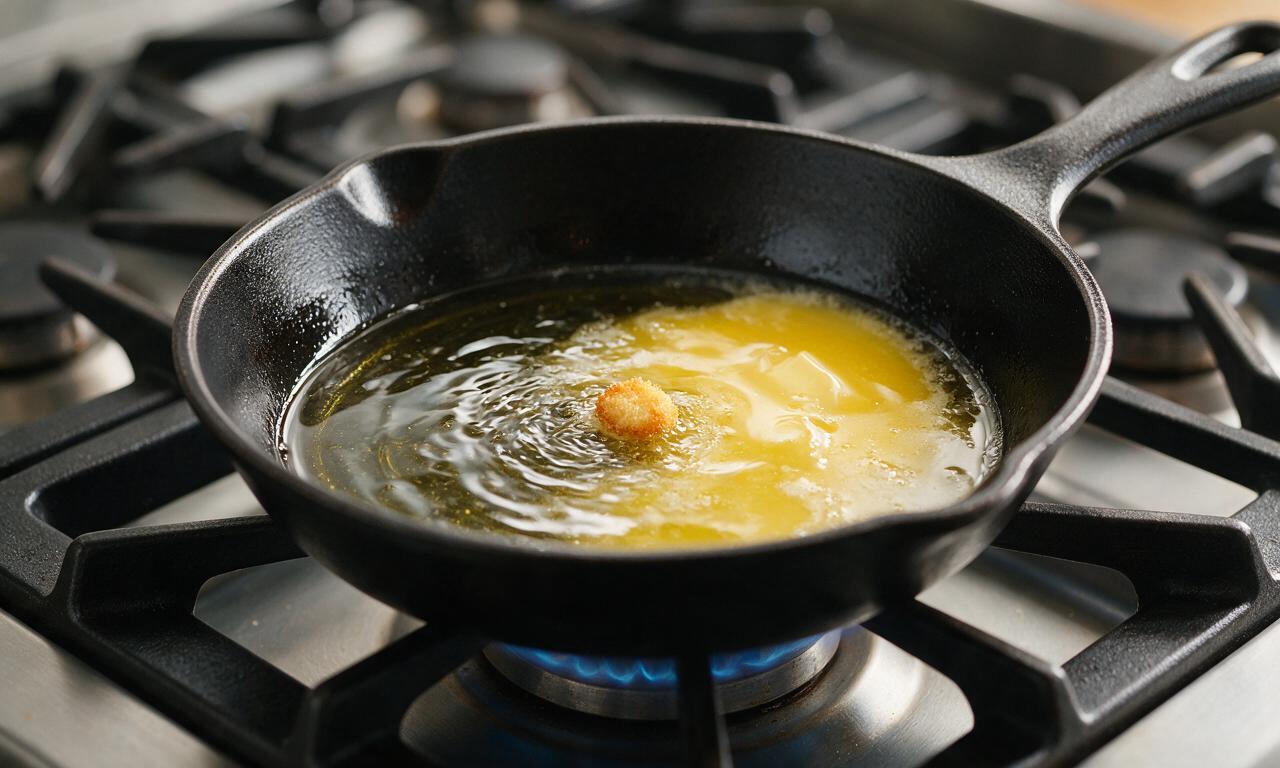
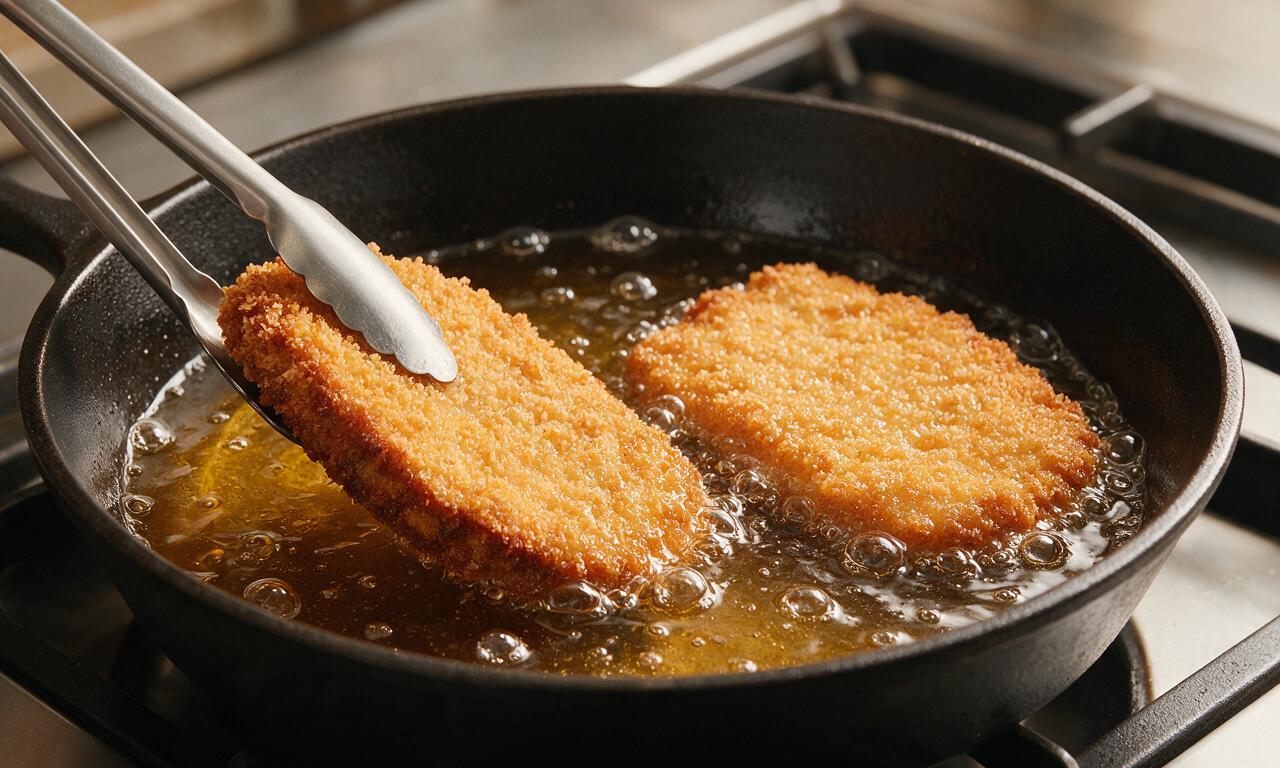
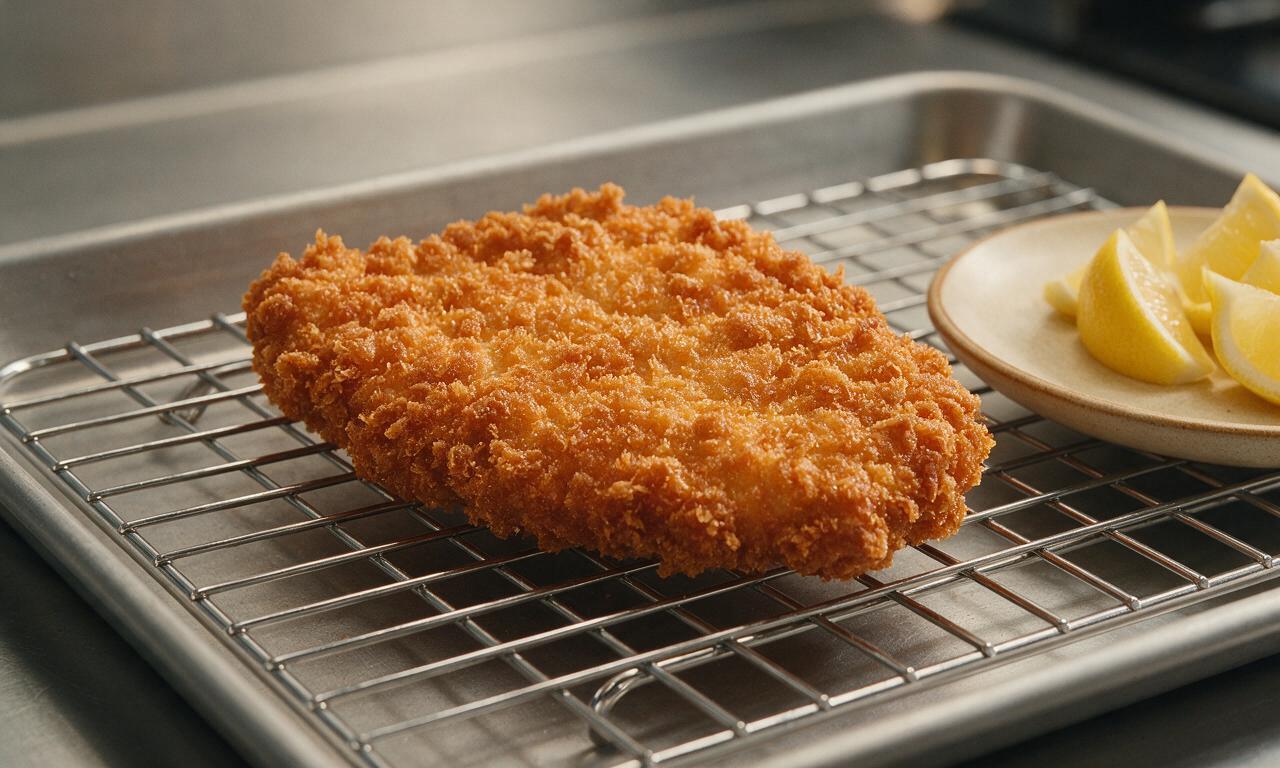
Soggy breading almost always traces back to oil that’s too cool, overcrowding the pan, or too-thick coating layers. Heat your oil to a steady 350°F before adding cutlets, fry in small batches so the oil temperature doesn’t plummet, and always drain finished schnitzel on a wire rack instead of paper towels to trap crunch.
4.Can I use panko breadcrumbs instead of traditional fine dry breadcrumbs?
▾
Fine dry breadcrumbs deliver the delicate, even, classic crisp schnitzel is known for, but panko works great if you prefer an extra-crunchy, airier coating. Just note panko browns faster than fine crumbs, so lower your oil temperature by 25°F to avoid burning the coating before the pork cooks all the way through.
5.How thin should I pound my pork cutlets for schnitzel?
▾
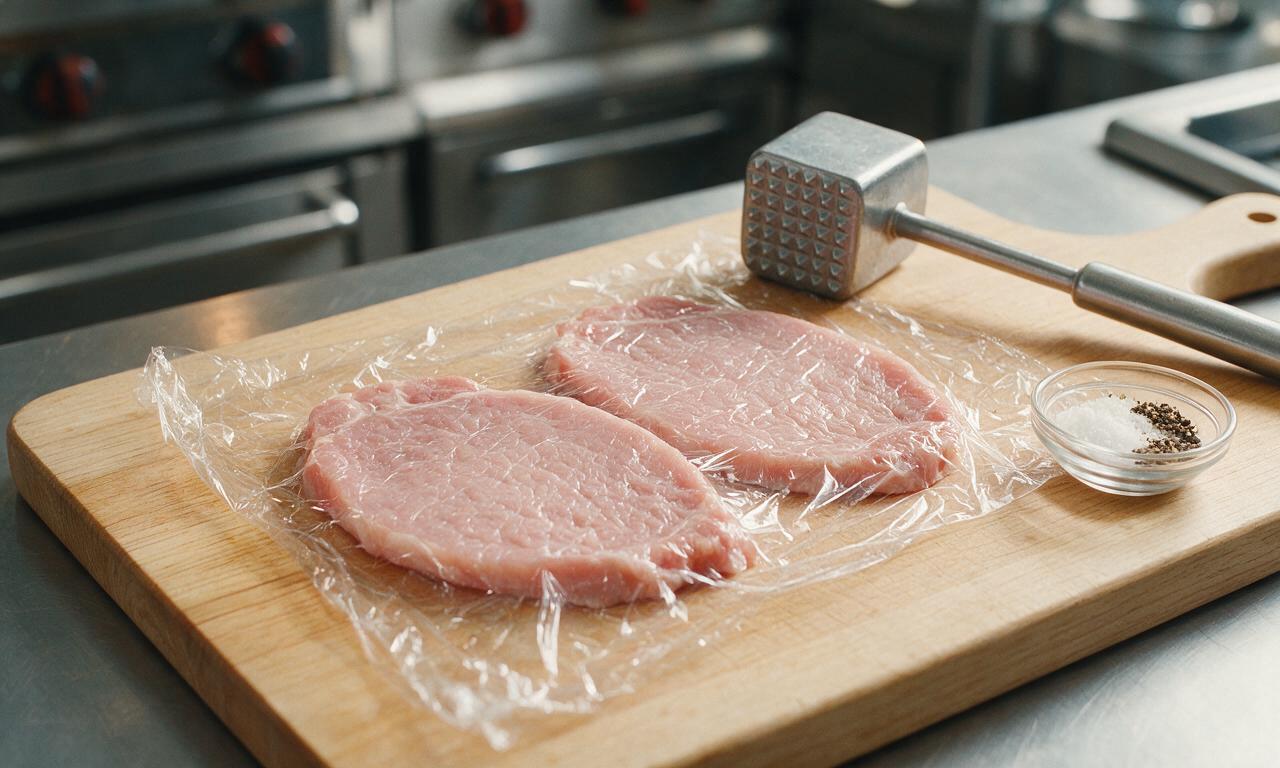
Aim for a perfectly uniform ¼-inch thickness across the entire cutlet for the most even cooking. Pound cutlets between two sheets of plastic wrap with a flat meat mallet (or the bottom of a heavy cast iron pan) to avoid tearing the meat. Uneven thickness leads to dry, overcooked edges and underdone thick spots.
6.What type of oil is best for frying schnitzel for a non-greasy finish?
▾
Stick to neutral, high-smoke-point oils like canola, regular vegetable oil, or refined avocado oil for the best results. Avoid strongly flavored oils like extra-virgin olive oil or toasted sesame oil, which overpower the mild pork flavor and burn easily at frying heat. You only need ¼ inch of oil in the pan—no deep frying required.
7.Do I need to brine pork cutlets first to keep schnitzel juicy?
▾
A quick 30-minute brine (4 cups cold water mixed with 2 tablespoons kosher salt) is a great optional step for extra juicy, evenly seasoned pork, but it’s not required if you’re short on time. If you skip brining, just be sure to season the pork, flour, and breadcrumbs generously so the cutlet doesn’t taste bland.
8.Why does my schnitzel curl up into a cup shape when it hits the hot oil?
▾
Curling happens when tough connective tissue on the cutlet edges cooks and contracts faster than the center, usually from untrimmed silver skin or uneven pounding. To prevent this, snip 3 to 4 small ½-inch cuts around the perimeter of each cutlet before breading to release tension as it fries.
9.How do I tell when schnitzel is fully cooked without cutting into it?
▾
Properly cooked schnitzel takes 2 to 3 minutes per side at 350°F to reach the FDA-recommended safe internal temp of 145°F, checked with an instant-read thermometer. The coating will be a deep, even golden brown, and the cutlet will feel firm (not squishy) when you press the center gently with tongs.
10.Can I make schnitzel ahead and reheat it without losing its crispness?
▾
Yes, as long as you skip the microwave. Let cooked schnitzel cool completely, store in an airtight container in the fridge for up to 3 days, then reheat on a wire rack set over a baking sheet in a 400°F oven for 8 to 10 minutes until hot and crisp. Microwaving turns the breading rubbery and soggy every time.
11.Can I bake schnitzel instead of pan-frying it for a lighter version?
▾
You can absolutely bake it for a lower-fat take, though it won’t have the exact same traditional fried crisp. Arrange breaded cutlets on a wire rack over a baking sheet, spritz both sides lightly with oil, and bake at 425°F for 15 to 18 minutes, flipping halfway, until golden and cooked through.
12.What are the most traditional sides to serve with pork schnitzel?
▾
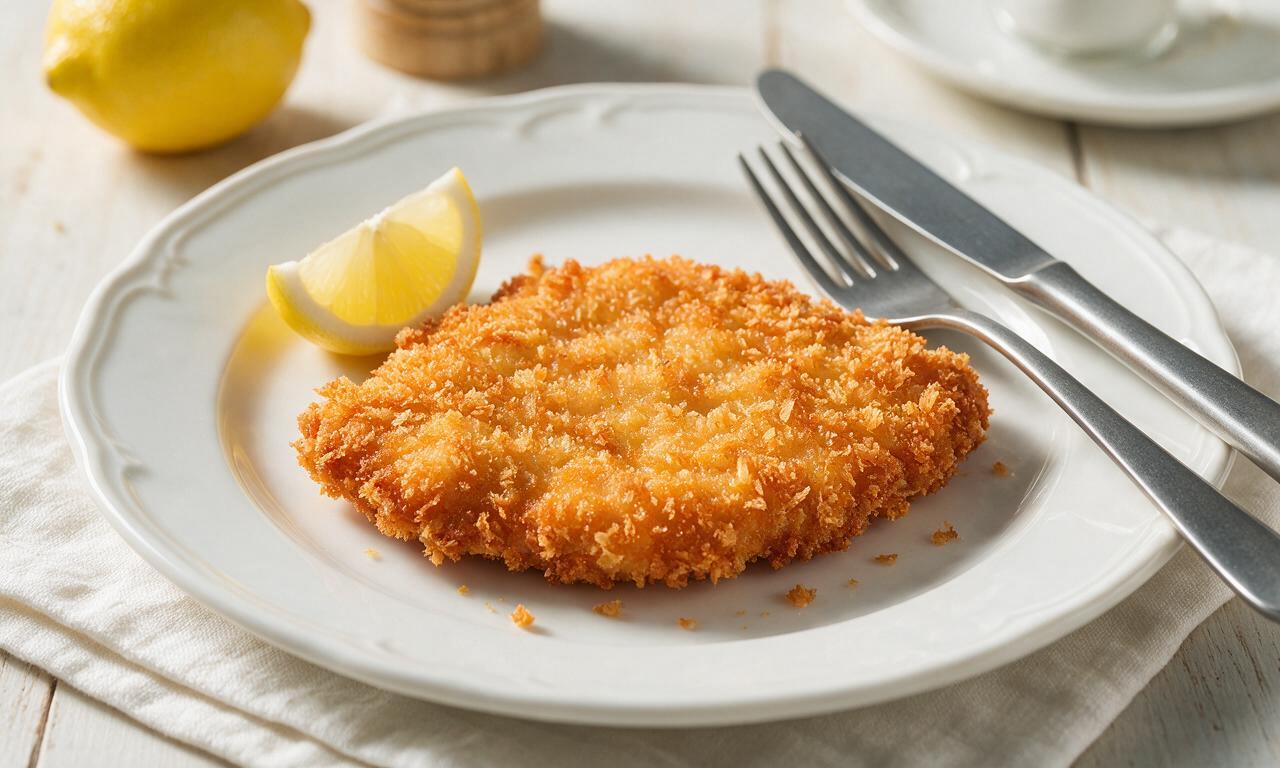
Classic Bavarian pairings include tangy warm German potato salad, buttery herbed spaetzle, crisp dill cucumber salad, or simple salt-roasted potatoes. Always serve schnitzel with thick wedges of fresh lemon to squeeze over right before eating—the bright acid cuts through the rich, fried coating perfectly.
13.Why do some recipes add milk or mustard to the egg wash for schnitzel?
▾
A splash of whole milk thins beaten egg so it doesn’t create a thick, gloppy layer that makes breadcrumbs slide off, while a tiny bit of Dijon mustard adds subtle, savory depth without being obvious in the final dish. Neither is required for traditional schnitzel, but both are easy, effective small tweaks.
14.Can I freeze uncooked breaded schnitzel for quick weeknight meals?
▾
Absolutely! Arrange breaded, uncooked cutlets in a single layer on a baking sheet, freeze until solid, then transfer to a labeled freezer bag for up to 3 months. Don’t thaw before cooking—fry straight from frozen at 335°F (slightly lower to cook through without burning) for 4 to 5 minutes per side.
15.How much salt should I use so my schnitzel doesn’t taste bland?
▾
Season every layer, not just the surface of the pork! Add 1 teaspoon of kosher salt per pound of pork to the cutlets directly, then mix ½ teaspoon salt into the flour and another ½ teaspoon into the breadcrumbs. This layered seasoning means every bite is flavorful, not just the very outer coating.
16.What’s the actual difference between pork schnitzel and Wiener schnitzel?
▾
Traditional Wiener schnitzel is legally required in many European regions to be made with thin veal cutlets, while classic pork schnitzel uses lean pork loin as its base. The breading and pan-frying method is nearly identical for both, so pork-based “Wiener schnitzel” on menus is just this popular Bavarian pork variation.
17.Should I press breadcrumbs hard into the cutlet, or just dredge them lightly?
▾
Press firmly but gently to make sure crumbs adhere evenly across the whole cutlet, but don’t squeeze so hard that you crush the crumbs or push egg wash off the meat. A light, even press on both sides creates a uniform coating that stays put during frying, instead of leaving bare spots as it cooks.
18.Why is my breading bubbling and pulling away from the pork while it fries?
▾
That separation and bubbling happens when trapped moisture sits between the pork and coating, usually because you didn’t pat the pork completely dry before breading, or left too much excess flour on the cutlet before dipping in egg. Shake off all excess flour and egg between steps, and always start with fully dry pork.
19.Can I use fresh breadcrumbs instead of dry fine breadcrumbs?
▾
Soft fresh breadcrumbs create a softer, less crisp coating that absorbs extra oil and turns greasy quickly, so they’re not ideal for traditional schnitzel. If that’s all you have on hand, toast the fresh crumbs on a baking sheet for 10 minutes at 300°F until fully dry and crisp before using them.
20.Is it bad if the schnitzel coating is puffy and not stuck flat to the meat?
▾
That light, slightly puffy, separated crust is actually the mark of a perfectly made traditional schnitzel, not a mistake! It forms when the coating sets quickly in hot oil and creates a tiny air pocket between the meat and breading, which is exactly what gives it that iconic shatteringly crisp, light texture.

OMG this schnitzel was a total game changer for our weeknight family dinner! My two super picky kids usually turn their nose up at pork but they both asked for seconds, even the one who complains about ‘too crunchy’ food. I paired it with a quick lemon aioli I had in the fridge and some roasted dill potatoes, and there were zero leftovers. SO good, way easier than I thought it would be to nail the traditional crispy texture!
Super easy recipe, perfect for weekly meal prep! I breaded a whole batch of cutlets on Sunday, stored them on a lined baking sheet in the fridge for 3 days, and cooked them up quick for dinners all week. The crust stayed perfectly crispy even when I reheated leftovers in the air fryer at 400°F for 5 minutes. Only tweak I made was adding a little extra smoked paprika to the breading for a tiny smoky kick, chef’s kiss.
Brought this to my neighborhood block party potluck last weekend and people were hounding me for the recipe before I even set the platter down! I made 8 cutlets, sliced them into easy-to-grab strips with a side of spicy stone-ground mustard for dipping, and they were gone in 10 minutes flat. Way less fussy than I expected for something that tastes like it came straight from a fancy German beer garden.
Full transparency, I’m a total beginner in the kitchen and I was so nervous to make this for my girlfriend’s birthday dinner since she’s obsessed with traditional German food. It came out perfectly crispy on the first try! My only mess-up was letting the oil get a little too hot for the first cutlet, so the crust browned way faster than the pork cooked through. I turned the heat down like the recipe advised and the rest were flawless. She genuinely thought I ordered takeout from her favorite spot lmao.
Was worried I wouldn’t be able to make this work for my celiac/gluten allergy, but I swapped the regular breadcrumbs for gluten-free panko and it came out EXACTLY as crispy as the traditional version! My husband who eats literally everything and turns his nose up at ‘diet food’ said he couldn’t even tell the difference. 10/10 will be adding this to our monthly dinner rotation.
Y’all, I grew up eating chicken fried steak smothered in gravy so I figured I’d give pork schnitzel a shot and wow, this is my new favorite quick weeknight meal. The fresh lemon squeeze over the top right after cooking cuts through the richness so perfectly, I didn’t even miss the gravy. Cook time was actually right at 30 minutes too, no weird hidden prep steps that make recipes take twice as long as the box says.
Made this right after a long rainy day hike last weekend, was craving something hearty and crispy and this absolutely hit the spot. I used thin-cut pork loin chops I already had stashed in the freezer instead of buying fresh specialty cutlets, thawed them quick, pounded them a little to even thickness, and it worked perfectly. Only heads up for other cooks: definitely grab a splatter screen for the pan, I got a couple tiny oil pops on my wrist when I wasn’t paying attention lol.