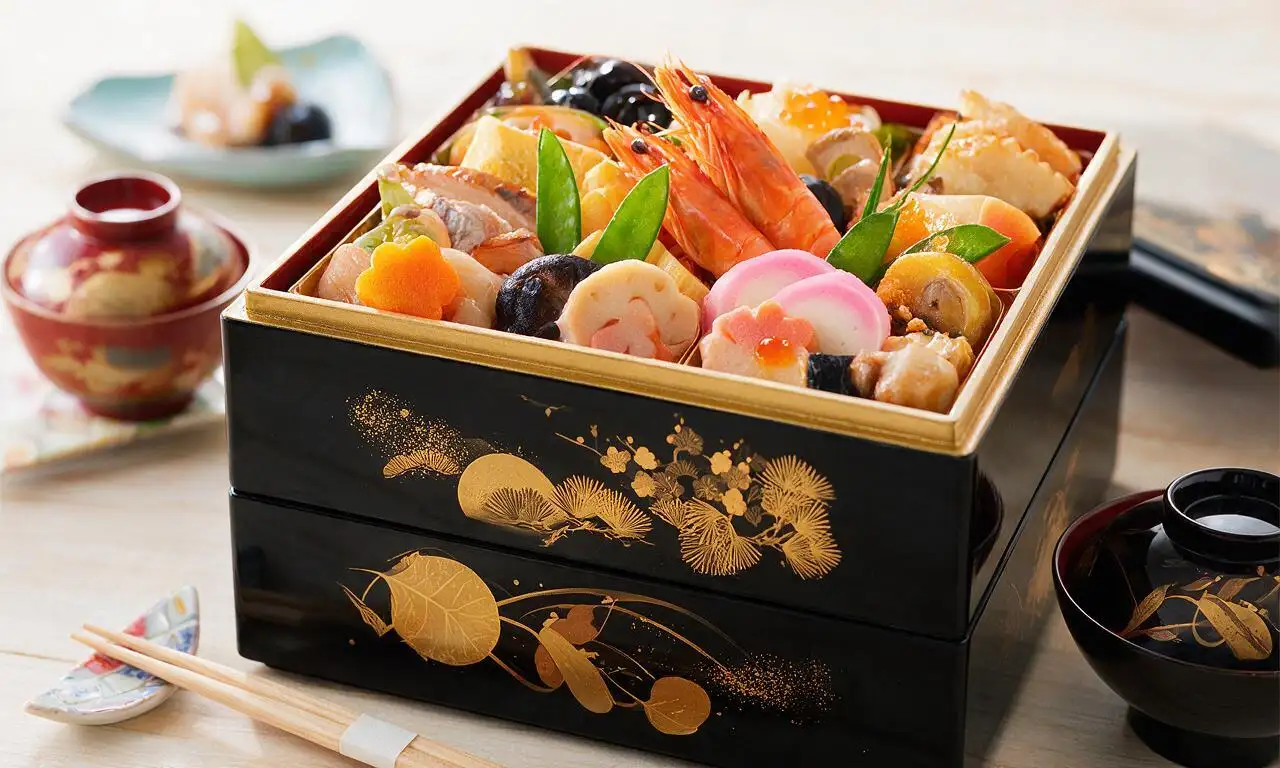
1.Why is osechi traditionally served in stacked lacquer jubako boxes?
▾
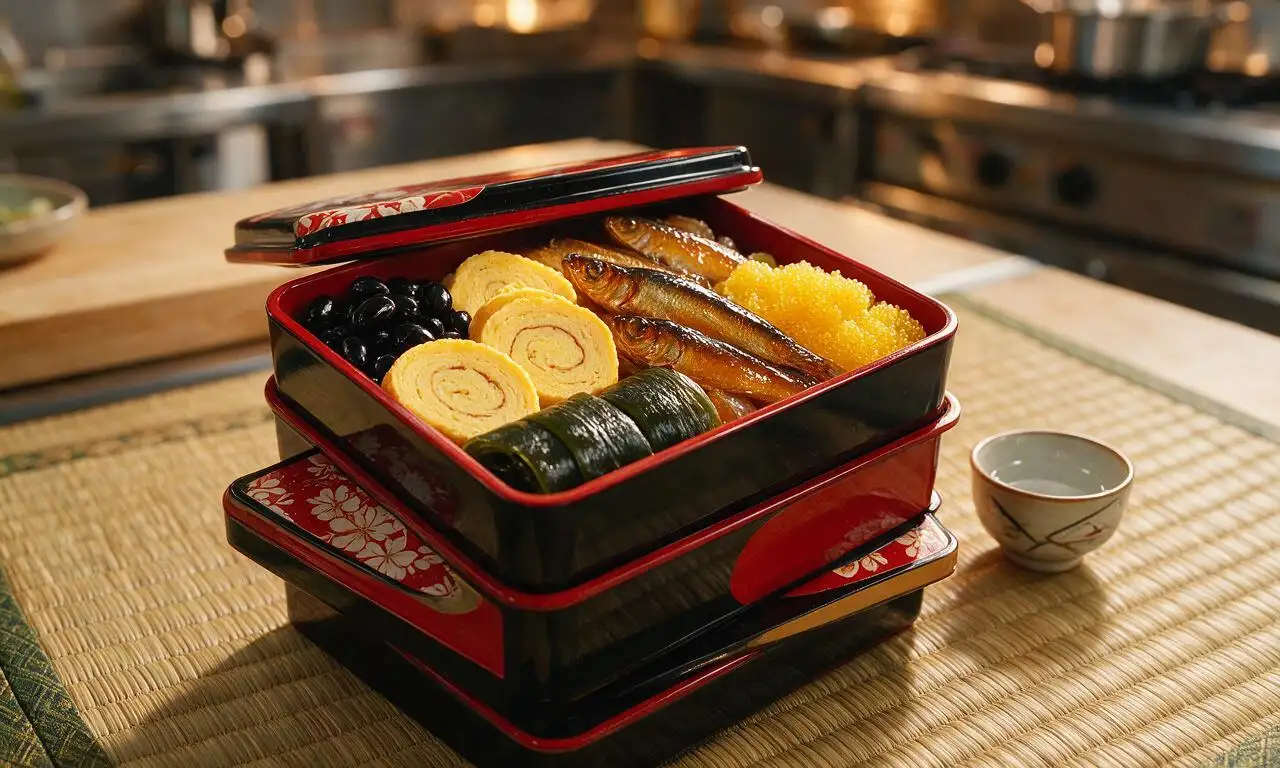
Those stacked jubako boxes aren’t just decorative! The layered design symbolizes piling up good fortune and prosperity for the coming year, and their tight seal keeps dishes fresh for days—historically, this let families pause cooking during the first 3 days of New Year celebrations. Stackable BPA-free food storage boxes work perfectly if you don’t own traditional lacquerware.
2.Do I have to make every single osechi dish all at once?
▾
Absolutely not! Traditional spreads can have 10+ dishes, but it’s totally fine to scale back to core symbolic items first: kuromame, kazunoko, tazukuri, and sweet rolled tamagoyaki make a perfectly authentic, manageable spread for small gatherings. Prep dishes 1-2 days ahead to cut down on last-minute holiday stress.
3.What’s the meaning behind the kuromame (dried black soybeans) in the spread?
▾
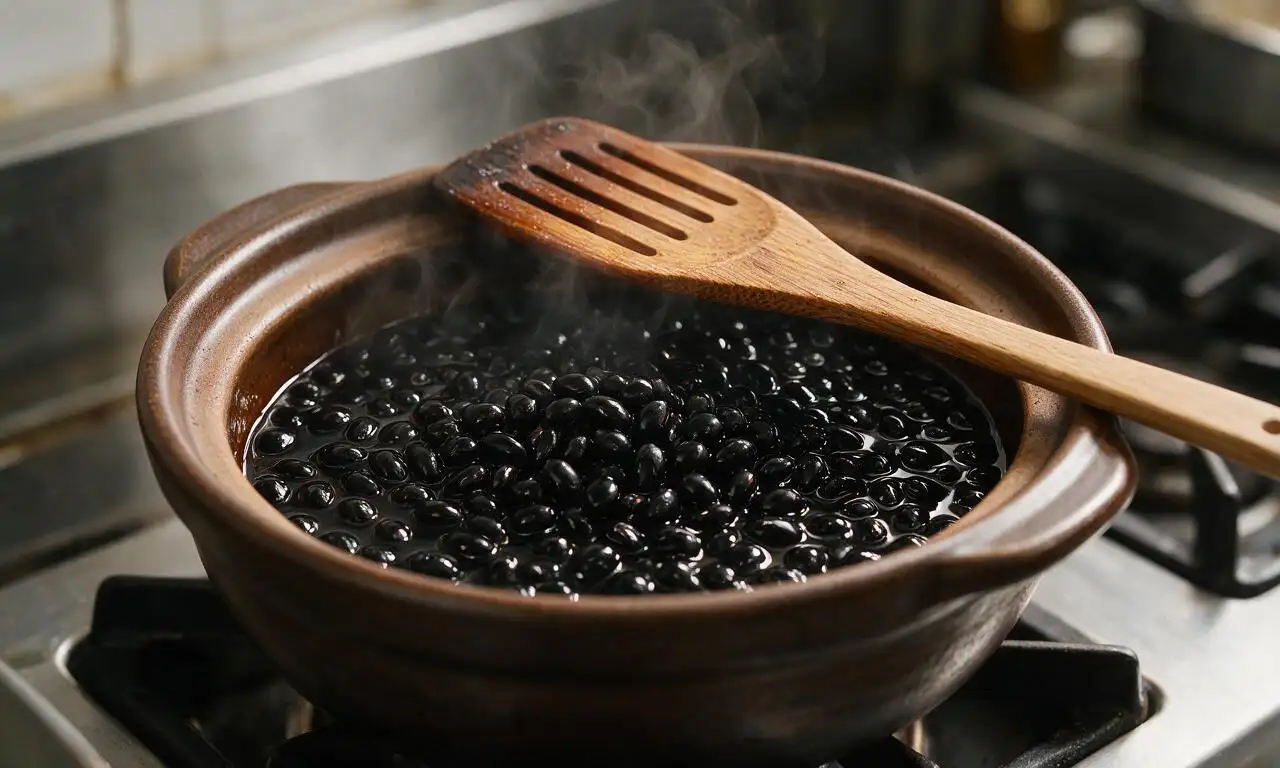
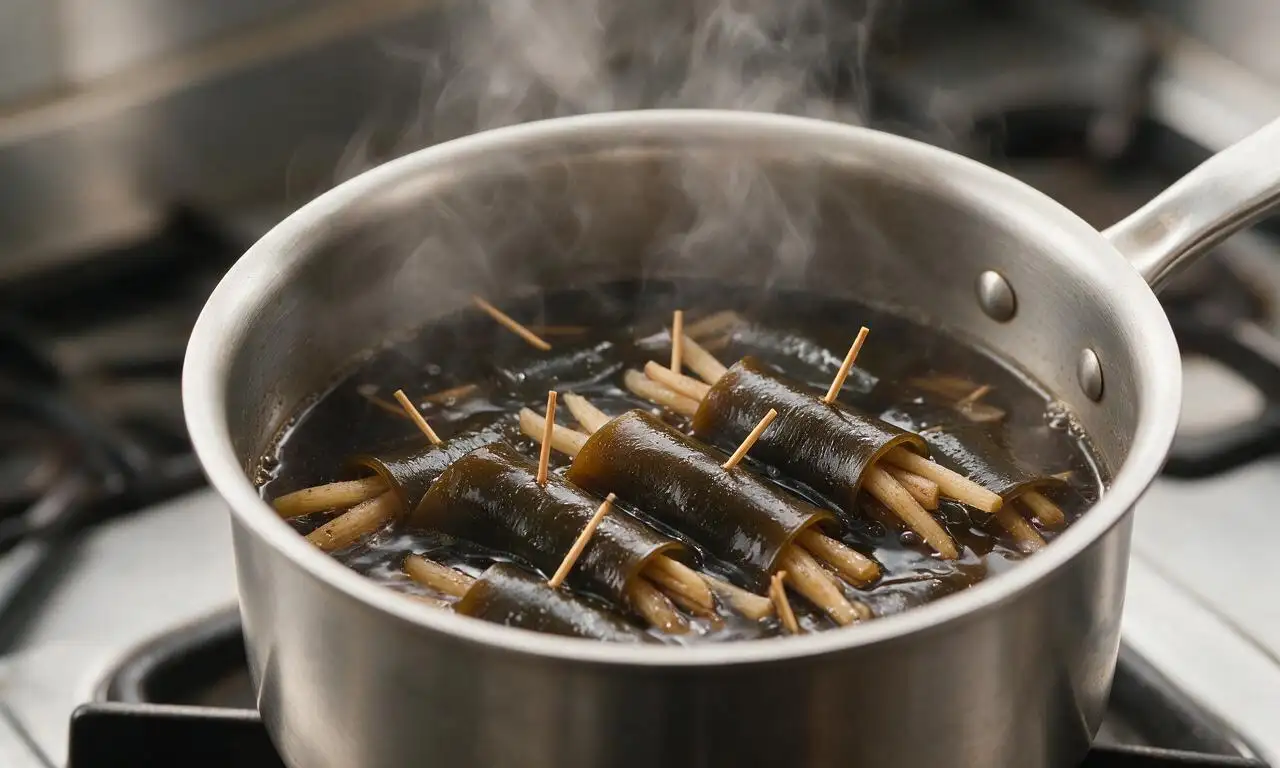
Kuromame carry a wish for good health and consistent hard work in the new year—their name plays on the Japanese word for “diligence,” and their dark, glossy color is thought to ward off misfortune. Cook them low and slow with sugar and soy sauce until tender, then cool them in their cooking liquid for that signature plump, shiny texture.
4.How do I prep kazunoko (salted herring roe) so it’s not too salty?
▾
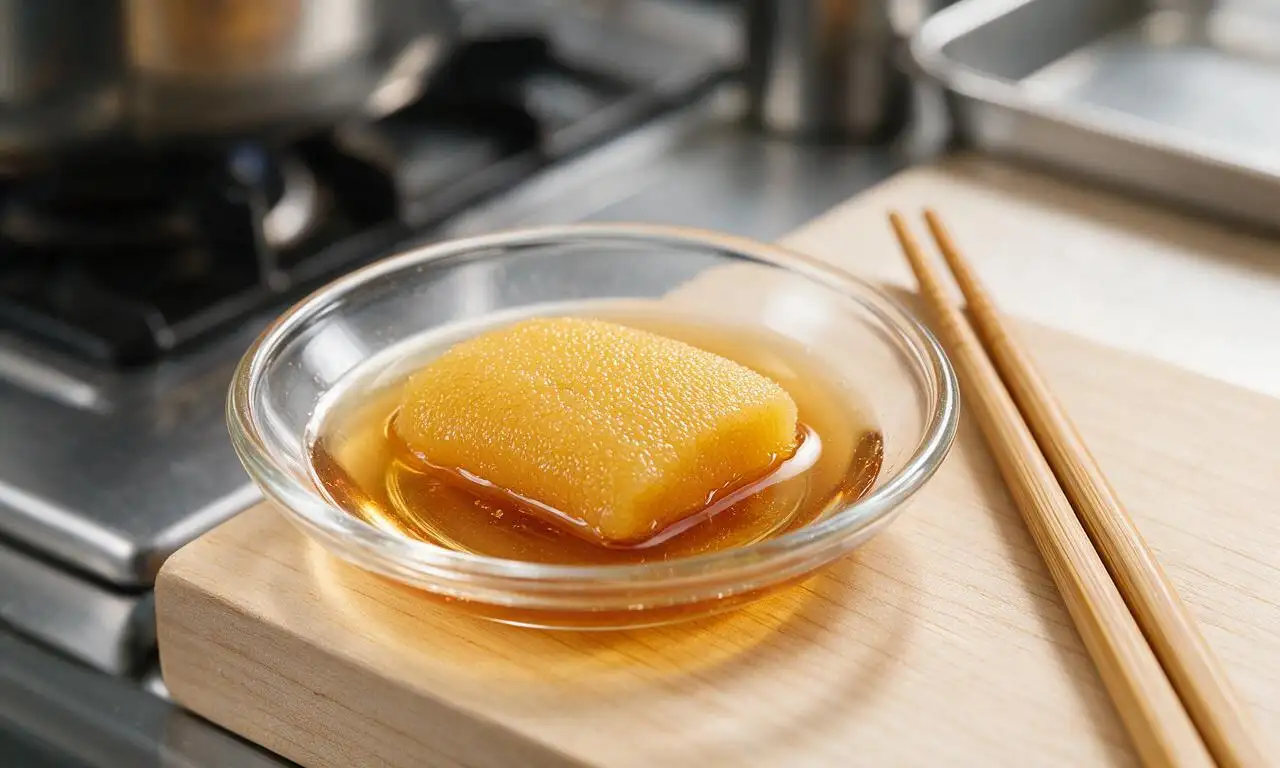
Salted kazunoko is heavily cured for long-term preservation, so you’ll need to desalinate it before serving. Soak the roe sacs in cold, filtered water in the fridge for 8-12 hours, changing the water once halfway through, until it has a mild, briny pop with no harsh salty bite. Pat dry before tossing with a light dashi-soy dressing.
5.Why are tazukuri (dried baby sardines) part of the New Year spread?
▾
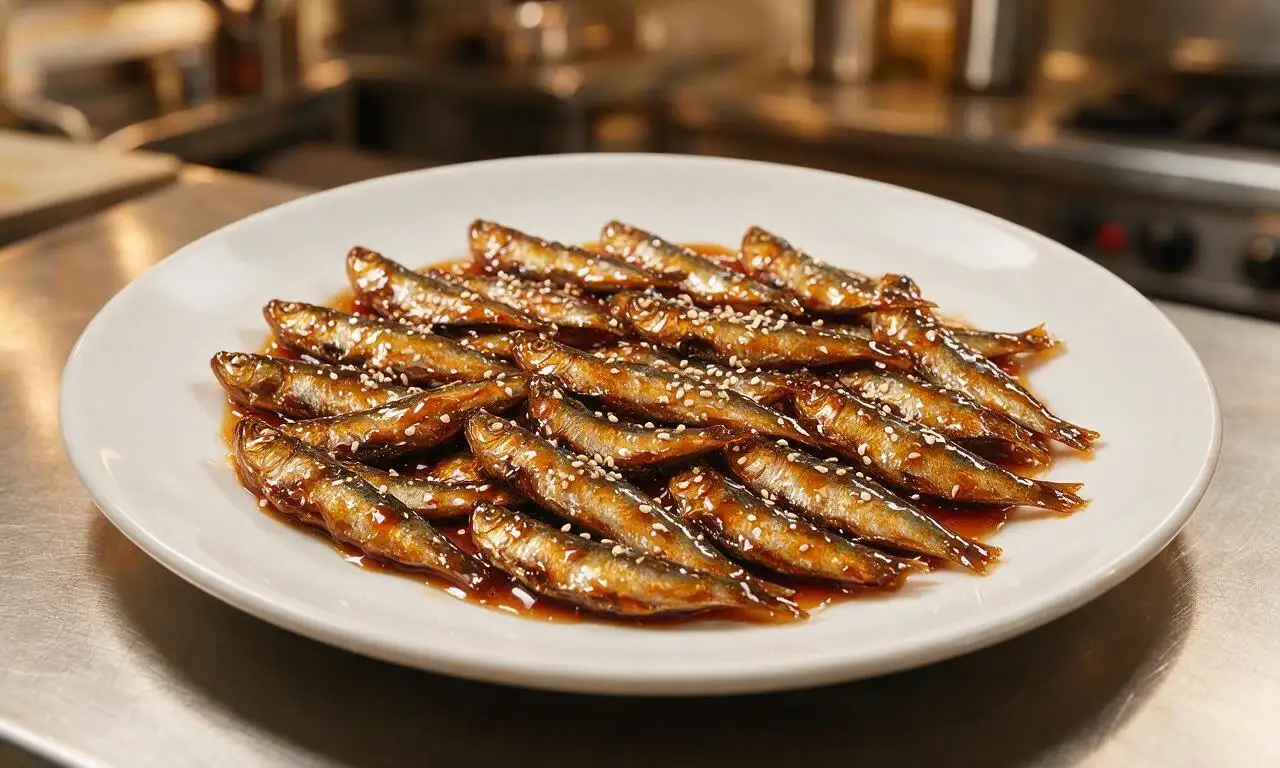
Tazukuri, which translates to “rice paddy maker,” date back to when sardines were used as natural fertilizer to boost rice harvests, so they symbolize an abundant, fruitful year ahead. Toast them briefly in a dry pan then toss with a sweet soy-sugar glaze until crisp, taking care not to burn them or they’ll turn unpleasantly bitter.
6.Can I make a vegetarian version of osechi without losing the traditional meaning?
▾
Definitely! Many modern osechi spreads swap fish-based items for plant-forward alternatives that still carry lucky symbolism. For example, replace kazunoko with brined, cubed konjac for a similar snappy texture, and add simmered lotus root, sweet chestnuts, and bright pickled vegetables to keep the spread colorful and inclusive for vegetarian guests.
7.What’s the easiest osechi dish for a first-time maker to pull off?
▾
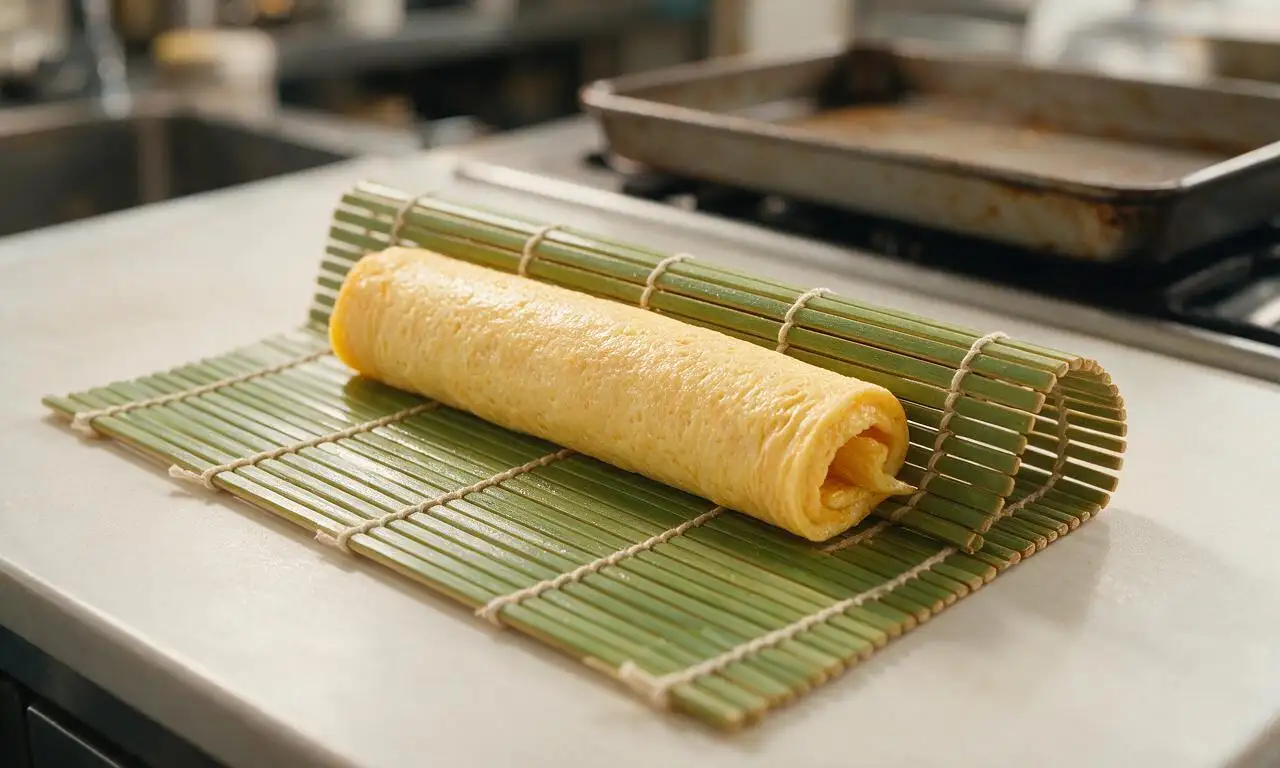
The sweet-savory rolled tamagoyaki made with large eggs is extremely beginner-friendly, even if you don’t have a specialty rectangular pan—a small nonstick skillet works perfectly! Whisk eggs with a splash of dashi, sugar, and a pinch of salt, cook thin layers one at a time, rolling as you go, for a tender, mild egg slice that pairs with every other osechi item.
8.How do I incorporate hanpen (steamed white fish cake) into my osechi spread?
▾
Hanpen has a light, fluffy, mild texture that balances the richer, sweeter flavors of other osechi items. Cut it into decorative flower or pine-bough shapes, simmer it briefly in lightly seasoned dashi, or toast it slightly and brush with a thin miso glaze for a soft, savory bite that adds bright white contrast to your jubako layers.
9.How far in advance can I prep osechi dishes?
▾
Most osechi dishes are intentionally designed to hold well, so you can prep almost all items 2-3 days before New Year’s Day and store them in airtight containers in the fridge. The only exception is delicate hanpen, which you should add to your boxes the night before serving to keep its soft, fluffy texture from getting soggy.
10.Why is osechi food usually sweet, salty, or vinegary instead of freshly cooked hot?
▾
Those bold, preserved flavor profiles developed long before home refrigeration, to keep food safe to eat during the multi-day New Year holiday when cooking was thought to disrupt the year’s first good luck. The dishes are meant to be enjoyed at cool room temperature, so you won’t need to reheat anything when serving guests.
11.Do I have to arrange the dishes in a specific order in the jubako boxes?
▾
Traditionally, sweet items like kuromame and candied chestnuts go on the top layer, savory grilled and simmered items like tazukuri and tamagoyaki on the middle layers, and brined or pickled items like kazunoko on the bottom layer. That said, the top priority is arranging items so colors pop evenly across each layer for a festive look.
12.My kuromame came out wrinkly instead of plump and shiny—what did I do wrong?
▾
Wrinkly kuromame almost always happens when you cook them at too high a rolling boil, or let them cool exposed to air instead of submerged in their cooking liquid. Next time, simmer them on the lowest possible heat, skimming any rising foam, then let them soak fully covered in their sweet soy liquid overnight in the fridge to plump up.
13.Can I use pre-made store-bought items to cut down on prep time?
▾
Of course! Even in Japan, many families mix homemade and high-quality store-bought osechi items to save time during the busy holiday season. Focus on making 2-3 favorite dishes from scratch—like tamagoyaki or tazukuri—then pick up pre-desalinated kazunoko, cooked kuromame, and hanpen from a Japanese grocery store to fill out your spread.
14.What’s the proper way to serve osechi to guests?
▾
Set the stacked jubako boxes at the center of your New Year’s gathering table, and uncover one layer at a time so food stays fresh. Serve small plates and chopsticks for guests, and pair the spread with hot ozoni (mochi soup) and cold toso (spiced New Year sake) for a fully traditional, celebratory meal that feels festive without being fussy.
15.Is there a meaning to the different colors in an osechi spread?
▾
Absolutely! The classic red, white, black, and gold color palette is deeply symbolic: red (from pickled plums or salmon) wards off bad luck, white (from hanpen or mochi) represents purity, black (from kuromame or seaweed) stands for stable health, and gold (from kazunoko or chestnuts) signals wealth and prosperity for the year ahead.
16.My tazukuri came out chewy instead of crisp—how do I fix that?
▾
Chewy tazukuri means you didn’t toast the dried sardines long enough to drive off excess moisture, or added too much glaze that made them soggy. Next time, toast sardines in a dry pan over medium-low heat for 3-4 minutes until they crunch when you bite one, toss with just enough thin soy-sugar glaze to coat, then spread on parchment to cool fully.
17.Can I freeze leftover osechi to enjoy later?
▾
Most cooked osechi items freeze well for up to 1 month, with a couple of key exceptions: hanpen will get rubbery and watery when frozen and thawed, and kazunoko will lose its signature snappy pop, so eat those fresh within 3 days of prep. Freeze kuromame, tamagoyaki, and tazukuri in labeled airtight bags, and thaw in the fridge overnight before serving.
18.Do I need special tools to make osechi at home?
▾
You don’t need any fancy specialty equipment to make a great osechi spread! A regular small nonstick pan works for tamagoyaki, a standard stockpot works for simmering kuromame and hanpen, and stackable food storage containers work in place of lacquer jubako. Small vegetable cutters to punch decorative shapes out of hanpen or veggies are a fun, low-cost nice-to-have.
19.What’s the significance of eating osechi on New Year’s Day, anyway?
▾
Osechi is rooted in centuries of Japanese tradition of welcoming the new year’s deities with offerings of lucky food, then sharing that food with family to wish each other health, happiness, and success in the 12 months ahead. Each dish carries a specific wish, so taking a bite of each is like making a small, joyful wish with loved ones.




OMG, I made this for our family New Year’s Day dinner this year and my kids went crazy for the sweet black beans and datemaki! I was worried the flavors would be too unfamiliar for them but they kept asking for second helpings. SO good, will absolutely be making this a yearly tradition!
This was my first time ever attempting osechi and I was so intimidated at first! The instructions were super clear but I did mess up the kuromame a little because I forgot to soak them overnight. Total cook time was closer to 3 hours for me because of that mishap, but everything still tasted amazing. Wondering if there’s a quicker shortcut for the beans if I forget to prep ahead?
Total game changer! I brought a selection of these osechi dishes to our neighborhood New Year’s potluck and everyone was asking me for the recipe. The sweet shrimp and chestnut kuri kinton were total crowd favorites, even with folks who said they don’t usually like Japanese food. 10/10, worth every minute of prep!
Made this for my roommates’ little New Year’s get-together since we couldn’t go home for the holidays. We didn’t have all the fancy traditional serving boxes so we just arranged everything on a big wooden platter and it still looked so fancy! Only knocked off a star because I couldn’t find konnyaku at my local grocery store so I had to skip that part, but everything else slaps.
I grew up eating my obaachan’s osechi every New Year’s but I never learned to make it before she passed. This recipe tastes exactly like hers— I teared up a little when I took the first bite of the simmered lotus root. Thank you so much for putting this together with such clear, easy to follow steps.
Great recipe overall! I did most of the prep work the night before New Year’s Eve so I wouldn’t be stuck in the kitchen all day, which worked out really well. My only note is that I wish the recipe specified which dishes are best made ahead vs day-of, because I was guessing a little bit. Still turned out delicious though, my whole family loved it.
As a vegetarian, I was so happy to see how easy it was to adapt this recipe! I swapped the shrimp for marinated roasted tofu and skipped the fish cakes, loaded up on extra lotus root, konnyaku, pickled veggies, and sweet chestnut puree, and it was still such a beautiful spread. My vegan roommate even had seconds! Would love more veg-forward Japanese holiday recipes if y’all have them.
I’ve been collecting vintage international holiday recipes for years and this one is top tier. I loved learning about the meaning behind each dish while I was cooking—good fortune, health, family prosperity, all that good stuff. It made the whole cooking process feel so much more special than just making a regular dinner. We ate ours while watching the New Year’s marathon on TV and it was the perfect start to the year.
Wait, why did I never think to prep osechi for weekly meal prep? The portions are perfect, most of the dishes last super well in the fridge, and it’s way more exciting than my usual chicken and rice rotation. I made a big batch on Sunday and have been eating a little bit for lunch every day this week and it’s held up perfectly. 10/10, will be doing this way more often than just New Year’s!
The end result tasted really good but I was surprised by how many specialty ingredients I needed to track down. I had to go to three different Asian grocery stores to find all the stuff, which added a lot of extra time to the process. If you don’t live near a well-stocked Japanese market, be prepared to order some stuff online ahead of time!
My granddaughter is married to a Japanese American man and I wanted to make something special for their first New Year’s married. I practiced this recipe twice before the big day and they both said it tasted just like the osechi his grandma used to make! I was so proud. The sweet rolled omelet was my favorite part to make, it was so pretty when I sliced it.
This was so fun to make! My 8 year old helped me roll the datemaki and arrange all the dishes in the boxes, which made for such a fun family activity. I only gave it 4 stars because the soy simmered vegetables were a little saltier than I expected, so next time I’ll cut back a little on the soy sauce. Otherwise, perfect!
Just finished making this for our small New Year’s brunch tomorrow and my whole apartment smells incredible. I did a little taste test of each component while I was plating and I’m already obsessed. The kuri kinton is so sweet and creamy, I could eat that whole bowl by itself. Can’t wait for my friends to try it tomorrow!
Made this after getting back from a New Year’s ski trip with friends and it was the perfect cozy post-ski feast. We ate it in our sweatpants around the coffee table and everyone agreed it was the best end to a great holiday week. The pickled plum veggies were the perfect bright bite after a long cold day outside.
Solid recipe! I was a little intimidated by the medium difficulty rating but it was way more straightforward than I thought it would be. The only part I struggled with was getting the datemaki to roll tight enough—mine came out a little lopsided, but they still tasted great. Any tips for getting a tight, even roll next time?
I host a big New Year’s Day open house every year and I’m always looking for new dishes to add to the spread. This year I added a full osechi platter and it was the talk of the party! So many guests said they’d never tried it before and loved learning about the different meanings of each dish. It looked so beautiful on the buffet table too, all the different colors popped.
I had osechi for the first time when I visited Tokyo for New Year’s a couple years ago and I’ve been chasing that flavor ever since. This recipe is spot on! It tasted exactly like the feast we had at our ryokan, I couldn’t believe it. I was worried I wouldn’t be able to replicate it at home but this was perfect.
I’ll be honest, I was worried 2.5 hours of cook time would be too much for my lazy holiday self but it was actually really enjoyable! I put on a bad holiday movie, poured myself a glass of sparkling wine, and took my time prepping each dish, and it didn’t feel like work at all. The end result was so worth it, 10/10.