
making cheese at home
intro
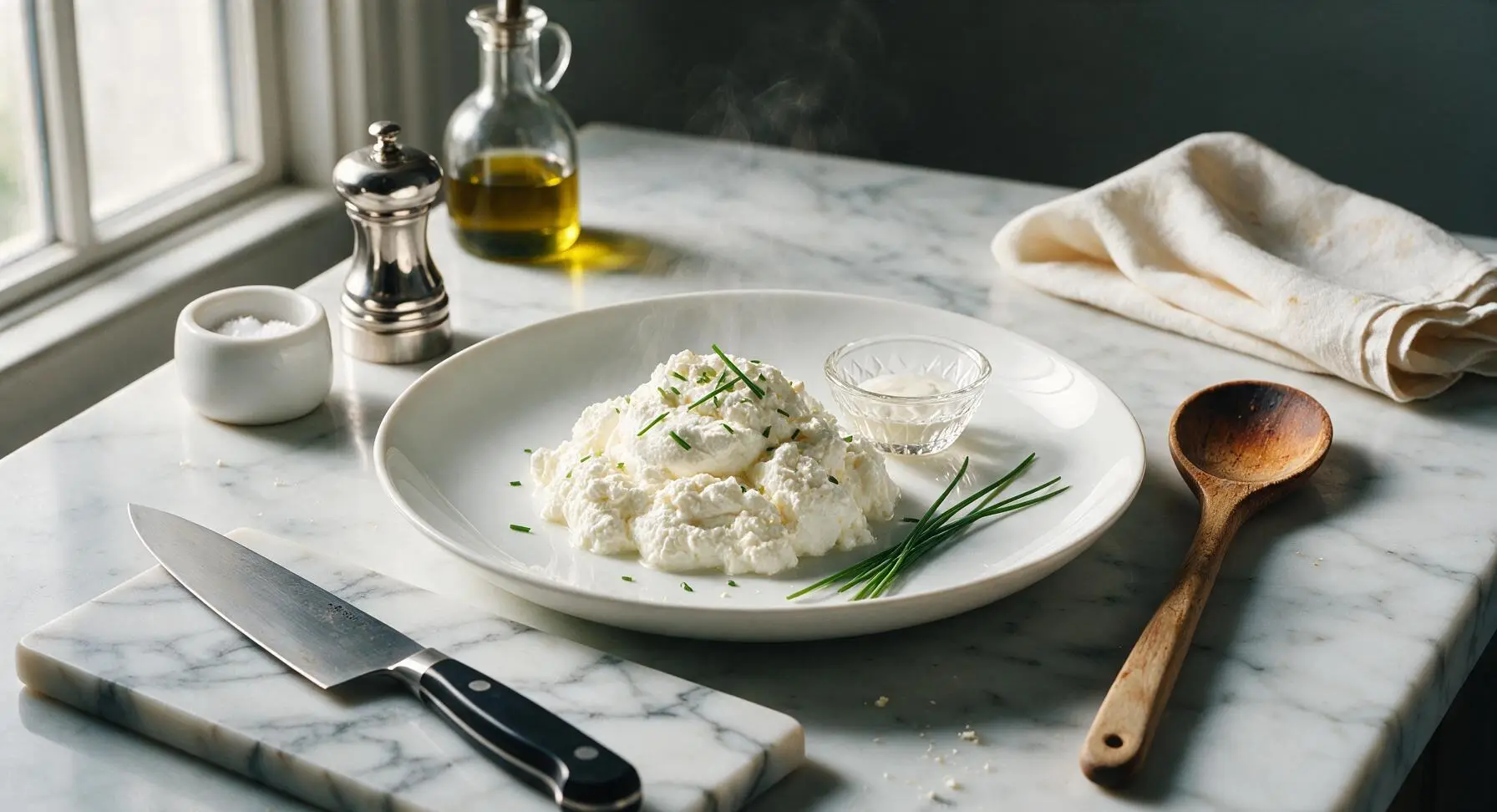
Creamy, pillowy fresh ricotta made with just 4 simple ingredients, no fancy equipment required. Brighter and richer than store-bought, perfect for spreading on crusty bread or adding to favorite recipes.
Ingredients
Steps
Prep Cooking Setup
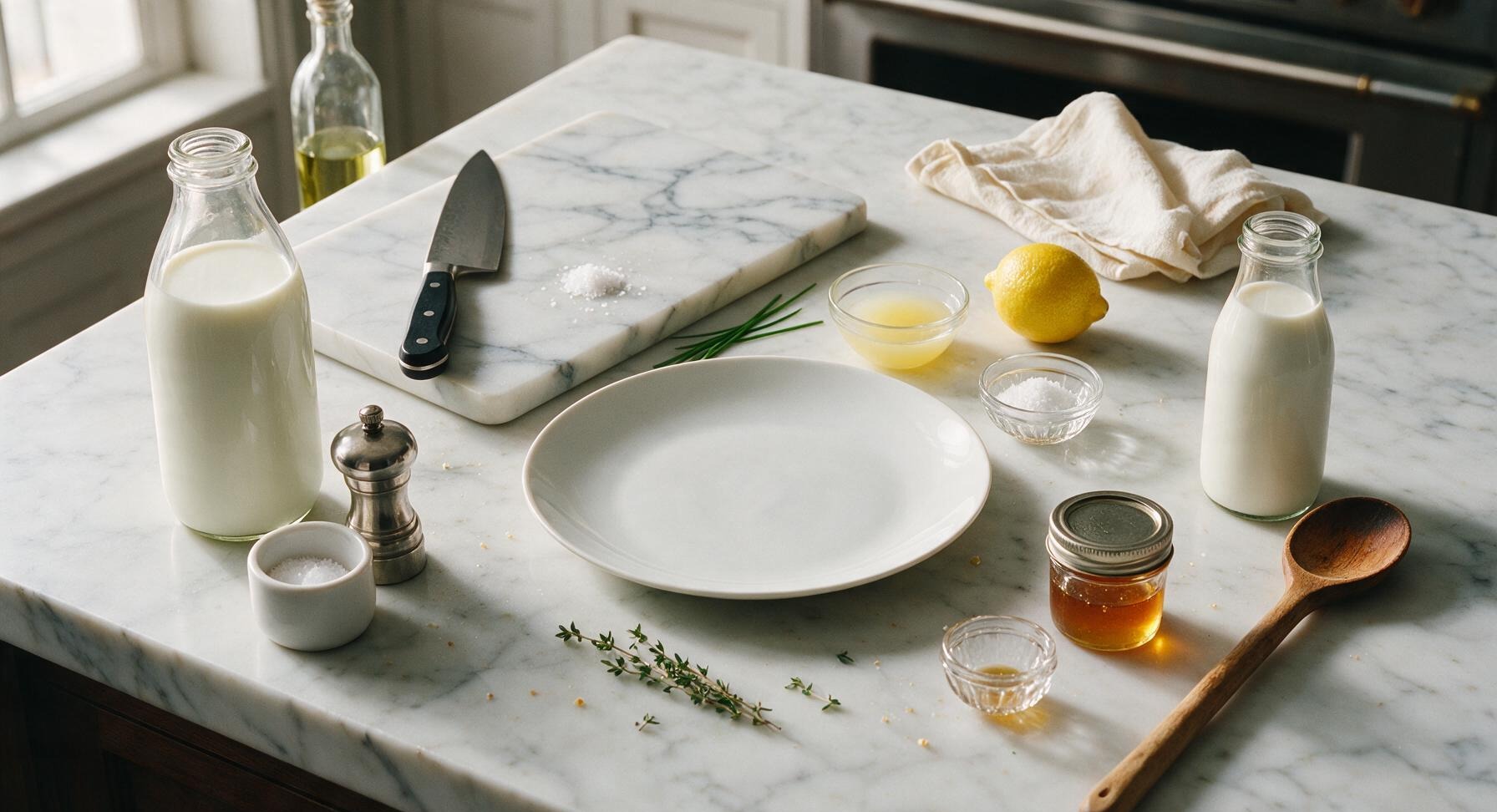
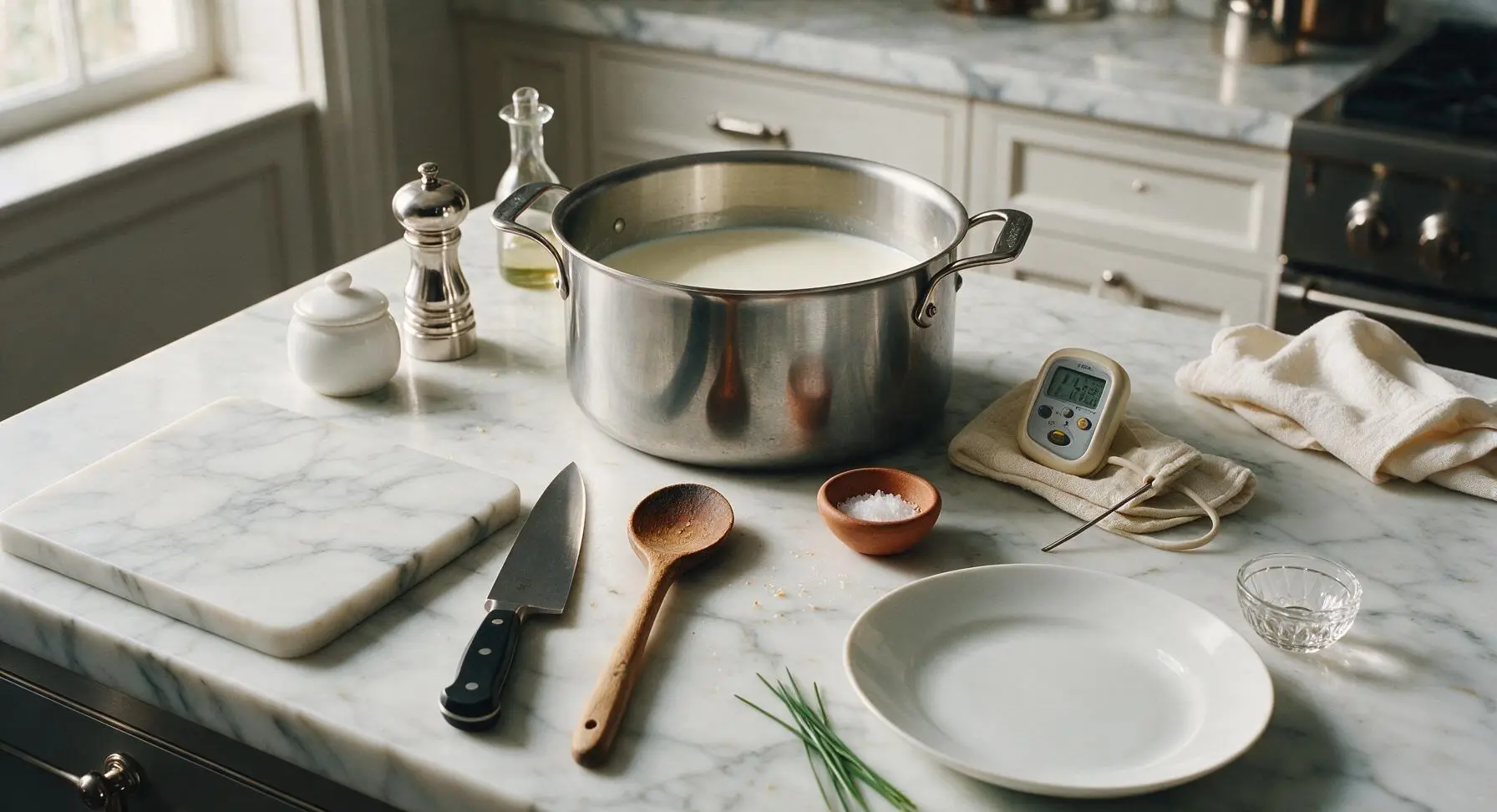
Place the 6-quart stainless steel stock pot on the center-back of the work area. Pour the full 2 liters of whole milk and 1 cup of heavy cream into the pot, add 1 teaspoon of kosher salt, and stir gently to combine. Do not turn on the heat yet. Ensure your instant-read thermometer is positioned on its pot holder to the right of the pot, ready to monitor milk temperature, as overheating will cause tough, grainy curds.
Heat Milk Slowly
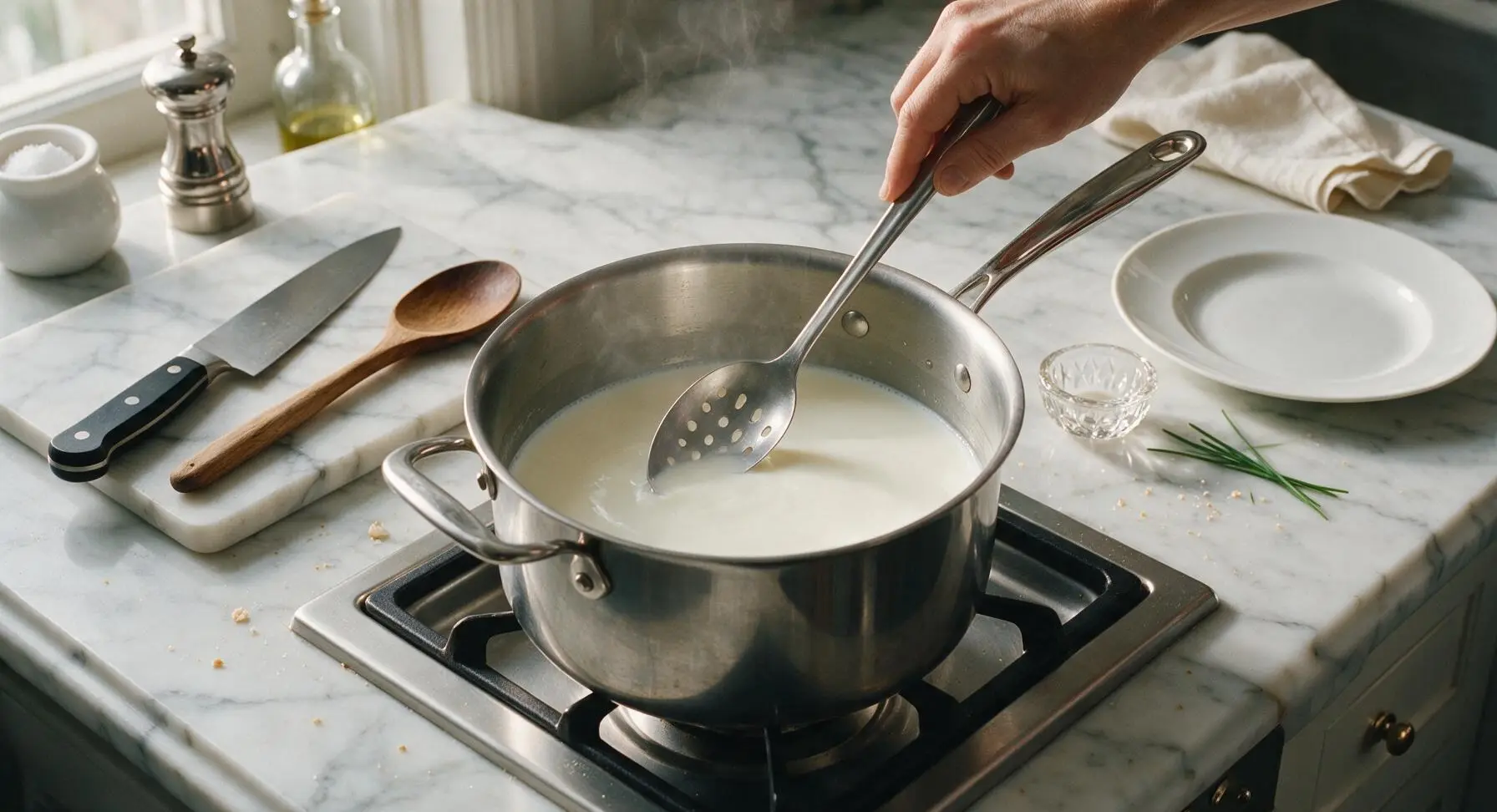
Turn the stovetop burner to medium-low heat. Warm the milk mixture slowly, stirring occasionally with the stainless steel slotted spoon to prevent scorching on the pot bottom, until it reaches exactly 190°F (88°C). Look for visual cues: small bubbles forming around the pot edge and light, wispy steam rising from the surface. Do NOT let the milk come to a rolling boil, as this will produce tough, rubbery curds.
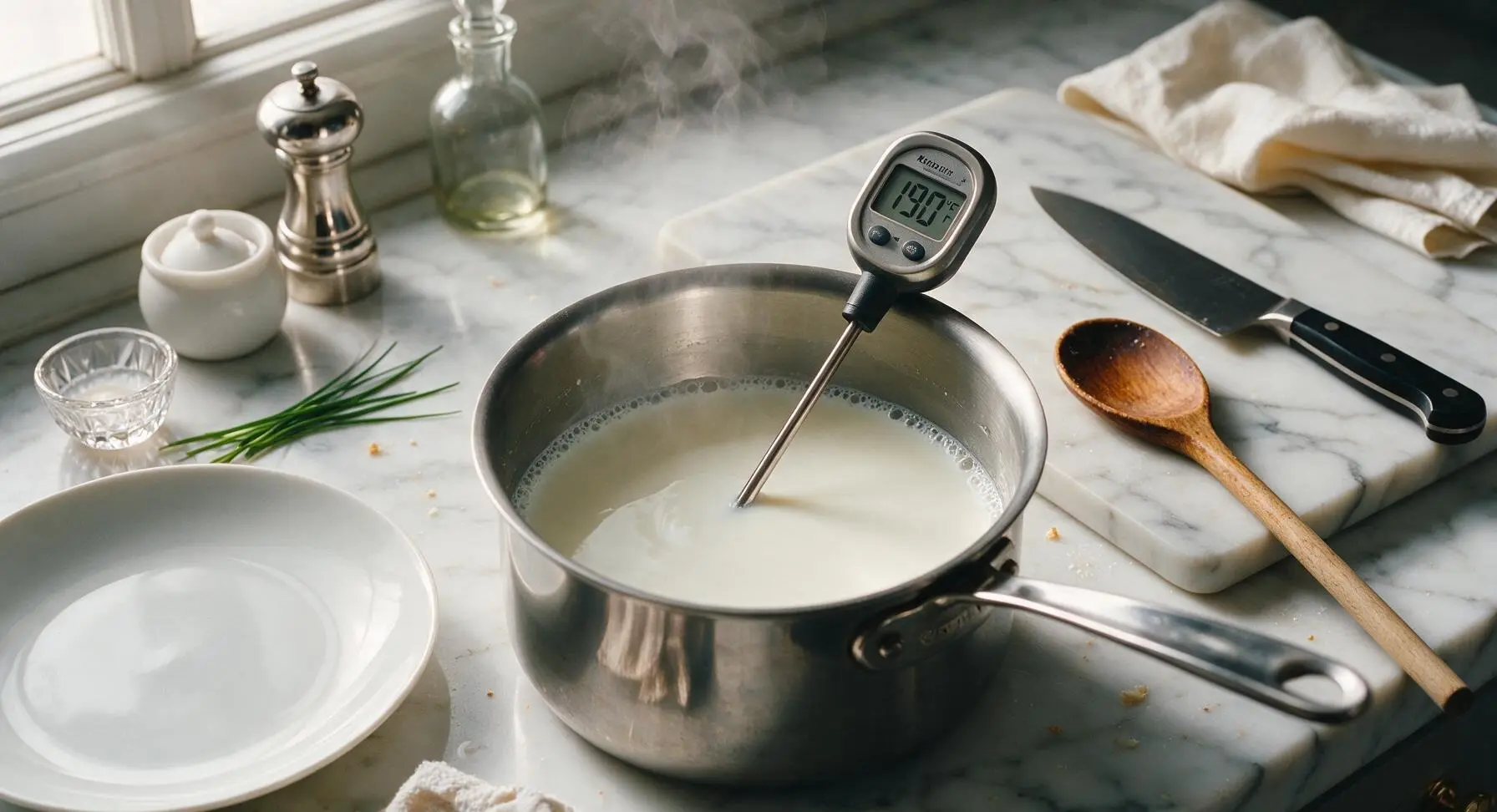
Add Lemon Juice
Turn off the heat completely. Pour 3 tablespoons of fresh lemon juice into the warm milk, then stir very gently and slowly for exactly 10 seconds to distribute the acid. You will immediately see small white curds start to separate from the pale yellow, translucent whey as the acid reacts with the milk proteins.
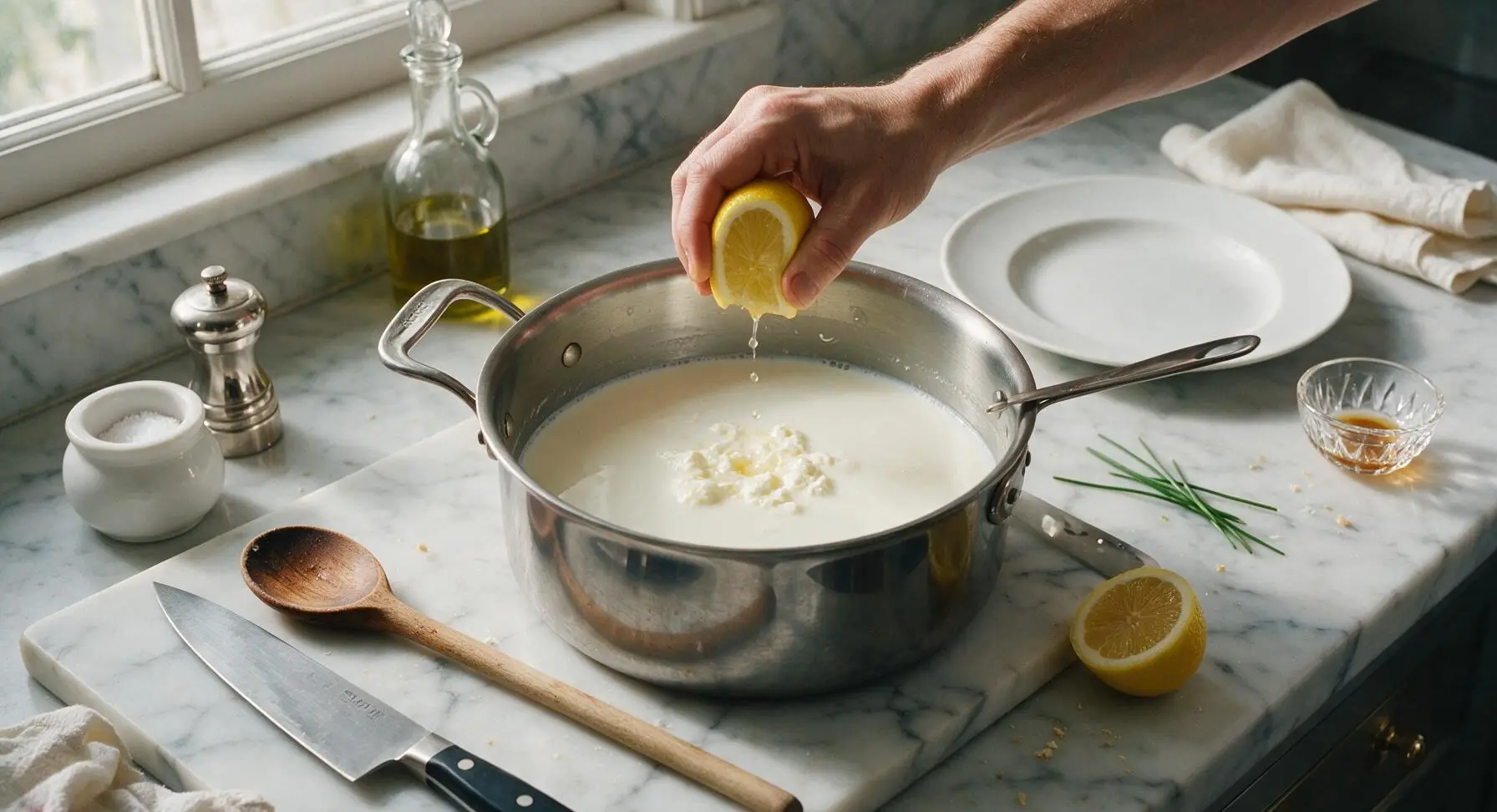
Let Curds Rest
Cover the pot with its stainless steel lid, and let the mixture sit undisturbed for 10 minutes at room temperature. Do not stir during this time: the curds will clump together into larger, soft masses, and the whey will turn a clear pale yellow. If the whey remains milky white after 10 minutes, add 1 extra teaspoon of lemon juice, stir once, and let rest 2 more minutes.
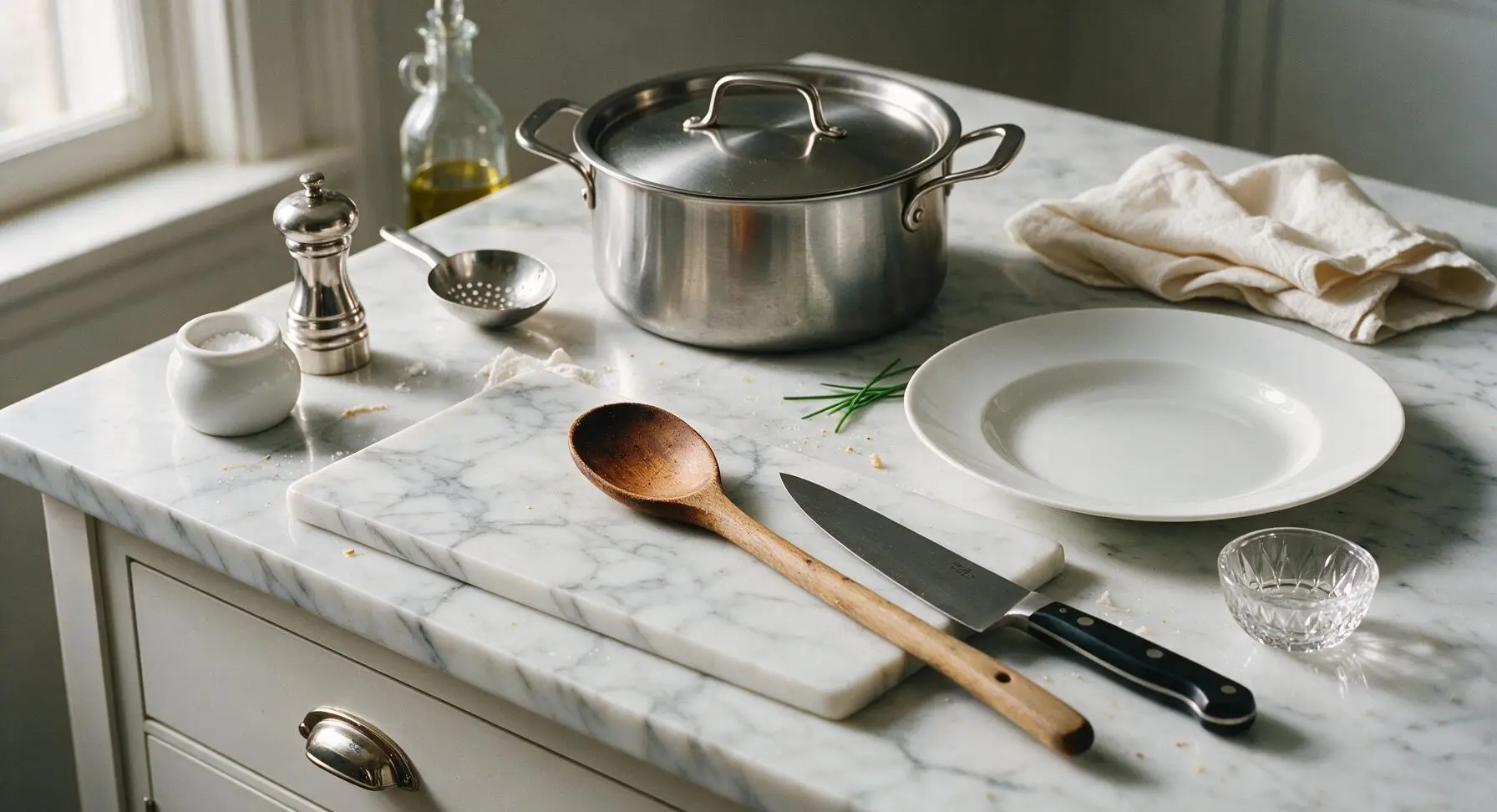
Set Up Colander
While the curds rest, place the 8-inch stainless steel colander front-center on the work area. Fold the unbleached cotton cheesecloth into a double layer, and drape it over the colander so 2 inches of cloth hang over all edges. Smooth out any folds in the cloth to ensure there are no gaps where small curds can escape during draining.
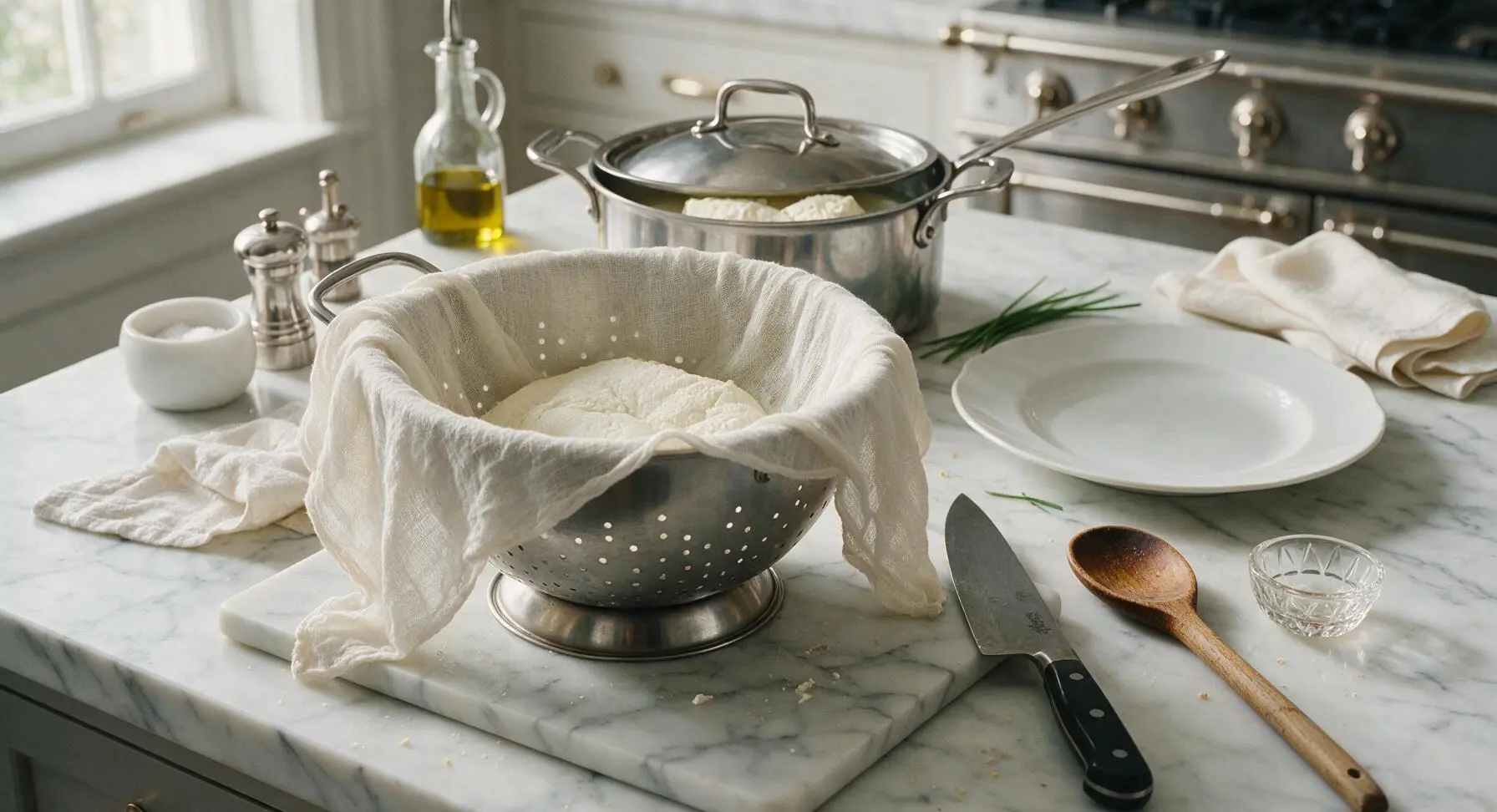
Scoop Curds Gently
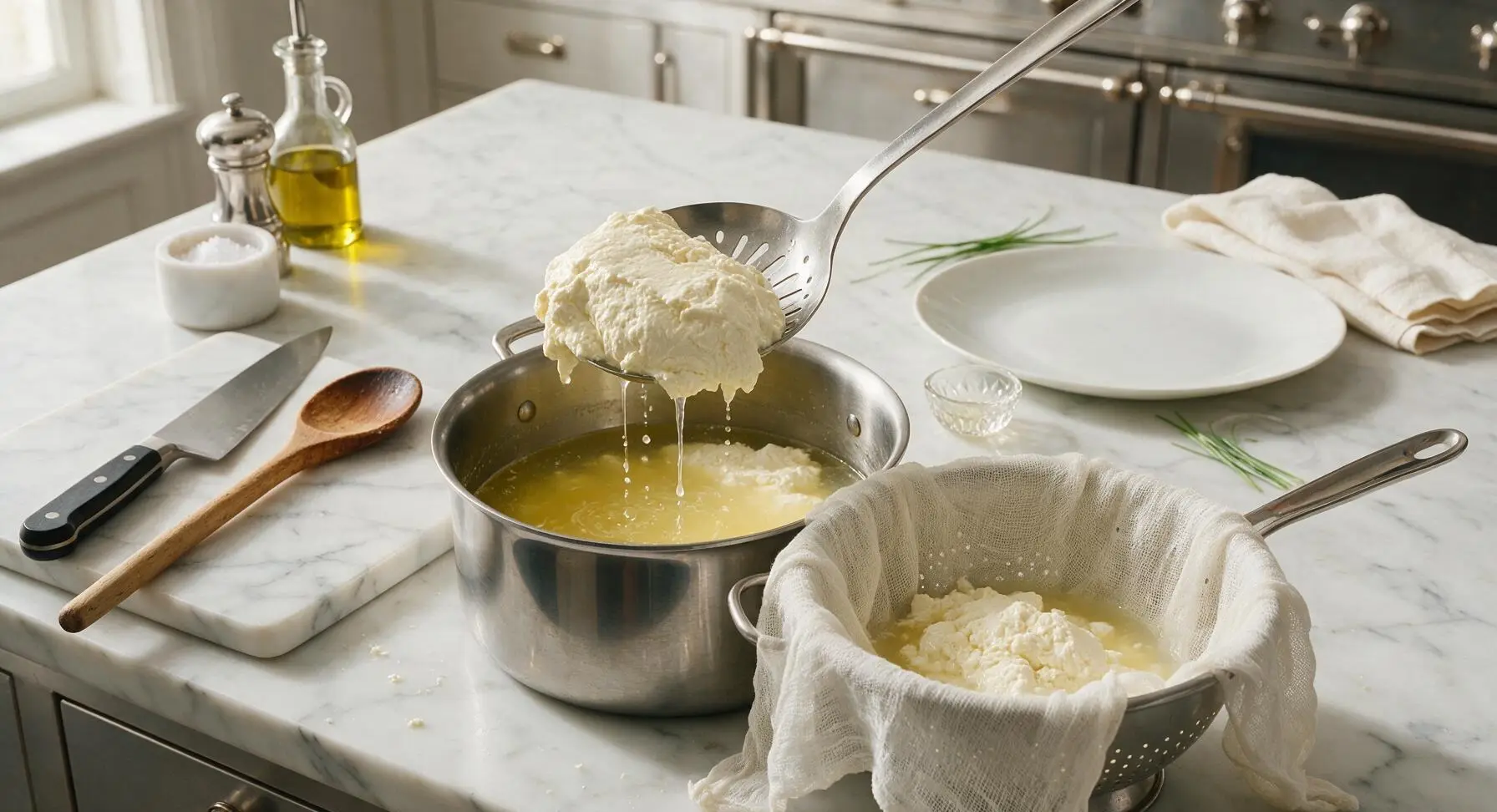
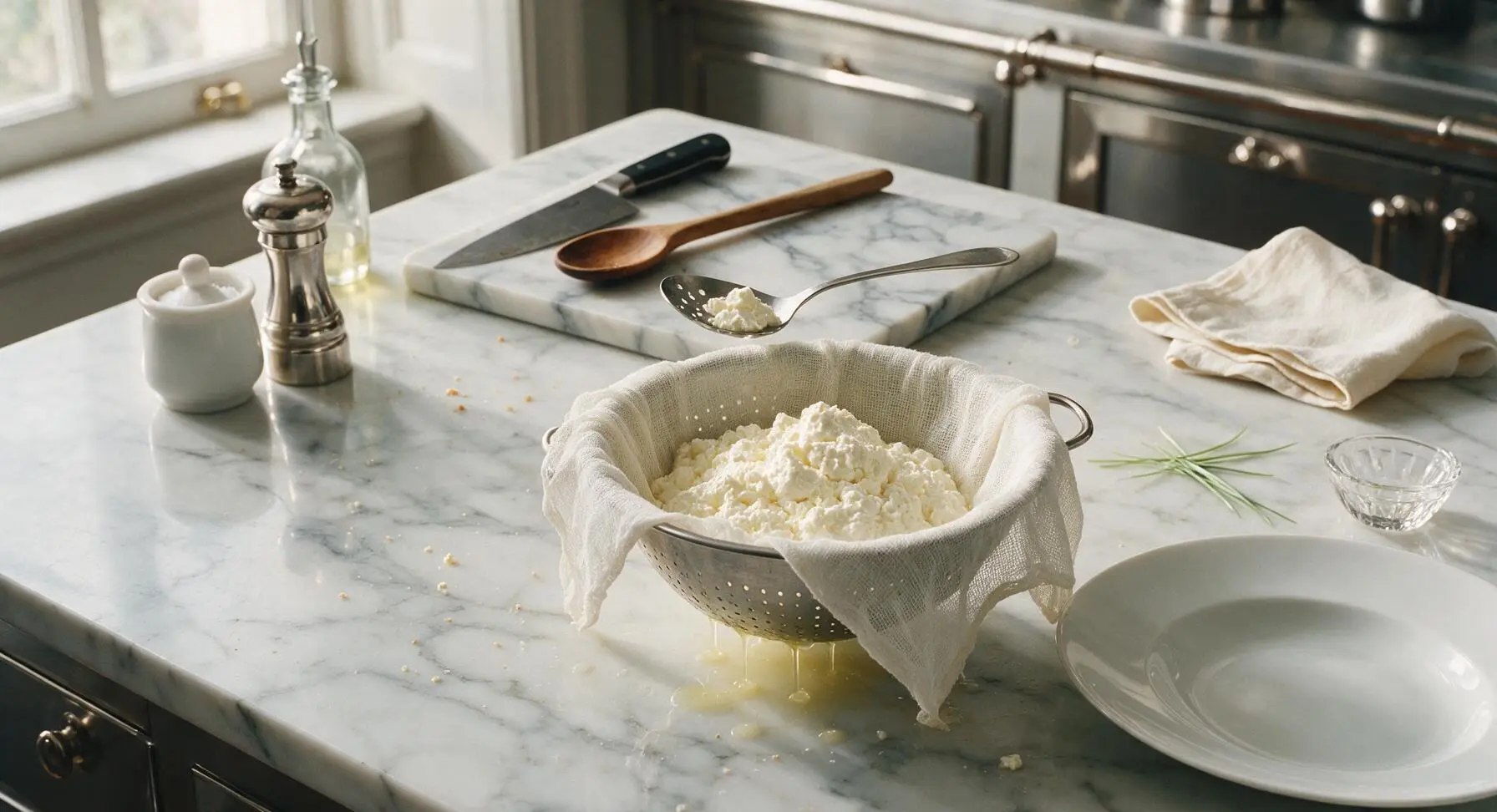
After the 10-minute rest, remove the lid from the pot. Use the stainless steel slotted spoon to gently lift the large, soft curds out of the yellow whey, and transfer them directly onto the cheesecloth-lined colander. Avoid pouring the entire pot of curds and whey into the colander at once, as this can push small curds through the cloth and create rubbery cheese.
Drain to Texture
Let the curds drain in the colander at room temperature to your preferred consistency: drain for 10 minutes for a soft, spreadable ricotta perfect for toast or dips, drain for 20 minutes for a firmer ricotta ideal for filling pasta or baking. Gently gather the edges of the cheesecloth and squeeze very lightly if you want firmer cheese, but do not press hard, as this will remove too much moisture and result in dry, crumbly cheese.
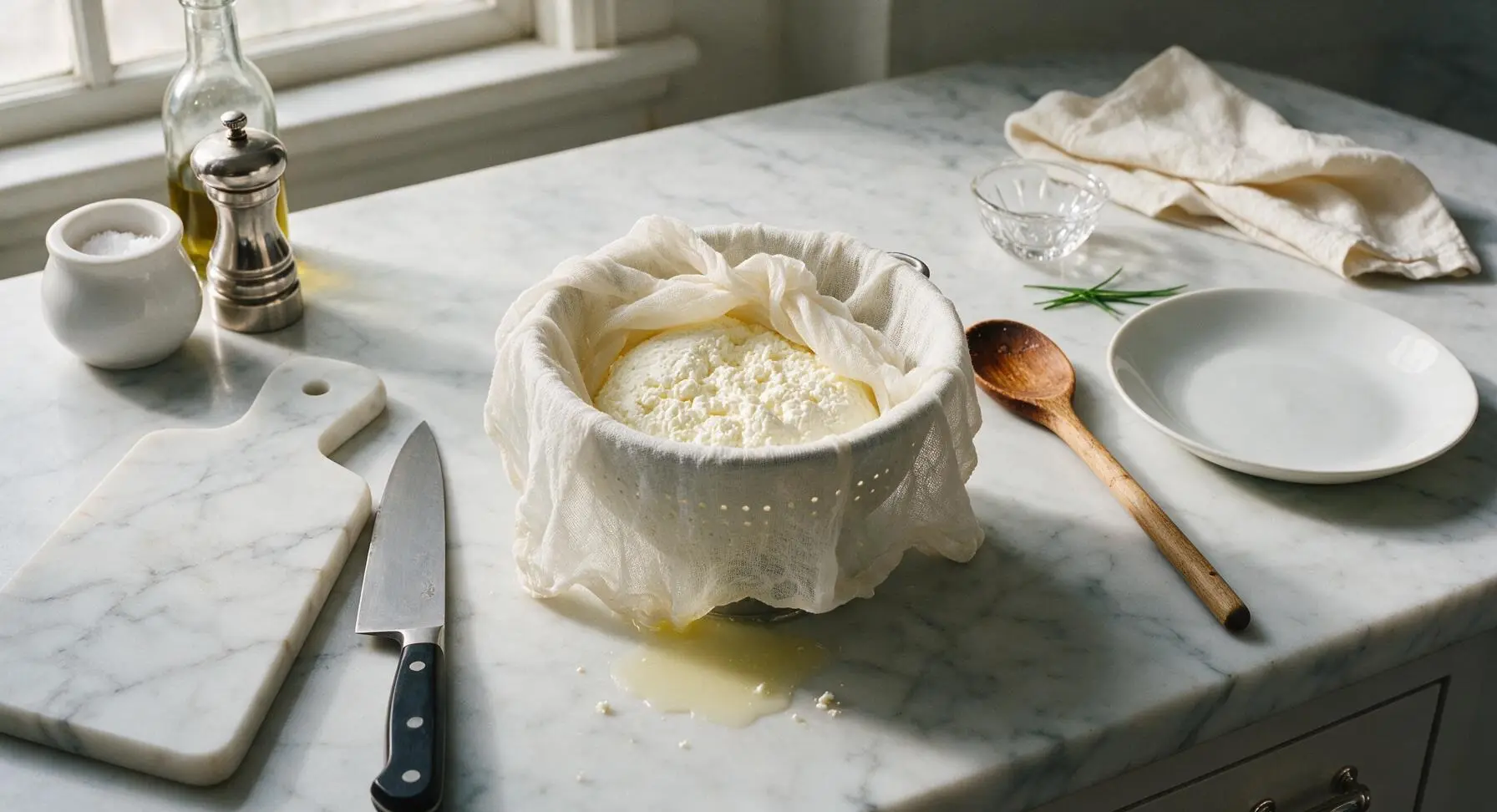
Plate and Garnish
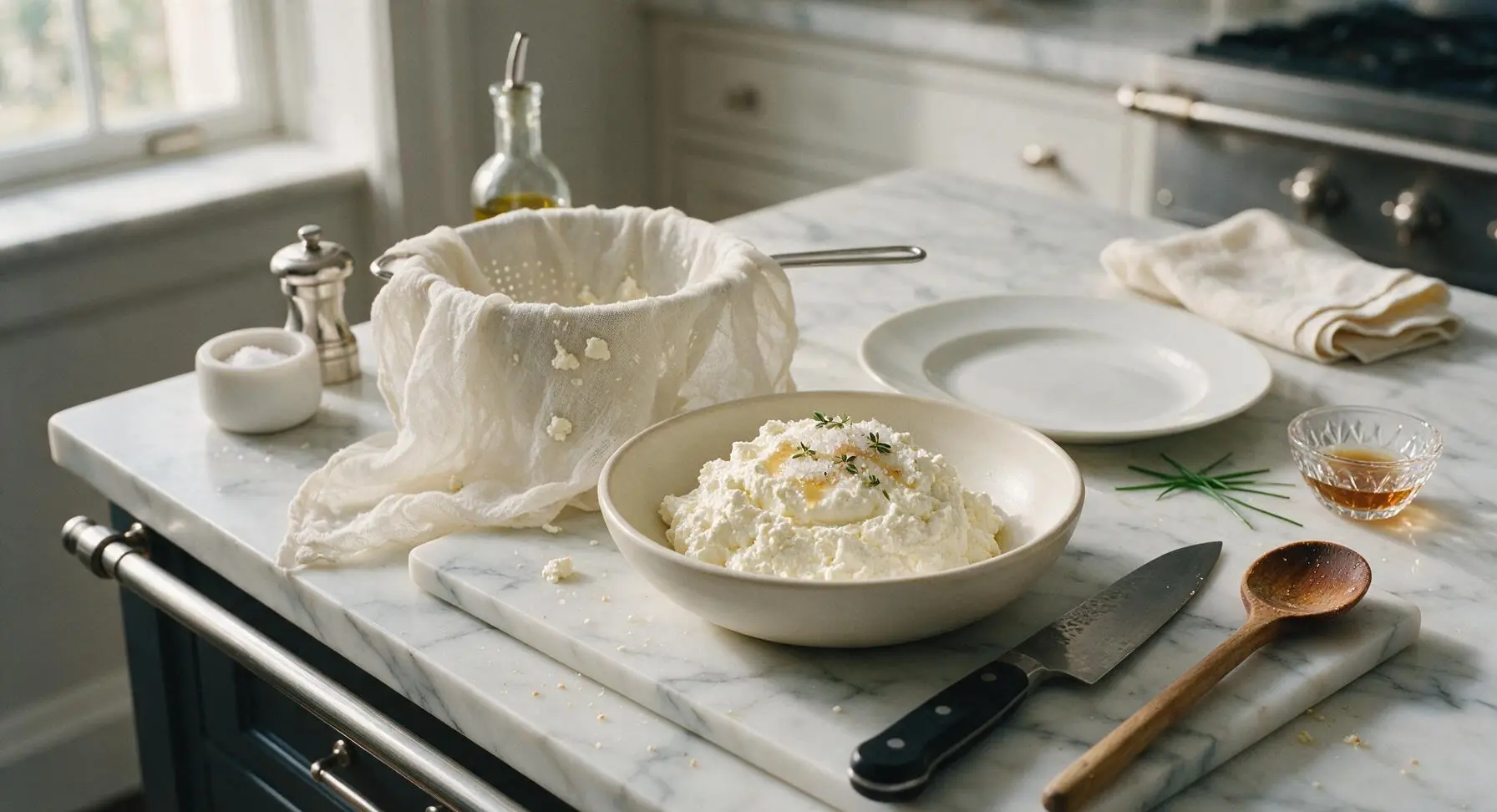
Once the ricotta reaches your desired texture, transfer it gently from the cheesecloth into the matte cream ceramic serving bowl. Top with a light sprinkle of flaky sea salt, a few fresh thyme leaves, and a tiny drizzle of wildflower honey if desired. Serve immediately with crusty sourdough, or store in an airtight container in the fridge for up to 5 days.
Tips
2.Resist the urge to stir vigorously after adding lemon juice: over-stirring breaks large curds into tiny fragments that slip through the cheesecloth weave, reducing your final cheese yield and creating a dry, crumbly texture instead of the soft, pillowy curds that make fresh ricotta special.
3.Save the drained whey instead of pouring it down the drain: the nutrient-dense pale yellow whey adds a subtle creamy tang when used in place of water for bread dough, smoothies, oatmeal, or cooked grains like farro and rice. Store it in a sealed glass jar in the refrigerator for up to 1 week.



Made this last night for a potluck appetizer — I mixed in a little lemon zest and served it with crostini and roasted cherry tomatoes, and people were begging for the recipe! So creamy, way better than any store bought brand I’ve tried. 10/10 will make again every week for meal prep.
My kids loved it! I was worried they’d turn their noses up at homemade cheese but they ate it warm with fresh berries and a drizzle of maple syrup for after school snack. Super straightforward recipe, no weird steps, perfect for a weeknight when I don’t have a ton of extra time.
Took a shot at this after ruining three batches of ricotta from other recipes and I’m shocked how perfectly this turned out on the first try! The curds set exactly when the recipe said they would, no mess, no weird rubbery texture. Already have a batch in the fridge for cannoli filling this weekend.
Solid recipe, but I added a pinch of flaky sea salt at the end and it made all the difference. Great base recipe to tweak with your favorite add-ins, super quick too. Used it on my homemade pizza last night and the texture was chef’s kiss.
Made a double batch on Sunday to use all week — tossed with pasta for lunches, mixed into scrambled eggs, even used a dollop in my morning smoothie for extra creaminess. Holds up great in the fridge for 4 days no problem, no weird separation. Worth the small effort!
OMG, I’ve literally never made cheese before in my life and this was foolproof! I was so intimidated but the steps are so simple, I kept waiting for something to go wrong and it never did. Tastes so fresh, I’ll never go back to store bought again.
Wait, do I have to use cheesecloth? I don’t have any on hand and I really want to make this tonight for my dinner party. Would a fine mesh sieve work in a pinch?
SO good! I served this at my weekend brunch with honey, toasted pistachios, and fresh peaches and every single guest asked where I bought the fancy artisanal ricotta. Little did they know I made it in 35 minutes in my own kitchen for a fraction of the price!
Wait how long does this keep in the fridge? I’m trying to cut down on grocery costs and this seems way cheaper than buying the pre-made stuff, but I don’t want to make more than I can use before it goes bad.
Can I use low-fat milk for this? I’m trying to keep my saturated fat intake a little lower but I love ricotta on my toast in the morning. Would that mess up the curd formation?
I brought this to my neighborhood block party last weekend with herbed crackers and marinated olives, and it was the first appetizer gone! People couldn’t believe how simple it was to make. I even added a little roasted garlic to half the batch and that was a huge hit too.
Wait, is the whey leftover from this usable? I hate throwing food away, and I remember hearing you can use whey for baking or smoothies? Don’t want to pour it down the drain if I can repurpose it!
Added a teaspoon of red pepper flakes and a handful of chopped fresh basil to my batch last night and it was unreal on top of garlic bread. This base recipe is such a blank canvas for whatever flavors you’re craving, I’m obsessed.
Game. Changer. I’ve been making my grandma’s Sunday sauce recipe for 10 years and always used store bought ricotta for the manicotti at our weekly family dinners, but this homemade version made the whole dish taste like I was a kid eating at her house again. Cannot recommend enough.
Wait, did I do something wrong? My curds were really small and didn’t separate very well, I ended up with kind of a grainy mess instead of creamy ricotta. I followed the steps exactly, what gives?
Wait a second — has anyone tried using this ricotta as a swap for cotija in street tacos? I know it sounds weird but I’m out of cotija and have a batch of this in the fridge right now. Curious if it would work!
Used this ricotta for my lemon ricotta pancake entry at the county fair last weekend and WON FIRST PLACE! The judges kept commenting on how fresh and light the cheese flavor was, no weird processed aftertaste. This recipe is my new secret weapon.
Wait — can I make this with lactose-free whole milk? I’m lactose intolerant but ricotta is my favorite cheese, and the lactose-free store bought version is so expensive and tastes weird. Would the acid (lemon juice/vinegar) still make the curds form right?
I used fresh lemon juice from the lemons I grew in my backyard for this recipe, and paired it with homemade sourdough toast for breakfast this morning. It felt like such a fancy, self-sufficient meal and it took barely any effort to pull off. 10/10, will be making this weekly.