
Mettwurst
intro
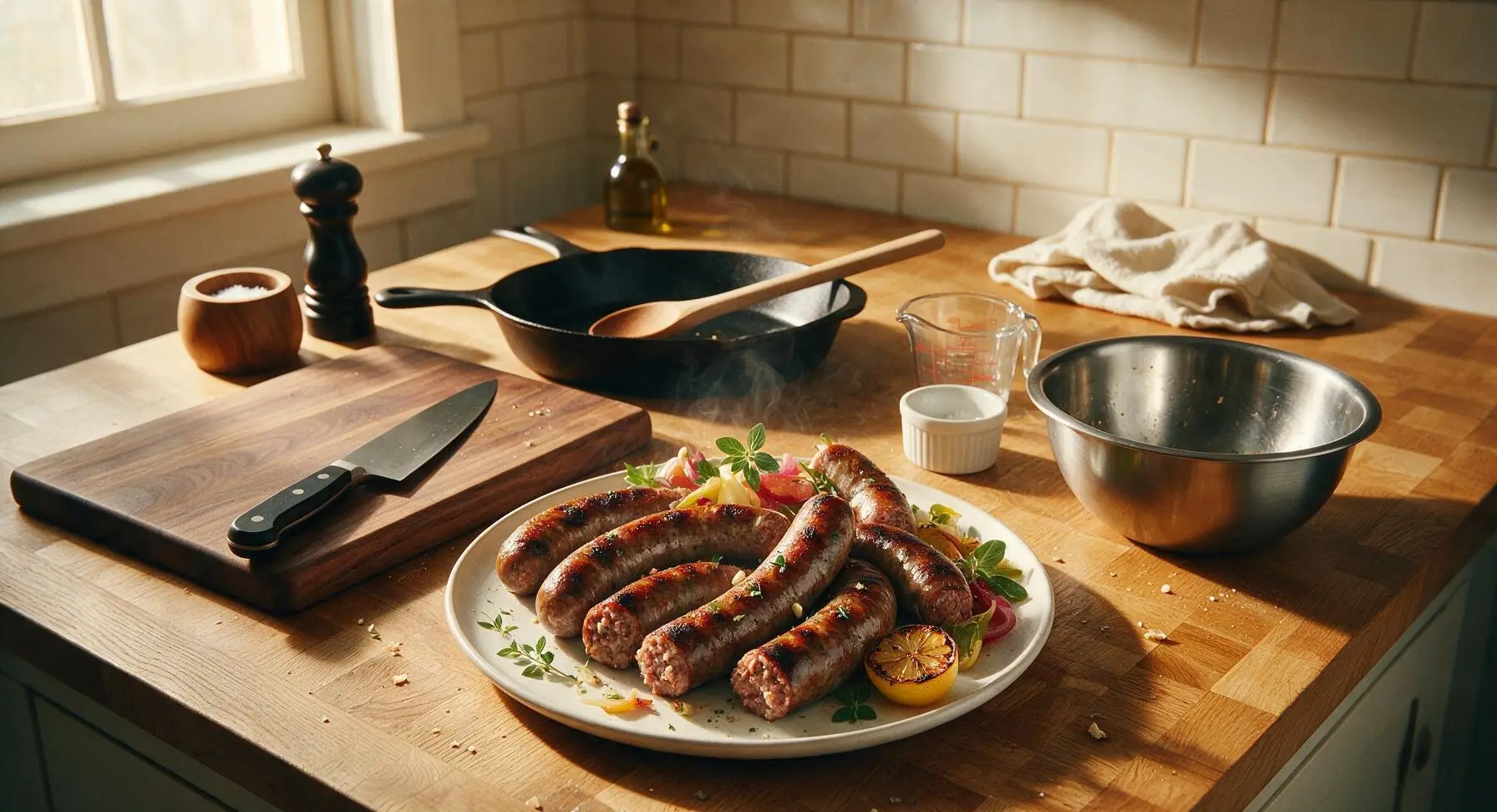
Traditional German Mettwurst is a coarsely ground, smoky cured pork sausage with a snappy casing, garlicky marjoram spice, and juicy texture, perfect for summer backyard grilling.
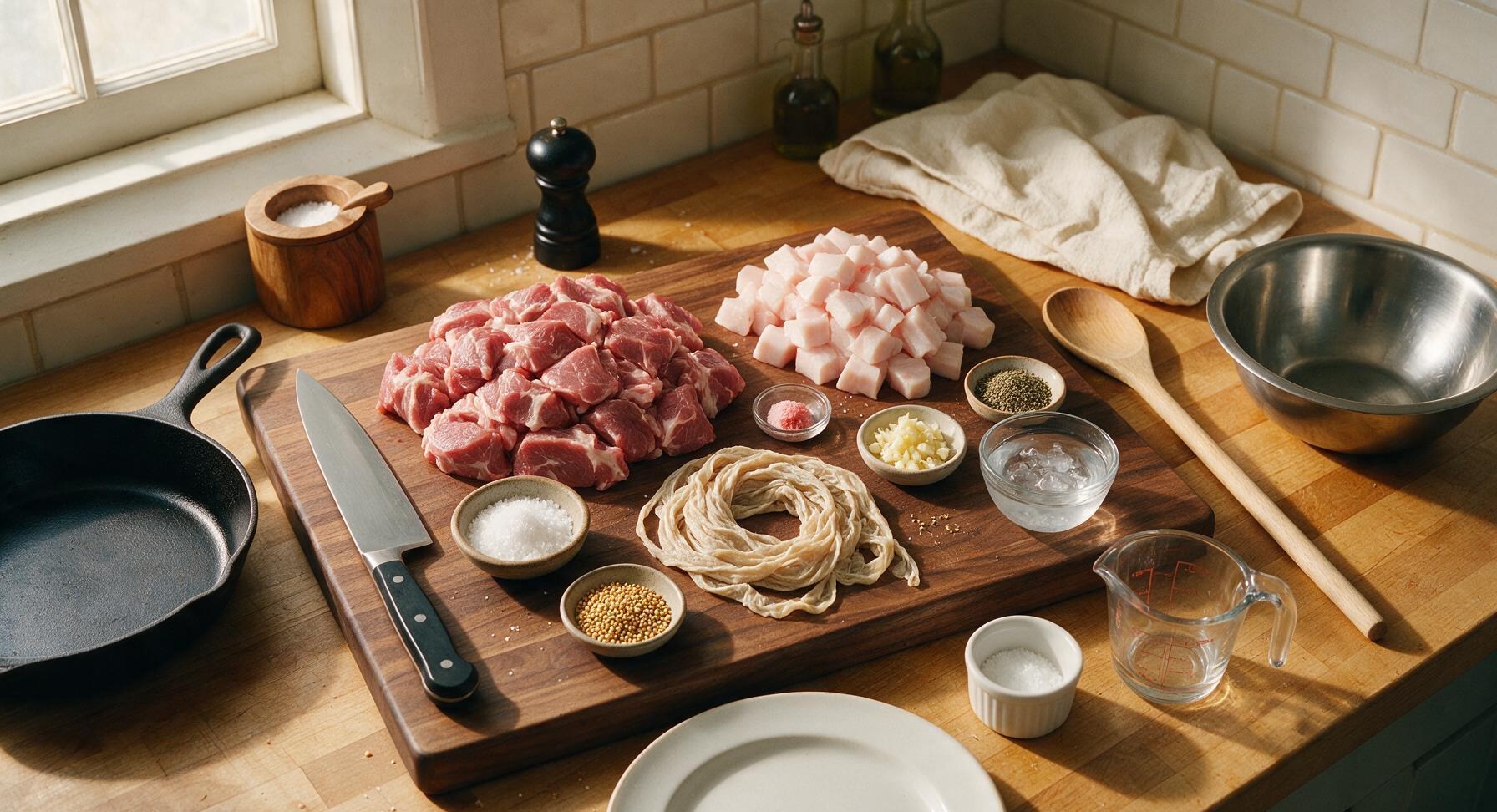
Ingredients
Steps
Chill Meat and Equipment
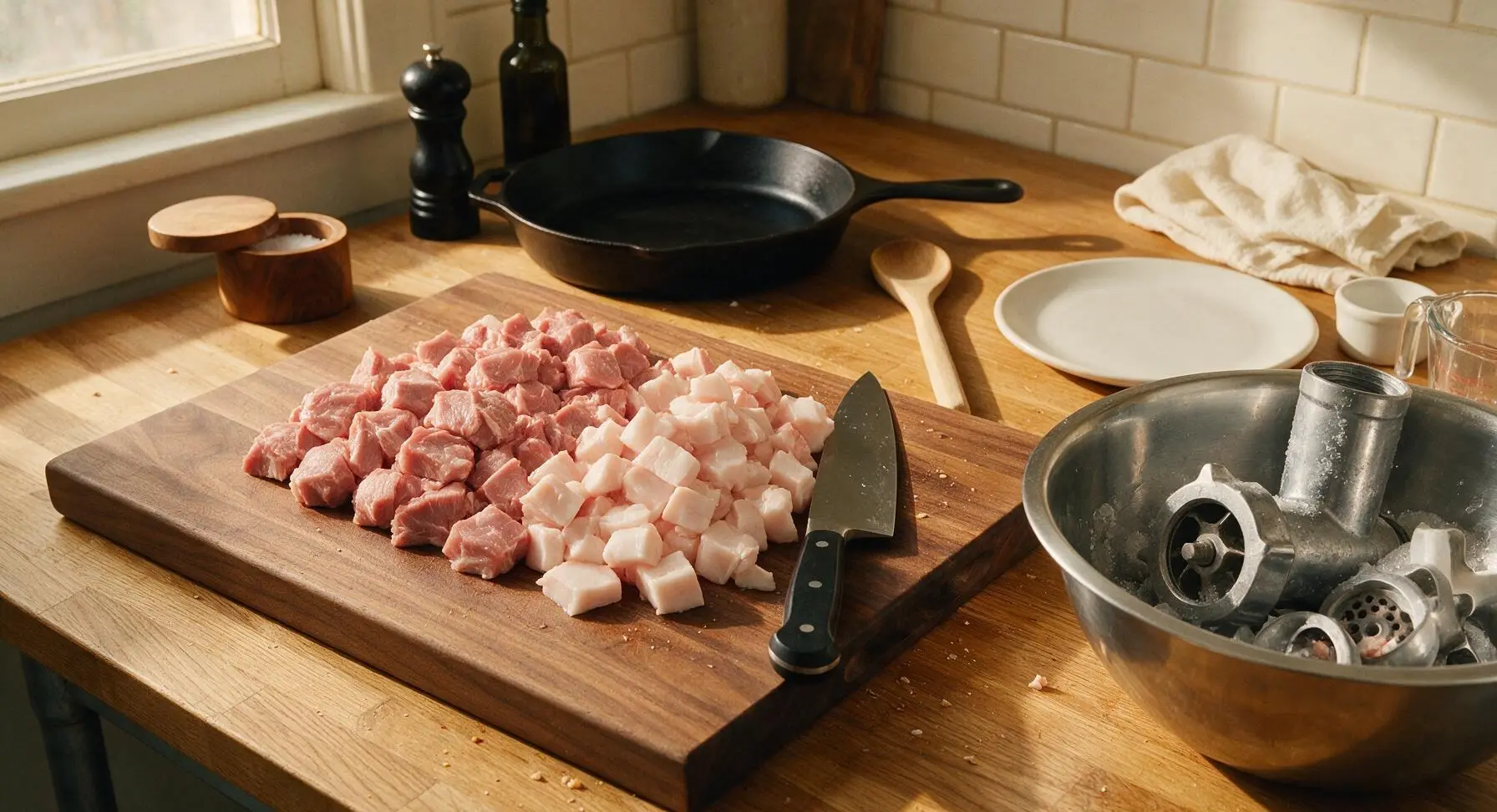
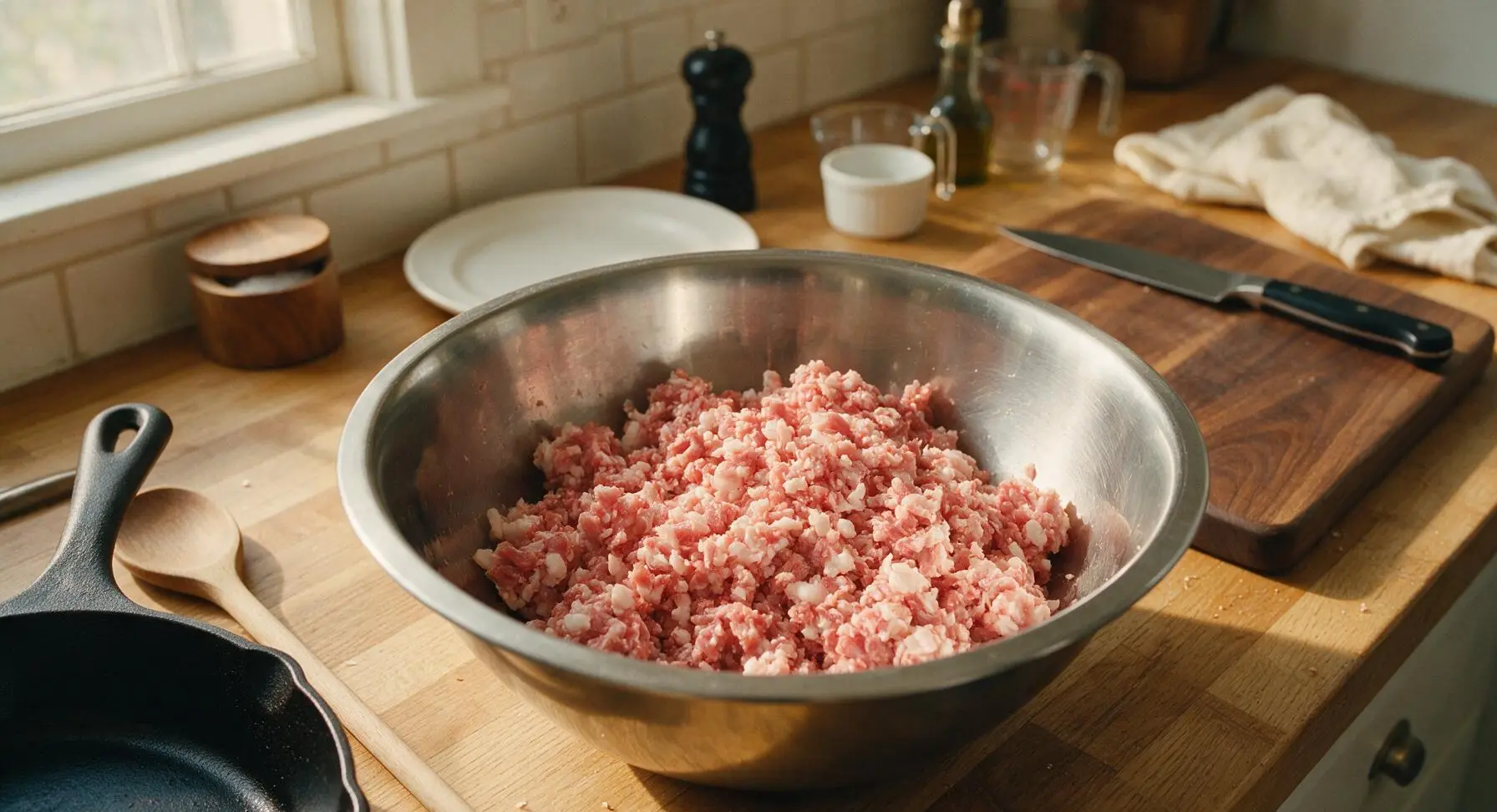
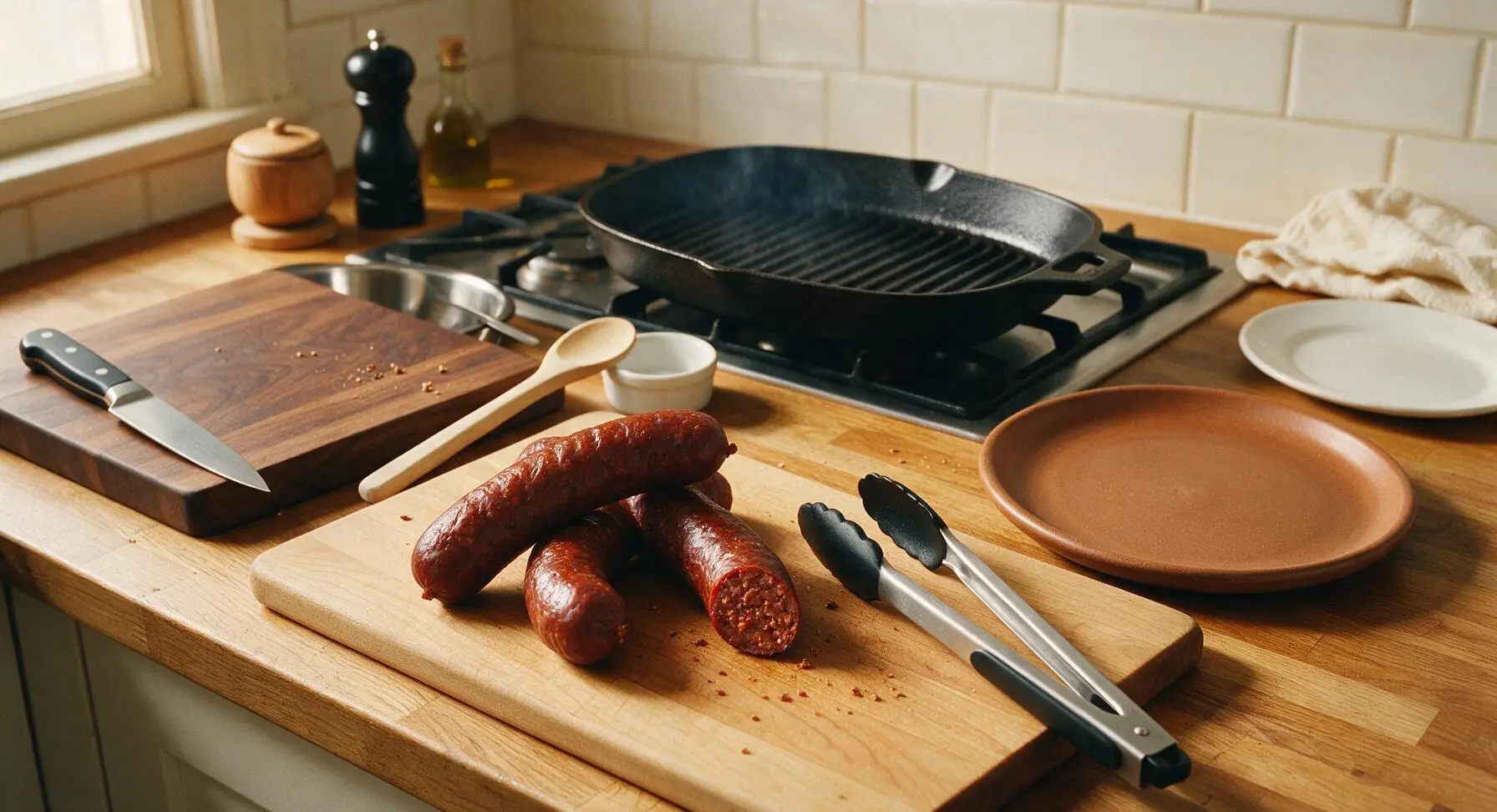
Cut pork shoulder and fat back into 2.5cm cubes using the chef knife on the maple cutting board. Arrange cubes in a single layer on a small tray, then place in the freezer for 30 minutes until firm (but not frozen solid) to the touch. Place the meat grinder parts, large mixing bowl, and grinding plate in the freezer alongside the meat; cold equipment prevents fat smearing during grinding for a crumbly, not pasty, sausage texture.
Grind Chilled Meat Coarsely
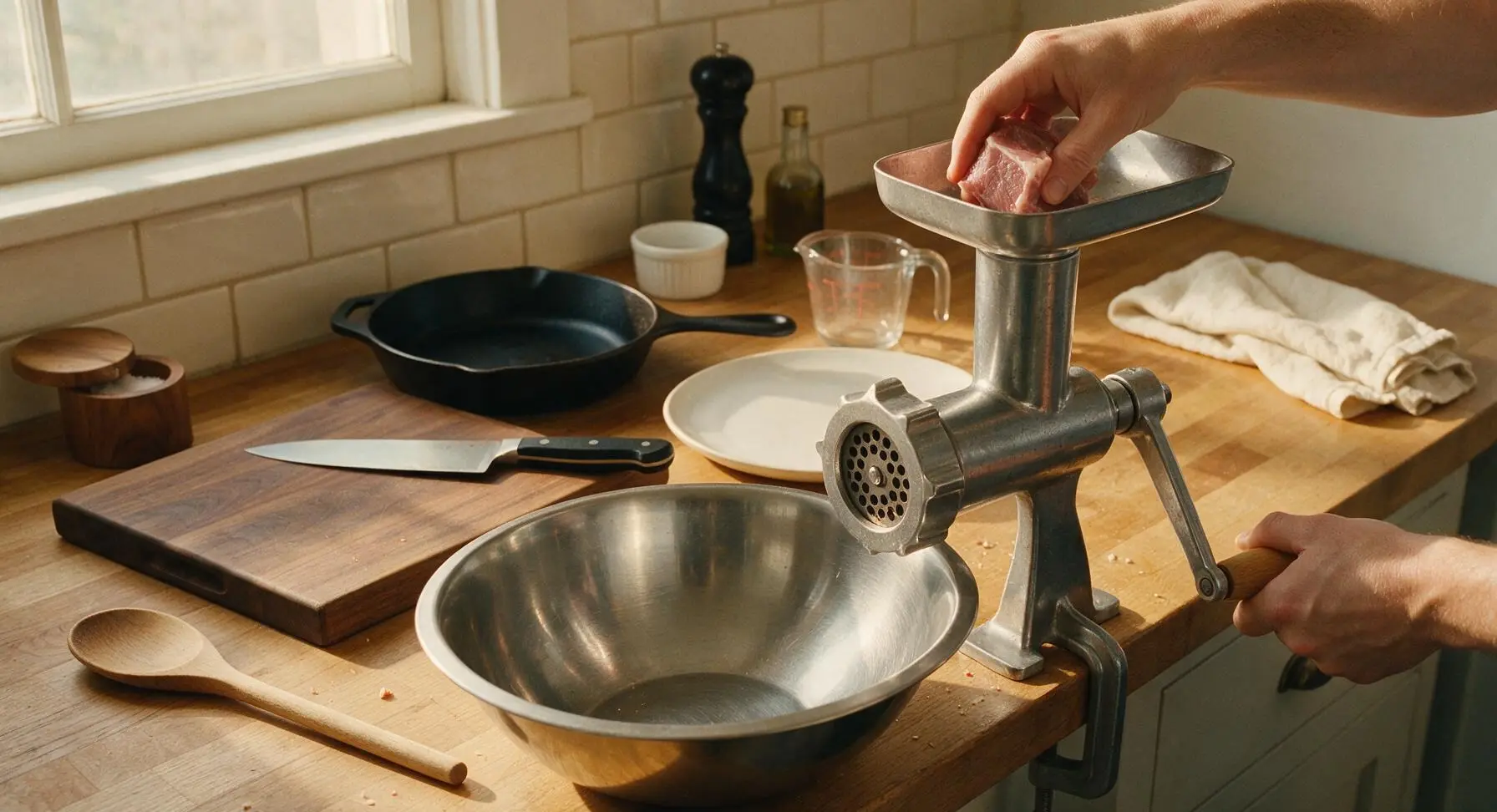
Assemble the pre-chilled meat grinder with the 6mm coarse grinding plate, clamped securely to the counter edge. Feed the chilled pork and fat cubes through the grinder using the beech wood pusher, turning the crank at a steady, slow pace to avoid forcing the meat. Collect the ground meat in the large stainless steel bowl under the grinder outlet. If fat begins to feel soft or smear, return all parts and meat to the freezer for 10 minutes before resuming. The finished grind will have distinct, separate pieces of lean and fat, no mushy paste.
Mix Spices Into Meat
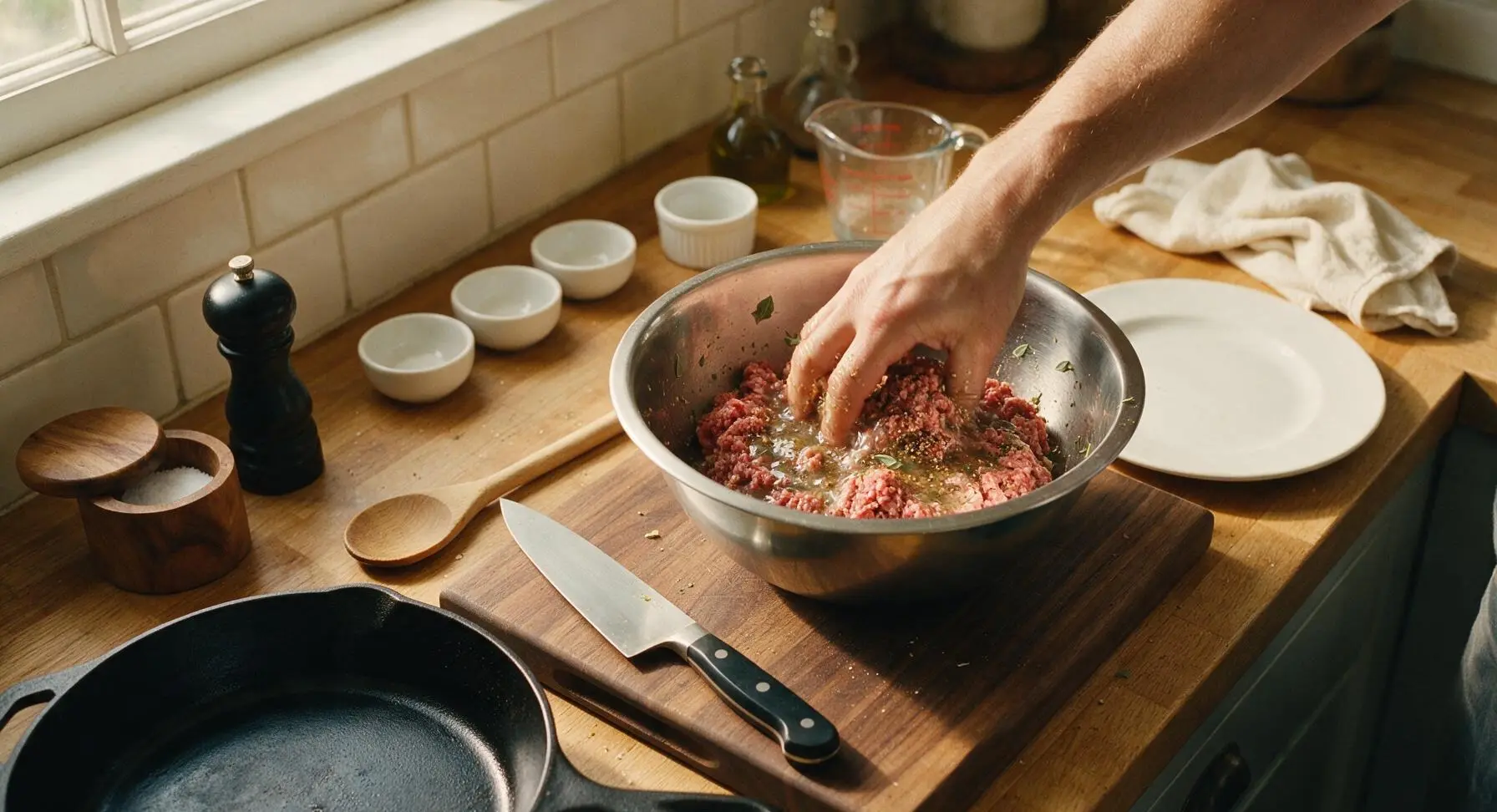
Measure kosher salt, Prague powder #1, ground black pepper, dried marjoram, minced garlic, and crushed mustard seeds into the small white pinch bowls. Combine spices with ice water, then pour evenly over the ground meat in the mixing bowl. Mix vigorously by hand for 3-4 minutes until the meat becomes sticky and tacky, with spices evenly distributed throughout; this sticky protein bind helps the sausage hold its shape after cooking.
Prepare Hog Casings
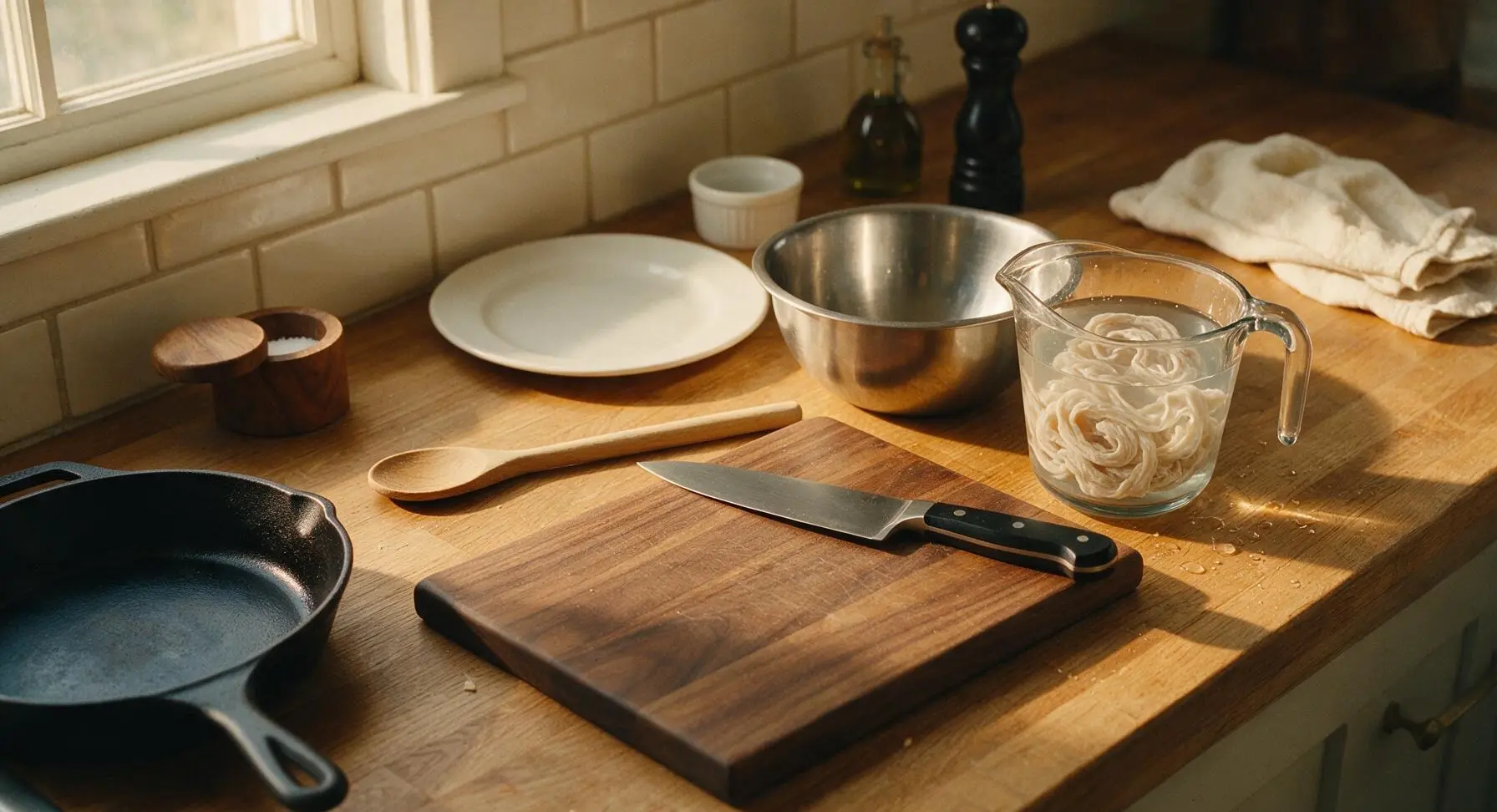
Remove natural hog casings from their salt brine, rinse thoroughly under cool running water to wash away excess surface salt. Run water through the interior of each casing to check for small tears, then submerge casings in cool water in the glass measuring cup to soak for 15 minutes until soft and pliable. Discard any casing sections with holes that would leak during stuffing.
Stuff Sausage Links
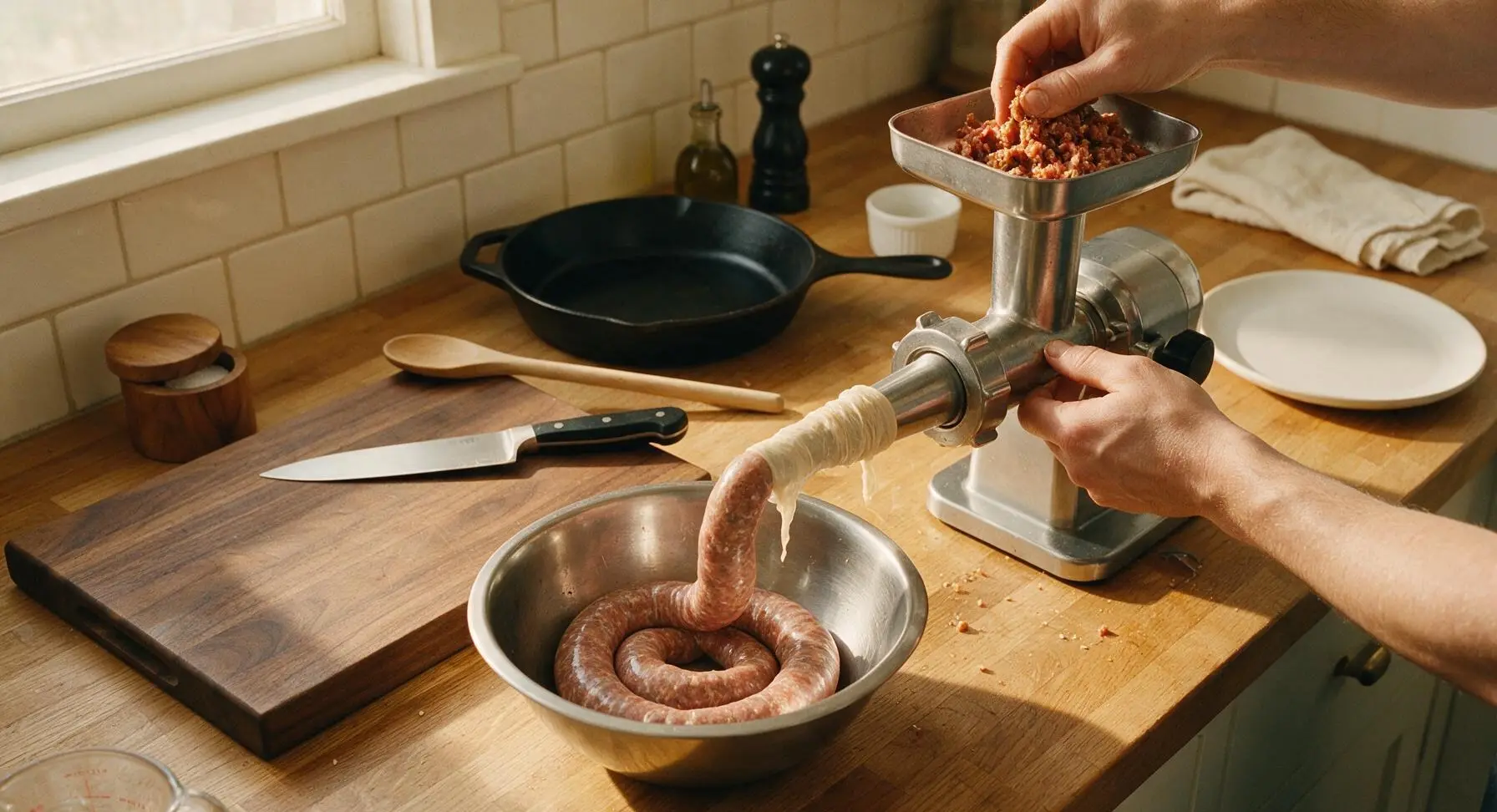
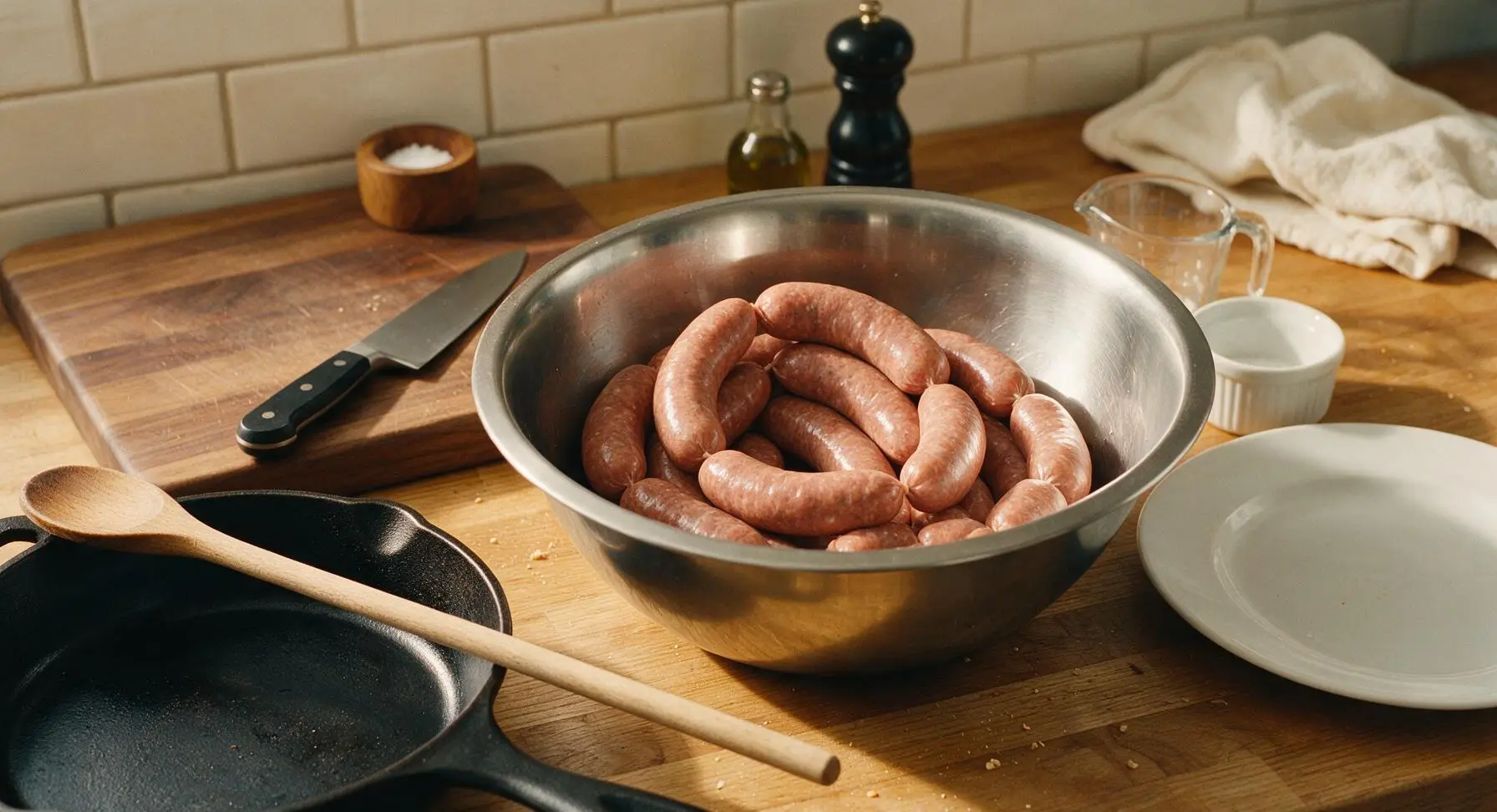
Swap the grinder's coarse grinding plate for the 18mm stainless steel stuffing tube. Slide the full length of soaked hog casing onto the tube, tying a tight knot at the hanging end of the casing. Feed the spiced meat mixture through the grinder at a slow, steady pace, letting the meat fill the casing evenly without overstuffing. Once all meat is used, twist the filled casing into 12cm long links, pinching and twisting every other link in the opposite direction to prevent unraveling. Poke any visible air bubbles with a sterile pin to prevent bursting.
Dry Sausage Surfaces
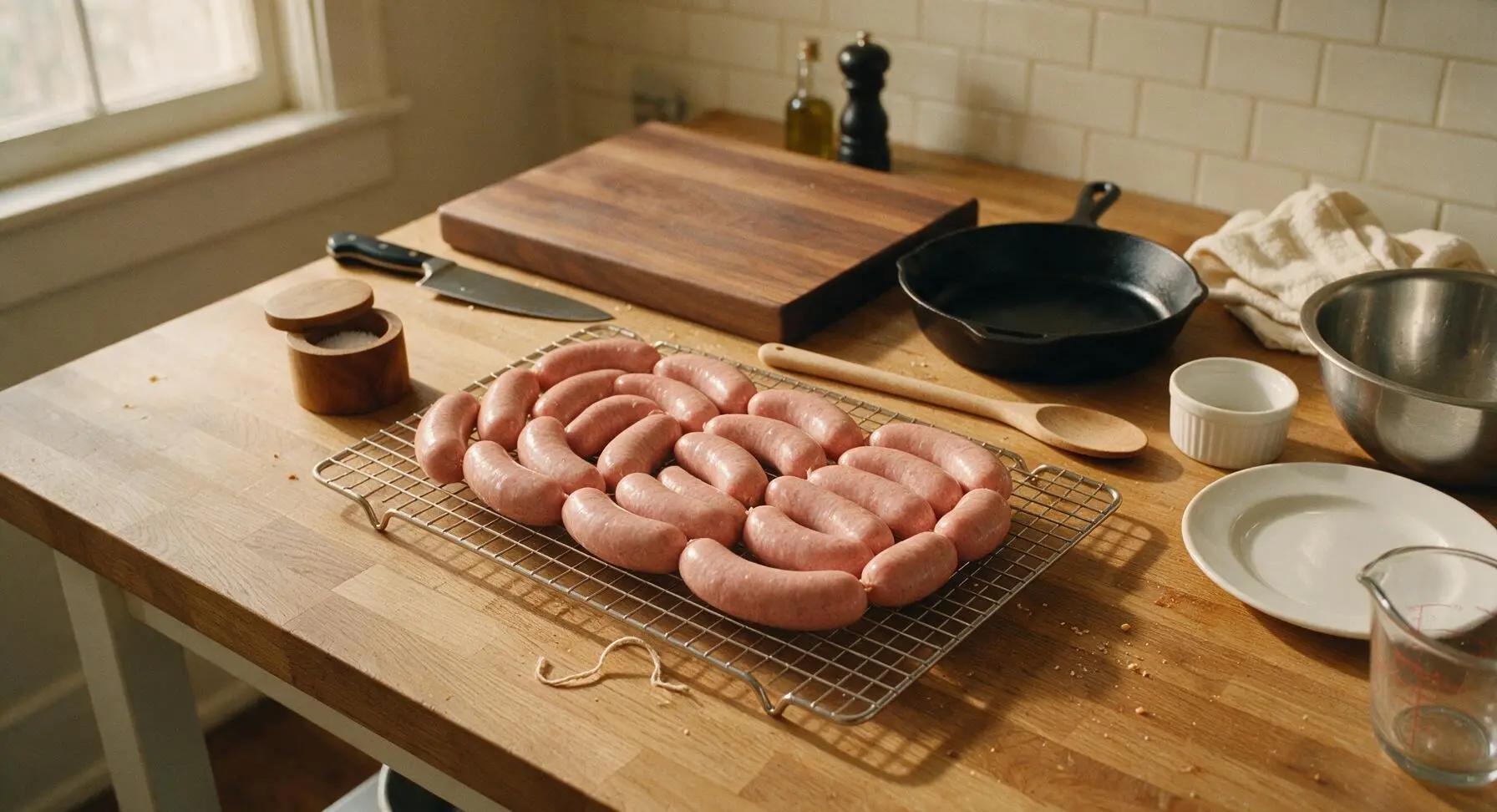
Arrange the stuffed sausage links in a single layer on the stainless steel wire cooling rack, leaving 1cm of space between each link for air flow. Place the rack in the refrigerator, uncovered, for 2 hours until the casing surface feels completely dry and slightly tacky. A dry, tacky surface allows smoke to adhere evenly, creating the signature deep smoky flavor and reddish-brown Mettwurst color.
Smoke to Safe Temperature
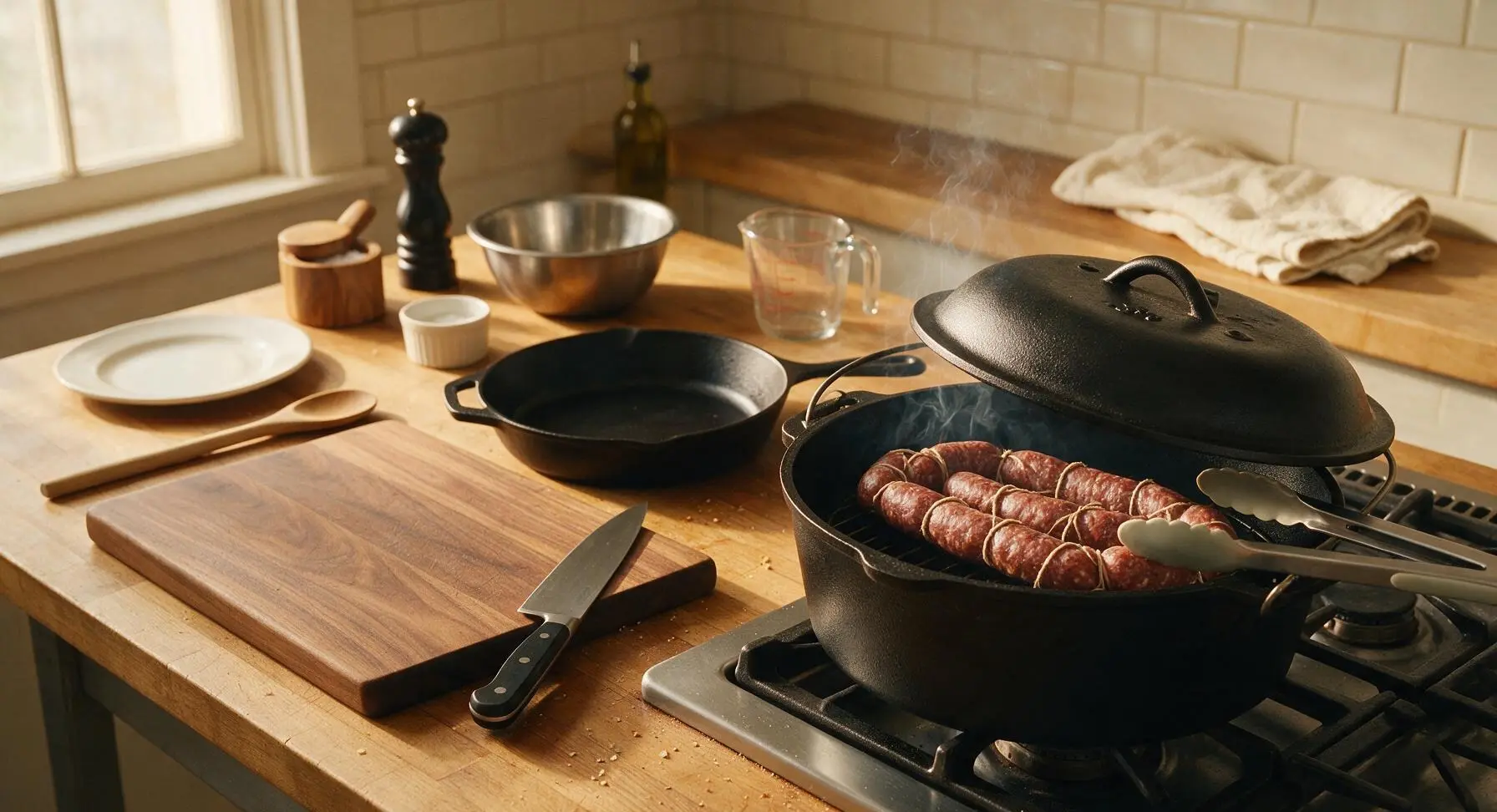
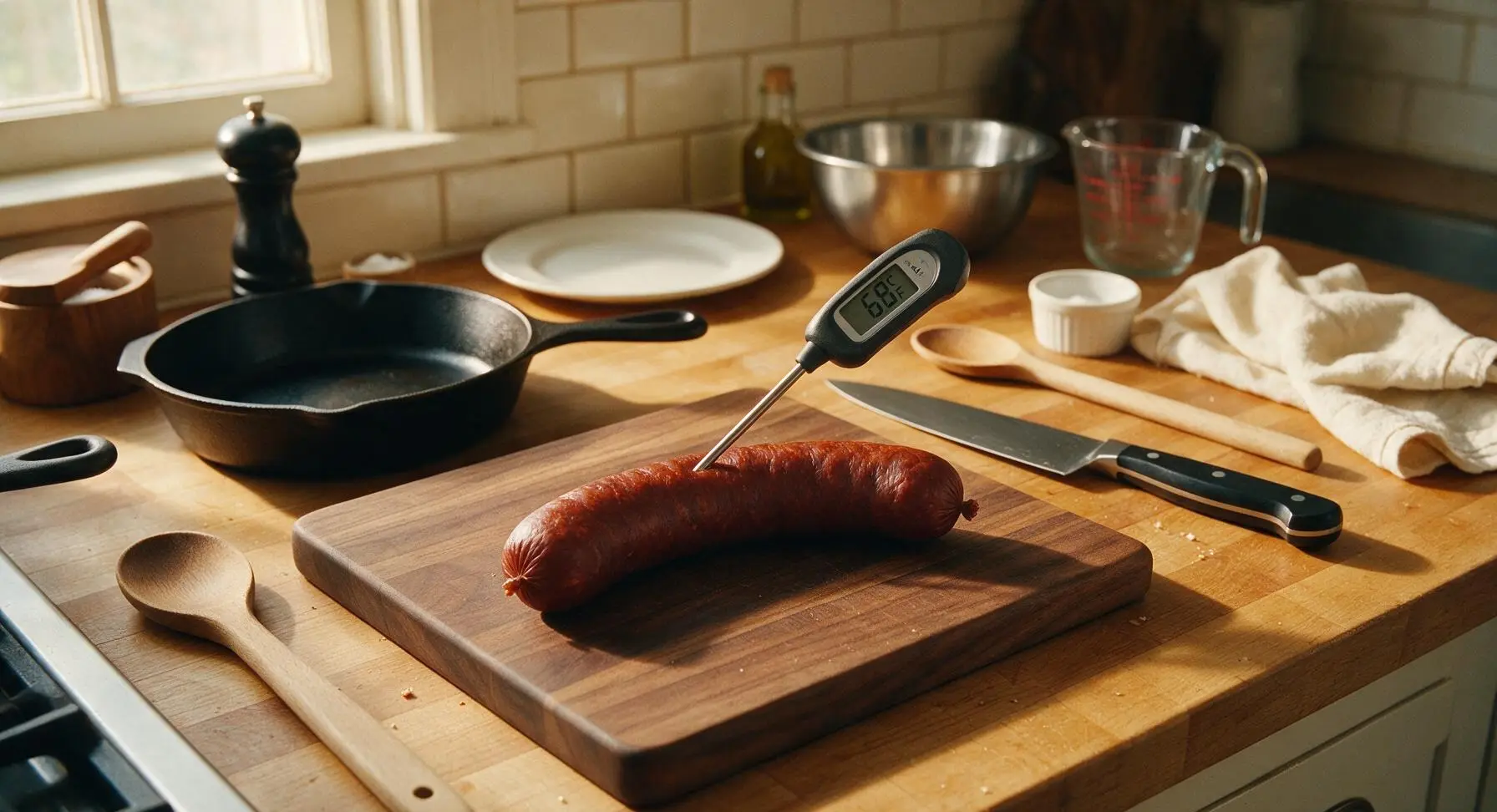
Preheat the cast iron stovetop smoker (or outdoor grill) to 110C (225F) using indirect heat, adding beech wood chips to the tray for mild, traditional smoke. Place the dried sausage links on the smoker rack, close the lid, and smoke for 2 hours, adding small amounts of wood chips as needed to maintain thin, wispy blue smoke. Cook until the instant-read thermometer inserted into the center of a link reads 68C (155F), turning links once halfway through cooking for even smoke exposure.
Rest and Sear Links
Use the tongs to transfer smoked sausages to the maple cutting board to rest for 10 minutes, allowing juices to redistribute through the meat. For classic grilled Mettwurst, heat the cast iron grill pan over high heat, then sear links for 1-2 minutes per side to create dark, crisp char marks. Transfer finished sausages to the terracotta serving plate.
Tips
2.Avoid overstuffing casings during filling: leave roughly 10% empty space in each casing to account for meat expansion during cooking, which prevents burst casings and lost juiciness.
3.Use mild beech wood for smoking instead of strong woods like hickory or mesquite: beech produces a soft, sweet smoke that complements the delicate marjoram and garlic flavor, rather than overpowering the sausage.
Tried this last night for our family dinner and my husband swore it tasted exactly like the mettwurst he had when he visited Germany back in college! I tossed in a tiny extra pinch of marjoram because we go crazy for that herby flavor, and it turned out chef’s kiss perfect. The medium difficulty rating feels totally spot on too— not too tricky for a home cook, but you do have to pay attention to the internal temps so you don’t overcook it.
OMG I made this for our Oktoberfest potluck last weekend and it was an absolute hit! I was a little nervous about the curing step since I’ve never made homemade sausage before, but the instructions were so straightforward. My kids went back for seconds, even my super picky 10 year old! SO good, will 100% be making this again for our fall family dinners.
Game changer for my weekly meal prep! I doubled the batch, sliced it up, and it’s been perfect for quick breakfasts with eggs and lunch wraps all week. Cook time felt a little long on a weeknight but totally worth the effort for how much flavor this has. Way better than the store-bought mettwurst I used to grab at the German deli.
Quick question for folks who’ve made this—has anyone pulled it off without a dedicated sausage stuffer? I only have the basic meat grinder attachment for my stand mixer, and I really don’t want to drop cash on a whole new piece of equipment just for one recipe. This looks SO good but I’m worried I won’t be able to make it work without the right gear.
Made this for my dad’s birthday since he’s a huge fan of all German food, and he said it’s the best homemade sausage he’s ever had! I was worried it would be too salty but the ratios were totally spot on. Only thing I’ll do different next time is make a double batch because we ate almost all of it in one sitting, oops.