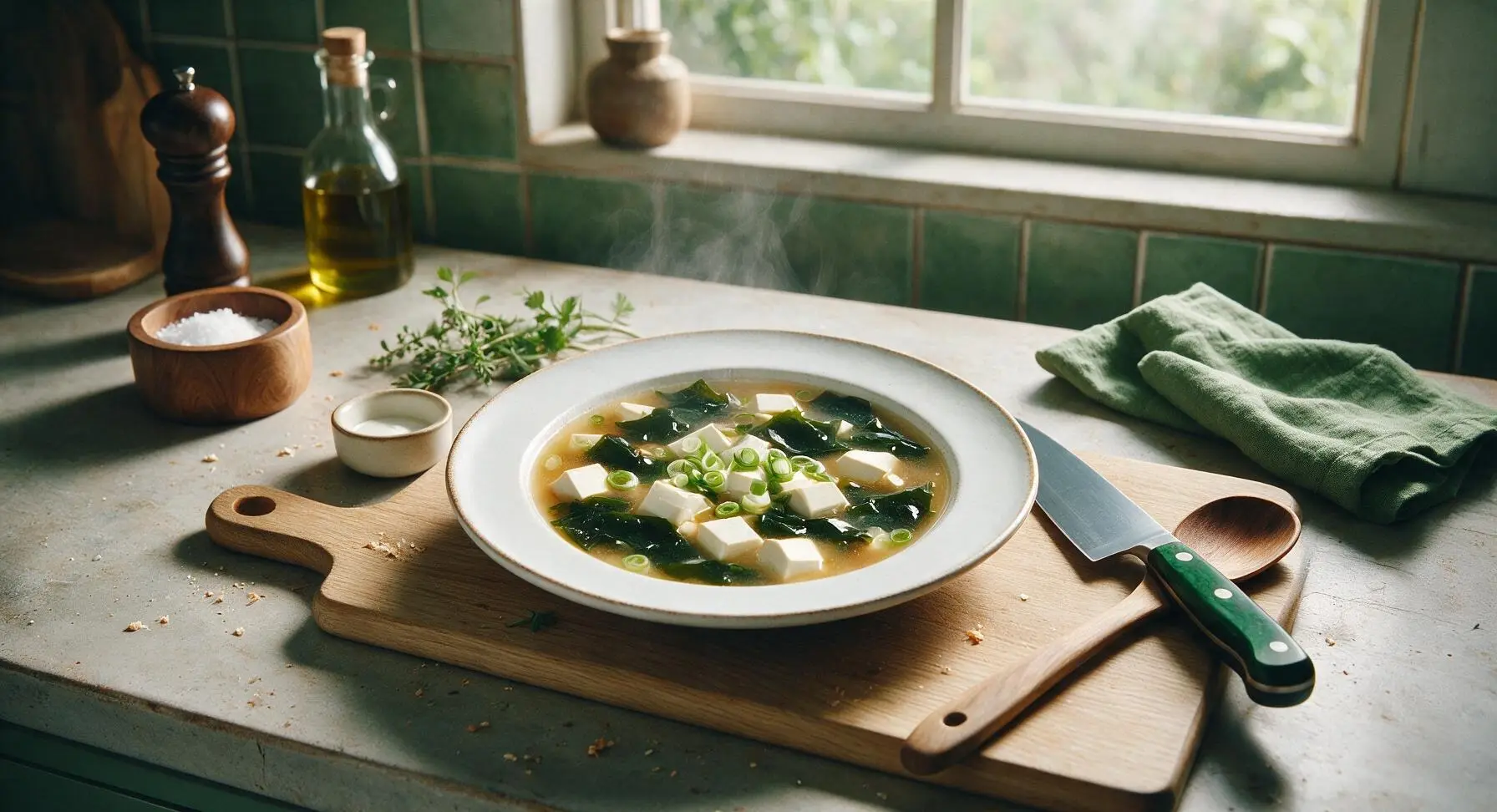
tofu miso soup

title 1
tofu miso soup
⏱️ cook time 10 minutes
🍽️ servings 4
⚡ Difficulty easy

intro

Light, umami-packed classic Japanese tofu miso soup with silken tofu, tender wakame, and fresh scallions—ready in 15 minutes, gentle, nourishing, and deeply comforting.

Ingredients
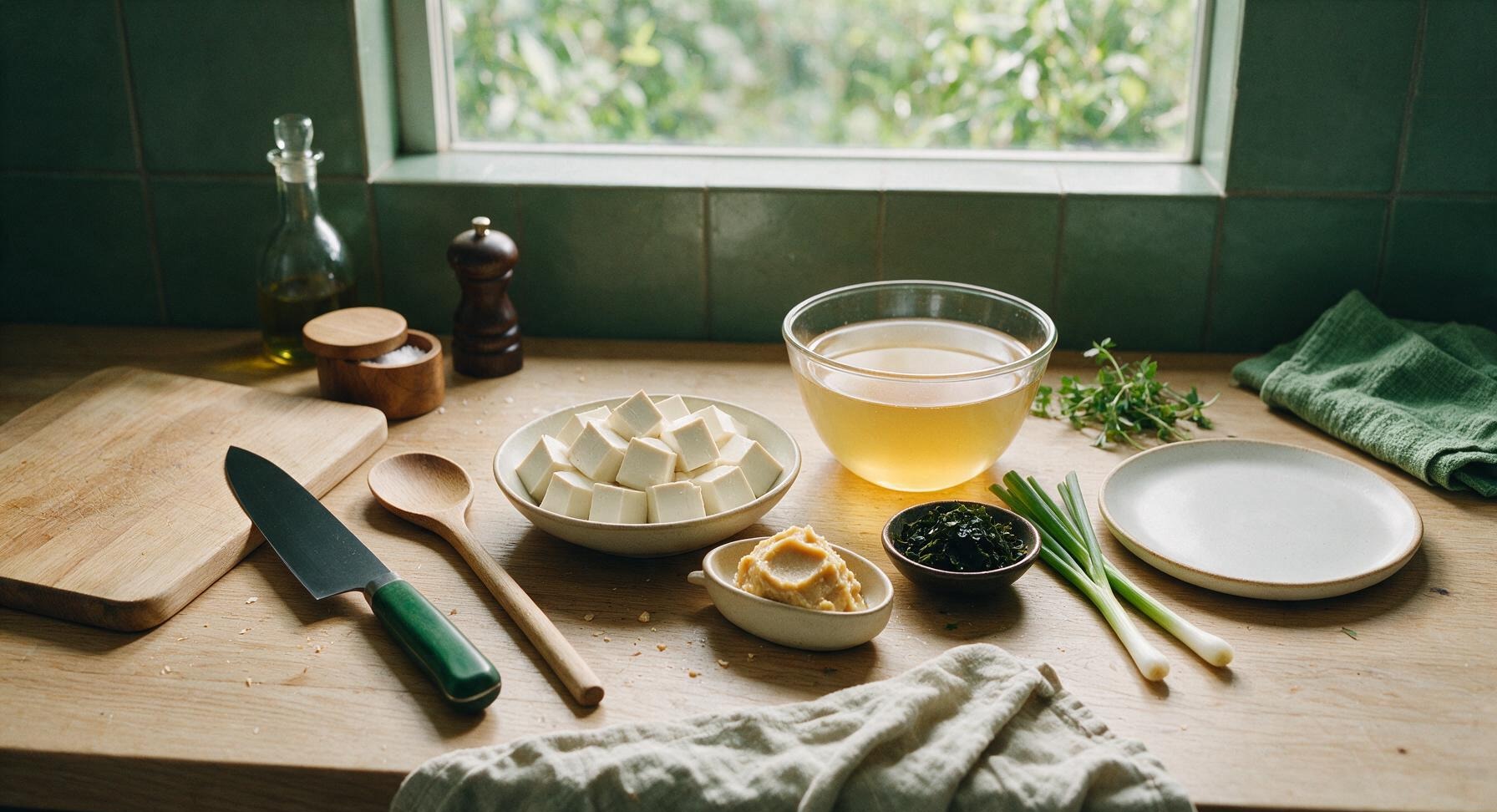
Silken tofu, drained 300g
Shiro (white) miso paste 3 tbsp (45g)
Prepared dashi stock 4 cups (960ml)
Dried wakame seaweed 1 tbsp (5g)
Fresh scallions (green onions) 2 stalks (20g)

Steps

1

Slice the scallions

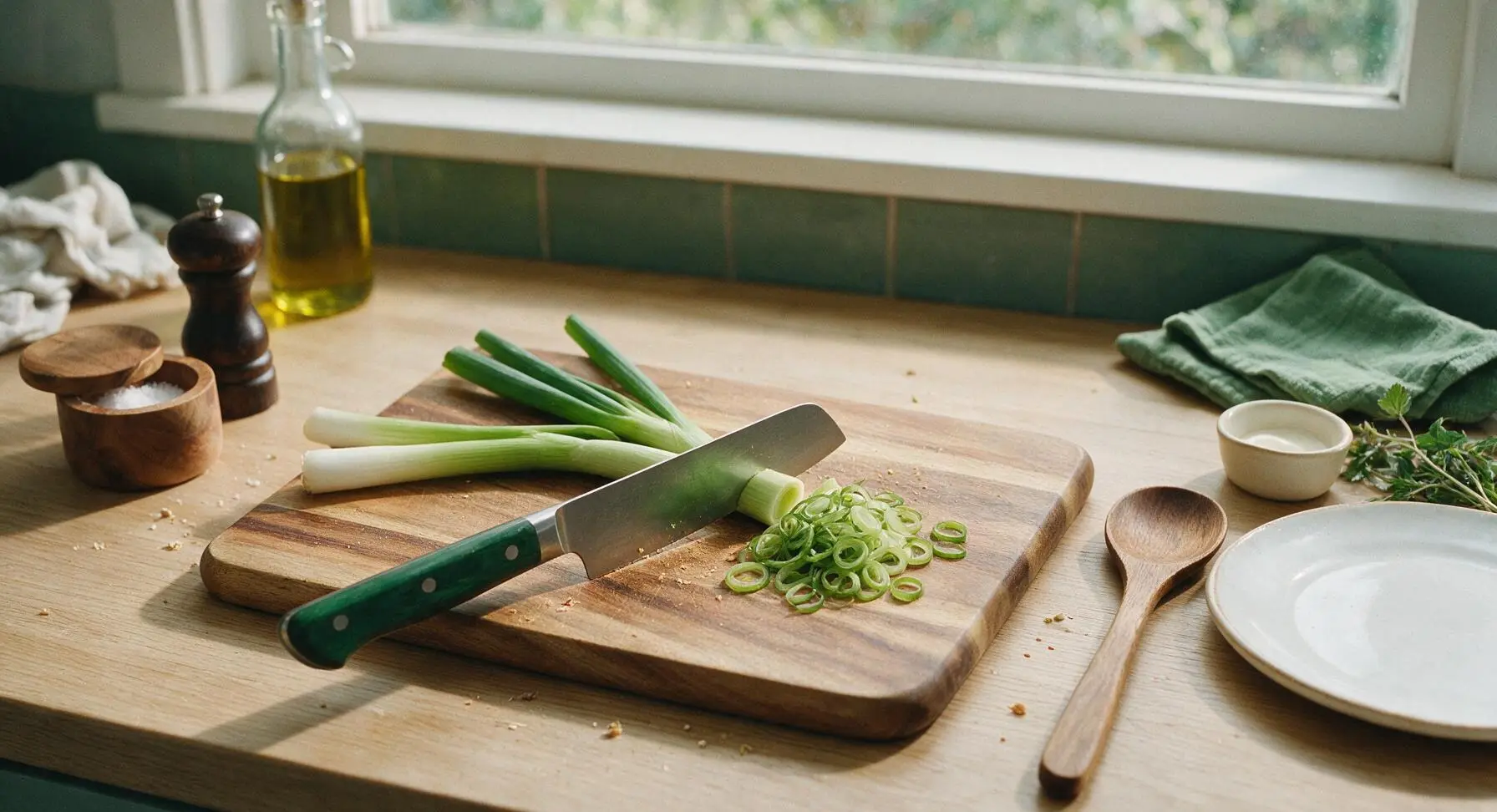
Rinse the 2 scallion stalks under cool running water, pat dry with the corner of the cotton kitchen towel. Place on the acacia cutting board, and use the santoku knife to slice thinly into 3mm rings. Set sliced scallions aside at the edge of the cutting board. This takes approximately 1 minute.
Step 1
step1:Slice the scallions
2

Cube silken tofu

Gently remove the drained silken tofu from its packaging, place on the clean section of the acacia cutting board. Use the santoku knife to cut the soft tofu into uniform 2cm cubes, taking care not to press too hard and crush the delicate curd. Do not move the cubed tofu until ready to add to broth; it will hold its shape better if undisturbed. This takes approximately 2 minutes.

Step 2
step2:Cube silken tofu
3

Bring dashi to simmer

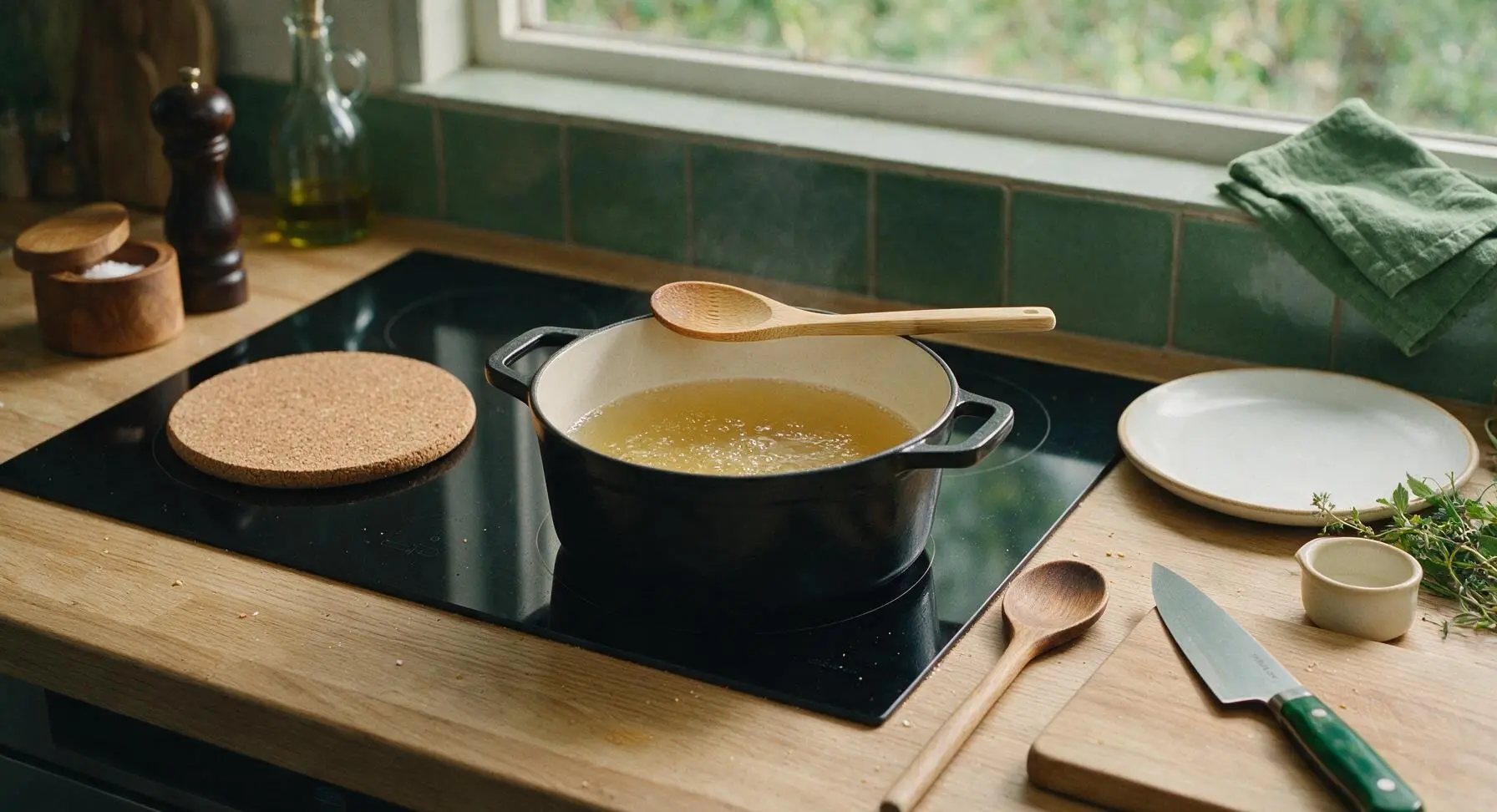
Lift the matte black enamel soup pot off its cork trivet, place over medium heat on the central induction zone, and pour in the 4 cups of prepared dashi stock. Bring the stock to a gentle, bare simmer (do not let it reach a rolling boil, as boiling will damage miso flavor later), approximately 80C/175F, with tiny bubbles just breaking at the pot edges. This takes approximately 4 minutes.
Step 3
step3:Bring dashi to simmer
4

Add tofu and wakame

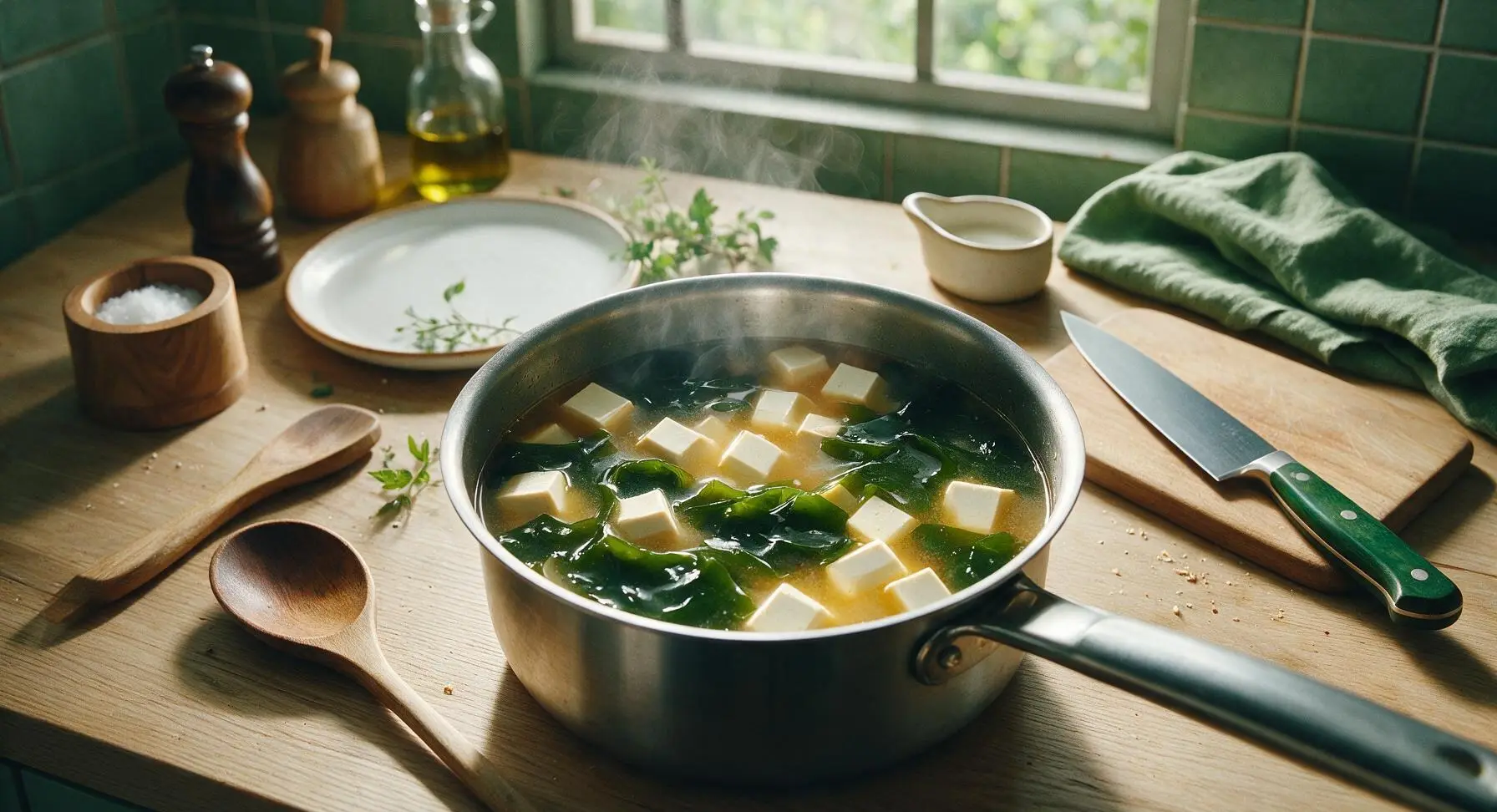
Gently slide the cubed silken tofu into the simmering dashi, then sprinkle in the 1 tablespoon dried wakame seaweed. Let the mixture warm through for 2 minutes, until the wakame fully rehydrates into bright green, tender pieces and the tofu is heated all the way through. Do not stir vigorously, as this will break apart the soft tofu; use the bamboo ladle to gently nudge ingredients if needed.

Step 4
step4:Add tofu and wakame
Step 4
step4:Add tofu and wakame
5

Temper the miso paste

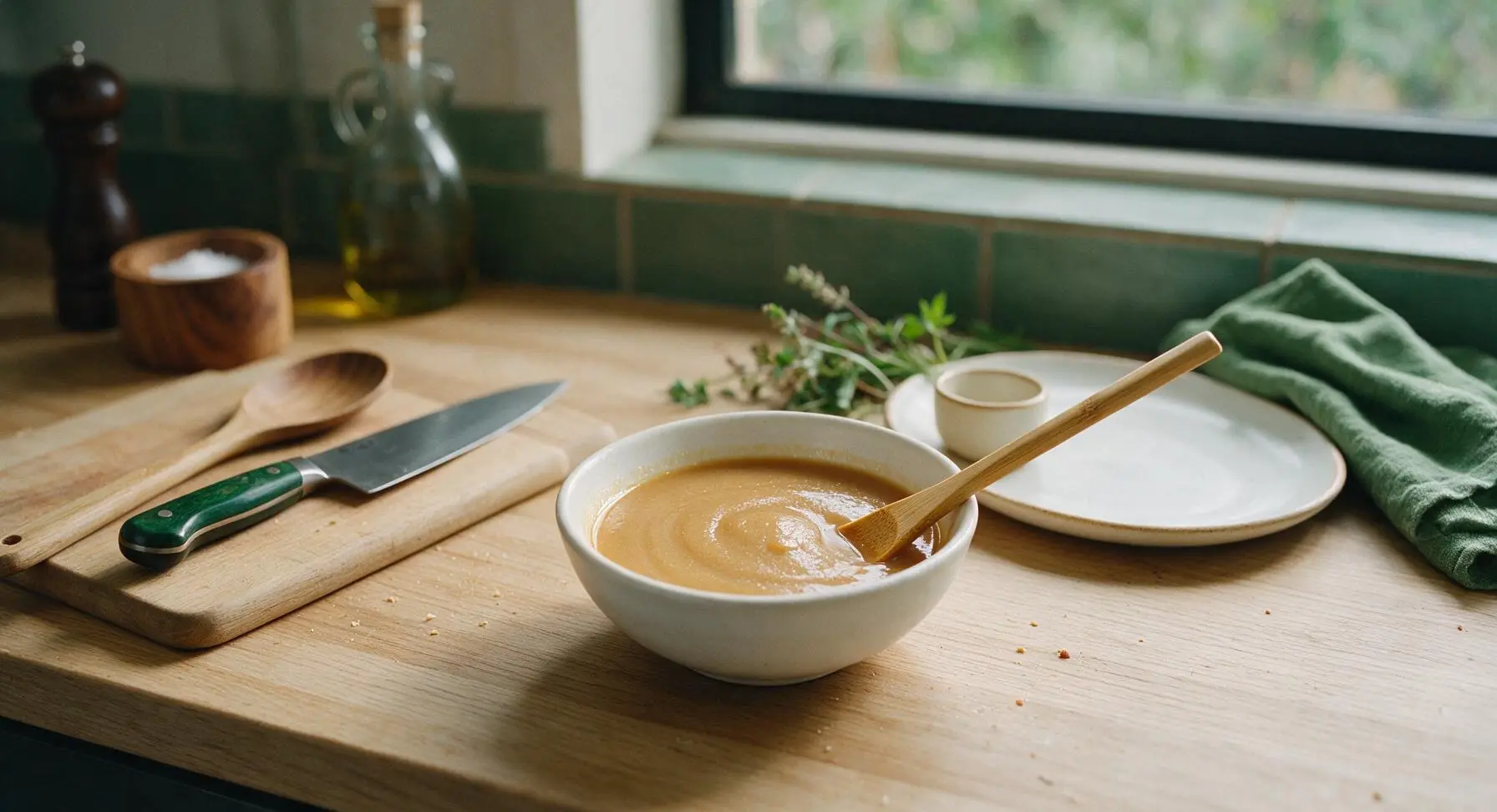
Scoop the 3 tablespoons of shiro miso paste into the small matte white ceramic miso mashing bowl. Ladle 1/2 cup of the hot dashi broth from the pot into the bowl with the miso, then stir gently with the end of the bamboo ladle until the miso fully dissolves into a smooth, lump-free slurry. Never add miso paste directly to boiling water, as this will make it grainy and kill its delicate probiotic flavors. This takes approximately 1 minute.

Step 5
step5:Temper the miso paste
Step 5
step5:Temper the miso paste
6

Stir miso into soup

Turn the heat under the soup pot to the lowest setting, then pour the tempered miso slurry into the pot through the fine-mesh stainless steel strainer to catch any remaining undissolved miso lumps. Use the bamboo ladle to stir the soup very gently in slow circles, until the miso is fully incorporated into the broth and the soup is a uniform pale amber color. Do not let the soup boil after adding miso, as high heat will make the miso taste bitter and destroy beneficial probiotics. This takes approximately 1 minute.

Step 6
step6:Stir miso into soup
7

Ladle and garnish soup

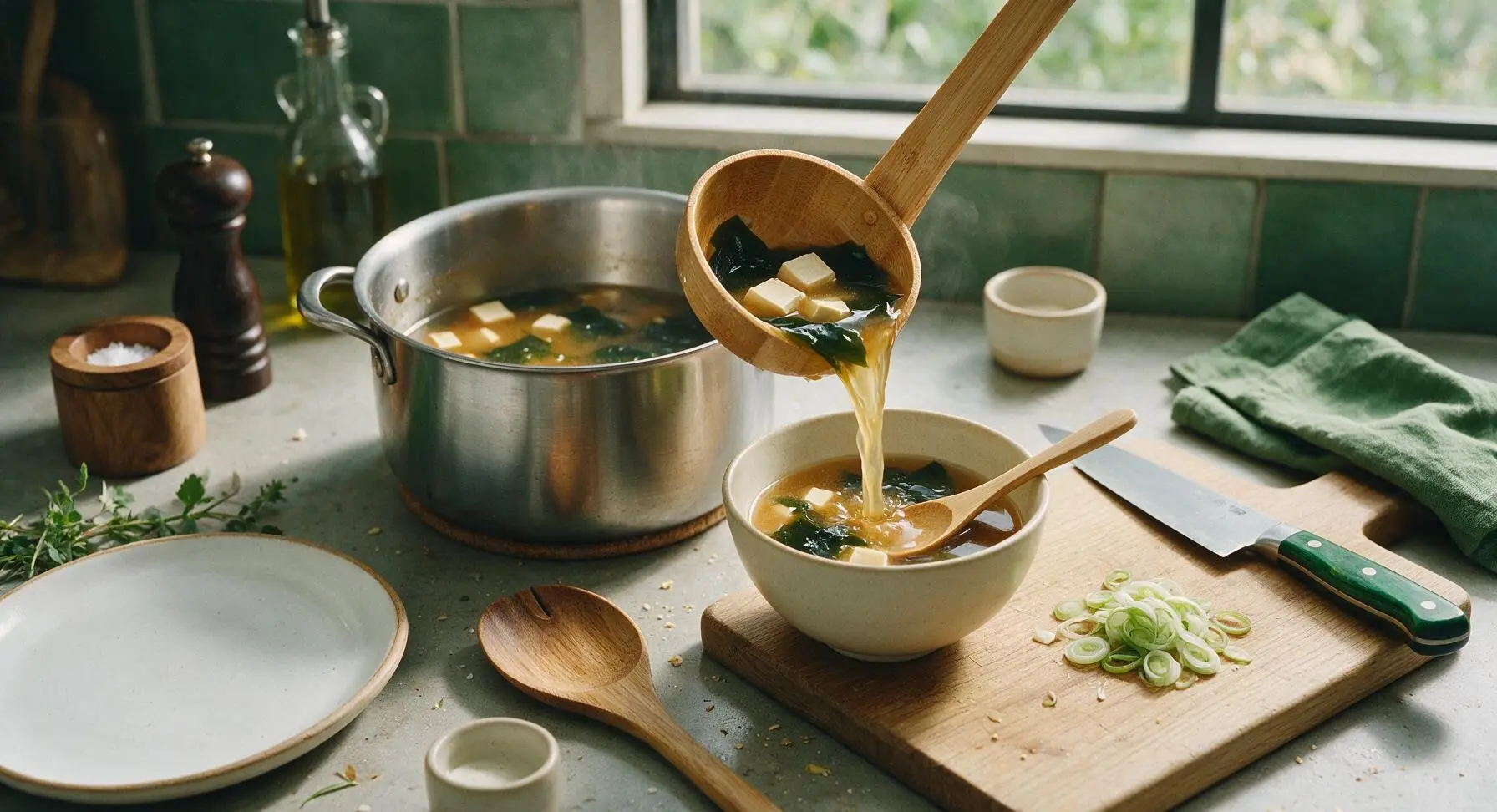
Turn off the heat under the pot. Use the bamboo ladle to carefully pour the soup into the matte cream ceramic miso soup bowl, making sure each serving gets an even amount of tofu, wakame, and broth. Top each bowl with a generous pinch of the thinly sliced scallions, then rest the matching wood soup spoon on the bowl rim. Serve immediately, while hot.
Step 7
step7:Ladle and garnish soup

Tips

1.Never boil miso paste: Temperatures above 85C/185F destroy miso's delicate umami depth and beneficial live probiotic cultures, resulting in a flat, bitter-tasting soup. Always temper miso in warm broth first, and add it only after turning the heat to low at the very end of cooking.
2.Choose silken tofu for authentic texture: Firm or extra-firm tofu has a chewy, dense texture that feels out of place in light miso soup. Silken tofu has a soft, custard-like consistency that melts gently into the broth, and requires only slow, gentle stirring to avoid breaking into small crumbles.
3.Adjust miso to taste before serving: Miso salinity varies widely by brand and fermentation length. Start with 3 tablespoons, taste the finished soup, and stir in an extra ½ tablespoon of tempered miso if you prefer a richer, saltier broth. Avoid adding soy sauce to adjust salt, as it will overpower miso's soft, fermented flavor.

✨ You May Also Like

Soups & Stews
🍜 Japan

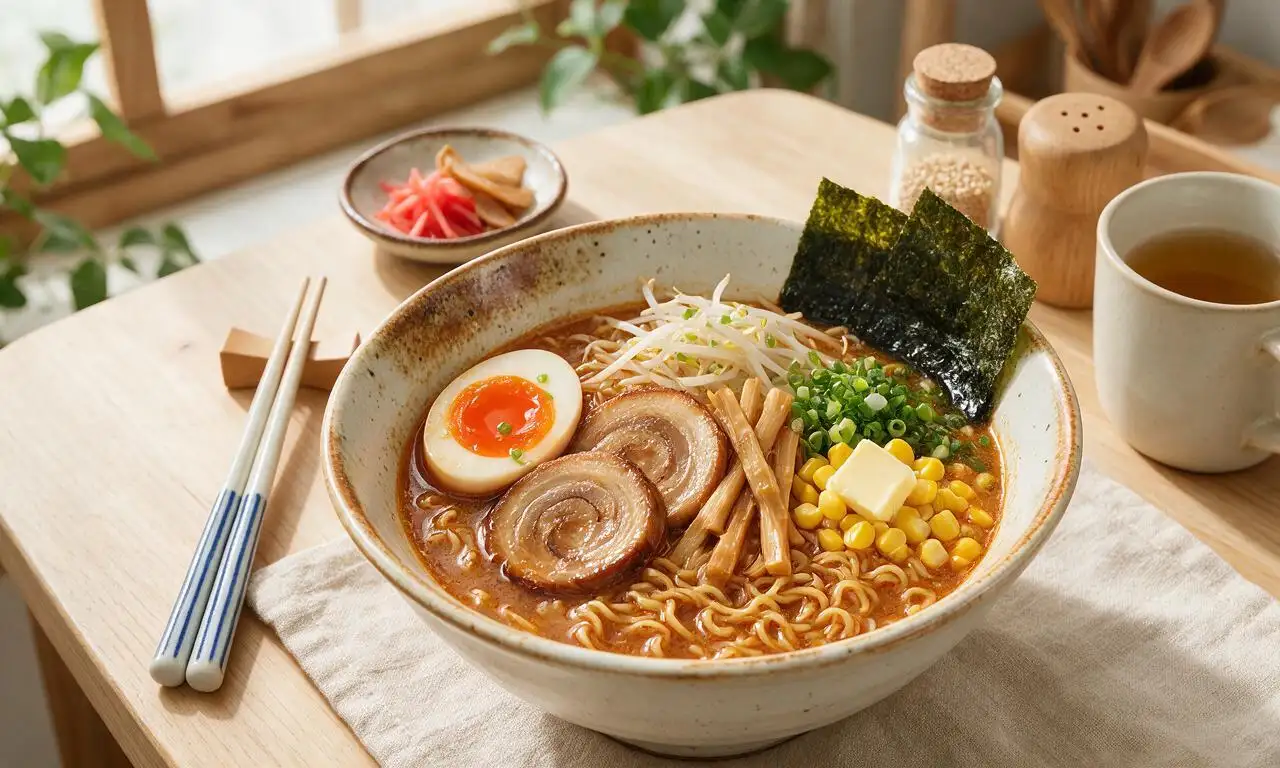
Rich, umami-dense Hokkaido-style miso ramen with chewy noodles, savory fermented broth, and classic toppings, a cozy, deeply satisfying warm meal.

⏱️ 45 minuteSoups & Stews ★ 4.5
Soups & Stews
🍜 United States

A hearty, peppery tripe and root vegetable stew with colonial Philadelphia roots, thick, warming, and packed with bold savory flavor for cold winter days.

⏱️ 2 hours 3Soups & Stews ★ 4.6
Soups & Stews
🍜 Mexico

Hearty, warming red pork posole loaded with tender hominy, slow-simmered in a rich smoky chile broth, served with zesty fresh garnishes for a deeply comforting, satisfying meal.

⏱️ 2 hours 3Soups & Stews ★ 4.7
Soups & Stews
🍜 United States

Warm, soothing classic chicken noodle soup loaded with tender chicken, soft egg noodles, and savory veggies, perfect for chasing chills and feeding the whole family.

⏱️ 40 minuteSoups & Stews ★ 4.9
Soups & Stews
🍜 France

Deeply savory caramelized onion broth topped with crusty bread and bubbly melted Gruyère, a timeless French bistro comfort food ideal for cold days.

⏱️ 1 hour 25Soups & Stews ★ 4.8
Soups & Stews
🍜 United States

Hearty, briny Maryland crab soup loaded with sweet blue crab, tender summer vegetables, and zesty Old Bay, a beloved Chesapeake Bay coastal comfort staple.

⏱️ 55 minuteSoups & Stews ★ 4.9

tofu miso soup:Frequently Asked Questions

1.Can I use firm tofu instead of silken tofu for this miso soup? ▾
Silken tofu is traditional for this recipe, prized for its soft, melt-in-your-mouth, custard-like texture that pairs perfectly with light miso broth. If you only have firm tofu, press out excess water for 10 minutes first, cut it into smaller ½-inch cubes, and note it will have a chewier, denser bite that doesn’t absorb broth quite as delicately as silken.
2.Why do so many recipes say you shouldn’t boil miso paste directly in soup? ▾
Boiling miso kills its delicate, beneficial probiotic cultures, dulls its bright sweet-umami depth, and can leave the soup tasting gritty, overly salty, or flat. Once your dashi reaches a gentle simmer, turn the heat to low, whisk miso into a small ladle of warm dashi to dissolve it fully, then stir it back into the pot right before serving.
3.How much dried wakame do I need, and do I have to pre-soak it first? ▾
Dried wakame expands dramatically as it rehydrates—you only need roughly 1 teaspoon per serving to get a perfect portion! You don’t need to pre-soak it separately, either. Just toss it directly into the warm dashi 1 to 2 minutes before adding miso, and it will soften into tender, silky pieces without turning mushy.
4.Can I make this soup if I don’t have pre-made prepared dashi stock? ▾
Absolutely! For a quick, authentic substitute, make 15-minute homemade dashi with a 4-inch piece of dried kombu and a small handful of bonito flakes, or use kombu-only dashi for a vegetarian version. Low-sodium chicken or vegetable broth works in a pinch, but it will lack that signature deep, rounded umami that makes miso soup feel so comforting.
5.Can I substitute darker red miso for the shiro (white) miso called for? ▾
Shiro miso is fermented for a shorter time, giving it a mild, slightly sweet, gentle umami that’s ideal for light tofu miso soup. If you only have darker red (aka) miso, use about 25% less than the recipe calls for, as it is saltier and more pungent, and add a tiny pinch of sugar to balance its bold, earthy notes.
6.How do I keep silken tofu from breaking apart into crumbles in the soup? ▾
Silken tofu is ultra-delicate, so gentle handling is key. First, drain it slowly by tipping the opened package over the sink for 5 minutes—never squeeze or press it. Cut it into ½-inch cubes right inside the package with a small paring knife, slide the cubes into warm (not boiling) broth at the end, and stir only very lightly to avoid mashing.
7.How long do leftovers of this miso soup keep in the fridge? ▾
Store leftover miso soup in a sealed airtight container in the fridge for up to 3 days. Note that the tofu will turn slightly spongier and the wakame will soften more the longer it sits. Reheat gently over low heat (never a rolling boil) to preserve miso’s flavor and probiotics, and top with fresh scallions right before serving for the best taste.
8.Should I use both the white and green parts of the scallions for this soup? ▾
Use both parts for the best balanced flavor and texture! Slice the pale white and light green sections very thin and add them to the broth 30 seconds before turning off the heat to mellow their sharp bite. Save the dark green tops to slice thinly and sprinkle on as a bright, fresh garnish right before serving for a pop of color and crisp zing.
9.Is this classic tofu miso soup vegan as written? ▾
The base recipe is only fully vegan if you swap standard prepared dashi, which is often made with dried bonito (fish) flakes, for a plant-based kombu or kombu-shiitake dashi. Most shiro miso pastes are naturally vegan, but it’s always smart to double-check labels for hidden fish-derived additives if you are cooking for a strict plant-based diet.
10.Why does my miso soup sometimes turn out too salty, and how do I fix it? ▾
Overly salty miso soup usually happens from using too much miso, or boiling miso which concentrates its salt content and dulls its subtle sweet notes. Fix it by stirring in a splash more warm dashi or plain water to dilute, add a tiny pinch of sugar to balance salt levels, and a small squeeze of fresh lemon juice to brighten the flat, muted flavor.
11.Can I add extra ingredients like mushrooms or greens to this classic recipe? ▾
This simple classic recipe is a fantastic flexible base for custom add-ins! Sliced shiitake mushrooms, baby spinach, cubed daikon, or small portions of cooked soba noodles all work beautifully. Cook heartier add-ins like daikon or mushrooms in the dashi before adding wakame and miso, and toss delicate greens in right at the end so they wilt without getting slimy.
12.Why does my wakame turn out slimy and mushy in miso soup? ▾
Mushy, slimy wakame almost always comes from adding it too early and letting it boil for too long, or using way too much (remember, it expands a lot!). Dried wakame only needs 1 to 2 minutes in warm, not boiling, dashi to rehydrate perfectly. For extra chew, rehydrate it in cold water for 5 minutes first, drain well, and add it right before serving.

Comments (5)

2 hours ago

OMG this is so easy and SO good! I threw this together on a busy weeknight when I had zero energy to cook, and my kids devoured it — even my super picky 7 year old who swears he hates tofu. Total game changer for quick family dinners, will be adding this to my regular meal prep rotation for sure!

30 minutes ago

Wait did you press the tofu first or just toss it straight in? I always worry mine gets too mushy when I make miso soup!

5 minutes ago

Great question! For this 10-minute recipe, you don’t even need to press the tofu if you grab extra-firm silken tofu — it holds its shape perfectly and stays silky without extra prep! If you use regular extra-firm tofu, a quick 10 minute press works great too.

3 days ago

I brought this to my office potluck last week and people were asking me for the recipe all afternoon! It’s light but flavorful, and it was perfect for the couple of vegan and gluten-free folks on our team. The cook time really is only 10 minutes, I timed it — no fancy hard-to-find ingredients required, total win.

yesterday

No cap, I’m a total beginner who can barely boil water and this still turned out perfect? I always thought miso soup was only something you get at sushi restaurants, but this is way cheaper and tastes just as good. It’s already saved me so much takeout money since I found the recipe lmao

2 hours ago

So happy to hear this worked out for you! Miso soup is such a great beginner recipe because it’s super forgiving — you can toss in extra add-ins like wakame, sliced green onions, or mushrooms whenever you want to mix it up, no fancy skills needed.

1 week ago

Made this when I was feeling under the weather last weekend and it hit so different. Warm, savory, not too heavy — it was exactly what my sore throat needed. I added a little extra ginger and some sliced shiitakes and it was chef’s kiss. Only knocking off one star because I accidentally boiled the miso at first and it got a little grainy, wish there was a bigger heads up about taking the pot off heat before stirring in the miso!

5 days ago

Oh girl I made that exact same mistake the first time! Now I turn the stove all the way off, ladle a little hot broth into a small bowl with the miso to whisk it smooth first, then stir it back into the pot — comes out perfect every time now!

2 weeks ago

This is my new go-to lazy lunch! I make a big batch on Sunday, portion it out into containers, and it lasts all week for work lunches. The tofu stays nice and soft, the miso flavor doesn’t get weird when I reheat it — 10/10, no notes. Even my husband who swears ‘healthy food tastes like cardboard’ asks for seconds every time I make it.

1 week ago

Wait do you reheat it in the microwave or on the stovetop? I tried reheating miso soup once before and it got super salty and bitter, would love any tips!

5 days ago

Great question! If you’re reheating, do it on low heat on the stovetop (don’t let it come to a rolling boil!) and add a tiny splash of water or dashi if it tastes too concentrated. Microwaving works too, just heat it in 30 second bursts so it doesn’t get too hot and kill that nice umami flavor.