1.Why does this recipe use 15cm (6-inch) mini baguettes instead of full-sized loaves?
▾
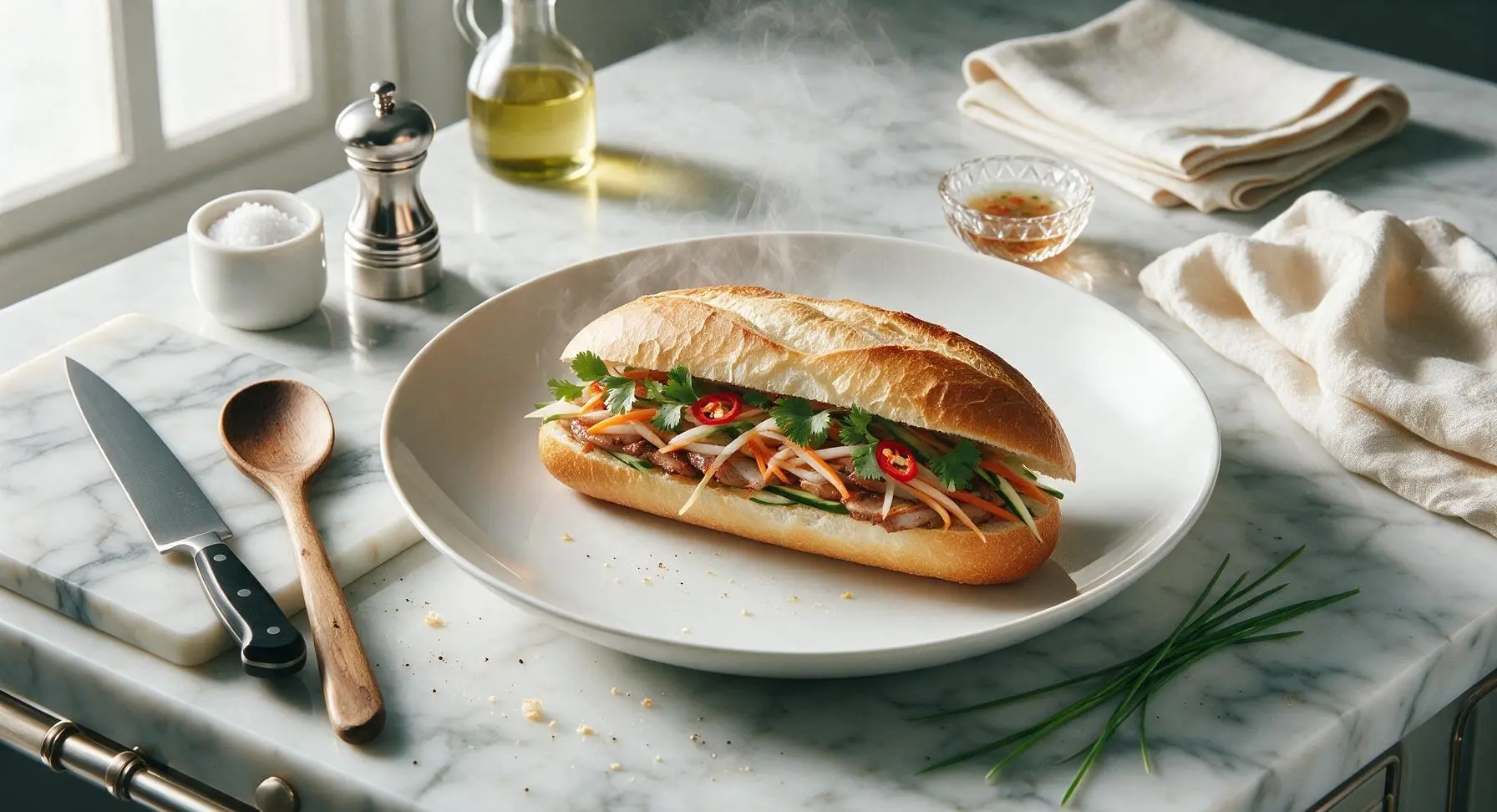
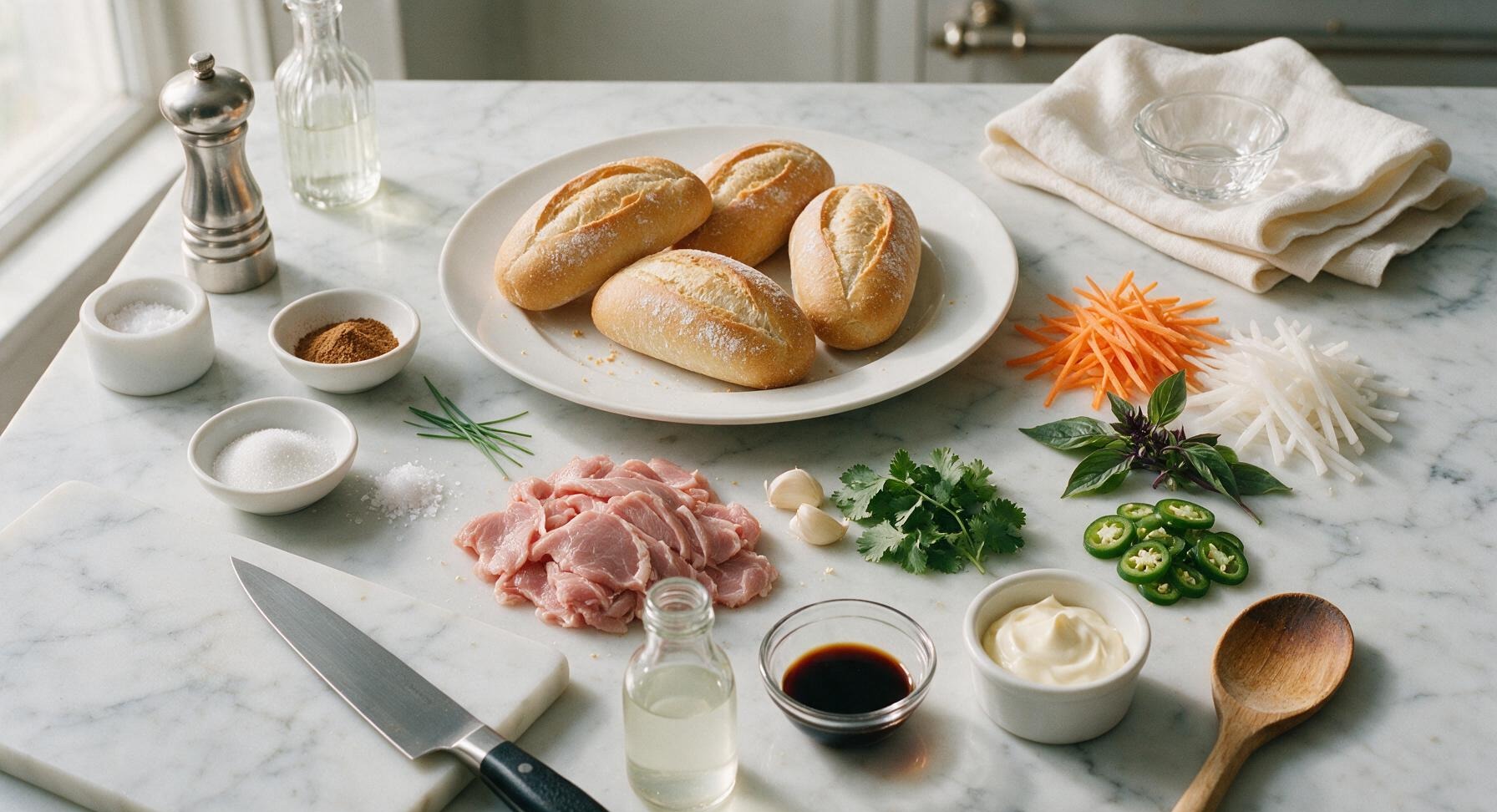
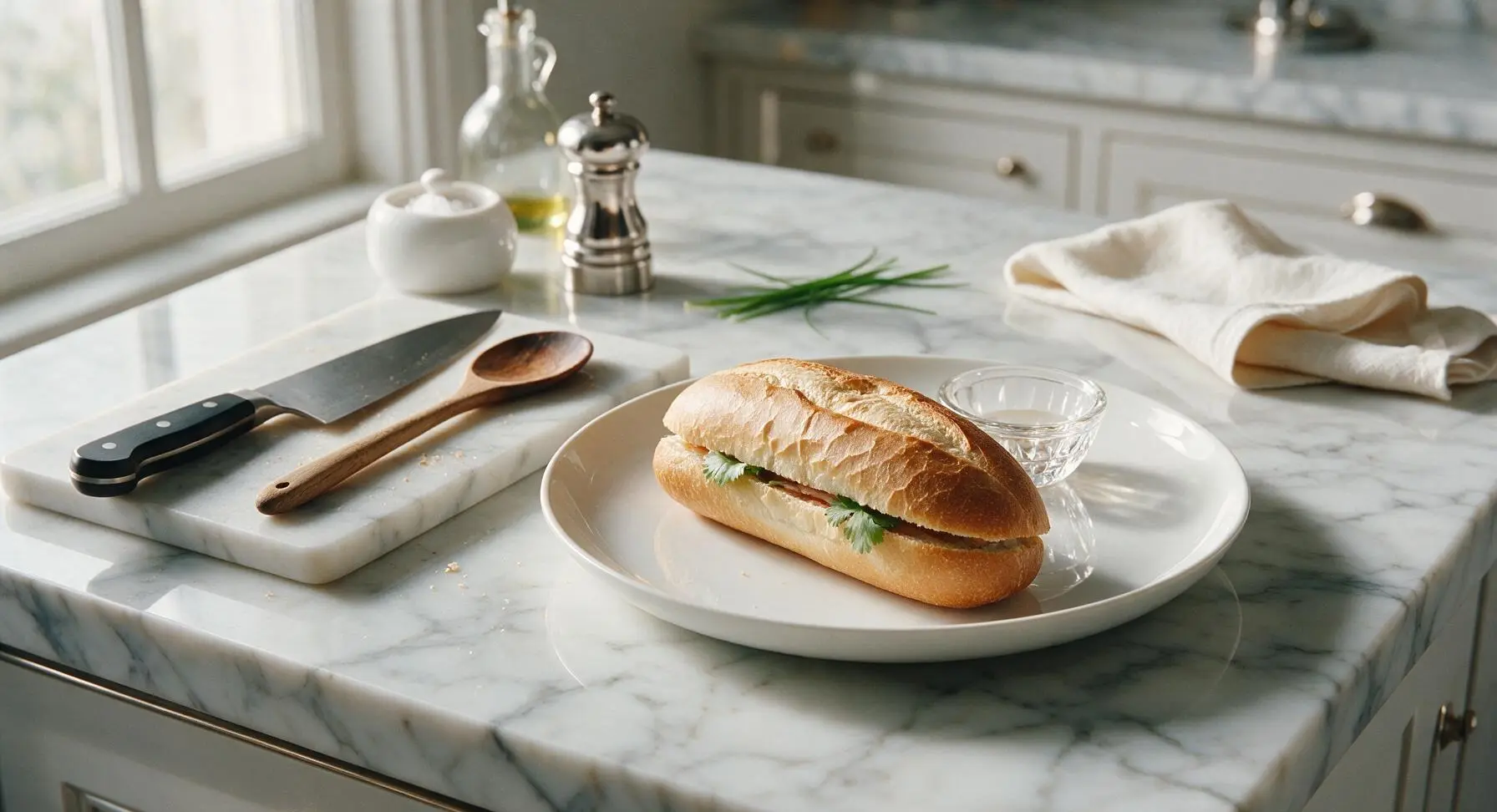
Those 6-inch mini crusty baguettes are the traditional serving size for classic bánh mì—they’re perfectly handheld, so every bite gets an even ratio of filling to bread instead of a mouthful of plain bread at the ends. Look for loaves with a thin, shatteringly crisp crust and soft, airy inner crumb, not dense chewy artisanal sourdough.
2.Why do I need to slice the pork shoulder against the grain?
▾
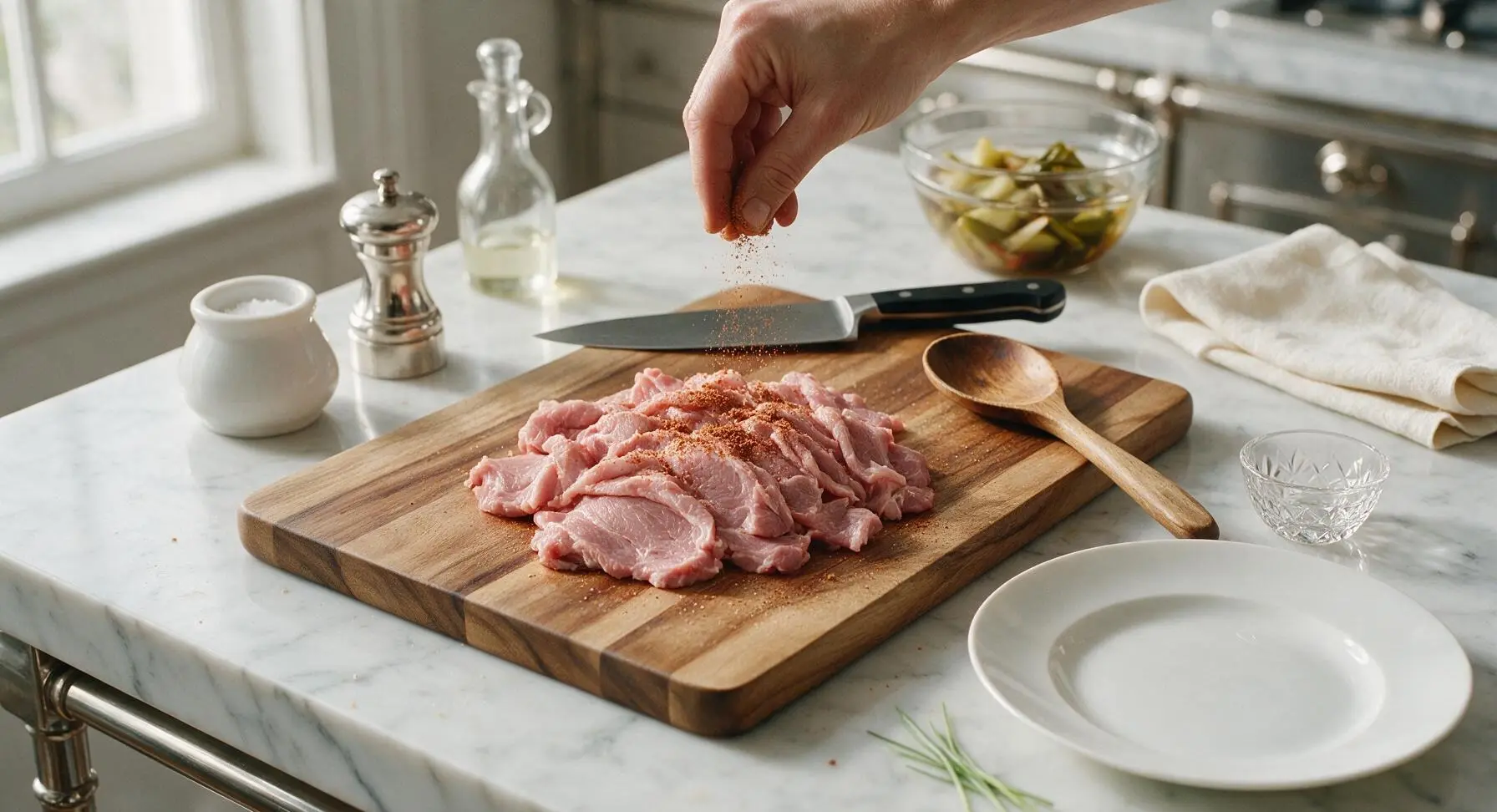
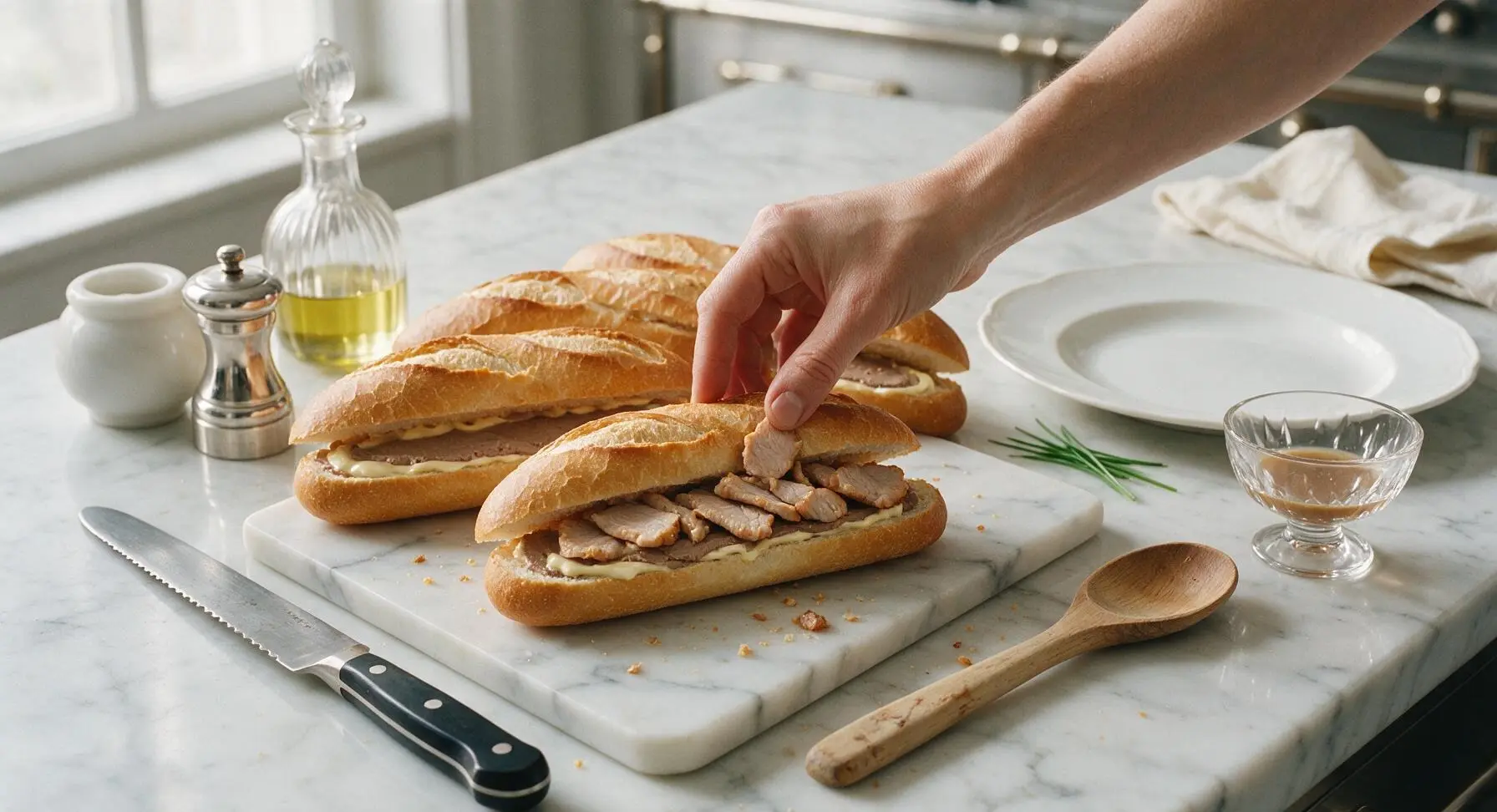
Slicing thinly against the grain breaks up the long, tough muscle fibers in pork shoulder, so every bite is tender instead of chewy or stringy, even after a quick high-heat sear. Aim for 3mm thick slices—if you pop the pork in the freezer for 15 minutes first, it’s much easier to cut clean, even thin slices without squishing the meat.
3.How long do I need to pickle the julienned carrot and daikon for authentic flavor?
▾
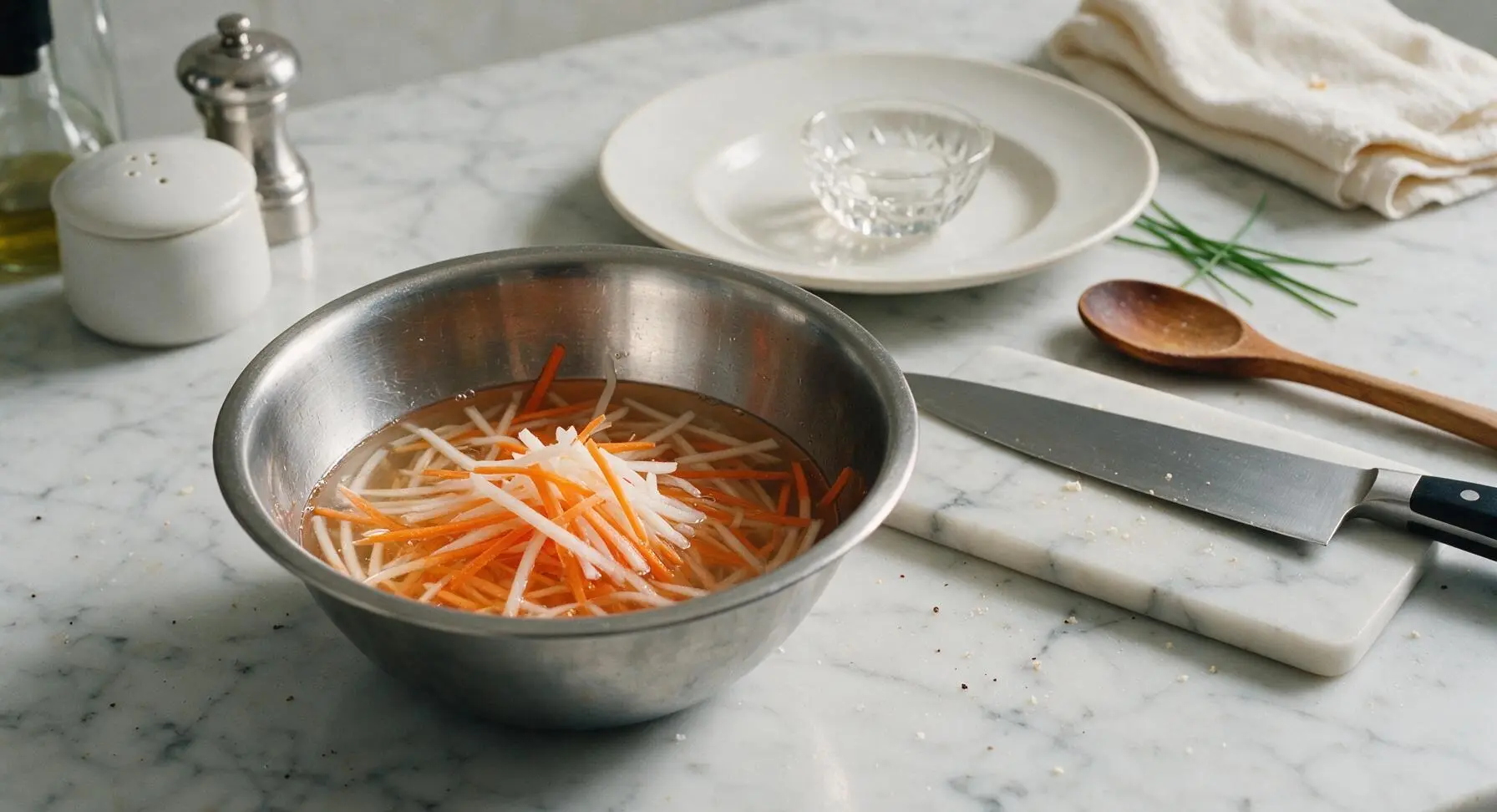
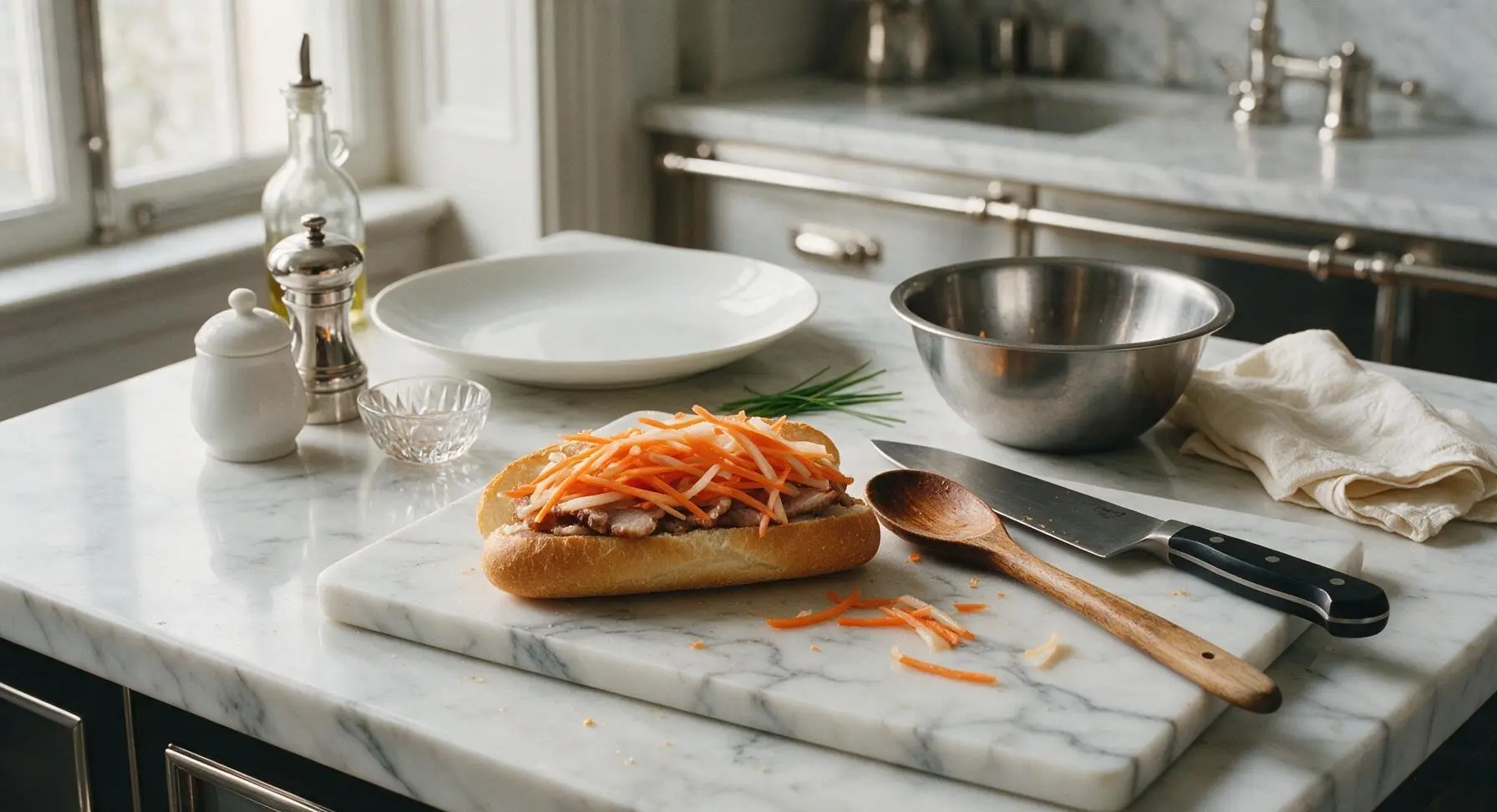
For the best bright, tangy crunch, let your julienned carrot and daikon pickle for at least 1 hour in a mix of rice vinegar, sugar, a pinch of salt, and a splash of water. You can make them up to 2 weeks ahead stored in an airtight jar in the fridge—they only get more flavorful, and stay crisp the whole time.
4.Can I use a different cut of pork if I don’t have pork shoulder?
▾
Pork shoulder is ideal because it has just enough marbled fat to stay juicy through searing, but you can swap in thinly sliced pork loin or boneless pork chops if that’s what you have. Just be careful not to overcook these leaner cuts—sear 30-45 seconds per side over high heat so they don’t dry out and turn tough.
5.My bánh mì gets soggy really fast after assembly—how do I prevent that?
▾
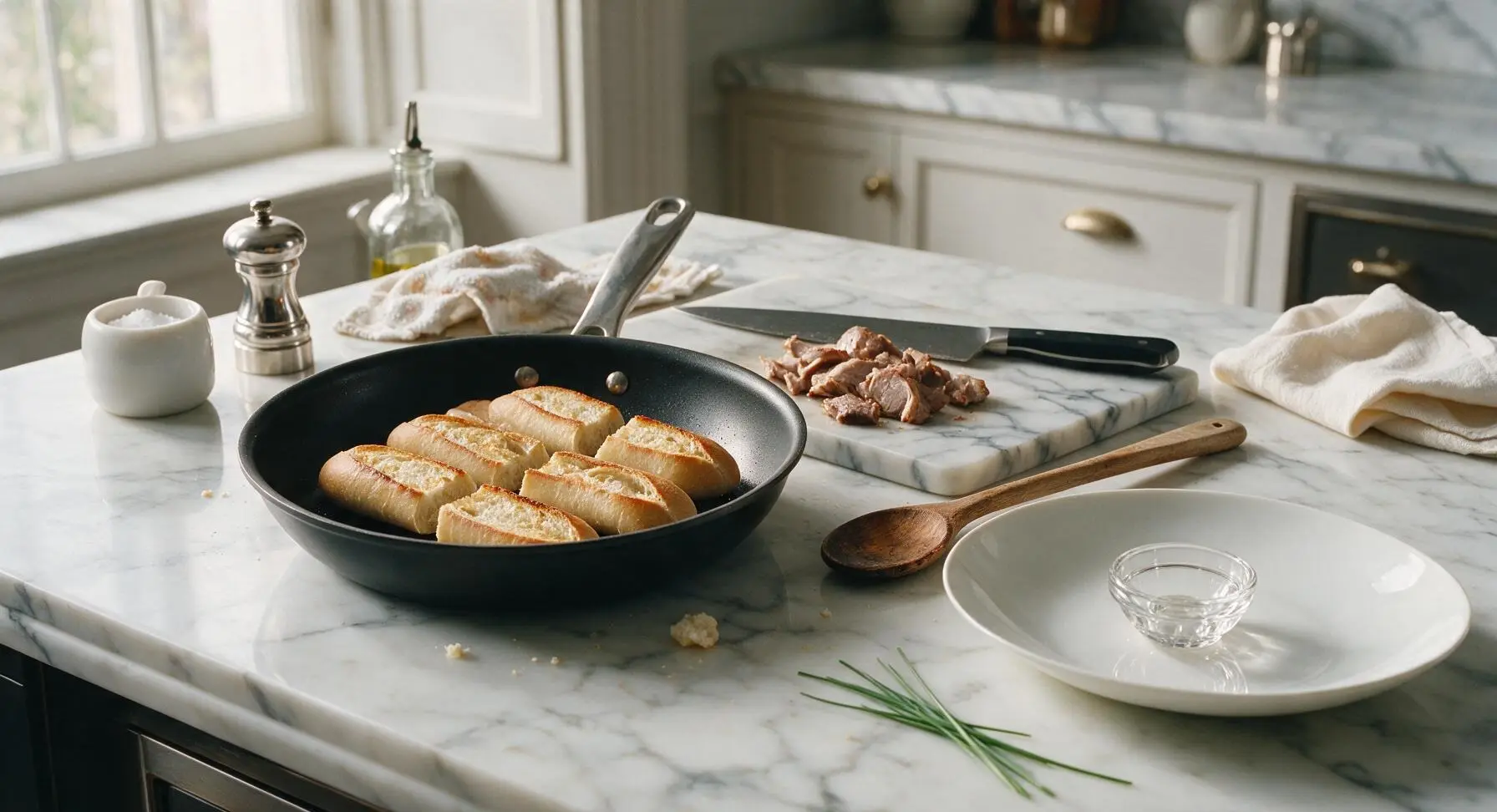
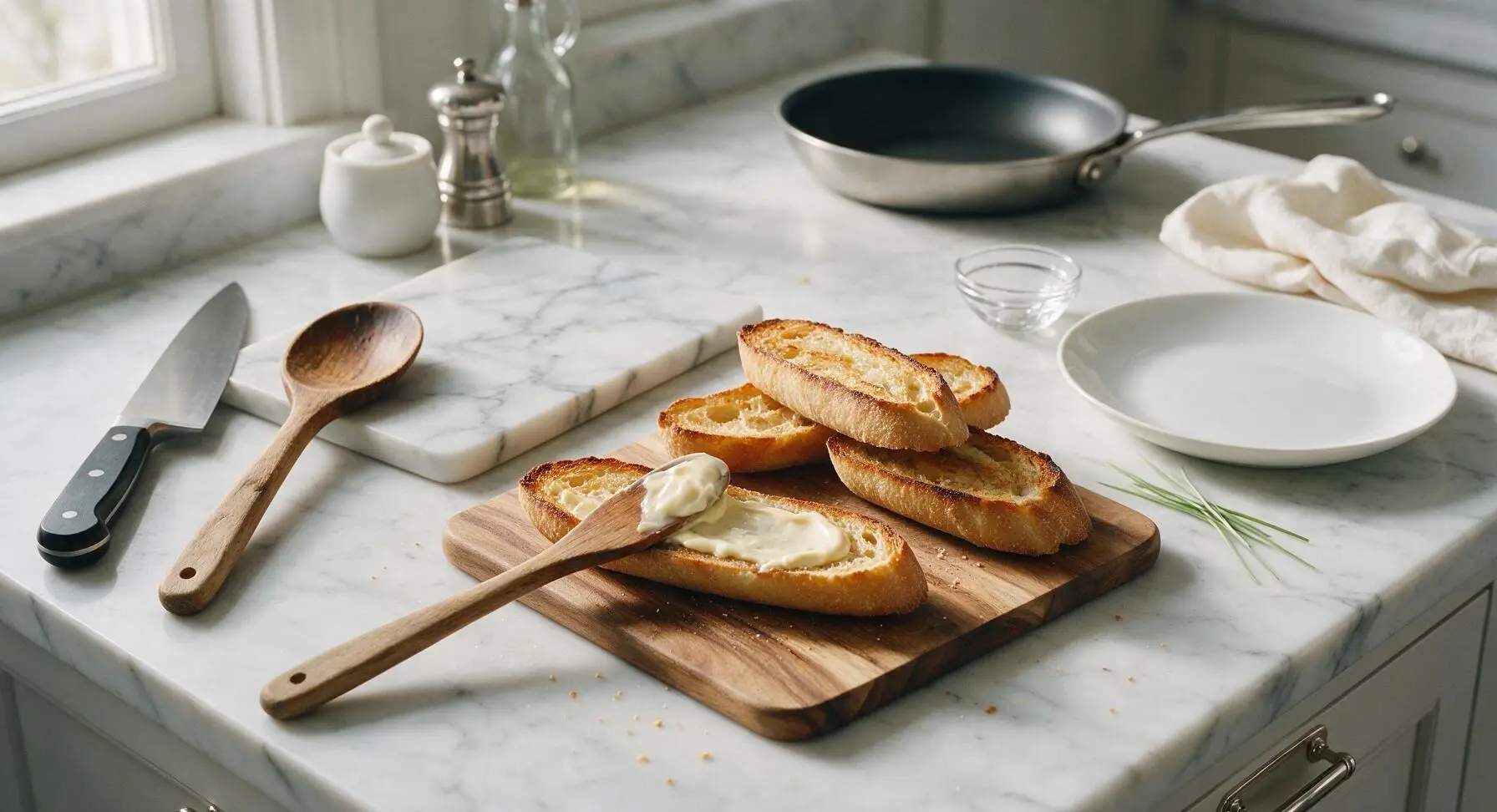
Sogginess usually comes from adding wet fillings straight to soft bread. First, warm your baguette in a 350°F oven for 3-4 minutes to crisp the crust and dry the inner crumb slightly. Spread a thin layer of pâté or mayo on both cut sides to create a moisture barrier before adding seared pork, pickles, and herbs.
6.Do I have to use daikon radish, or can I skip it?
▾
Daikon adds that signature mild, peppery crunch that balances sweet carrot and savory pork, so I don’t recommend skipping it entirely. If you can’t find daikon, swap in julienned jicama for a similar crisp, mild texture, or a small amount of thinly sliced red radish for a brighter, sharper peppery bite.
7.What’s the easiest way to julienne carrot and daikon evenly for pickling?
▾
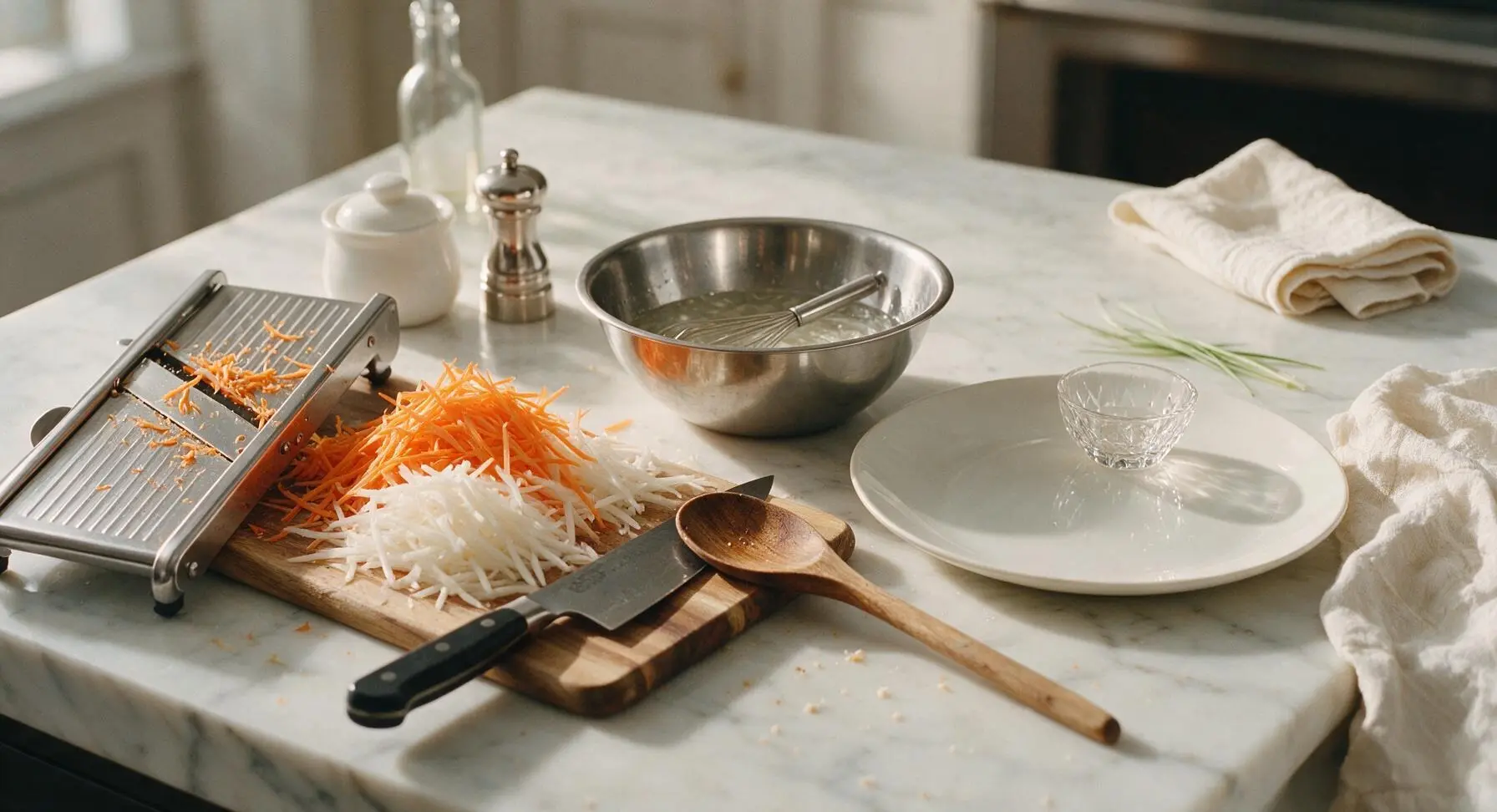
The most consistent method is to use a julienne peeler or mandoline fitted with a 3mm julienne blade, which cuts perfectly uniform matchsticks in seconds. If you’re cutting by hand, first slice veggies into thin planks, stack the planks, then slice lengthwise into matchstick-sized pieces for even pickling.
8.Can I make these bánh mì ahead of time for meal prep?
▾
Fully assembled bánh mì don’t hold up well longer than 30 minutes, because pickles will quickly make the bread soggy. For meal prep, store all components separately: crisped baguettes wrapped in foil, seared pork in an airtight container, drained pickles, and cilantro wrapped in a damp paper towel. Assemble right before eating.
9.Is cilantro mandatory, or can I use other fresh herbs?
▾
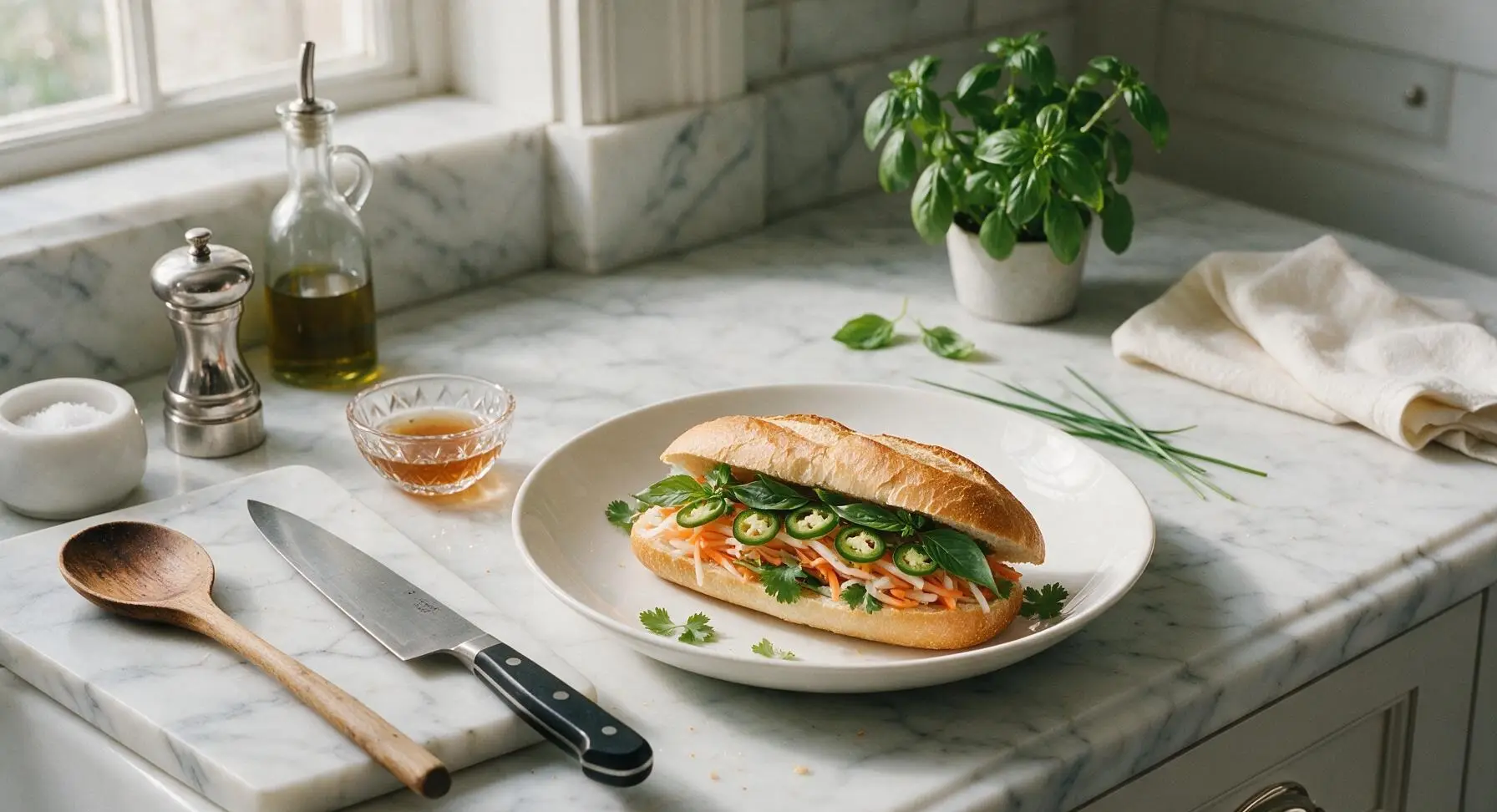
Fresh cilantro is the classic herb for bánh mì, adding that bright, citrusy, earthy note that ties all the flavors together. If you dislike cilantro, swap in fresh Thai basil leaves, a few sprigs of mint, or a mix of both for the same bright, fresh contrast to rich pork and tangy pickles.
10.How hot should my pan be to sear the pork properly?
▾
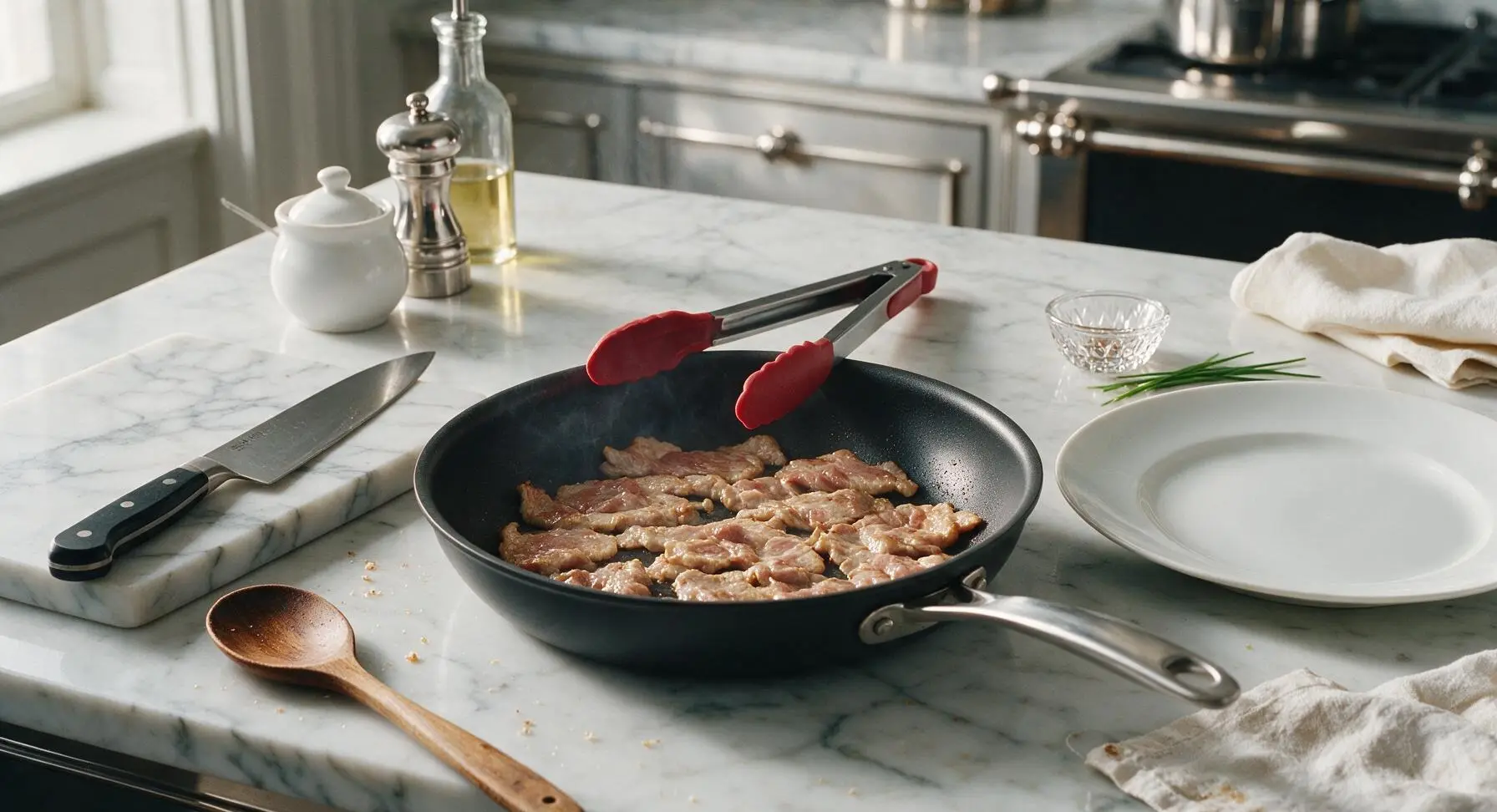
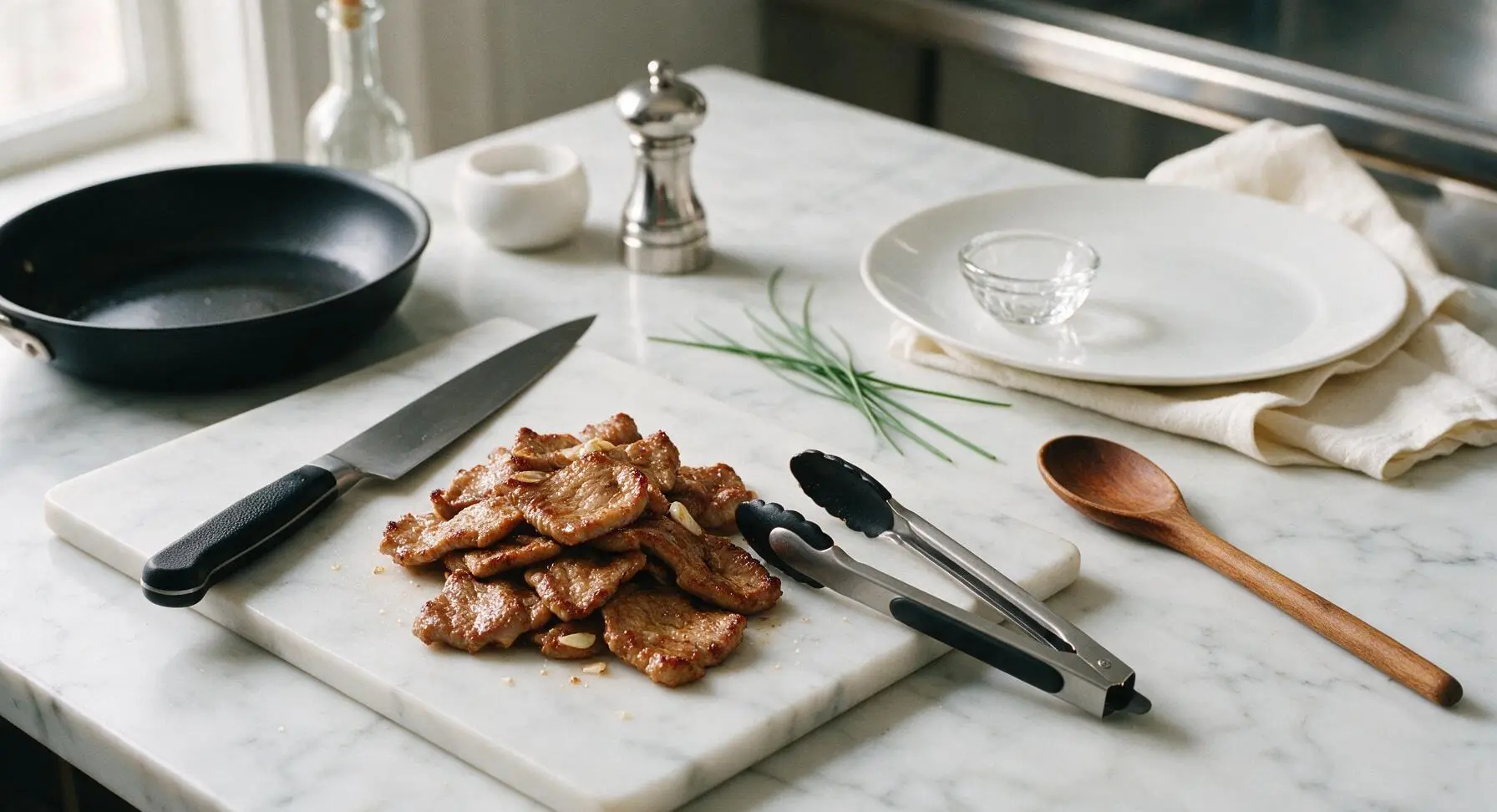
You want your skillet (preferably carbon steel or cast iron) screaming hot—heat it over medium-high for 3-4 minutes until a drop of water evaporates on contact in 1 second. Lay thin pork slices in a single layer without crowding the pan, and sear 45 seconds per side until golden with slightly crispy edges and no pink remains.
11.What marinade should I use for the pork to get classic bánh mì flavor?
▾
Toss your thin pork slices with a mix of 2 tbsp fish sauce, 1 tbsp soy sauce, 1 tbsp brown sugar, 1 minced garlic clove, and a pinch of black pepper, then let it marinate 20 minutes before searing. This mix hits the classic salty, sweet, umami base that pairs perfectly with tangy pickles and fresh herbs.
12.Can I make a vegetarian version of this classic bánh mì?
▾
Absolutely! Swap the seared pork shoulder for marinated, pan-seared tofu slices or tempeh, using the same marinade but swapping fish sauce for soy sauce or tamari to get that same savory, sweet umami kick. Keep all other components the same for that signature balanced, bright, rich, crisp bite.
13.Do I need to hollow out the baguette before adding fillings?
▾
It’s not mandatory, but gently pulling out a small amount of the soft inner crumb from the top half of the baguette makes it easier to stack fillings without everything sliding out when you take a bite. Don’t scoop out too much, though—you want just enough of a trough to hold fillings without losing that soft bread texture.
14.What spreads are traditional to add to a classic bánh mì?
▾
The classic spread combo is a thin layer of softened unsalted butter and creamy pork liver pâté on one cut side, and a thin swipe of mayonnaise on the other. Both add richness that cuts the tang of the pickles, and they act as a moisture barrier to keep the crust crisp. Extra mayo works if you don’t like pâté.
15.How do I add the classic gentle heat to a bánh mì?
▾
Classic bánh mì has optional mild heat that doesn’t overpower other flavors, usually from thin slices of fresh jalapeño layered in with the herbs. Add 2-3 thin slices per sandwich, leaving seeds in if you want more heat, or skip it entirely for mild eaters. Avoid adding liquid hot sauce, which will make the bread soggy.
16.My pickled carrot and daikon are too sour—how do I fix that?
▾
If your pickles taste sharp or overly tart, you’ve used too much vinegar or not enough sugar. Stir in extra granulated sugar 1 teaspoon at a time until the brine balances tangy and sweet, then add a pinch more salt to round out the flavor. Good pickles should taste bright, not mouth-puckeringly sour, to balance rich pork.
17.Can I use regular soft sandwich bread instead of baguettes?
▾
I don’t recommend it—soft sandwich bread doesn’t have the crisp crust and airy crumb that defines bánh mì’s texture, and it will turn soggy almost immediately from pickles and pork. If you can’t find mini baguettes, look for small crusty Italian rolls with a thin, crisp crust as the closest substitute.
18.How do I reheat leftover seared pork so it doesn’t dry out?
▾
The best way to reheat thin pork slices is to toss them in a dry skillet over medium heat for 1-2 minutes, flipping once, until just warmed through. Skip the microwave—it makes thin pork slices rubbery and dry. Let the pork come to room temperature for 10 minutes first for faster, more gentle reheating.
19.Is adding cucumber traditional for bánh mì, or should I skip it?
▾
Thinly sliced English cucumber is a totally traditional, welcome addition! Cut it into thin lengthwise spears, and pat them dry with a paper towel before layering to avoid adding extra moisture that sogs out the bread. It adds an extra cool, crisp layer that pairs beautifully with tangy pickles and savory pork.
20.How do I crisp up soft storebought mini baguettes for bánh mì?
▾
Spritz the outside of the mini baguettes lightly with a little water, then bake them directly on an oven rack at 375°F for 4-5 minutes. The steam from the water will crisp the crust right up to that signature shattery texture, and warm the inner crumb so it’s soft but not doughy. Cool 1 minute before slicing to fill.


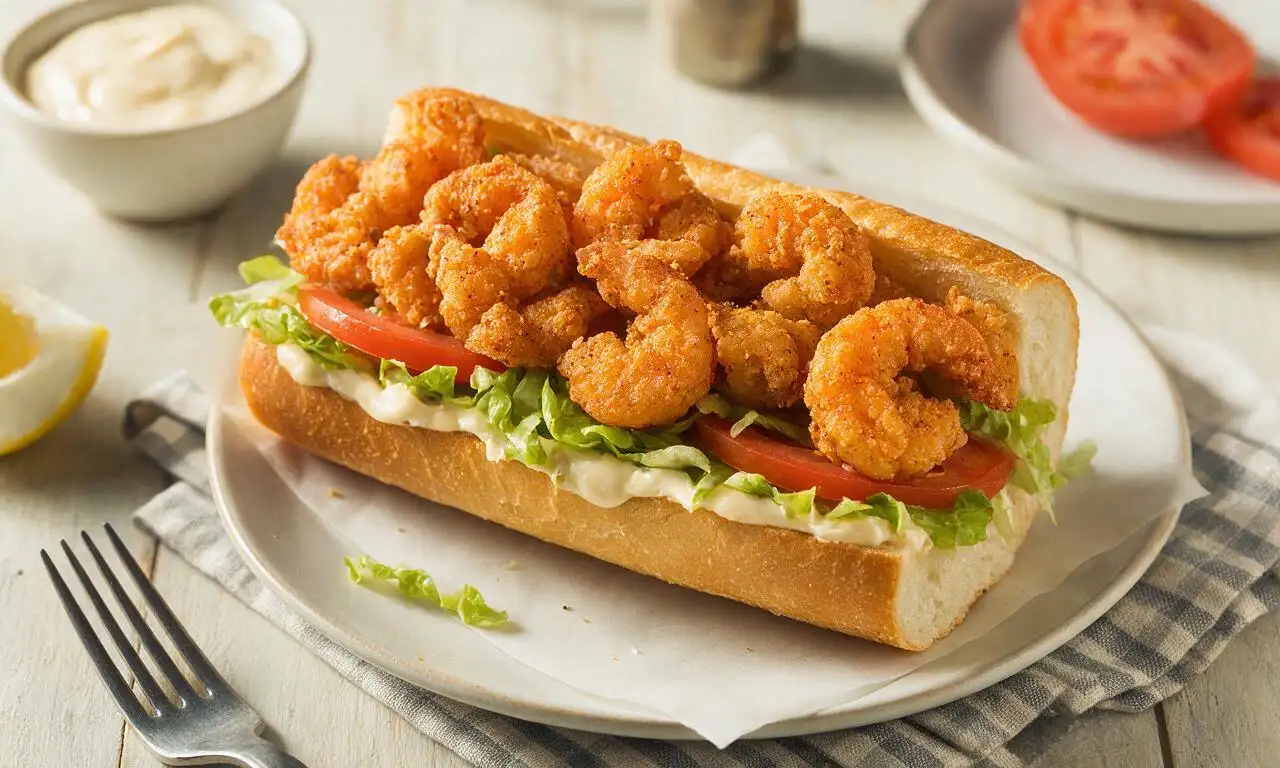
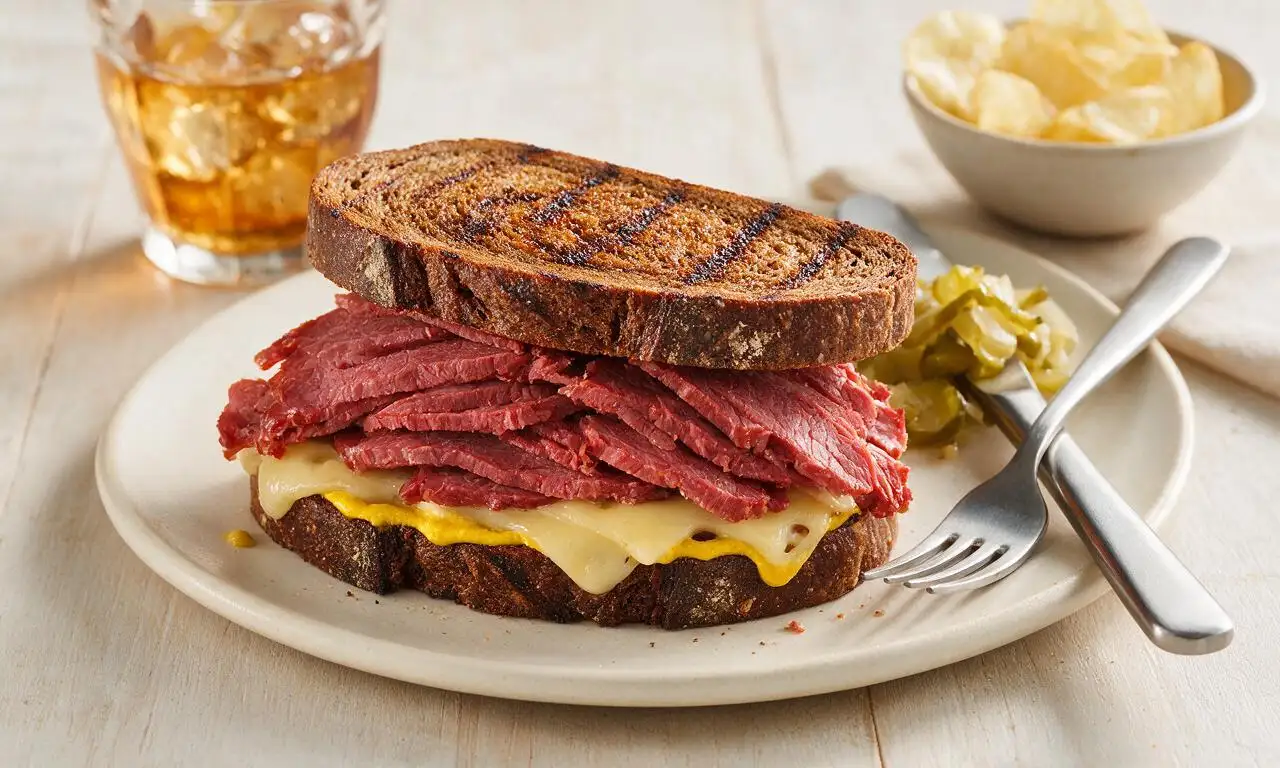
OMG this bánh mì recipe is a total game changer! I’ve always been intimidated to make Vietnamese food at home because I thought it’d be super complicated, but a 10 minute cook time? No brainer. I grabbed pickled daikon and carrots from my local Asian market on a whim, threw these together for weeknight family dinner, and my kids DEVOURED them. Even my super picky 8 year old asked for seconds. I already added this to my weekly meal prep rotation! SO good.
Made these for our neighborhood potluck last weekend and they were a huge hit! I swapped the traditional pork for grilled chicken since a couple of our neighbors don’t eat pork, and it still slapped. Only reason I’m not giving 5 stars is I wish the recipe had a quick note on adjusting spice level for folks who can’t handle jalapeños — half my crew are total wimps when it comes to heat, so I had to guess how much to leave out. Will definitely make these again though!
Wait why did I waste $12 a pop on bánh mì from the downtown sandwich shop for years when I can make these at home in 10 minutes for a fraction of the cost? I prepped a big batch on Sunday, kept all the fillings separate so the crusty bread didn’t get soggy, and they held up perfectly for work lunch all week. My coworker even begged for the recipe after she stole a bite of mine on Wednesday! 10/10, no notes.