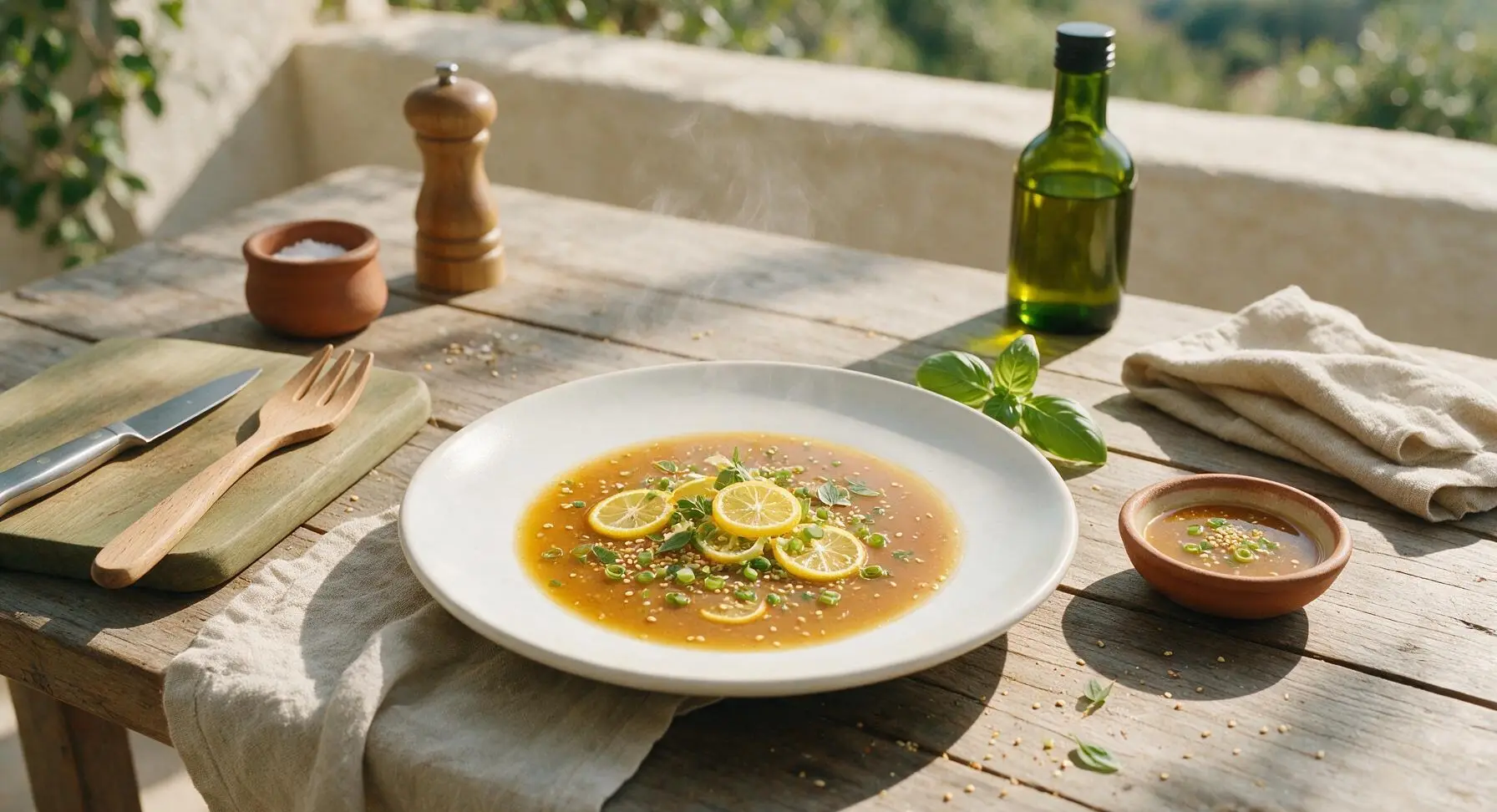
yuzu ponzu sauce

title 1
yuzu ponzu sauce
⏱️ cook time 0 minutes
🍽️ servings 8
⚡ Difficulty easy

intro

Bright, tart, and deeply umami, homemade yuzu ponzu is a versatile Japanese citrus sauce perfect for dipping, dressing, and marinating, with bright floral flavor far better than bottled versions.

Ingredients
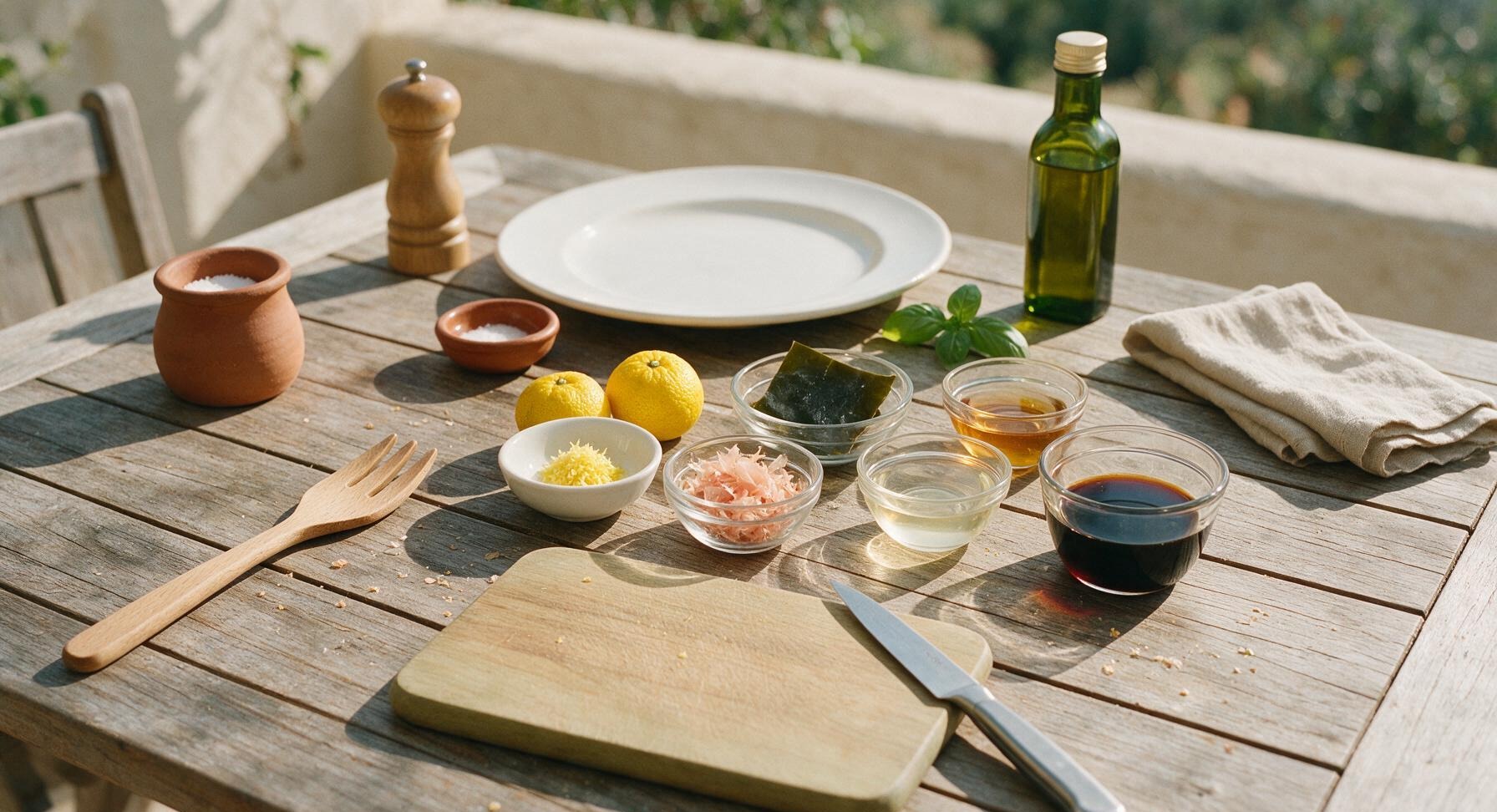
Low-sodium soy sauce 120ml (1/2 cup)
Fresh yuzu fruit 3 small (120g, yields 60ml juice + 1 tsp zest)
Dried bonito flakes (katsuobushi) 5g (1/4 cup loosely packed)
Dried kombu (kelp) 5g (5cm square piece)
Mirin 30ml (2 tbsp)
Unseasoned rice vinegar 30ml (2 tbsp)

Steps

1

Zest and juice yuzu

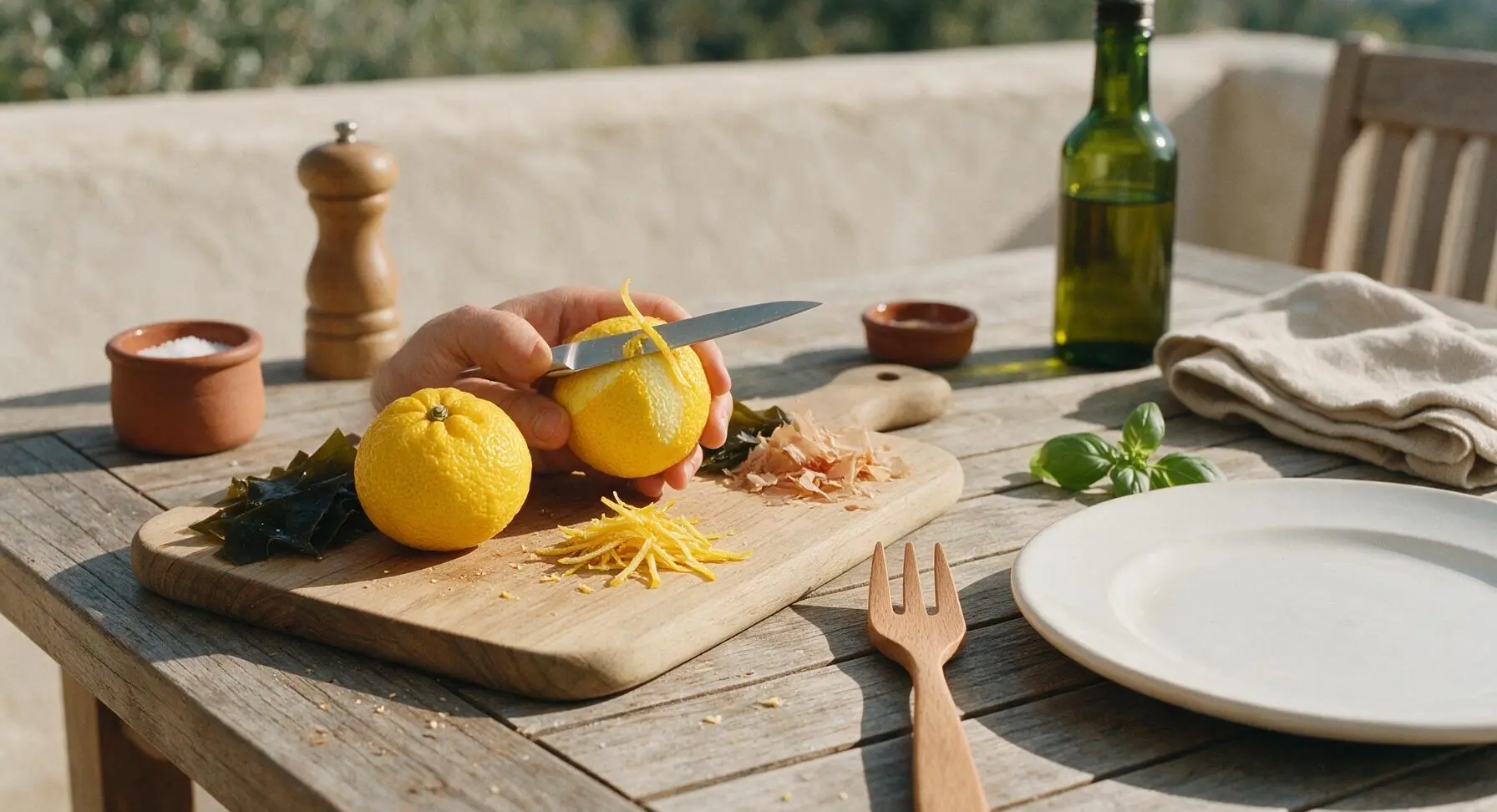
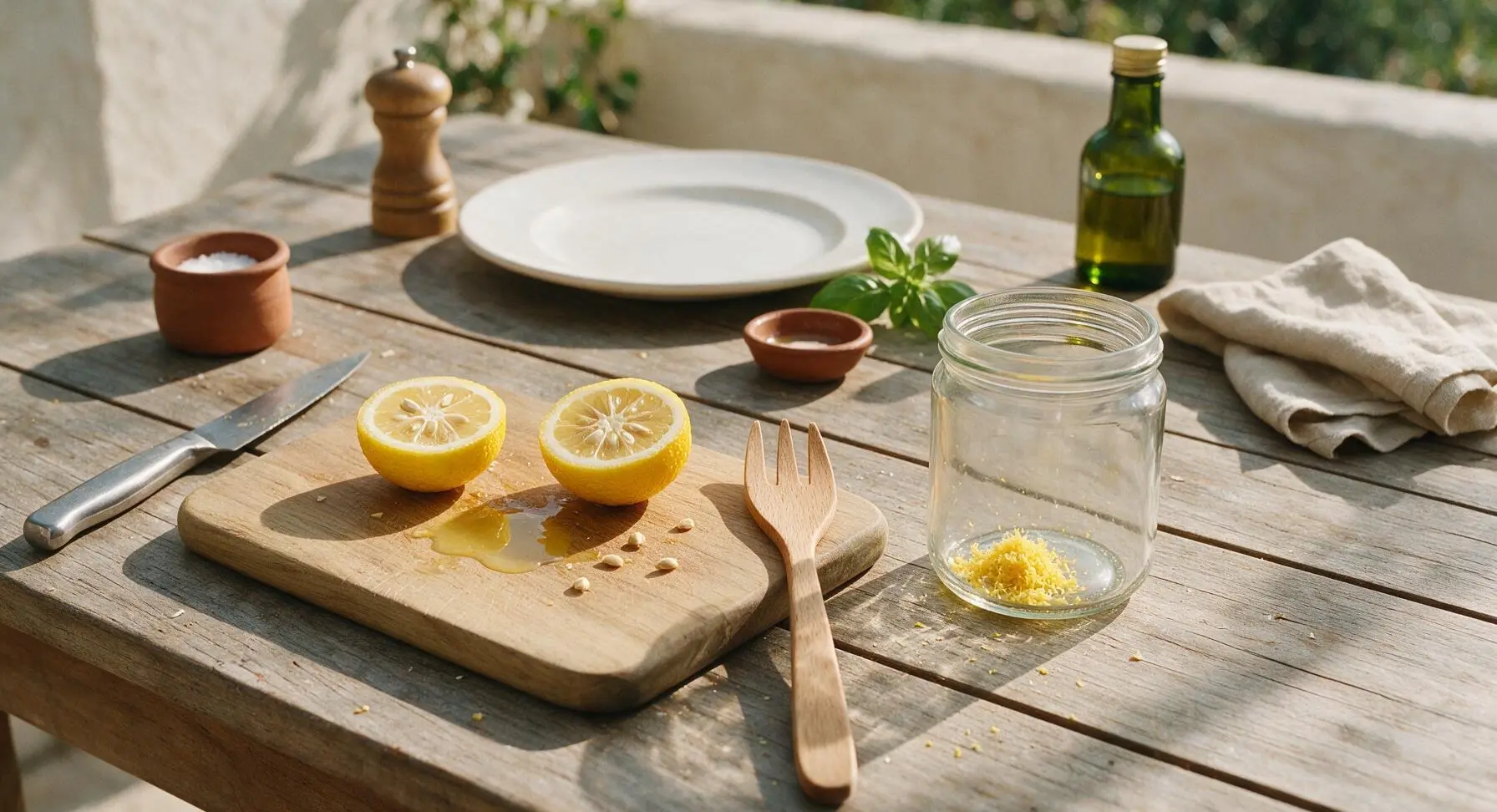
Place 2 whole fresh yuzu on the hinoki cutting board. Use the paring knife to carefully remove thin strips of outer yellow zest, avoiding the bitter white pith underneath, until you have 1 teaspoon of fine zest. Slice the zested yuzu (plus the third whole yuzu) in half crosswise, squeeze to extract 60ml (1/4 cup) of clear, pale yellow juice, picking out and discarding any seeds that fall into the juice. Pour the collected juice and zest into the clean 300ml glass storage jar.
Step 1
step1:Zest and juice yuzu
Step 1
step1:Zest and juice yuzu
2

Mix base liquid ingredients

Pour the measured 120ml low-sodium soy sauce, 30ml mirin, and 30ml unseasoned rice vinegar into the glass storage jar with the yuzu zest and juice. Use the bamboo stirring spoon to stir the mixture gently for 10 seconds until fully combined, with no separate layers of liquid visible.

Step 2
step2:Mix base liquid ingredients
3

Add kombu and bonito

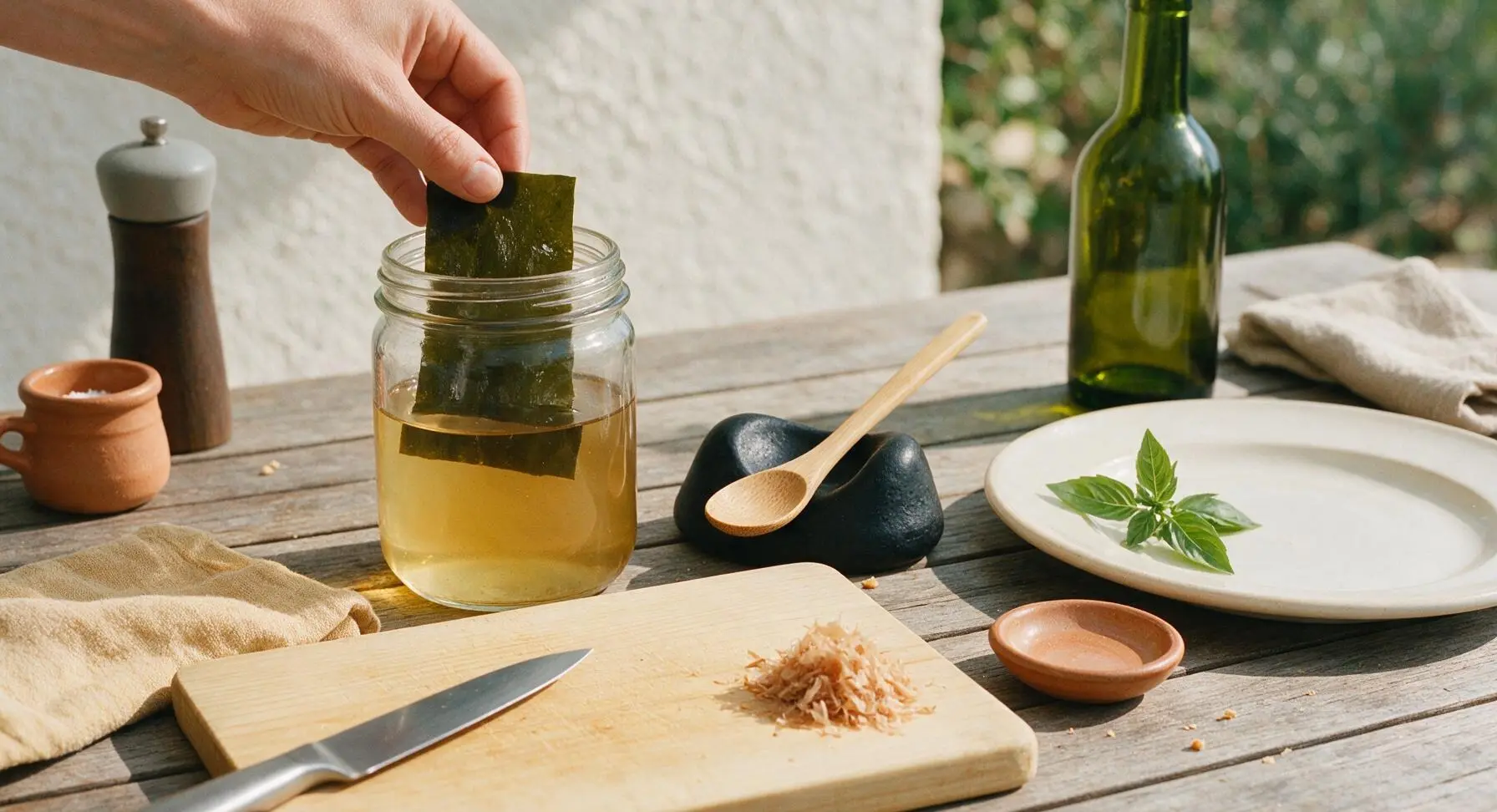
Pick up the folded cotton tea towel from its back-left position, use a clean corner to gently wipe the 5cm square piece of dried kombu to remove any surface dust (do not wash off the white salt bloom, which adds valuable umami), then return the towel to its fixed position. Drop the wiped kombu and the full 5g of dried bonito flakes into the jar with the liquid mixture, pressing them down gently with the bamboo spoon to fully submerge all solids under the liquid surface.
Step 3
step3:Add kombu and bonito
4

Seal and steep refrigerated

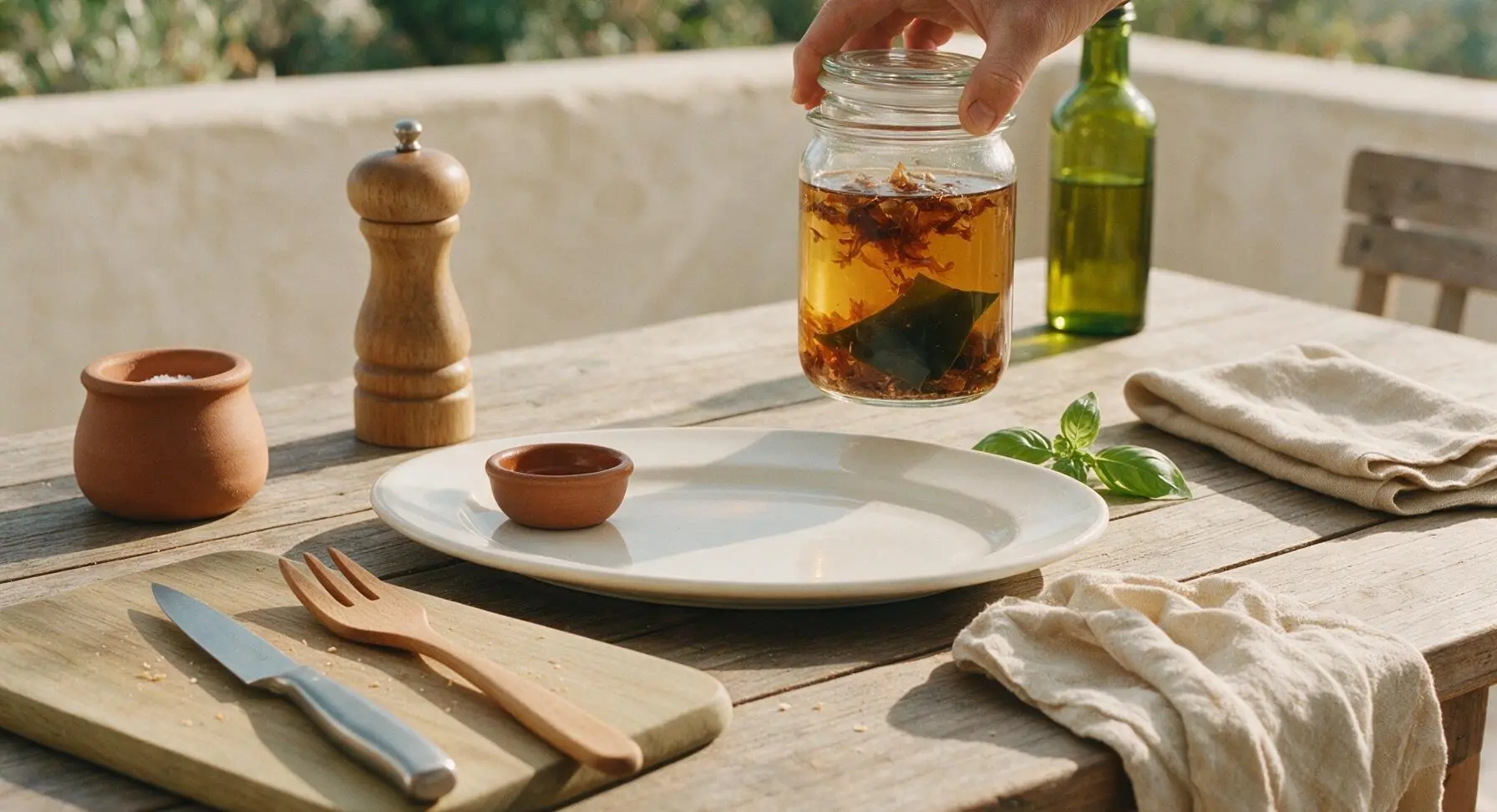
Fasten the tight glass lid onto the storage jar, giving it 2 gentle shakes to distribute the solids evenly. Place the sealed jar in the refrigerator to steep for 24 hours, which allows the umami from the kombu and bonito to infuse into the citrus-soy base, and the flavors to mellow into a balanced, bright sauce. Do not steep longer than 48 hours, as the bonito can turn bitter with over-extraction.
Step 4
step4:Seal and steep refrigerated
5

Strain out solid ingredients

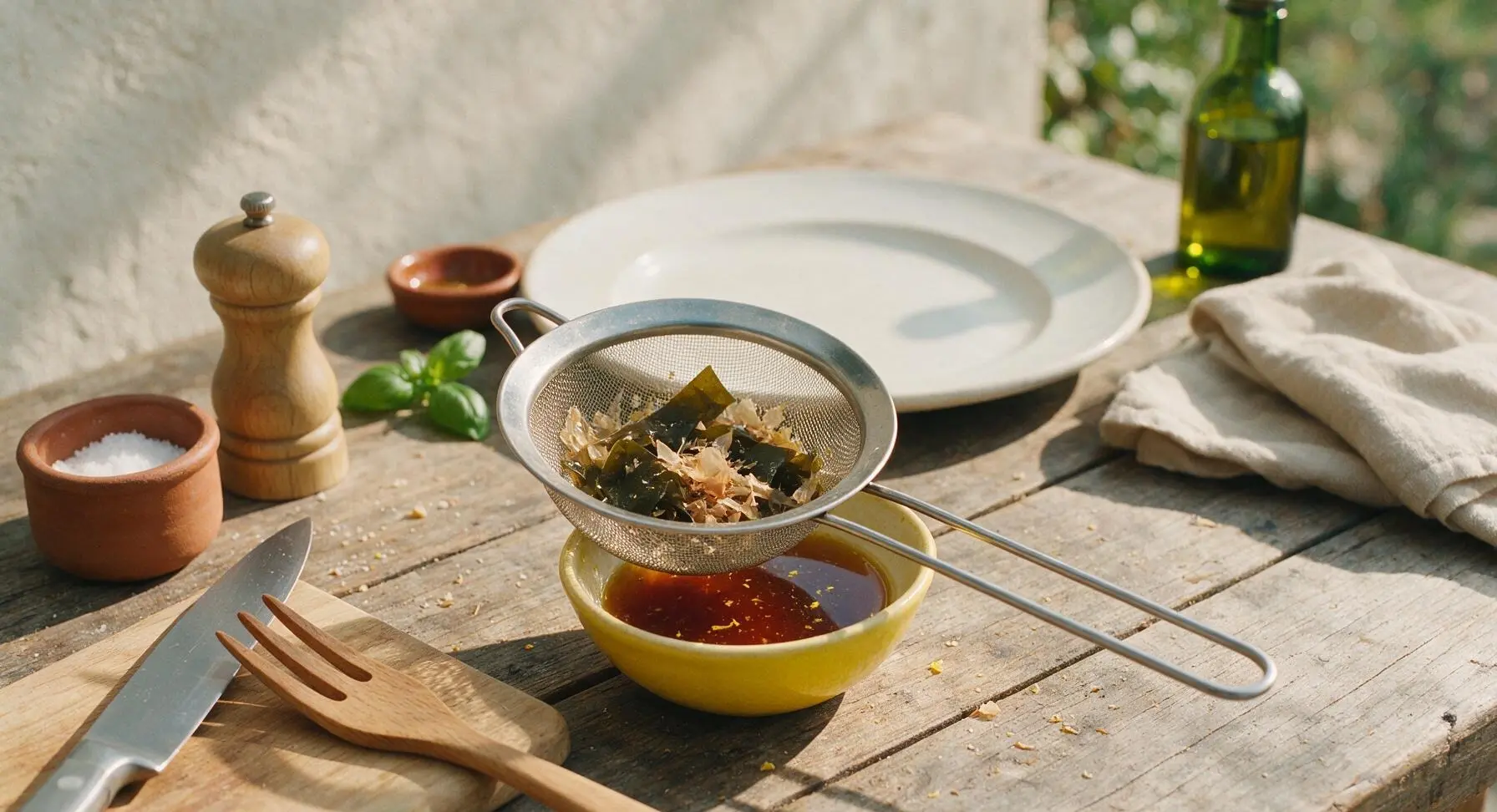
After 24 hours of steeping, remove the jar from the refrigerator. Place the fine-mesh stainless steel strainer over the top of the small yuzu-yellow ceramic sauce bowl. Pour the steeped liquid through the strainer, catching all the kombu, bonito flakes, and any large zest pieces in the mesh. Discard the used, flavor-spent solids.

Step 5
step5:Strain out solid ingredients
Step 5
step5:Strain out solid ingredients
6

Rest and serve chilled

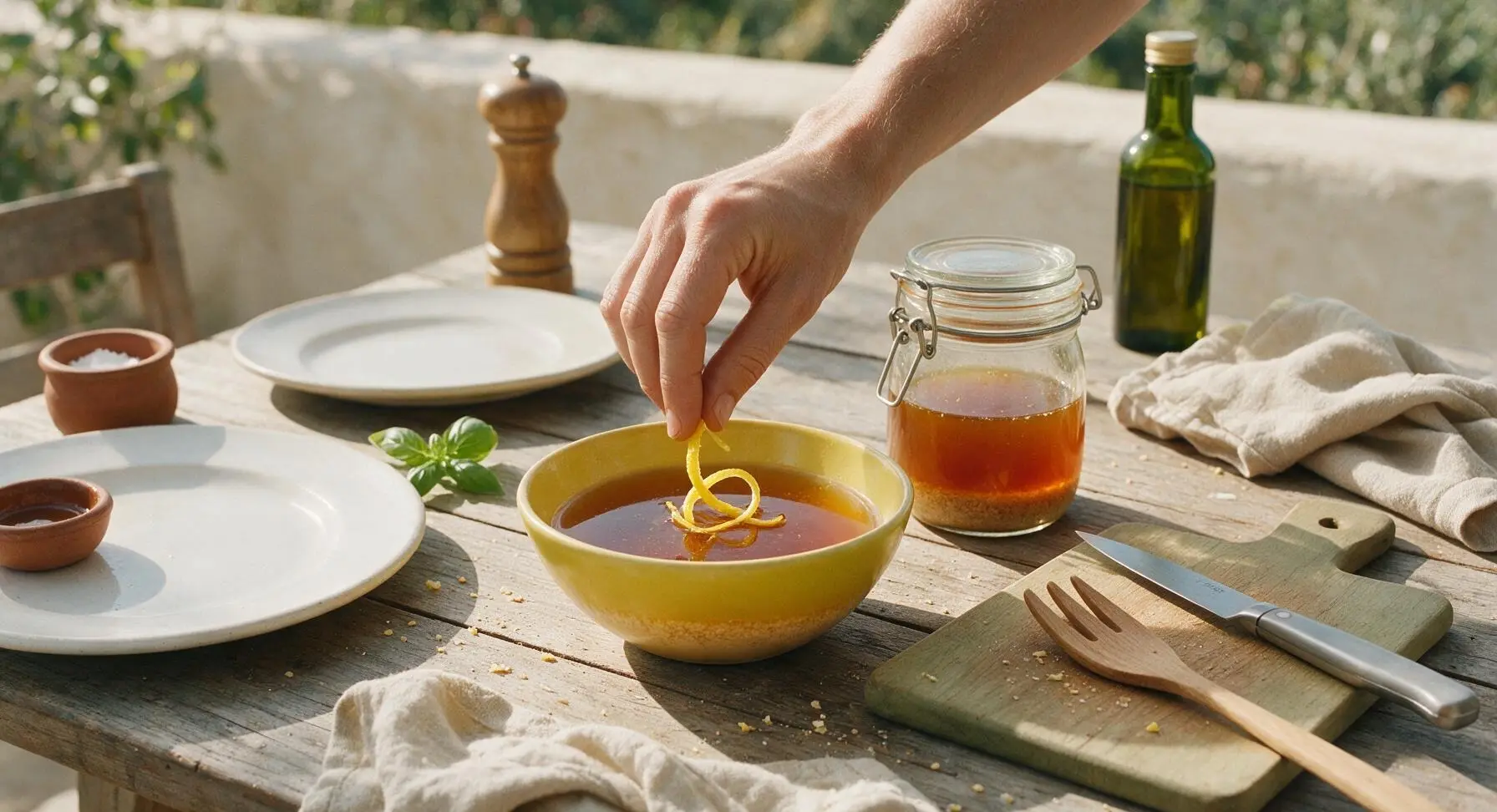
Let the strained ponzu rest for 10 minutes at room temperature to allow any fine sediment to settle to the bottom of the bowl. Give the sauce a gentle stir before serving, and garnish with a thin twist of fresh yuzu peel. Store leftover strained ponzu in the sealed glass jar in the refrigerator for up to 2 weeks, and use for dipping dumplings, dressing salads, marinating fish, or drizzling over cold tofu.
Step 6
step6:Rest and serve chilled

Tips

1.Avoid scraping the bitter white pith when zesting yuzu: only remove the thin, fragrant outer yellow zest layer, as the pith contains harsh bitter compounds that will overpower the sauce’s bright floral citrus notes.
2.Strain the sauce exactly after 24 hours of cold steeping: steeping longer than 48 hours will extract bitter, fishy notes from the bonito flakes that throw off the balanced umami-citrus flavor. For a lighter, less briny profile, reduce bonito flakes to 2g.
3.If fresh yuzu is hard to source, substitute with 3 tablespoons fresh lemon juice, 2 tablespoons fresh lime juice, and 1 tablespoon fresh white grapefruit juice, plus 1 teaspoon lime zest, to mimic yuzu’s unique tart, floral, slightly bitter profile. Bottled yuzu juice works in a pinch, but lacks the bright aromatic oil from fresh zest.

✨ You May Also Like

Side Dishes
🍜 India

Velvety, aromatic all-purpose curry sauce perfect for tossing with roasted veggies, grilled protein, or rice for fast, cozy, flavorful meals.

⏱️ 25 minuteSide Dishes ★ 4.8
Side Dishes
🍜 Spain

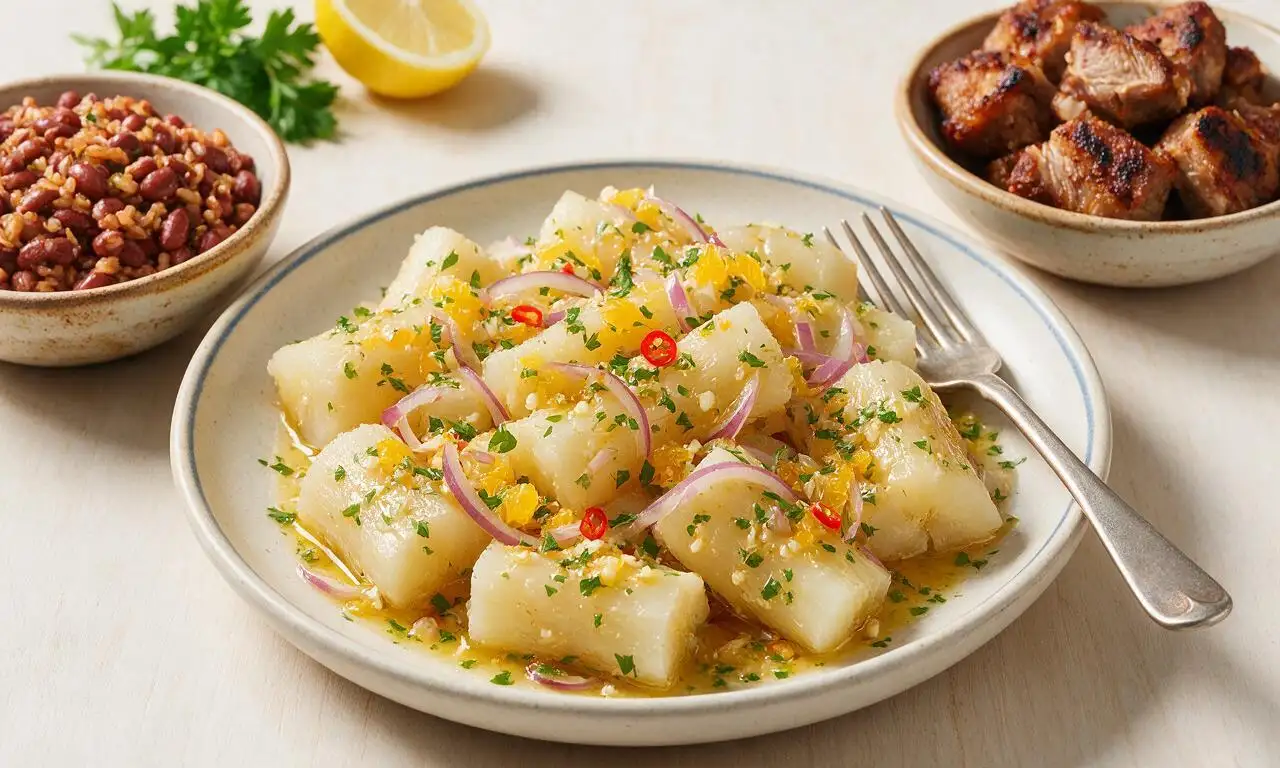
Tender, starchy boiled yuca tossed in bright, garlicky citrus mojo sauce—an iconic, zesty side that pairs beautifully with roasted pork, grilled meats, and rice and beans.

⏱️ 40 minuteSide Dishes ★ 5
Side Dishes
🍜 United States

Tender, paper-thin potato flatbread, a beloved Norwegian-American Minnesota Christmas staple, griddled until softly spotted and served warm with butter.

⏱️ 1 hour 30Side Dishes ★ 4.6
Side Dishes
🍜 United States

Rich, deeply savory cured salt pork, a long-lasting kitchen staple perfect for frying crispy as a side or adding umami to stews, beans, and chowders.

⏱️ 7 days (2Side Dishes ★ 4.9
Side Dishes
🍜 United States

Crispy, tangy classic Southern fried green tomatoes with a crunchy cornmeal crust, served hot for a nostalgic, comforting summery bite.

⏱️ 25 minuteSide Dishes ★ 4.9
Side Dishes
🍜 United States

Moist, golden-crusted savory muffins with sweet corn, zesty jalapeño, and melted cheddar, perfect for pairing with smoky summer grilled fare.

⏱️ 30 minuteSide Dishes ★ 4.9

yuzu ponzu sauce:Frequently Asked Questions

1.How long will homemade yuzu ponzu stay fresh in the fridge? ▾
If stored in a tightly sealed glass jar in the coldest part of your fridge (usually the back of the lower shelf), it will stay fresh for 2–3 weeks. The flavor actually improves over the first 3 days as the kombu and katsuobushi deepen the umami, so just give the jar a quick shake before each use.
2.What can I use as a substitute if I can’t find fresh yuzu fruit? ▾
If fresh yuzu isn’t available at your local Asian market or grocery store, mix 3 parts fresh lime juice with 1 part fresh mandarin orange juice to mimic yuzu’s signature bright tart, subtly floral sweetness. Skip bottled yuzu juice when possible—it often has preservatives that dull that fresh, bright flavor.
3.Do I need to fully cook this ponzu on the stovetop? ▾
You don’t need a full rolling boil, but a gentle 1-minute simmer of the mirin first helps cook off its harsh raw alcoholic edge. Add the soy sauce, kombu, and katsuobushi off heat to steep, so you don’t burn the delicate bonito flakes or make the kombu turn slimy and bitter.
4.Why does the recipe specify low-sodium soy sauce instead of regular? ▾
Regular full-sodium soy sauce will make finished ponzu overly salty as it steeps, since kombu and katsuobushi both add subtle salty, umami notes of their own. Low-sodium soy lets the bright floral yuzu notes and deep bonito umami shine without making the sauce too briny for dipping or dressing.
5.Can I adjust this recipe to make a vegan version of yuzu ponzu? ▾
Absolutely! Swap the dried bonito flakes (katsuobushi) for 5 grams of dried shiitake mushrooms, and use a vegan low-sodium soy sauce or gluten-free tamari in place of standard soy. Steep it for the same 24 hours, and you’ll get the same rich umami depth without any animal products.
6.Do I have to strain out the kombu and katsuobushi after steeping? ▾
Yes, you should strain out both the kombu and katsuobushi after 24 hours of steeping in the fridge. If you leave them in longer, the bonito will start to release bitter, off-flavors, and the kombu can develop an unpleasantly slimy, gummy texture that ruins the sauce’s smooth consistency.
7.What are the best ways to use homemade yuzu ponzu? ▾
It’s incredibly versatile! Use it as a dipping sauce for gyoza, shabu-shabu, potstickers, or sashimi, toss it with cold soba noodles, drizzle it over grilled fish or roasted veggies, thin it with a touch of sesame oil for salad dressing, or use it as a bright marinade for chicken or tofu.
8.Can I freeze leftover ponzu to extend its shelf life? ▾
Yes! Pour fully strained, cooled ponzu into ice cube trays, freeze until solid, then pop the cubes out and store them in a labeled zip-top freezer bag for up to 3 months. Thaw individual cubes in the fridge as needed, or toss a frozen cube straight into hot stir fries for a quick flavor boost.
9.Why did my homemade ponzu turn out bitter? ▾
Bitterness usually comes from one of three common missteps: you simmered katsuobushi at a rolling boil (which releases harsh bitter compounds), you got bitter white yuzu pith in your juice, or you left kombu and bonito steeping longer than 24 hours without straining. Stick to the steep time for balanced flavor.
10.What can I use if I don’t have mirin for this recipe? ▾
If you don’t have mirin on hand, mix 2 parts dry sherry with 1 part granulated sugar, heated just until the sugar dissolves to mimic mirin’s sweet, mild umami depth. Avoid using seasoned rice vinegar as a swap—it’s far too tart and will throw off the sauce’s carefully balanced flavor.
11.Should I add yuzu zest to the ponzu for extra flavor? ▾
You can add a 1-inch strip of yuzu zest (only the bright yellow outer peel, no bitter white pith attached) during the steeping process for an extra pop of bright floral aroma. Be sure to pull the zest out when you strain the kombu and katsuobushi so it doesn’t turn bitter in the fridge over time.
12.Is there a way to make a lower-sugar version of this ponzu? ▾
Yes! Cut the mirin amount by half, and replace the missing volume with a splash of unseasoned rice vinegar to keep the bright tart balance without extra sugar. The final sauce will be slightly tarter, but it will still have that signature umami depth and bright yuzu flavor with half the added sugar.
13.Can I reuse the kombu and katsuobushi after straining them out? ▾
You absolutely can—don’t toss those steeped ingredients! Use them to whip up a quick dashi for miso soup, simmer them with soy and sugar to make savory furikake rice topping, or blend them into a paste to add umami to stir-fry sauces, so you get the most value out of every ingredient.
14.Why does homemade yuzu ponzu taste so much better than bottled versions? ▾
Most bottled ponzu relies on added preservatives, artificial yuzu flavoring, high-fructose corn syrup, and extra salt to extend its shelf life, which mutes the bright, tart, floral notes of fresh yuzu. Your homemade version uses fresh, whole ingredients with no fillers, for a brighter, more layered, balanced umami flavor.

Comments (11)

2 days ago

OMG this yuzu ponzu is a total game changer! I used to buy the expensive bottled stuff from the Japanese market every week, and this tastes even brighter? No cook time? Are you kidding? I whipped it up in 5 minutes to go with my homemade gyoza for family dinner last night, and even my super picky teen asked for extra to dip his edamame in. 10/10 will be making this on repeat for meal prep!

1 day ago

Right?! I stopped buying the bottled stuff too after making this! I add a tiny pinch of grated ginger to mine for extra zing, so good with ahi poke bowls.

1 day ago

So glad your family loved it! The grated ginger addition sounds fantastic — it pairs perfectly with the bright yuzu and salty soy base. Great call using it for edamame too!

1 week ago

Used this as a marinade for grilled salmon last weekend for our neighborhood potluck and everyone was begging for the recipe! It’s got the perfect balance of tangy, salty, and a little hint of sweetness. So easy to throw together even when you’re running late to a cookout. Will absolutely be a summer grilling staple for me.

6 days ago

Love hearing that! Grilled salmon with this ponzu is such a perfect match — the bright citrus cuts right through the rich fish so well. Thanks for bringing it to your potluck!

30 minutes ago

Super easy to make in my tiny dorm kitchen! I only had bottled yuzu juice instead of fresh, and it still turned out way better than the takeout ponzu they give you at the sushi place down the street. Only knock is I wish it lasted a little longer in the fridge, but that’s just an excuse to make it more often I guess!

yesterday

SO good! I tossed this with a little sesame oil and cold soba noodles for my kids’ lunch boxes today, and both of them came home with empty containers asking when I can make it again. I love that there’s zero cook time — I can throw it together while the coffee brews in the morning, no hassle at all. Perfect for busy school mornings!

12 hours ago

I did the same soba noodle thing for my bridge club lunch last week! Everyone thought I spent hours making the dressing, I didn’t tell them it took 3 minutes 😂

10 hours ago

That makes our day! Quick, kid-approved recipes are what we live for. The cold soba toss is such a smart, easy lunch hack — we’ll have to add that tip to the recipe notes soon!

3 days ago

I’ve been messing around with homemade ponzu recipes for years and this one is dead on. The ratio of soy to citrus to mirin is perfect, no tweaks needed for me. I keep a jar of this next to my grill to drizzle on grilled shrimp, chicken thighs, even roasted asparagus. Total workhorse sauce.

2 days ago

Agreed on the ratio! I tried a different recipe last month that was way too sour, this one is perfectly balanced. Tried it on asparagus last night per your tip, chef’s kiss.

5 days ago

Swapped the regular soy for tamari to make this gluten free, and used a little maple syrup instead of mirin to keep it vegan, and it turned out incredible! Drizzled it over my roasted veggie bowl for meal prep this week and every bite tastes so fresh. So glad I found this easy recipe!

2 weeks ago

Wait a second, I never thought to use ponzu on tacos? I had some leftover after making poke, tossed it with my fish tacos last night and my mind is blown. Who knew citrus soy sauce would pair so well with cabbage slaw and avocado? Only gave 4 stars because I added a little extra lime for my taste, but that’s personal preference.

1 week ago

Dude that taco idea is genius! I’m gonna try that this weekend with my grilled mahi mahi, that sounds insane.

1 week ago

We love that creative twist! Ponzu works on so much more than just Japanese dishes — that fish taco hack is going straight into our weekend meal rotation. No shame in adjusting the citrus to your taste, that’s what home cooking is all about!

5 minutes ago

Just made a batch and had to immediately leave a review! The yuzu aroma is so bright and fragrant, way better than any store bought ponzu I’ve ever tried. I’m planning to use half for dumpling dip tonight and the other half as a salad dressing for tomorrow’s lunch. So easy even a total cooking newbie like me can’t mess it up.

just now

Welcome to the homemade ponzu club! So glad it came out well for your first batch — the salad dressing use is one of our all-time favorite ways to use leftover ponzu, especially with a little toasted sesame oil mixed in.

1 week ago

I’ve been making ponzu for my grandkids since they were little, but I always used lemon juice because I couldn’t find yuzu around here. Finally ordered some yuzu juice online and tried this recipe, and wow, that bright floral note is unbeatable! My granddaughter said it tastes just like the ponzu we had at the sushi restaurant on her birthday. Brought a tear to my eye, honestly.

2 hours ago

Game. Changer. I stirred a spoonful of this into my hot pot dipping sauce last night and it elevated the whole meal. I was worried I’d have to track down a million specialty ingredients, but I found everything I needed at my regular grocery store (shoutout to the international aisle!). Zero cook time means I don’t have to plan ahead to make it, which is perfect for my chaotic weeknight dinners.

1 hour ago

Pro tip: if your regular store doesn’t carry fresh yuzu, the bottled yuzu juice in the Asian aisle works great too! I made it that way in my dorm and it was still chef’s kiss.

3 days ago

I brought this to a friend’s sushi night potluck a couple days ago and everyone thought I bought it from the fancy Japanese market downtown! I added a little dried bonito flake to mine like my mom used to make, and it gave it that perfect deep umami kick. So easy, so flavorful, I’ll never buy pre-made ponzu again.

2 days ago

I made a vegan version without bonito flakes and it still slaps! I added a little dried shiitake powder to get that umami depth instead, works perfectly.

2 days ago

That bonito flake addition is so traditional and delicious — love that you added a family touch to the recipe! And great tip from Kelly about the dried shiitake powder for a vegan swap, that’s such a smart umami hack.