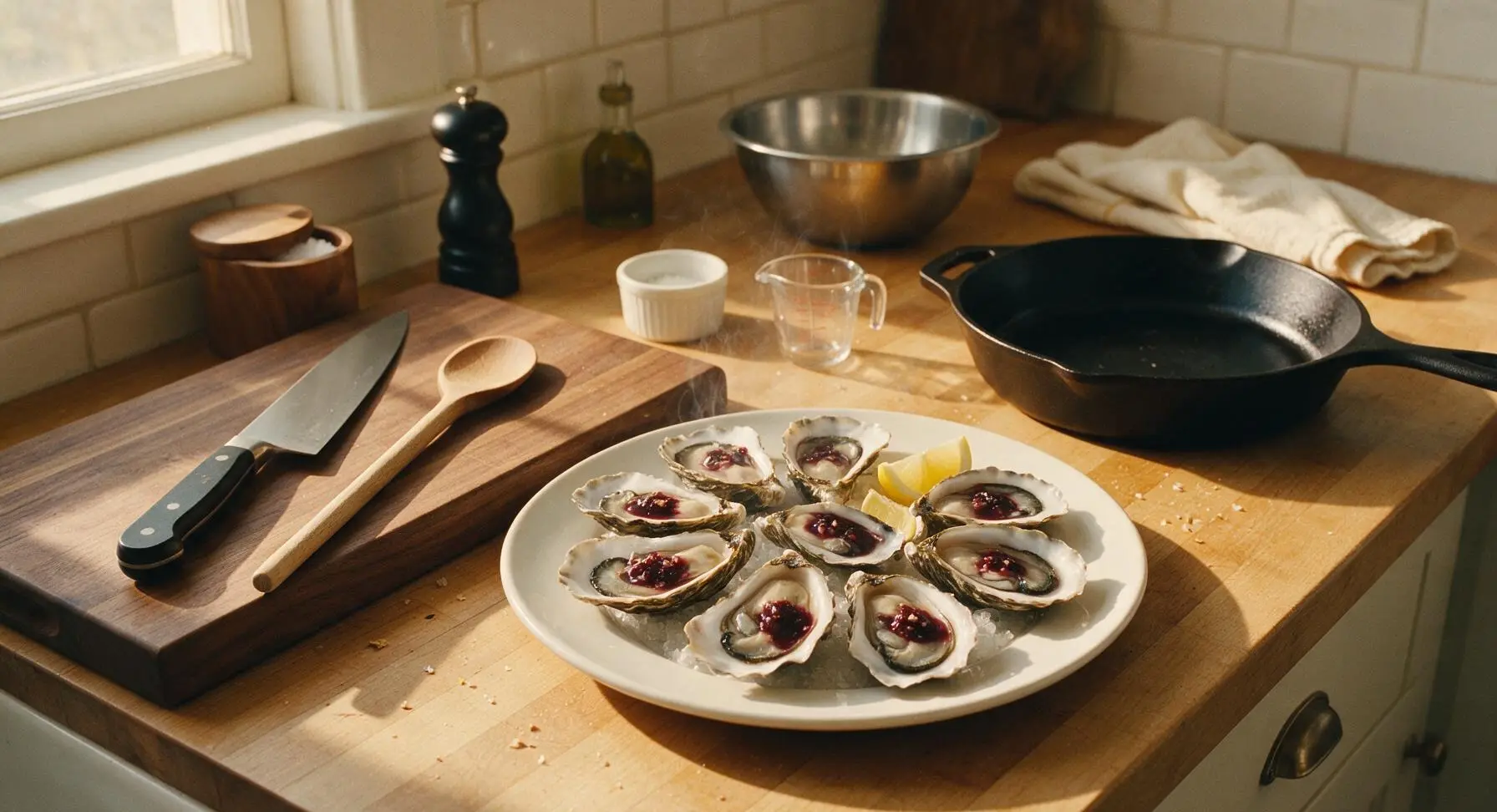
Atlantic Oysters

title 1
Atlantic Oysters
⏱️ cook time 0 minutes (no heat cooking required)
🍽️ servings 4
⚡ Difficulty medium

intro

Briny, ice-cold Atlantic oysters on the half shell with classic red wine mignonette and fresh lemon—an elegant, bright starter that tastes of crisp coastal sea air.

Ingredients
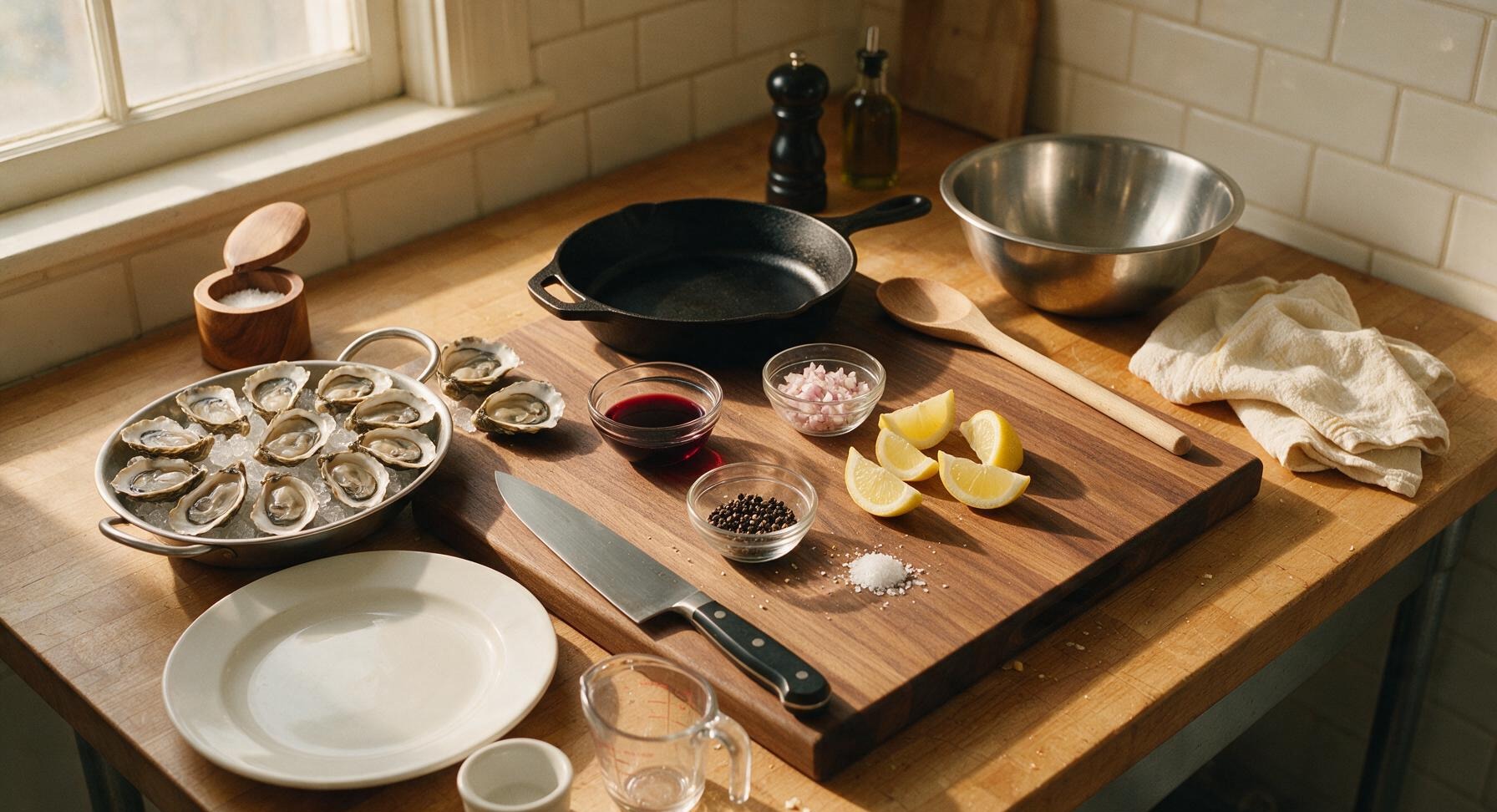
Live Atlantic oysters 12 medium (7cm shell length)
Crushed ice 4 cups
Shallot 1 small (30g, finely diced)
Unfiltered red wine vinegar 1/4 cup
Whole black peppercorns 1/2 tsp (freshly cracked)
Flaky sea salt 1/8 tsp
Fresh lemons 2 small (cut into 8 wedges)

Steps

1

Scrub Oyster Shells

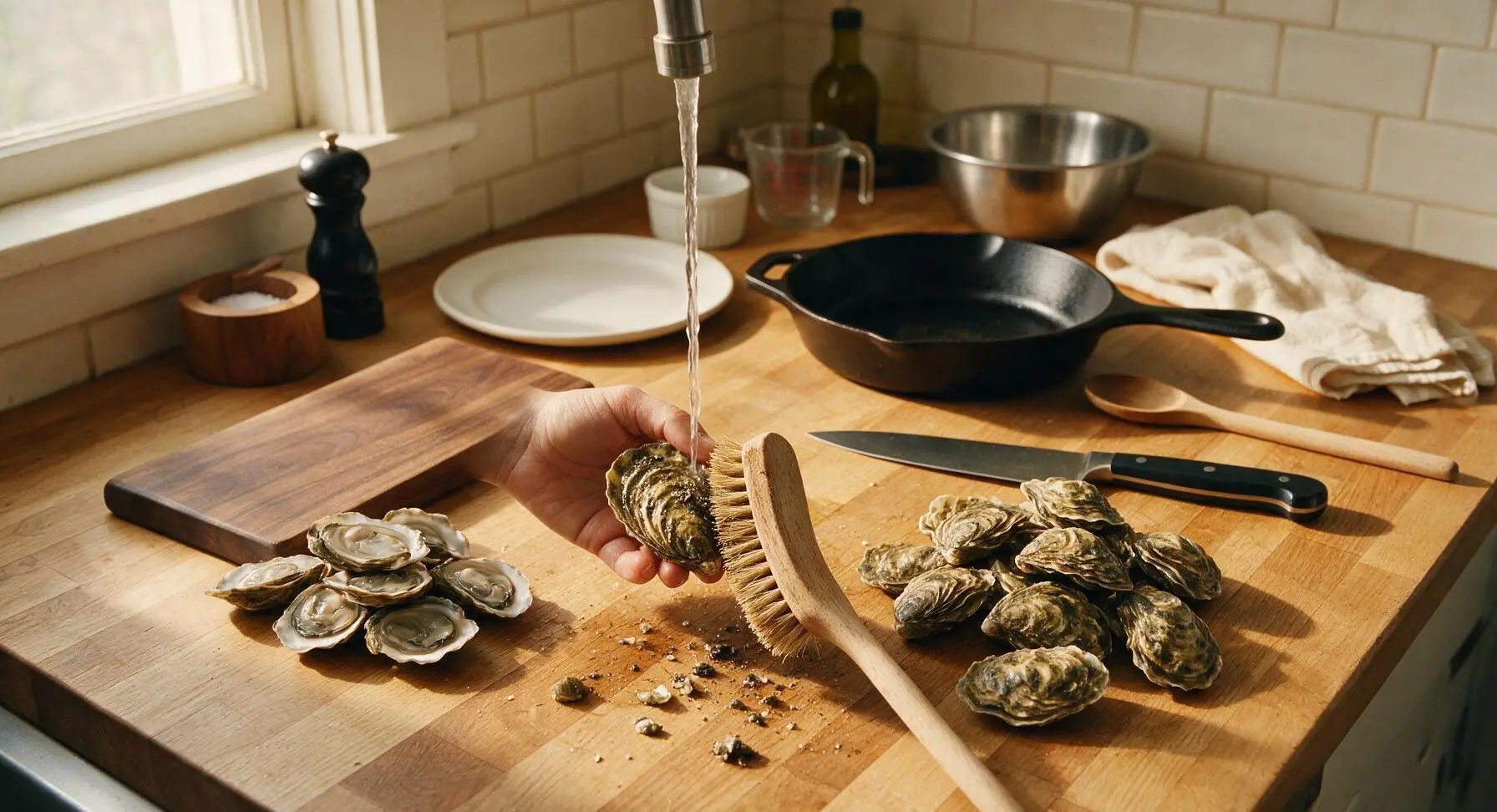
First, rinse all 12 live Atlantic oysters under cold running tap water. Hold each oyster firmly, and use the stiff natural bristle scrub brush to scrub away all mud, barnacles, and grit from the ridged outer shells. Discard any oysters that are already open and do not snap closed when tapped firmly, as these are dead and unsafe to eat. Pat scrubbed shells lightly dry with the edge of the navy linen towel (kept in its fixed top-right position). This step takes approximately 5 minutes; finished shells will feel smooth and free of grit when you run a finger over them.
Step 1
step1:Scrub Oyster Shells
2

Make Mignonette Sauce

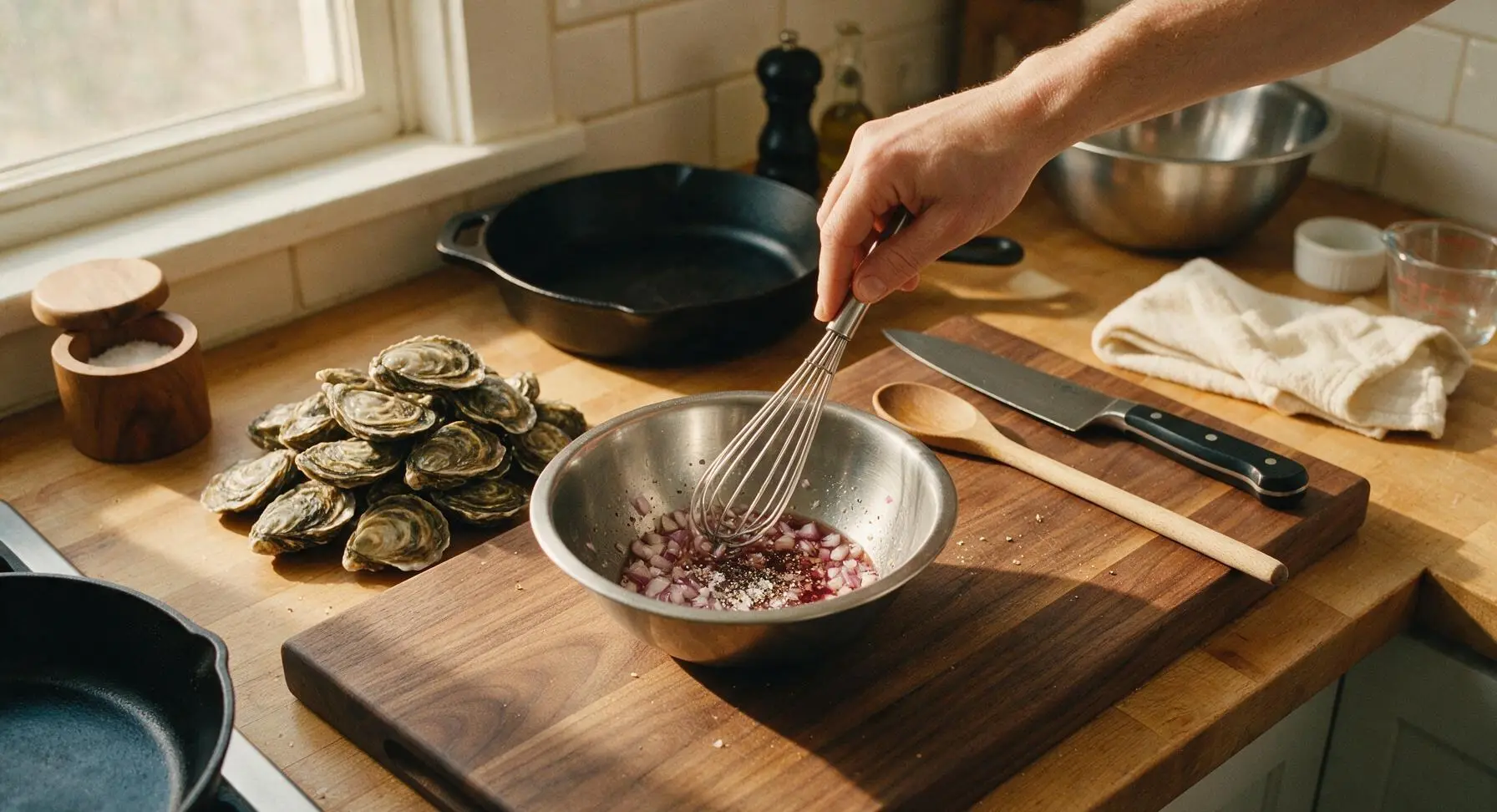
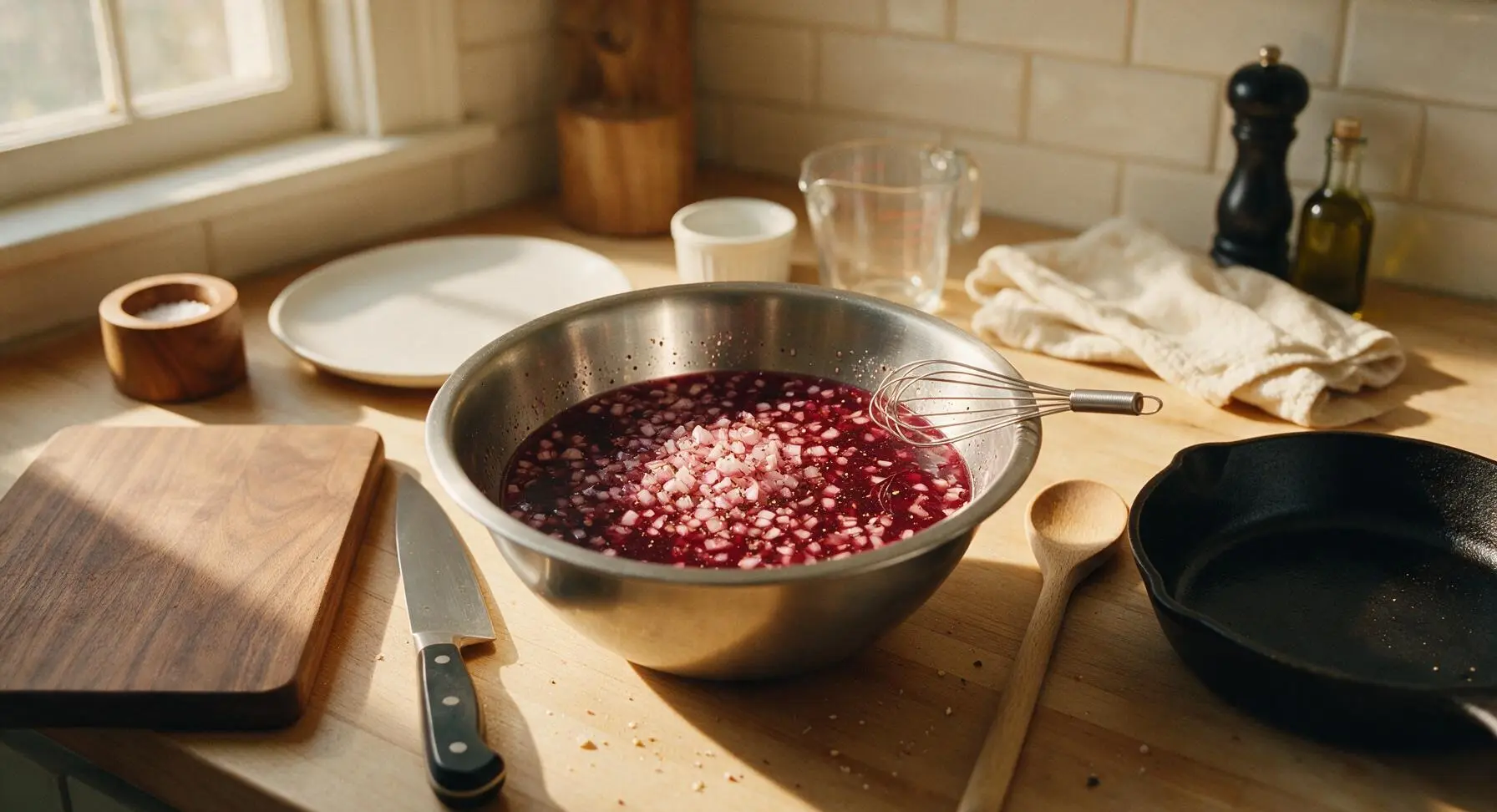
Crack the 1/2 tsp of black peppercorns with the base of the pepper mill, then add to the small brushed stainless steel mixing bowl along with the 1/4 cup unfiltered red wine vinegar, finely diced shallot, and 1/8 tsp flaky sea salt. Use the mini stainless steel whisk to stir the mixture until the salt fully dissolves, about 30 seconds. Let the mignonette rest for 10 minutes at room temperature to allow the sharp shallot flavor to mellow and infuse into the vinegar. Classic mignonette does not contain sugar, lemon, or herbs—its bright, tangy profile is designed to complement, not overpower, oyster brine.
Step 2
step2:Make Mignonette Sauce
Step 2
step2:Make Mignonette Sauce
3

Prep Serving Platter

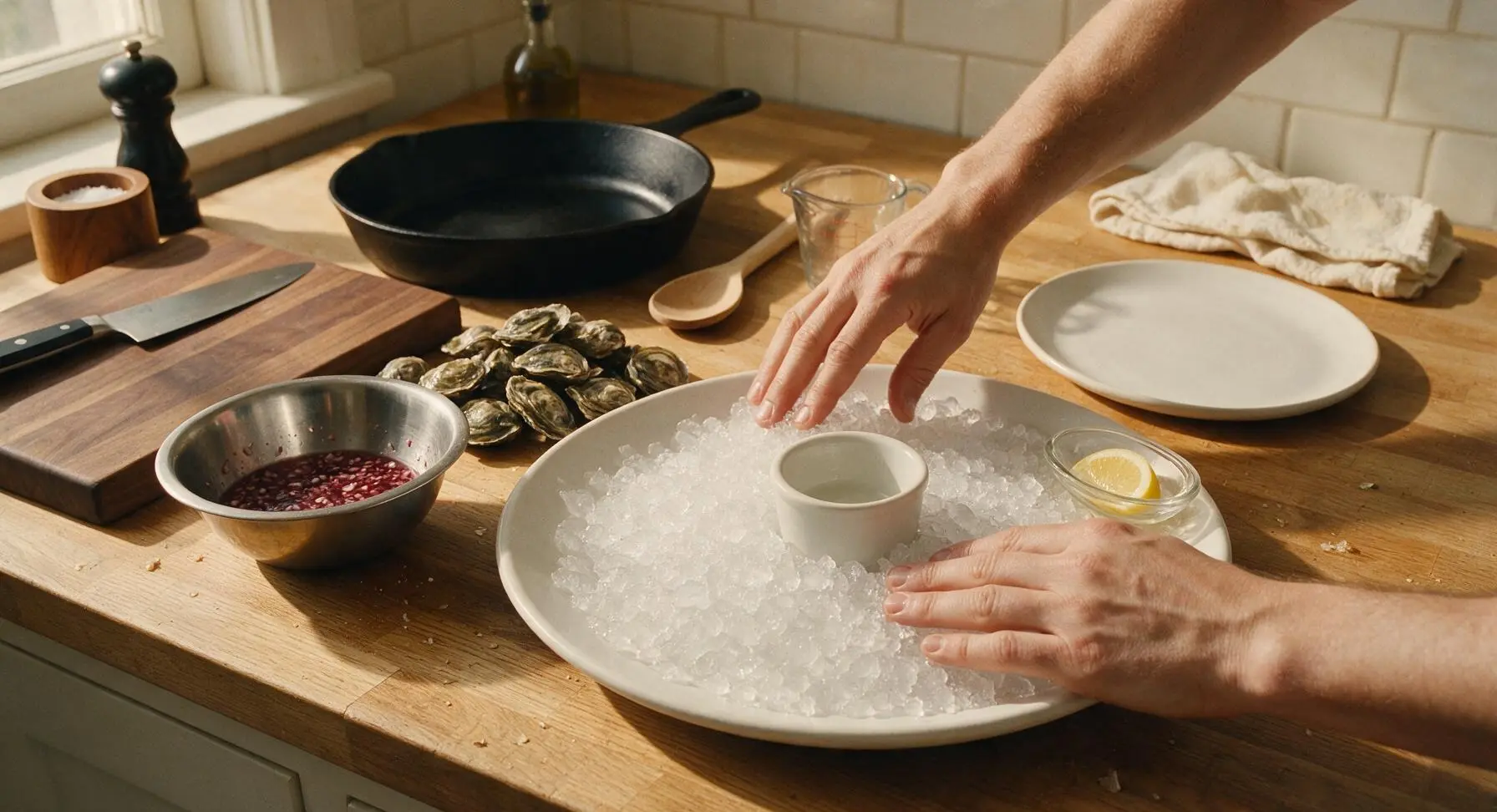
Take the large matte white ceramic serving platter, and spread 4 cups of crushed ice evenly across the platter bottom to create a 2cm thick cold bed. Use loosely packed crushed ice, not fine slush, to keep oysters cold for 30-45 minutes without melting too quickly and diluting oyster brine. Place one of the tiny matte white ramekins in the exact center of the ice-filled platter, ready to hold the mignonette sauce. Set the small clear glass oval lemon dish on the right rim of the platter.
Step 3
step3:Prep Serving Platter
4

Secure Oyster for Shucking

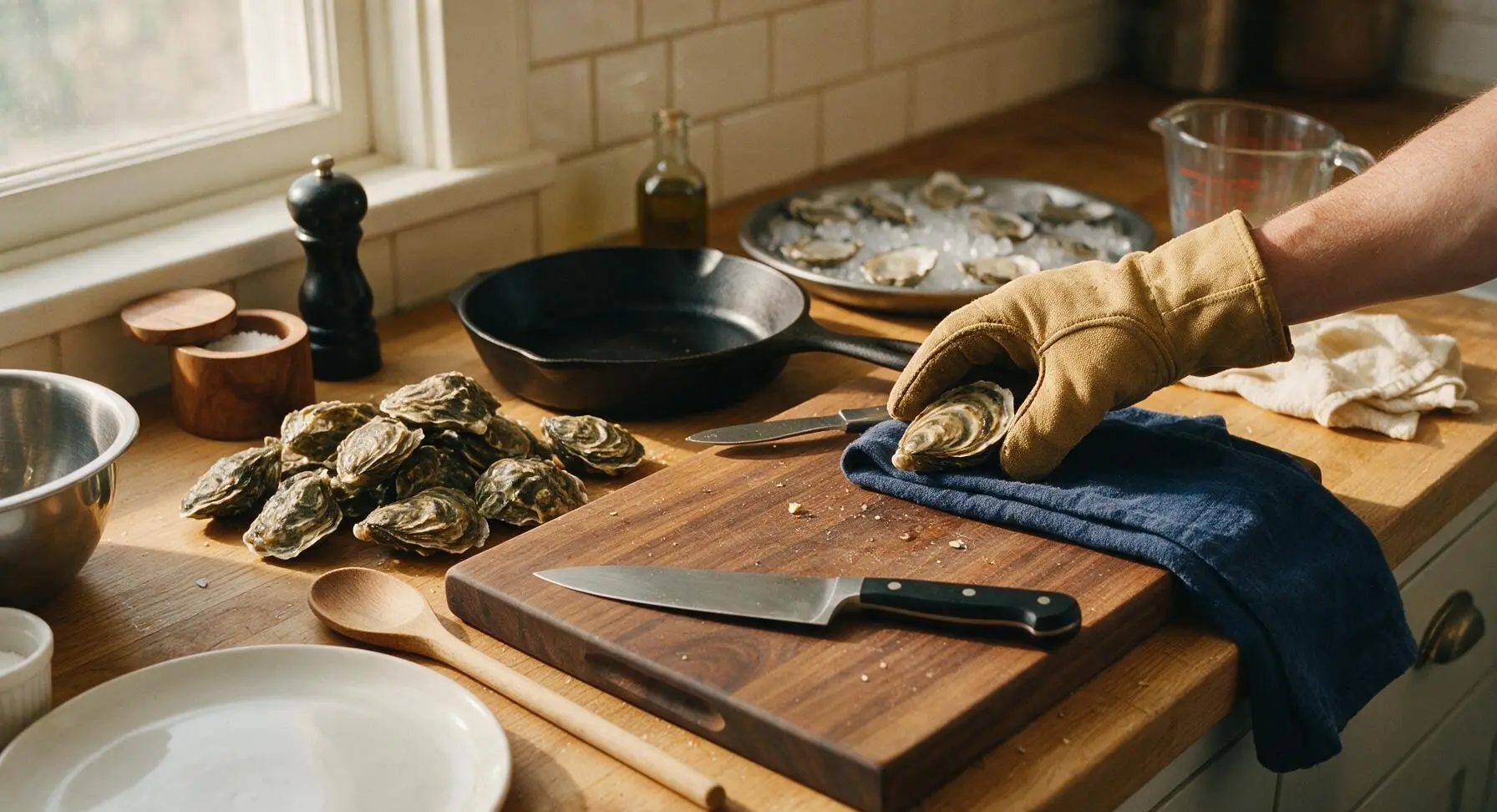
Put the thick tan canvas oyster shucking glove on your non-dominant hand to protect against knife slips. Hold one scrubbed oyster firmly in the gloved hand, cupped deep-side down, with the narrow pointed hinge facing toward your dominant hand. Rest the oyster on the edge of the folded navy linen towel (still in its fixed top-right position) for extra stability, so the flat side of the shell faces up. Never hold the oyster in mid-air while shucking—this is the most common cause of shucking injuries for beginners.
Step 4
step4:Secure Oyster for Shucking
5

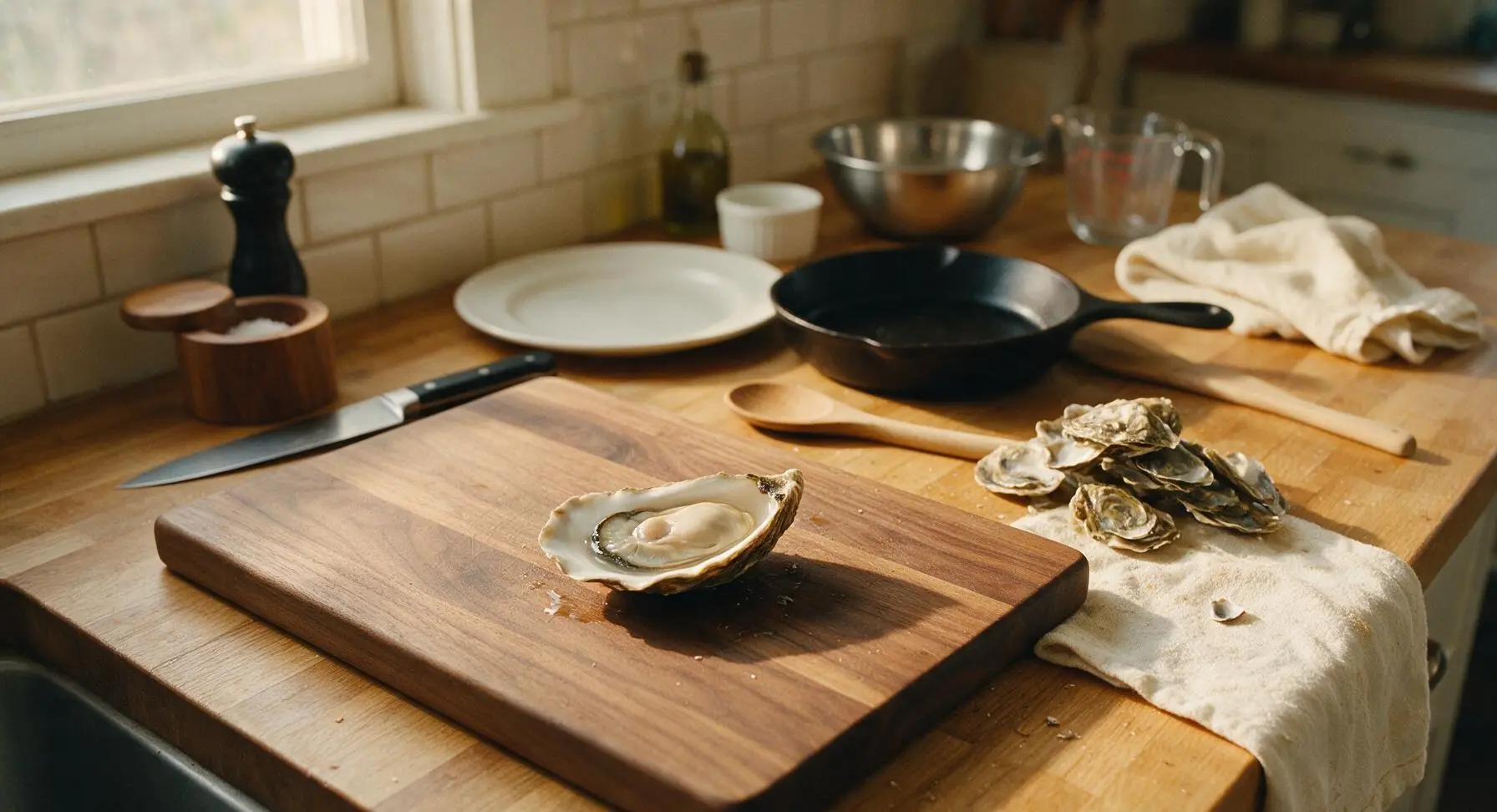
Shuck Oysters Carefully

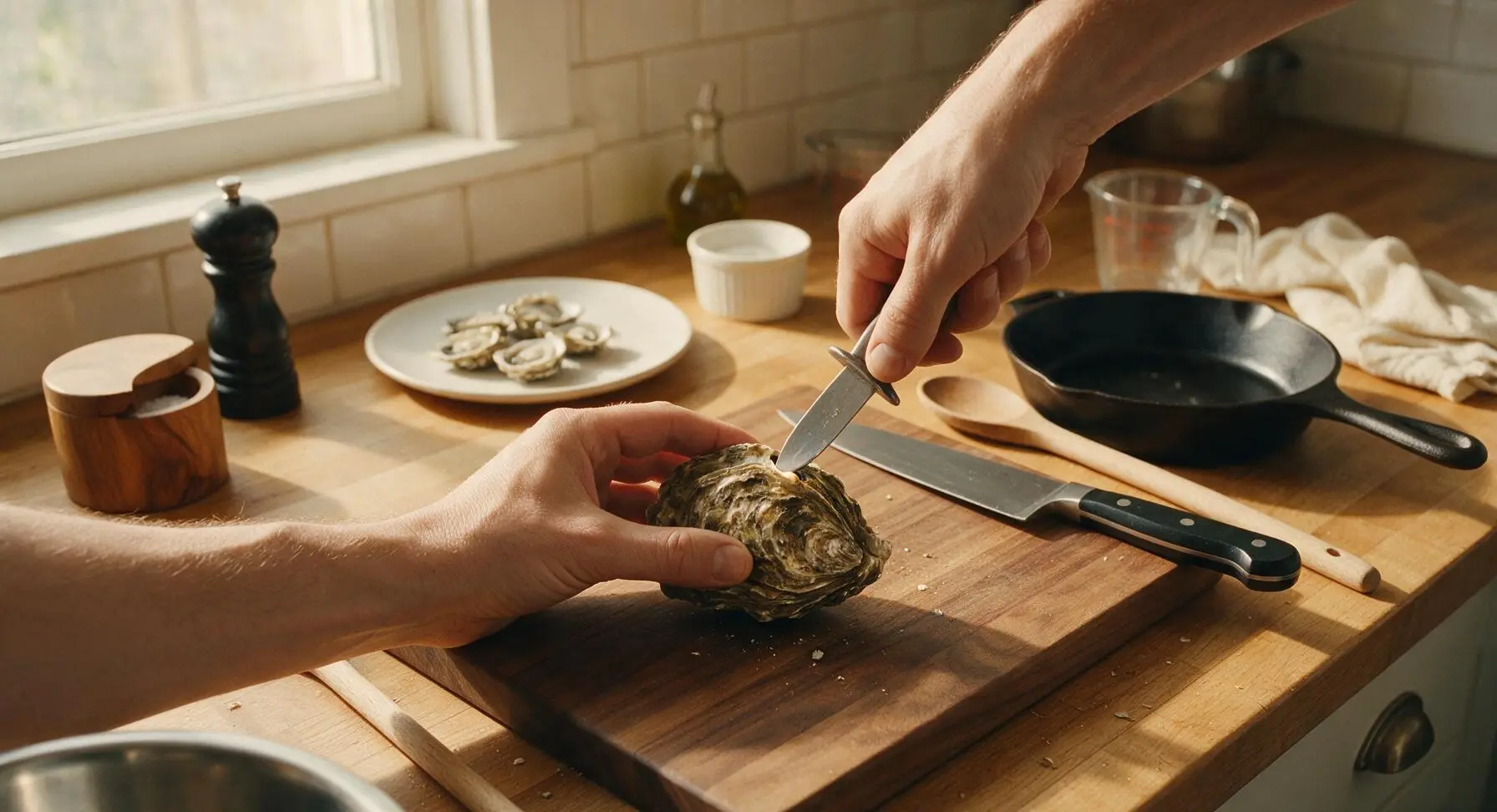
Wedge the rounded tip of the oyster shucking knife into the small natural gap in the oyster hinge, applying firm, steady pressure while twisting the knife gently to pop the hinge seal—you will hear a faint 'pop' when the seal breaks. Once the seal breaks, slide the knife along the inside of the top flat shell to cut the adductor muscle holding the shell closed, then lift off and discard the top shell. Run the knife under the oyster meat in the bottom cupped shell to separate it from the shell, taking care not to spill the natural clear brine inside. Use the tip of the small paring knife to remove any tiny bits of broken shell from the meat. Repeat this process for all 12 oysters.
Step 5
step5:Shuck Oysters Carefully
Step 5
step5:Shuck Oysters Carefully
6

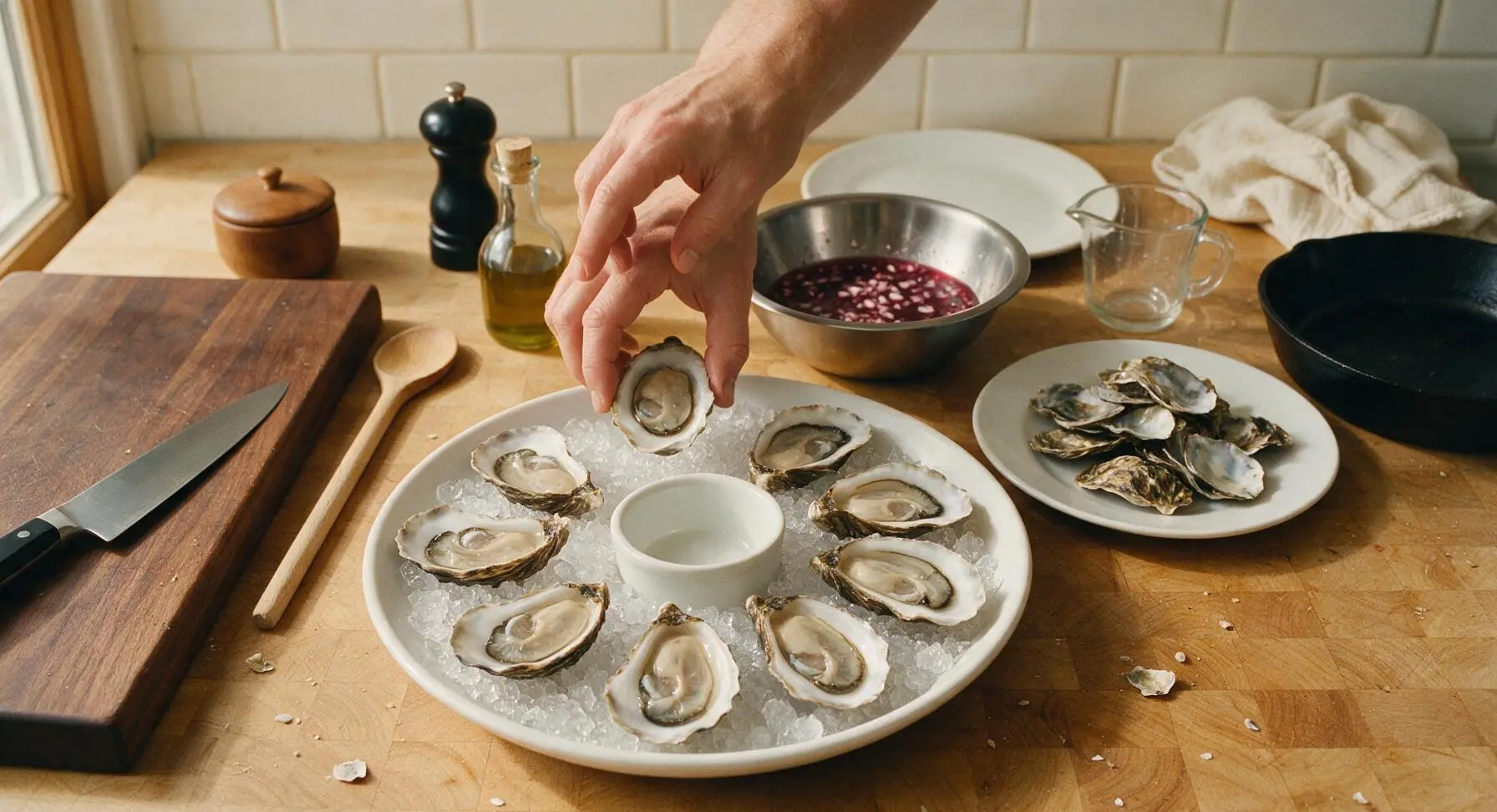
Arrange Oysters on Ice

One by one, nestle each shucked oyster (still in its cupped bottom shell) into the crushed ice on the serving platter, pressing the shell lightly into the ice so it sits perfectly level and does not tip over or spill brine. Arrange the oysters in a tight circular ring around the central ramekin, leaving 2cm of even space between each shell. Once all oysters are arranged, pour the prepared mignonette sauce from the mixing bowl into the central ramekin.
Step 6
step6:Arrange Oysters on Ice
7

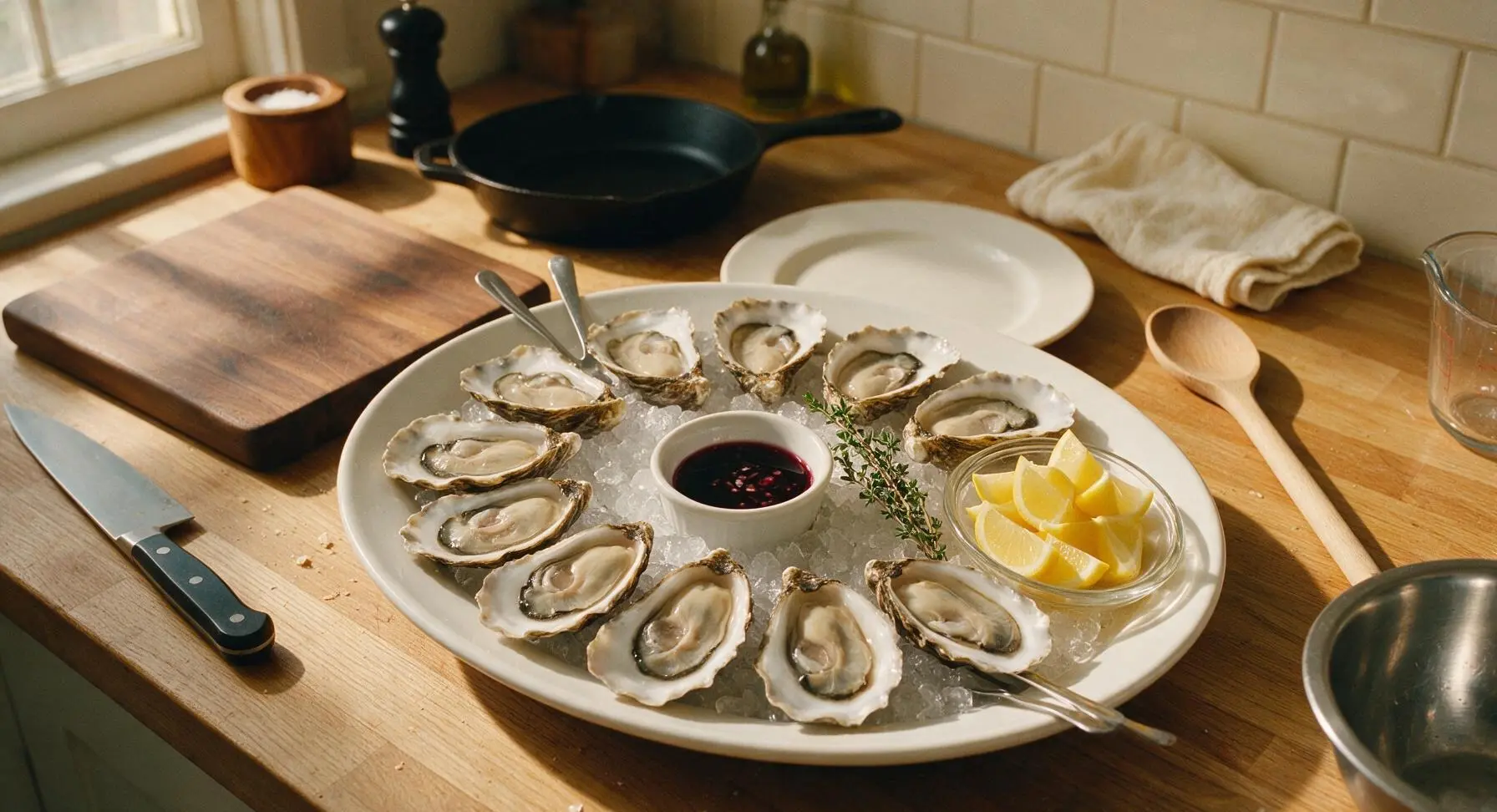
Garnish and Serve Cold

Place the 8 lemon wedges into the small clear glass oval dish on the platter rim. Pluck one 5cm sprig of fresh thyme from the potted plant in the back left corner, and tuck it between two oysters for a subtle fresh green garnish. Serve immediately while oysters are ice-cold, providing small seafood forks for guests to top each oyster with a 1/4 teaspoon spoonful of mignonette and a light squeeze of lemon. Do not let oysters sit at room temperature for more than 1 hour total, as this poses food safety risk.
Step 7
step7:Garnish and Serve Cold

Tips

1.Purchase oysters the same day you plan to serve them, and store them in the refrigerator in a shallow open container covered with a damp paper towel—never seal them in an airtight plastic bag, as this will suffocate the live oysters and make them unsafe to eat. Discard any oysters that do not close when tapped before shucking, and any that smell overly fishy instead of like clean sea water.
2.If you are new to shucking, practice on 2-3 less expensive oysters first to get a feel for the hinge pressure. Never use a regular sharp chef's knife or paring knife to shuck: these blades can slip and cause serious cuts, so a dedicated thick-bladed oyster knife and protective canvas glove are essential safety tools.
3.Resist the urge to drown oysters in sauce or lemon: a tiny 1/4 teaspoon dollop of mignonette or single light squeeze of lemon is all you need to brighten the briny, sweet, mineral flavor of fresh Atlantic oysters. Too much acid will mask the delicate, fresh sea taste that makes high-quality oysters special.
✨ You May Also Like

Snacks & Appetizers
🍜 Mexico

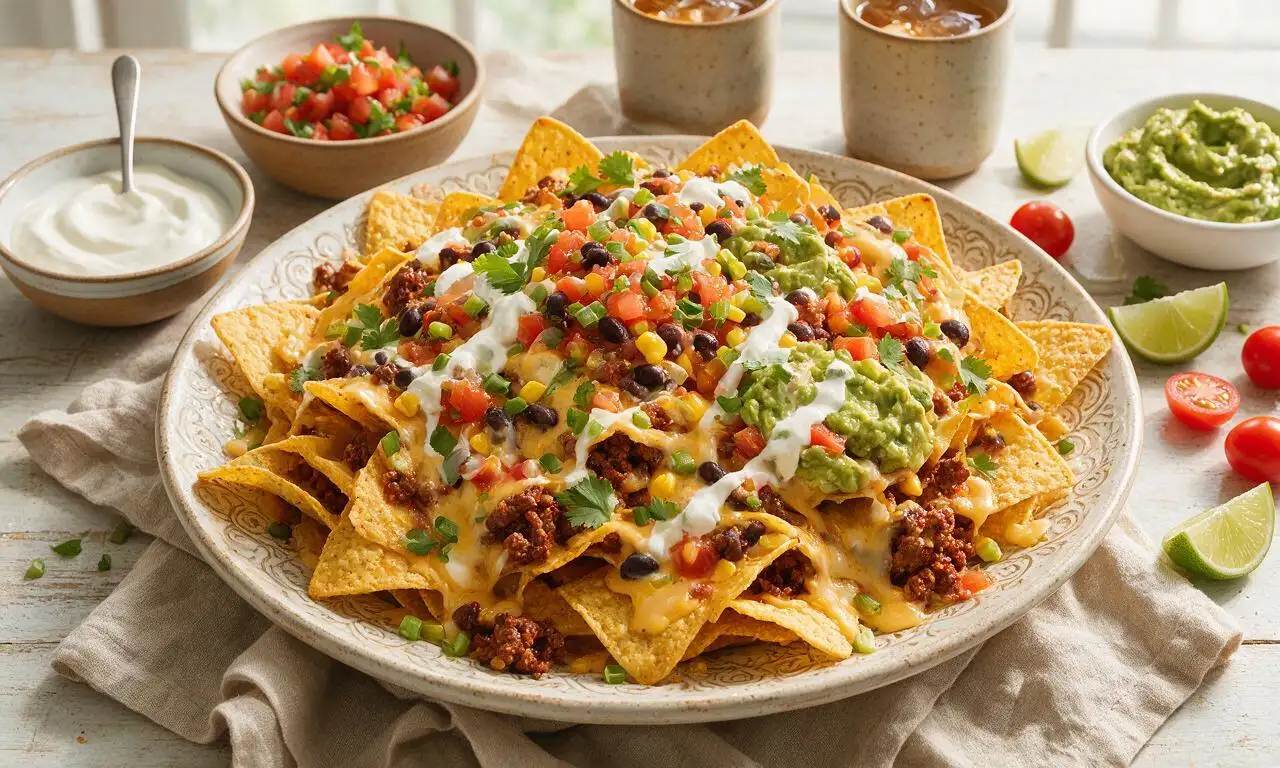
Crispy thick-cut tortilla chips piled high with seasoned beef, melted cheese, and bright fresh toppings for a shareable, crowd-favorite bite.

⏱️ 25 minuteSnacks & Appetizers ★ 4.8
Snacks & Appetizers
🍜 United States

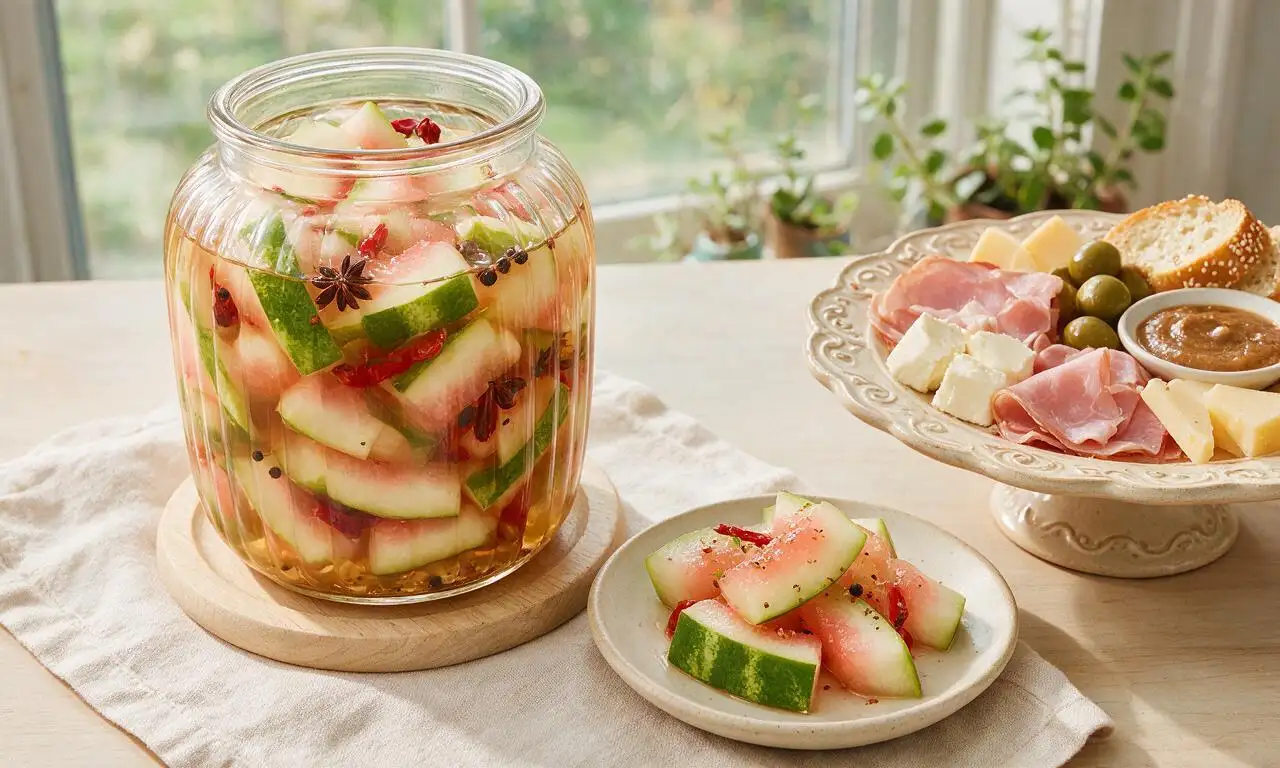
Crisp, sweet-tangy spiced pickled watermelon rind is a zero-waste summer staple, perfect with grilled meats, charcuterie, or eaten straight from the jar as a bright snack.

⏱️ 30 minuteSnacks & Appetizers ★ 4.6
Snacks & Appetizers
🍜 Germany

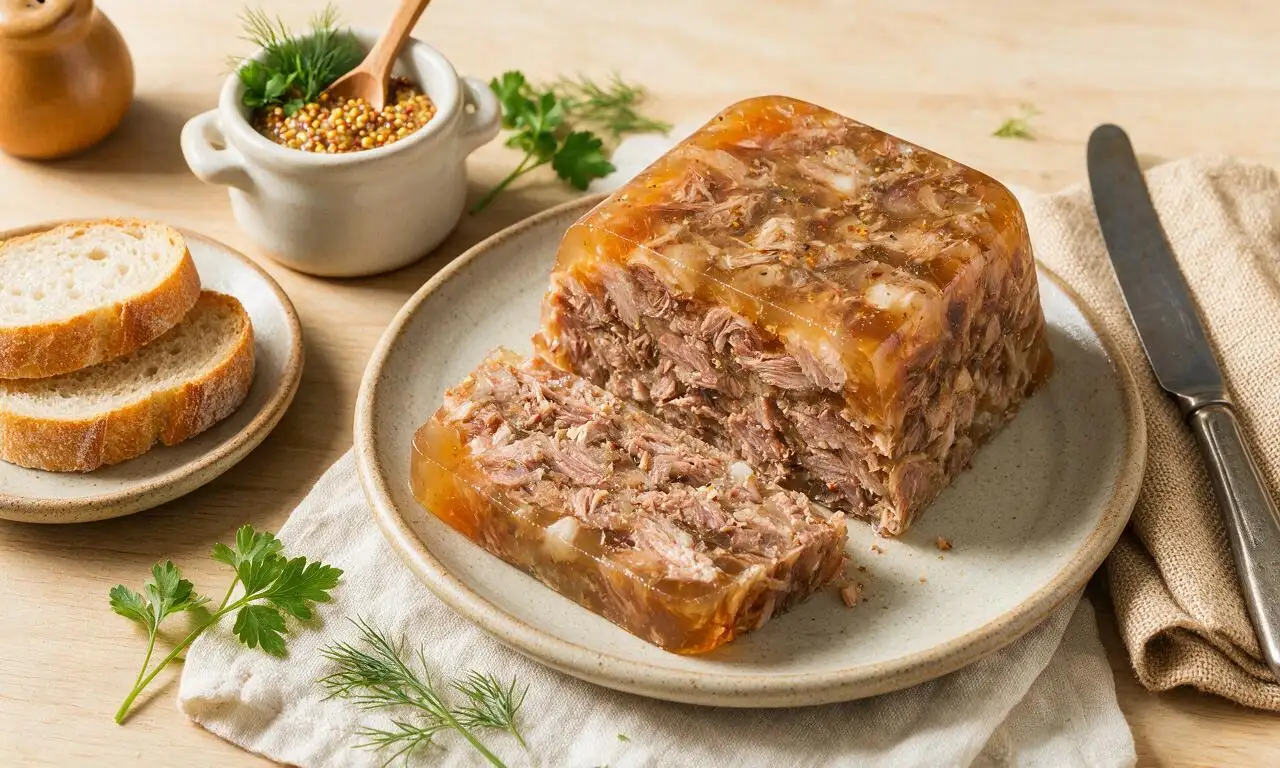
A tangy, jellied pork cold cut slow-simmered with aromatic spices, set into a firm sliceable loaf, served cold with mustard and crusty bread.

⏱️ 3 hours 4Snacks & Appetizers ★ 4.8
Snacks & Appetizers
🍜 United States

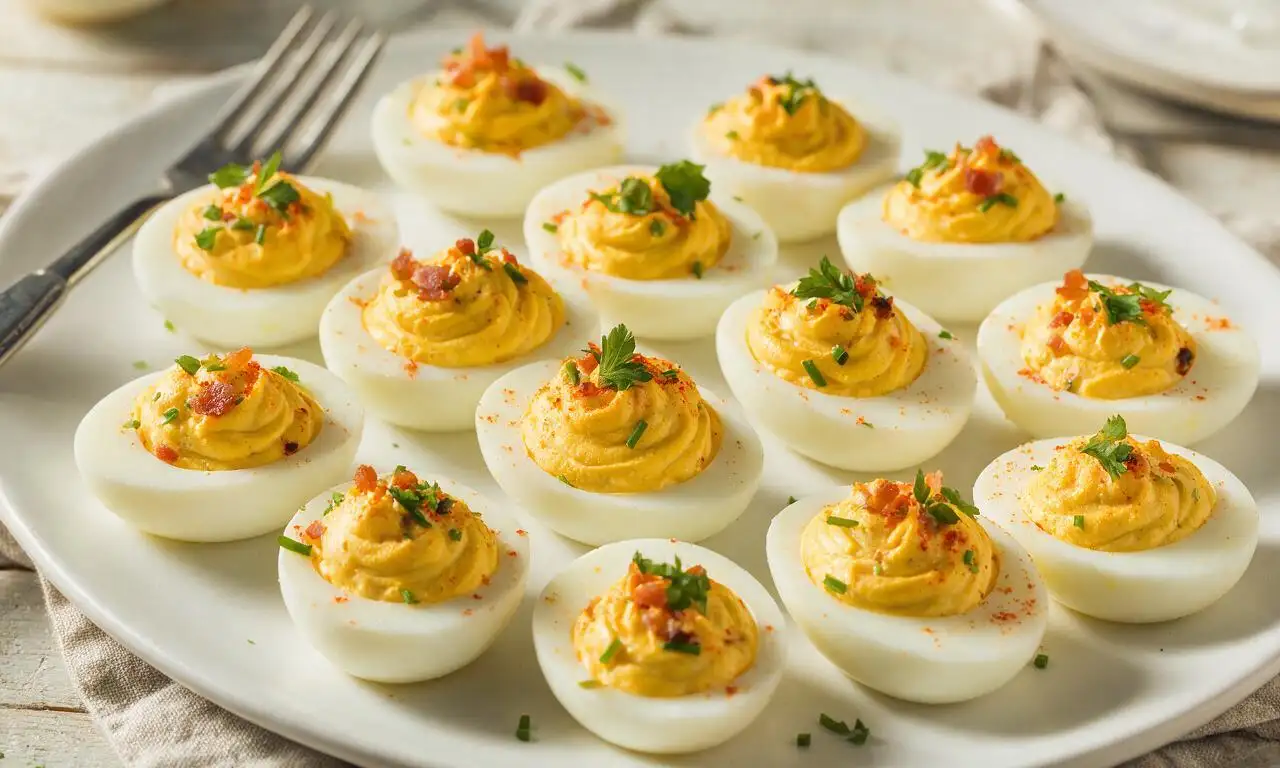
Creamy, tangy, perfectly seasoned hard-boiled egg halves filled with a rich, smooth yolk mixture, a timeless, crowd-pleasing bite for holiday and casual gatherings alike.

⏱️ 40 minuteSnacks & Appetizers ★ 4.8
Snacks & Appetizers
🍜 Russia

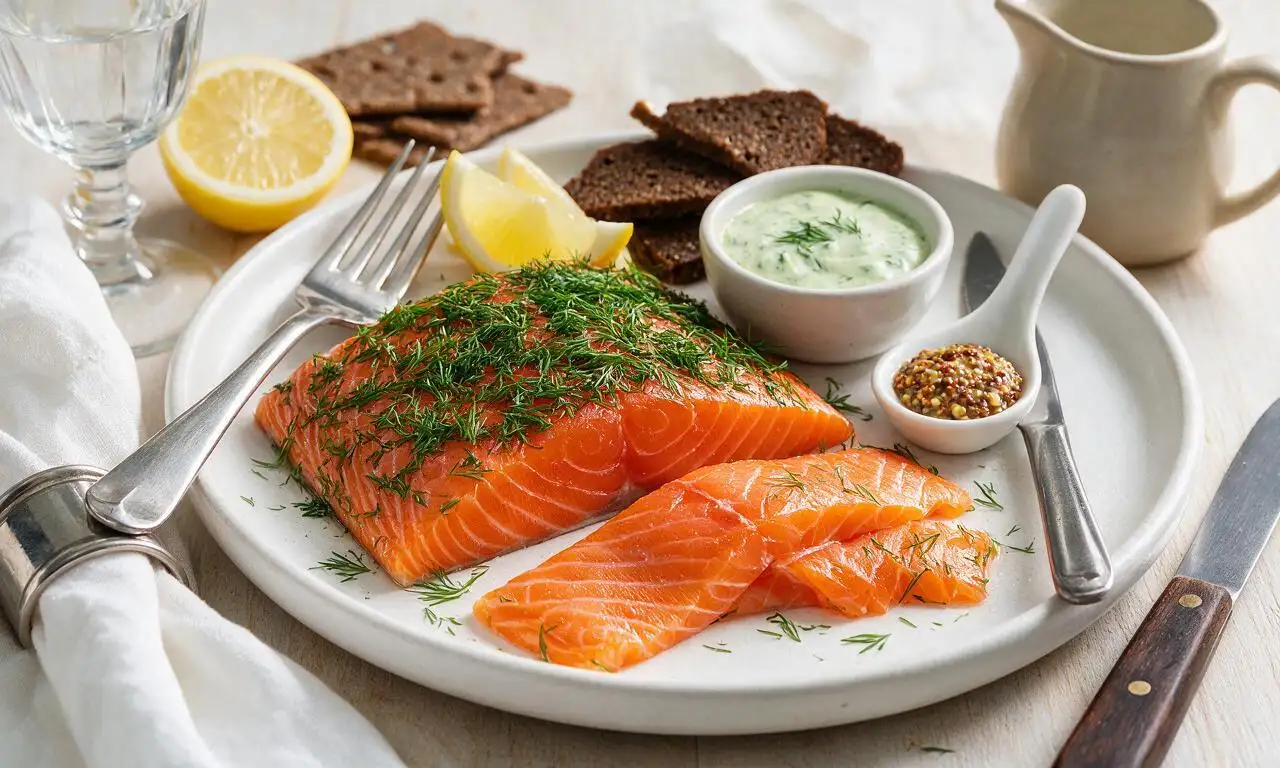
Silky, dill-forward no-smoke cured salmon, a Scandinavian classic with bright salty-sweet flavor, ideal for holiday starter platters and open-faced rye sandwiches.

⏱️ 48 hours Snacks & Appetizers ★ 4.7
Snacks & Appetizers
🍜 Japan

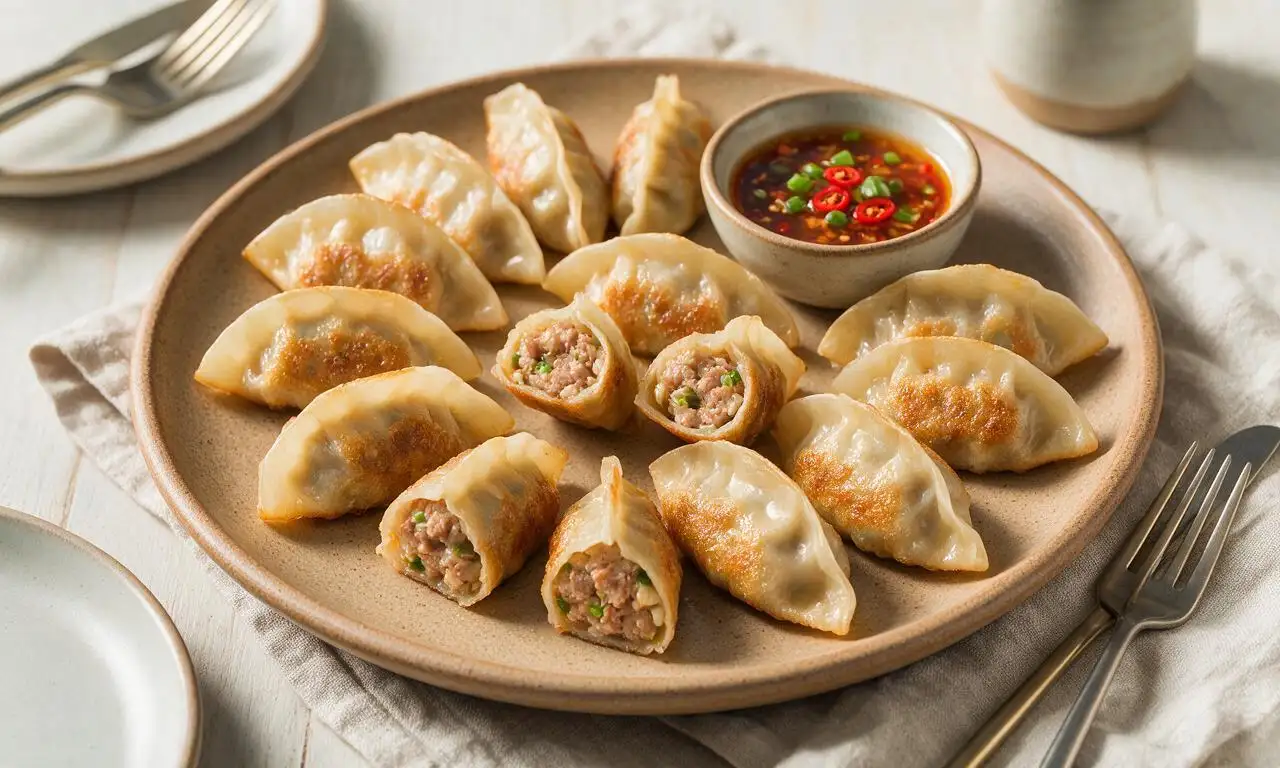
Crisp golden bottoms, juicy savory pork and vegetable filling, and tangy dipping sauce make these pan-fried gyoza a beloved shareable bite.

⏱️ 45 minuteSnacks & Appetizers ★ 4.8

Atlantic Oysters:Frequently Asked Questions

1.How do I select fresh, safe live Atlantic oysters for this dish? ▾
Opt for oysters with tightly closed shells, or shells that snap shut right away when lightly tapped—any oyster with a gaping shell that doesn’t close is dead and unsafe to eat. They should smell like crisp, briny coastal water, not sour, fishy, or rotten. Buy them the day you plan to serve, and store them cup-side down in the fridge until shucking to hold onto their flavorful natural liquor.
2.Do I have to shuck the oysters right before serving? ▾
Absolutely, for peak texture and bright briny flavor. Shuck oysters no more than 20 minutes before serving, keeping them nestled cup-side up on crushed ice the whole time to stay ice-cold. Shucking too far in advance causes them to dry out, lose their savory natural liquor, or pick up stale off-flavors from your refrigerator.
3.What’s the best type of red wine vinegar to use for the mignonette? ▾
Reach for unfiltered, raw red wine vinegar with a bright, tangy, slightly fruity profile for the most classic, balanced mignonette. Skip overly processed, filtered clear red wine vinegar, which tastes flat and harsh. You don’t need a pricey artisanal bottle, just avoid bottom-shelf generic options that taste like sharp, unbalanced acetic acid.
4.How finely should I mince the shallot for the red wine mignonette? ▾
Mince the shallot into very fine, uniform 1/8-inch dice so you get a tiny, subtle crunch in every bite without large, overpowering chunks of raw shallot. Oversized pieces will deliver a sharp allium kick that overwhelms the oysters’ delicate brininess. For a milder flavor, give minced shallot a quick cold water rinse before mixing into the vinegar.
5.Can I make the red wine mignonette ahead of time? ▾
You can make the mignonette up to 3 days ahead, stored in a sealed glass jar in the refrigerator. The shallot will mellow slightly as it cures in the vinegar, which many people prefer, and the cracked black pepper will infuse the liquid for a deeper, rounded flavor. Give it a quick stir right before serving to redistribute the shallot and pepper bits.
6.What’s the safest, easiest way to shuck oysters at home? ▾
Use a proper thick-bladed oyster shucking knife, not a thin paring knife which can slip and cause serious cuts. Hold each oyster in a thick folded kitchen towel (or wear a cut-resistant glove) cup-side down, wedge the knife tip into the shell hinge, twist to pop it open, then slide the blade to cut the adductor muscle on both shells.
7.Why do you serve oysters on crushed ice instead of cubed ice? ▾
Crushed ice forms a stable, evenly cold bed that holds each oyster half shell level, so precious briny oyster liquor and mignonette don’t spill out before you take a bite. It chills oysters faster and more consistently than large cubed ice, keeping them crisp through serving time without melting too quickly and making the oysters watery or diluted.
8.Should I rinse the oysters after shucking them? ▾
Skip rinsing shucked oysters unless you spot tiny bits of broken shell in their natural liquor. Rinsing washes away the briny, mineral-rich liquor that gives raw oysters most of their signature coastal flavor. If you see shell fragments, pick them out with your knife tip, or use a splash of the oyster’s own liquor to dislodge bits instead of tap water.
9.How should I prepare the whole black peppercorns for the mignonette? ▾
Crack whole peppercorns coarsely with a mortar and pestle, or place them in a sealed plastic bag and crush them with the flat side of a heavy skillet, instead of reaching for pre-ground pepper. Coarse cracked pepper delivers warm, spicy pops of flavor that pair perfectly with tangy vinegar and briny oysters, while fine pre-ground pepper tastes dusty and flat.
10.How much mignonette should I put on each oyster? ▾
You only need about ¼ to ½ a teaspoon of mignonette per oyster—this is a bright accent, not a heavy sauce meant to drown the oyster. The goal is to add tangy, shallot-kissed contrast to the oyster’s brininess, not cover up its delicate natural coastal flavor. Serve extra mignonette on the side so guests can adjust to taste.
11.Can I use a different type of oyster if I can’t find Atlantic oysters? ▾
You absolutely can, though Atlantic oysters have that signature bold, briny, crisp profile that pairs perfectly with red wine mignonette. If substituting, pick similarly briny, firm East Coast oysters over ultra-creamy, mild, cucumber-forward West Coast varieties, which tend to pair better with lighter, citrus-forward accents than this tangy red wine version.
12.How long can I safely keep leftover oysters? ▾
It’s best to only shuck as many oysters as you plan to serve in one sitting, since raw shucked oysters degrade in texture and flavor very quickly. If you have extra unshucked live oysters, store them cup-side down on a bed of ice in the fridge (not submerged in fresh water) for up to 2 days, discarding any that fail the tap test before shucking.
13.Do I really need to serve lemon wedges alongside the mignonette? ▾
Fresh lemon wedges are a classic, flexible accompaniment that gives guests a bright, citrusy option if they don’t want the shallot-forward tang of the mignonette, or want to cut through extra brininess on a particularly rich oyster. You don’t need a lot—one small wedge per 2 to 3 oysters is plenty for guests to add a tiny squeeze to taste.

Comments (7)

3 days ago

OMG, this mignonette is a total game changer! I was so nervous shucking oysters for our anniversary dinner last night, but the flavor payoff was insane. The red wine vinegar and shallot balance is *chef’s kiss*—no need for cocktail sauce at all. My husband kept going back for seconds, we polished off two dozen way faster than I planned. Will absolutely make this for our next summer cookout!

2 days ago

Quick question—did you use a dry red wine for the mignonette? I grabbed a sweet pinot noir by accident and don’t know if it’ll ruin the batch 😅

yesterday

Great question! Stick to a dry red like a cab franc or light merlot for best results—sweet wine will make the mignonette taste cloying instead of bright and tangy. If you already have the sweet pinot open, add an extra splash of red wine vinegar and a pinch of black pepper to cut the sweetness, it’ll still work in a pinch!

1 week ago

Solid recipe! I served these at our backyard oyster roast last weekend and got a ton of compliments. Only knock is I wish there was a note about how to pick the freshest Atlantic oysters— I almost grabbed a batch that smelled a little too fishy at the seafood counter. The mignonette itself is perfect, tangy without overpowering the brininess of the oysters. 10/10 would make again.

2 days ago

As someone who’s only ever had oysters at restaurants, I was shocked how easy this was! No cooking required? Hello, perfect weeknight fancy date night meal. I paired it with a crisp sauv blanc and it felt like a $100 restaurant meal for a fraction of the cost. Pro tip: chill the mignonette for 30 minutes before serving, it makes it so much better.

yesterday

Love that pro tip! Chilling the mignonette lets the shallot mellow out a bit so it doesn’t have that sharp raw bite, it’s one of my go-to little tricks too. So glad you got that restaurant-level experience at home!

5 days ago

Brought these to our neighborhood potluck last week and they were the first thing gone! I was worried they’d be too fancy for the crowd, but even the people who said they “hate raw oysters” tried them and loved the mignonette. So good, I’ve already shared the recipe with three of my neighbors.

3 days ago

Did you shuck all of them ahead of time? I’m making these for a pool party this weekend and don’t want to be stuck shucking while everyone’s hanging out!

2 days ago

You can shuck oysters up to 2 hours ahead of time! Just keep them nested on a bed of crushed ice in the fridge until you’re ready to serve, and top each with a tiny spoonful of mignonette right before setting them out. Perfect for low-fuss parties!

yesterday

Taste was great, but man, shucking oysters is way harder than the recipe makes it sound! I nicked my thumb twice and ended up asking my neighbor to come help me finish. Next time I might just ask the fishmonger to shuck them for me to save the hassle. Flavor is 5 stars, but the difficulty felt way higher than medium for a total beginner like me.

30 minutes ago

Just made this for a quick post-beach snack and I’m blown away. I grew up eating oysters on the Cape and this mignonette tastes exactly like the stuff my grandpa used to make. Total nostalgia bomb. Didn’t even have to run to the store, I had all the ingredients in my pantry already!

5 minutes ago

Wait, how long does the leftover mignonette last in the fridge? I wanna make a big batch to keep on hand for oyster nights!

2 hours ago

Really good! I added a tiny dash of hot sauce to my mignonette for a little kick and it was chef’s kiss. Only thing is I think I minced my shallots too big, so some bites were super onion-y. Next time I’ll dice them finer. Overall super solid, will be making this all summer long.

30 minutes ago

That hot sauce addition sounds delicious! Finely dicing the shallots is key so they don’t overpower each bite—if you have a mandoline, you can slice them paper thin then give them a quick rough chop for the perfect texture. So glad you enjoyed it!