1.Why do you recommend beef chuck instead of a leaner cut for this goulash?
▾
Beef chuck is ideal because its evenly distributed marbling and connective tissue break down slowly during simmering, creating melt-in-your-mouth tender bites and rich, beefy depth. Lean cuts like sirloin or round will dry out and turn stringy over long, low heat, even with extra liquid. Just trim thick, hard outer fat before cubing to avoid a greasy finished stew.
2.Can I use smoked paprika if I don’t have sweet paprika on hand?
▾
You can, but adjust the ratio to keep the traditional mild, warm flavor true. Swap ¾ of the measured sweet paprika for smoked paprika, and keep the remaining ¼ as plain sweet paprika to avoid overpowering the stew with heavy smoke. Skip hot paprika entirely unless you want an intentionally spicy, non-traditional twist on the classic dish.
3.Do I really need caraway seeds, or can I leave them out of the recipe?
▾
Don’t skip them! Caraway seeds add that distinct earthy, slightly warm anise note that defines traditional goulash, balancing paprika’s bright sweetness and beef’s savoriness. If you don’t have whole seeds, use ½ teaspoon of ground caraway for every 1 teaspoon of whole seeds called for. Fennel seeds work as a last-minute substitute, though they have a brighter, sweeter licorice edge.
4.How low should my simmer be to get tender beef without burning the stew?
▾
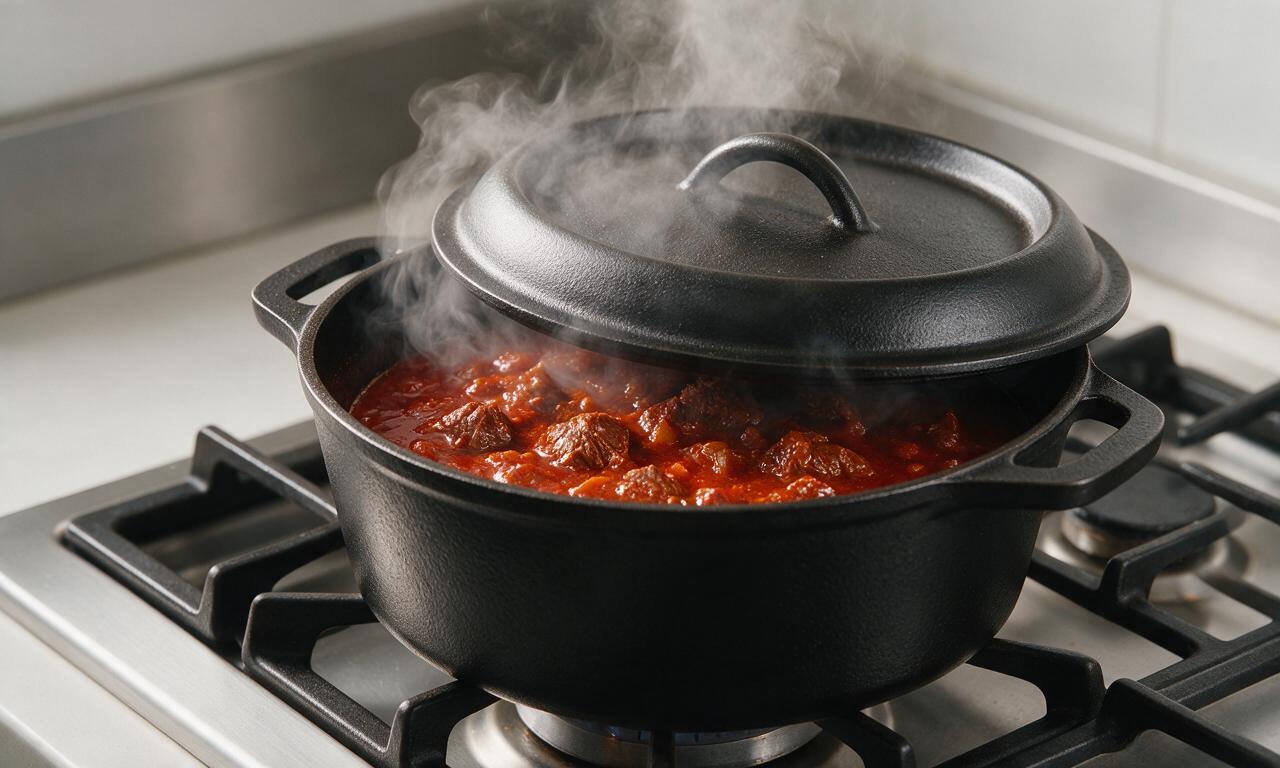
Aim for a very gentle, low simmer where only 1 or 2 small bubbles break the surface every couple of seconds, whether cooking stovetop or in a slow cooker. A rolling boil will make beef seize up and turn tough, and can cause paprika to burn on the pot bottom, leaving a bitter aftertaste. Stir the pot bottom every 45 minutes for stovetop cooks to prevent sticking.
5.Why does my goulash sometimes taste bitter, and how do I fix that?
▾
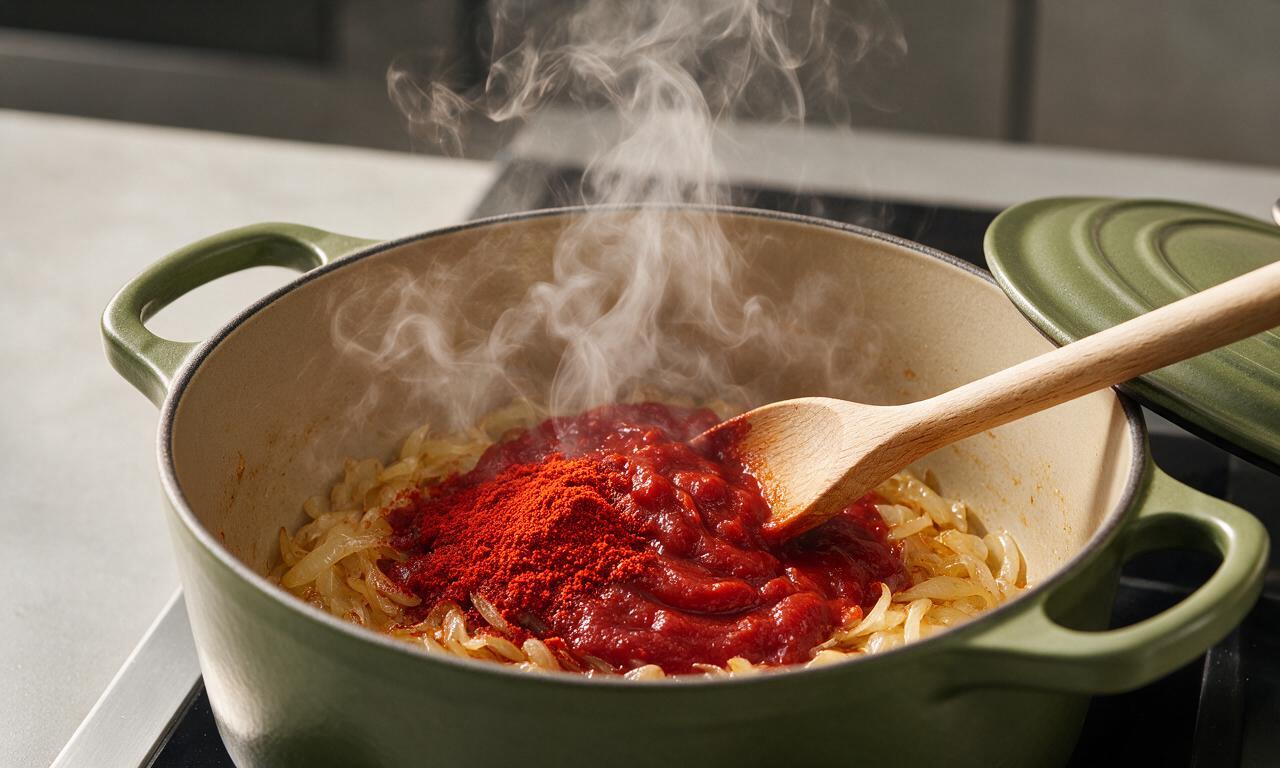
Bitter goulash almost always comes from toasting paprika over too-high heat, or burning the garlic and onion base when sautéing. Paprika is a delicate, high-sugar spice that burns in seconds over high heat. If you end up with a slightly bitter batch, stir in a tiny spoonful of sugar, a splash of red wine vinegar, or a dollop of sour cream at the end to balance the flavor.
6.Can I make this goulash in a slow cooker instead of simmering it on the stovetop?
▾
Absolutely! Sear the beef, sauté onions and garlic, and toast the spices on the stovetop first to build deep, layered flavor, then transfer everything to your slow cooker with vegetables and liquid. Cook on LOW for 6 to 8 hours, or HIGH for 3 to 4 hours, until beef is fork-tender. Avoid lifting the lid too often, as that releases heat and extends cook time.
7.How finely should I chop the yellow onion for this recipe?
▾
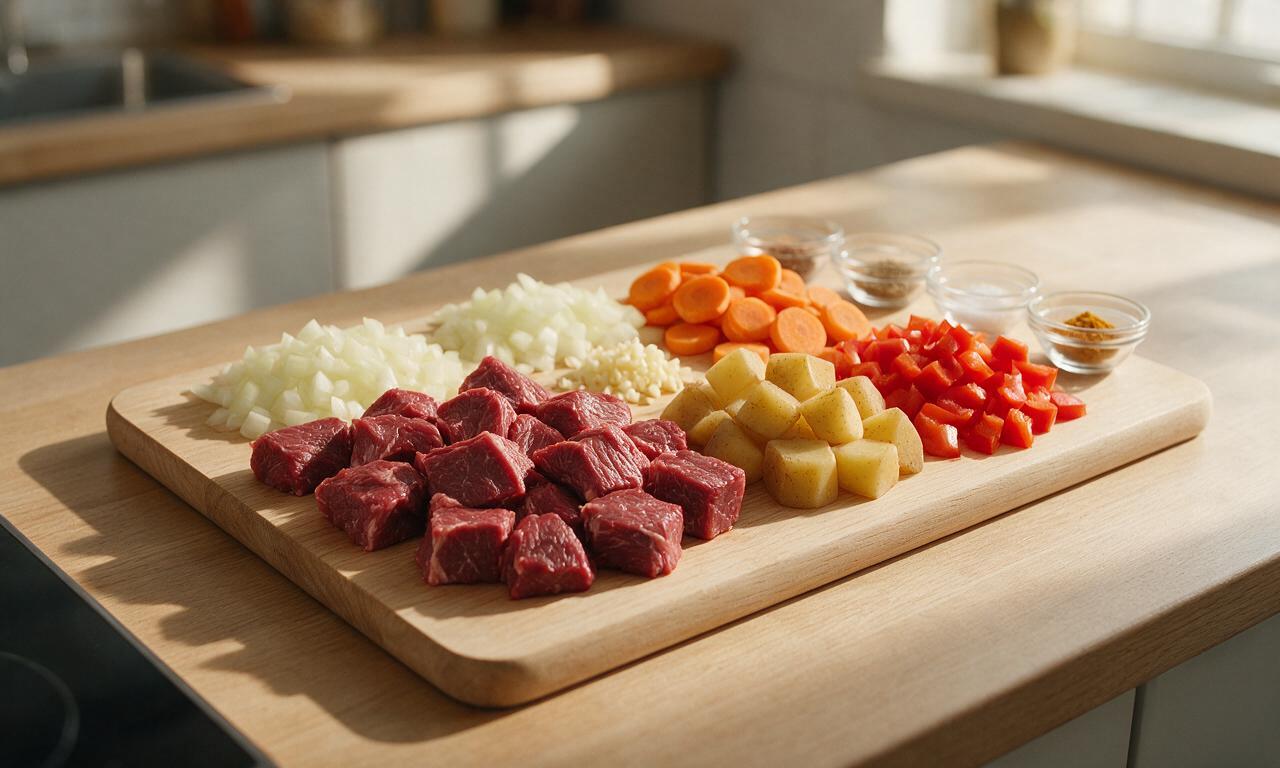
Chop yellow onion into uniform ¼-inch dice so it melts almost completely into the simmering liquid, creating a thick, flavorful base for the stew without leaving big, crunchy onion chunks. Don’t puree it ahead of time, though—slowly sautéing diced onion until soft and translucent builds a sweet, savory foundation you can’t get from raw pureed onion.
8.What’s the best way to prep garlic so it doesn’t burn in the goulash?
▾
Mince garlic finely, but add it to the pot only after your onions are fully soft and translucent, cooking it for just 30 to 60 seconds until fragrant before adding paprika and caraway. Garlic burns extremely quickly over even medium heat, and burnt garlic leaves a sharp, acrid taste through the whole stew. Never add garlic at the same time as onions, as it cooks much faster.
9.Do I need to sear the beef before adding it to the simmering liquid?
▾
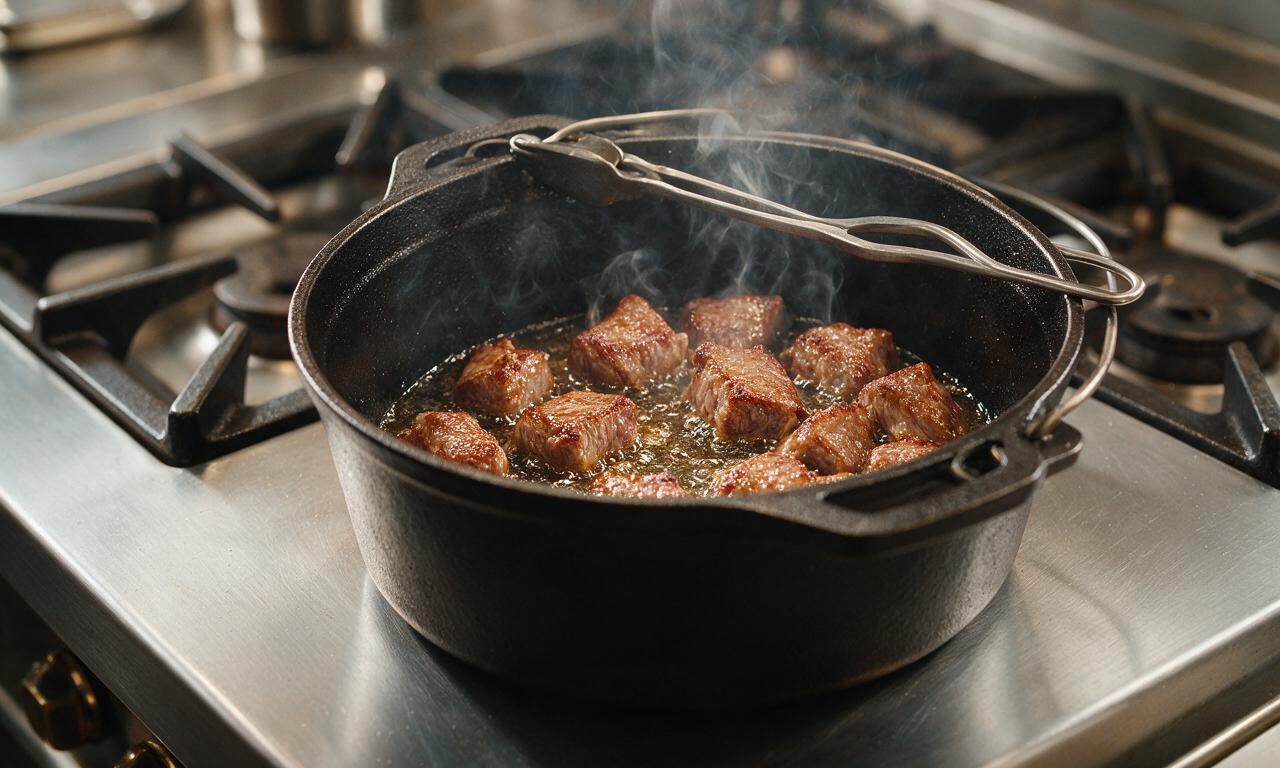
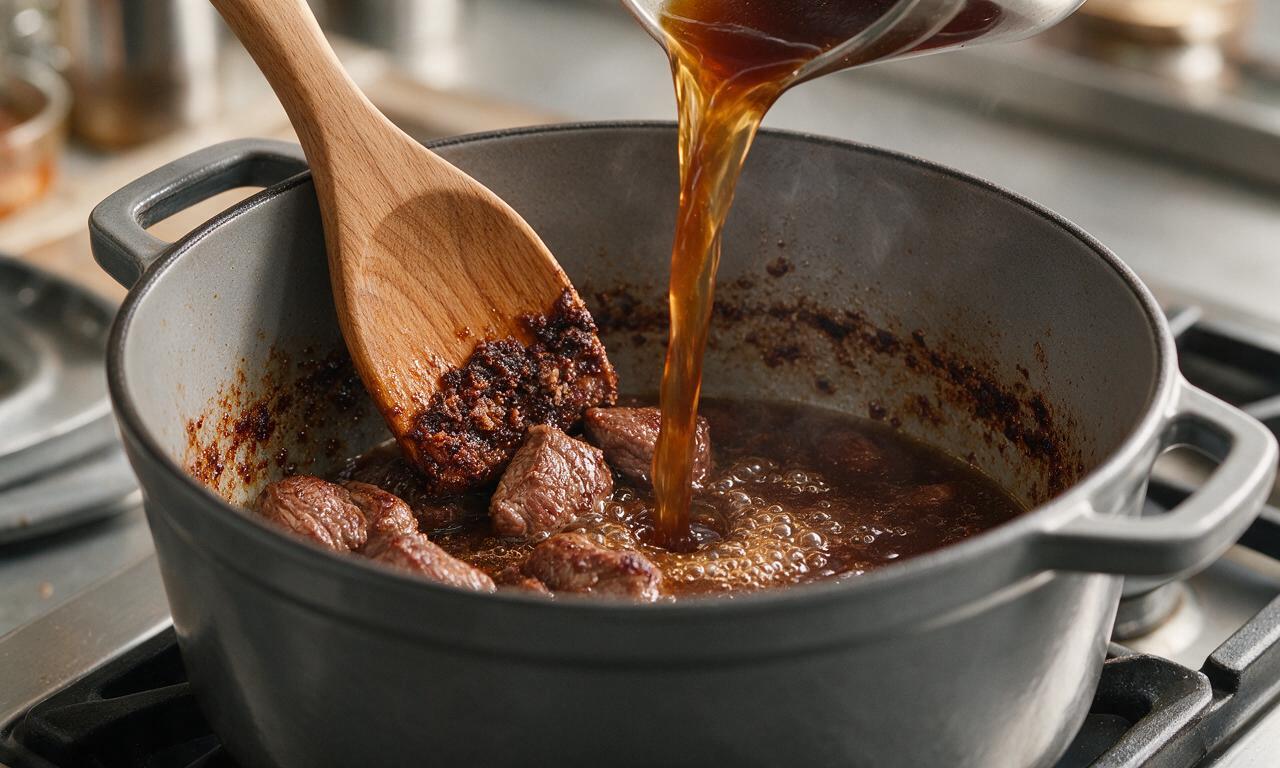
Skipping the sear is one of the biggest mistakes you can make for deep goulash flavor. Pat beef cubes completely dry with paper towels first, then sear in batches in a hot, oiled pot until deep golden brown on all sides. Don’t crowd the pan, or beef will steam instead of searing. Those browned pot bits (called fond) add massive savory depth to the final stew.
10.What vegetables work best in this goulash, besides the core onion and garlic?
▾
Stick to hearty, slow-cooking veggies that hold up to long simmer times: diced carrots, cubed russet or Yukon Gold potatoes, and diced bell pepper are all classic additions. Add them during the last 45 minutes to 1 hour of cook time so they get tender but don’t turn mushy. Skip delicate veggies like zucchini or spinach, as they’ll break down completely and ruin the hearty texture.
11.How thick should traditional goulash be, and how do I fix it if it’s too thin?
▾
Traditional goulash is a thick, hearty stew, not a thin soup—you should be able to scoop it with a spoon without liquid running all over your plate. If it’s too thin at the end of cooking, mix 1 tablespoon cornstarch with 2 tablespoons cold water, stir into the simmering stew, and cook 5 more minutes until thickened. You can also mash a few cooked potato cubes to naturally thicken the liquid.
12.Can I make this goulash ahead of time, and does it reheat well?
▾
Goulash actually tastes better the next day! Flavors meld and deepen as it chills in the fridge, so making it 1 to 2 days ahead is perfect for meal prep or dinner parties. Store it in an airtight container in the fridge for up to 4 days, and reheat gently on the stovetop over low heat, stirring occasionally. Add a splash of beef broth if it thickens too much as it chills.
13.What are the most traditional side dishes to serve with this beef goulash?
▾
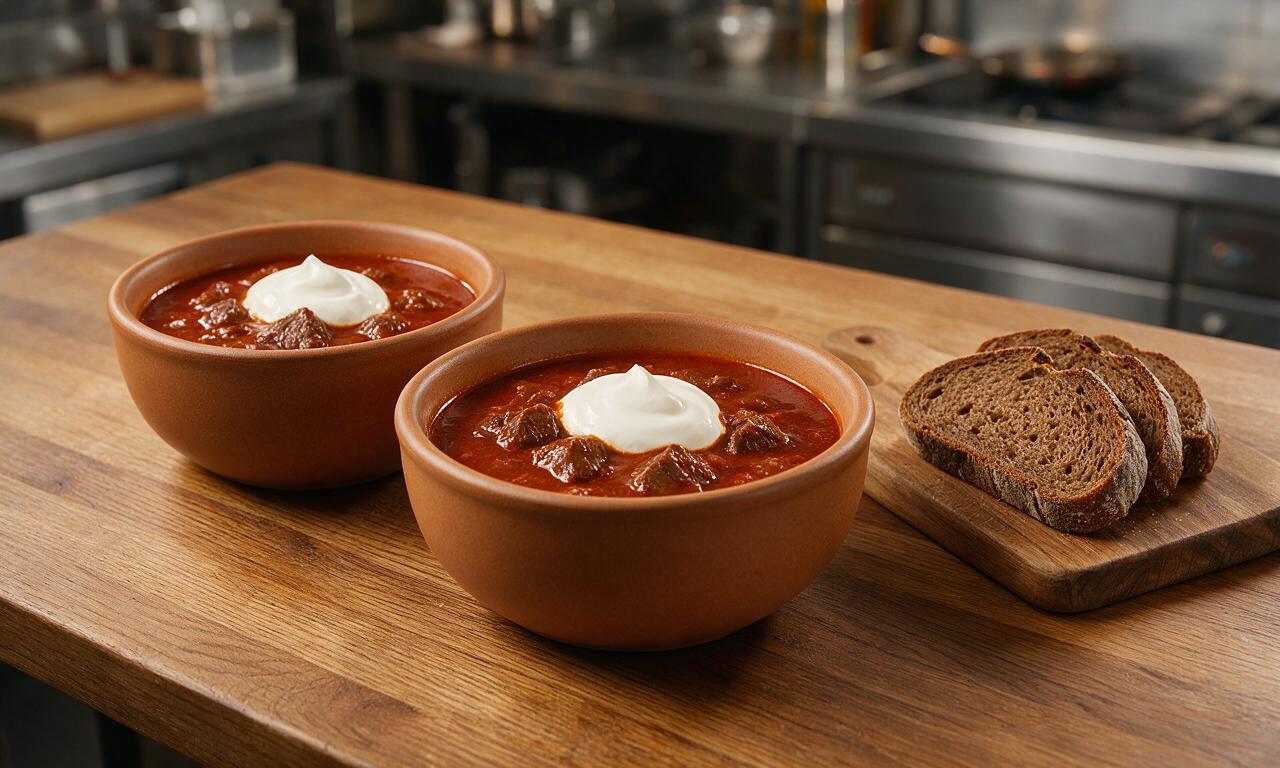
The classic pairing is buttered egg noodles or soft, fluffy spaetzle dumplings, which soak up the rich paprika sauce perfectly. Crusty sourdough bread is another great option for sopping up every last drop. Most people also serve it with a dollop of full-fat sour cream and a sprinkle of fresh chopped parsley on top to cut through the stew’s richness.
14.Is it possible to over-simmer this goulash, and how do I avoid that?
▾
You can overcook it if you leave it on high heat for too long, which will make beef turn dry and mushy instead of tender, and cause vegetables to disintegrate. Stick to the low, gentle simmer, and start checking for doneness at the 2.5-hour mark for stovetop cooking: beef should pull apart easily with a fork, but still hold its cube shape instead of turning to shreds.
15.Should I use whole or ground caraway seeds for the most authentic flavor?
▾
Whole caraway seeds, lightly crushed before adding to the pot, give the most authentic, layered flavor—they release their oils slowly as the stew simmers, for a warm, rounded taste instead of the sharp, flat flavor of stale pre-ground caraway. If you only have ground, that works fine, just add it 10 minutes before the end of cooking to keep its flavor bright.
16.Can I freeze leftover goulash for later quick meals?
▾
Absolutely! Let the goulash cool completely first, then transfer it to freezer-safe airtight containers or heavy-duty freezer bags, leaving ½ inch of headspace for expansion as it freezes. It will keep for up to 3 months in the freezer. Thaw it in the fridge overnight before reheating gently on the stovetop, stirring well to recombine any separated liquid as it warms.
17.What kind of liquid should I use to simmer the goulash for the best flavor?
▾
Low-sodium beef broth is the best base, because it lets you control salt levels as you cook, and adds extra beefy depth that plain water can’t match. A splash of dry red wine added after searing beef (to scrape up the fond) adds wonderful rich, tangy depth, but you can skip it and use extra broth if you avoid cooking with alcohol.
18.Why do some goulash recipes use tomatoes, and is that a traditional addition?
▾
A small amount of tomato paste or diced tomato is common in many regional goulash variations, but it’s not the core of the traditional recipe—too much tomato will overpower the sweet paprika and caraway flavors that define the dish. If you add tomato, stick to 1 to 2 tablespoons of tomato paste, so it adds subtle depth without turning it into a generic tomato beef stew.

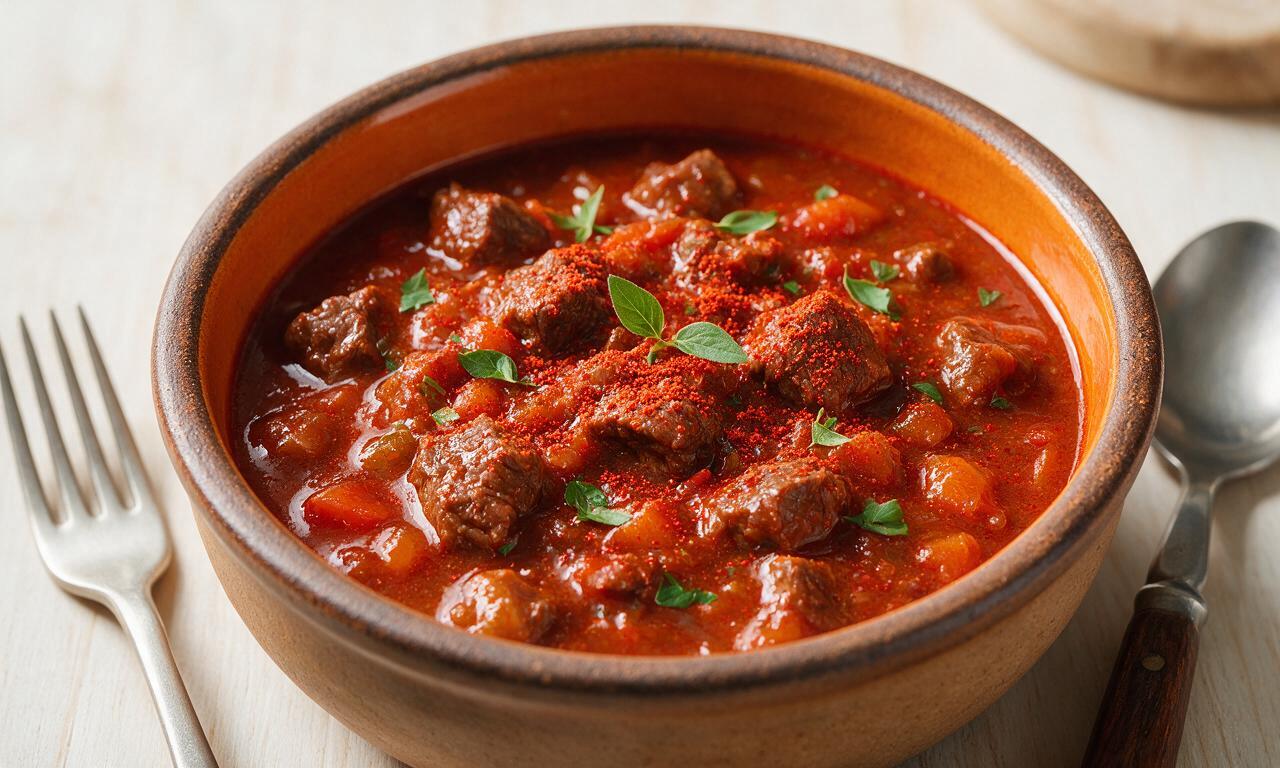
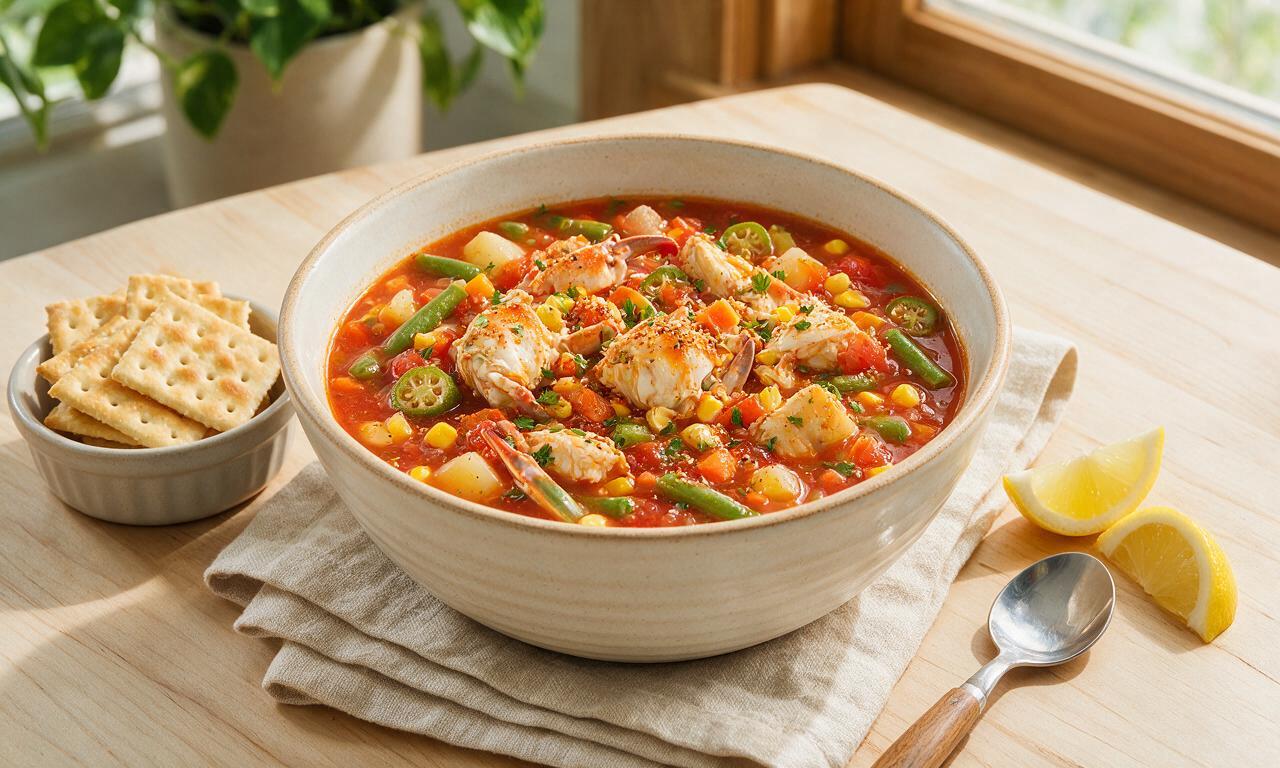
OMG, this goulash was a total game changer for our Sunday family dinner! I used a chuck roast like the recipe said, let it simmer the full 90 minutes, and the beef was so fall-apart tender my 7 year old asked for seconds before he even finished his first bowl. Served it over buttered egg noodles just like my grandma used to, and even my picky husband raved. 10/10 will be making this for our fall potluck next month!
Solid recipe, turned out way better than the goulash I tried making last month that came out tough and watery. I did cut the cook time down by 15 minutes because I was crunched for time before my kid’s soccer practice, and it was still really tasty. Next time I’ll plan ahead to do the full 90 minute simmer because I can tell it’ll be even better. Good stuff!
SO good! I made a big batch of this on Sunday for my weekly meal prep, and it held up perfectly all week in the fridge. The flavors actually got better each day, which is my favorite kind of recipe. I skipped the noodles and served it over roasted cauliflower to keep it lower carb, and it was still chef’s kiss. Definitely adding this to my regular rotation!
Took me right back to the goulash my Hungarian neighbor used to make when I was a kid! I was worried the medium difficulty would mean a bunch of fancy ingredients, but it was all stuff I already had in my pantry except for the sweet paprika, which I grabbed on my last grocery run. Simmered it low and slow on my stovetop, didn’t rush it, and the whole house smelled incredible for hours. My grandkids thought it was the best thing I’ve made all year.
Pretty good, but I felt like it needed a little kick! I added a teaspoon of cayenne and a dollop of sour cream on top when I served it, and that hit the spot for me. The beef was perfectly tender after the full simmer time, no chewy bits at all. I’ll probably make this again when we have friends over for game night, it’s super hearty and feeds a crowd.
I was so nervous to make this because I’m still pretty new to cooking, and the medium difficulty rating made me second guess myself, but the instructions were so clear! I followed every step exactly, and my roommate said it tasted like something from a fancy restaurant. I did have to google what 'simmer' meant at first, oops, but once I got the heat turned down low it worked perfectly. So proud of how this turned out!