
Humboldt Bay Oysters
intro
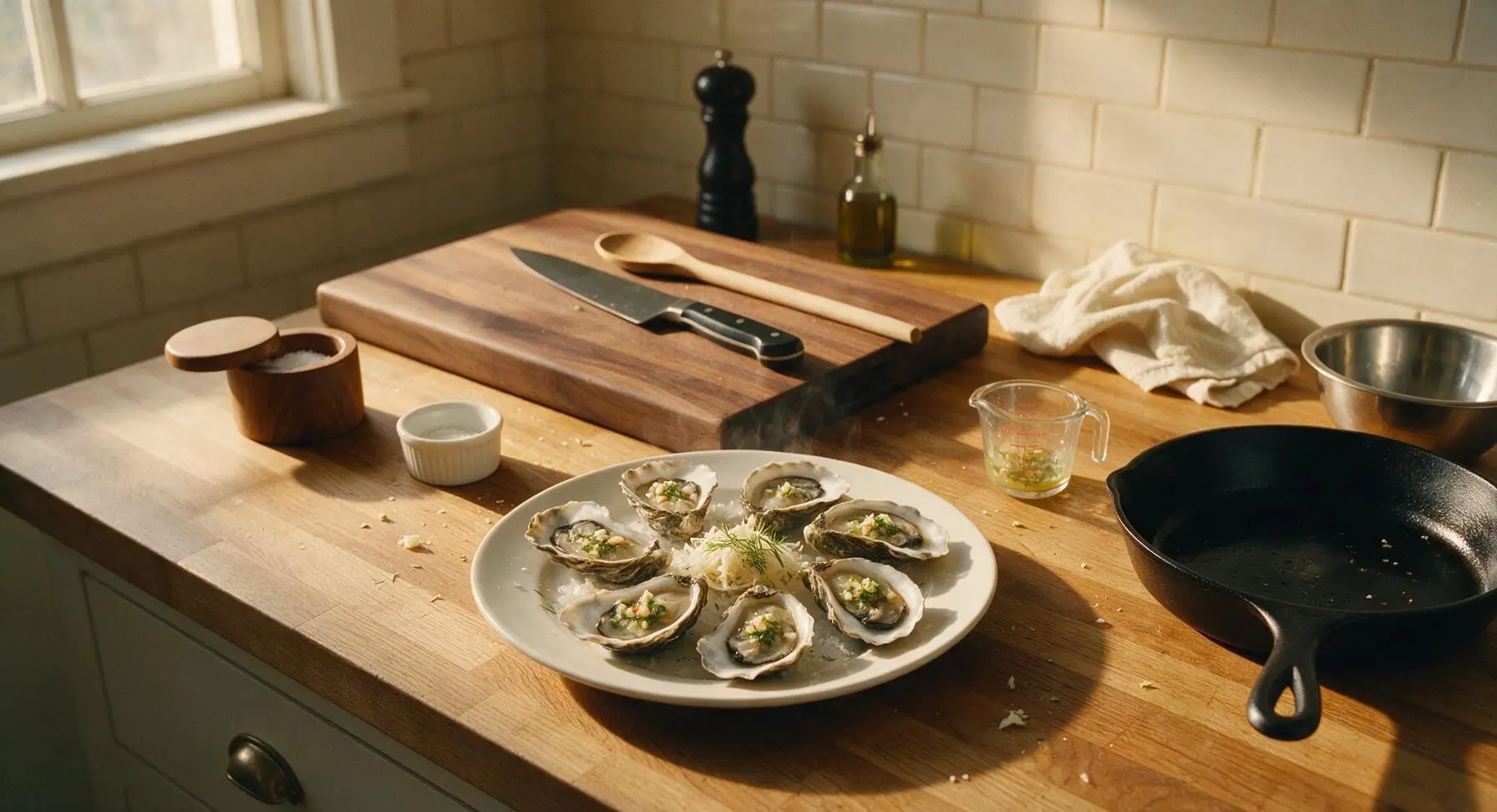
Briny, sweet Humboldt Bay oysters served on the half shell with bright apple-cider dill mignonette and fresh horseradish—light, elegant, and perfect for a special coastal meal.
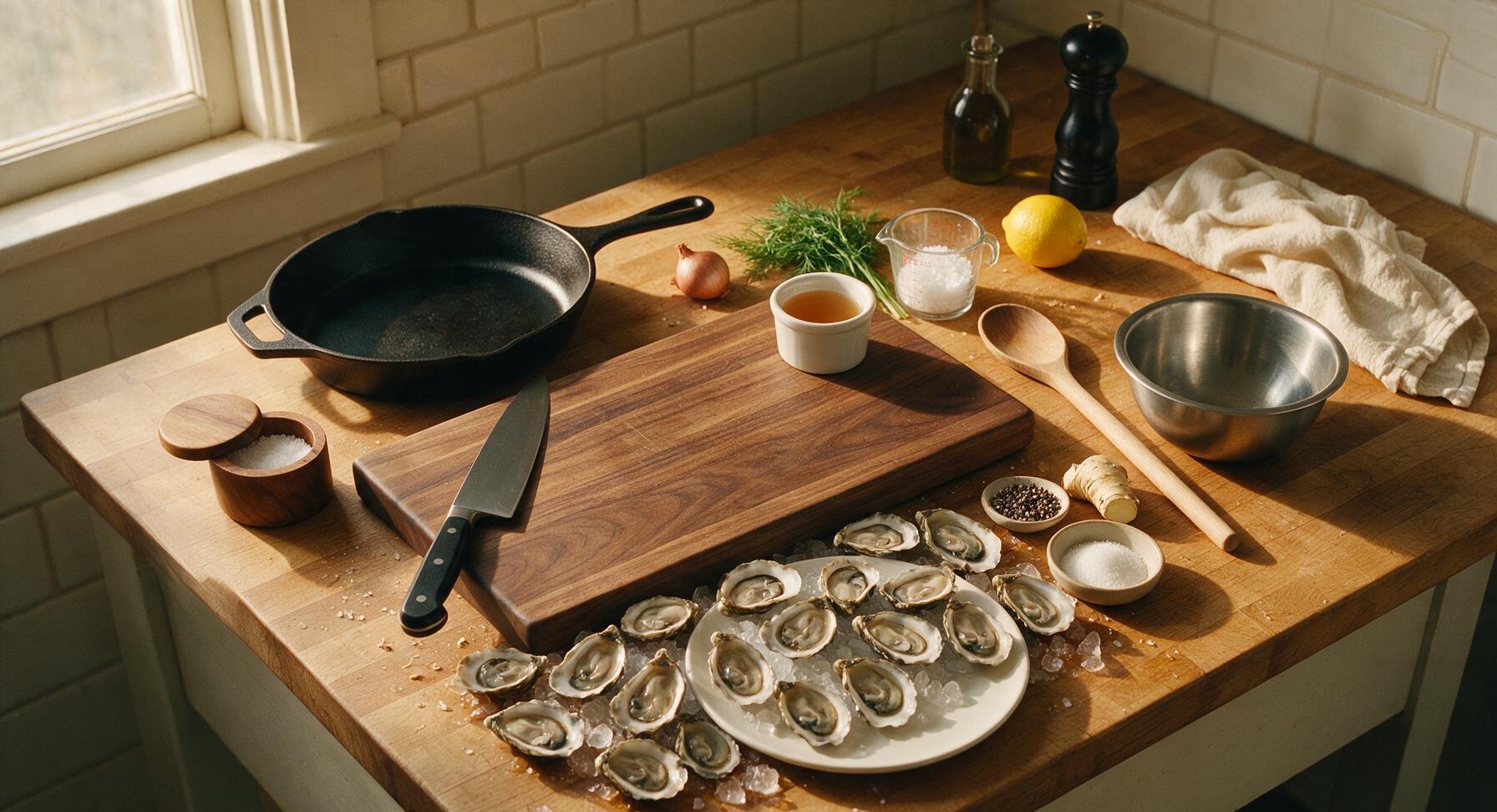
Ingredients
Steps
Scrub and chill oysters
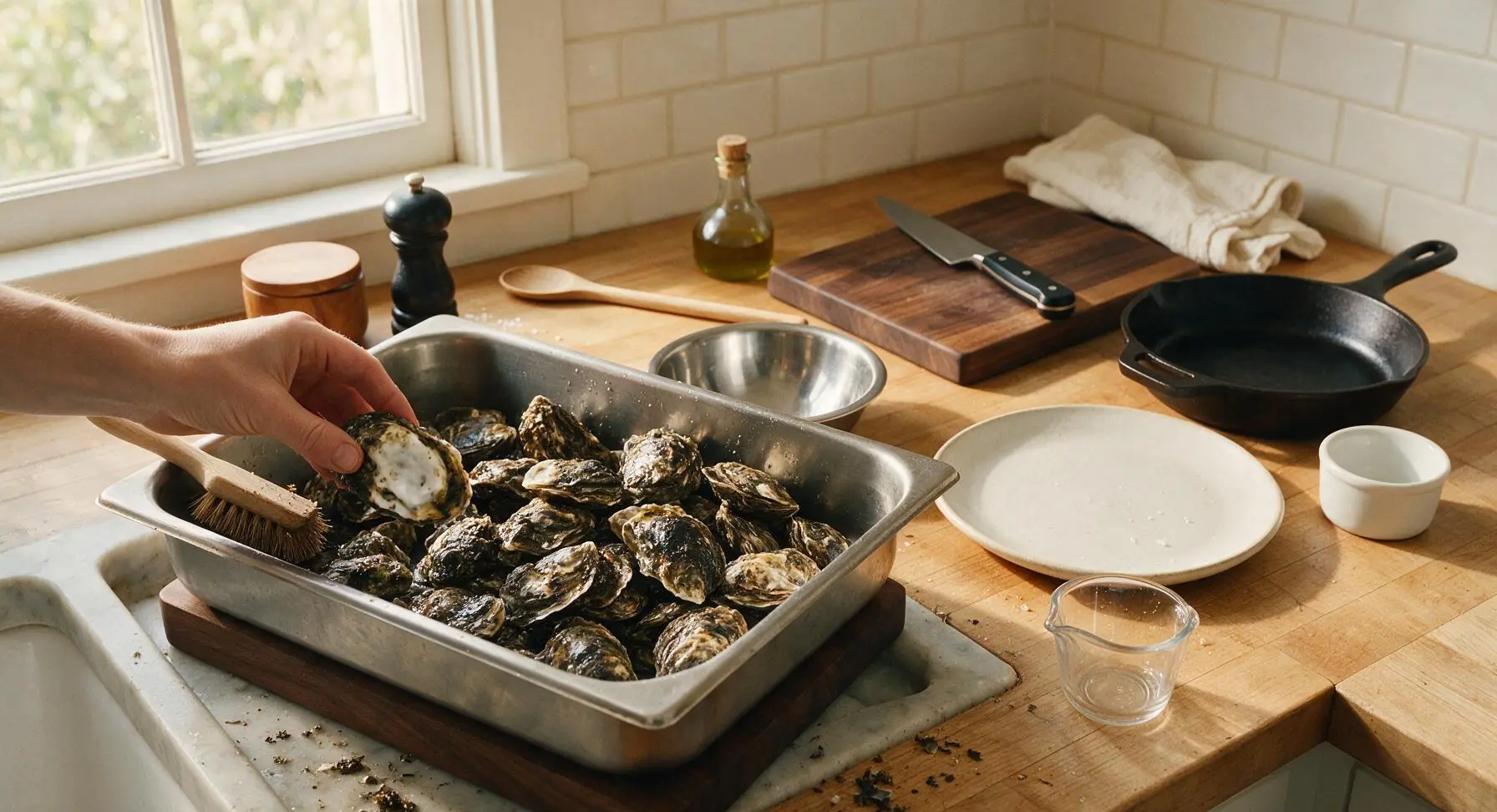
First, place all 24 oysters in the large stainless steel tray. Rinse oysters briefly under cold water, then use the stiff natural bristle brush to scrub away all mud, barnacles, and loose seaweed from the rough outer shells. Discard any oysters that are already open or do not snap shut when tapped lightly, as these are unsafe to eat. Place scrubbed oysters on the tray in the refrigerator to chill for 10 minutes at 40°F (4°C) while you prepare the mignonette.
Dice shallot finely
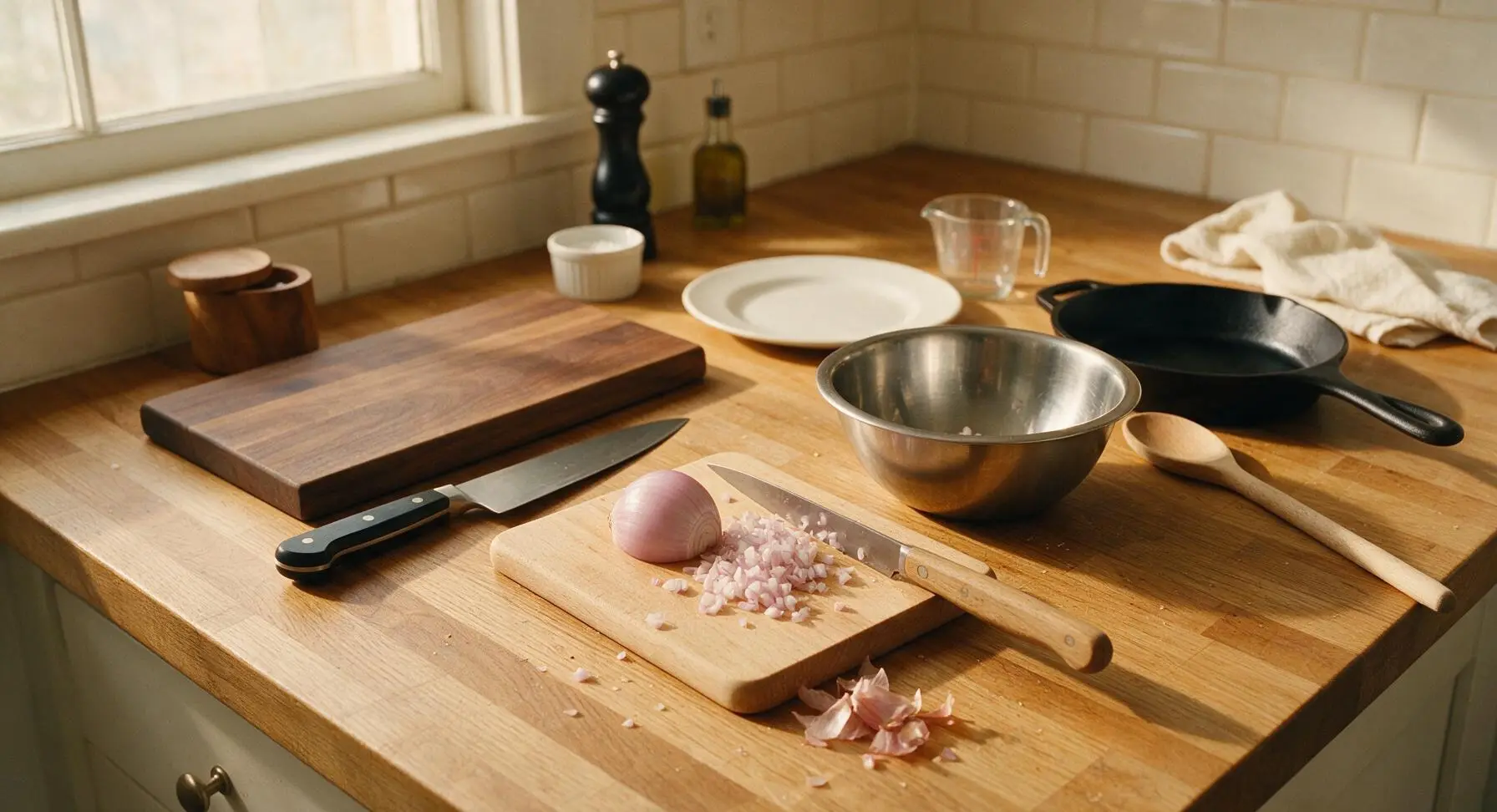
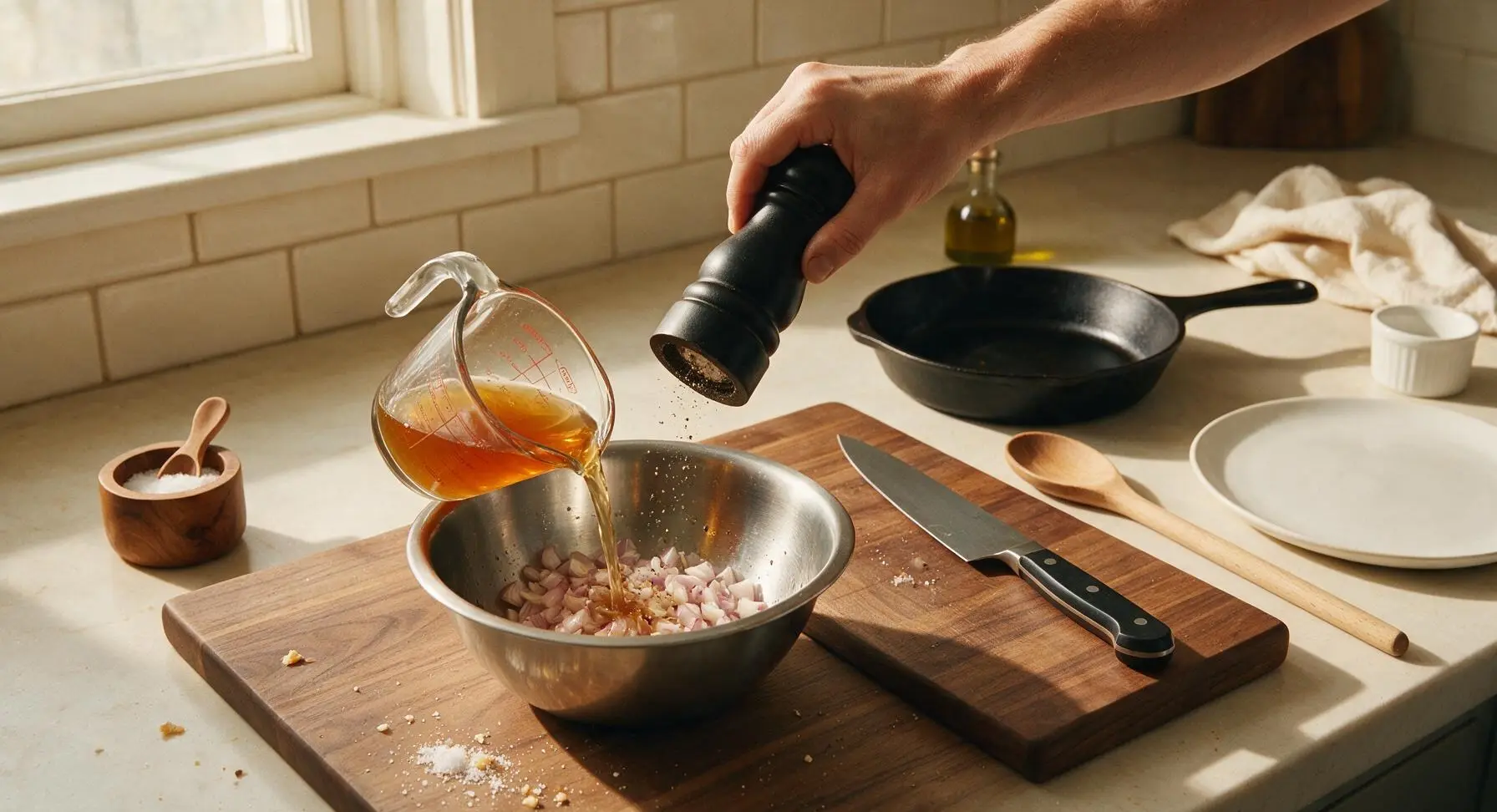
Set the small beech wood cutting board on the central counter. Use the small paring knife to trim the root and stem ends from the shallot, peel off the papery purple outer skin, and dice the shallot into very fine 1mm pieces, yielding approximately 2 tablespoons of diced shallot. Transfer the diced shallot to the small stainless steel mixing bowl.
Mix mignonette base
To the mixing bowl with diced shallot, add 1/2 cup raw unfiltered apple cider vinegar (measured in the clear glass measuring cup), 1 tsp granulated sugar, and 1/4 tsp freshly cracked black pepper (cracked directly from the matte black pepper mill). Stir gently with the tip of the paring knife until the sugar fully dissolves, about 30 seconds. Let the mixture rest for 10 minutes at room temperature to let the sharp shallot flavor mellow and flavors meld.
Prep garnish components
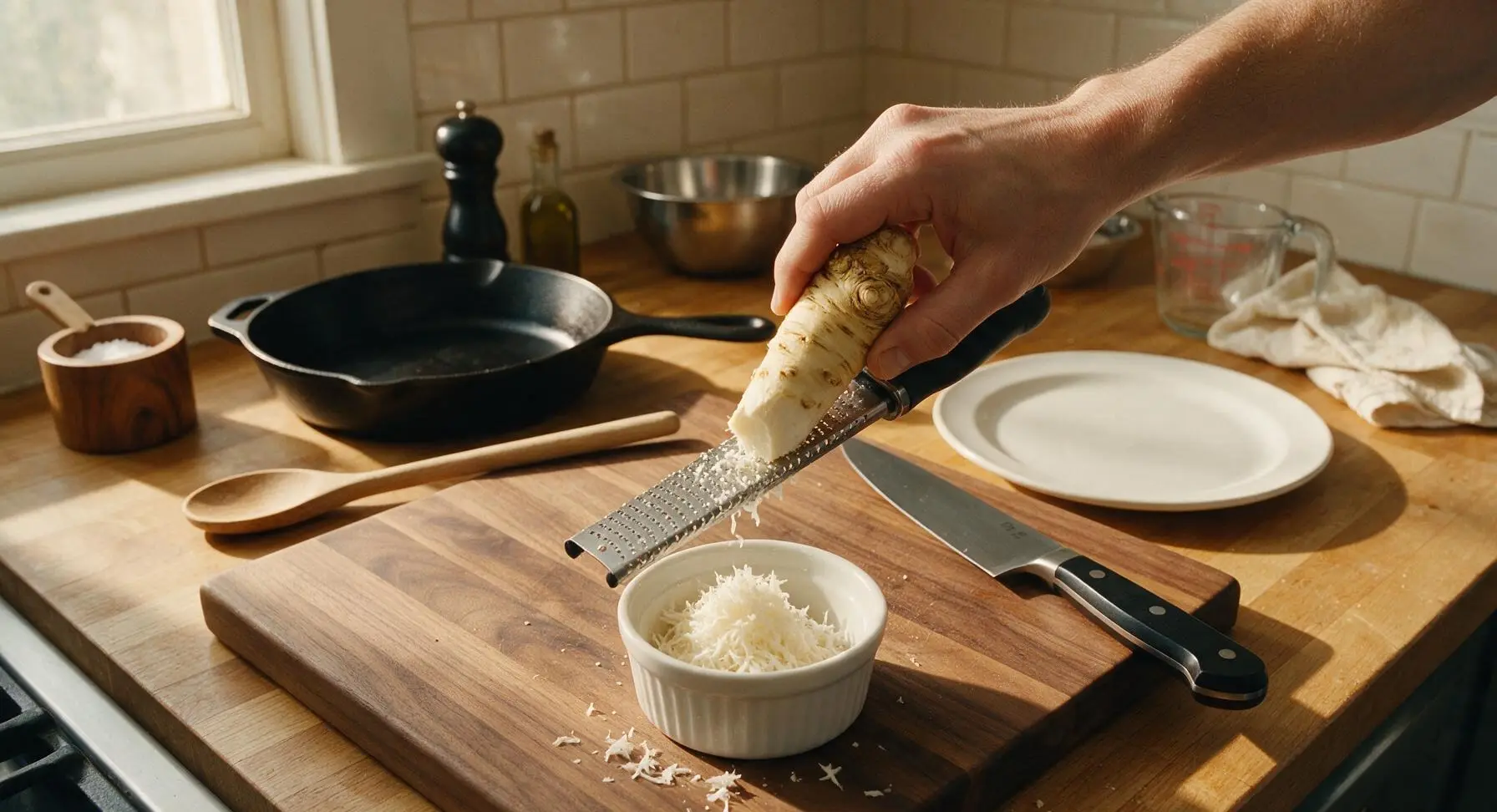
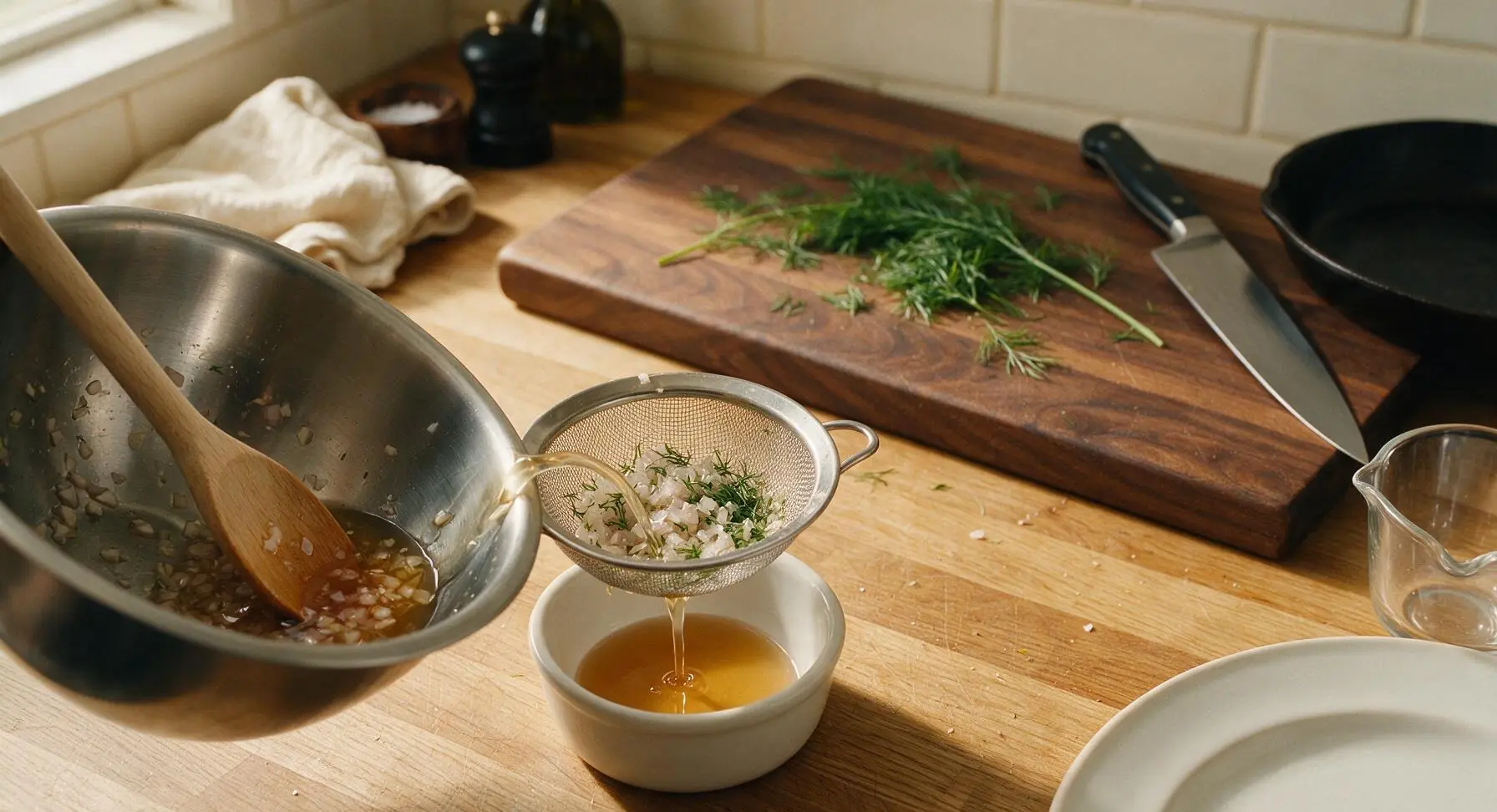
While the mignonette rests, hold the fresh horseradish root against the microplane grater over one of the small white ramekins, grating the root into fine, fluffy shreds to yield approximately 1/4 cup of grated horseradish; set the ramekin aside. Next, use the paring knife to finely chop 1 tablespoon of fresh dill fronds, leaving a few small whole fronds aside for garnish. Stir the chopped dill into the rested mignonette mixture, then pour half the mignonette through the fine wire mesh strainer into the second small white ramekin for guests who prefer a smooth, shallot-free serving, leaving the remaining chunky, shallot-flecked mignonette in the mixing bowl.
Shuck oysters carefully
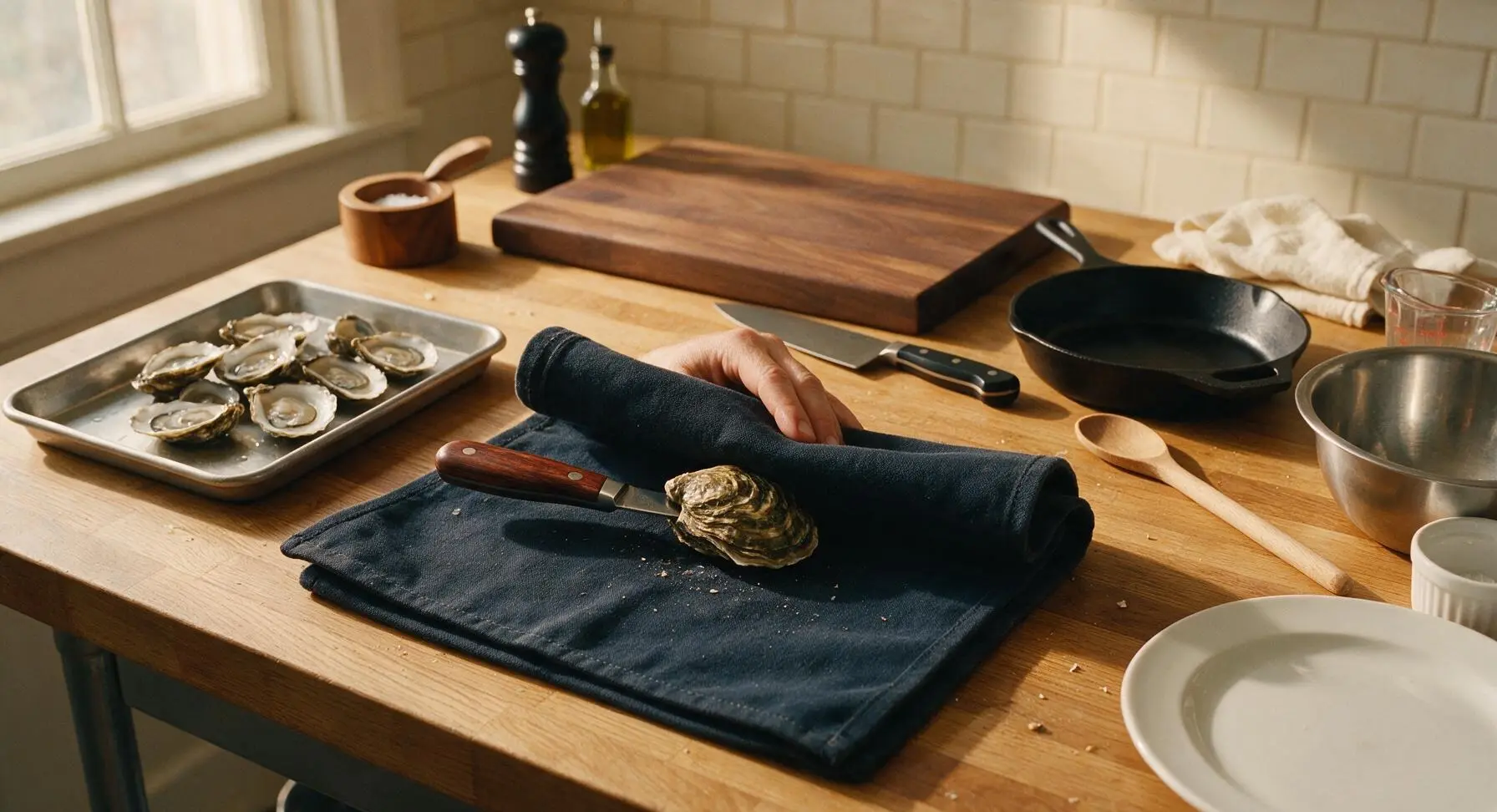
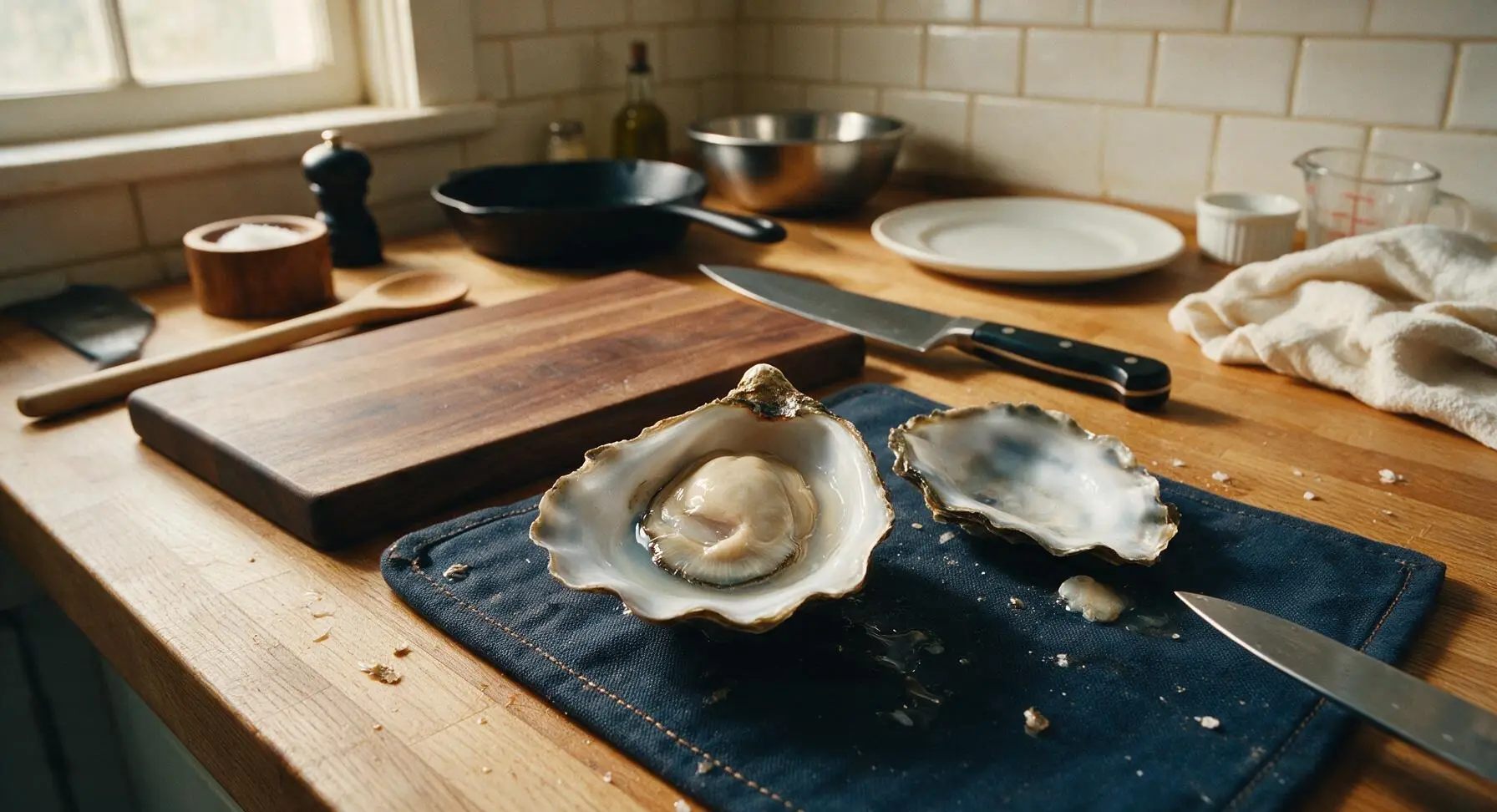
Remove chilled oysters from the refrigerator. Fold the navy canvas shucking mat double thickness and set it on the central counter to protect your hand. Hold one chilled oyster cupped-side down on the mat, pressing firmly with your non-dominant hand kept behind the thick folded edge of the mat to avoid slips if the knife shifts. Insert the tip of the rosewood-handled oyster knife into the narrow hinge of the oyster, applying gentle steady pressure and twisting the knife 20-30 degrees to pop the hinge open with a faint click. Run the knife along the inside of the top flat shell to sever the adductor muscle, then lift off and discard the top shell, taking care to keep as much natural clear brine in the cupped bottom shell as possible. Run the knife under the oyster meat to release it from the bottom shell so it slides easily when eaten. Discard any oysters with off, sulfurous odors or dry, discolored meat. Repeat for all 24 oysters, placing shucked oysters back on the stainless steel tray as you work.
Arrange serving platter
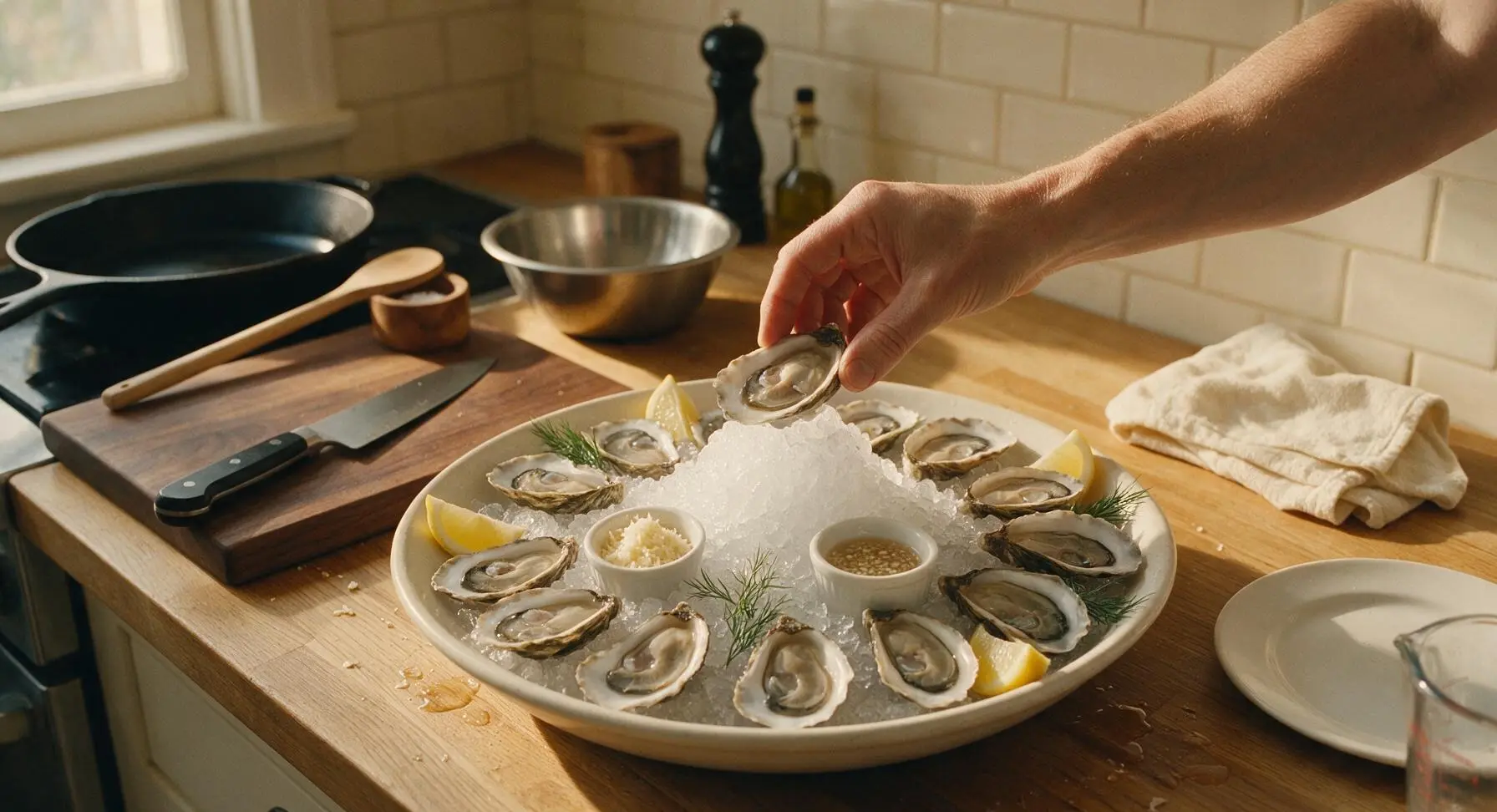
Retrieve the large matte off-white ceramic serving platter. Mound 4 cups of crushed ice evenly across the platter, creating a slight rounded peak in the center to hold oysters steady. Nestle each shucked oyster (in its cupped half shell) into the ice, arranging them in a neat circular pattern facing outward so the meat is easily accessible to guests. Tuck the reserved whole dill fronds between oyster shells for garnish. Set the two ramekins (one with grated horseradish, one with strained smooth mignonette) in gaps on the ice, and tuck four lemon wedges evenly around the platter edge. Sprinkle a tiny pinch of coarse sea salt from the terracotta cellar over the ice to lower its melting point and keep oysters cold longer.
Tips
2.Keep oysters refrigerated at 40°F (4°C) until the moment you shuck them: cold oysters have a firmer adductor muscle that makes shucking easier, and they retain their bright, briny-sweet flavor without becoming mushy or unsafe.
3.Let the mignonette rest for 10 full minutes after mixing before serving: this resting time softens the harsh, acrid bite of raw shallot, so the bright vinegar and herb notes complement rather than overpower the delicate, briny oyster flavor.
OMG these were SO good at our last coastal dinner party! I used fresh Humboldt Bay oysters I picked up from the fish market in Eureka last weekend, and the apple cider dill mignonette is a total game changer. The bright tang cuts the brininess perfectly, even my sister who swears she hates raw oysters had three!
Made these for our backyard oyster roast last weekend and everyone raved! I added a tiny pinch of red pepper flakes to the mignonette for a little kick, chef’s kiss. My 16 year old even asked for the recipe to bring to his friend’s potluck next week.
Okay full transparency, I shucked my first ever oysters for this recipe and I was so nervous! The difficulty level said medium which felt intimidating at first, but the mignonette came together in literally 5 minutes and it made even my wonky shucked oysters taste fancy. 10/10 for date night.
Wait hold on, 0 minutes cook time? I thought mignonette needed to sit for a few hours to let the flavors meld? I made this right before serving last night and it felt like the dill flavor was a little flat. Did I do something wrong?
I swapped the regular dill for wild dill I foraged near my house and used hard cider instead of regular apple cider for a little extra zing. Unreal. Served these with homemade sourdough crackers for a light lunch after hiking, 10/10.
Made these for my husband’s birthday dinner and he said it was better than the oysters we had on our honeymoon in Oregon! I served them with roasted garlic butter steak and roasted asparagus, perfect fancy weeknight meal that felt super special. My kids even tried a bite (with lots of cocktail sauce on the side, ha)!
Is there a good non-alcoholic swap for the champagne vinegar in the mignonette? I’m hosting a sober dinner party next month and want to make sure everyone can enjoy these!
Game changer! I brought these pre-shucked (don’t judge, I was short on time) to a potluck in the mountains last weekend and people were hovering over the platter the whole night. The sweet apple cider paired so well with the salty oysters, I will absolutely be making this all fall.
Tried this last night with oysters from the Great Lakes instead of Humboldt Bay, still slapped! The mignonette is so versatile, I even dipped some cucumber slices in the leftover sauce as a snack later. Zero waste win.
I’ve been making classic red wine mignonette for years and I was bored of it, this apple cider dill version is my new go-to! It’s lighter, fruitier, and perfect for early fall when apples are in season. I brought a jar of the mignonette to my neighbor’s fish fry and everyone asked for the recipe.
Meal prep hack! I made a big batch of the mignonette on Sunday and it lasted perfectly in the fridge all week for quick oyster appetizers after work. Who says fancy seafood has to be a ton of work? 10/10 for busy folks who still want to eat good.
Loved the flavor of the mignonette but I way overdid it on the shallot my first batch — I ended up with chunks of shallot overpowering the dill and cider. Any tips for getting the ratio right if I’m measuring by eye?