1.What type of gourd do I need to make authentic Southern Brazilian chimarrão?
▾
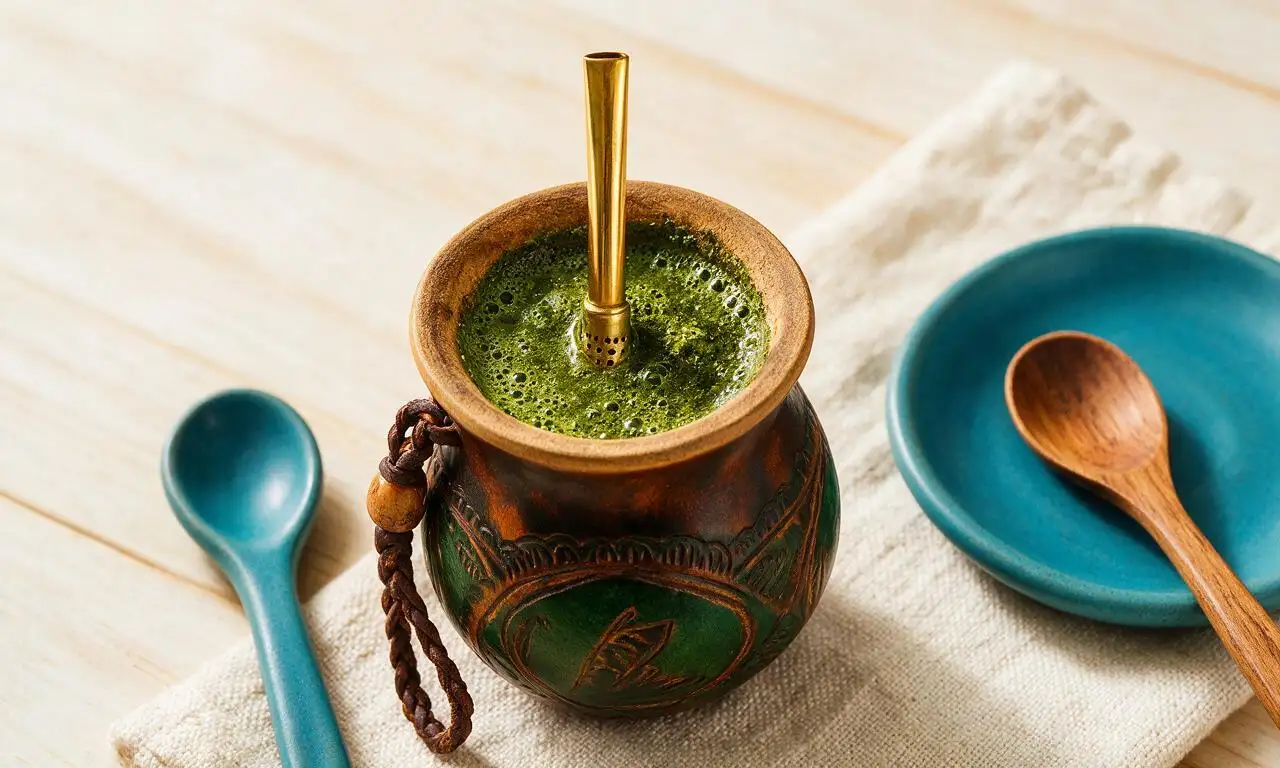
You can use a traditional natural calabash gourd (called a cuia) for the most authentic, subtly earthy flavor, but food-safe stainless steel or silicone gourds work perfectly for beginners. Natural gourds require curing before first use to remove bitter woody residues, while synthetic options are ready after a quick wash, no extra prep needed.
2.Do I have to cure a new natural calabash gourd before using it for chimarrão?
▾
Yes, curing prevents bitter off-flavors and extends your gourd’s lifespan, similar to seasoning a cast iron pan. Fill it ¾ full with used yerba mate, top with hot (not boiling) water, let it sit 24 hours, scrape out the soft inner membrane, rinse, and repeat once more to build a smooth, seasoned interior that mellows flavor over time.
3.What temperature should my hot water be, and why can’t I use boiling water for chimarrão?
▾
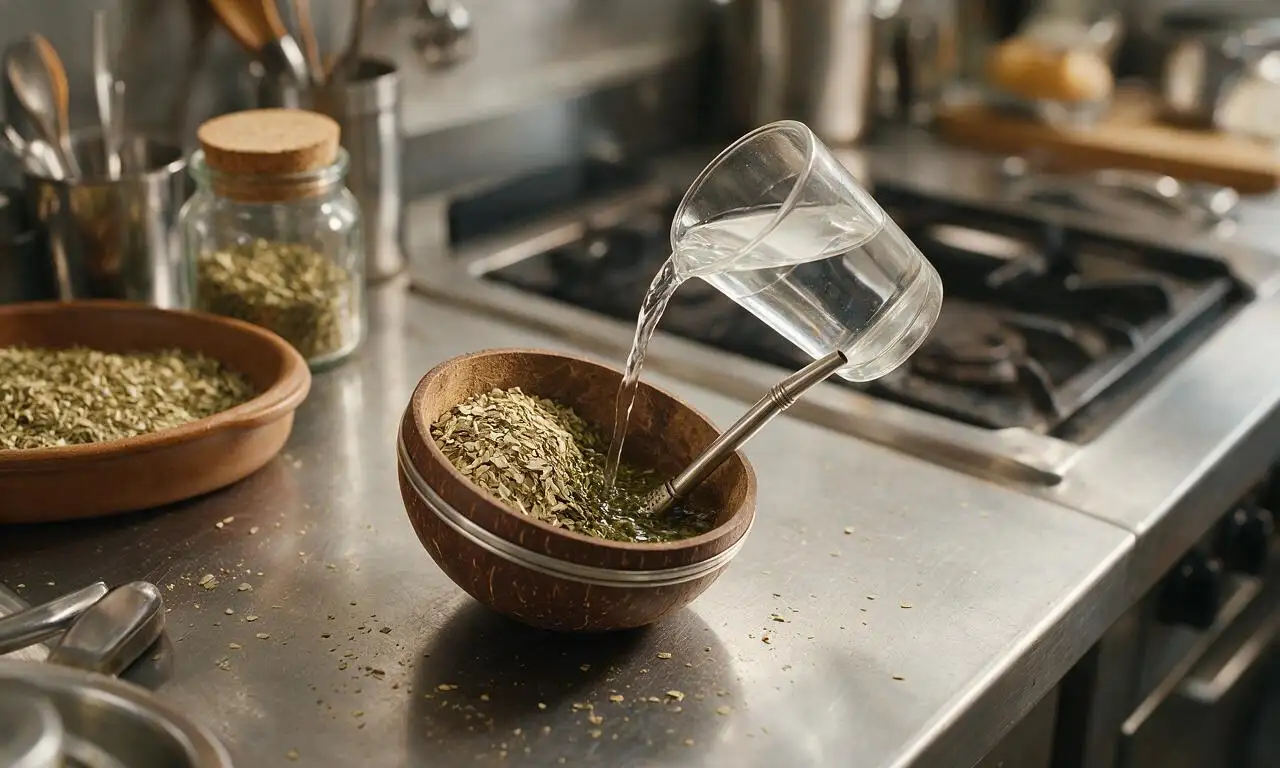
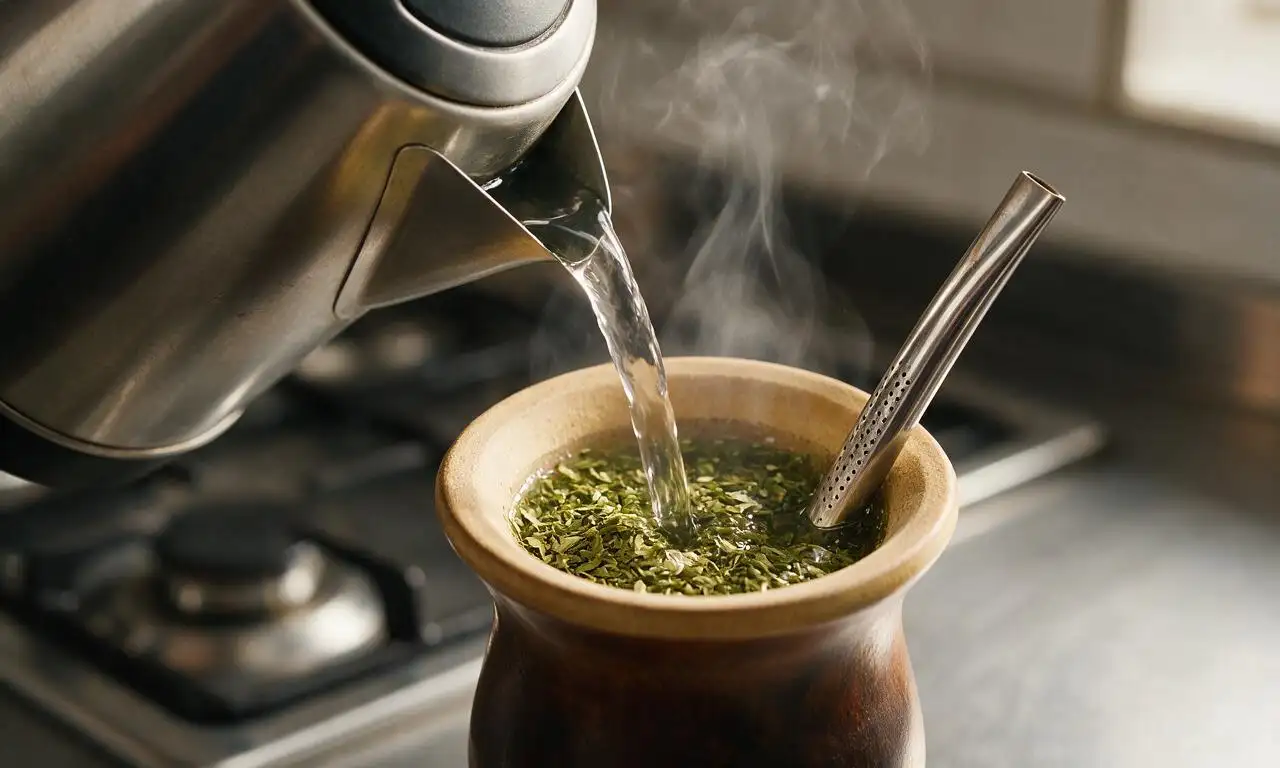
Aim for hot water between 160–180°F (71–82°C), never rolling boiling 212°F water. Boiling water scorches the delicate yerba mate leaves, pulling out harsh, overly bitter compounds that ruin the drink’s smooth, earthy profile. If you don’t have a thermometer, wait 30 seconds after your kettle shuts off before pouring.
4.Is sugar required for traditional chimarrão, or is it usually served unsweetened?
▾
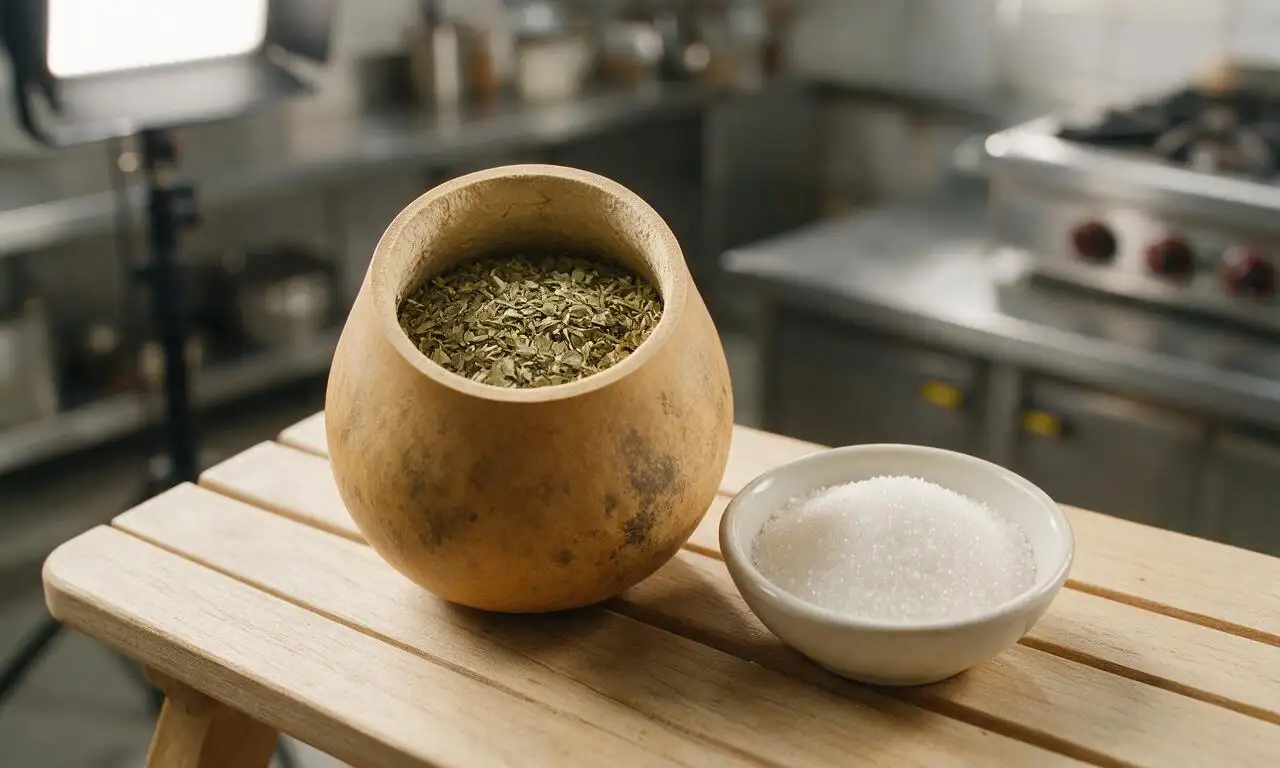
Traditional chimarrão is most often served unsweetened in southern Brazil, letting the bold, grassy, earthy yerba flavor take center stage. Granulated sugar is totally optional—add 1–2 teaspoons per gourd fill if you prefer a less bitter sip. Skip honey, artificial sweeteners, or flavored syrups if you’re aiming for an authentic preparation.
5.What is a bombilla, and do I need a special straw to drink chimarrão?
▾
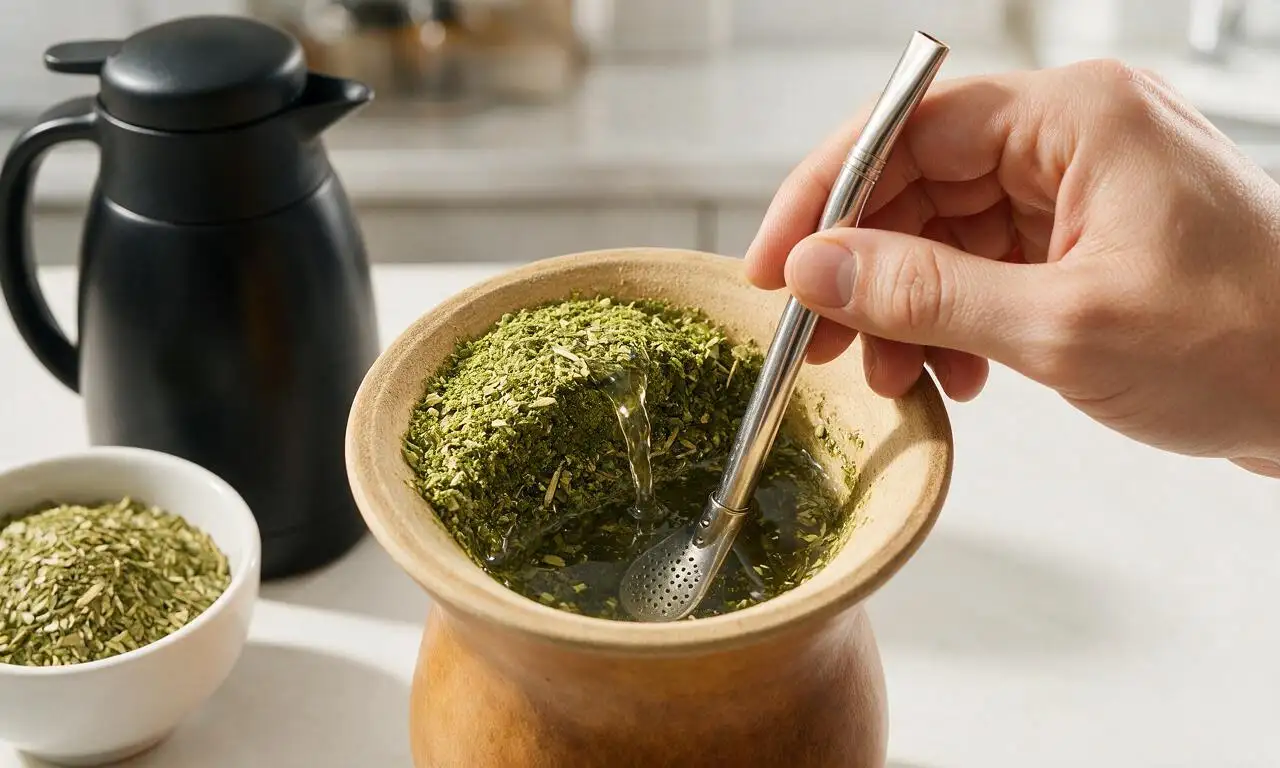
A bombilla is the filtered metal straw made specifically for mate drinks, with a slotted or mesh filter at the bottom that sits in the yerba to keep loose leaf particles out of your mouth. A regular straw will clog immediately with leaves, so it won’t work. Opt for a food-grade stainless steel bombilla with a removable filter for easy cleaning.
6.How do I properly pack yerba mate into the gourd for the best, clog-free draw?
▾
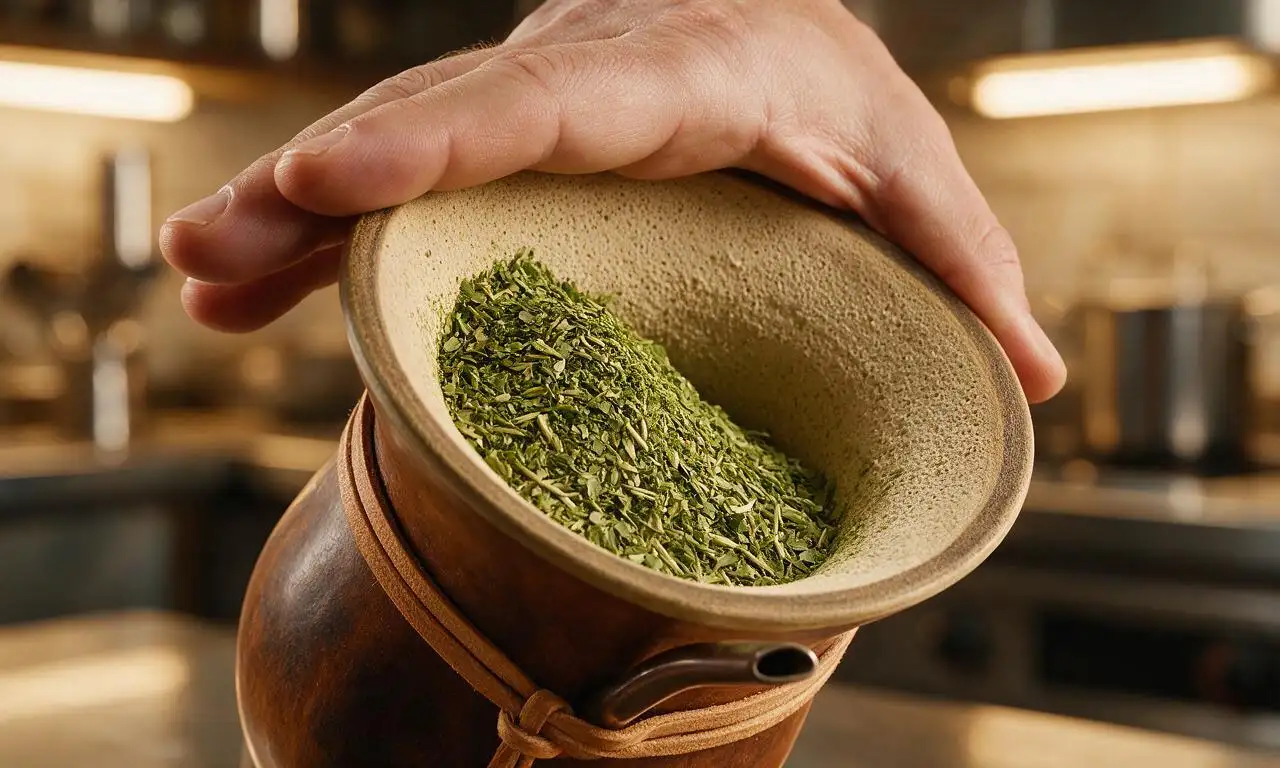
Fill your dry gourd ⅔ full of loose yerba, cover the top with your palm, flip it upside down, and shake gently to settle fine leaf particles to the top. Tilt the gourd so all the yerba rests on one sloped side, then pour a small splash of cold water into the empty side to moisten leaves before adding hot water and inserting the bombilla.
7.Why do recipes call for adding cold water before pouring hot water over the yerba?
▾
That initial splash of cold filtered water protects delicate yerba leaves from heat shock when you add hot water, preventing the release of harsh, bitter tannins. It also helps leaves swell and settle into a stable, sloped mound that won’t shift as you pass the gourd, keeping your bombilla from clogging mid-gathering.
8.Is chimarrão caffeinated, and how does its caffeine content compare to coffee?
▾
Yes, chimarrão is caffeinated, with roughly 80–90 mg of caffeine per 8-ounce serving, compared to 95–120 mg in a standard 8-ounce cup of brewed coffee. The caffeine from yerba mate releases more slowly than coffee caffeine, so most people notice a steady, jitter-free energy boost instead of a sharp spike and crash.
9.What’s the proper etiquette for sharing chimarrão in a group setting?
▾
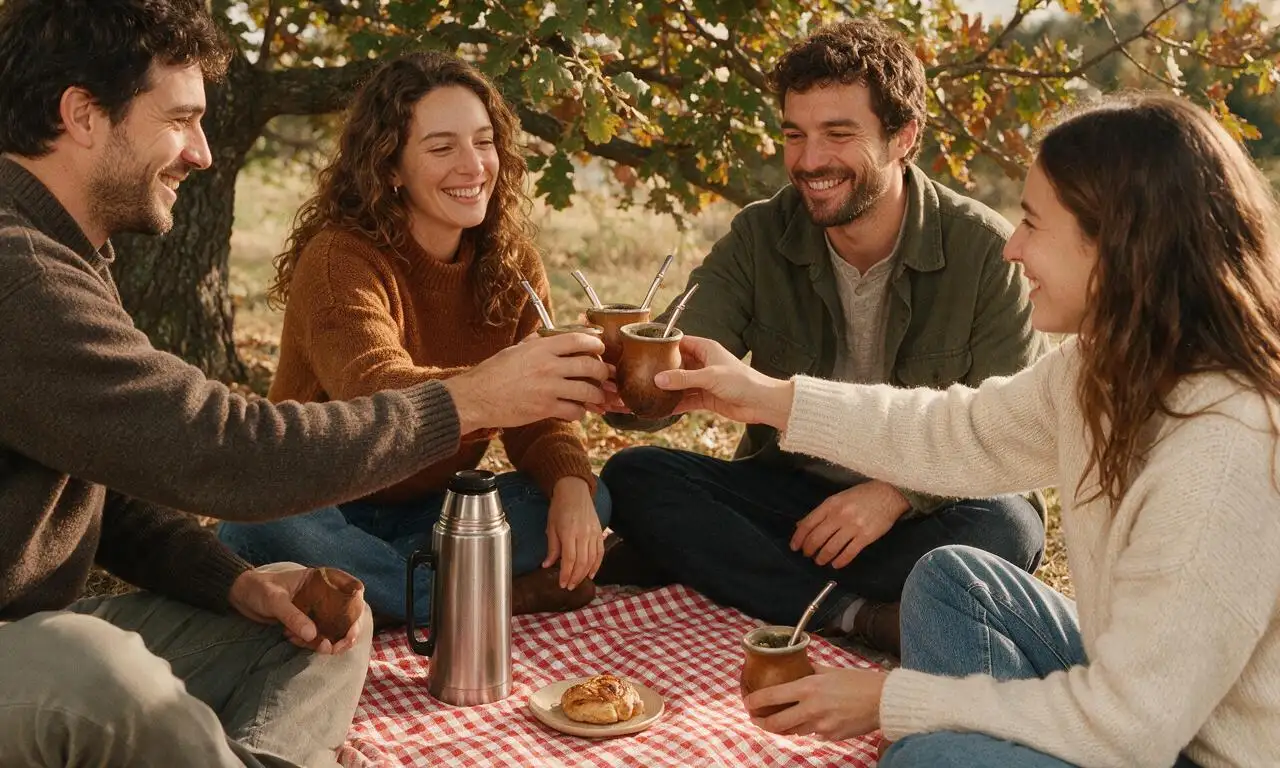
The person who prepares the gourd (called the cebador) drinks the first few sips to clear fine particles from the bombilla, then passes the gourd clockwise to each guest. Drink all the water in the gourd when it’s your turn, don’t move the bombilla, and only say "thank you" when you’re done drinking for the session.
10.Is it okay to move the bombilla around in the gourd while I’m drinking to get better flavor?
▾
No, never twist, stir, or reposition the bombilla once it’s placed in the moistened yerba mound. Moving it disrupts the settled leaf structure, clogs the filter with fine particles, and stirs up bitter sediment that makes every subsequent sip harsh and gritty. If your draw is blocked, hand the gourd back to the cebador to adjust it.
11.How many hot water refills can I get out of a single packed batch of yerba?
▾
A properly packed mound of yerba will stay flavorful for 15–25 refills of hot water, depending on leaf quality and water temperature. You’ll know the yerba is spent when sips taste thin, watery, and faintly grassy with none of the signature bold, earthy depth—at that point, dump the old leaves and pack a fresh batch.
12.Can I make chimarrão ahead of time and store it in the fridge to drink later?
▾
Traditional chimarrão is meant to be sipped fresh, hot, and immediately after preparation, so making it ahead isn’t recommended. As yerba steeps for long periods, it leaches extremely bitter tannins that make the drink unpleasantly astringent. For a cold mate drink, make tereré, the traditional cold-brewed mate, instead of refrigerating hot chimarrão.
13.What makes Brazilian chimarrão different from yerba mate served in Argentina or Uruguay?
▾
While all are mate-based communal drinks, Southern Brazilian chimarrão uses a finer yerba grind with more leaf and less stem than Argentine or Uruguayan mate, giving it a bolder, more robust, slightly more bitter flavor. It’s also traditionally served in a smaller, wider-mouthed gourd, with slightly hotter water than Uruguayan preparations.
14.Do I need to pick out small stems or twigs from loose yerba before packing the gourd?
▾
No, don’t remove the small stems and twigs mixed into high-quality loose yerba mate—those are intentionally included to mellow flavor, reduce bombilla clogging, and keep the leaf mound porous for even water flow. Picking out stems leads to an overly bitter, astringent drink that clogs your straw constantly, even with a fine mesh filter.
15.How do I clean my gourd and bombilla after a chimarrão session to prevent mold?
▾
After your session, dump all used yerba immediately, rinse the gourd with warm plain water (skip soap, which absorbs into porous natural gourds and ruins future flavors), wipe the interior with a clean paper towel, and air dry it completely open-side down. Disassemble your bombilla, scrub the filter, and air dry it fully to prevent bacterial buildup.
16.Can I add milk, lemon, or spices to traditional chimarrão for extra flavor?
▾
Traditional chimarrão is never served with milk, lemon, spices, or other flavor add-ins—those are reserved for other mate preparations like mate cocido or flavored tereré. The only common optional add-in for authentic chimarrão is a small amount of granulated sugar for those who prefer a sweeter sip; other add-ins are considered non-traditional.
17.Why is my chimarrão always unpleasantly bitter, even when I don’t use boiling water?
▾
Overly bitter chimarrão usually comes from one of three easy-to-fix mistakes: you didn’t moisten leaves with cold water before adding hot water, you packed the yerba too tightly so water sits in contact with leaves too long, or you’re using yerba that’s past 25 refills, when bitter tannins dominate. Try slightly cooler water if you’re extra sensitive to bitter flavors.
18.Can I use bagged yerba mate instead of loose dried leaves to make chimarrão?
▾
Bagged yerba mate won’t work for authentic chimarrão, as the grind is usually too fine and the bag prevents you from building the proper sloped leaf mound needed for even extraction and smooth sipping. Stick to loose, traditional chimarrão-cut yerba, sold in most Latin American grocery stores, for the right texture, flavor, and draw through your bombilla.


What? OMG, I had no idea making chimarrão at home was this easy! I tried this for my husband's backyard BBQ last weekend when his Brazilian coworker came over, and he said it tasted exactly like what his grandma makes back in Porto Alegre. Total game changer, I thought you needed fancy equipment but the steps were so straightforward. 10/10 will be making this for every cookout from now on!
Made this for my teen son's soccer team potluck after practice last night, and everyone was so curious about it! A couple of the kids said it was way better than the energy drinks they usually chug after games. Only reason I’m not giving 5 stars is I added a little too much hot water at first and it was bitter, but once I adjusted the temperature it was SO good.
Took this on my backcountry camping trip last weekend and it was the perfect pick-me-up around the campfire in the mornings. Way easier to prep than coffee, no messy filters needed, and the caffeine kick lasted all morning while we were hiking. Already packed the yerba in my camp box for my next trip.
Hmm, I followed the recipe exactly but mine came out really grassy-tasting? Did I get the wrong kind of yerba mate? I picked up the first bag I saw at the grocery store, maybe it’s a different blend? I want to like this because all my friends rave about it, but I’m not sure what I messed up.
Game. Changer. I brought this to our neighborhood block party potluck and people were lined up to try it! I set up a little station with the gourd and bombilla like the recipe said, and everyone thought it was such a fun, interactive thing instead of just regular iced tea. Even my picky 7 year old asked for a second sip!
I’ve been trying to cut out sugary coffee drinks and this is the perfect swap! I make a batch every Sunday for meal prep for the work week, it’s zero sugar, gives me steady energy without the jitters, and it’s so cozy on cold Seattle mornings. Love that it only takes 10 minutes to throw together, too.
Super easy recipe for a broke college student! I found a cheap bag of yerba at the international market near campus and followed the steps, and it’s way cheaper than buying lattes every day between classes. Only wish the recipe had notes on how to clean the bombilla properly, mine got a little clogged after a couple uses.
My family has been making fun of me for getting obsessed with mate after my trip to Brazil last year, but when I made this recipe for our Sunday family dinner, even my grandpa who swears by sweet tea asked for a refill! I love that it’s so simple to make, I don’t have to track down a million hard-to-find ingredients. Now we have a weekly mate night on the porch!