
Hefeweizen

title 1
Hefeweizen
⏱️ cook time 1 hour
🍽️ servings 10
⚡ Difficulty medium

intro

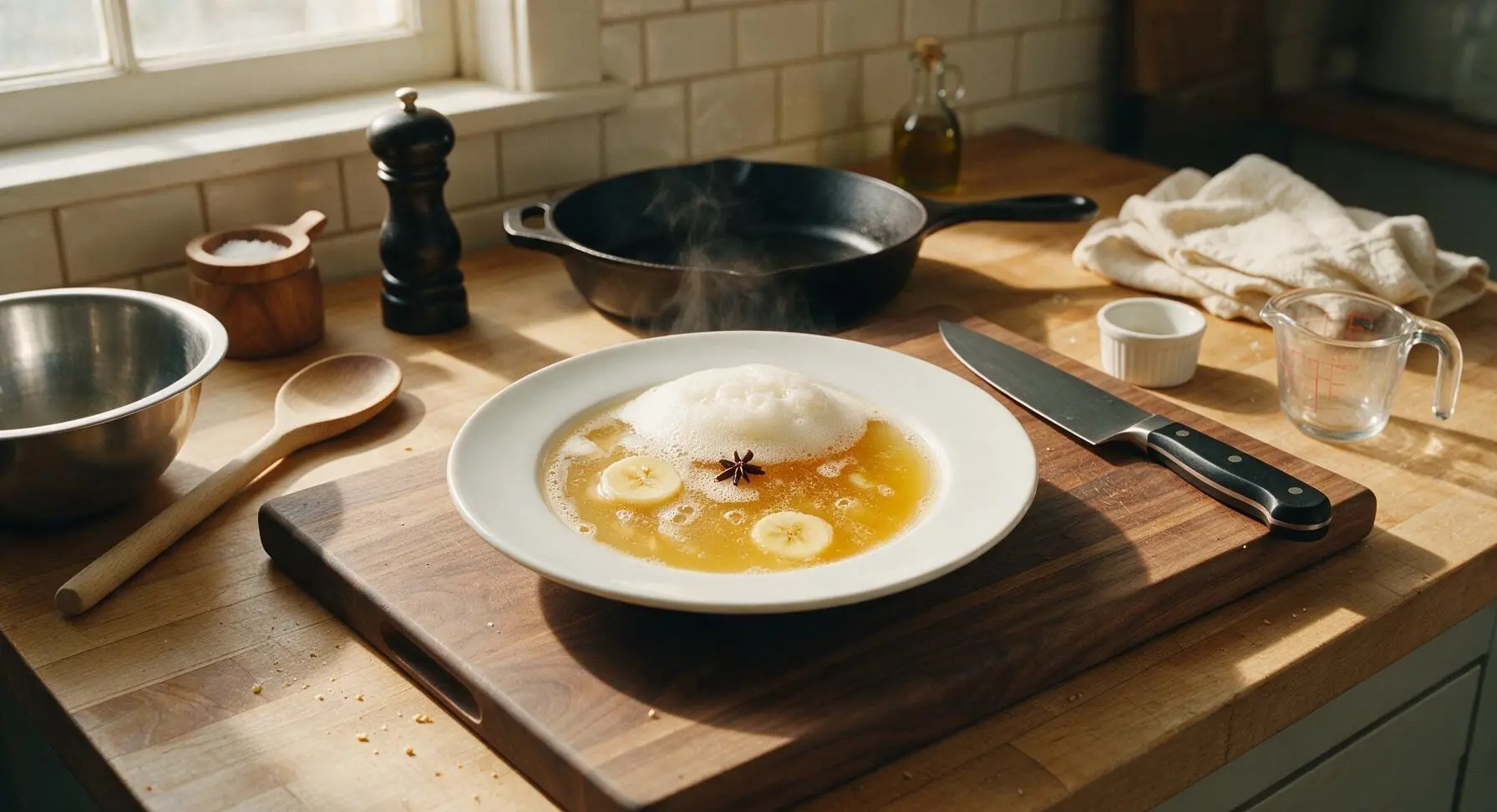
Traditional cloudy golden Bavarian wheat beer with bright banana and clove notes, creamy carbonation, and a fluffy white head, perfect for warm summer sipping.

Ingredients
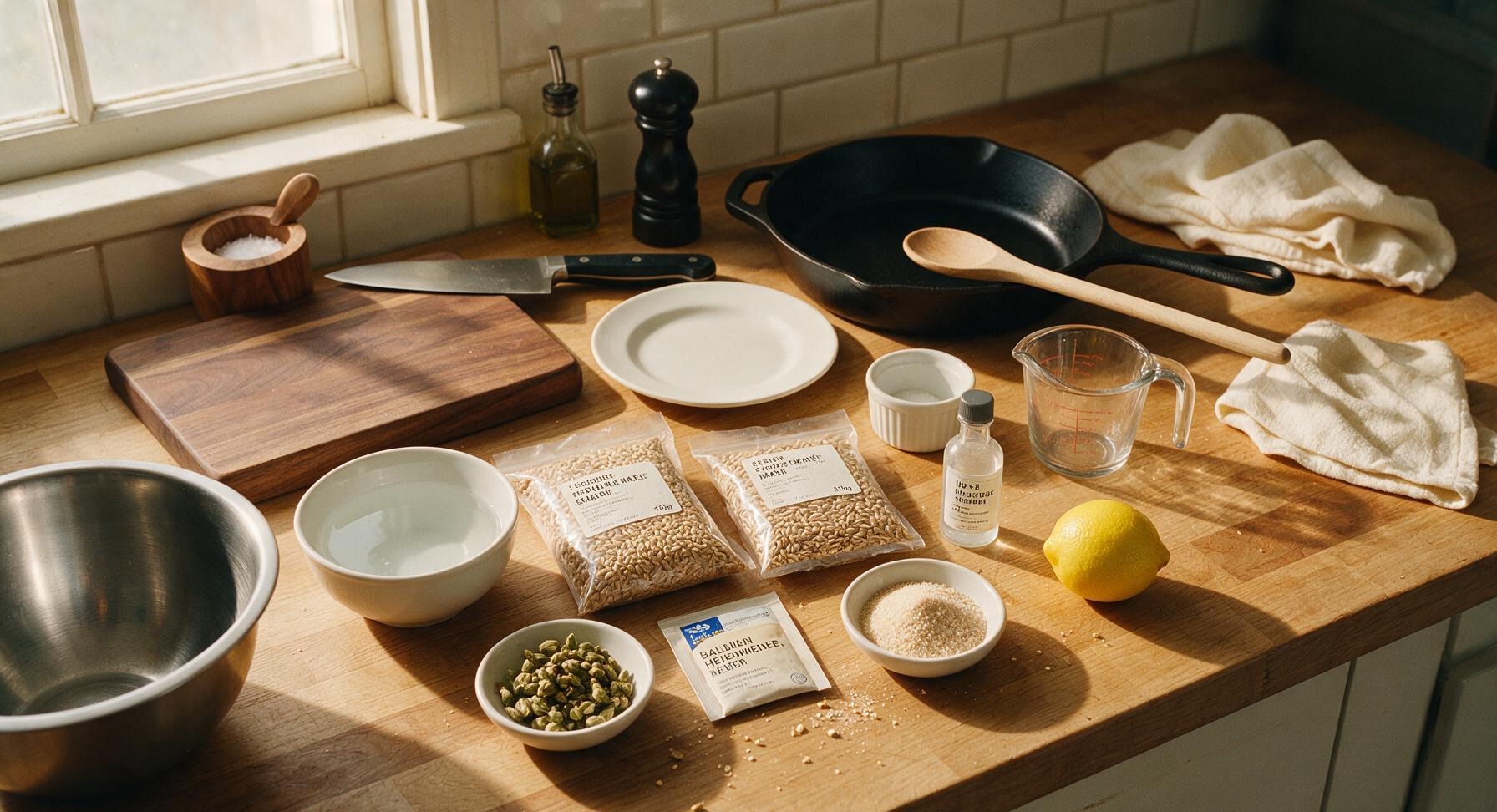
Filtered cold water 1.5 gallons
Light dry wheat malt extract 450g (1lb)
Light dry pilsner malt extract 225g (8oz)
Hallertau whole leaf hops 14g (0.5oz)
Bavarian hefeweizen ale yeast 11g (1 packet)
Corn priming sugar 55g (2oz)
No-rinse brewing sanitizer 15ml (1 tbsp)
Fresh lemon 1 whole

Steps

1

Sanitize Brewing Equipment

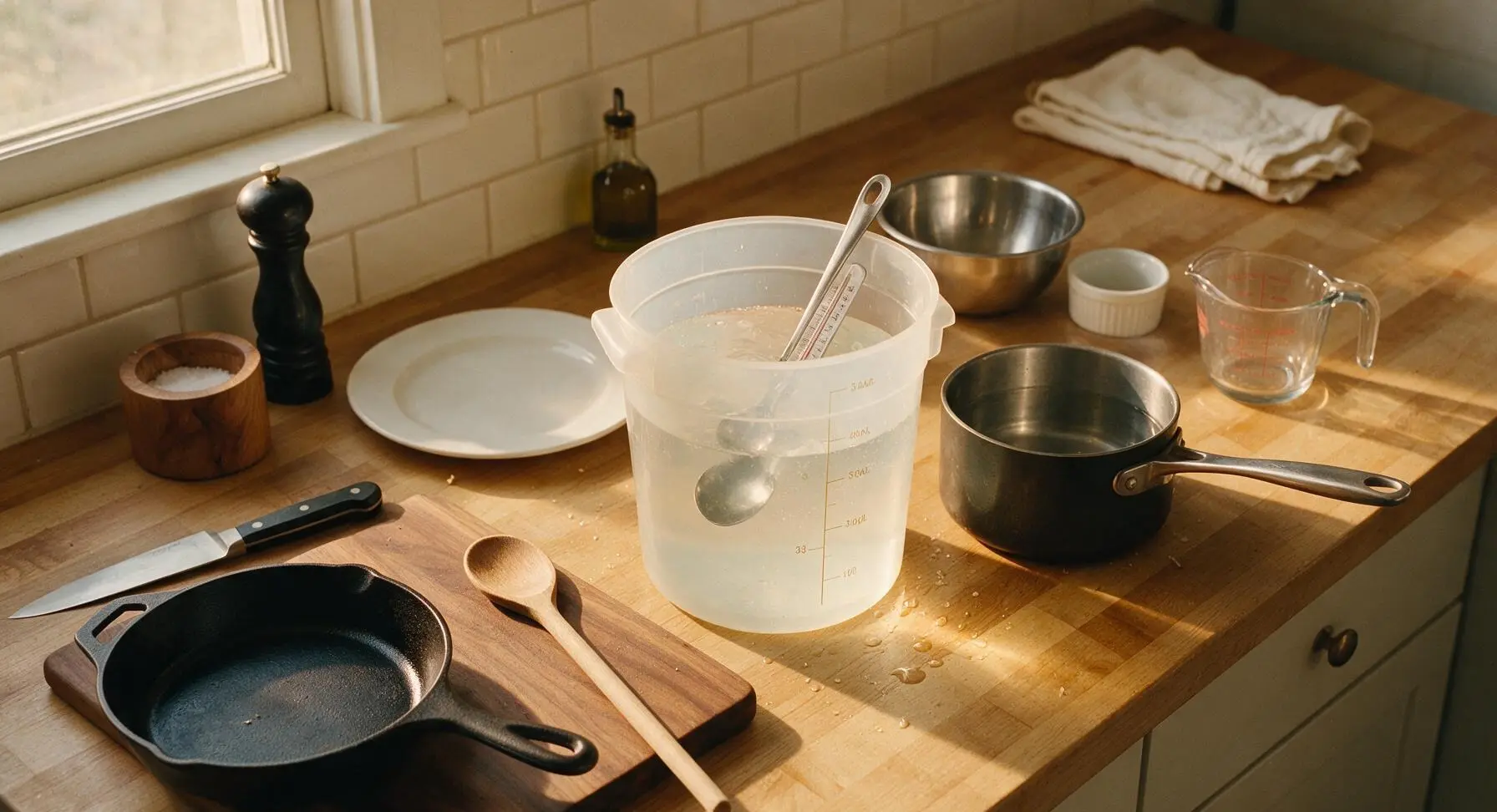
Mix 1 tablespoon no-rinse brewing sanitizer with 1 gallon of cold filtered water in the 3-gallon sanitizing bucket. Submerge the stock pot, stirring spoon, thermometer, strainer, fermentation jug, airlock, and auto-siphon in the solution for 60 seconds. Remove items and let air dry on the counter; do not wipe with a towel, as this introduces bacteria. All surfaces that will touch cooled wort must be fully sanitized to prevent off-flavors.
Step 1
step1:Sanitize Brewing Equipment
2

Heat the Wort Base

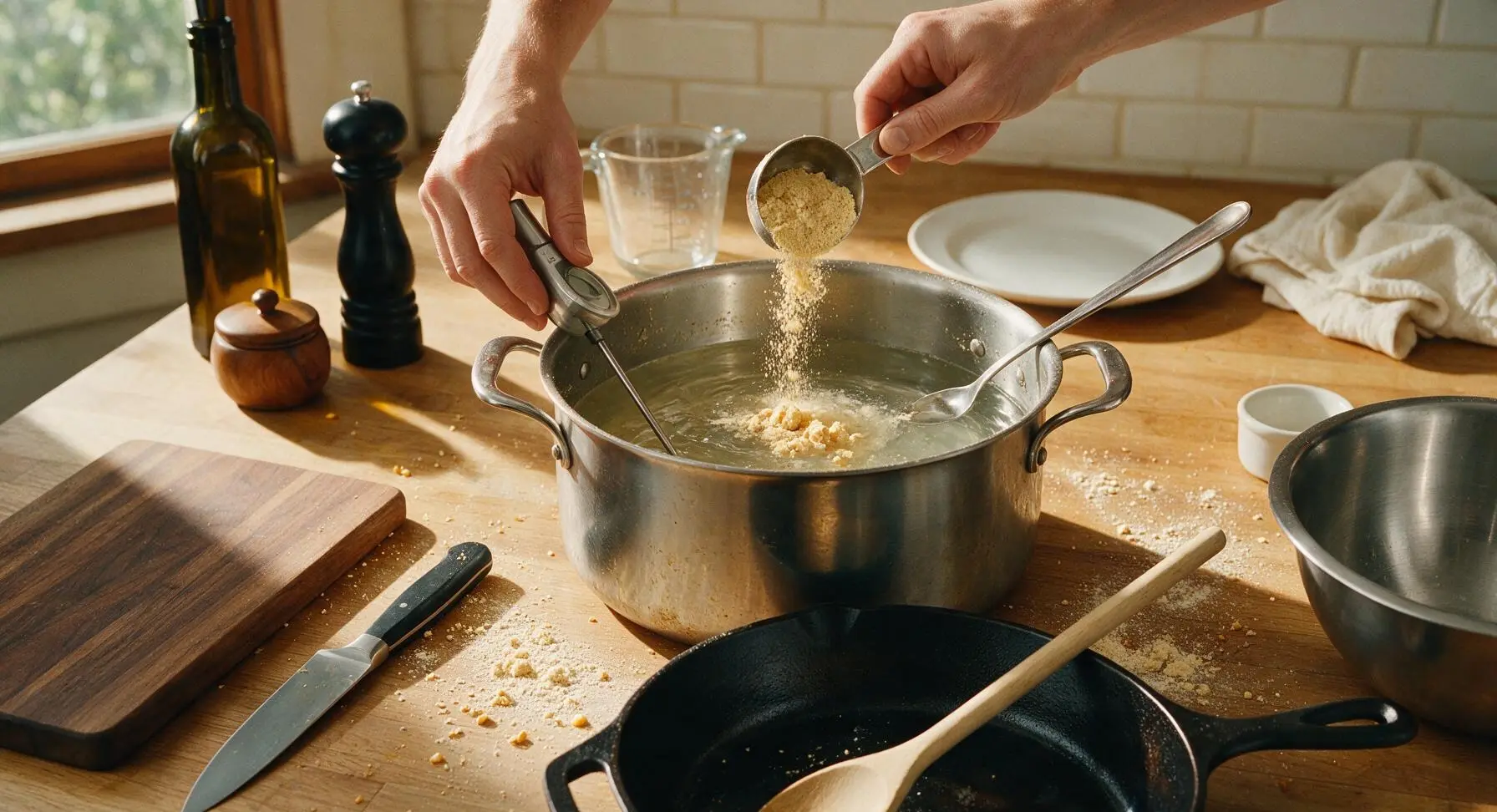
Pour 0.5 gallons of filtered cold water into the sanitized 8-quart stainless steel stock pot, set over medium-high heat. When the water reaches 160°F (71°C) as measured by the clipped digital thermometer, slowly stir in both the wheat malt extract and pilsner malt extract with the stainless steel stirring spoon until fully dissolved with no remaining clumps. Bring the wort (malt-water mixture) to a gentle rolling boil, adjusting heat as needed to avoid sticky boilovers.
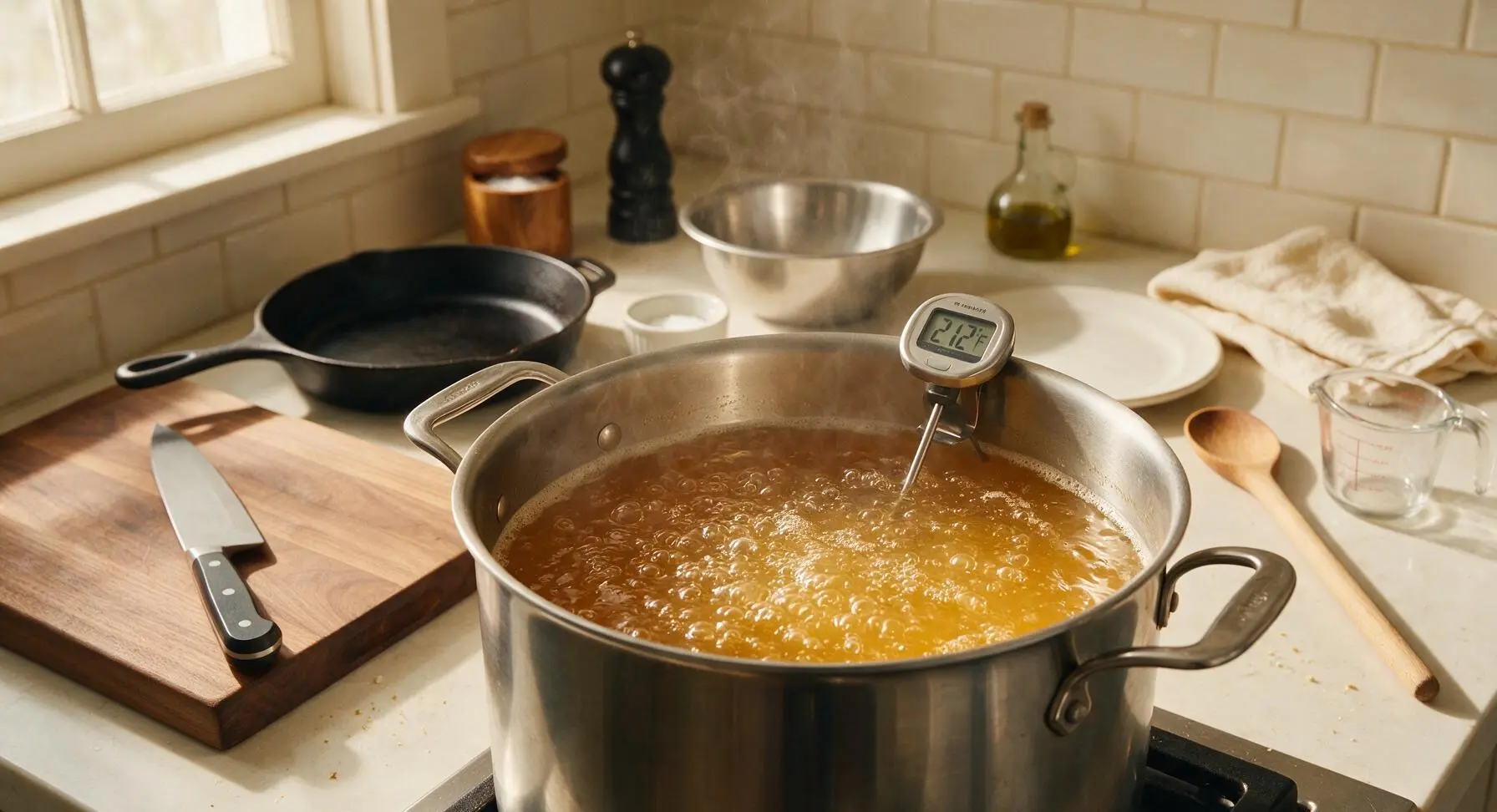
Step 2
step2:Heat the Wort Base
Step 2
step2:Heat the Wort Base
3

Add Hallertau Hops

Once the wort reaches a steady rolling boil, add 10g (0.35oz) of the Hallertau hops to the pot. Set a timer for 45 minutes, maintaining a gentle rolling boil for the full duration, stirring occasionally with the stainless steel spoon to prevent scorching on the pot bottom. Keep the pot lid slightly ajar to let steam escape and reduce boilovers.
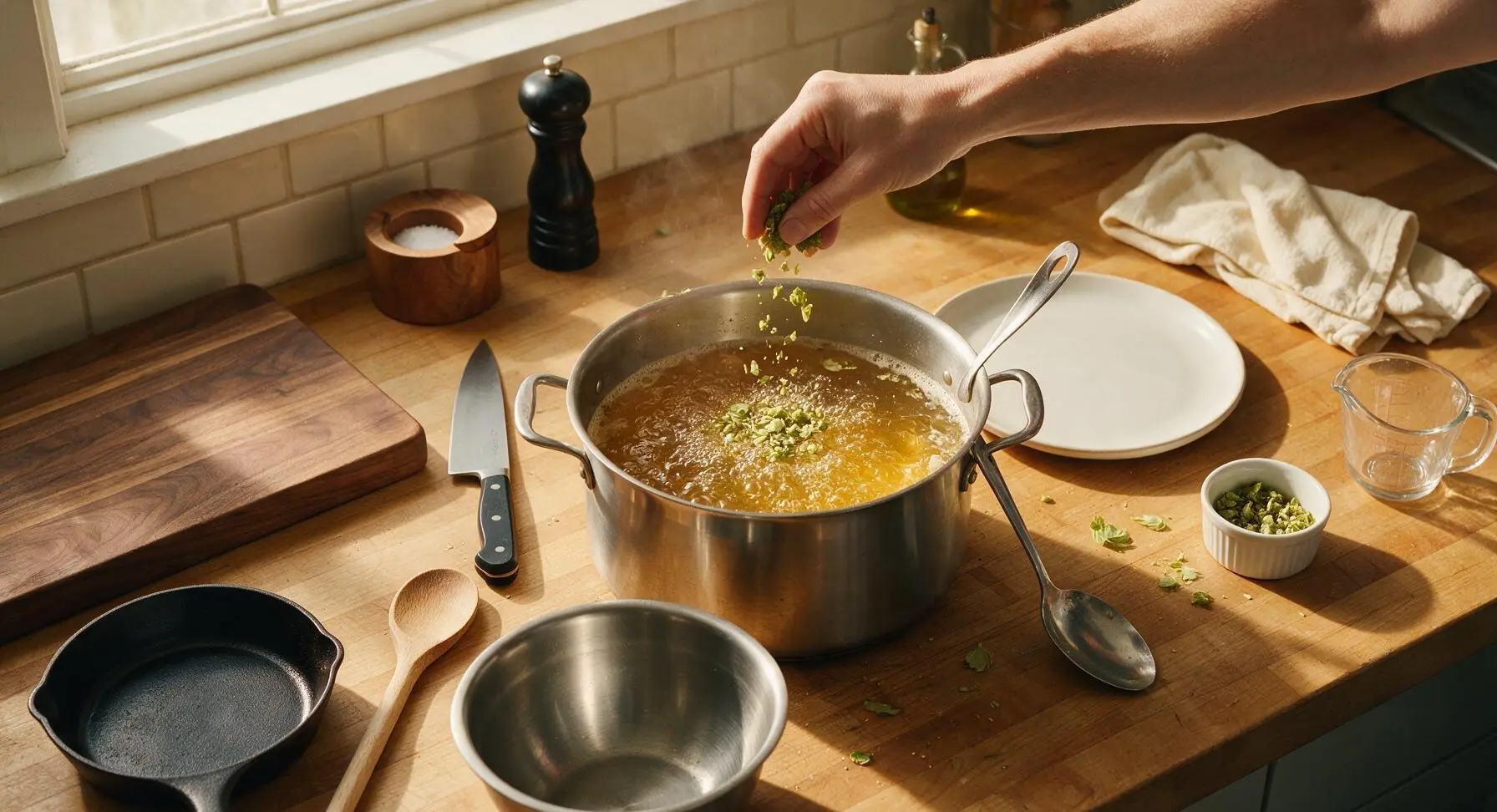
Step 3
step3:Add Hallertau Hops
4

Cool and Strain Wort

After the 45-minute boil completes, turn off heat, add the remaining 4g (0.15oz) of Hallertau hops for bright floral aroma, and let steep for 5 minutes. Set the stock pot in a sink of ice water to cool the wort to 70°F (21°C) as quickly as possible (within 20 minutes) to reduce contamination risk. Pour the cooled wort through the fine nylon mesh strainer into the sanitized 1-gallon glass fermentation jug, then top off with extra filtered cold water to reach the etched 1-gallon volume mark.
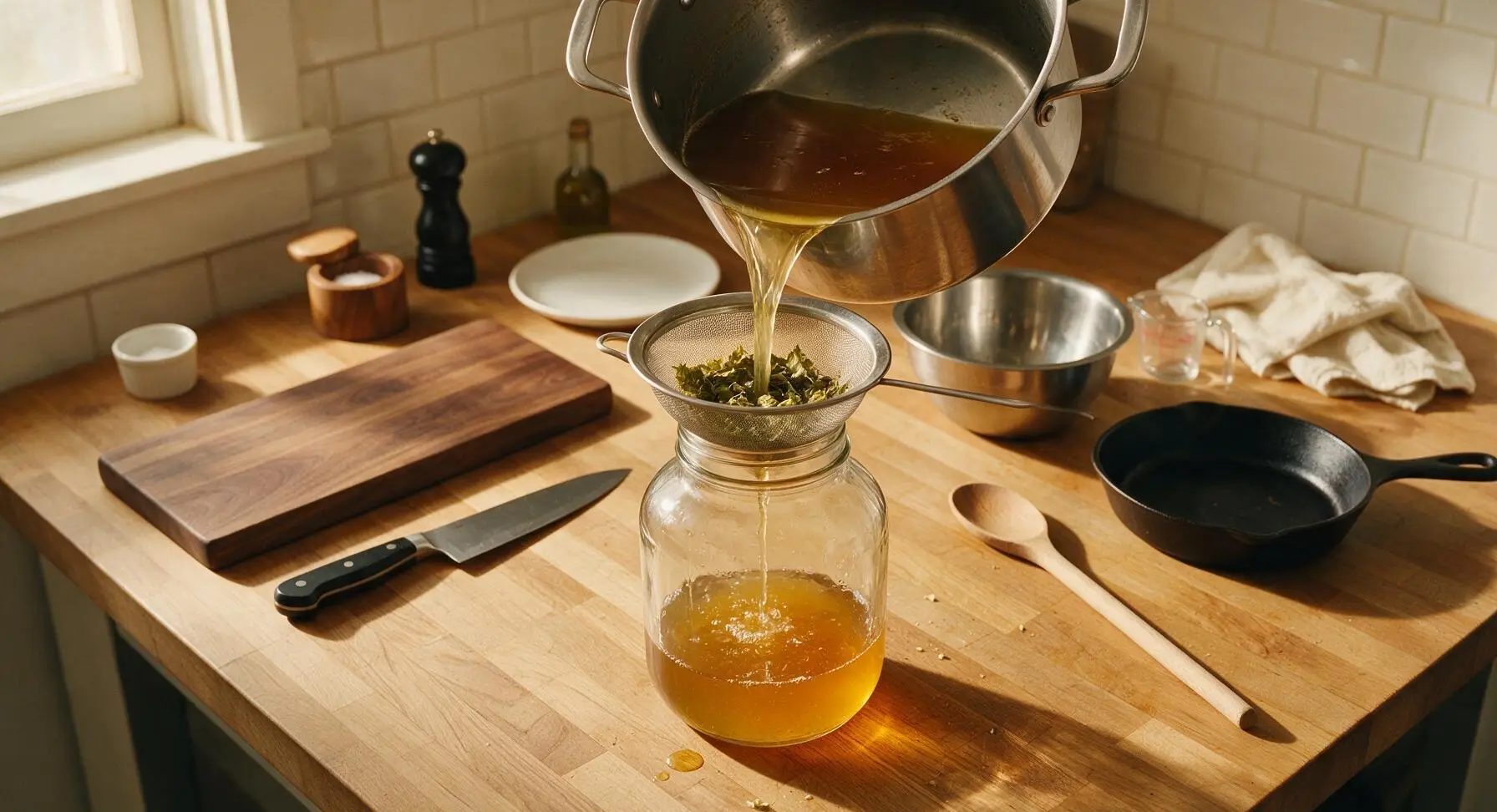
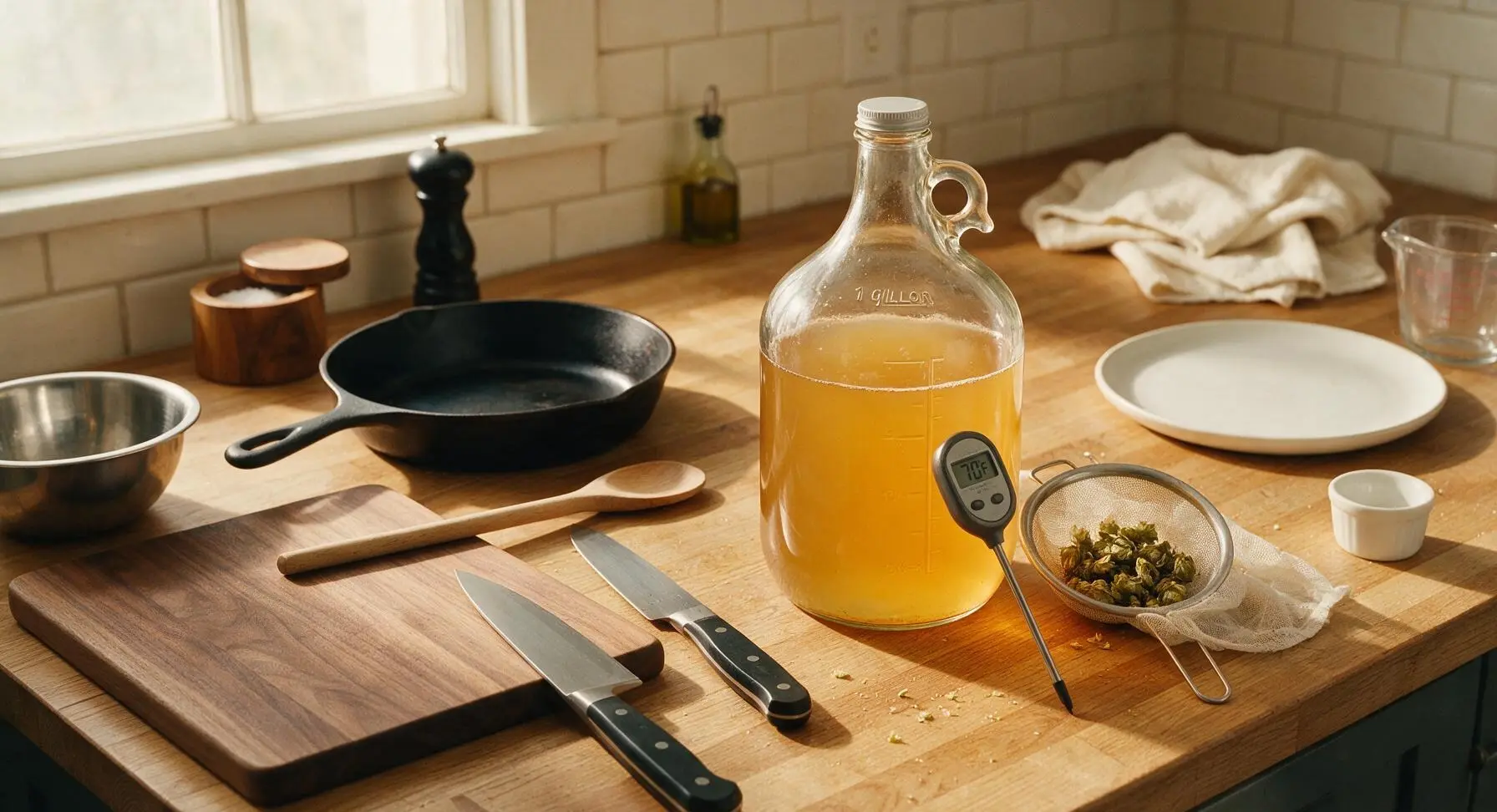
Step 4
step4:Cool and Strain Wort
Step 4
step4:Cool and Strain Wort
5

Pitch Yeast and Seal

Sprinkle the full 11g packet of Bavarian hefeweizen yeast evenly across the surface of the cooled 70°F wort in the fermentation jug; do not stir initially. Fit the rubber stopper and 3-piece airlock into the jug mouth, then fill the airlock halfway with sanitizer solution to let fermentation gas escape while blocking airborne contaminants. Move the jug to a dark, temperature-stable spot held at 65-68°F (18-20°C) for primary fermentation.
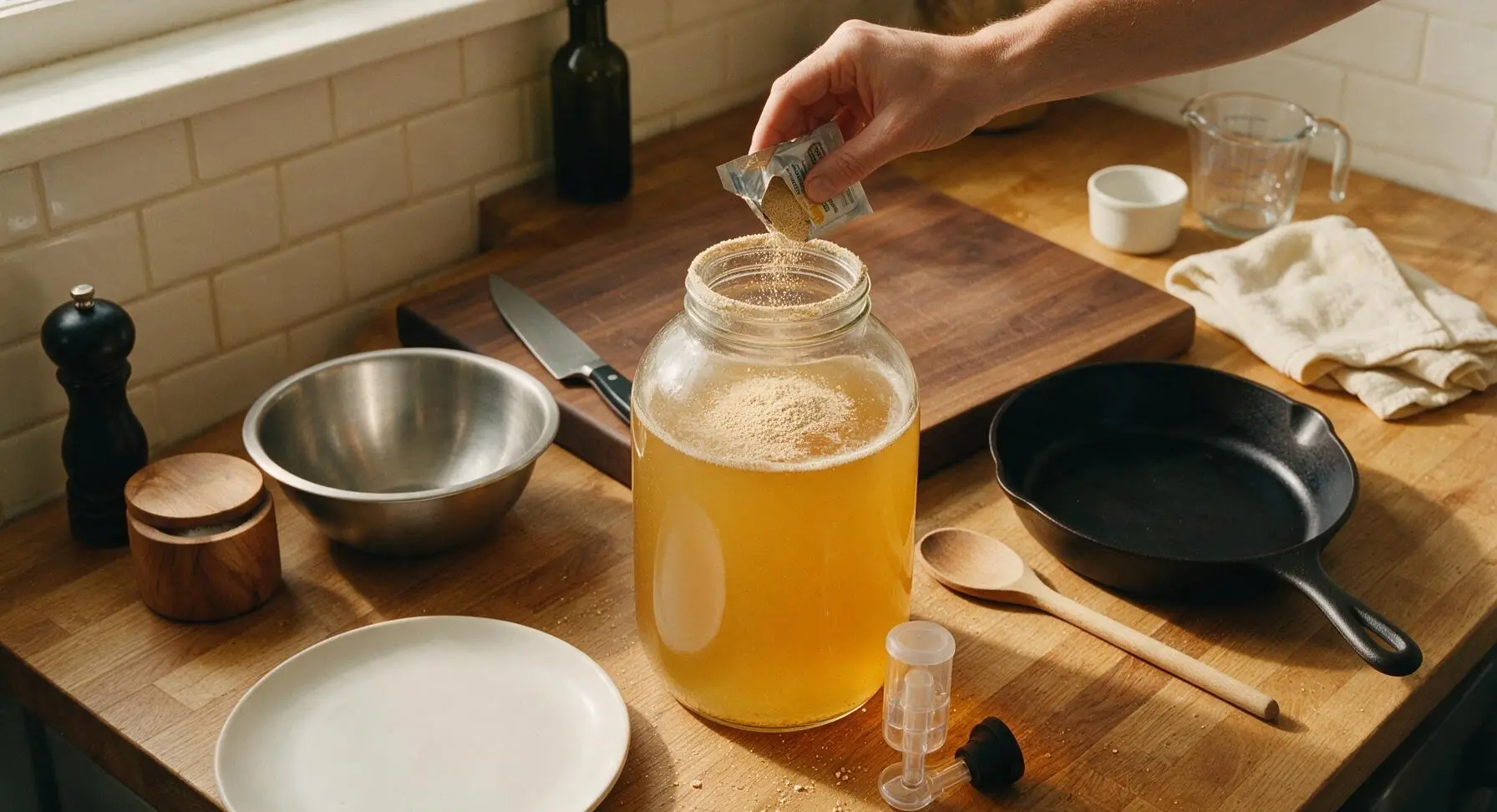
Step 5
step5:Pitch Yeast and Seal
6

Monitor Primary Fermentation

Check the airlock daily: steady bubbling will start within 24-48 hours as yeast converts sugar to alcohol and carbon dioxide, signaling active fermentation. Let the beer ferment undisturbed for 14 days at 65-68°F, until airlock bubbling stops completely, the beer clarifies slightly, and a thick layer of pale tan yeast sediment settles firmly at the bottom of the jug.
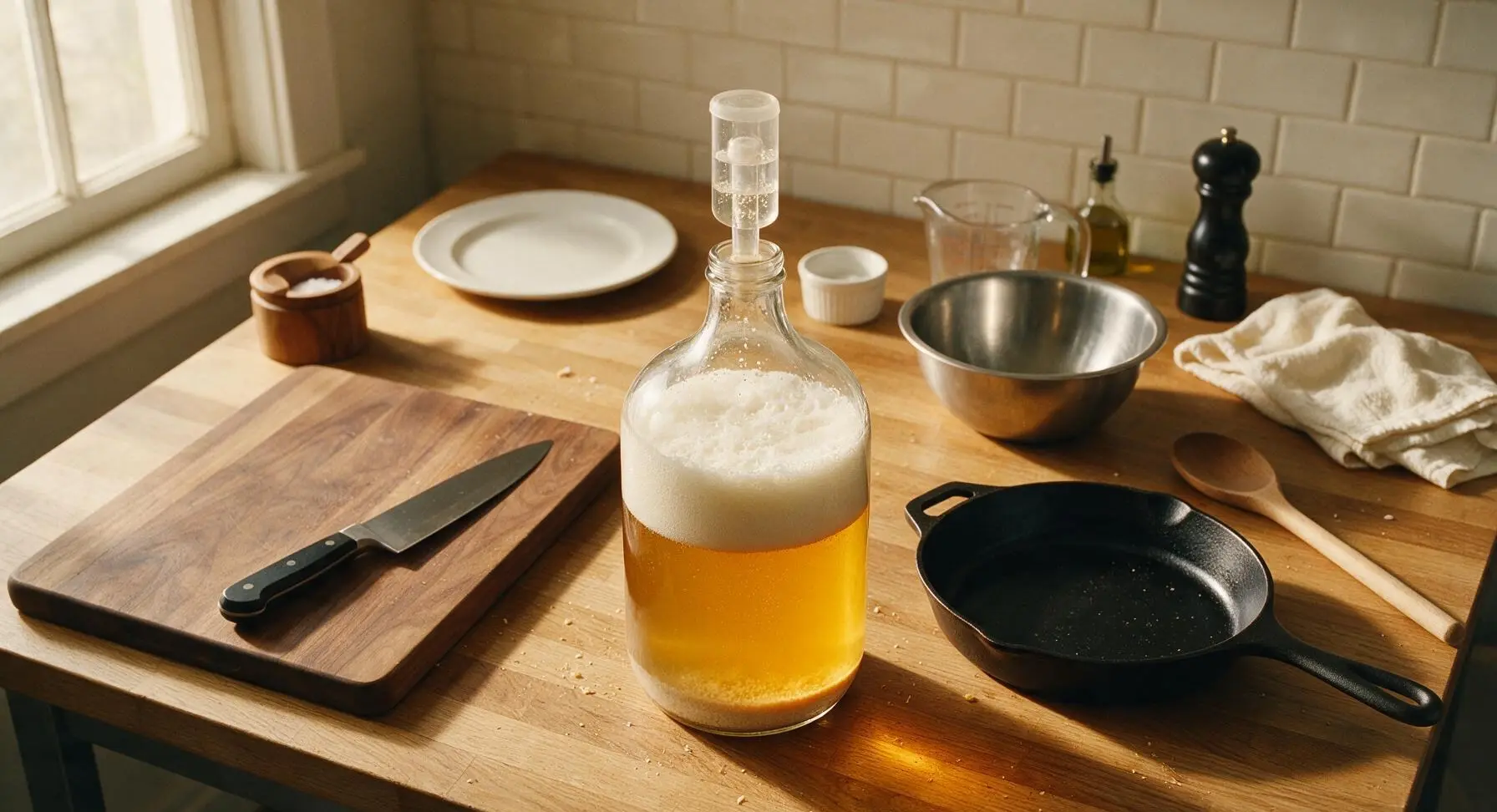
Step 6
step6:Monitor Primary Fermentation
7

Bottle to Carbonate

Once fermentation finishes, dissolve 55g (2oz) of corn sugar in 60ml (1/4 cup) of boiling water, cool to 70°F, and pour into the fermentation jug, swirling gently to mix without splashing (to avoid oxidation). Use the food-grade auto-siphon and tubing to transfer the beer into sanitized 12oz glass bottles, leaving 2.5cm (1 inch) of headspace at the top of each bottle, then cap tightly. Store bottles at 65-68°F for 7 days to build natural carbonation, then move to the refrigerator to chill for 3 days before serving.
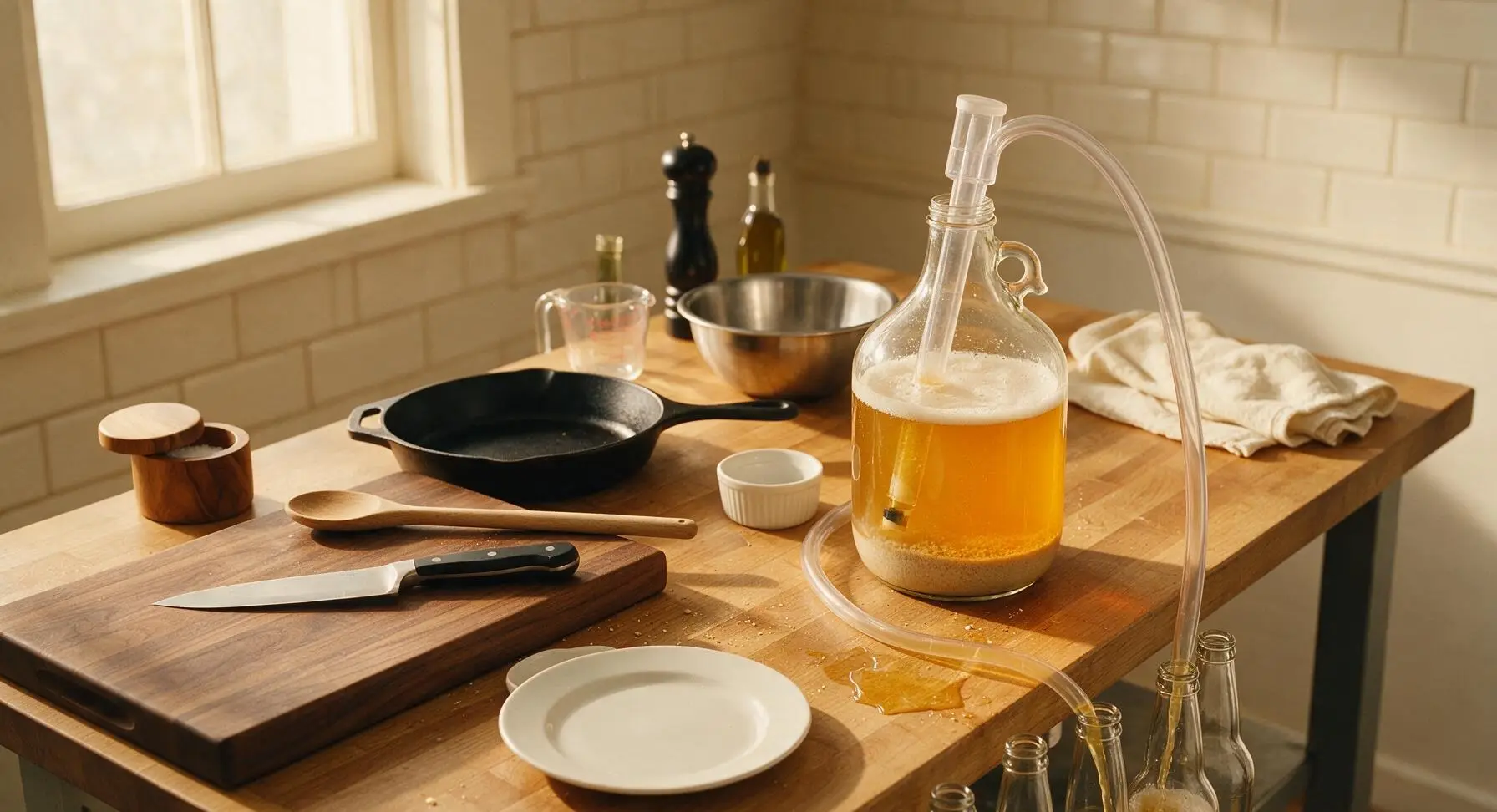
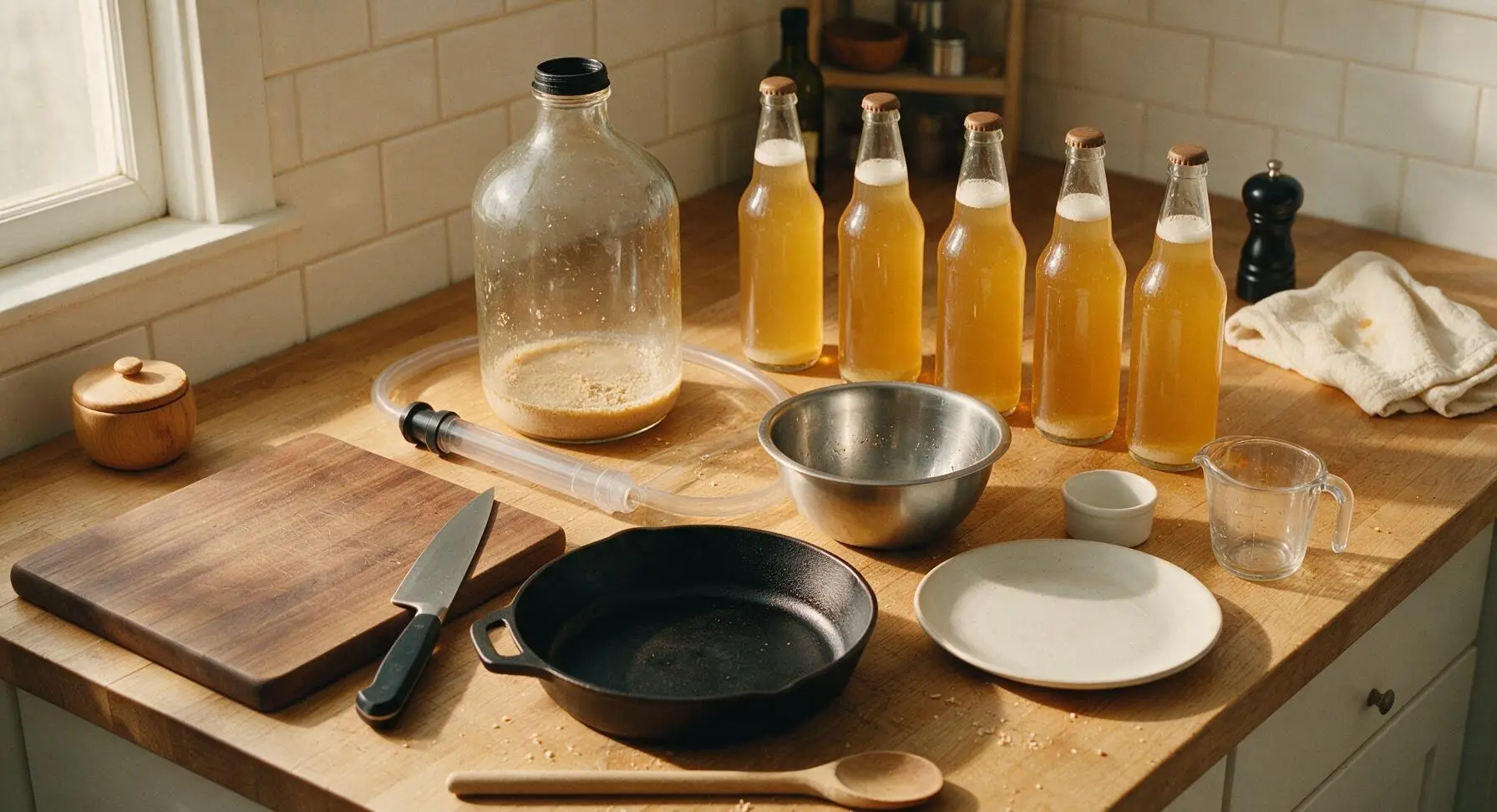
Step 7
step7:Bottle to Carbonate
Step 7
step7:Bottle to Carbonate
8

Pour and Garnish

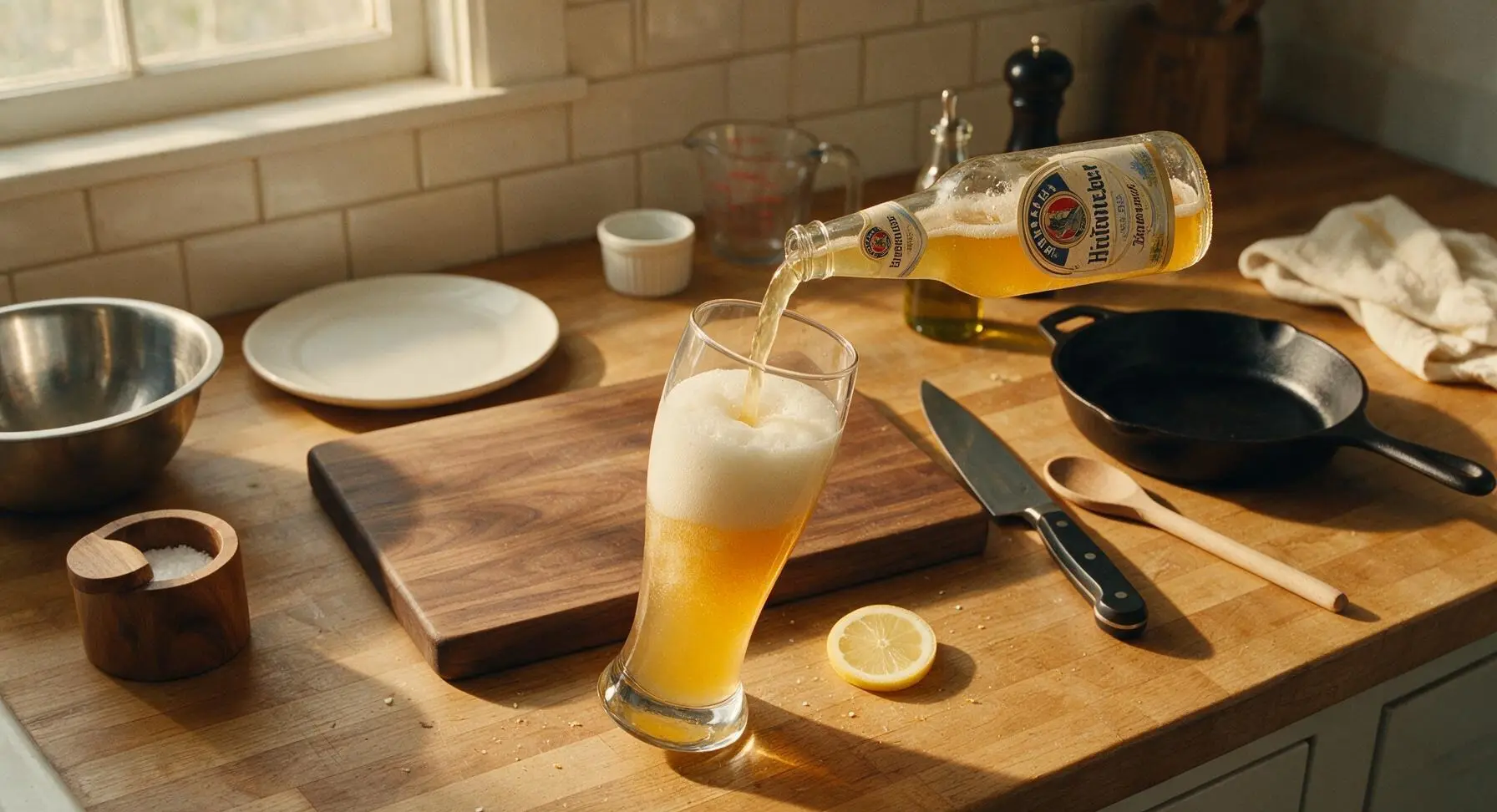
When ready to serve, chill bottles to 4°C (40°F). Hold the 500ml Weizen glass at a 45-degree angle, pouring beer slowly down the glass side until it is 2/3 full, then tilt the glass upright and pour the remaining beer in a steady stream to build a thick, fluffy 5cm (2 inch) foam head. Garnish with a thin slice of fresh lemon on the rim, if desired.
Step 8
step8:Pour and Garnish

Tips

1.Hold fermentation steady at 65-68°F: Temperatures above 70°F will produce harsh, solvent-like off-flavors, while temperatures below 62°F will stall yeast activity and reduce the signature banana and clove ester notes that define traditional Hefeweizen.
2.Avoid splashing cooled wort or finished beer: Introducing oxygen after active fermentation starts causes stale, cardboard-like off-flavors, so siphon and pour gently to minimize aeration throughout the bottling process.
3.Skip filtering your finished beer: The signature cloudy appearance of Hefeweizen comes from suspended wheat proteins and yeast, which add to its smooth, bready mouthfeel; the small amount of yeast transferred to bottles also enables natural carbonation.


✨ You May Also Like

Drinks & Beverages
🍜 Mexico

A bright, balanced tequila-based cocktail with zesty fresh lime, smooth orange liqueur, and a signature salt rim, perfect for warm summer sipping.

⏱️ 5 minutesDrinks & Beverages ★ 4.9
Drinks & Beverages
🍜 United States

Thick, creamy, nostalgic classic vanilla milkshake with a rich, smooth texture, topped with whipped cream and a cherry for cool, sweet refreshment.

⏱️ 5 minutesDrinks & Beverages ★ 4.7
Drinks & Beverages
🍜 United States

A bright, golden strong ale with fruity banana-clove notes, subtle hop spice, and soft carbonation, brewed in classic Trappist Tripel tradition.

⏱️ 2 hours aDrinks & Beverages ★ 4.5
Drinks & Beverages
🍜 United States

A frothy, nostalgic American soda fountain treat pairing bubbly cold root beer with creamy vanilla ice cream, perfect for cooling down at warm weather gatherings.

⏱️ 20 minuteDrinks & Beverages ★ 4.8
Drinks & Beverages
🍜 United States

Tart, funky, effervescent American Wild Ale is a complex fruity craft beer brewed with wild yeast, delivering bright, zesty notes perfect for warm-weather sipping.

⏱️ 2 hours aDrinks & Beverages ★ 4.4
Drinks & Beverages
🍜 United States

Bright, bubbly copycat of the iconic American caramel cola, balanced with citrus and warm spice, perfect for sipping ice-cold on hot days.

⏱️ 15 minuteDrinks & Beverages ★ 4.8

Hefeweizen:Frequently Asked Questions

1.Can I use regular tap water instead of filtered cold water for this hefeweizen recipe? ▾
Filtered cold water is ideal because tap water often has chlorine or chloramine that can create plastic-like, medicinal off-flavors that overpower hefeweizen’s delicate banana and clove notes. If you only have tap water, leave it out uncovered for 24 hours or run it through a carbon filter first to remove those problematic compounds before brewing.
2.Why isn’t my homemade hefeweizen cloudy like the traditional Bavarian versions I’ve tried? ▾
That iconic haze comes from suspended wheat proteins and hefeweizen yeast, not a brewing mistake! Skip clarifying agents like Irish moss, avoid over-filtering, and don’t rapidly chill (cold crash) your batch for more than 24 hours before bottling. Bottle conditioning with a small amount of priming sugar will keep that perfect soft, cloudy golden appearance.
3.How do I get those classic banana and clove notes without adding actual fruit or spice? ▾
Those signature flavors come entirely from the Bavarian hefeweizen ale yeast, no add-ins needed! Ferment at 62–68°F for the first three days, then let the temperature rise to 72°F to finish fermentation. Too cold leads to overpowering clove, too warm creates harsh, solvent-like off-flavors instead of smooth banana.
4.Can I substitute pellet hops for the Hallertau whole leaf hops in this recipe? ▾
Absolutely, though whole leaf Hallertau adds a softer, more delicate noble hop character. If using pellets, use 20% less by weight, since pellets are more concentrated, to match the mild, floral, slightly spicy hop profile that lets wheat and yeast notes take center stage—this is not a style you want to over-hop.
5.Do I really need wheat malt extract, or can I use all pilsner malt extract instead? ▾
The light dry wheat malt extract is non-negotiable for that classic soft, bready, fluffy mouthfeel and signature haze that defines hefeweizen. An all-pilsner extract batch will make a nice crisp golden ale, but it will lack wheat beer’s signature creaminess. If you’re short on wheat extract, aim for at least 50% wheat to stay true to the style.
6.Why does my hefeweizen always gush and overflow when I open a bottle? ▾
Gushing is almost always from over-priming at bottling, or bottling before fermentation is fully complete. Hefeweizen has higher natural carbonation (2.5–3 volumes of CO2) than many ales, so stick to 3/4 cup of corn sugar per 5-gallon batch for priming, and confirm final gravity is stable for two straight days before bottling.
7.How long should I let my hefeweizen condition before drinking it for the best flavor? ▾
Unlike heavy, hoppy, or high-alcohol beers that need long aging, hefeweizen is best enjoyed young! Let bottles condition at room temperature for 10–14 days to build carbonation, then chill for 2–3 days before drinking. After 3 months, the bright banana and clove notes will start to fade, so skip long-term cellaring for this batch.
8.What’s the right way to pour a traditional hefeweizen to get that fluffy white head without waste? ▾
Start by rinsing a tall weizen glass with cold water (skip soap, which leaves residue that kills head retention). Tilt the glass 45 degrees and pour 3/4 of the beer slowly, then swirl the remaining beer in the bottle to rouse settled yeast, and pour straight in to top off that thick, pillowy white head.
9.My last hefeweizen had weird green apple off-flavors—what went wrong? ▾
Those sharp green apple notes are acetaldehyde, a common fermentation byproduct that pops up when you rush fermentation or keep temperatures too low. Pitch enough healthy yeast, hold temps in the recommended 62–72°F range, and let the beer rest on the yeast for 2–3 days after hitting final gravity to let it clean up those off-flavors before bottling.

Comments (14)

2 days ago

OMG, this turned out SO good! I’ve tried 3 other hefeweizen recipes before and they always came out too bitter, but this one has that perfect banana/clove balance I’ve been chasing. Brought a growler to my neighborhood cookout last weekend and people were begging for the recipe. Game changer for my homebrew setup!

yesterday

So stoked to hear this was a hit at your cookout, Jake! That classic banana/clove ester profile is all about controlling fermentation temp around 68°F if you want to nail it consistently next batch.

3 days ago

Wait, medium difficulty? As a total homebrew newbie I was nervous to tackle this, but the step-by-step for the mash was so easy to follow! My only hiccup was I forgot to add the late wheat malt addition at first, but I caught it 5 minutes in. How long do you usually let this condition in the bottle before it’s ready to drink?

2 days ago

I let mine sit for 2 full weeks in the bottle at room temp and it was perfect! Tried one at 1 week and it was way too flat, don’t rush it like I did 😂

2 days ago

Great save catching that malt addition, Sarah! Rob is spot on—2 weeks of bottle conditioning at 70-72°F gives you that perfect fluffy head and carbonation. If you can hold out for 3 weeks, the flavor gets even smoother!

1 week ago

Brewed this for our annual backpacking trip kickoff potluck and it was chef’s kiss! Super refreshing after a long day of trail maintenance, not too heavy, that classic hefeweizen tang went so good with the brats and potato salad everyone brought. Will absolutely be adding this to my regular brew rotation.

5 days ago

Idk if I messed up the fermentation temp but mine came out with way more banana notes than I expected? Not mad about it, just curious if that’s normal for this recipe? My roommate said it tastes exactly like the hefeweizen we had at that beer garden in Milwaukee last summer so that’s a win in my book.

3 days ago

Banana notes mean your fermentation temp was a touch higher than the recommended 68, that’s all! I actually prefer it that way, tastes way more authentic to the small Bavarian breweries I visited a few years back.

yesterday

Okay, the 1 hour cook time is no joke! I blocked off a whole afternoon thinking this would take forever, but the active work was actually super straightforward. My only question: can I substitute a portion of the wheat malt for white wheat if I don’t have enough pale wheat on hand?

2 hours ago

I did a 50/50 split of pale and white wheat on my last batch and it turned out great! Just a tiny bit softer mouthfeel, no weird off flavors at all.

30 minutes ago

Great question! You can absolutely swap in up to 30% white wheat without throwing off the recipe, just hold off on going higher than that or you might end up with a stuck mash. Glad the cook time didn’t catch you off guard!

2 weeks ago

Brewed this during that crazy 115 degree heatwave we had last month, had to rig up a swamp cooler for my fermentation chamber to keep the temp steady. Ended up being the best batch I’ve ever made! My whole family raved about it at our Fourth of July cookout, even my brother who only drinks IPAs had two glasses.

1 week ago

That swamp cooler hack is legendary, nice work troubleshooting the heat! It’s so funny how even dedicated IPA fans can’t resist a perfectly made hefeweizen on a hot summer day.

1 week ago

I don’t even homebrew that often but I pulled this out for my book club’s summer garden party and everyone thought I bought it from a fancy local brewery! Served it with lemon wedges and soft pretzels, total vibe. 10/10, will make again for our next gathering.

5 days ago

Wait, has anyone tried dry hopping this with a little Hallertau? I love the traditional profile but I’m curious if a tiny hop addition would add a nice little extra layer, or if that would ruin the classic flavor.

3 days ago

I added a half ounce of Hallertau at flameout on my last batch and it was chef’s kiss! Super subtle, didn’t overpower the banana/clove at all, just added a little bright earthy note.

2 days ago

Great experiment idea! If you do add hops, stick to noble varieties like Hallertau or Tettnang and keep additions light so you don’t cover up that iconic hefeweizen yeast character. Would love to hear how it turns out if you try it!

1 week ago

Made this for my office potluck last week and it was gone in 20 minutes flat! People kept coming back asking if I had any hidden growlers stashed in my car. Only note: next time I’m definitely making a double batch, one batch is nowhere near enough for a crowd.

5 days ago

Same! I made a single batch for my husband’s birthday BBQ and we ran out before half the guests even arrived. Double batch is non-negotiable for groups, lesson learned the hard way 😂

2 weeks ago

This recipe is so solid. I’ve been brewing for 8 years and I’m always tweaking recipes, but I followed this one exactly for a competition last month and took 2nd place in the wheat beer category! The judge specifically called out the perfect balance of esters and malt sweetness, which I’ve never nailed on a hefe before.

30 minutes ago

Help! I bottled this 3 days ago and I just noticed a couple of the bottles are leaking a little around the caps? Did I do something wrong? I followed the priming sugar measurement exactly, I swear!

5 minutes ago

Don’t panic! That usually means you didn’t get the caps crimped tight enough. If you have a bottle capper, you can re-crimp the loose ones now before they lose all their carbonation. I had the exact same thing happen on my first hefe batch!

just now

Ben is totally right! Leaky caps almost always come down to a loose crimp, not over-carbonation this early in conditioning. Re-cap those loose bottles gently, make sure your capper is adjusted correctly, and they’ll be just fine. Keep us posted how they turn out!

2 days ago

SO good! I’m used to drinking store-bought hefeweizen and this tastes way fresher, way more flavorful. Poured it into my favorite weizen glasses this weekend with a little orange slice (don’t @ me, I know traditional is lemon) and it was the perfect Sunday afternoon drink while we watched the game.

yesterday

No judgment on the orange slice—drink it however makes you happy! The best part of homebrewing is getting to tweak little details to match your own taste. So glad you enjoyed it!

3 days ago

I love that this recipe scales so easily! I brewed a 5-gallon batch last week to have on hand for impromptu hangouts all month, and it’s already half gone. My kids loved hanging out in the garage while I was mashing, saying the whole house smelled like warm fancy bread, which was such a silly, fun bonus.

2 weeks ago

Game changer! I’ve been chasing that authentic hefeweizen taste since I got back from my trip to Munich last fall, and this is dead on. The clove note is present but not overwhelming, the mouthfeel is perfectly fluffy, even my picky craft beer snob friend was impressed. 10/10, no notes.

1 week ago

Agreed! I’ve made this three times now and every single batch gets better. Tried it with the traditional lemon wedge and with a raspberry syrup add-in for a fruity twist, both slapped.



