
Helles Lager
intro
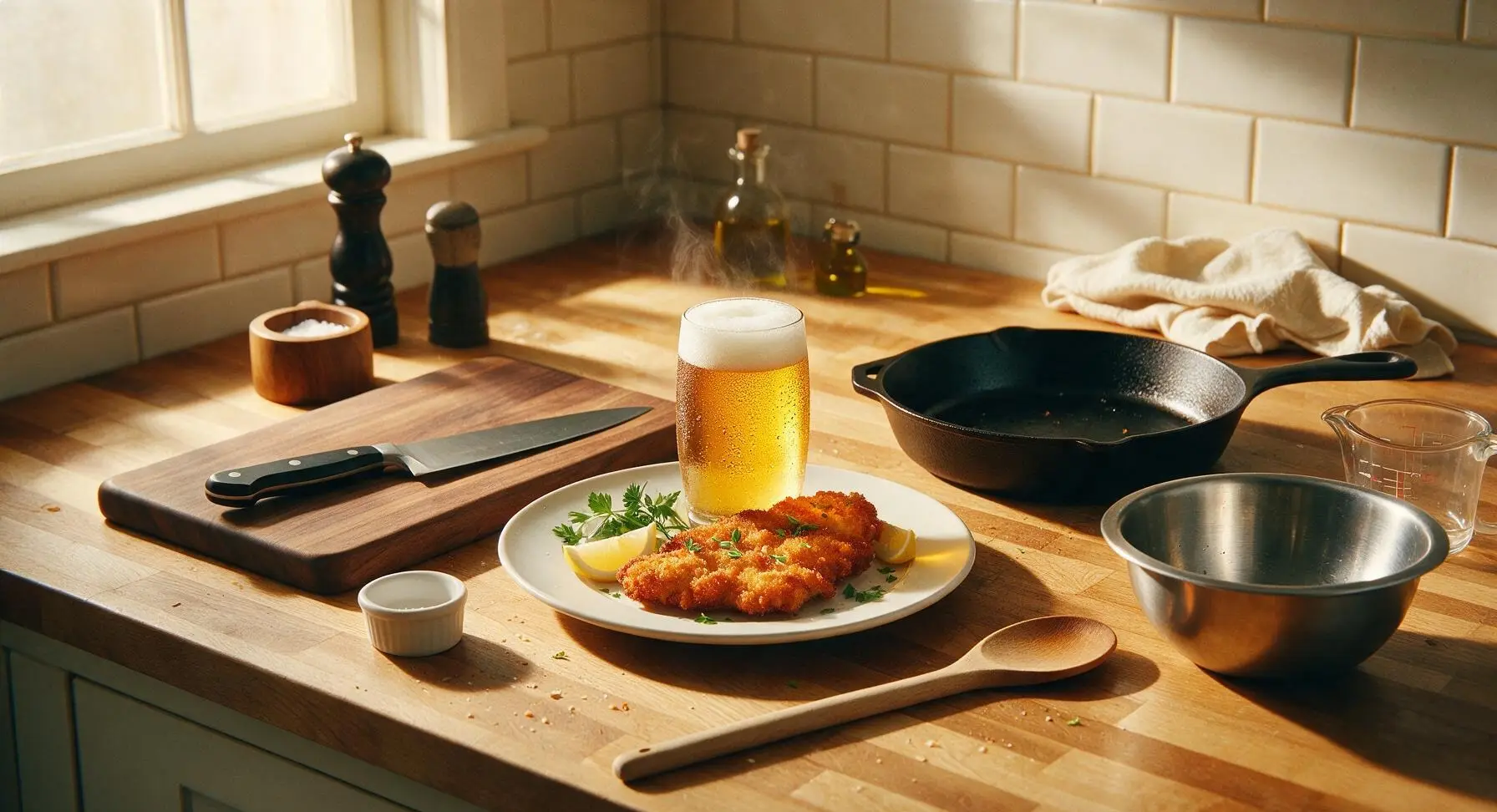
Crisp, golden Bavarian Helles Lager with soft bready malt notes, delicate floral hop balance, and a clean, smooth finish—best served ice-cold for warm weather sipping.
Ingredients
Steps
Sanitize All Equipment
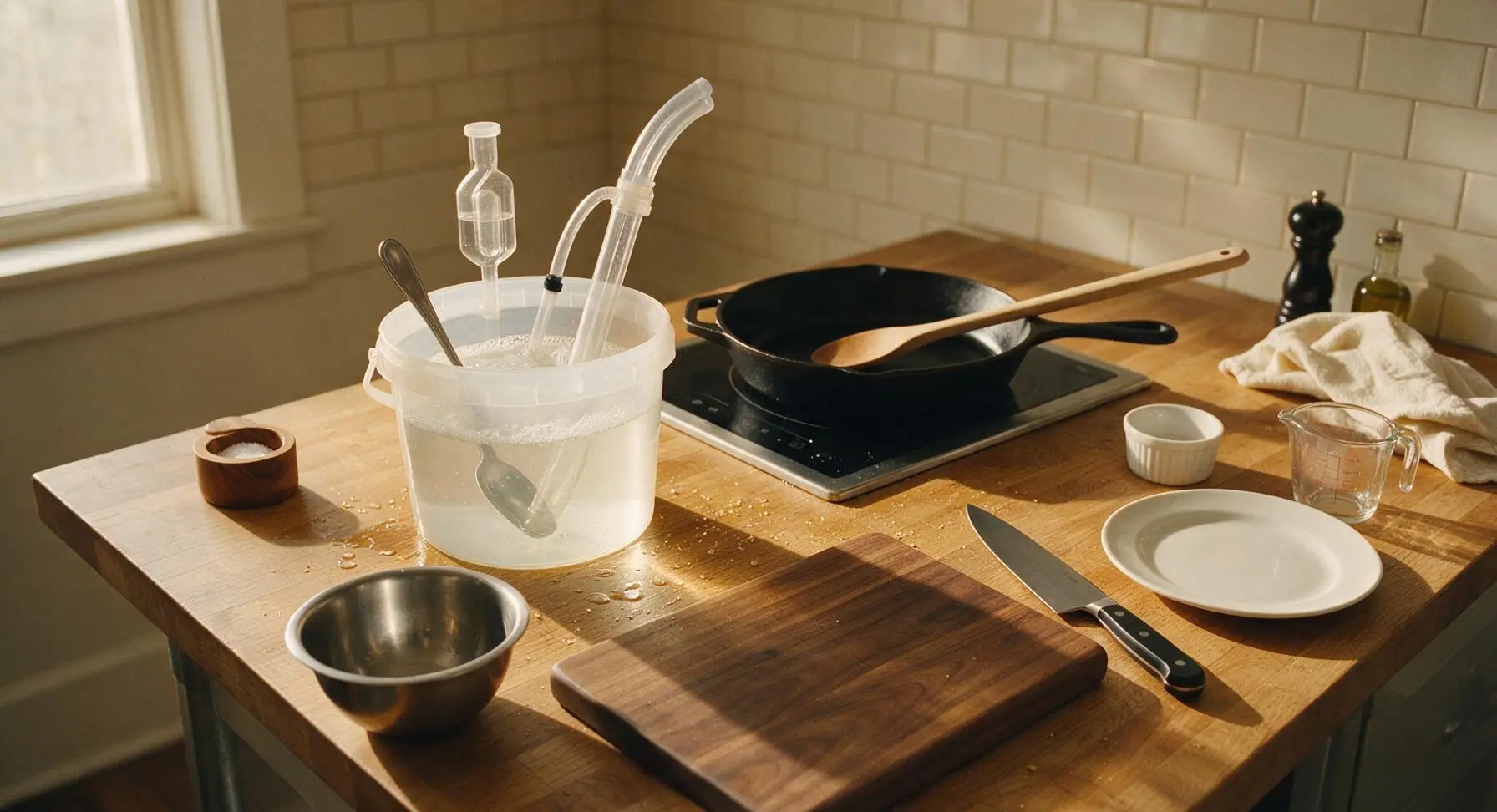
Fill the translucent white sanitizer bucket with 19 liters (5 gallons) of cool filtered water and mix in no-rinse brewing sanitizer per package instructions. Submerge all equipment that will contact cooled wort (stirring spoon, airlock, auto-siphon, carboy stopper, bottling bucket spigot, bottle caps) for 2 full minutes, then set pieces on a clean section of counter to air dry. Proper sanitization eliminates bacteria and wild yeast that cause sour or off-flavors.
Mash the Grain Bill
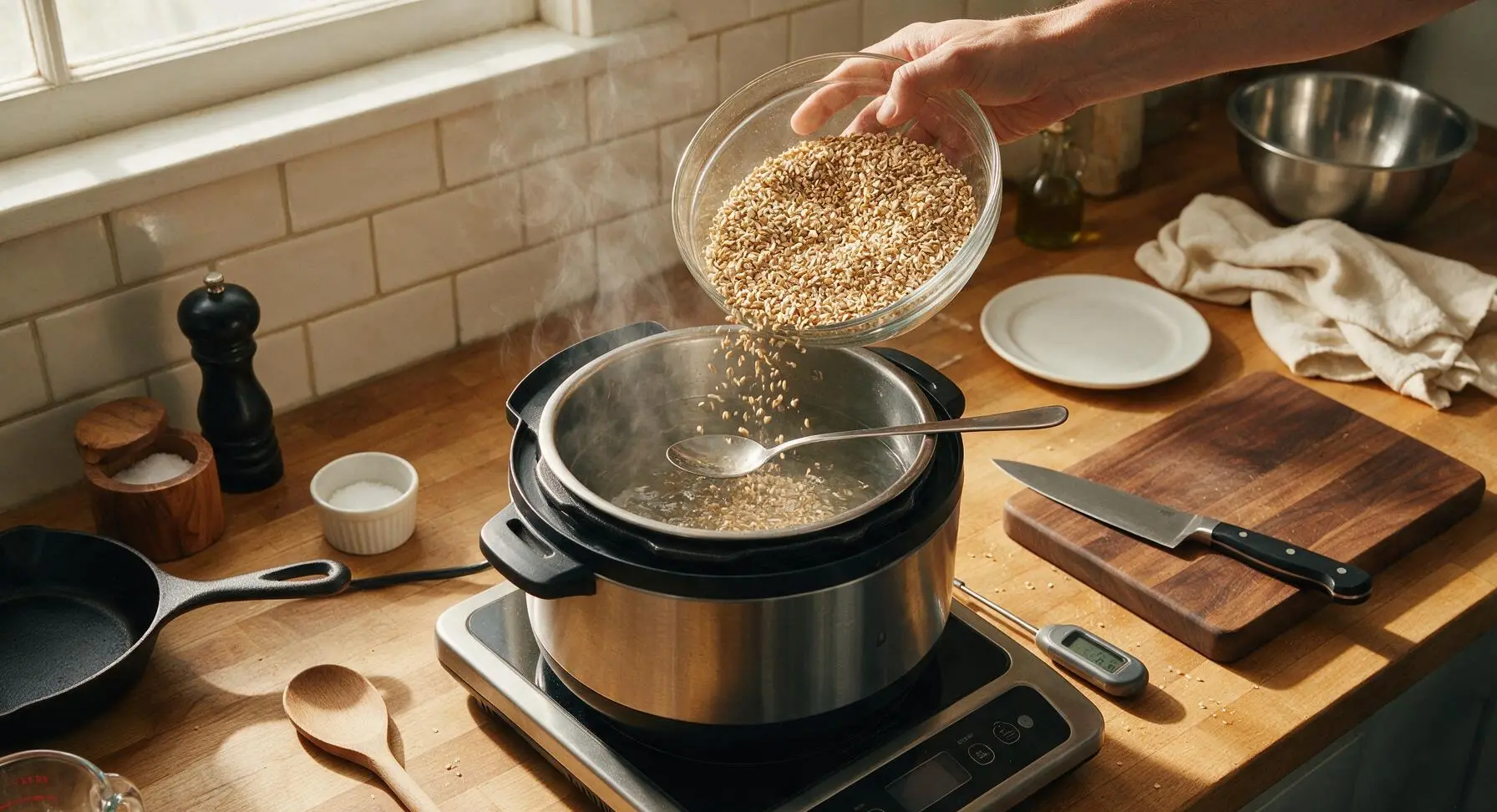
Heat 15 liters (4 gallons) of filtered water in the insulated mash tun on the induction burner to 67°C (153°F), verified with the digital instant-read thermometer. Slowly stir in all crushed Pilsner and Munich malt with the stainless steel stirring spoon, mixing thoroughly to break up any dry clumps of grain. Seal the mash tun lid and hold the temperature steady at 67°C for 60 minutes; a small sample of drained wort will taste sweet, bready, and pale golden when ready.
Lauter and Sparge Grains
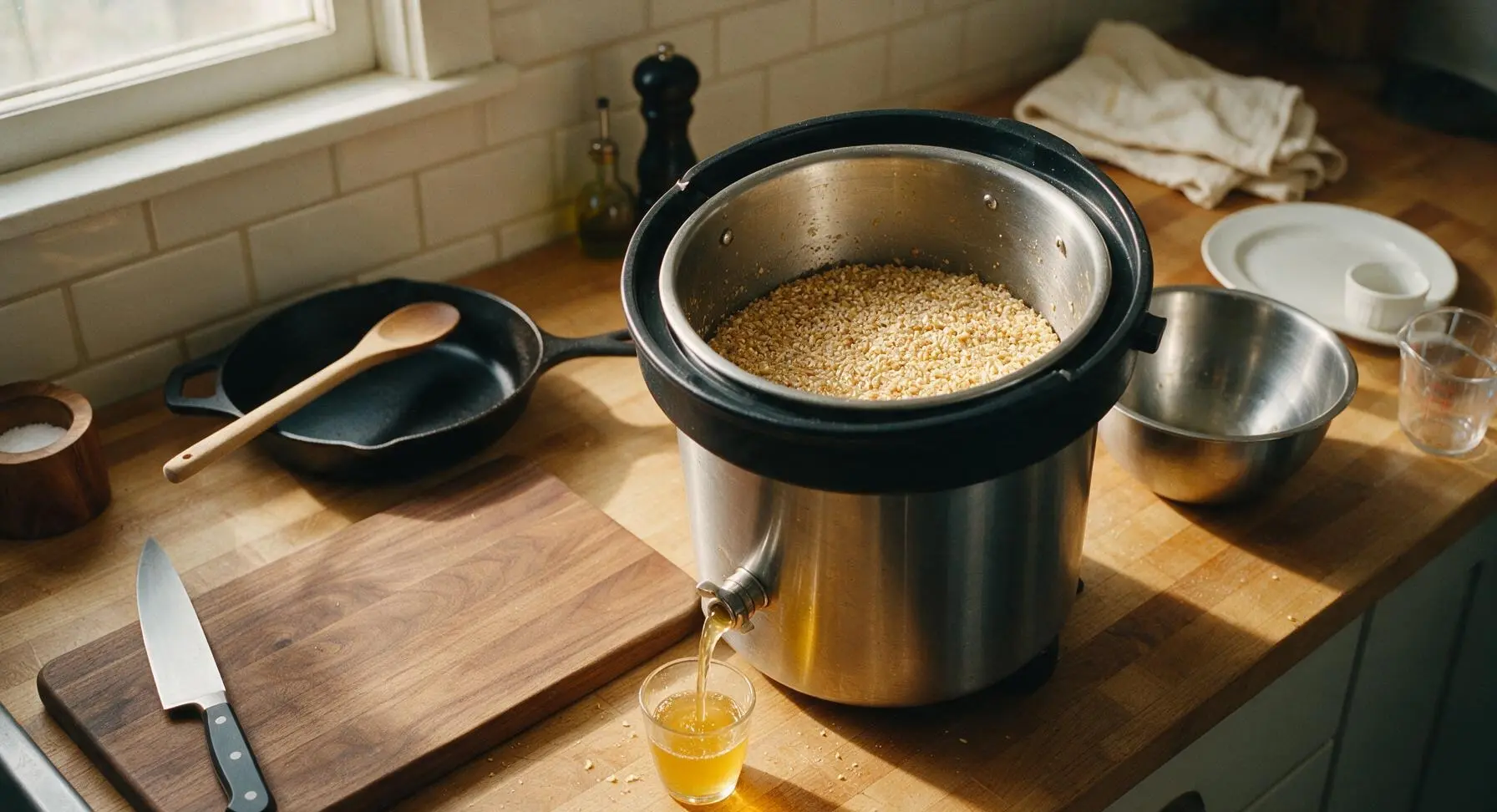
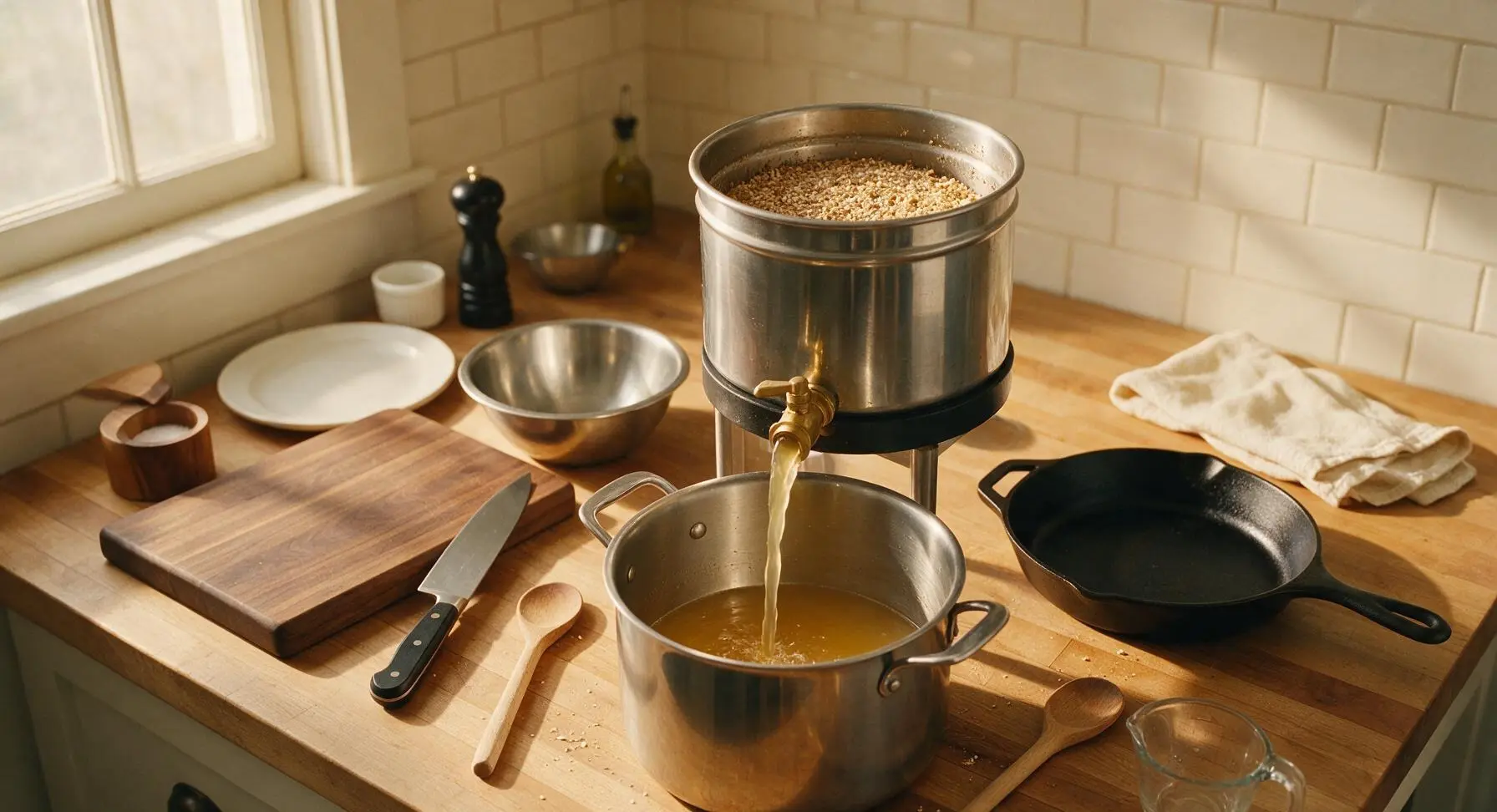
Elevate the mash tun on a small stand above the open brew kettle, then slowly open the spigot to drain the sweet initial wort into the kettle. Once the liquid level drops just above the grain bed, slowly pour 8 liters (2.1 gallons) of 77°C (170°F) filtered water over the grain bed to rinse residual sugars from the malt. Collect runoff until you have 21 liters (5.5 gallons) of total wort in the brew kettle.
Boil Wort and Add Hops
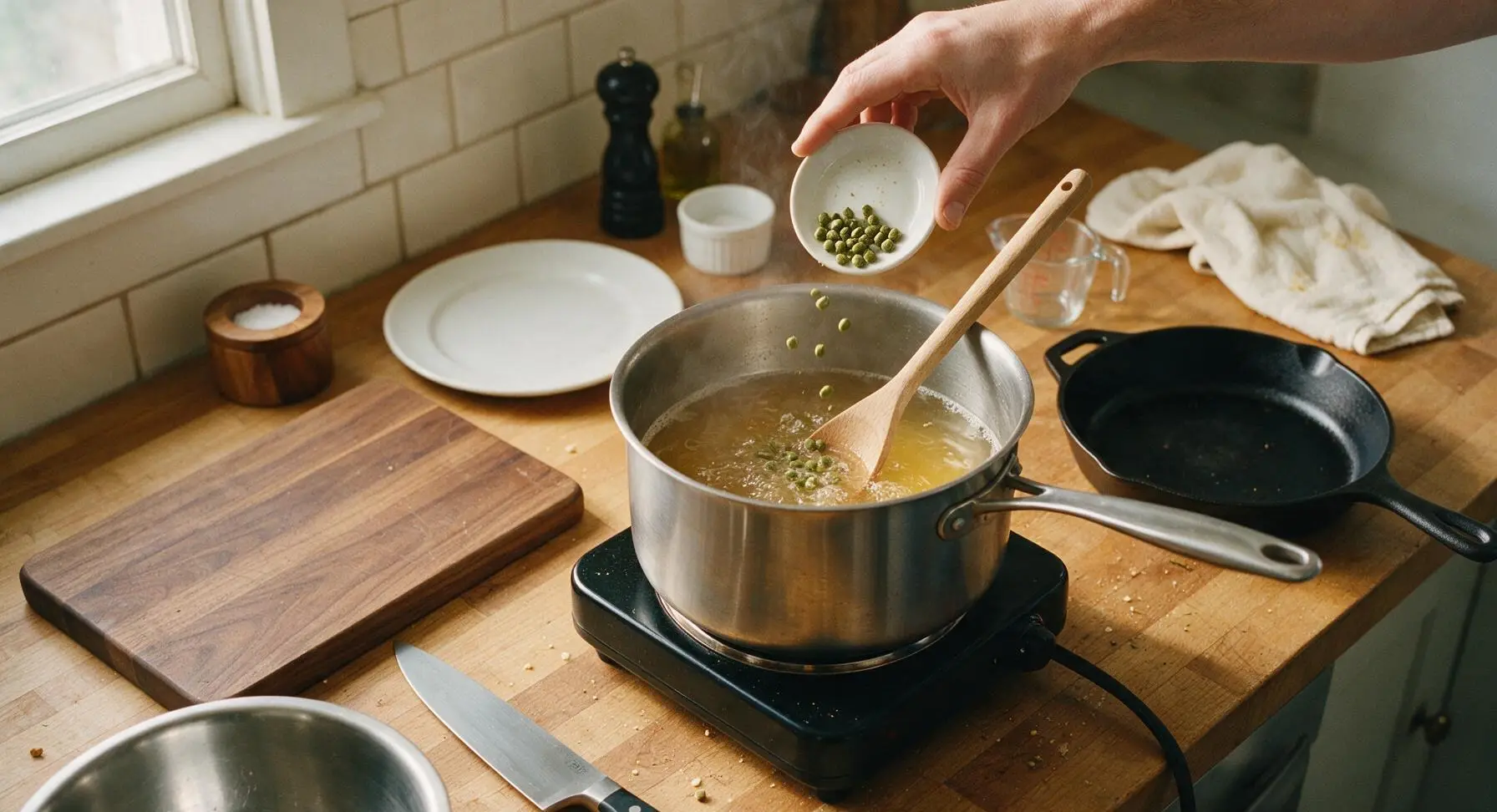
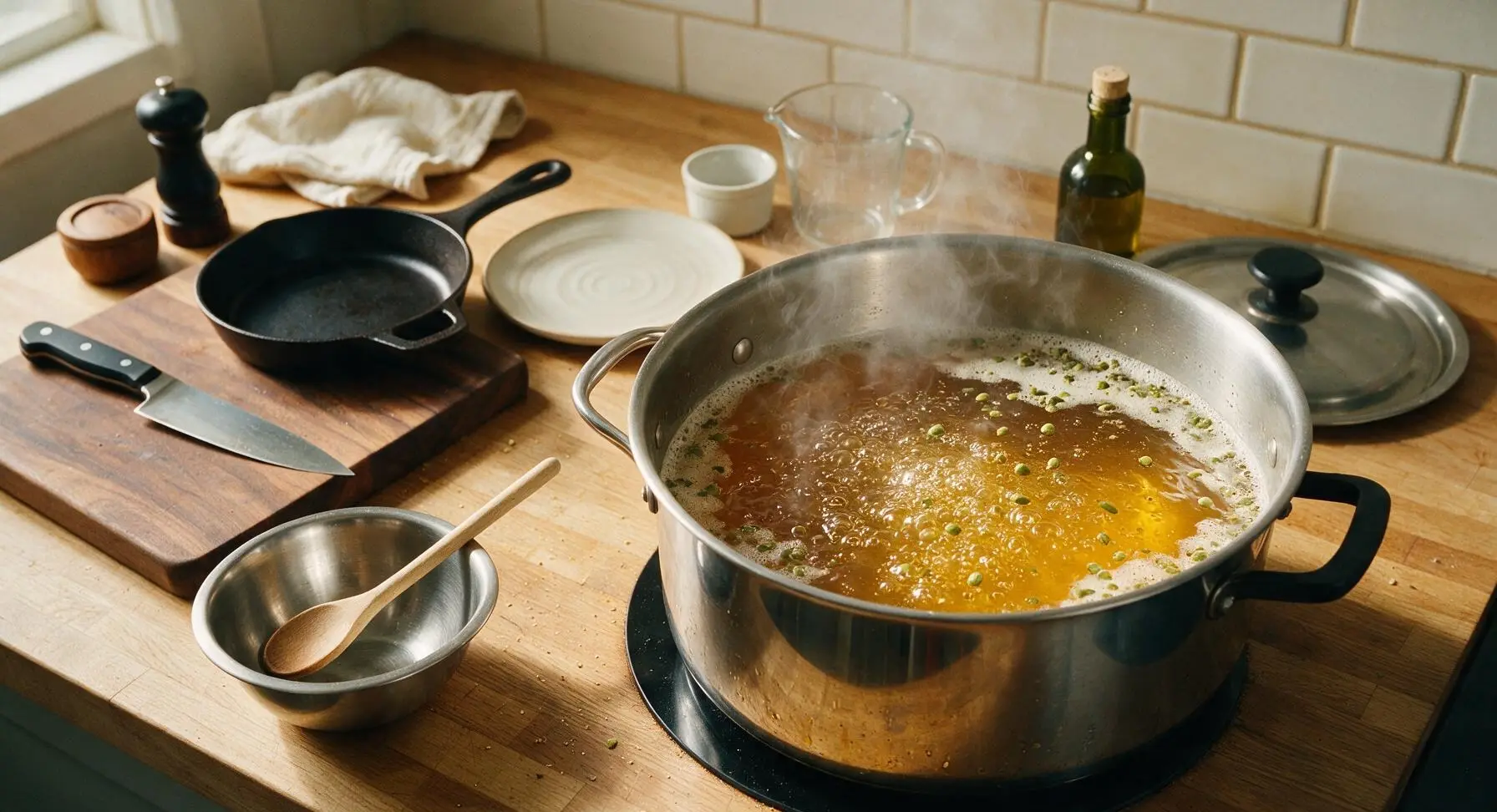
Place the brew kettle on the center induction burner, set heat to medium-high, and bring wort to a gentle rolling boil (watch closely to avoid sticky boilovers). Once boiling is steady, add 20g of Hallertau hop pellets for bittering, then set a timer for 60 minutes. With 15 minutes remaining in the boil, add the final 8g of Hallertau hop pellets for soft floral aroma. Turn off heat once the 60-minute boil completes.
Cool Wort and Pitch Yeast
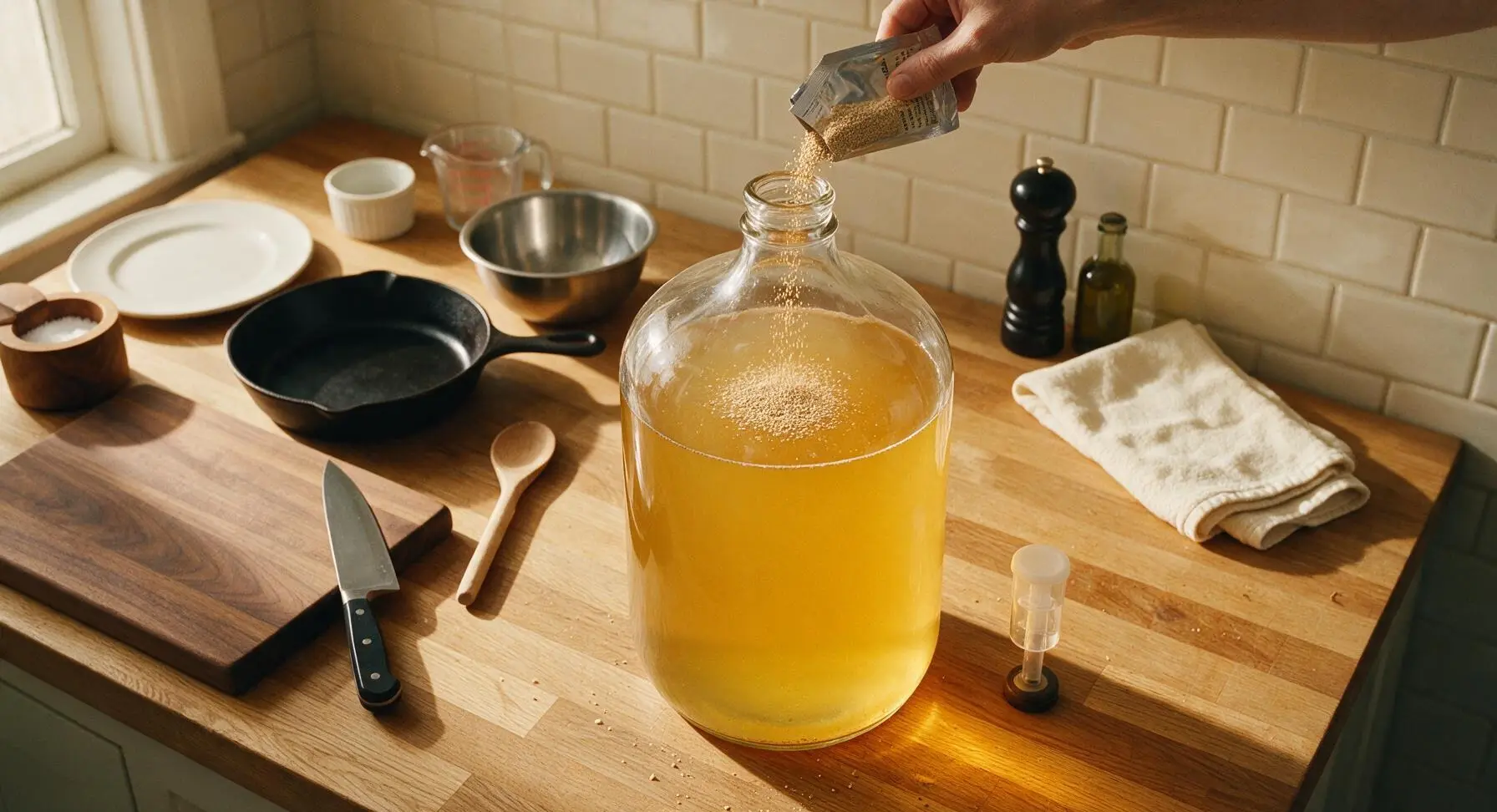
Remove the brew kettle from heat and cool the wort as quickly as possible to 12°C (54°F) using an ice bath. Pour the cooled wort through a sanitized fine-mesh strainer into the sanitized 5-gallon glass carboy, leaving heavy hop trub and grain sediment behind in the kettle. Sprinkle the entire packet of Bavarian lager yeast evenly across the wort surface, then seal the carboy with a sanitized rubber stopper and fill the airlock halfway with sanitizer solution before inserting it into the stopper.
Conduct Primary Fermentation
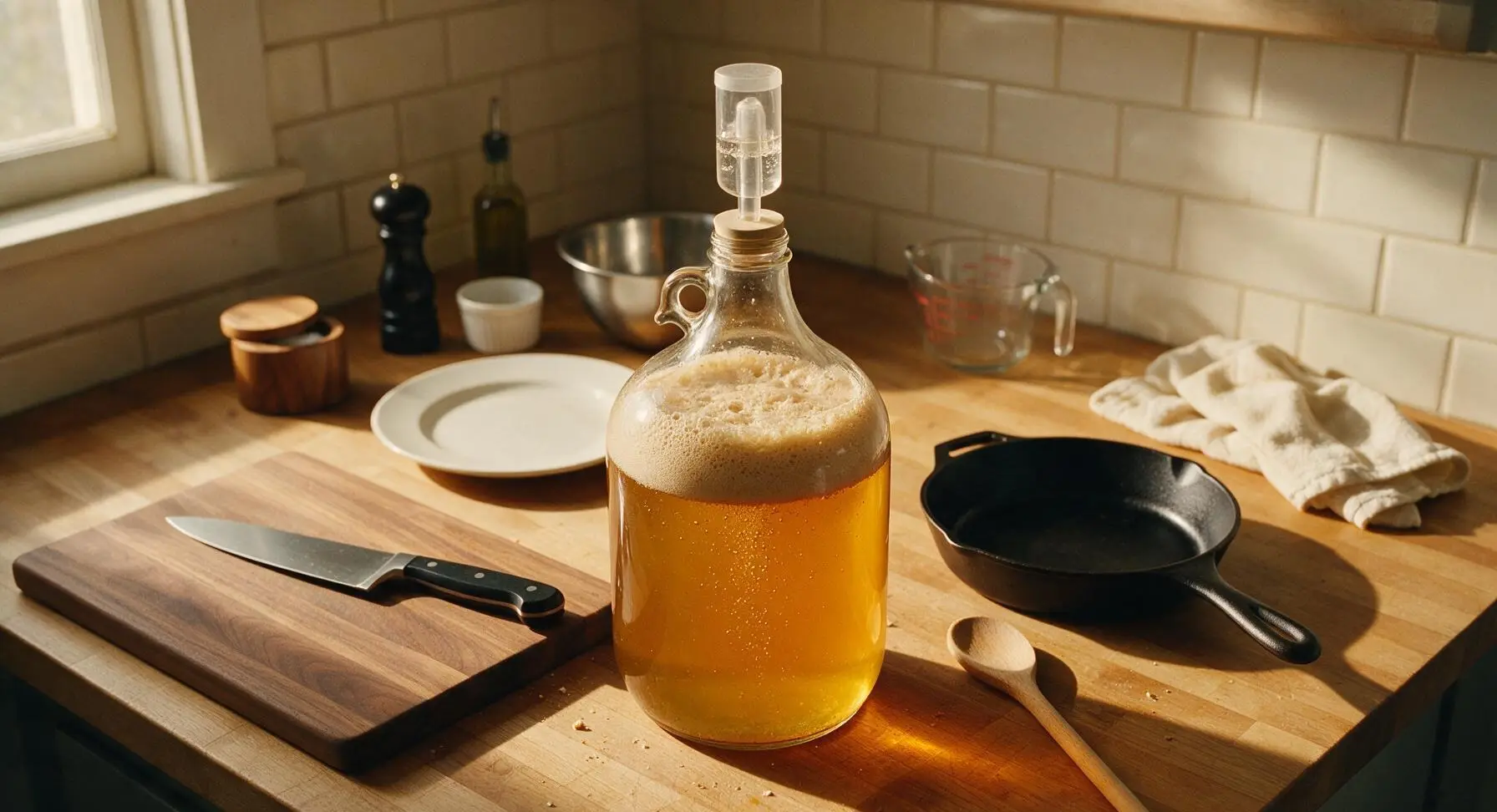
Keep the sealed carboy in a dark, temperature-controlled space held steady at 12°C (54°F) for 2 weeks. Fermentation is active when steady bubbles rise through the airlock; it is complete when bubbling slows to less than 1 bubble per minute, and suspended hop and yeast particles begin to settle out of the wort. During this time, yeast converts wort sugars into alcohol and carbon dioxide.
Cold Condition Lager
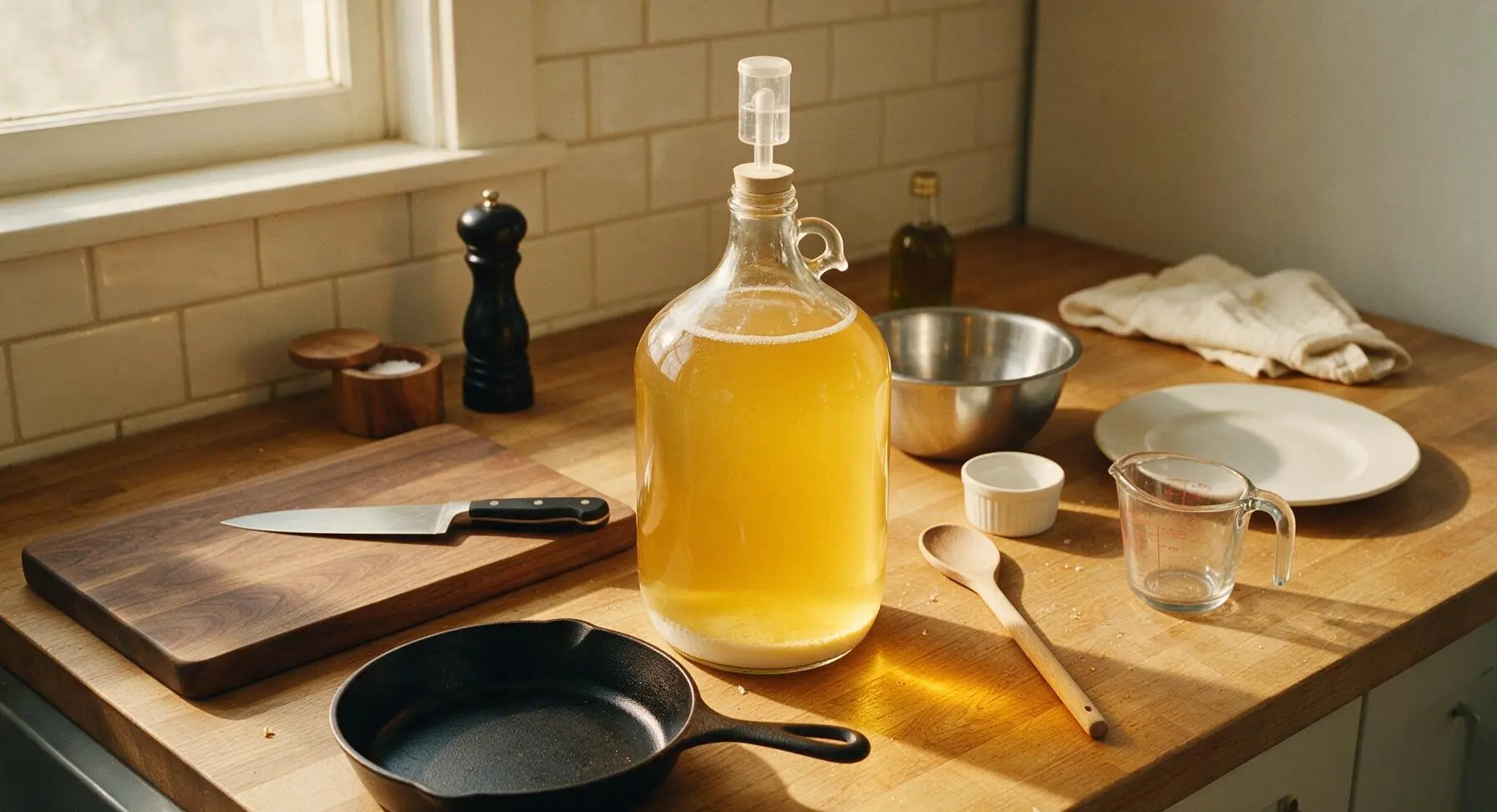
After primary fermentation finishes, slowly lower the storage temperature by 2°C per day until reaching 4°C (39°F) over 3 days, to avoid shocking the yeast. Hold the beer at this steady cold temperature for 4 full weeks to lager: during this time, remaining yeast and sediment will settle, harsh flavors will mellow, and the beer will develop its signature smooth, clean malt profile.
Bottle and Carbonate
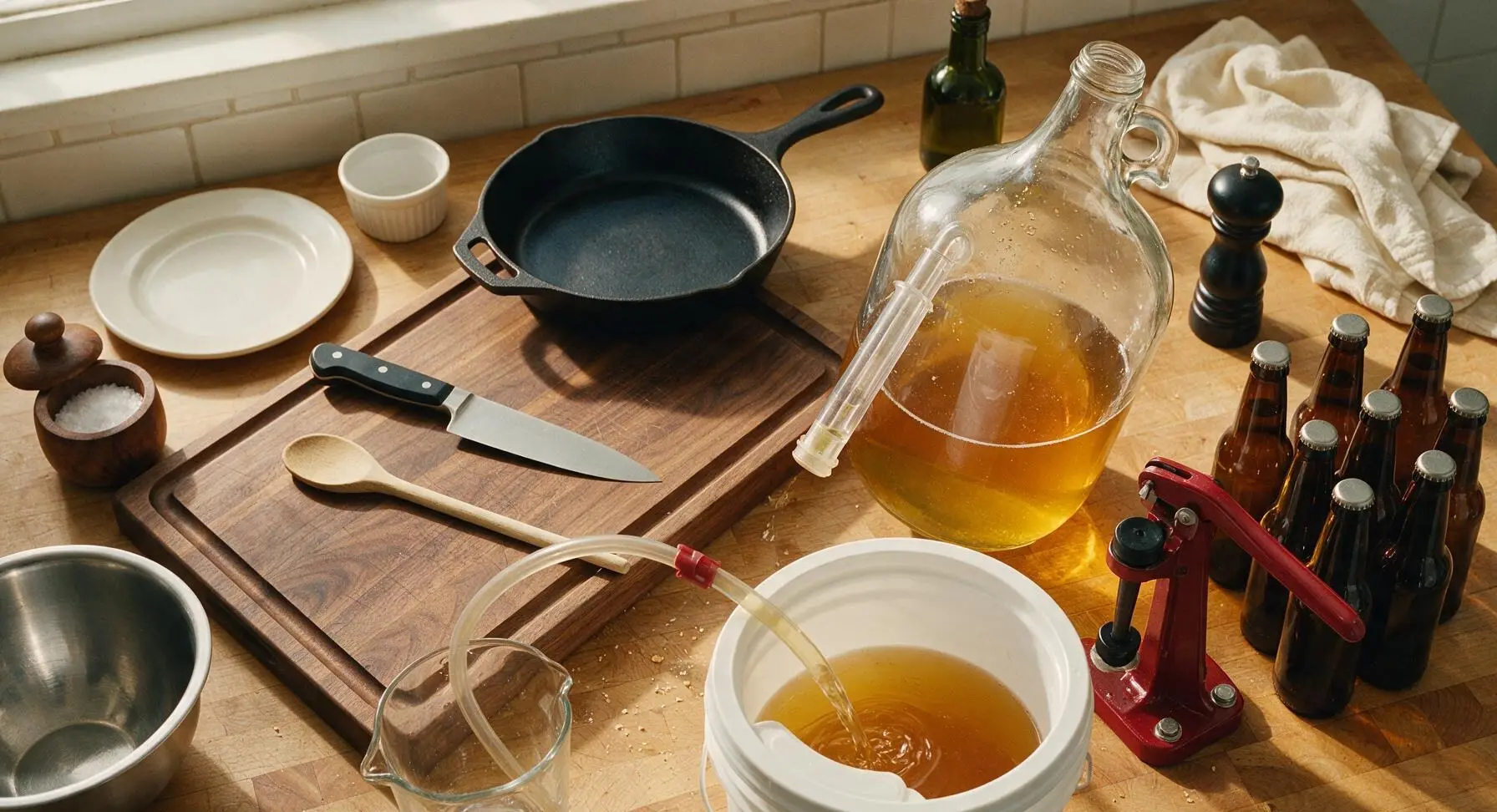
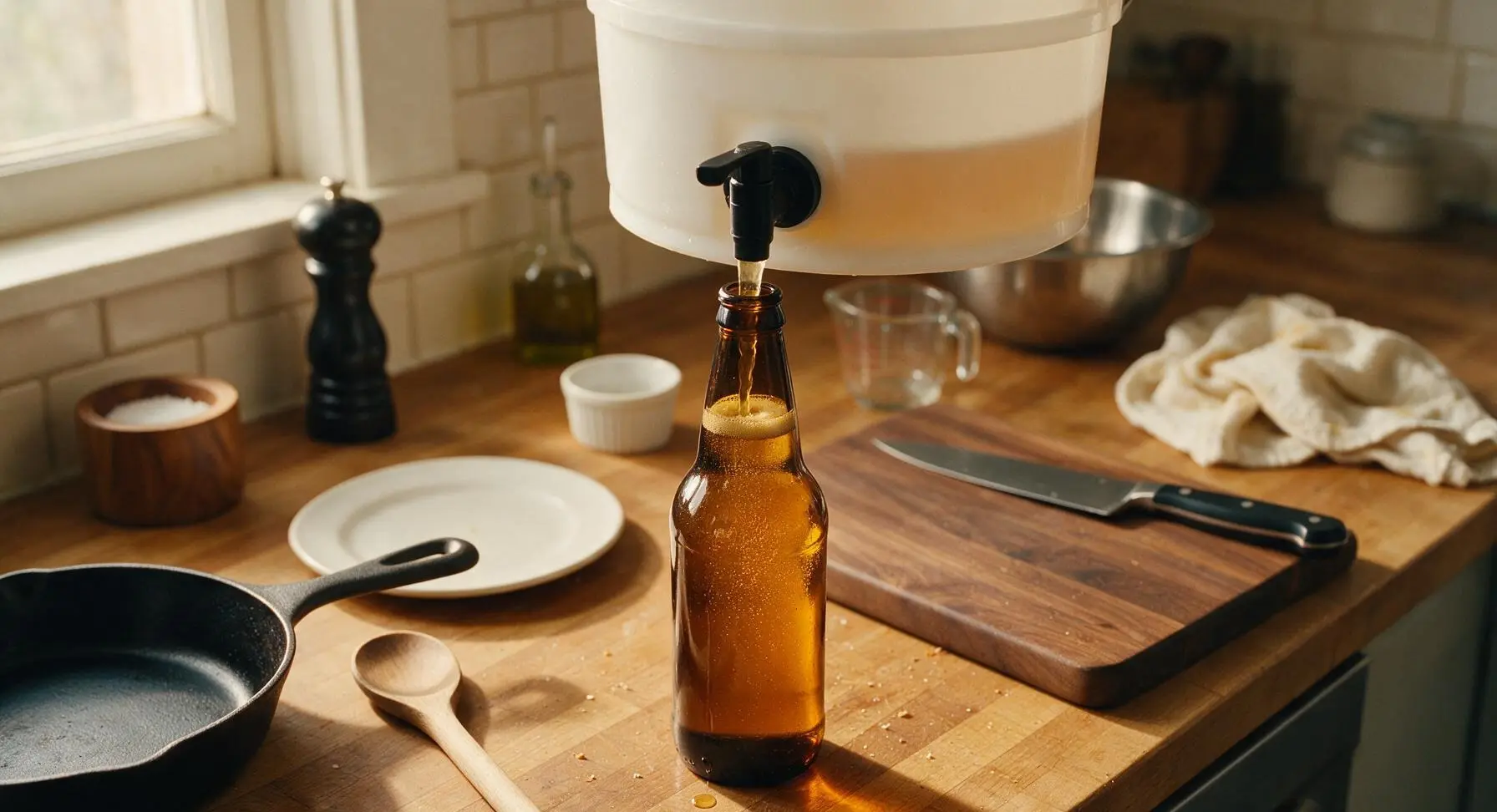
Sanitize all 50 amber glass bottles and bottle caps. Boil 150g of corn sugar in 250ml of filtered water to create a priming solution, then pour the cooled solution into the sanitized bottling bucket. Use the auto-siphon to transfer the clear lager from the carboy into the bottling bucket, stirring gently to evenly mix the priming sugar. Fill each bottle to 2cm below the rim, cap tightly with the bench capper, then store bottles at 18°C (65°F) for 2 weeks to allow natural carbonation to develop before chilling and serving.
Tips
2.Resist the urge to add extra hops: traditional Munich Helles is malt-forward, with Hallertau hops providing only subtle floral, spicy balance rather than bold bitterness.
3.Do not rush the lagering phase: skipping the 4-week cold conditioning step will result in a yeasty, unbalanced beer that lacks the smooth, crisp finish of authentic Helles.






Brought my second batch of this to my family’s Labor Day cookout and even my dad who swears he only drinks macro light beer asked for a second pint! The only hiccup I had was my first batch got a little infected because I skimped on sanitizing my siphon, so learn from my mistake folks — sanitize EVERYTHING.
OMG, this Helles recipe is an absolute game changer! I brewed a batch for our neighborhood potluck last weekend and every single person was raving about how smooth and crisp it was, way better than the store-bought imports I usually grab. Took me a little longer than 4 hours total on brew day because I messed up my mash temp the first go around, but totally worth it.
Game. Changer. I’ve been chasing that perfect Helles taste for 3 years of homebrewing and this recipe nailed it first try. My homebrew club even gave it first place in our summer lager competition last month! If you’re on the fence about making this, stop overthinking and do it.
First time attempting a lager after brewing nothing but IPAs for 2 years, and this recipe did NOT disappoint. SO good, my partner said it tastes exactly like the ones we drank at that beer garden in Munich on our honeymoon! Only note is I wish there was a little more detail on diacetyl rest timing for new lager brewers.
Meal prepped? No, brew prepped! I gathered all my ingredients last week to knock this out on my day off, and it’s currently lagering in my chest freezer. Snuck a tiny hydrometer sample yesterday and the malt balance is already perfect — can’t wait to tap the keg in 4 weeks for my fantasy football draft party.
Medium difficulty is no joke y’all, I was definitely stressed about getting the lagering temps right the first time, but the payoff is insane. This is crisp, bready, just the right amount of hop bite — I’ll be keeping this in my regular rotation for brew days from now on.
I will say, set aside more than 4 hours if you’re a total beginner! I forgot to account for time to heat up my strike water and clean up after, so my brew day ended up being closer to 6 hours, but the end result was so worth it. Tastes exactly like the Helles I order at my local German pub.
Tweaked the recipe a tiny bit to use 10% Vienna malt instead of all Pilsner and it came out incredible — has that little extra toasty note that makes it feel extra special without straying too far from the classic Helles vibe. 10/10, will brew again.
Super excited to try this recipe! Quick question for folks who’ve made it — has anyone had success brewing this with a dry lager yeast instead of the liquid strain called for? I don’t have a stir plate for a starter right now and don’t wanna waste ingredients.
My husband and I brewed this together for our anniversary (we had our first date at a Bavarian beer bar!) and it turned out SO good. We bottled half with a little extra carbonation for tailgates this fall and kegged the other half to have on tap at our house. Already planning to make another batch before the weather gets cold.