
International Pilsner
intro
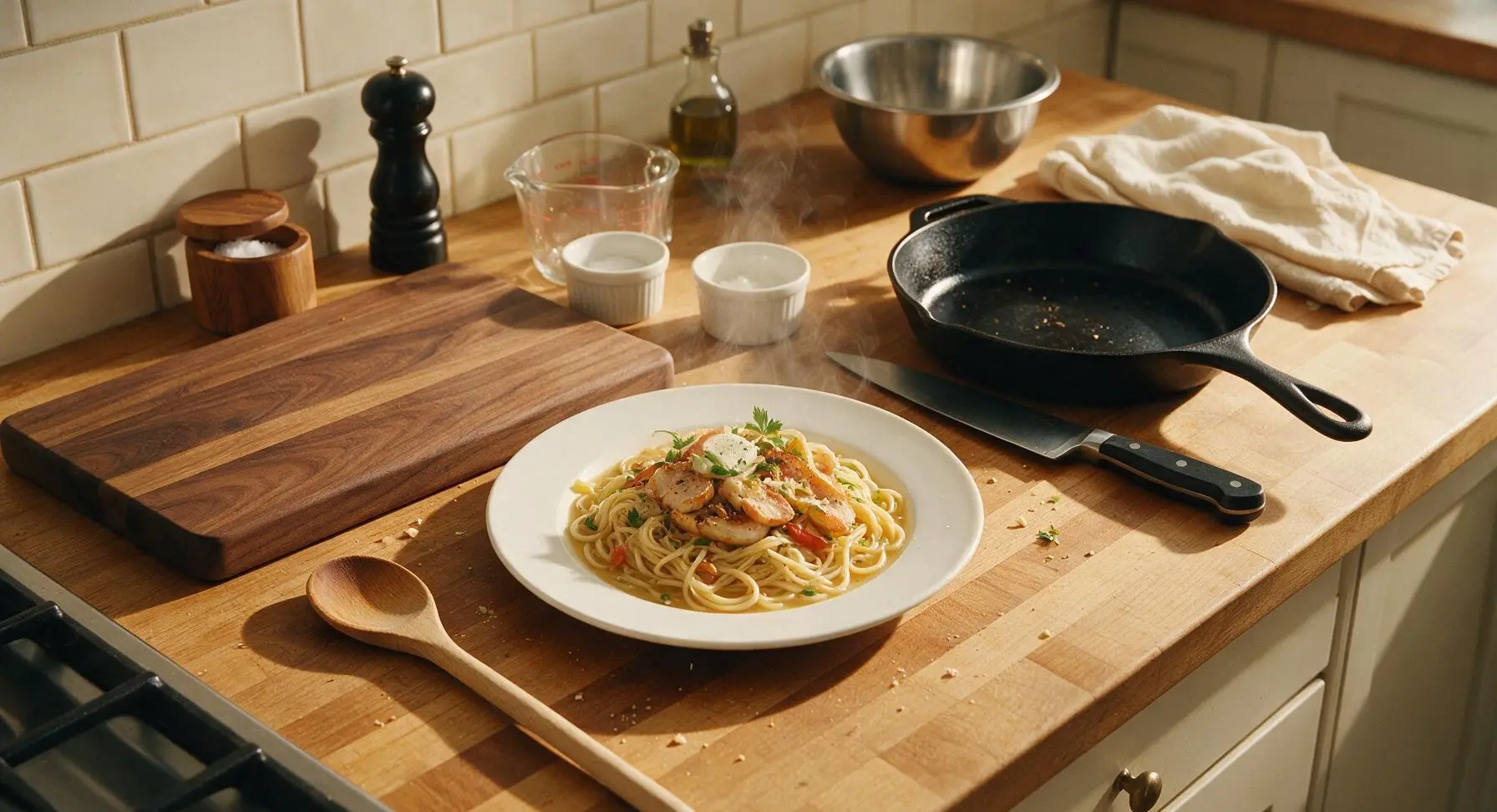
Crisp, brightly carbonated, and clean-tasting, this homebrewed international pilsner balances soft malt sweetness, subtle noble hop bitterness, and a dry, refreshing finish perfect for warm summer days.
Ingredients
Steps
Sanitize Brewing Equipment
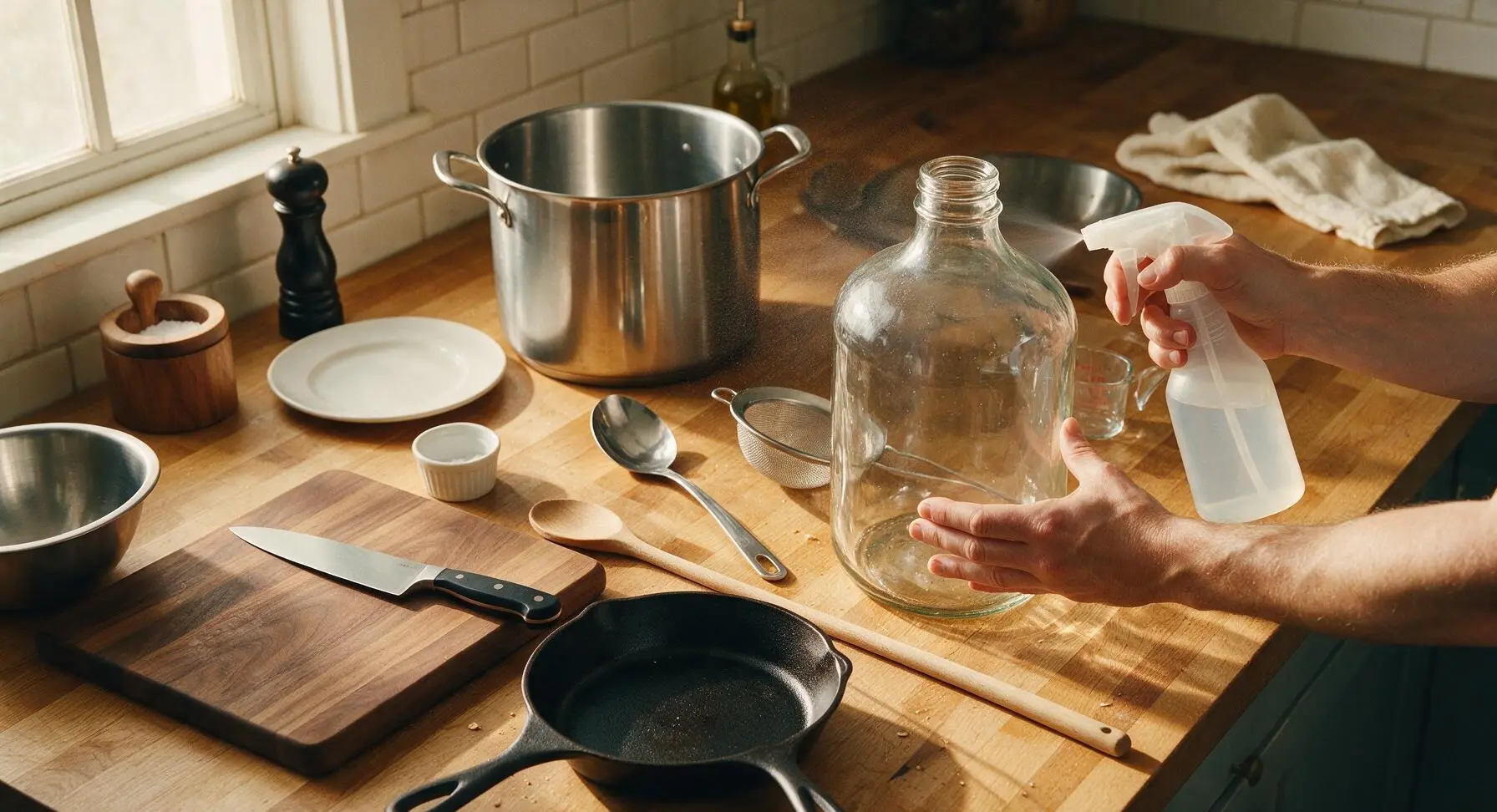
First, spray all contact surfaces of the stainless steel brew pot, stainless steel stirring spoon, fine-mesh strainer, glass fermentation carboy, and silicone auto-siphon with the no-rinse food-grade sanitizer. Let sit for 60 seconds, then wipe excess moisture with a clean section of the light blue cotton towel. No visible sanitizer residue should remain; unsanitized equipment is the leading cause of sour, off-flavored homebrew.
Heat Mash Water
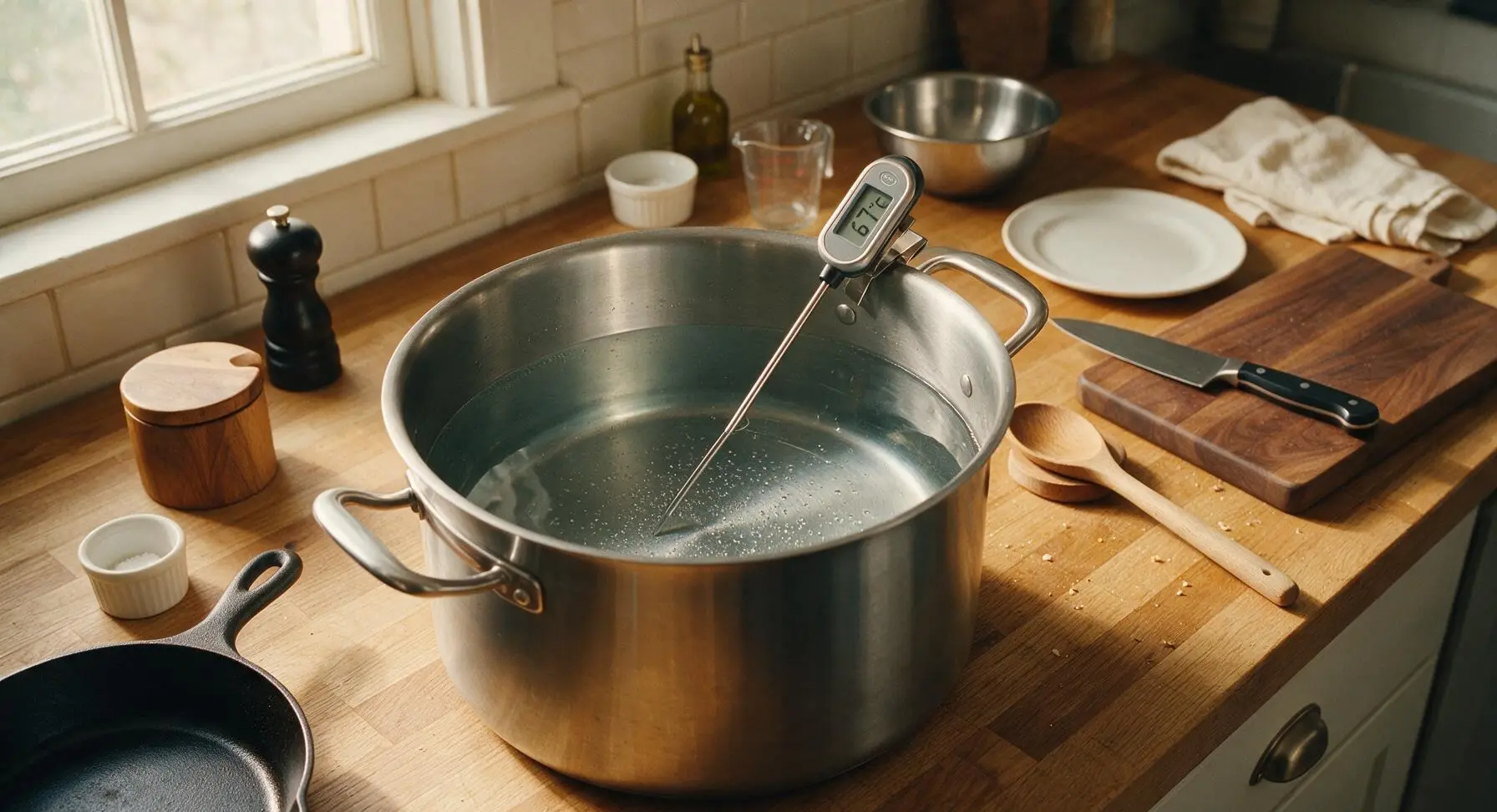
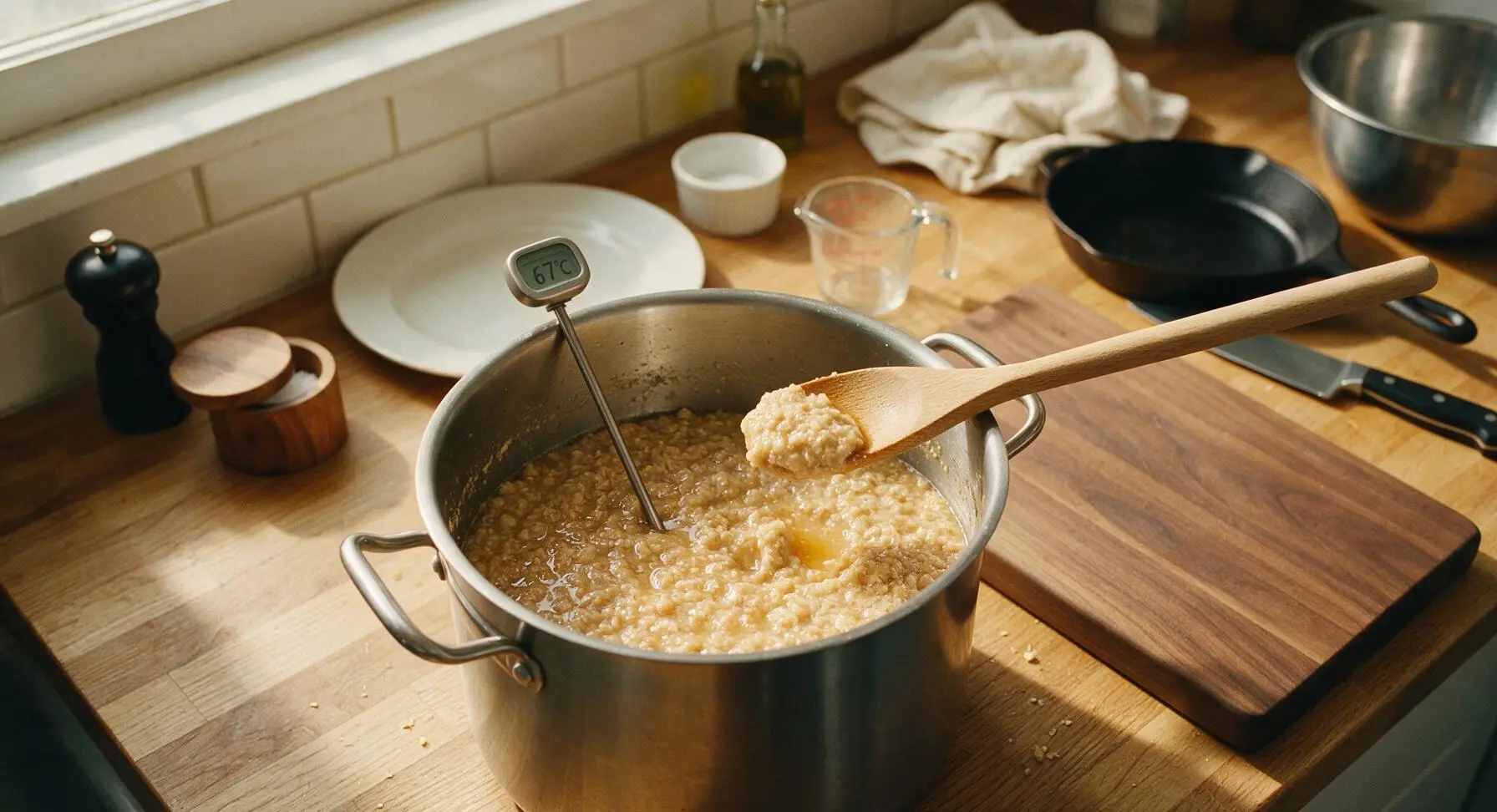
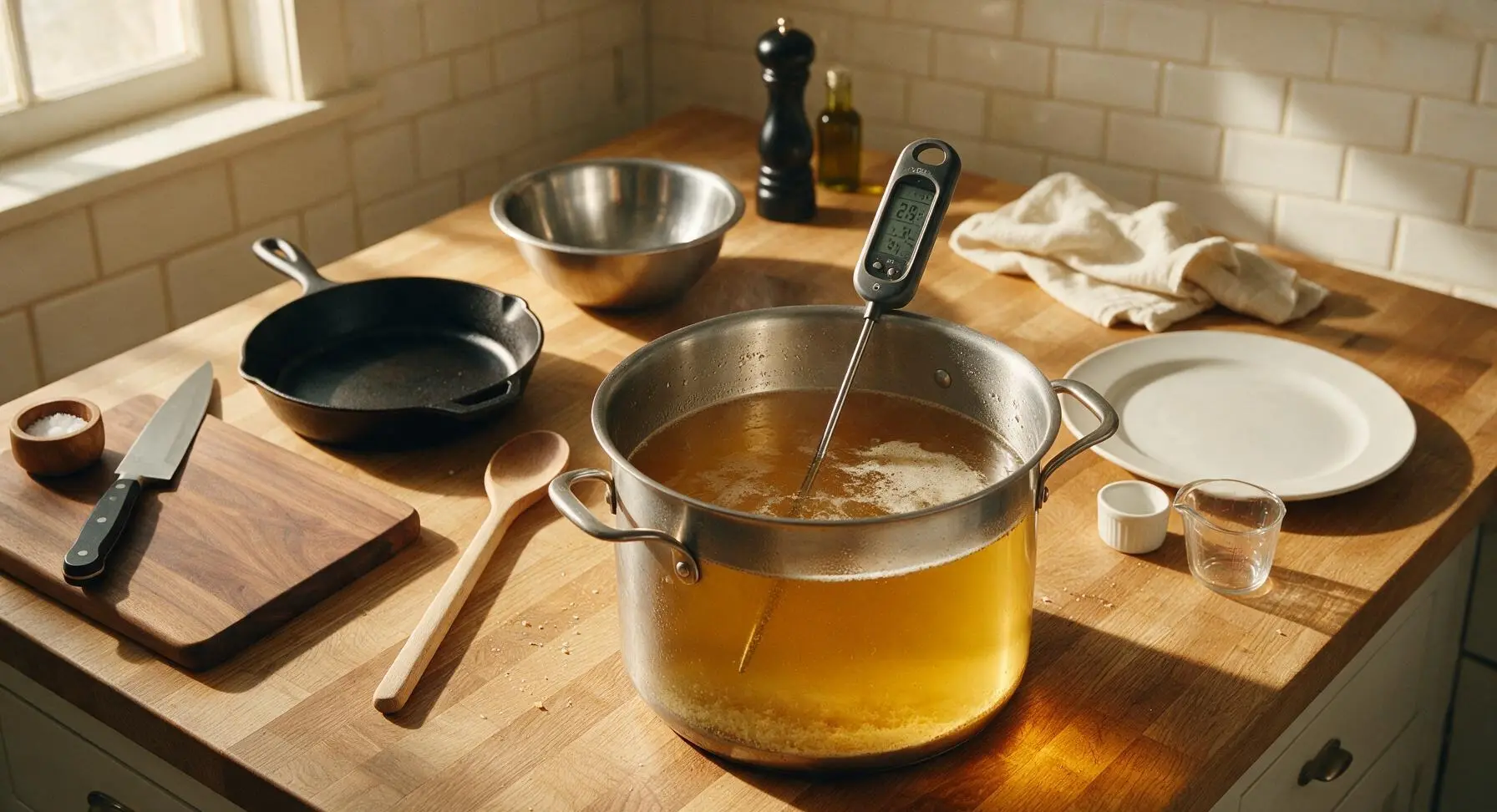
Pour 4L of filtered water into the stainless steel brew pot, set over medium heat until the water reaches exactly 67C (153F), confirmed with the digital instant-read thermometer. Do not let the water reach boiling at this stage; overheated water will extract harsh, bitter tannins from grain later in the process.
Mash the Grain Bill
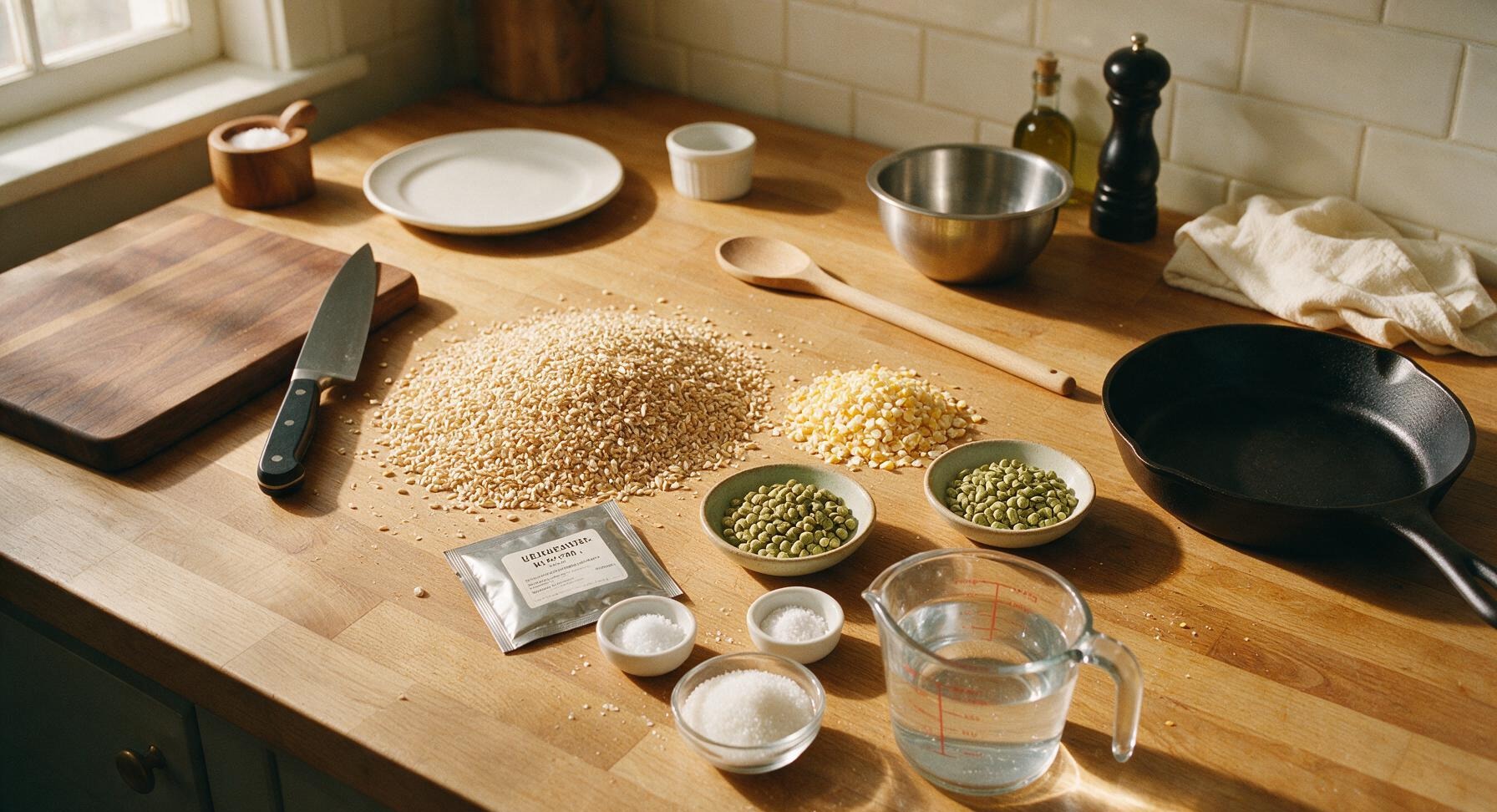
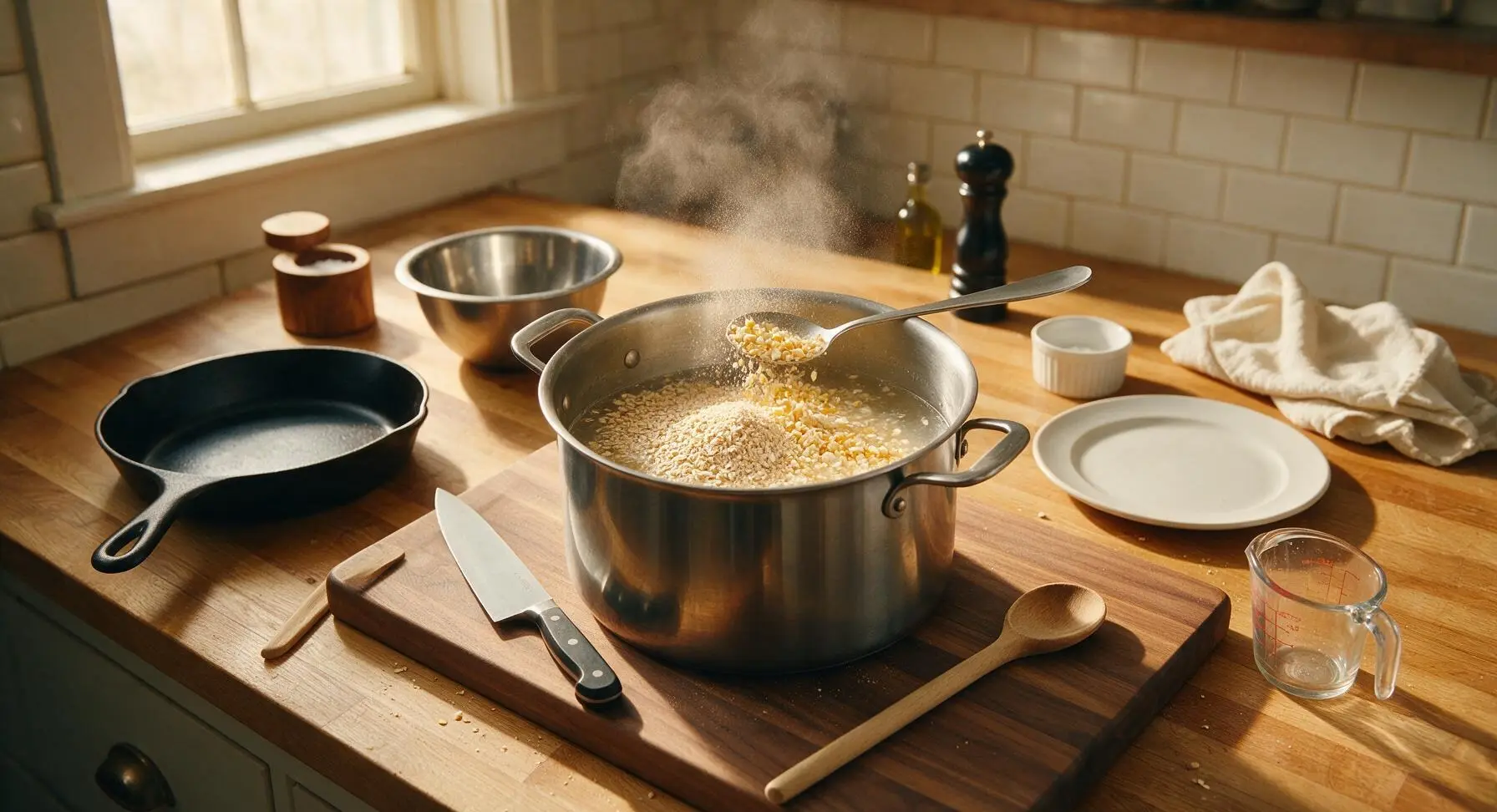
Slowly stir the crushed pilsner malt and flaked corn into the heated water, using the stainless steel stirring spoon to break up any dry clumps until the mixture reaches a thick, porridge-like consistency. Hold the temperature steady at 67C (153F) for 60 minutes, keeping the pot covered to retain heat. The mash will smell faintly of fresh baked bread and sweet grain when fully converted.
Boil and Add Hops
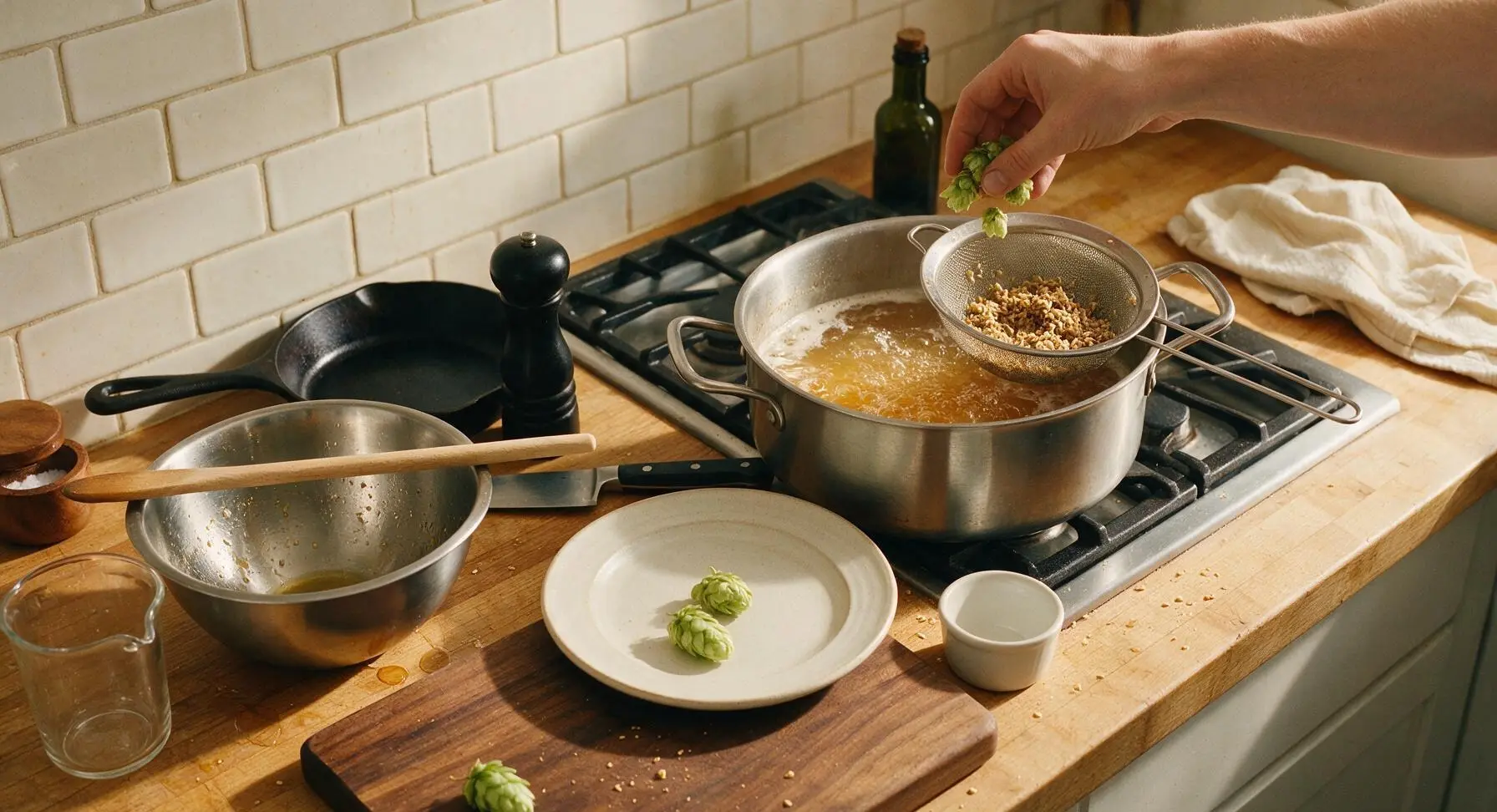
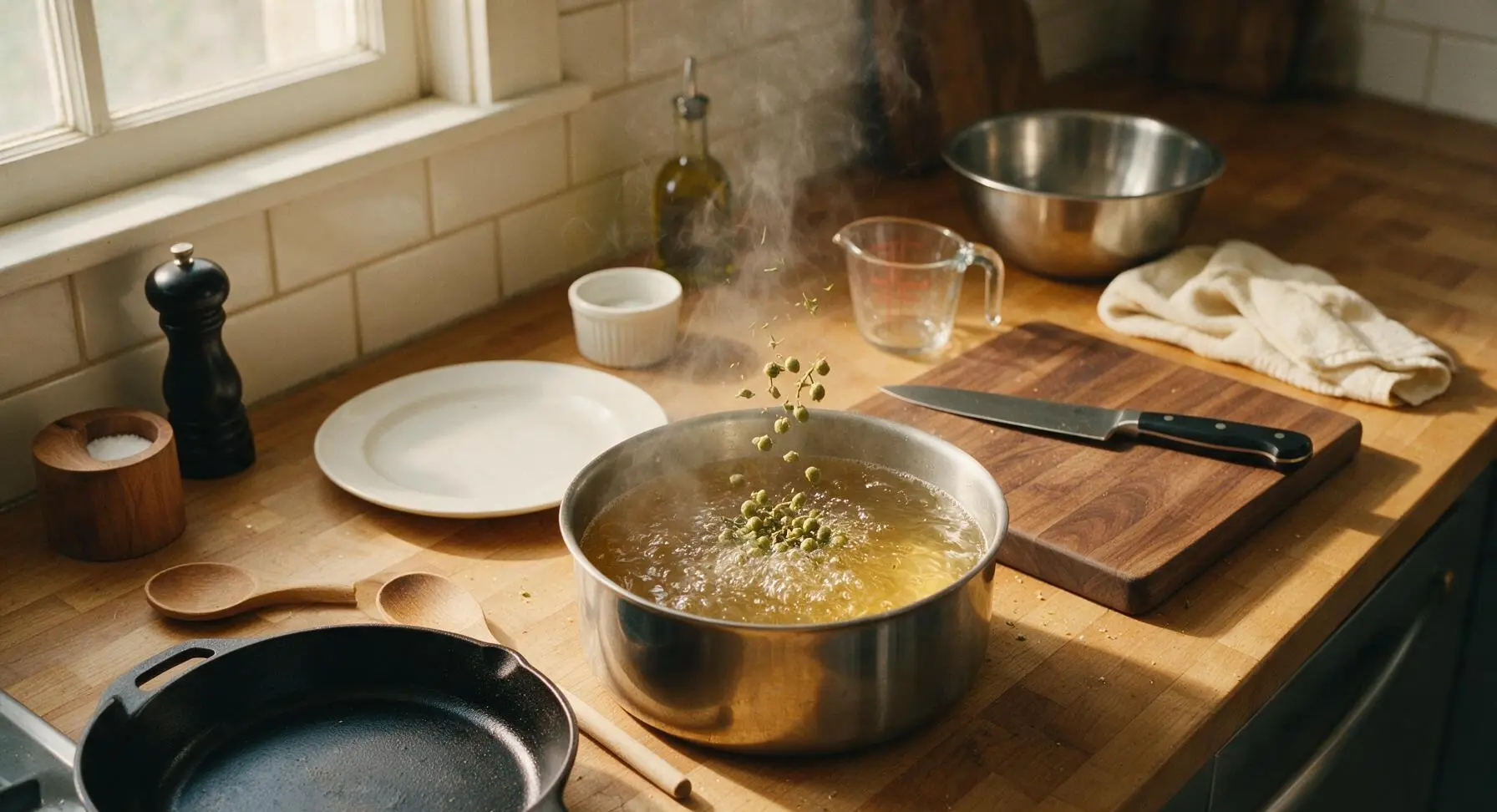
Strain out spent grains using the fine-mesh strainer, then bring the collected sweet wort to a gentle rolling boil (100C/212F) over medium-high heat. Once boiling, add the 15g of Hallertau bittering hops immediately and set a timer for 60 minutes. With 5 minutes remaining in the boil, add the 10g of Saaz aroma hops for bright, floral notes. Adjust heat as needed to prevent the wort from boiling over the pot edges.
Chill Wort Rapidly
As soon as the 60-minute boil ends, turn off heat and place the covered brew pot in an ice bath to cool the wort to exactly 18C (64F), verified with the digital thermometer, which takes approximately 15 minutes. Rapid chilling prevents unwanted off-flavors and creates a cold break of pale protein sediment that settles at the pot bottom, resulting in a clearer final beer.
Transfer to Fermenter
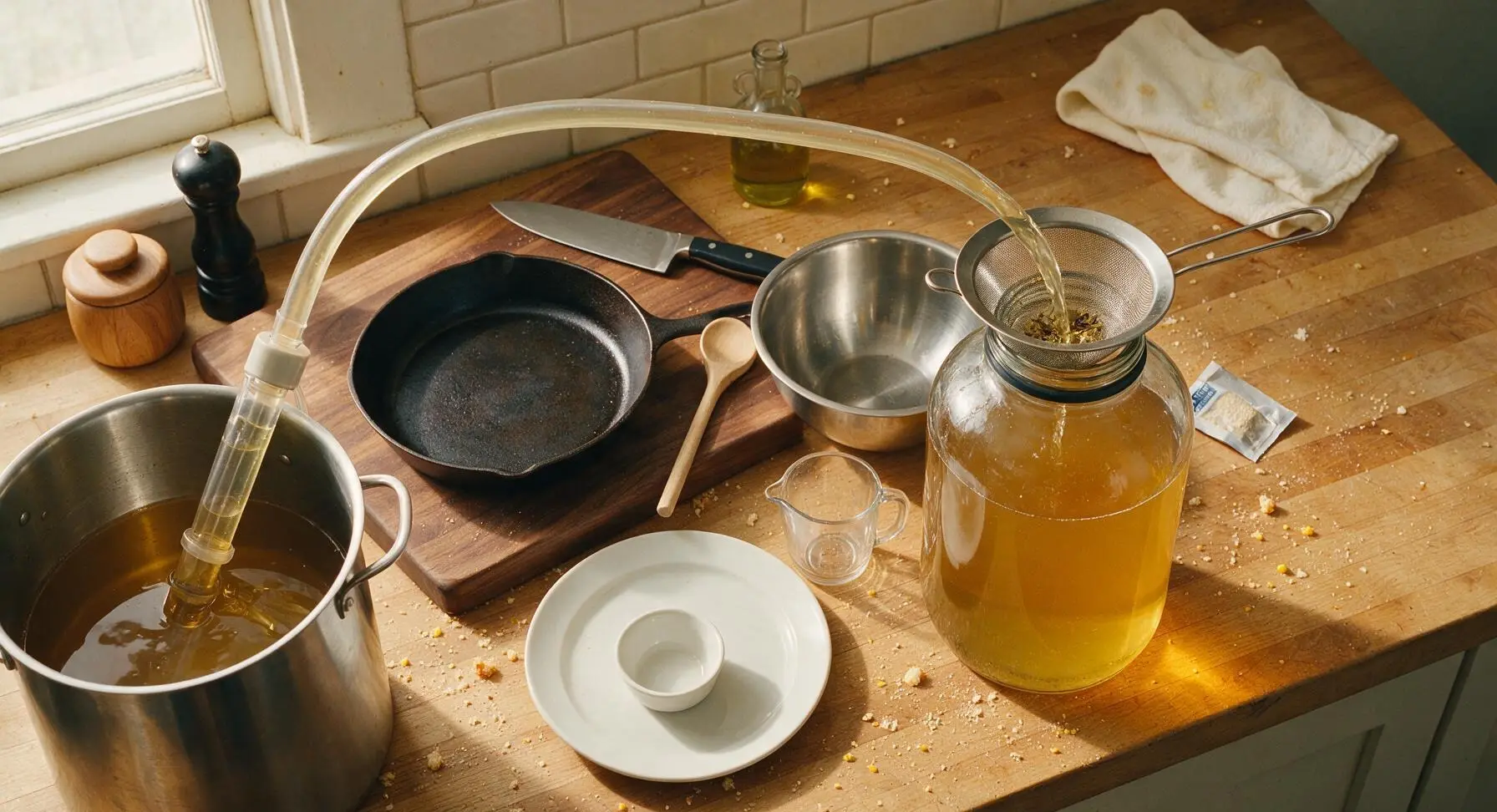
Pour the cooled, clear wort through the fine-mesh strainer into the clear glass fermentation carboy, leaving the protein sediment and hop debris behind in the brew pot. Top up with remaining filtered water to reach the 5.7L (1.5gal) graduation mark on the carboy, then sprinkle the entire packet of lager yeast evenly over the wort surface. Seal the carboy neck with a sanitized airlock filled halfway with sanitizer solution.
Cold Ferment Beer
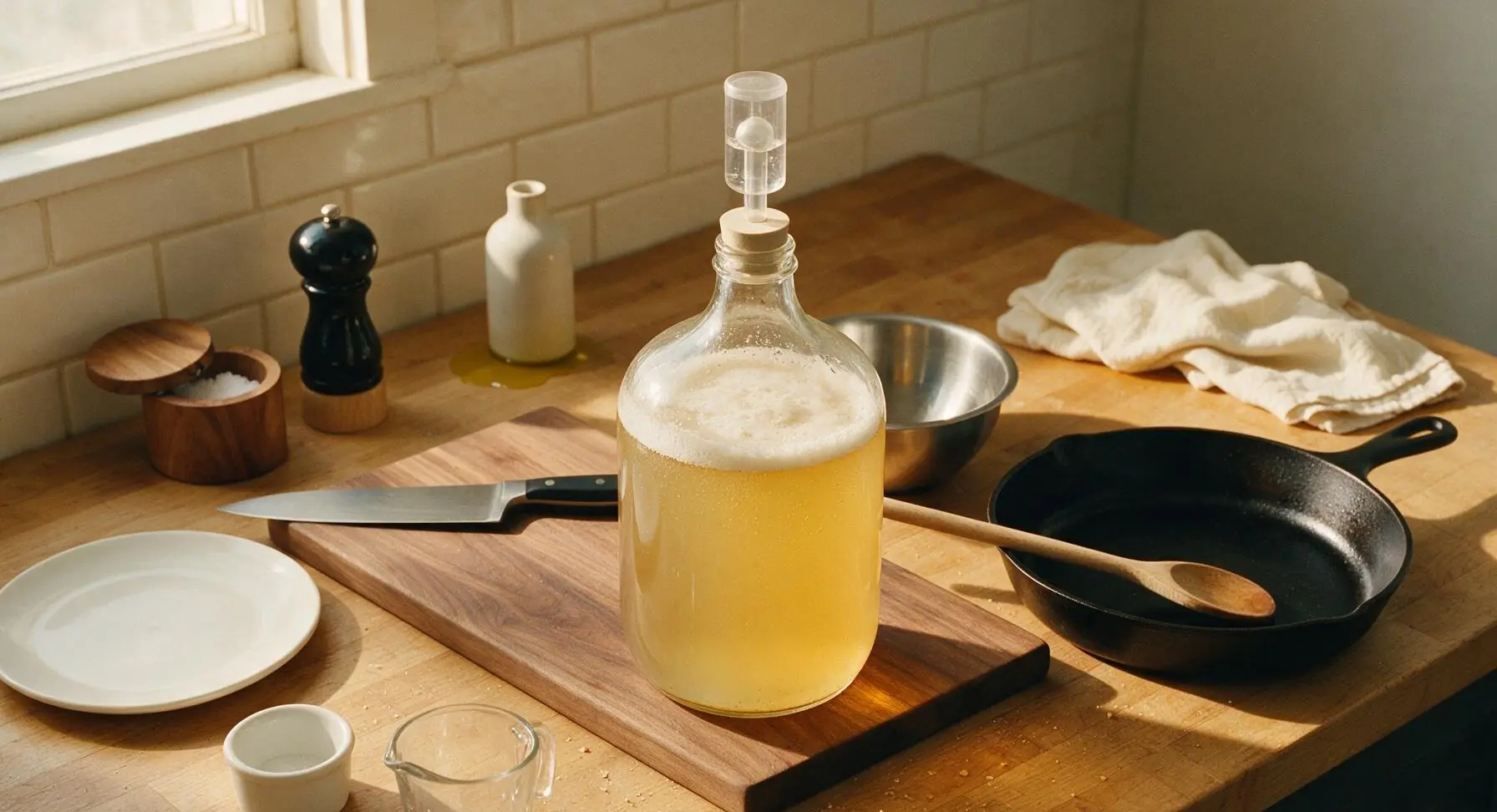
Move the sealed carboy to a dark, temperature-controlled space held steady at 12C (54F) for 4 weeks. Bubbles will rise through the airlock every few seconds for the first 10-14 days as active fermentation proceeds; when bubbles stop entirely for 3 consecutive days, fermentation is complete. The beer will clarify from hazy gold to crystal clear as it conditions.
Bottle and Carbonate
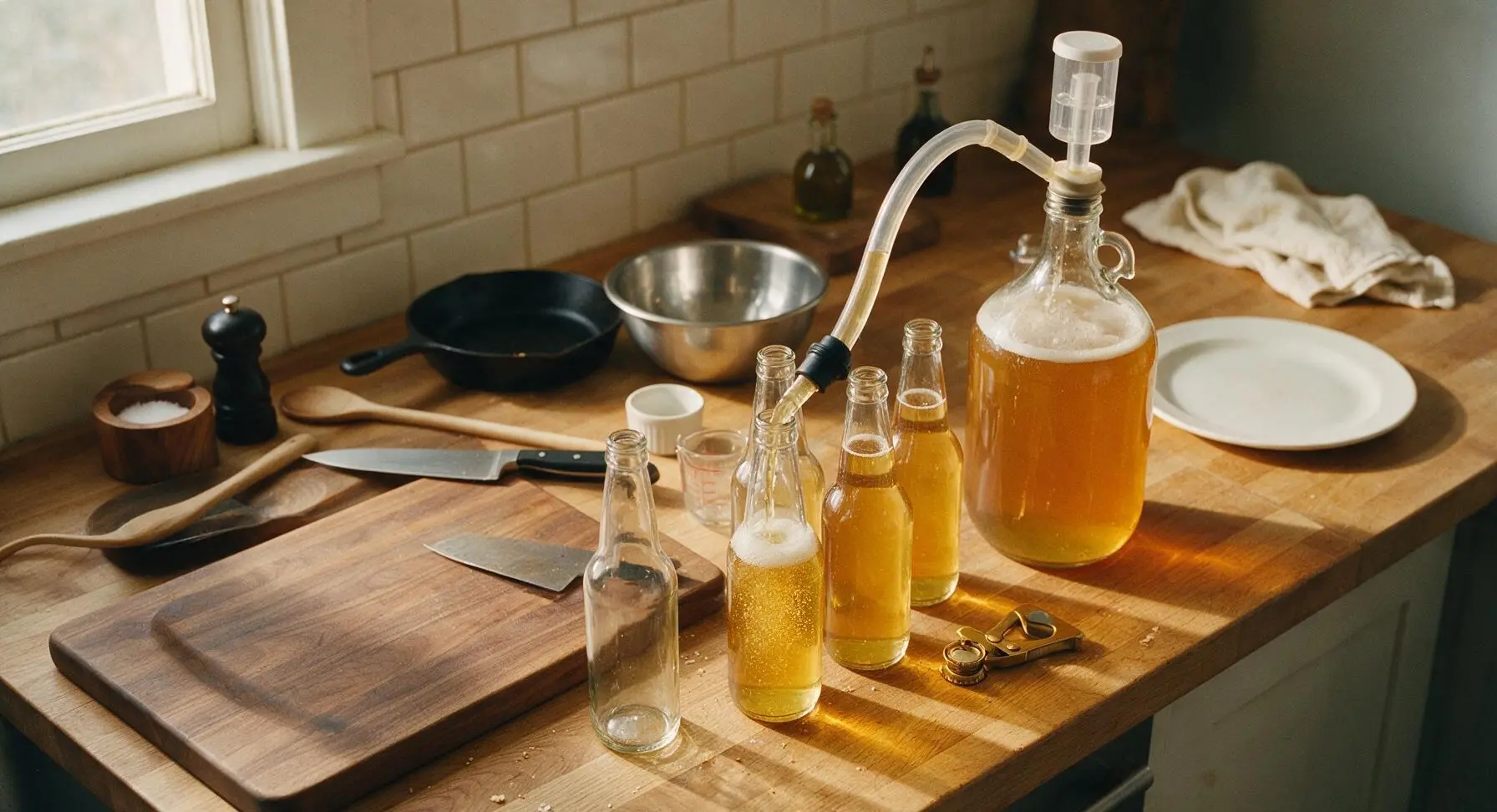
Once fermentation finishes, dissolve 45g of priming corn sugar in 100ml of boiling water, cool, and add to the bottom of a sanitized bottling container. Use the auto-siphon to transfer the clear, finished beer onto the priming sugar, mixing gently to distribute evenly. Siphon into sanitized glass beer bottles, seal caps with the brass bottle capper, and let bottles rest at 20C (68F) for 2 weeks to build natural carbonation, then chill for 3 days before serving.
Tips
2.Maintain steady mash and fermentation temperatures as closely as possible: pilsners rely on a clean, neutral flavor profile, and temperature swings during mashing extract harsh astringent notes, while overly warm fermentation produces fruity, estery flavors that are out of style for a crisp international pilsner.
3.Avoid opening the fermentation carboy before fermentation is fully complete: oxygen exposure at this stage causes stale, cardboard-like oxidation flavors that ruin the bright, fresh character of a well-made pilsner.






OMG this pilsner recipe is a total game changer! I brought my first batch to our neighborhood potluck last weekend and everyone was asking where I bought it — couldn’t believe I brewed it at home! Crisp, clean, exactly the classic international pilsner vibe I was chasing. Total active time was exactly what the recipe said, no surprises there. Already planning my second batch this Saturday!
First time homebrewer here! I was intimidated because this is marked medium difficulty, but the step-by-step mashing instructions were so clear I didn’t mess up a single step. My husband said it tastes better than the imported pilsners we pick up at the liquor store. SO good, already recommended to my brother who’s been brewing for years.
Brewed this for our college football tailgate last weekend, and it was gone before the first quarter ended. Crisp, light enough to drink all afternoon without feeling heavy, zero weird off-flavors like I got with my last pilsner attempt. 10/10, will be a staple in my brew rotation going forward.
Took a star off only because I messed up the temperature on my first mash and got a slightly sweeter finish than I wanted, but that was 100% my bad! When I followed the temp guide exactly on batch two, it was perfect — bright, hoppy but not bitter, super smooth. Brought a six pack to my family dinner last Sunday and even my dad who only drinks big-name macro beer loved it.
Wait, has anyone tried adjusting the hop schedule a little to add a tiny bit more Saaz kick? I love the classic profile but I’m wondering if an extra half ounce at 15 minutes would throw the balance off? Don’t want to ruin a good thing!
I don’t even brew beer that often but I made this for my partner’s birthday party and everyone lost their minds. It’s so smooth even friends who say they ‘don’t like beer’ had two glasses. Worth every minute of the 6 week wait, no cap.
Total pro tip from someone who’s messed up enough brews: don’t skip the 30 minute chill step! I tried to rush it once on a different pilsner recipe and got that weird buttery off-flavor, but following the fast chill direction here gave me that perfectly crisp, clean finish every time. This recipe is foolproof if you actually follow the steps.
I’ve brewed probably 20 different pilsner recipes over the last 8 years, and this is hands down the most consistent, closest to the classic international pilsners you’d get at a beer garden in Prague. No weird fruity ester notes from too-warm fermentation, no harsh bitterness, perfectly balanced. My only note is that I’d recommend a 2 week cold crash at the end for extra clarity, but that’s just personal preference.
My husband got a homebrew kit for Christmas and we tried this recipe first because he loves pilsners. It was so easy to tackle together on a rainy Saturday — the active time flew by while we watched old movies, and when it was ready, we bottled it with custom labels for our anniversary party. Everyone loved it, such a fun little project!
Did a side by side taste test of this recipe with a pricey imported pilsner and my homebrew won hands down with my whole friend group. The grain bill is perfectly balanced, not too malty, not too thin. Saved the recipe to my permanent folder, no more buying pilsners at the store for me!
Quick heads up for new brewers: make sure you sanitize EVERYTHING. I thought I was careful on my first batch of this and got a tiny bit of contamination that made it taste a little off, but when I re-did it and went hard on sanitizer, it came out perfect. The recipe itself is rock solid, don’t cut corners on prep!
Meal prep but for beer? I brew a batch of this once a month so I always have a cold six pack in the fridge for after hikes or when friends pop over unannounced. It’s approachable enough for people who don’t drink craft beer, tasty enough for beer snobs, 10/10 all around. The 6 week wait is torture but so worth it.
Tried this recipe at 7000ft elevation and adjusted my boil time by 10 minutes to account for the lower boiling point, and it came out absolutely perfect. Crisp, clean, just the right amount of hop bite. Was worried the altitude would mess it up but the base recipe is solid enough to tweak for weird conditions.
Update! I waited the extra time for carbonation like Chef Admin suggested and it’s perfect! Cracked open a bottle last night with my roommate and we both agreed it tastes exactly like the fancy imported pilsners we pay $12 a six pack for. Never going back, this is my new go-to brew recipe.