
Kolsch
intro
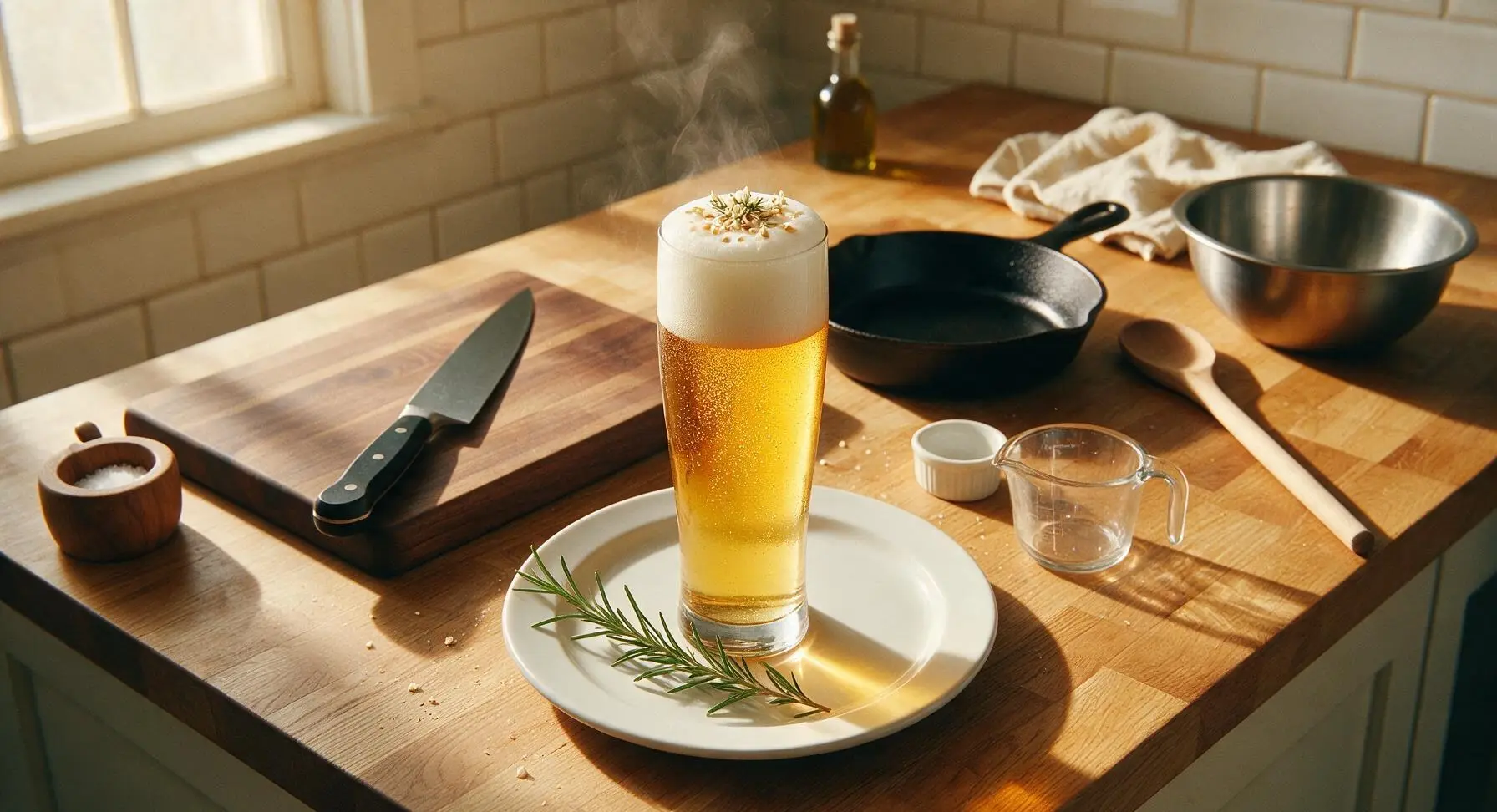
Crisp, pale golden Cologne-style Kolsch, with subtle bready malt notes and delicate floral Hallertau hop aroma, perfectly carbonated for hot summer days and backyard cookouts.
Ingredients
Steps
Sanitize Brewing Equipment
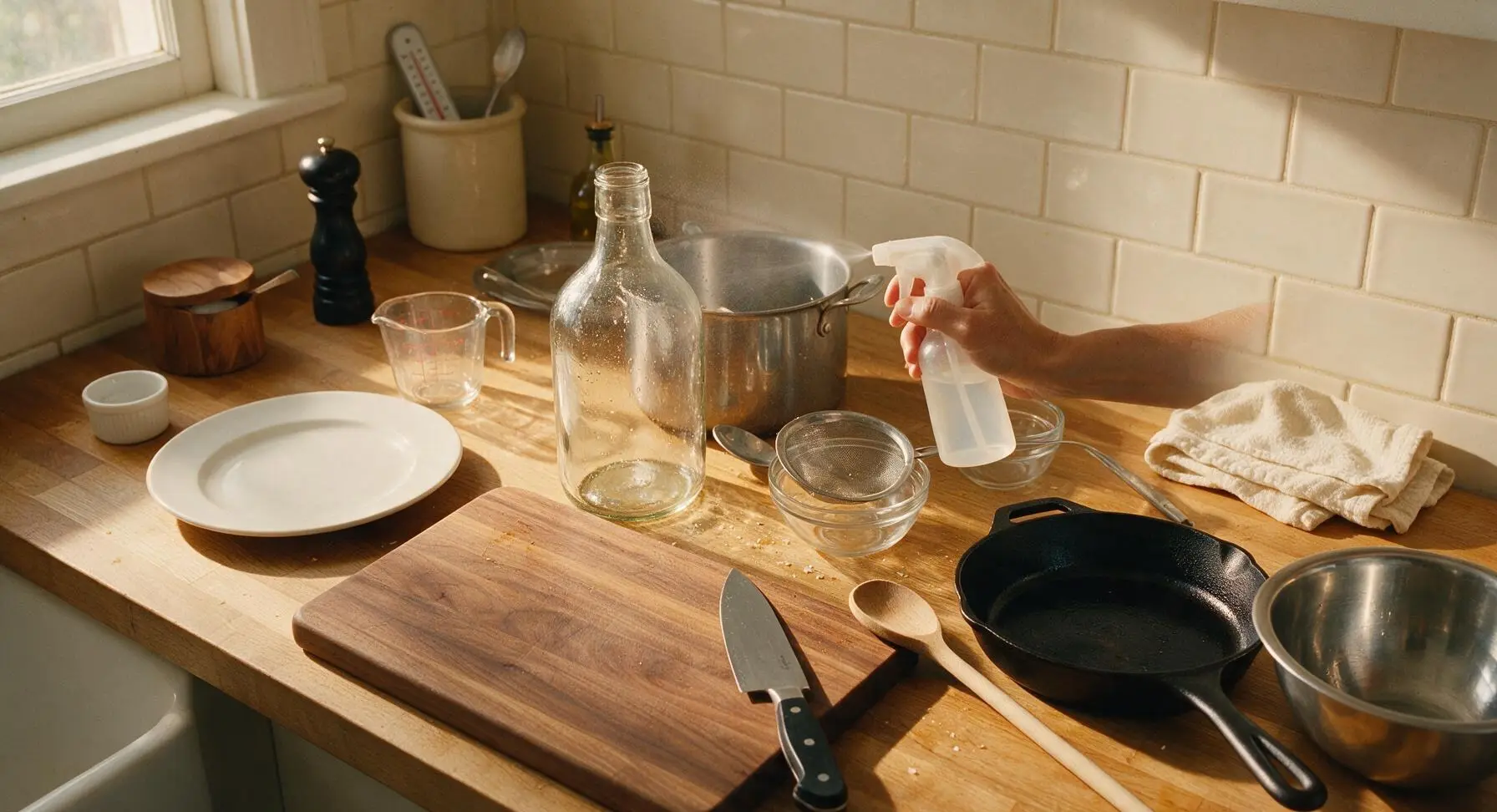
Fill the sanitizer spray bottle with no-rinse brewing sanitizer mixed per package directions. Thoroughly spray all surfaces of the stock pot, stirring spoon, thermometer, strainer, carboy, rubber stopper, airlock, and siphon that will come into contact with cooled beer. Let surfaces air dry for 2 minutes; do not wipe dry, as this can introduce bacteria. All equipment must be visibly wet with sanitizer before use.
Heat Mash Water
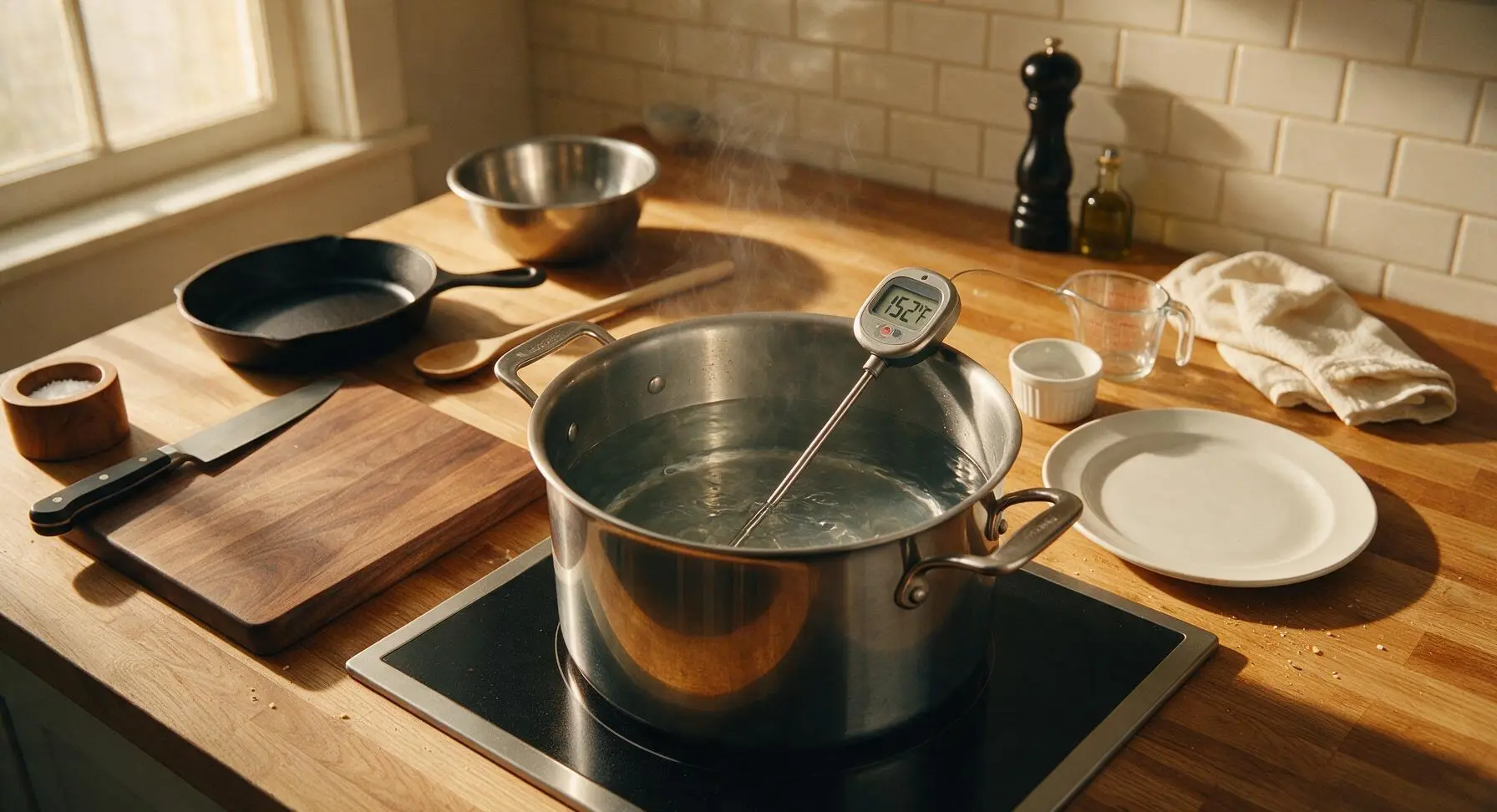
Pour 1.25 gallons (4.7L) of filtered water into the 8-quart stainless steel stock pot. Set the portable induction burner at center counter, place the pot on the burner, and heat over medium setting. Use the digital thermometer to monitor water temperature until it reaches a steady 152°F (67°C), the ideal mash temperature for Kolsch. Remove the pot from direct heat if it climbs above target to avoid overheating the grains.
Mash the Crushed Grains
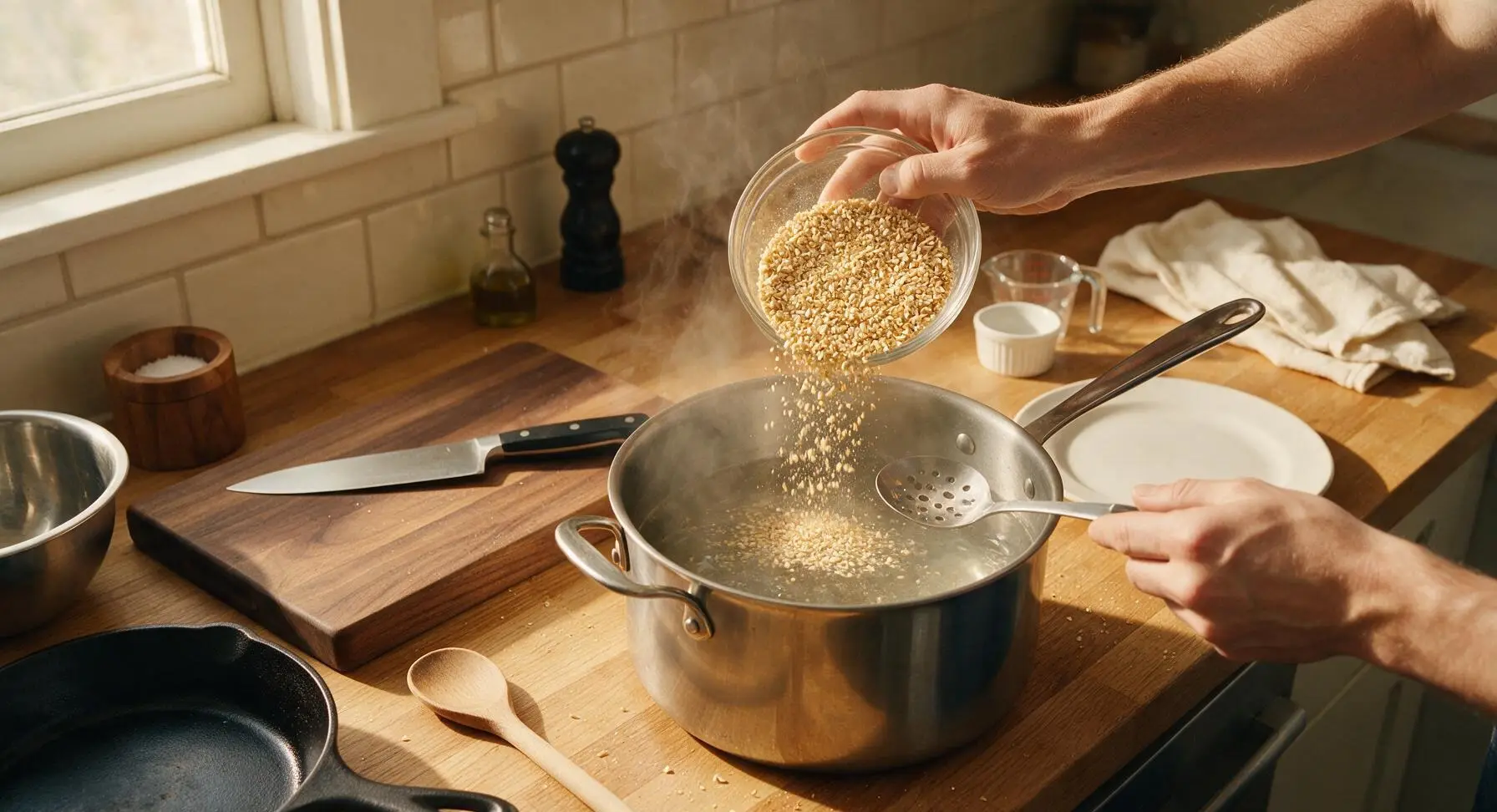
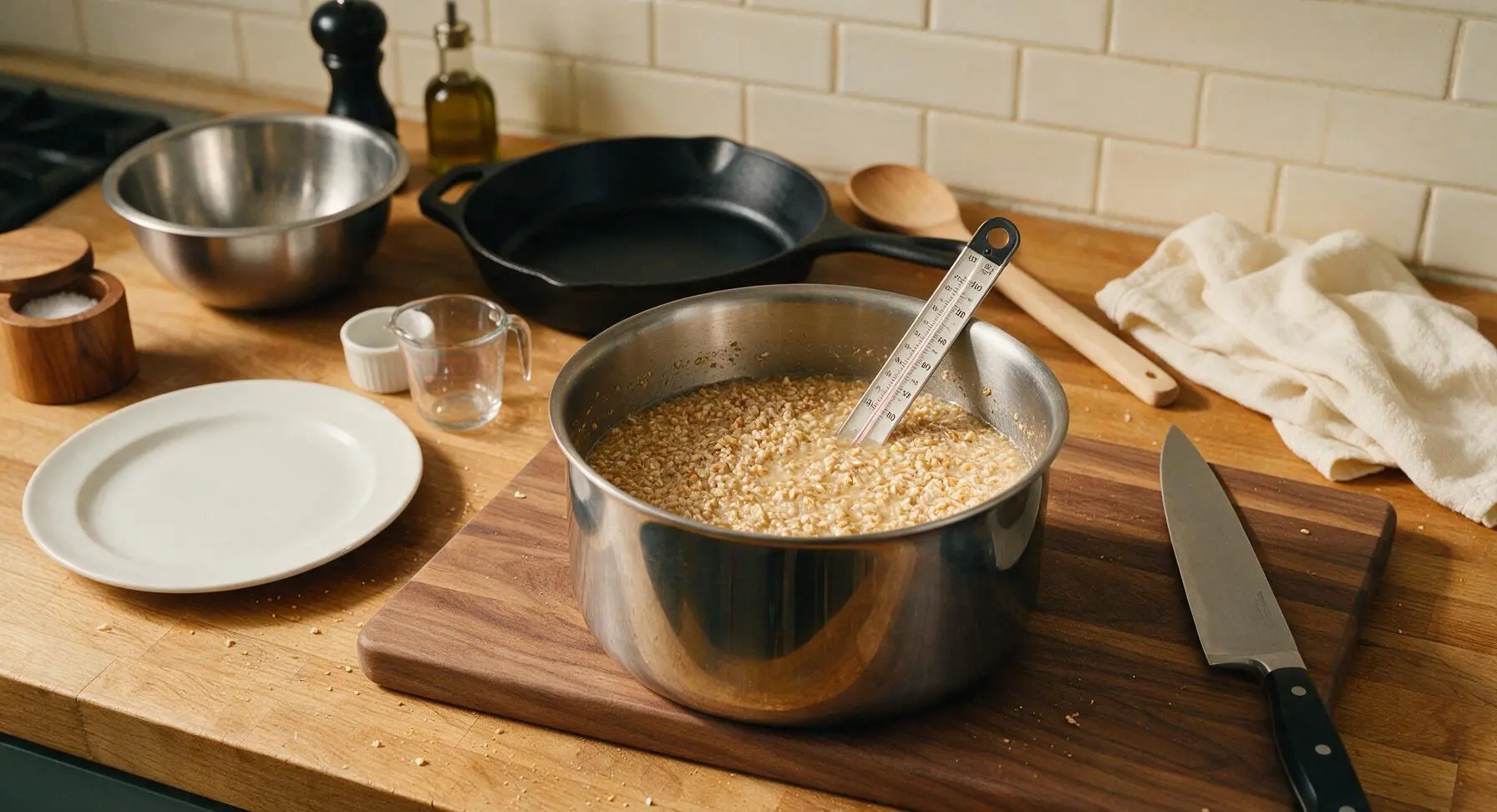
Slowly pour all crushed Pilsner and Vienna malt into the 152°F water, stirring continuously with the slotted stainless steel spoon to break up any dry grain clumps. The mixture will form a thick, porridge-like mash. Cover the pot, hold temperature steady at 148–152°F (64–67°C) for 60 minutes, stirring every 10 minutes to prevent hot spots. At the end of the mash, the liquid will smell sweet and bready, with a pale straw hue.
Boil and Add Hops
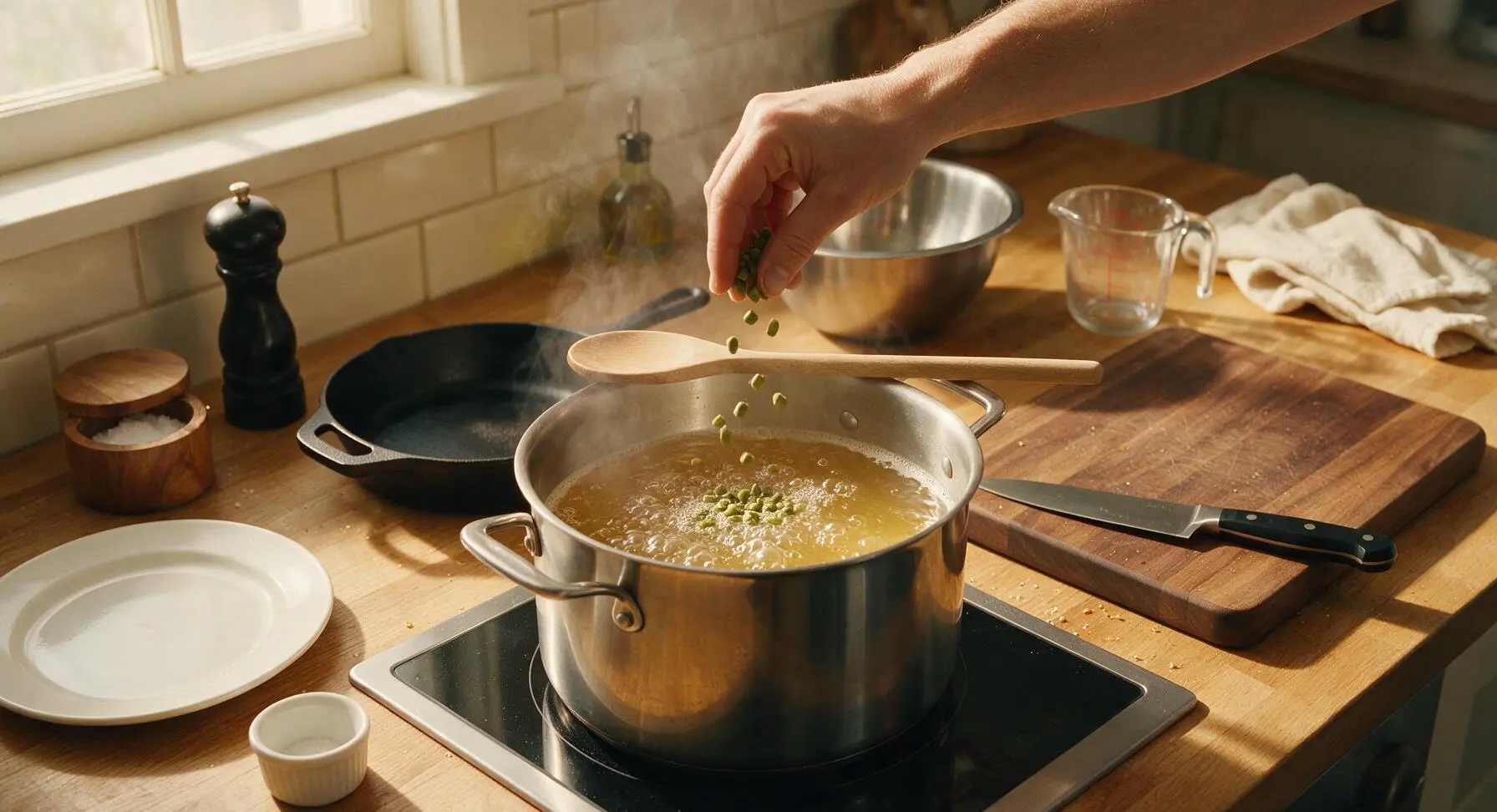
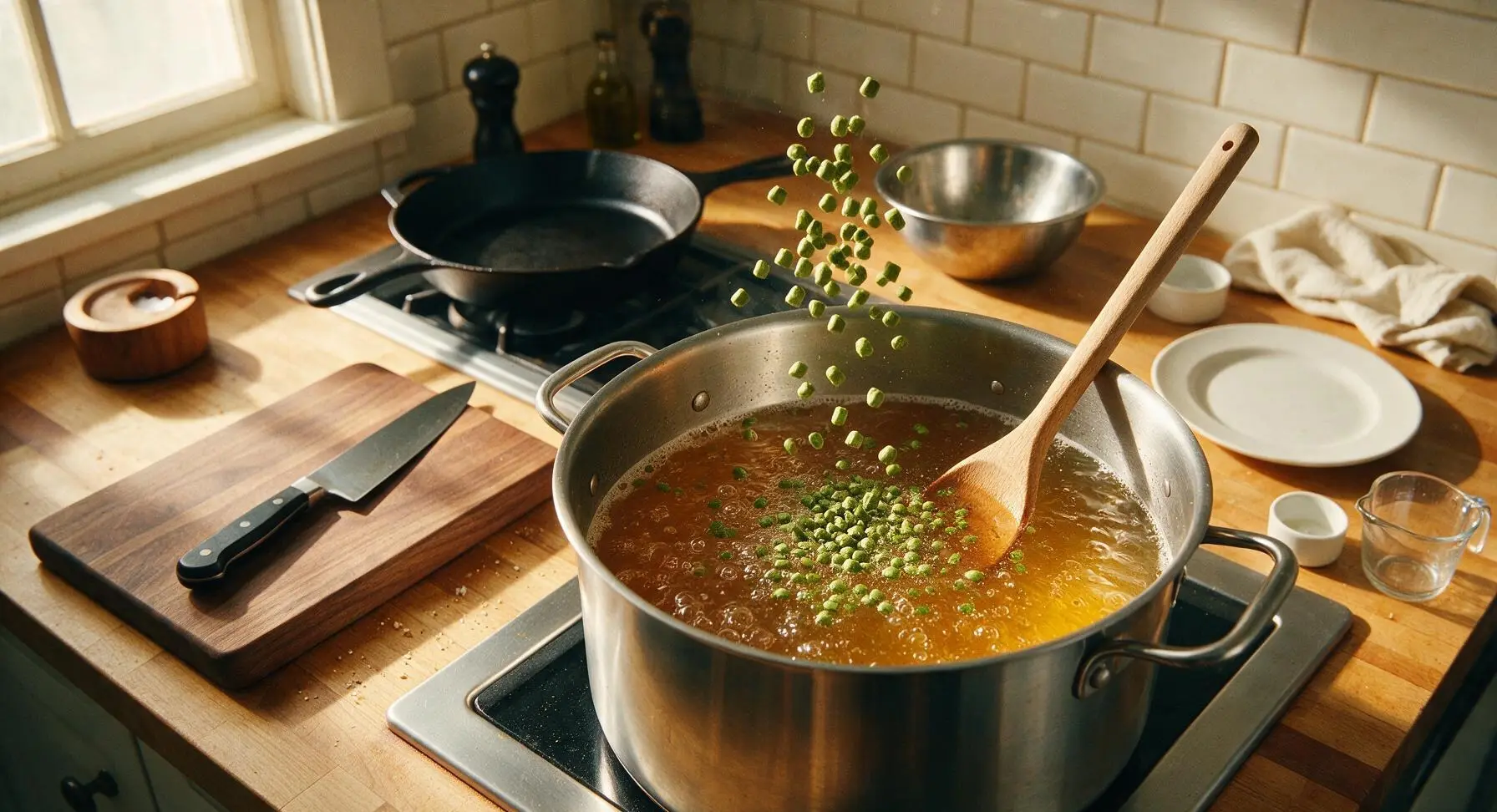
Pour the remaining 0.5 gallons (1.9L) of filtered water into the mash, then increase induction burner heat to bring the sweet wort (extracted sugar liquid) to a gentle rolling boil. Once boiling, add 0.35oz (10g) of Hallertau hop pellets, set a timer for 60 minutes, and adjust heat to maintain a steady boil without boilovers. With 5 minutes remaining in the boil, add the final 0.15oz (4g) of Hallertau hops to preserve bright floral aroma. Remove the pot from heat immediately when the 60-minute timer ends.
Cool and Strain Wort
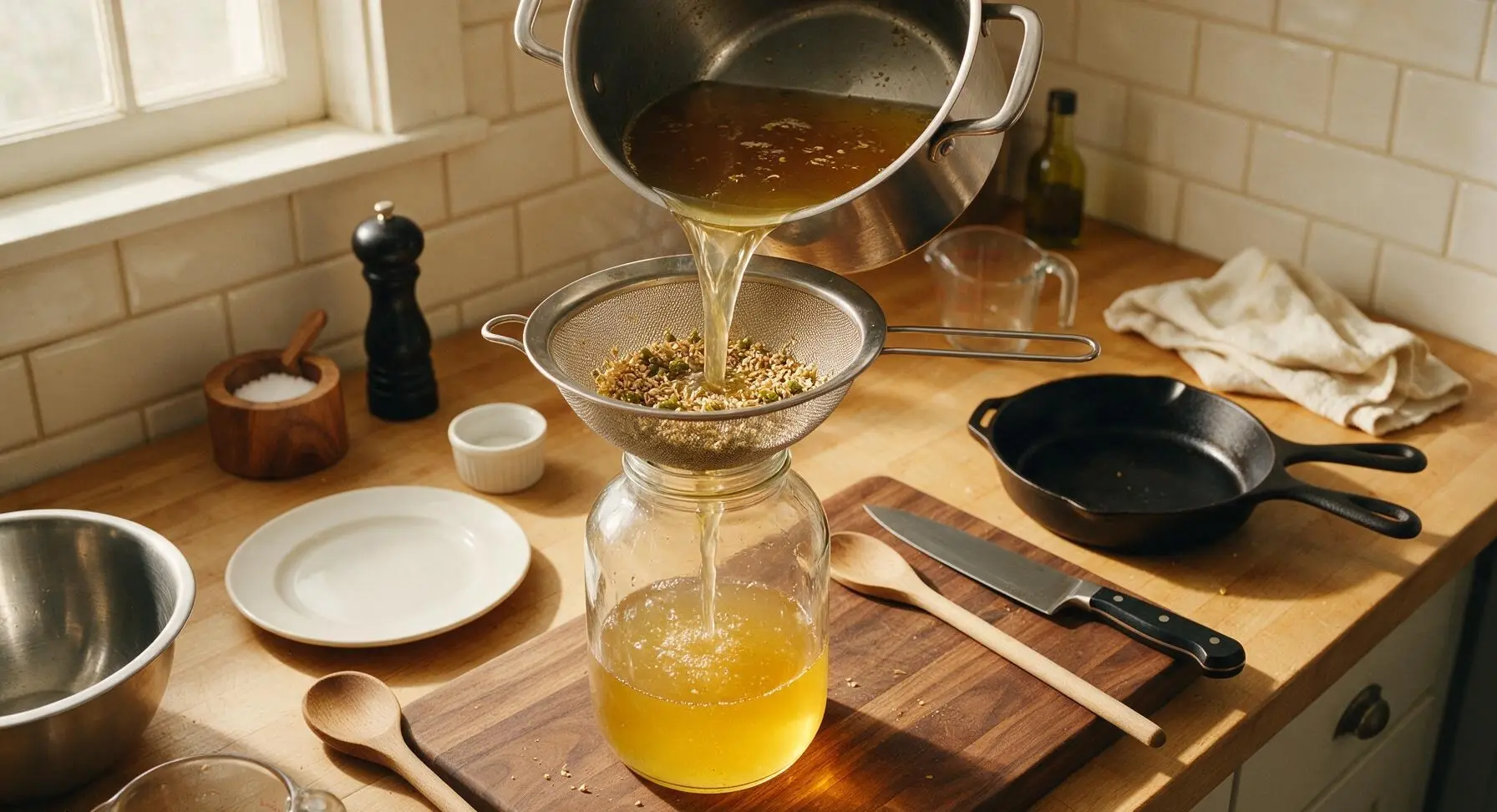
Move the covered stock pot to an ice bath to cool the wort quickly to 70°F (21°C), approximately 20 minutes, to prevent off-flavors and prepare for yeast. Set the fine-mesh stainless steel strainer over the mouth of the sanitized glass carboy, then pour the cooled wort through the strainer to catch all spent grain and hop debris. Top the carboy with extra cold filtered water if needed to reach the etched 1-gallon volume mark.
Pitch the Yeast
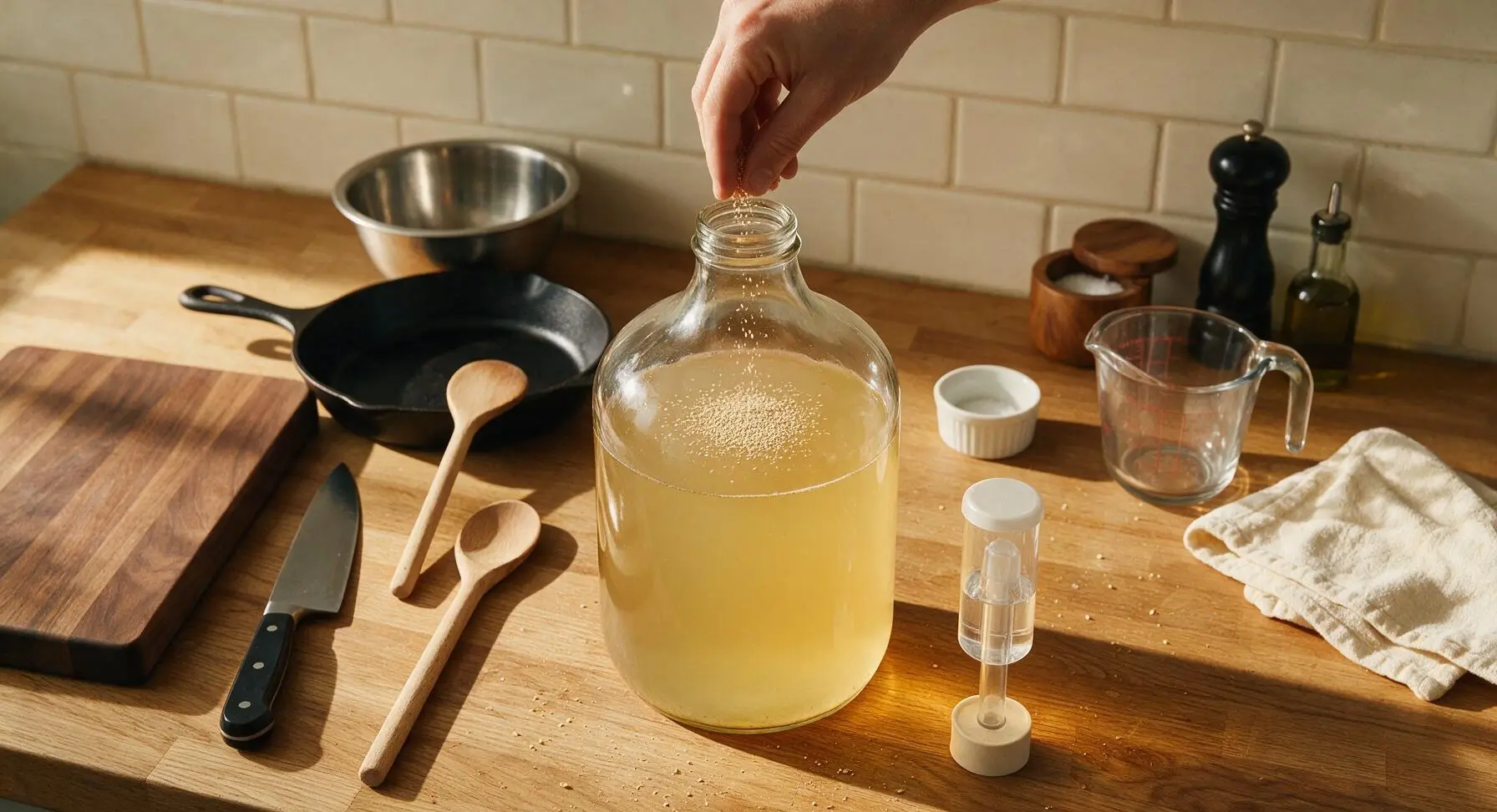
Sprinkle the entire 11g packet of Kolsch ale yeast evenly across the surface of the cooled wort in the carboy. Seal the carboy neck with the sanitized rubber stopper, then fill the airlock halfway with sanitizer solution and insert it through the stopper hole. Give the carboy a gentle, slow swirl to distribute yeast evenly, taking care not to splash sanitizer from the airlock into the beer.
Ferment the Beer
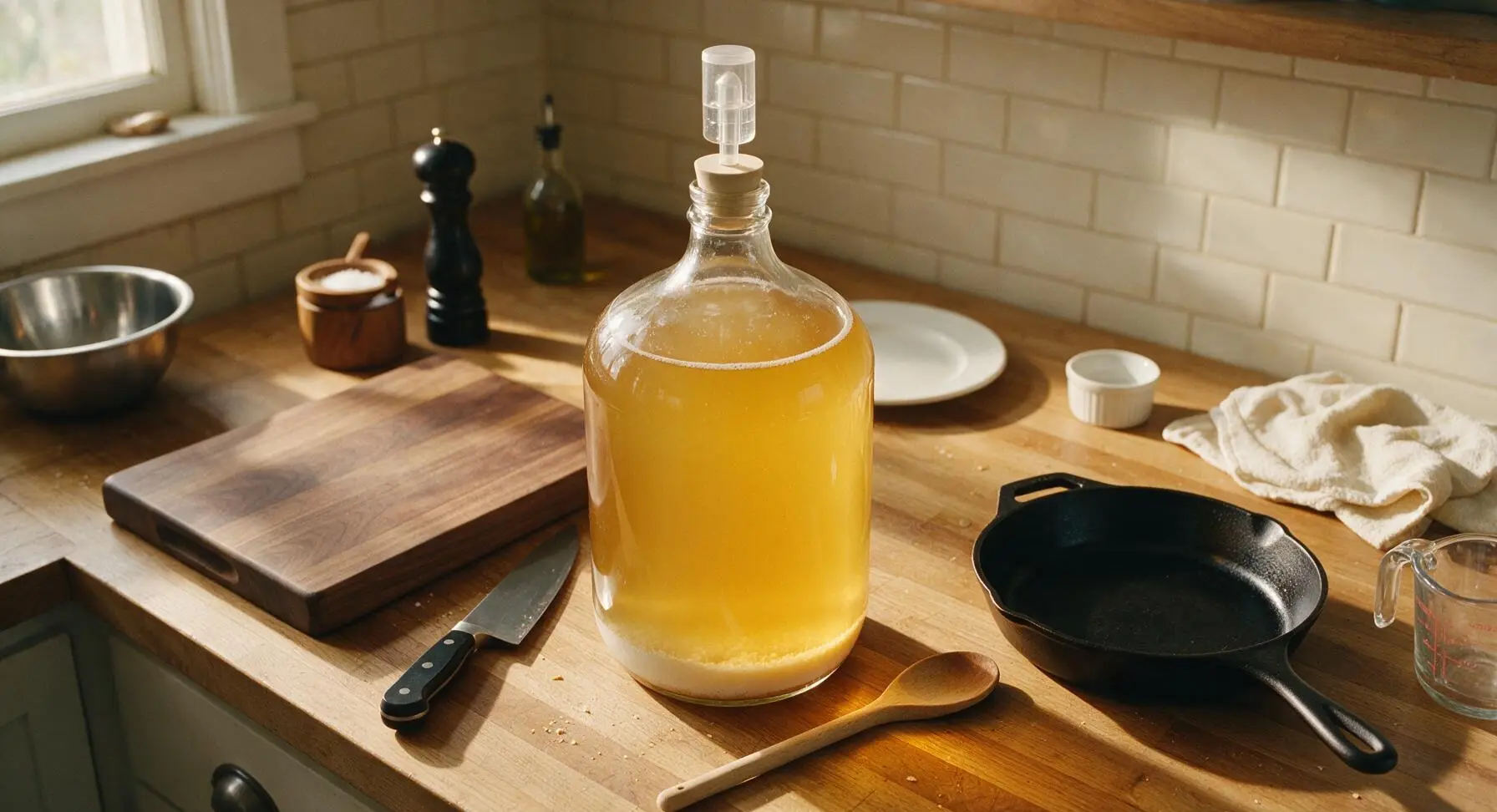
Move the sealed carboy to a dark, temperature-stable space held at 60–65°F (15–18°C) for primary fermentation. Let rest undisturbed for 10–14 days, until bubbling in the airlock stops completely, the beer turns crystal clear, and a thin layer of white yeast sediment settles at the bottom of the carboy. Avoid moving or jostling the carboy during active fermentation to prevent sediment from mixing back into the clear beer.
Bottle and Carbonate
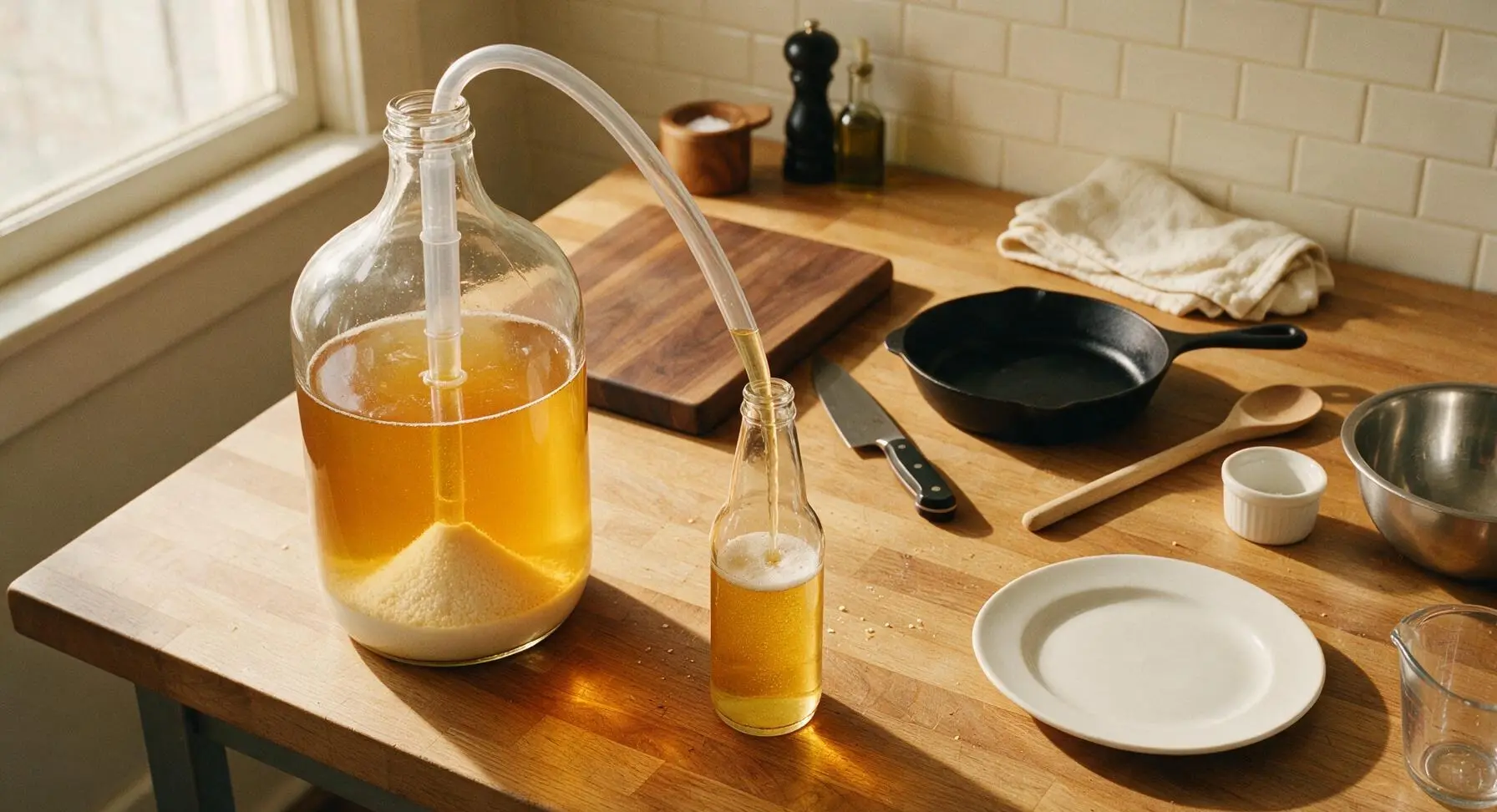
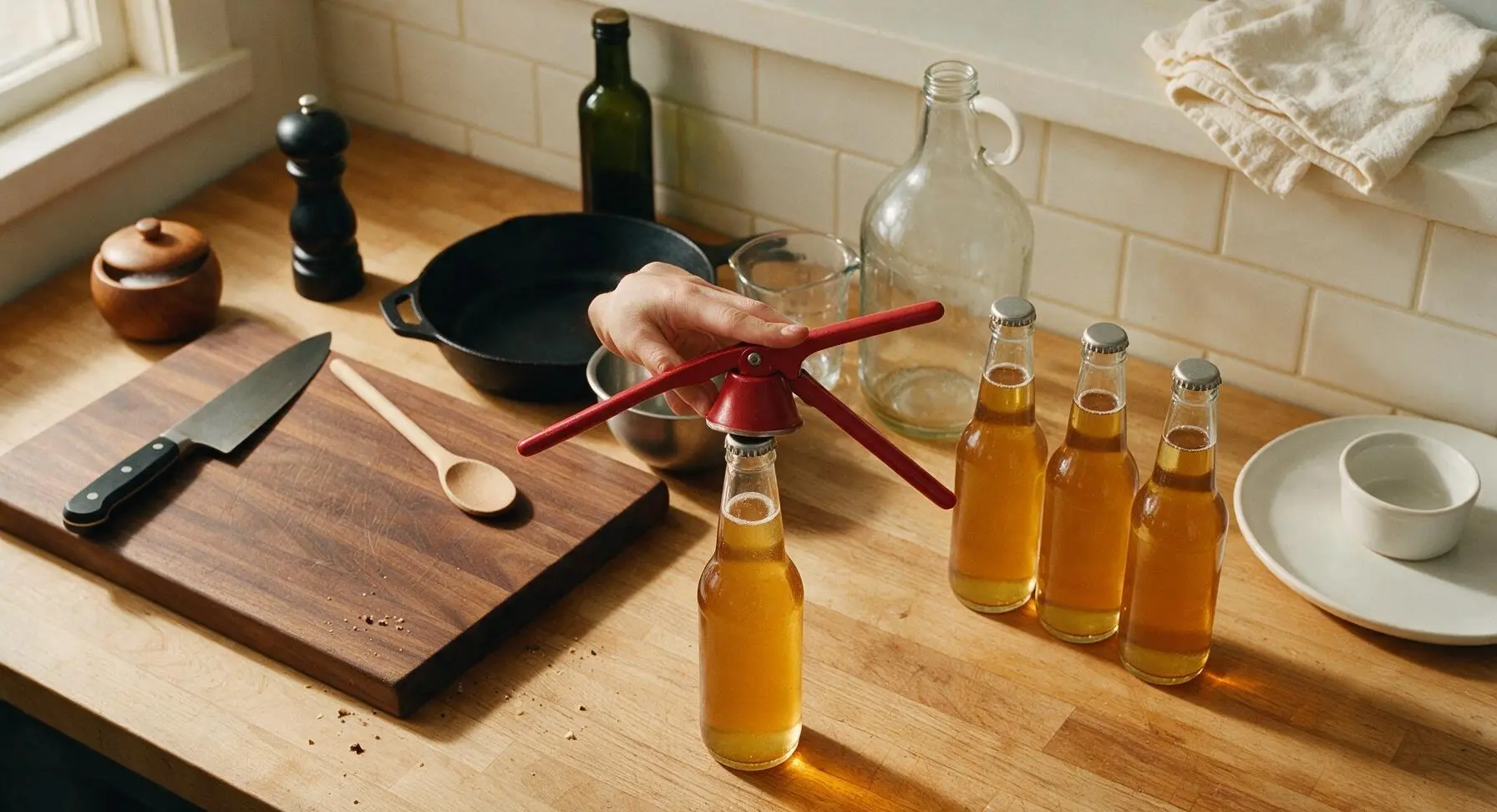
Boil the 1.8oz (51g) of corn sugar in 1/4 cup water for 5 minutes to make a priming solution, then let cool completely. Use the sanitized auto-siphon to transfer clear beer from the carboy into sanitized 12oz glass bottles, leaving the yeast sediment undisturbed at the bottom of the carboy. Divide the cooled priming sugar evenly between the bottles, then use the red bottle capper to seal each bottle with a sanitized metal cap. Store bottles in a dark 65°F (18°C) space for 7–10 days to build natural carbonation, then chill before serving.
Tips
2.Maintain steady fermentation temperatures between 60–65°F (15–18°C): Temperatures above 68°F (20°C) will cause the Kolsch yeast to produce harsh, solvent-like fruity off-notes that ruin the style's signature smooth, crisp finish.
3.Serve Kolsch traditionally in narrow, straight-sided stange glasses chilled to 40°F (4°C): The narrow shape preserves the beer's tight white head and delicate floral hop aroma, just as it is served in Cologne's historic riverfront biergartens.






OMG, made this for our neighborhood block party last weekend and people would NOT stop asking for the recipe! The crisp, light flavor is exactly what I remember from that trip to Cologne a few years back. Cook time was totally manageable even with my messy home setup, didn’t take all day like some other Kolsch recipes I’ve tried. Game changer for summer cookouts!
SO good! Brewed a batch to pair with our weekly taco night and it was the perfect match—light enough to not overpower the carnitas and lime, crisp enough to cut through the sour cream. My roommate already asked when we’re making another batch.
Just finished bottling my first batch of this! The wort tasted so good going into the fermenter, I already know this is gonna be my go-to summer beer. Question: how long do you recommend conditioning in the bottle before cracking the first one?
Made this last weekend for our camping trip, it was so light and refreshing after a long day on the trails. Knocked a star off only because I wish the recipe had notes on scaling it up for a 5-gallon batch instead of the smaller 2-gallon size. Ended up doing the math myself but it would’ve saved me time!
First time ever attempting any kind of home brew, picked this because the difficulty said medium and it didn’t require a ton of fancy equipment. Mine turned out a little hoppier than I expected? Did I mess up the bittering hop addition timing? Still drinkable, my roommates loved it, but want to nail it next time.
Brought a six pack of this out to our weekly golf round with the guys and everyone was raving. Way smoother than the cheap domestic beer we usually bring, and it didn’t weigh us down in that 105 degree heat. Will be a staple in my golf cooler from now on.
Game. Changer. I hosted a girls’ night pool party last night and served this chilled with citrus slices, everyone thought I bought it from a fancy local brewery! Didn’t tell them I brewed it myself until they all asked for the brewery name, lol. So easy to follow even for someone like me who’s only been brewing 6 months.
As someone who grew up drinking Kolsch on trips to visit family in Germany, I was super skeptical this would live up to the hype. Spoiler: it does. The soft finish, that subtle apple note, zero harsh aftertaste? 10/10, already on my third batch this summer.
Wait, I know this is technically a beer recipe but I used the flavor profile to make Kolsch-braised brats for our Sunday family dinner and my kids went back for seconds! The subtle fruity notes make the meat taste so much brighter than just using regular lager. Will absolutely be making a batch of the actual Kolsch to go with the brats for our next tailgate.
Made this in my dorm kitchen with a cheap homebrew kit I got for my birthday, it turned out way better than I thought it would! Only issue was I didn’t have the exact noble hops the recipe called for so I substituted what I had, still tasted great. Would recommend for other broke college kids looking for a fun weekend project.
Wait, I don’t even homebrew but my partner does, and I helped him make this for our Father’s Day gathering with my dad. It was so fun to make together, and my dad (who is super picky about beer) said it was better than the imported Kolsch he buys at the liquor store. Win win in my book!
Tested this recipe out to add as a seasonal special at my small diner, and it’s been flying off the taps! Locals keep coming back specifically for it, saying it’s the perfect light beer to pair with our burger and fry special. Might have to keep it on the menu year round instead of just summer.
I’ve tried so many copycat Kolsch recipes over the years and this one is by far the closest to the real deal I’ve had stateside. The hint of pear and that soft, bready malt base? *Chef’s kiss* Brought a growler of it to our weekly potluck at work and the whole office was begging for the link.
Made this for my annual backyard rib cookoff, it was the perfect complement to the smoky ribs and baked beans. So much better than serving the same old mass-produced beer every year. Even my cousin who only drinks IPAs said he loved how smooth it was, which is a major win in my book.
Really solid recipe! Only note is that my kitchen ran a little warm during fermentation so I got a slightly more fruity, estery profile than the traditional Kolsch is supposed to have. Still tasted great, just a heads up for anyone making this in a hotter climate to keep an eye on ferment temp.