Weisswurst

title 1
Weisswurst
⏱️ cook time 1 hour 30 minutes
🍽️ servings 4
⚡ Difficulty medium

intro

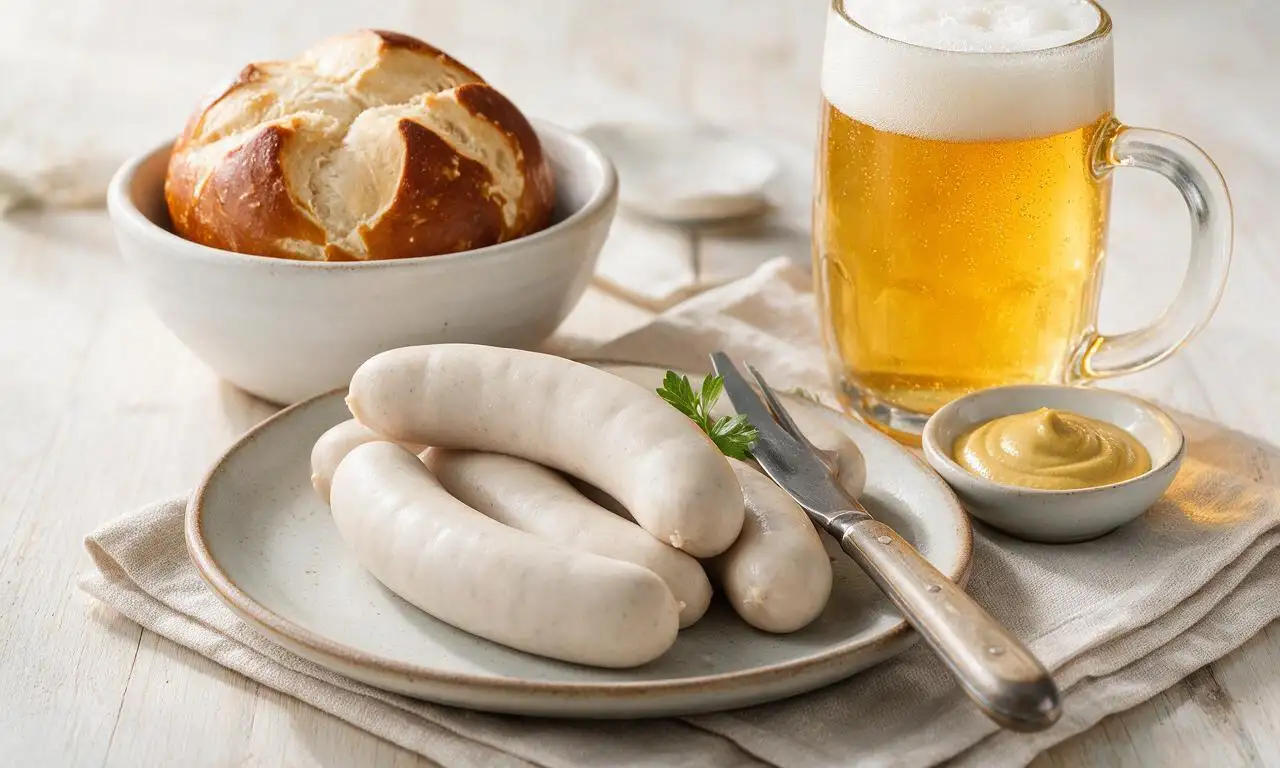
Tender, mild veal and pork white sausage, a beloved Bavarian classic served with sweet mustard, soft pretzels, and cold wheat beer.

Ingredients

Lean veal, trimmed of sinew, cut into 2cm cubes 400 grams
Pork back fat, cut into 2cm cubes 200 grams
Ice-cold water 120 ml
Fresh flat-leaf parsley, finely chopped 3 tablespoons
Kosher salt 2 teaspoons
Freshly ground white pepper 1 teaspoon
Ground mace 1/2 teaspoon
Ground dried ginger 1/4 teaspoon
Unwaxed lemon zest 1 teaspoon
White onion, finely grated and squeezed dry 2 tablespoons
Natural hog casings (32-34mm diameter), soaked 30 minutes 2 meters
Sweet Bavarian mustard (for serving) 120 grams
Large soft pretzels (for serving) 4 pieces
German wheat beer (for serving, optional) 500 ml

Steps

1

Chill meat and equipment

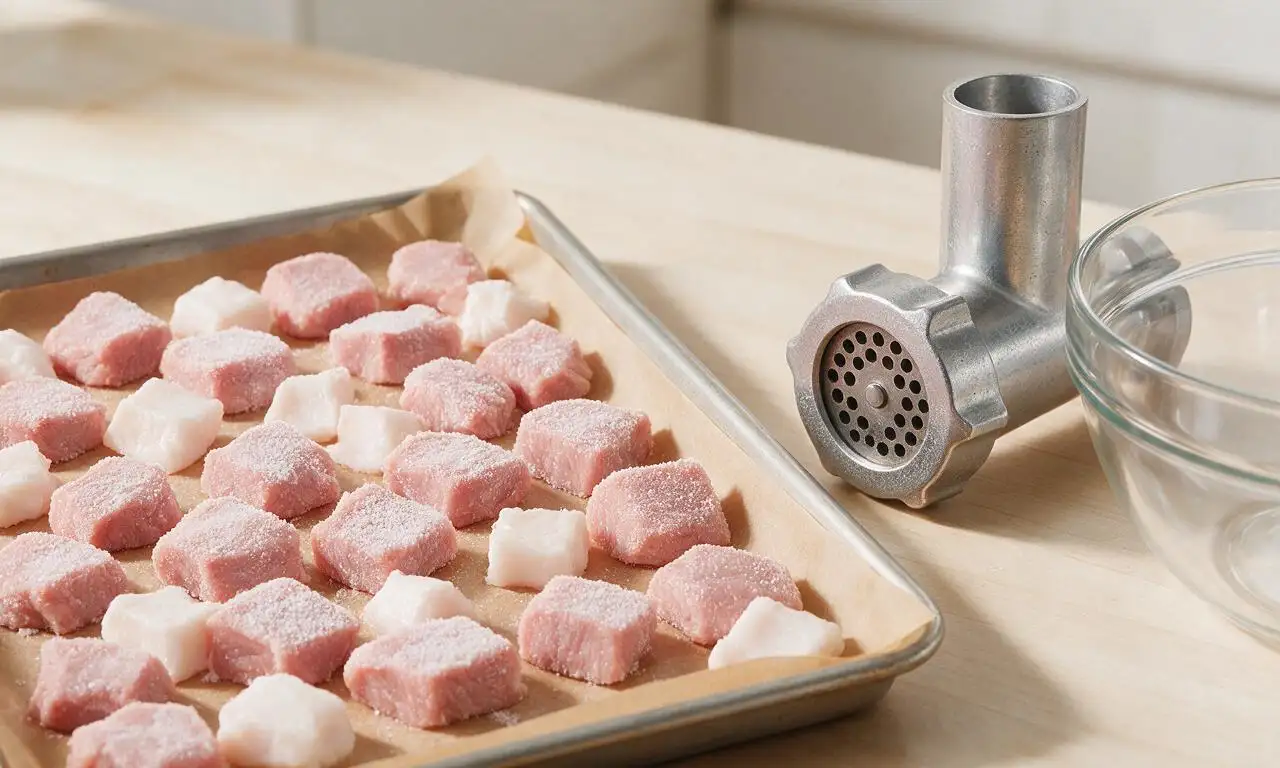
Place cubed veal and pork back fat on a parchment-lined baking tray, and freeze for 30 minutes until firm to the touch but not rock-solid (internal temperature around -1°C/30°F). Place your meat grinder attachment, stand mixer bowl, and sausage stuffer tube in the freezer to chill for the same 30 minutes to prevent fat from melting during processing.
Step 1
step1:Chill meat and equipment
2

Grind chilled meat blend

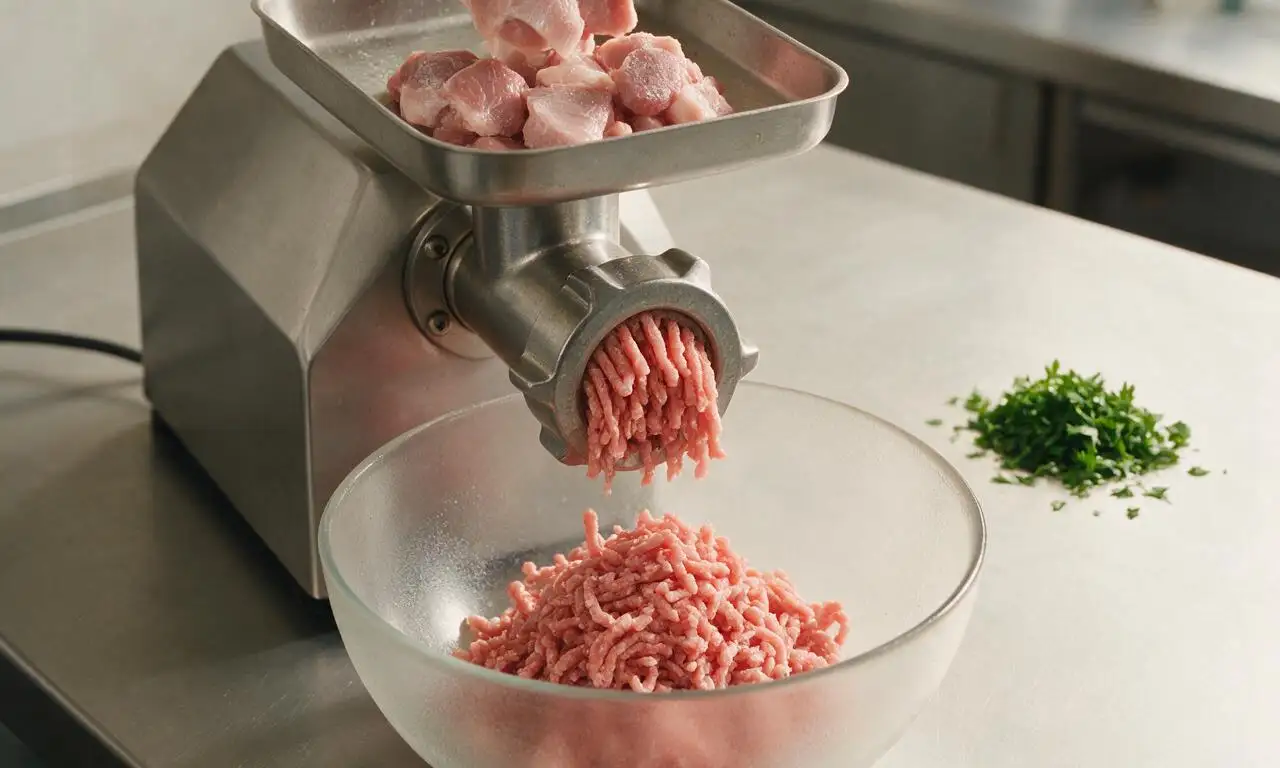
Assemble your pre-chilled meat grinder with a 4mm (fine) grinding plate. Alternately feed the firm partially frozen veal, pork fat, and squeezed grated onion through the grinder into the chilled mixing bowl below. Once all the meat has passed through the first grind, run the entire collected mixture through the grinder a second time to create a smooth, uniform fine texture. Work quickly throughout this step to ensure the meat mixture stays below 4°C/39°F to prevent fat melting.
Step 2
step2:Grind chilled meat blend
3

Blend in seasonings

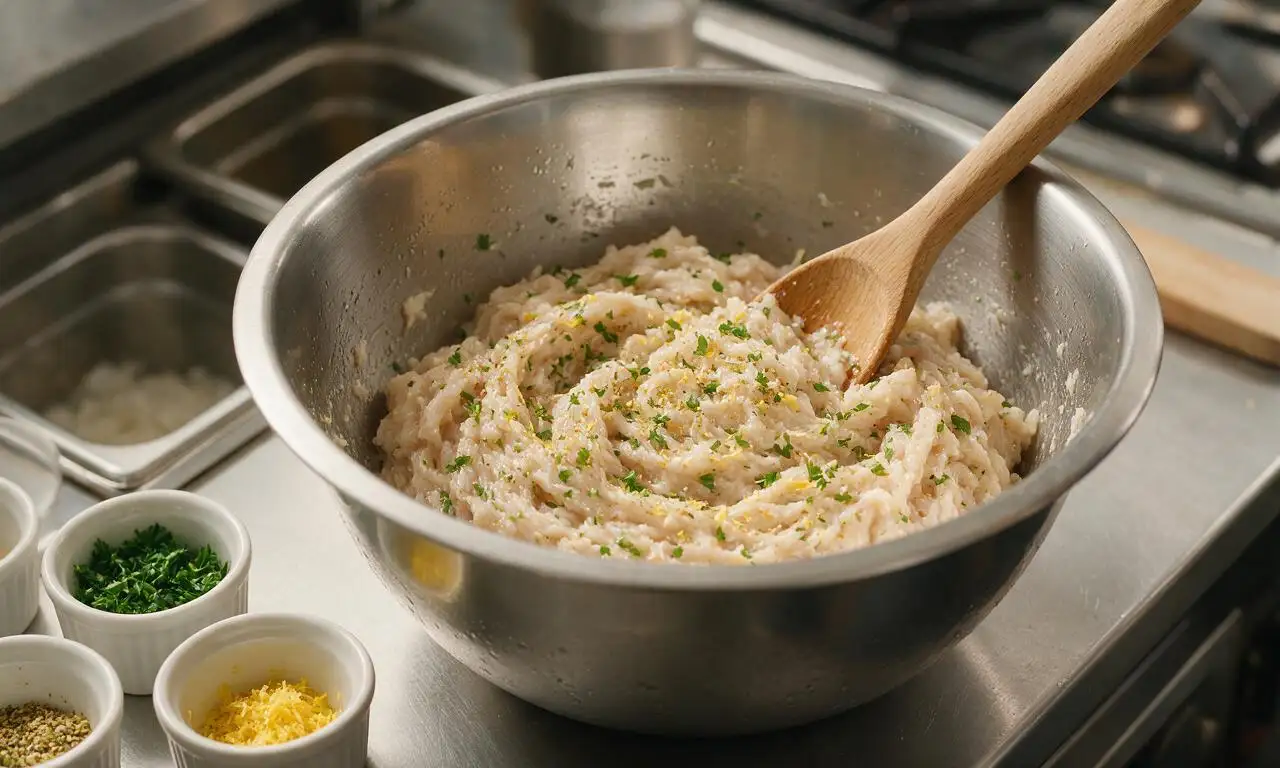
Add the ice-cold water, kosher salt, white pepper, mace, ground ginger, lemon zest, and chopped parsley to the twice-ground meat mixture. Mix on low speed with a stand mixer fitted with a paddle attachment (or by hand with a stiff wooden spoon) for exactly 2 minutes until the mixture becomes sticky, cohesive, and pulls cleanly away from the sides of the bowl. Stop mixing as soon as this texture forms, as overmixing will develop tough meat proteins.
Step 3
step3:Blend in seasonings
4

Stuff sausage casings

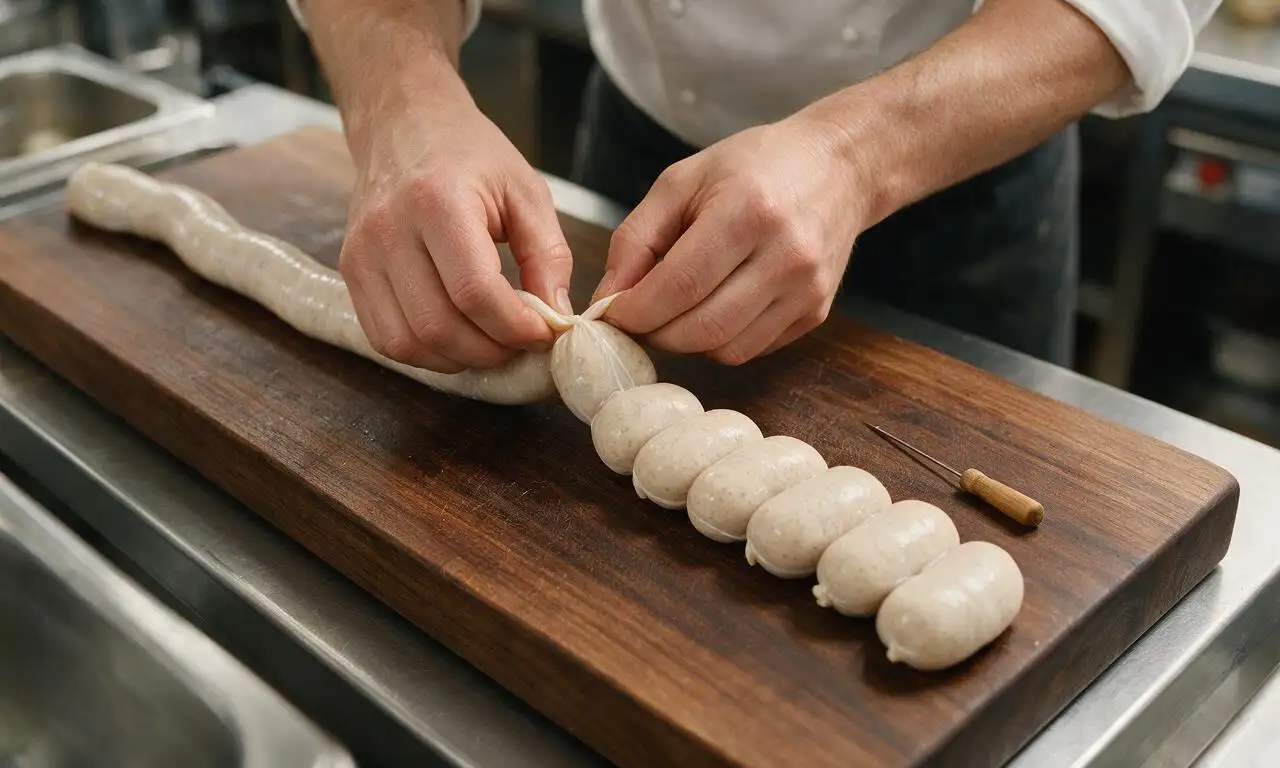
Thread the soaked, rinsed hog casing fully onto the chilled sausage stuffer tube, tying a tight overhand knot at the free end of the casing. Feed the meat mixture through the stuffer at a slow, steady pace to fill the casing evenly, taking care not to overstuff (which causes bursting during cooking). Once the entire casing is filled, twist the long sausage rope into 10cm (4 inch) individual links, pinching firmly and twisting every other link in the opposite direction to prevent unravelling. Prick any visible air pockets with a sterilized straight pin to eliminate gaps.
Step 4
step4:Stuff sausage casings
5

Gently poach sausages

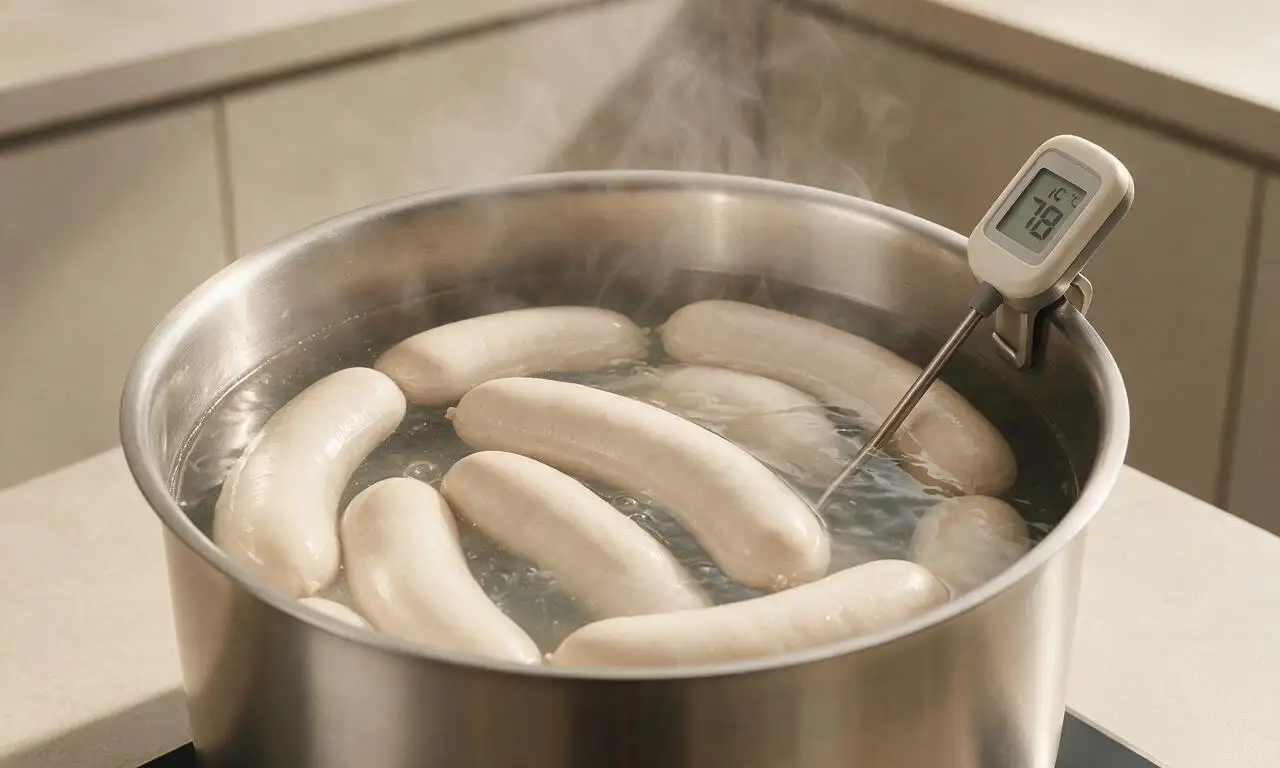
Fill a large stock pot with 2 liters of water, bring to a very gentle simmer (75-80°C/167-176°F, no rolling boil, as boiling will burst casings and make the sausage tough). Carefully lower the sausage links into the water, maintain the low steady temperature for 15-20 minutes until the internal temperature of the sausages reaches 70°C/158°F on an instant-read thermometer. Do not stir aggressively to avoid tearing casings.
Step 5
step5:Gently poach sausages
6

Rest and serve traditionally

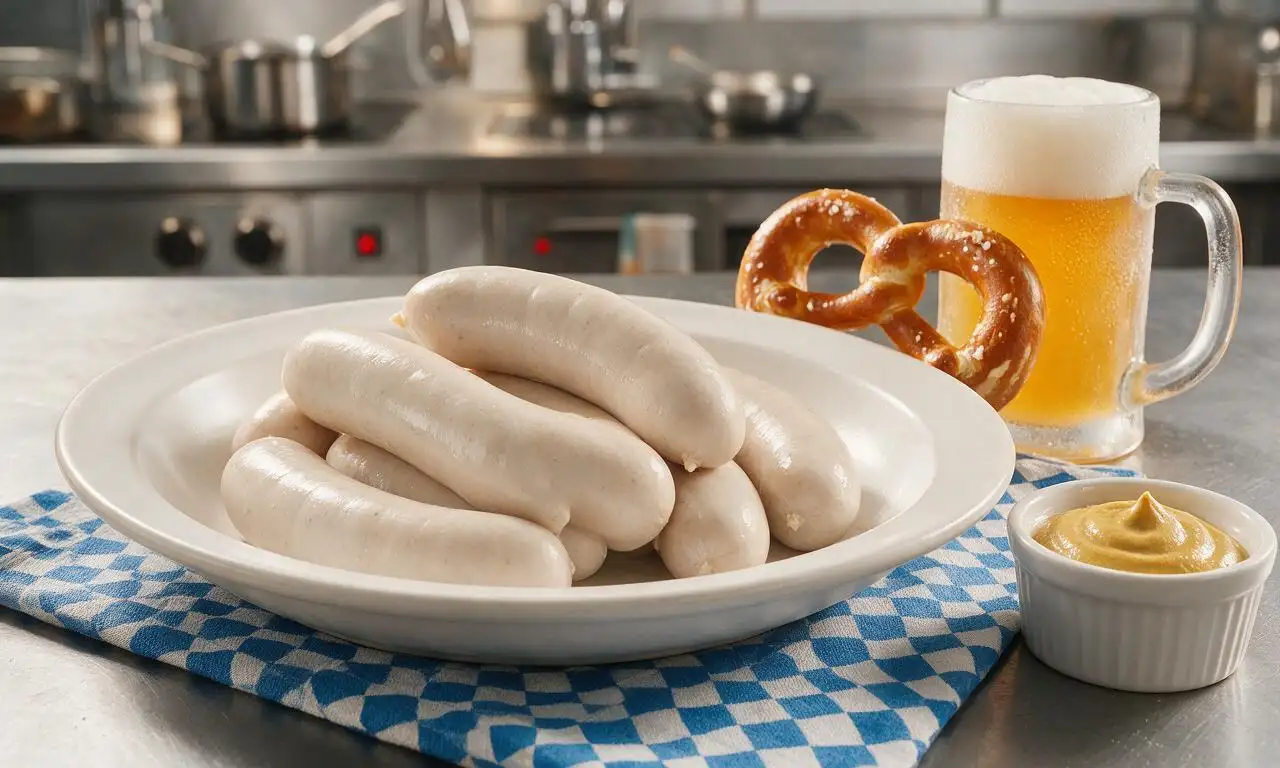
Use a slotted spoon to gently lift the poached sausages from the warm water, transferring them to a pre-warmed ceramic serving platter. Let the sausages rest for 3 minutes to allow juices to redistribute. Serve immediately alongside the sweet Bavarian mustard, soft pretzels, and optional cold wheat beer, following tradition by peeling off the casings before eating if desired.
Step 6
step6:Rest and serve traditionally

Tips

1.Never allow poaching water to reach a rolling boil: high heat will render fat out of the sausage, burst casings, and create a dry, rubbery texture. Keep water at a steady 75-80°C, with only tiny bubbles rising to the pot edge.
2.Keep all meat, equipment, and added water ice-cold through every processing step: warm fat fails to emulsify properly, resulting in a grainy, crumbly sausage instead of weisswurst’s signature smooth, tender bite.
3.Weisswurst casings are traditionally not eaten: to enjoy as the Bavarians do, slice each sausage lengthwise, peel away the thin casing, and dip each bite in sweet mustard rather than spreading mustard on the sausage.

✨ You May Also Like

Lunch
🍜 United States

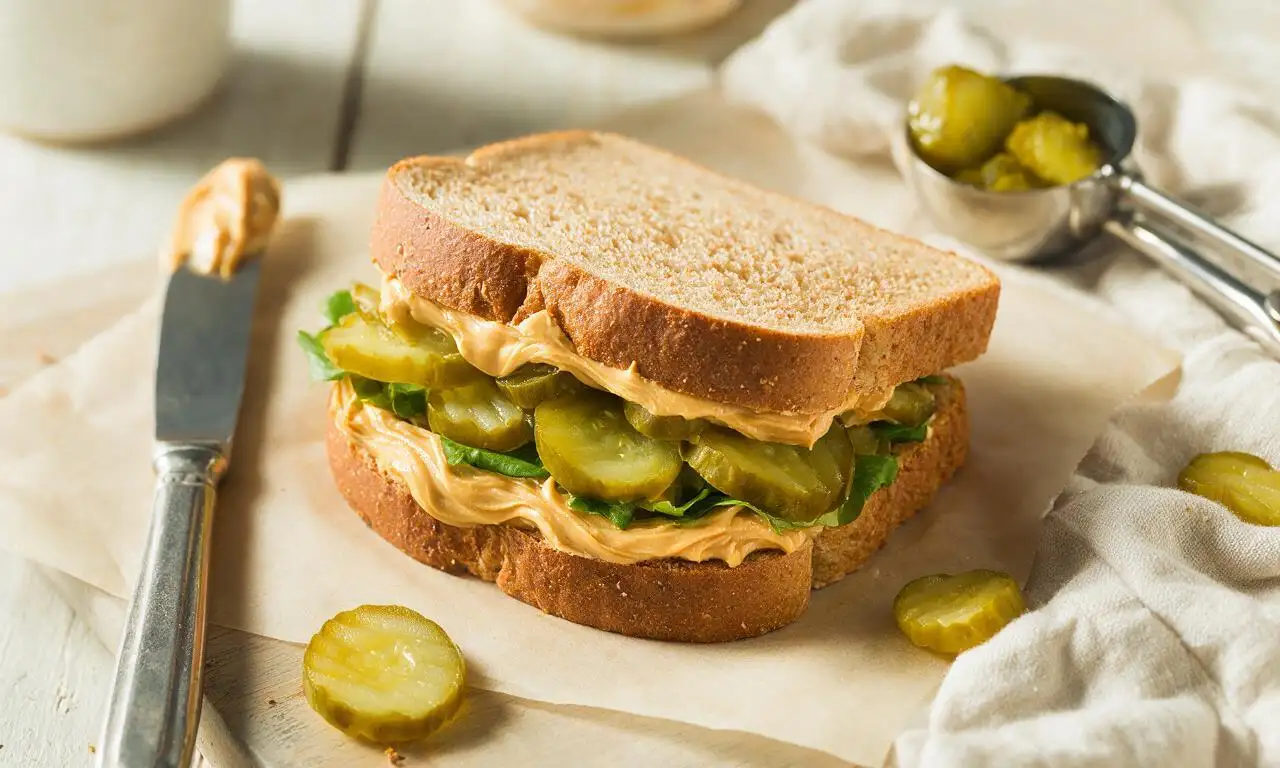
Creamy, salty, tangy nostalgic Midwestern sandwich pairing rich peanut butter with crisp briny dill pickles for a fast, satisfying no-cook meal.

⏱️ 5 minutesLunch ★ 4.6
Lunch
🍜 United States

Crispy, melty pressed sandwich layered with savory roast pork, ham, Swiss cheese, pickles, and tangy mustard: a beloved Cuban-American comfort classic.

⏱️ 25 minuteLunch ★ 4.9
Lunch
🍜 United States

Hearty, briny New Orleans pressed sandwich stacked with cured Italian meats, provolone, and zesty olive salad, served cold for bold, portable flavor.

⏱️ 1 hour 20Lunch ★ 4.7
Lunch
🍜 United States

A tangy, creamy Southern American staple, this no-cook cheesy sandwich is packed with sharp cheddar and sweet pimentos for a satisfying, portable bite.

⏱️ 1 hour 15Lunch ★ 4.8
Lunch
🍜 United States

Crispy Cajun-spiced fried shrimp piled on crusty French bread with tangy remoulade and fresh toppings, the iconic Louisiana street food sandwich.

⏱️ 35 minuteLunch ★ 4.4
Lunch
🍜 United States

Stacked, savory deli-style corned beef sandwich with melted Swiss, tangy mustard, and crisp griddled rye— a fast, hearty, satisfying classic.

⏱️ 15 minuteLunch ★ 4.9

Weisswurst:Frequently Asked Questions

1.What’s the right way to cook weisswurst so it doesn’t split or turn rubbery? ▾
Skip a rolling boil entirely—simmer the sausages in lightly salted water held right around 160°F (no active bubbles) for 10 to 12 minutes. A hard boil bursts natural casings and renders out delicate pork fat, leaving the sausage dry and tough. Never prick casings before cooking, either, as that lets juicy, herby filling leak out.
2.Do I need to remove the sausage casing before eating weisswurst? ▾
Yes, traditional Bavarian weisswurst uses a chewy natural pork casing that’s not meant to be eaten. You can use the classic Bavarian “zuzeln” method: hold one end of the warm sausage and suck the tender filling out, or simply slice the casing lengthwise with a knife and peel it off easily before eating.
3.Why is ice-cold water a key ingredient in the weisswurst filling? ▾
Ice-cold water serves two critical purposes for perfect weisswurst texture. First, it keeps meat and fat cold enough to prevent fat smearing, which would create a grainy, uneven bite instead of the signature smooth, tender consistency. Second, it helps kosher salt dissolve evenly to bind the filling so it holds together during cooking.
4.Can I substitute other meats if I can’t find lean veal for this recipe? ▾
You can, but stick to very lean, mild-flavored cuts to match weisswurst’s signature delicate taste. The best swap is trimmed, lean pork shoulder cut to the same 2cm cube size. Avoid strongly flavored game or fatty beef, which will overpower mild parsley seasoning, and skip pre-ground meat, which creates a mushier final texture.
5.What sides should I serve for an authentic Bavarian weisswurst meal? ▾
Stick to classic, time-tested pairings for the most authentic experience: sweet Bavarian mustard (not sharp yellow or spicy brown), warm soft pretzels with a light sprinkle of coarse salt, and ice-cold German wheat beer. You can add a small side of mild sauerkraut if you like, but skip heavy, strongly flavored sauces that overpower the sausage’s mild flavor.
6.Why doesn’t traditional weisswurst use curing salt or bold spices? ▾
Traditional weisswurst is a fresh, uncured sausage historically made early in the morning and served before noon, before modern refrigeration existed. It relies only on fresh parsley and kosher salt for seasoning, skipping curing salt, smoke, or heavy spices, to keep its pale white color and delicate, fresh veal and pork flavor front and center.
7.How long can I store homemade uncooked weisswurst? ▾
Since this is a fresh, preservative-free uncured sausage, store it tightly wrapped in the coldest part of your refrigerator for no more than 2 days before cooking. For longer storage, freeze uncooked sausages in airtight, freezer-safe bags for up to 3 months, and thaw them fully in the fridge before simmering to avoid uneven cooking.
8.My homemade weisswurst turned out dry and crumbly—what went wrong? ▾
The two most common causes are overheated filling during prep, or cooking at too high a temperature. If fat warms above 40°F while grinding or mixing, it will separate and leak out during cooking, leaving a dry, crumbly texture. Always keep meat, fat, and equipment ice-cold while prepping, and never boil sausages as they cook.

Comments (3)

3 days ago

OMG, I made these for our Oktoberfest potluck last weekend and they were a total hit! I was nervous about the difficulty being medium since I’ve never made sausage from scratch before, but the steps were super clear and easy to follow. The texture was so tender, not rubbery at all like the frozen store-bought ones I’ve tried before. My husband kept going back for seconds, and even my picky 7-year-old ate two! Served them with sweet Bavarian mustard and soft pretzel bites, 10/10 would make again for our next get-together.

2 days ago

Wait did you stuff the casings yourself for this? I’ve been so intimidated to try that part for homemade sausage, how much of a pain was it?

yesterday

So glad these were a hit at your Oktoberfest potluck, even with your picky 7-year-old! For anyone nervous about stuffing casings (looking at you, Jake!), go slow and keep the meat mixture ice cold to prevent tearing – it gets way easier after the first couple tries!

1 week ago

Game changer recipe! I prepped a double batch on Sunday for the week’s lunches, paired them with sauerkraut and roasted potatoes, and they held up perfectly even after reheating in the office microwave. Only note: I didn’t have fresh flat-leaf parsley on hand so I used dried, and it still turned out really flavorful. Total cook time felt pretty spot on for me too, and way more budget-friendly than picking these up from the fancy German deli downtown that charges $12 a pack.

5 days ago

Love that you adapted this for weekly meal prep! Dried parsley works totally fine in a pinch – just remember to use 1/3 of the amount called for, since dried herbs are more concentrated than fresh. So glad you enjoyed them!

2 hours ago

Made these last night for family dinner and wow, SO good. I messed up the first test batch by getting the water to a rolling boil instead of a gentle simmer so a couple sausages split open, but the rest came out perfect. The little bit of lemon zest and fresh parsley really brightens up the mild veal and pork flavor – it tasted just like the weisswurst I had when I visited Munich for Oktoberfest a few years back. Will definitely be keeping this recipe in my regular dinner rotation.