
Weizenbier
intro
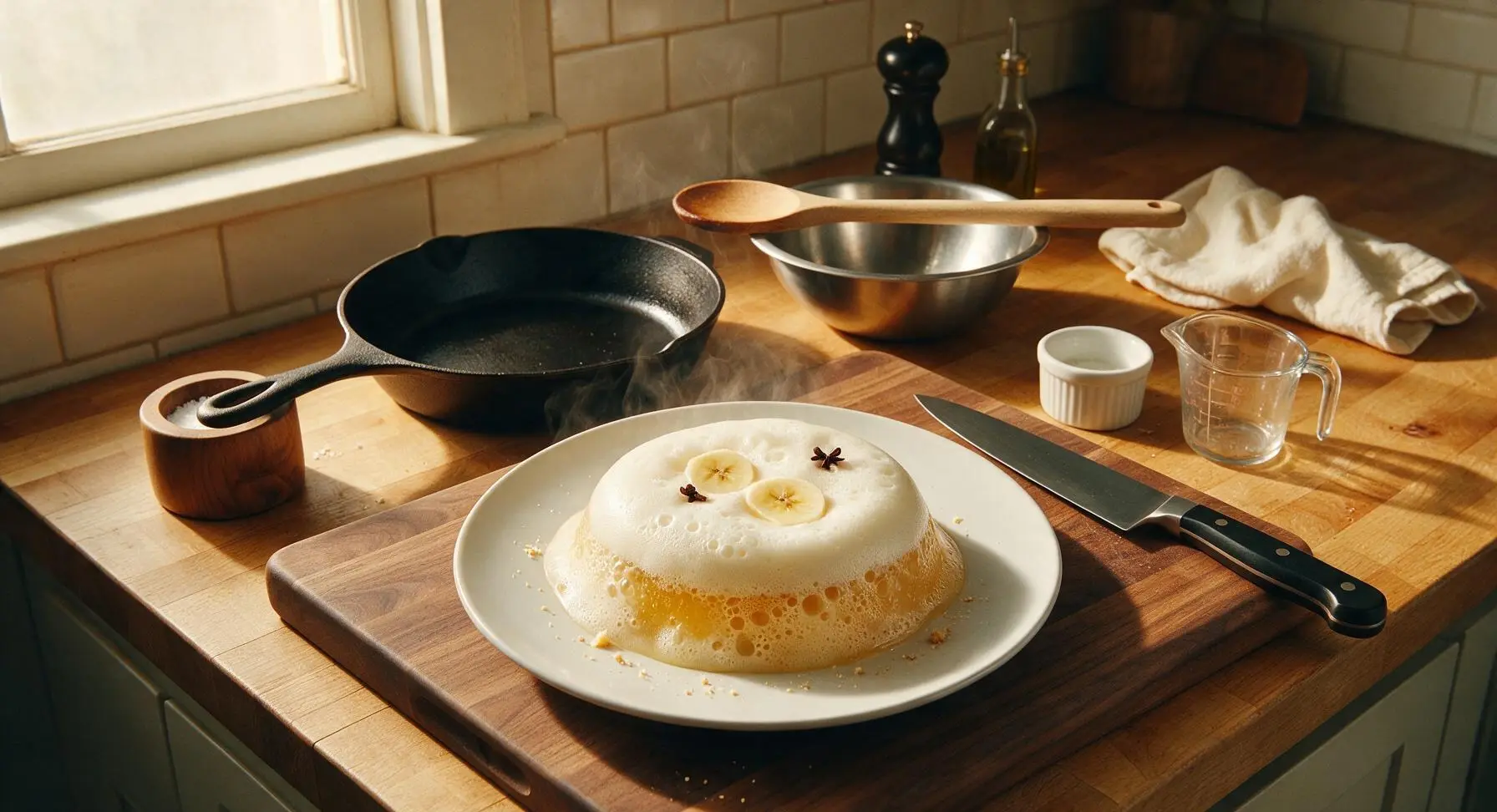
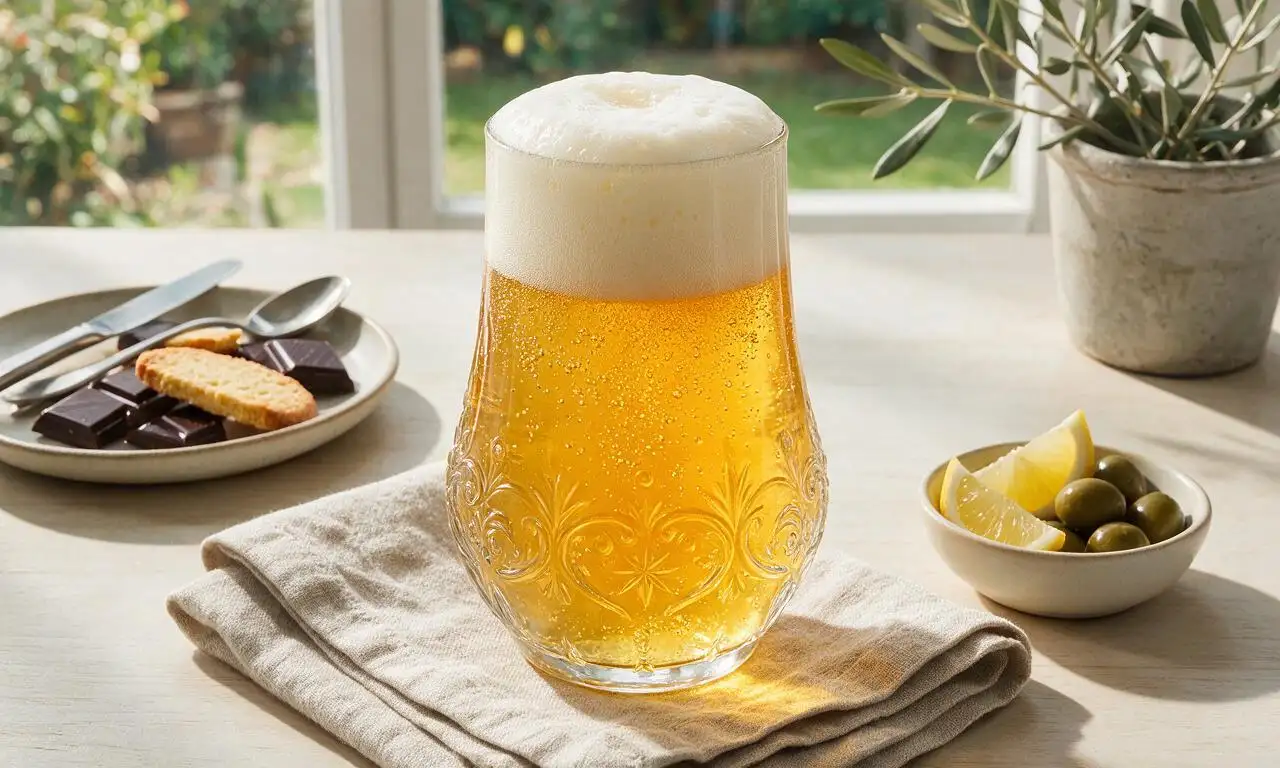
Classic cloudy Bavarian wheat beer with bright banana and clove notes, a thick creamy foam head, and crisp, effervescent carbonation, perfect for warm summer days.
Ingredients
Steps
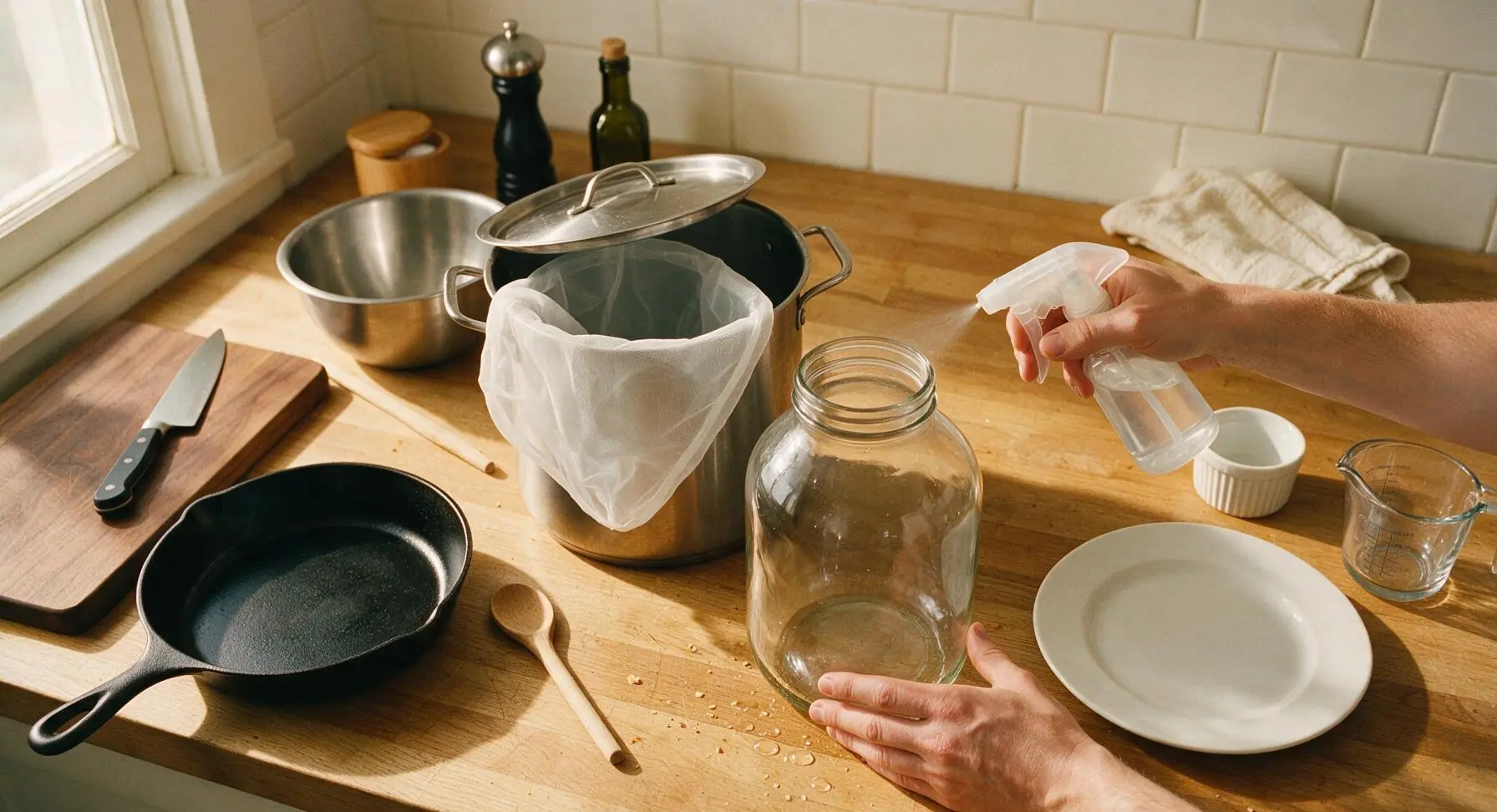
Sanitize Brewing Equipment
Before handling any ingredients, spray all food-contact surfaces of the brew pot, stirring spoon, grain bag, carboy, airlock, siphon, and bottle capper with no-rinse food-grade sanitizer from the spray bottle. Allow sanitizer to sit for 60 seconds, then drain excess liquid (no rinsing required). Any surface that touches cooled wort must be fully sanitized to prevent bacterial contamination and off-flavors in the finished beer.
Heat Mash Water
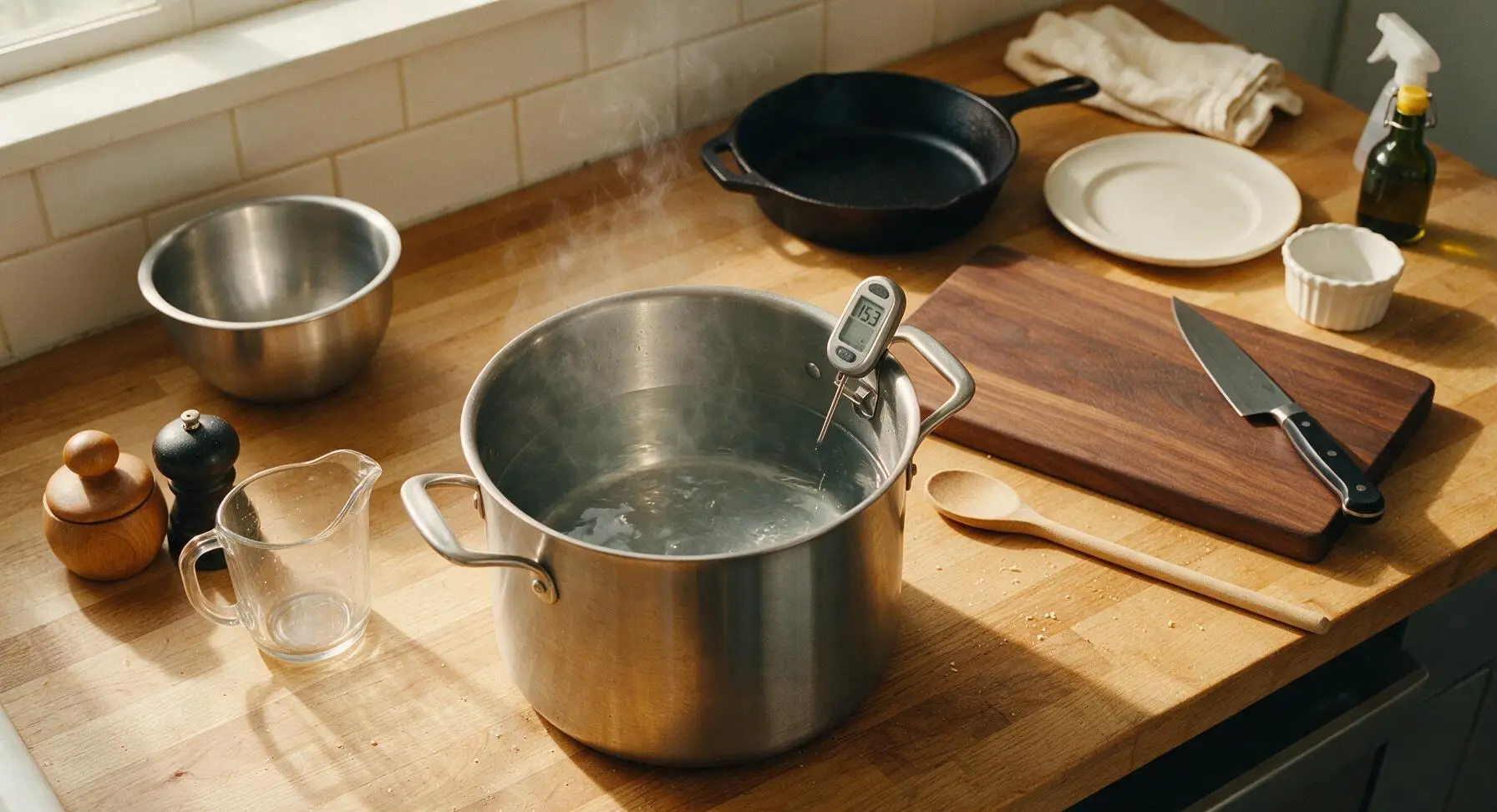
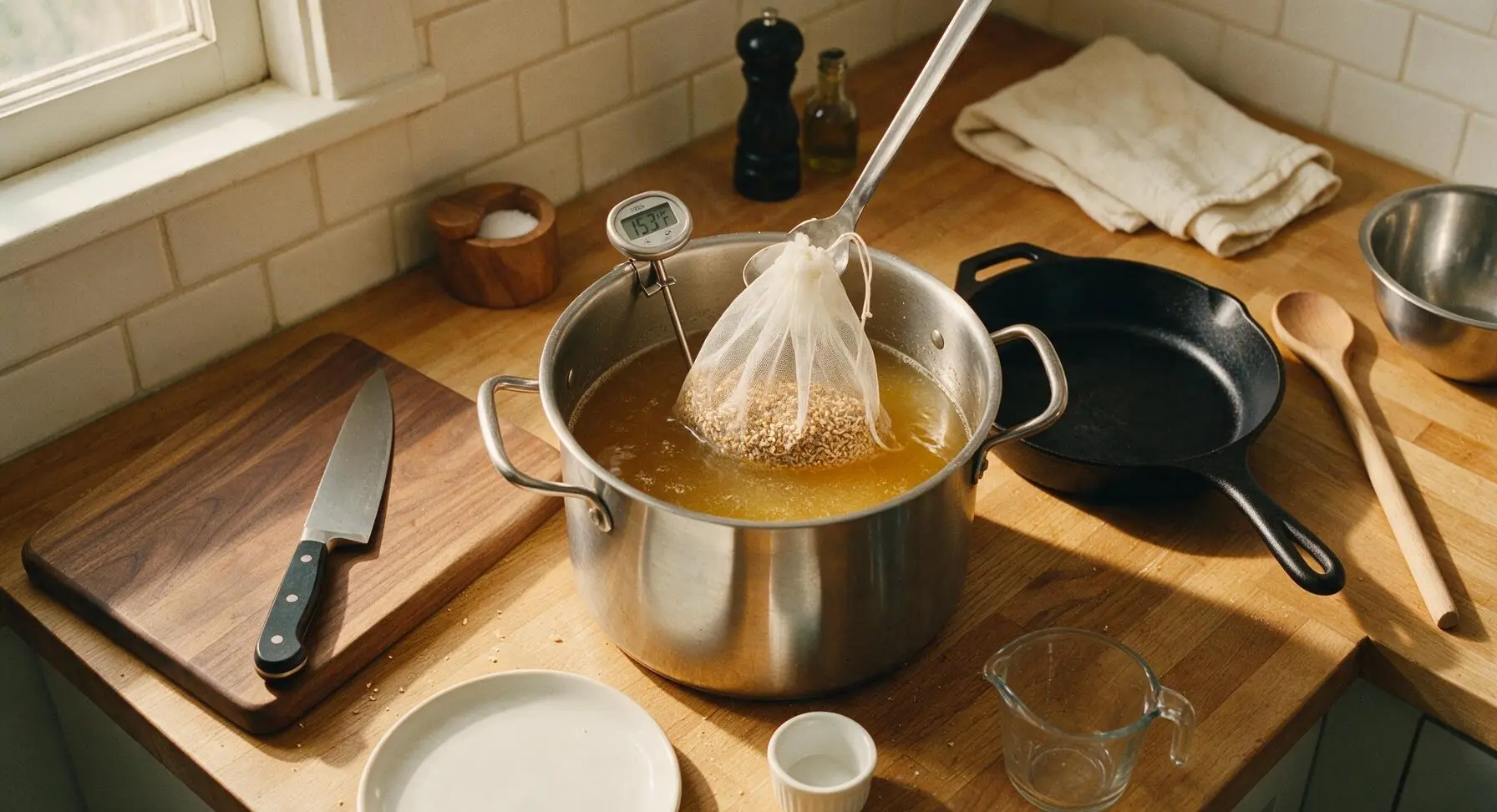
Pour 3L of cold filtered water into the sanitized stainless steel brew pot, clip the digital thermometer to the pot rim, and heat over medium stovetop heat until the water reaches a steady 67C (153F). Adjust burner heat as needed to hold this temperature, and do not bring water to a boil at this stage.
Steep the Crushed Grains
Combine the crushed wheat malt and pilsner malt in the white nylon mesh grain bag, tie the drawstring loosely, and lower the bag fully into the 67C water. Cover the pot, hold the temperature steady at 65-68C (149-154F) for 60 minutes, gently lifting and stirring the grain bag with the stainless steel spoon every 15 minutes. The clear water will darken to a hazy deep golden color as malt sugars extract into the wort.
Boil and Add Hops
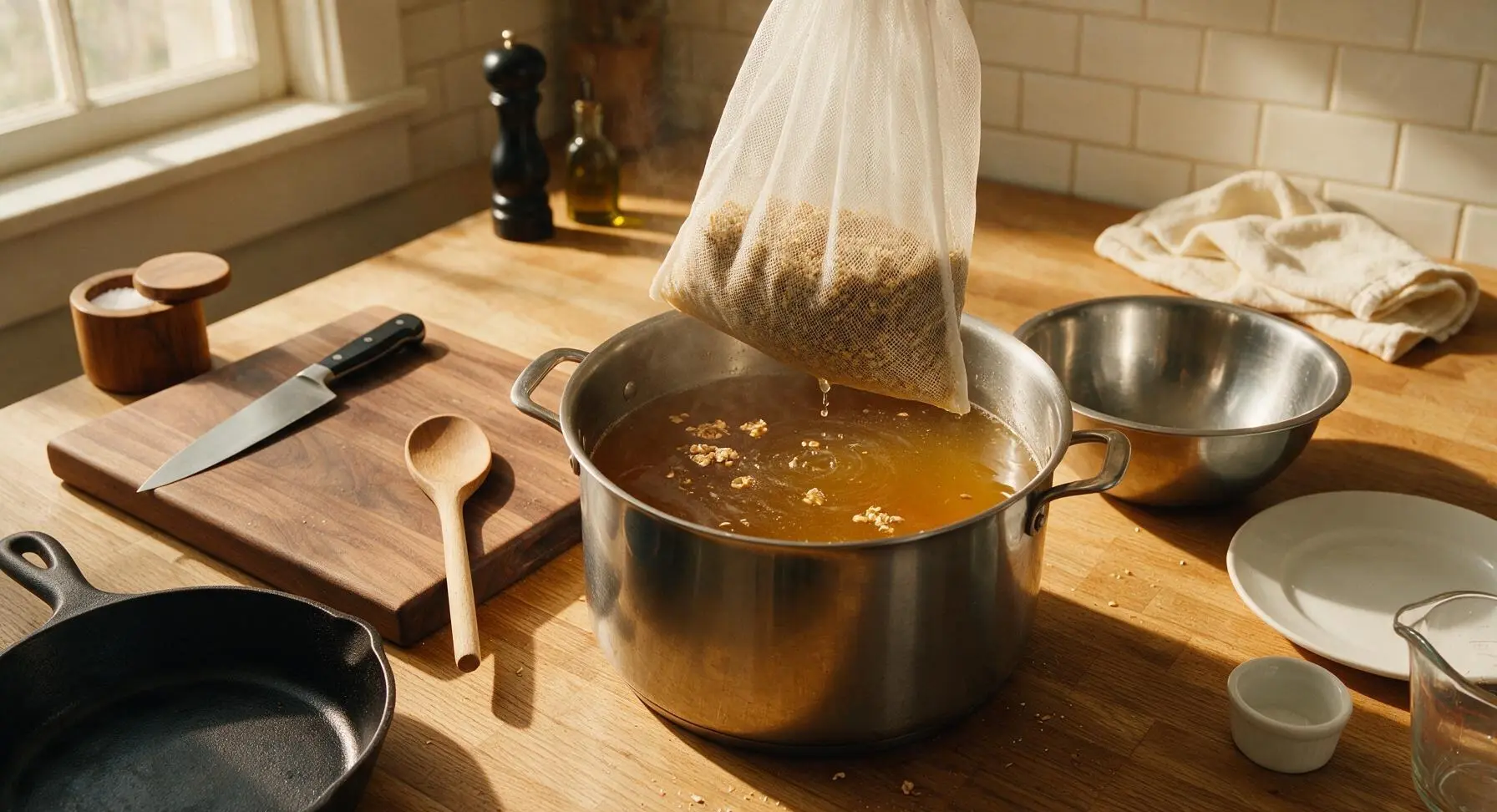
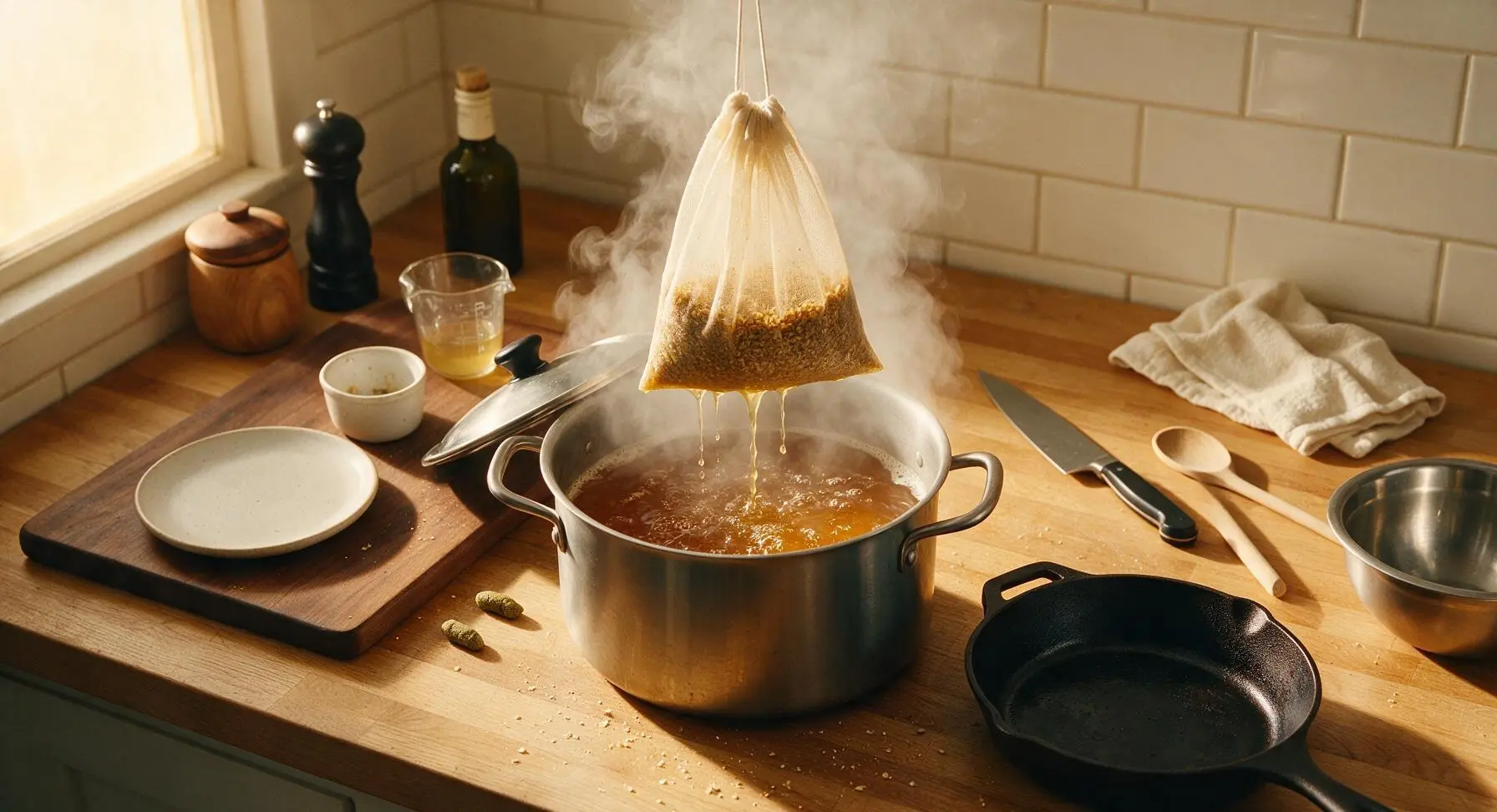
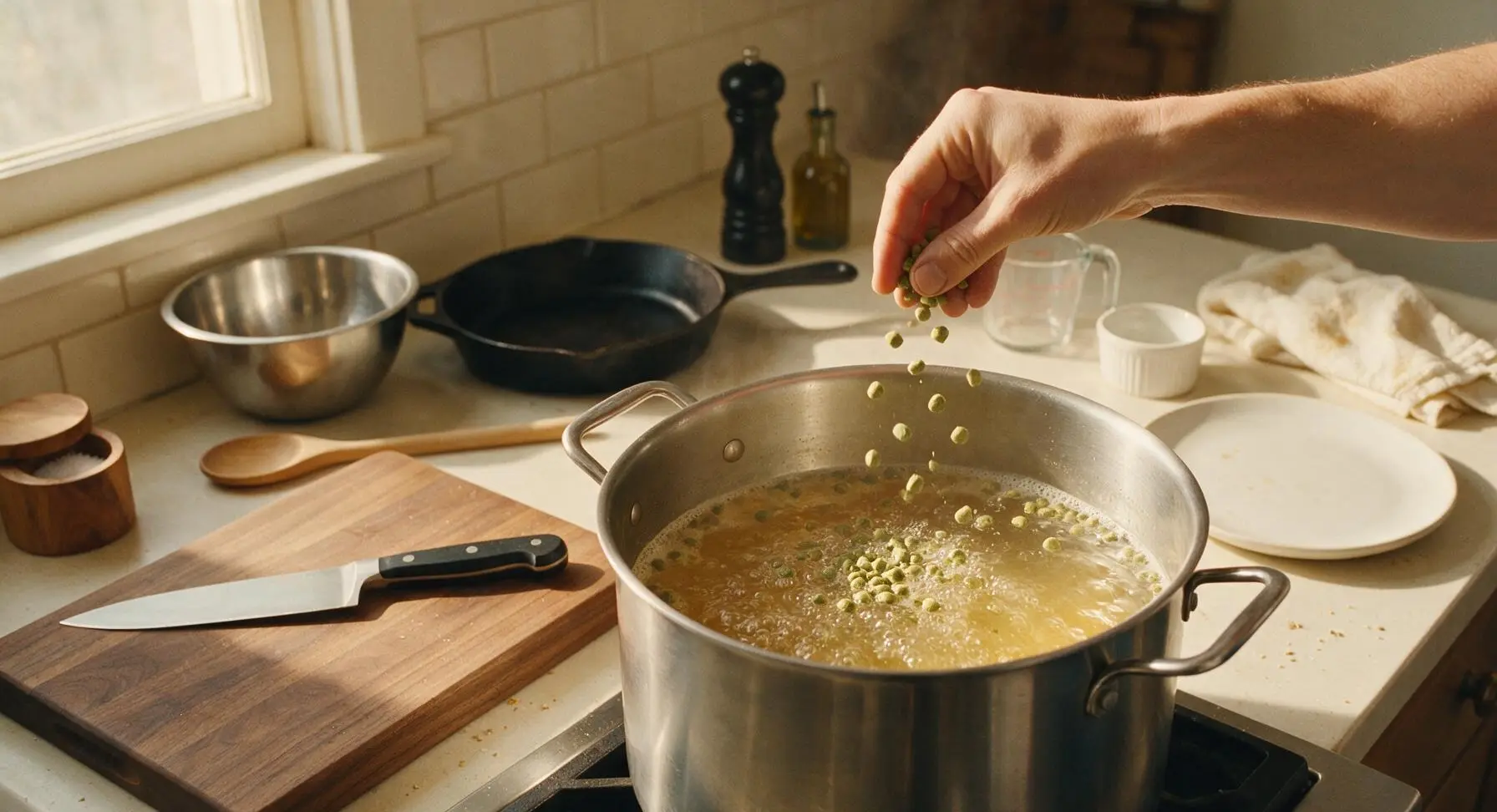
Lift the grain bag fully out of the pot, allowing it to drain completely over the wort (do not squeeze the bag, as this extracts harsh astringent tannins). Increase heat to bring the wort to a gentle rolling boil (100C/212F). Once boiling, add 7g (0.25oz) of Hallertau hops, set a timer for 60 minutes, and maintain a steady gentle boil, adjusting heat to prevent boilovers. Add the remaining 7g (0.25oz) of Hallertau hops during the final 5 minutes of the boil to preserve bright, floral hop aroma.
Cool and Pitch Yeast
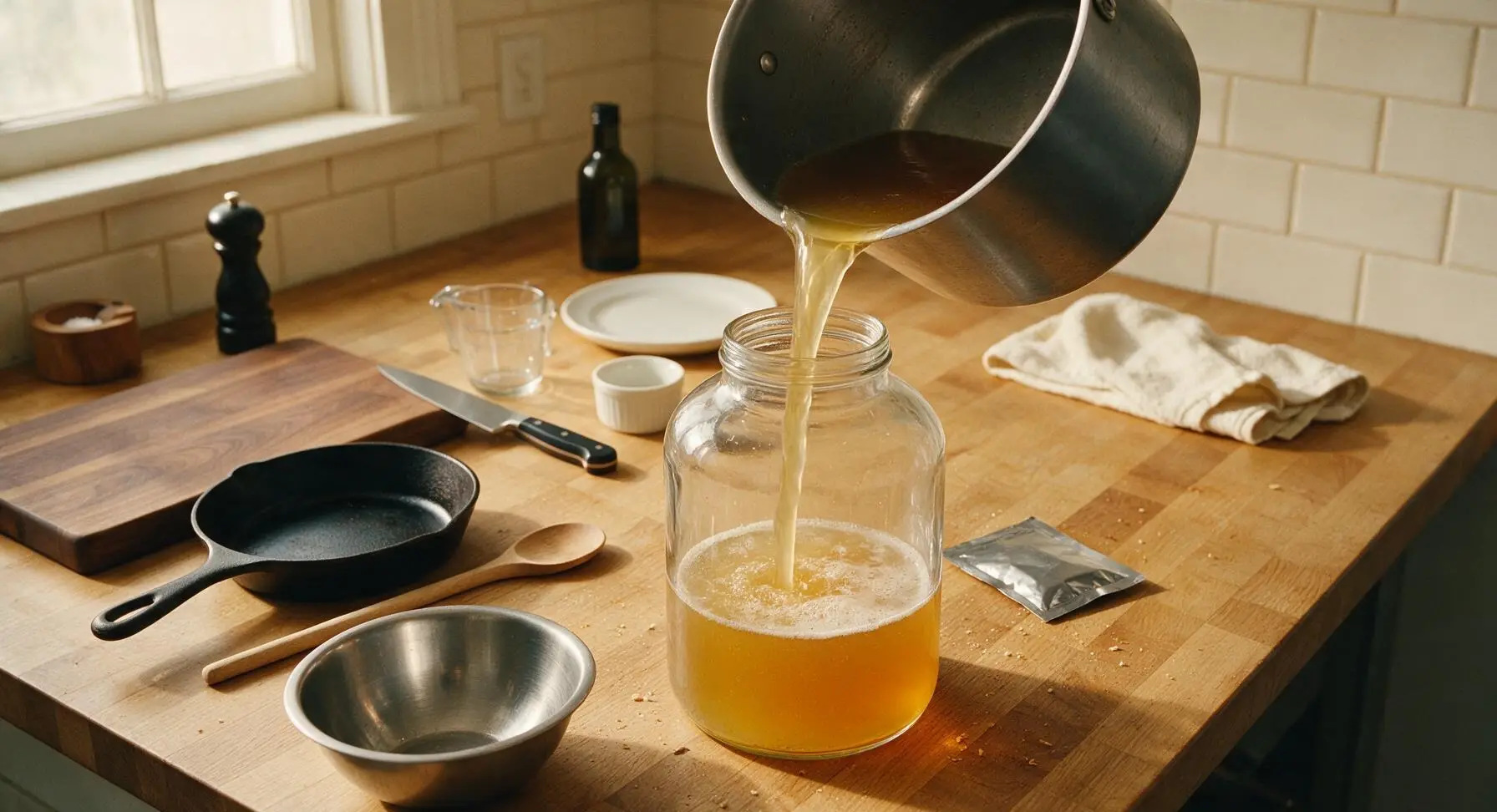
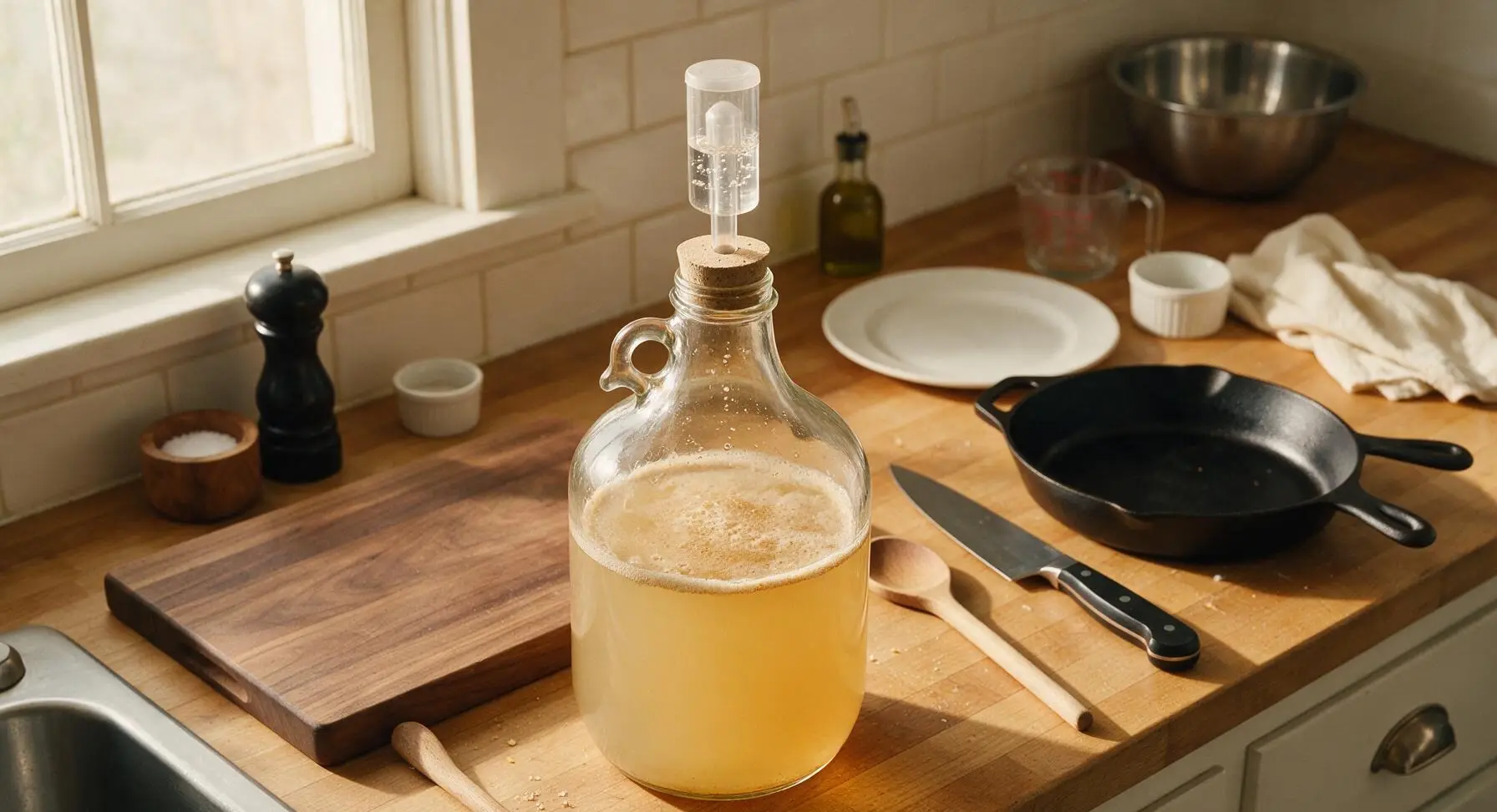
Remove the pot from heat, cover tightly, and submerge the lower half in an ice bath to cool the wort rapidly to 21C (70F), approximately 20 minutes. Pour the cooled wort into the sanitized glass carboy, top up with remaining filtered water to reach the 1-gallon etched mark, then sprinkle the entire packet of hefeweizen yeast evenly over the wort surface. Seal the carboy with the drilled rubber stopper, fill the airlock halfway with sanitizer, and insert it into the stopper. Move the carboy to a dark, temperature-stable 18-21C (65-70F) space for 7 days of primary fermentation; active bubbling in the airlock will begin within 24 hours as yeast becomes active.
Bottle for Carbonation
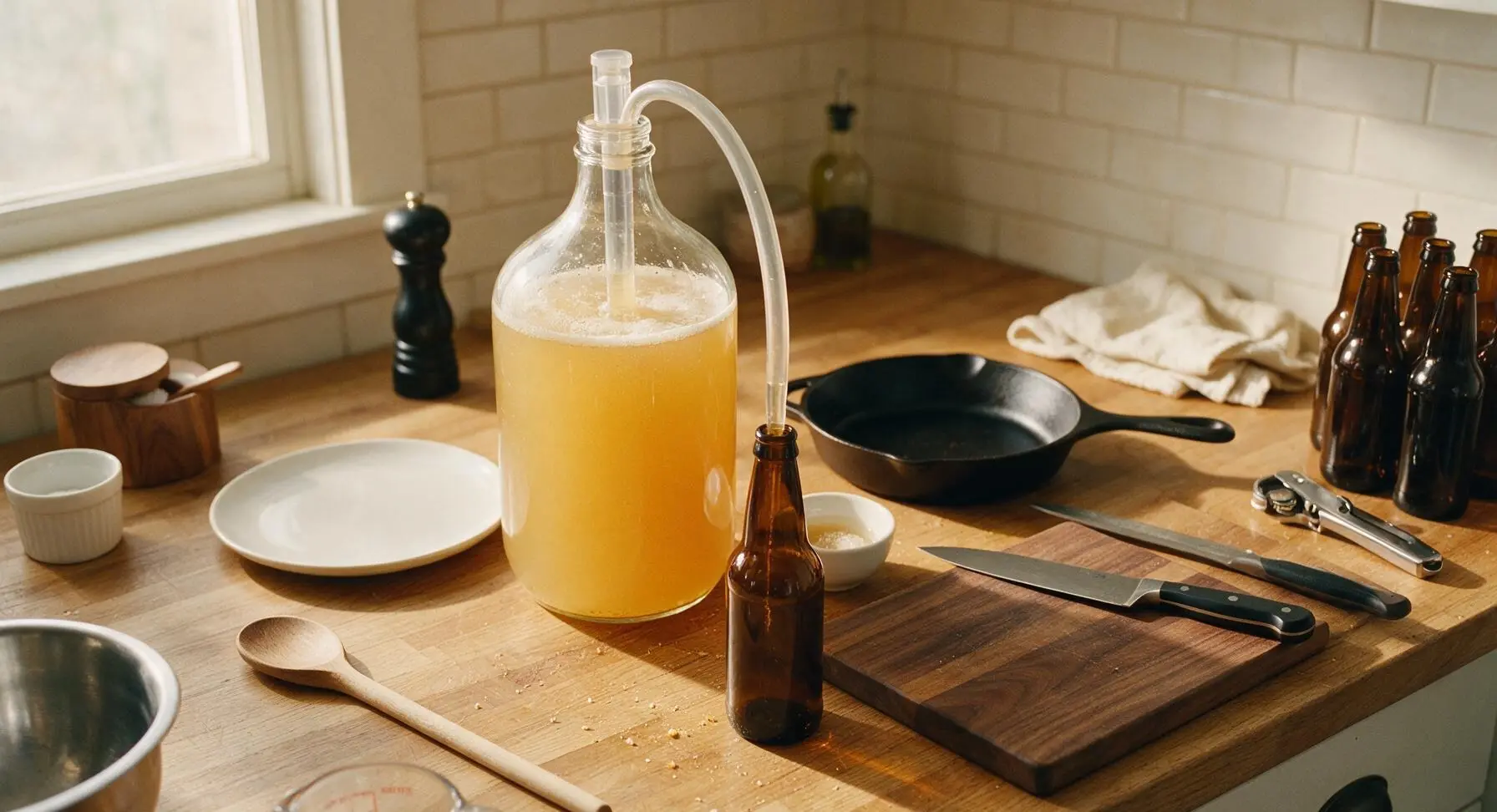
After 7 days of primary fermentation, when airlock bubbling slows to fewer than 1 bubble per minute, boil the corn priming sugar in 100ml of filtered water for 5 minutes, then cool to 21C (70F). Use the auto-siphon to transfer the fully fermented beer from the carboy, gently mixing it with the cooled priming sugar solution to distribute sugar evenly. Fill each sanitized amber glass bottle to 2.5cm (1 inch) below the rim, then crimp sanitized crown caps onto each bottle using the stainless steel bottle capper. Store sealed bottles in the same dark, 20C (68F) space for 7 additional days to allow natural carbonation to build.
Chill and Pour
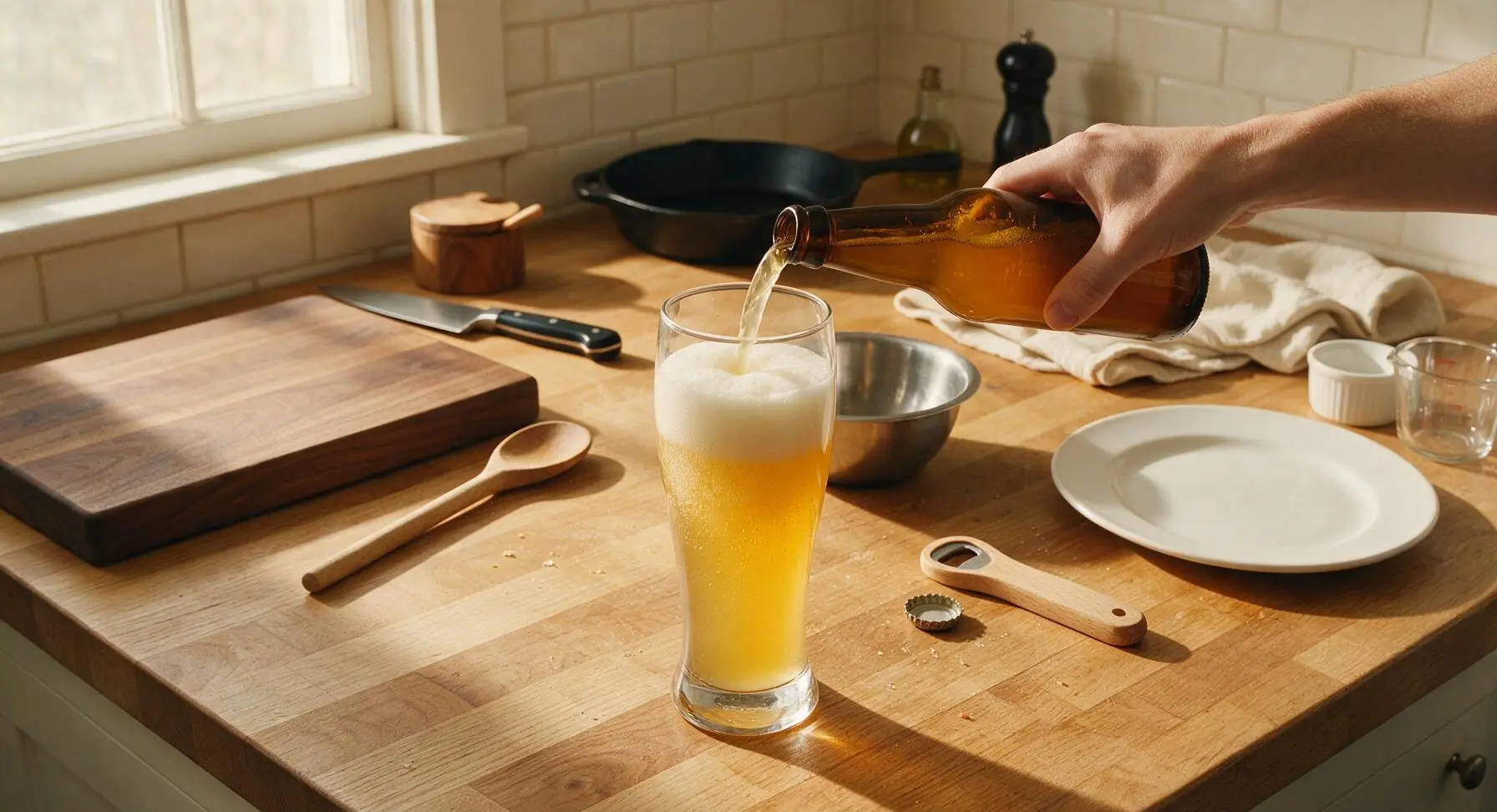
After 7 days of bottle conditioning, chill a bottle of Weizenbier in the refrigerator for 4 hours to reach 4C (39F). Hold a tall weizen glass at a 45-degree angle, pour beer slowly down the inner side of the glass until it is 2/3 full, then tilt the glass upright and pour the remaining beer (swirling the bottle slightly to rouse settled yeast) to create a thick, fluffy foam head. Garnish with a thin lemon slice on the rim if desired.
Tips
2.Hold fermentation temperature strictly between 18-21C (65-70F): temperatures above 22C will produce overpowering solvent-like banana notes, while temperatures below 17C will stunt yeast activity and suppress the signature balance of banana and clove esters, resulting in flat, bland beer.
3.Rouse the yeast when pouring: traditional Weizenbier is intentionally cloudy, so leave the last 10ml of beer in the bottle, swirl gently to lift the settled yeast sediment, then pour it into the glass to achieve the classic hazy appearance and add subtle, bready depth of flavor. Total time from brew day to ready-to-drink beer is 14 days, including inactive fermentation and conditioning time.


OMG, I’ve been nervous to try homebrewing wheat beer for years because everyone says hefeweizen is tricky, but this recipe was so straightforward! That note about holding the mash temp right at 152°F was a total game changer—my first batch came out with that perfect banana/clove note I’ve been chasing since I had hefeweizen at that beer garden in Munich. Brought a growler to our neighborhood potluck last weekend and everyone was begging for the recipe! So good.
Took me a minute to round up all the specialty grains, but totally worth the effort. My only heads up is that 2.5 hours of active time is pretty accurate—don’t try to squeeze this in after work on a weeknight like I did first, I was up way later than I planned sanitizing carboys. Ended up with a super crisp, refreshing beer that’s way better than the store-bought hefeweizens I usually grab for cookouts.
My partner is a total craft beer nerd so I made this for his birthday and he was obsessed! He said it tastes exactly like the hefeweizens he drank when he studied abroad in Bavaria. We paired it with soft pretzels and obatzda for our at-home Oktoberfest dinner and it felt like we were right back at the beer hall. 10/10 will make again.
Game changer of a recipe from what I can tell from the instructions, but quick question: has anyone tried brewing this with a partial mash setup instead of full all-grain? I don’t have a giant mash tun yet, I’m still rocking a basic 5 gallon stock pot on my patio burner. Would love to not have to drop $200 on new gear to make this.
SO good. I was worried about the fermentation temp since my garage gets pretty warm here in the summer, so I picked up a cheap temp control wrap for my carboy and followed the recipe’s 62°F primary temp recommendation. The banana flavor is perfect, not too overpowering, no weird off-flavors from overheating. My roommates already asked when I’m making the next batch.
Brewed this for our college football tailgate last weekend and it was a massive hit. Even my friends who only drink light domestic beer were going back for seconds. I added a tiny extra hop addition at flameout because I like a little more bitterness, but the base recipe is chef’s kiss. Will be a regular in my brew rotation for sure.
Okay, full transparency: this was my very first ever homebrew attempt, and I was so sure I messed it up when I saw the weird krausen bubbling out of the airlock on day 2. I followed every step exactly, even sanitized twice like the recipe said, and when I bottled it two weeks later it was perfect! I can’t believe I made actual good beer at home. My whole family was shocked.
We host a big annual Oktoberfest party every fall, and this hefeweizen is going to be the star of the show this year! Only thing is, I want to make a bigger batch—like 10 gallons instead of 5—will scaling all the ingredients 2x work, or do I need to adjust the hop additions or mash time? I don’t want to mess this up for 40 guests.
Really solid recipe, that tip about not filtering out the yeast when bottling is so important for that classic cloudy hefe look and taste. My only tiny note is that the carbonation was a little lower than I wanted when I first cracked a bottle after 2 weeks of conditioning—def wait an extra 3-5 days in the bottle if you love that sharp, fizzy bite that hits your nose when you pour a cold hefeweizen.
Tried this last weekend after my local homebrew shop recommended the recipe, and OMG it’s so much better than the hefeweizen I’ve been buying at the liquor store for $12 a six pack! That subtle vanilla-banana note is insane, I served it with lemon wedges like they do in Bavaria and my friends lost their minds. 10/10, already gathering supplies for batch number two.