
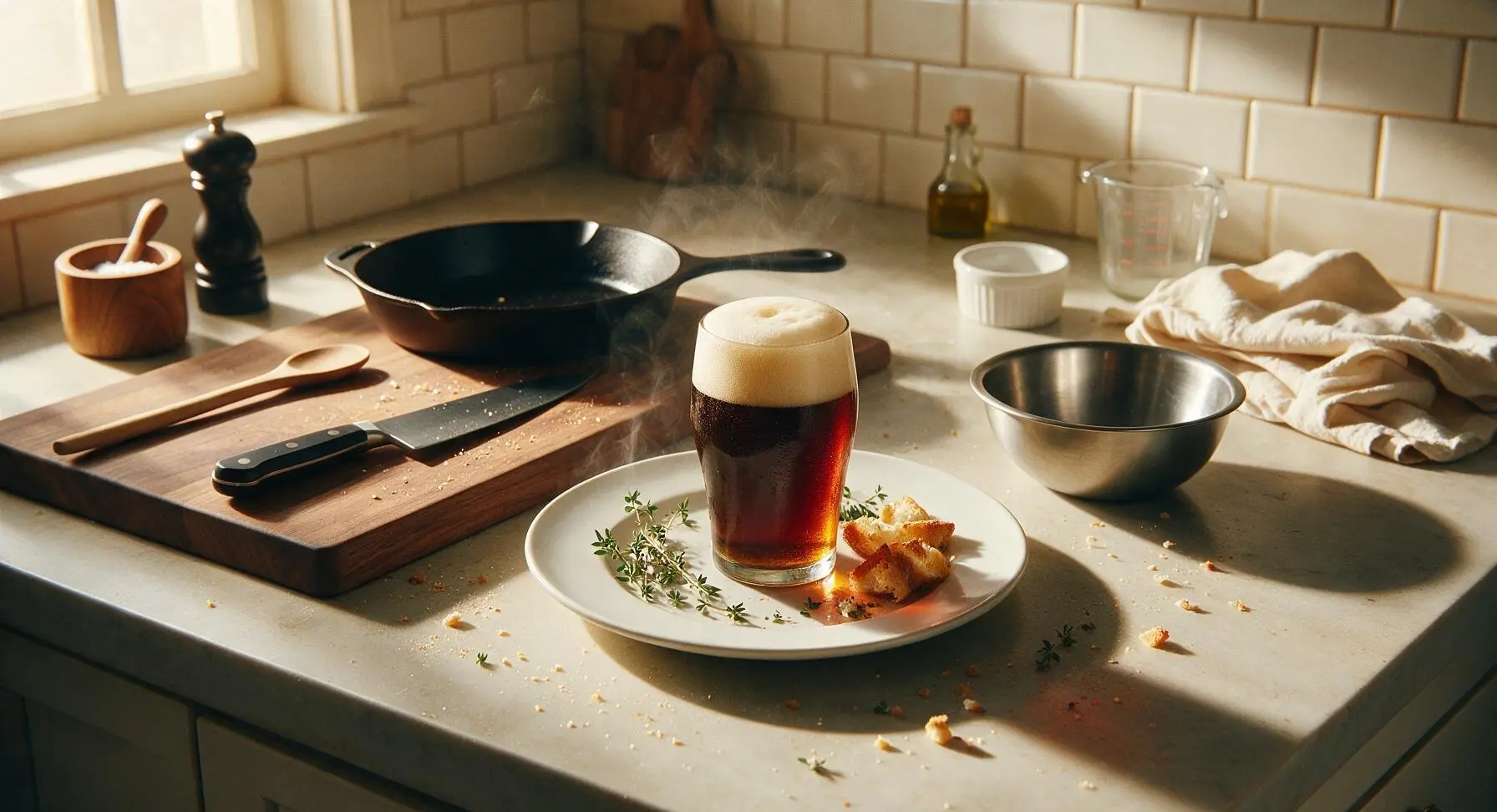
Bock

title 1
Bock
⏱️ cook time 1 hour 30 minutes
🍽️ servings 12
⚡ Difficulty medium

intro

Deeply malty, smooth traditional Bavarian bock lager, with rich toasty caramel notes, subtle floral hop bitterness, and a clean warming finish, perfect for cool autumn sipping.

Ingredients
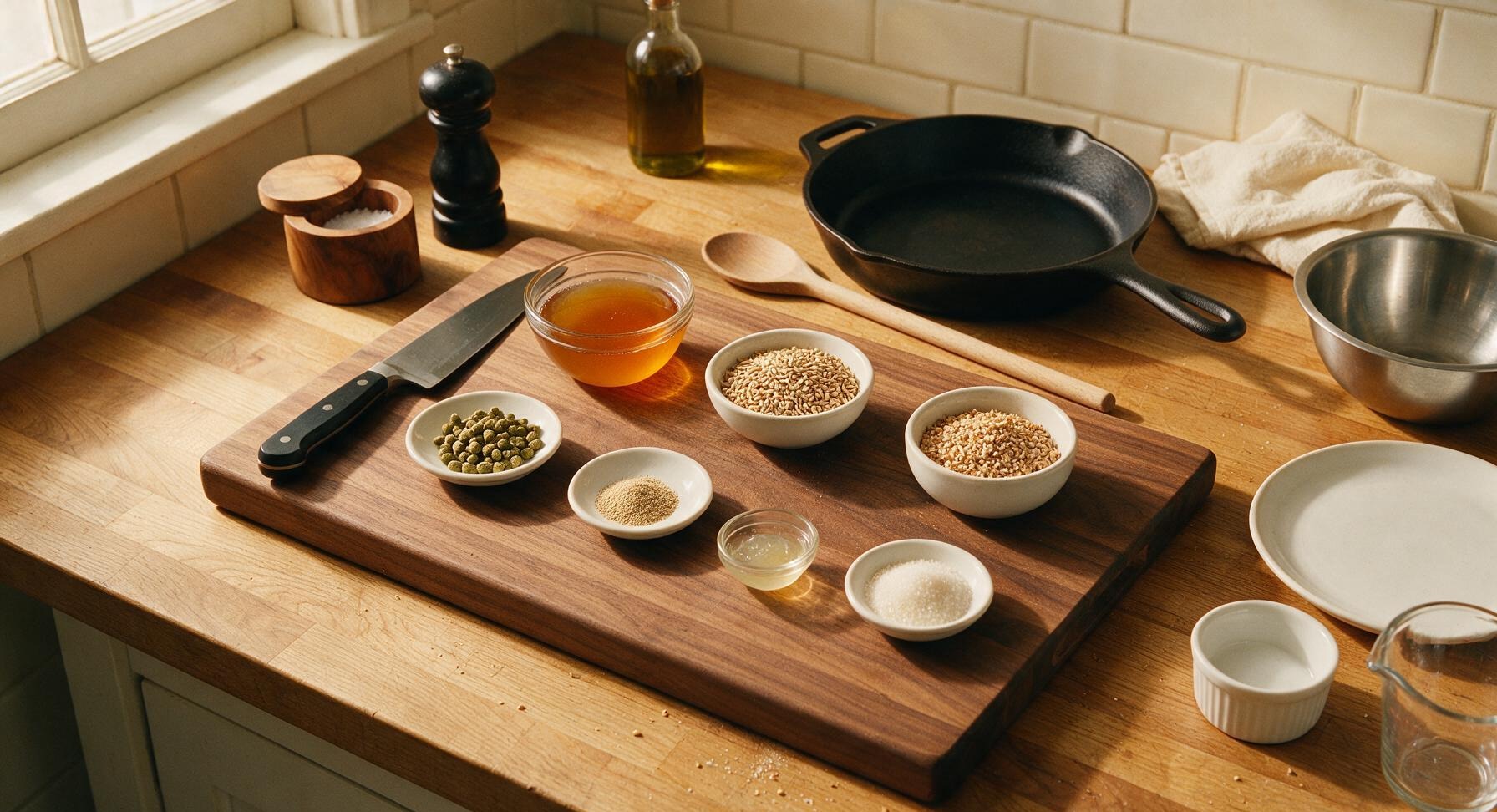
Light pilsner liquid malt extract 1.8kg
Crushed Munich malt (10L) 250g
Crushed caramel malt (60L) 50g
Hallertau noble hop pellets 12g
Bavarian lager yeast 1 packet (7g)
Irish moss (fining agent) 2.5ml
Priming corn sugar 12g

Steps

1

Steep Crushed Specialty Malts

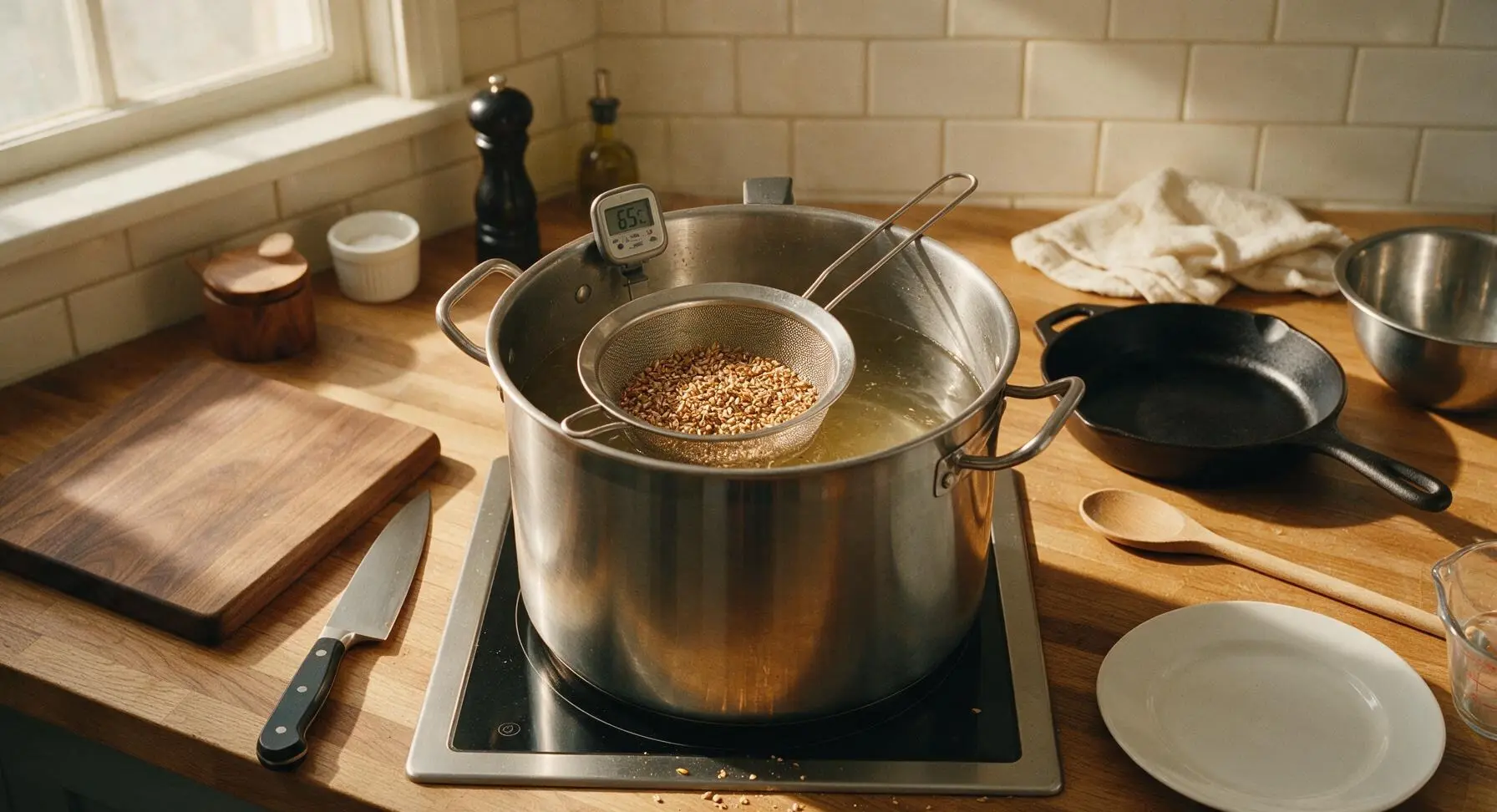
Fill the 5-gallon stainless steel brew pot with 4 liters of cool filtered water, set on the flush-mount induction burner, and heat to exactly 65C (150F). Place the 250g crushed Munich malt and 50g crushed caramel malt in the fine-mesh stainless steel strainer, lower into the warmed water, and hold a steady 65C temperature for 30 minutes. Do not allow the water to exceed 70C, as this will extract harsh, bitter tannins from the grain husks. The water will deepen to a rich golden amber as malt sugars and flavors steep into the liquid.
Step 1
step1:Steep Crushed Specialty Malts
2

Drain Grains and Boil Wort

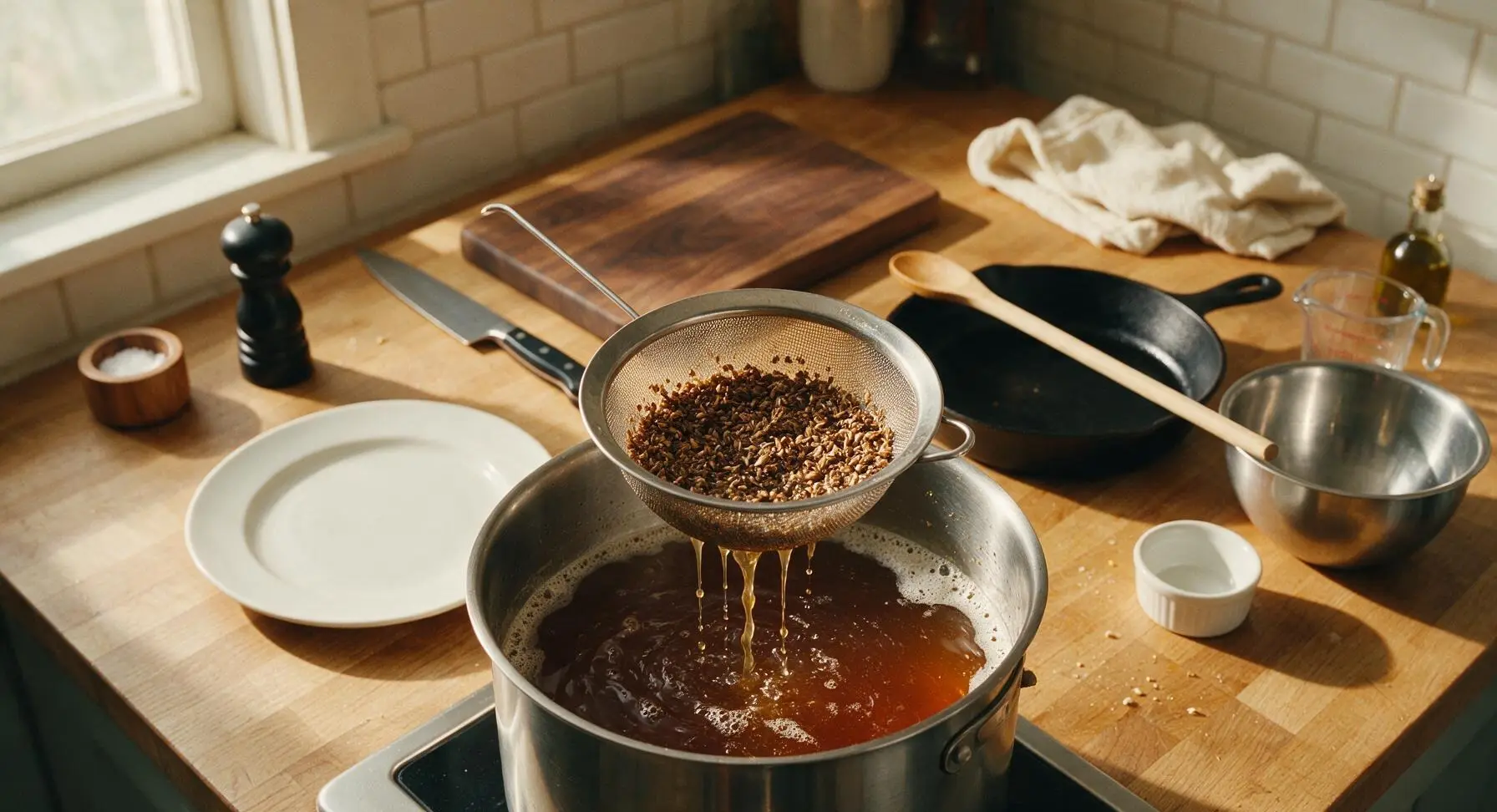
After 30 minutes of steeping, lift the strainer of spent malts above the pot, allowing all dark amber wort to drain back into the pot—do not squeeze the grain, as this presses out harsh tannins. Discard the spent grains. Turn heat to high, and bring the wort to a gentle, steady rolling boil, watching closely to prevent foam boil-over as the liquid heats.
Step 2
step2:Drain Grains and Boil Wort
3

Add Malt and Bittering Hops

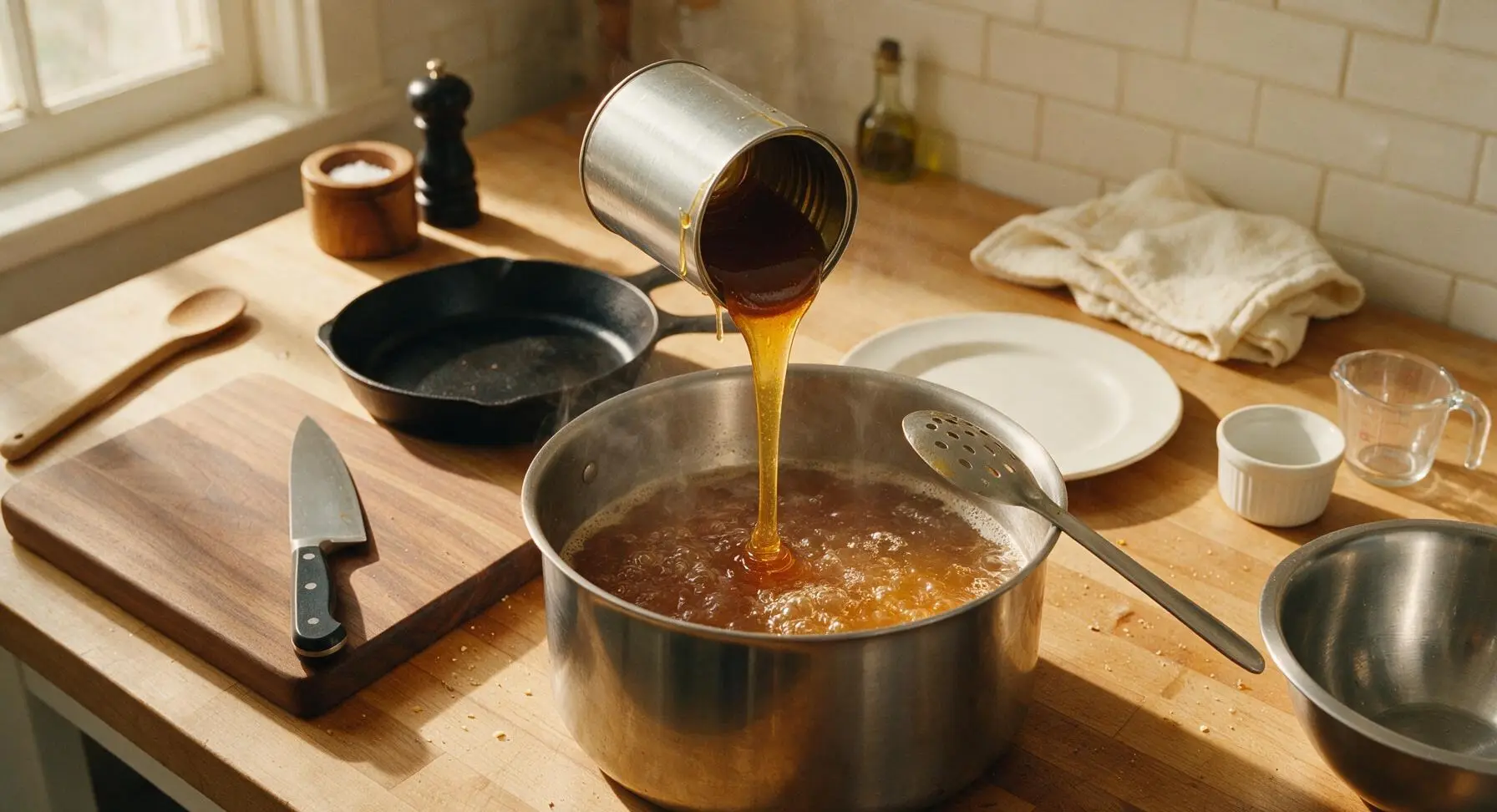
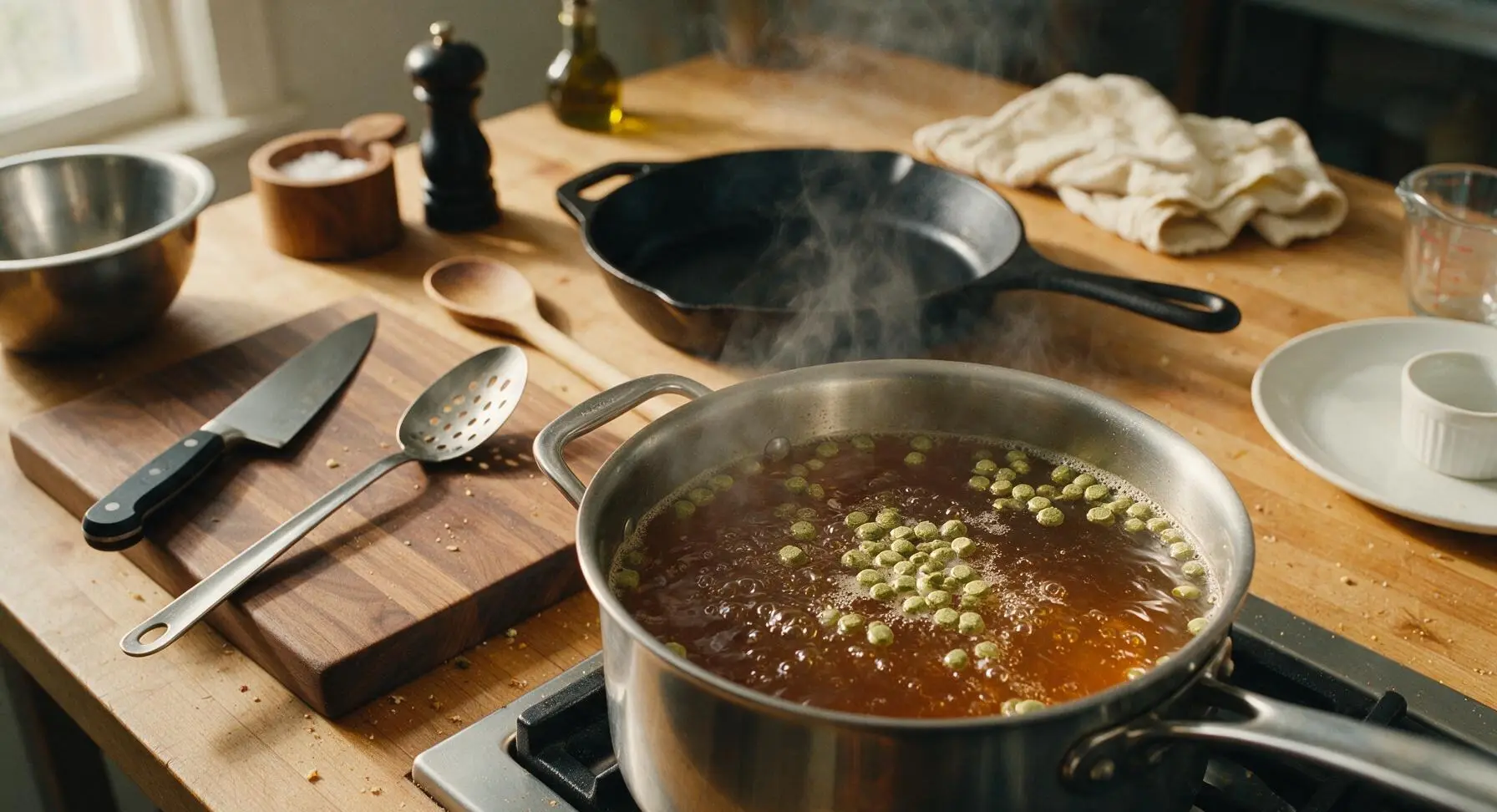
Once the wort reaches a steady rolling boil, reduce heat slightly to prevent overflow. Slowly pour in the full 1.8kg of light pilsner liquid malt extract, stirring constantly with the long slotted stainless steel spoon until the extract is fully dissolved to prevent scorching on the pot bottom. Add 9g of the Hallertau hop pellets (reserve 3g for late addition), then set a timer for a 60-minute steady boil.
Step 3
step3:Add Malt and Bittering Hops
Step 3
step3:Add Malt and Bittering Hops
4

Add Aroma Hops and Finings

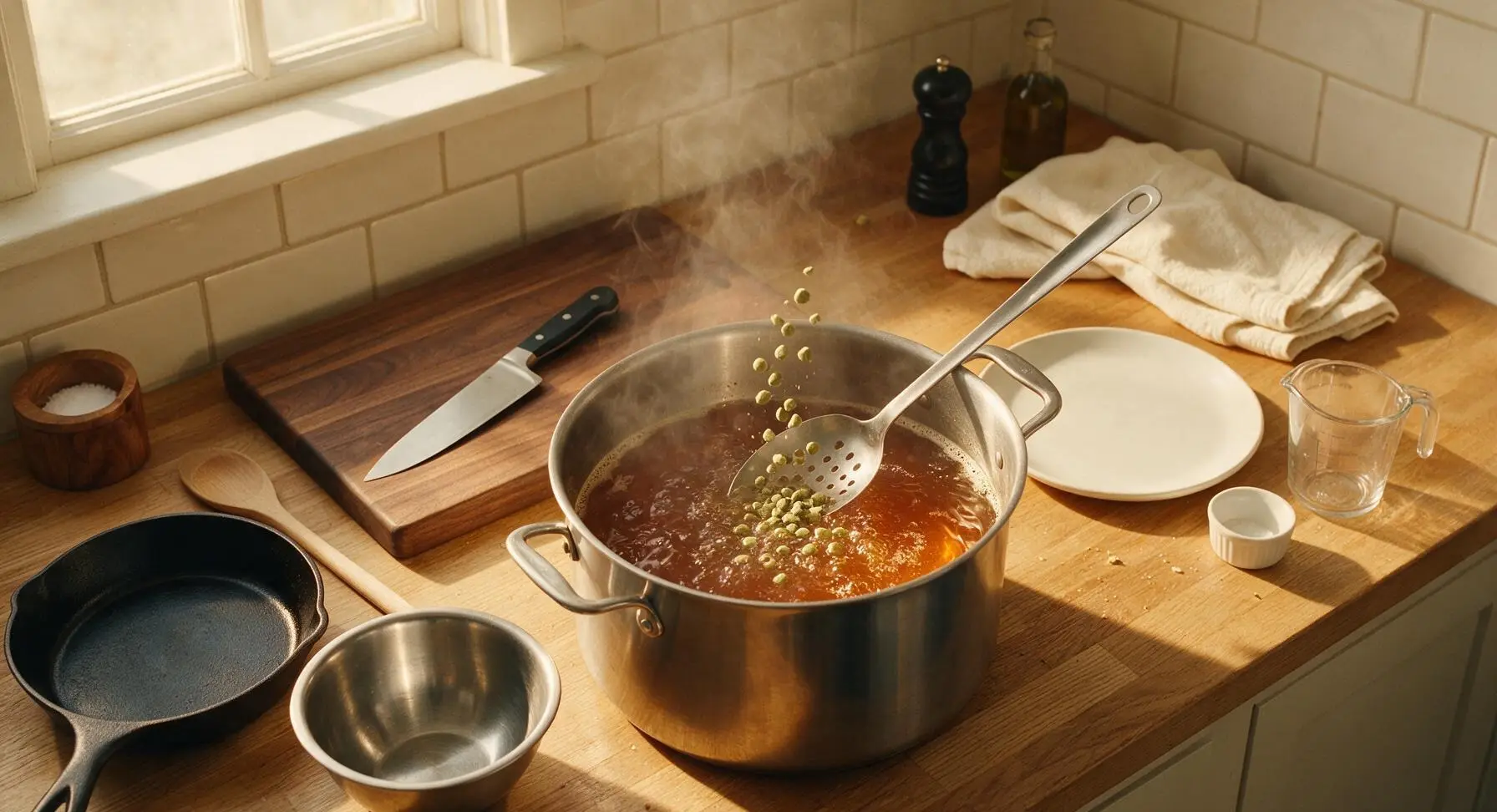
When 15 minutes remain on the 60-minute boil timer, add the reserved 3g of Hallertau hop pellets for bright, floral aroma, plus the 2.5ml of Irish moss to help pull sediment out of the wort for a clear, bright finished bock. Continue boiling steadily, stirring occasionally to prevent sticking on the pot bottom.
Step 4
step4:Add Aroma Hops and Finings
5

Cool Wort Rapidly

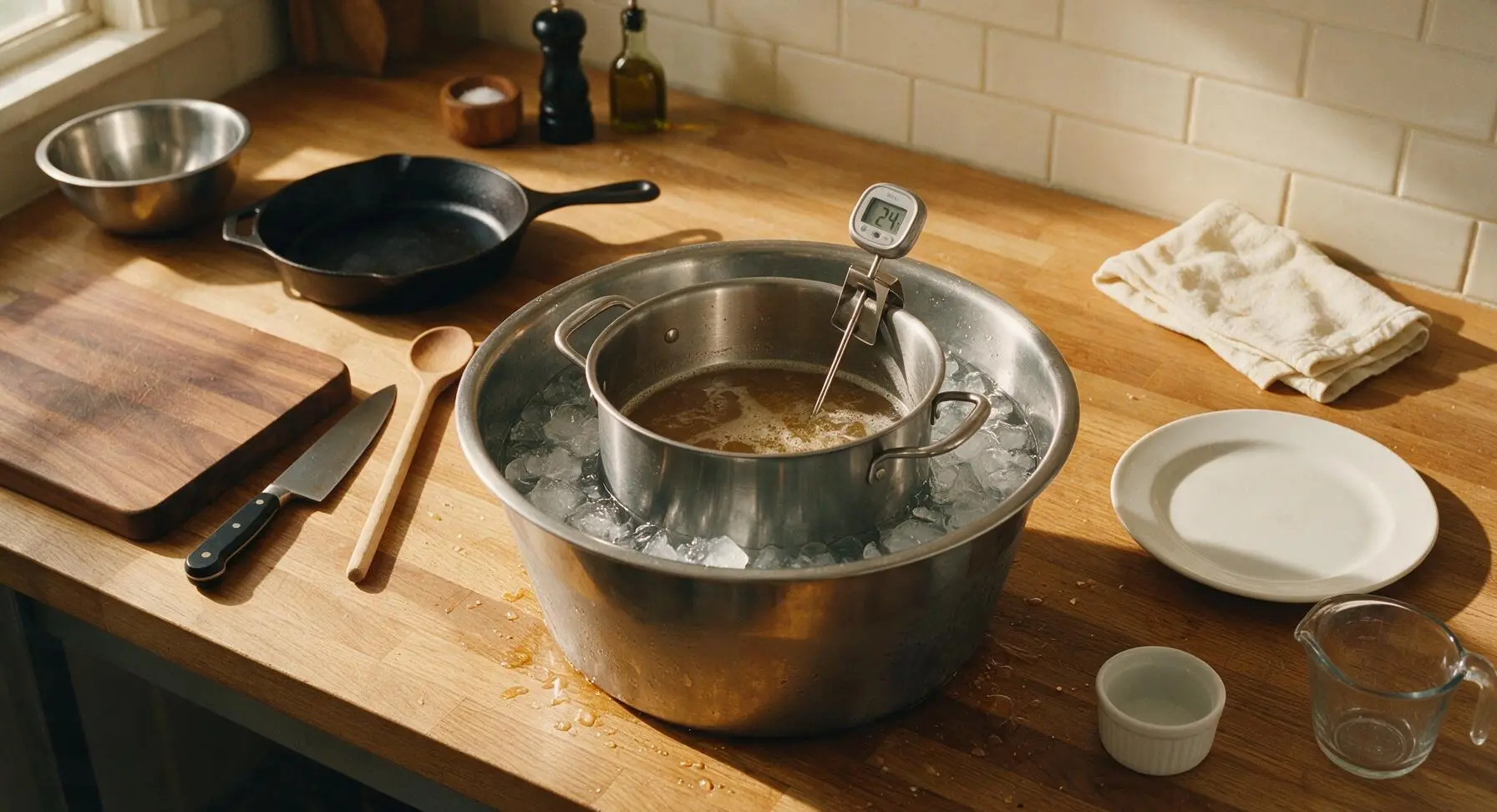
When the 60-minute boil finishes, turn off the heat. Carefully lift the brew pot and nestle it into the large stainless steel ice bath tub filled with ice and cold water, positioned on the open section of counter. Cool the wort as quickly as possible to 18C (65F), roughly 20 minutes, stirring occasionally to distribute cold evenly. From this point forward, only sanitized tools may touch the wort to prevent contamination from wild yeast.
Step 5
step5:Cool Wort Rapidly
6

Transfer Wort to Carboy

Once the wort cools to exactly 18C, place the translucent white food-grade funnel in the neck of the 2-gallon clear glass carboy, set the carboy on the center of the counter. Pour the cooled wort through the funnel into the carboy, leaving 5cm of headspace below the neck. Top up with cool filtered water as needed to reach the 7.6L (2 gallon) mark.
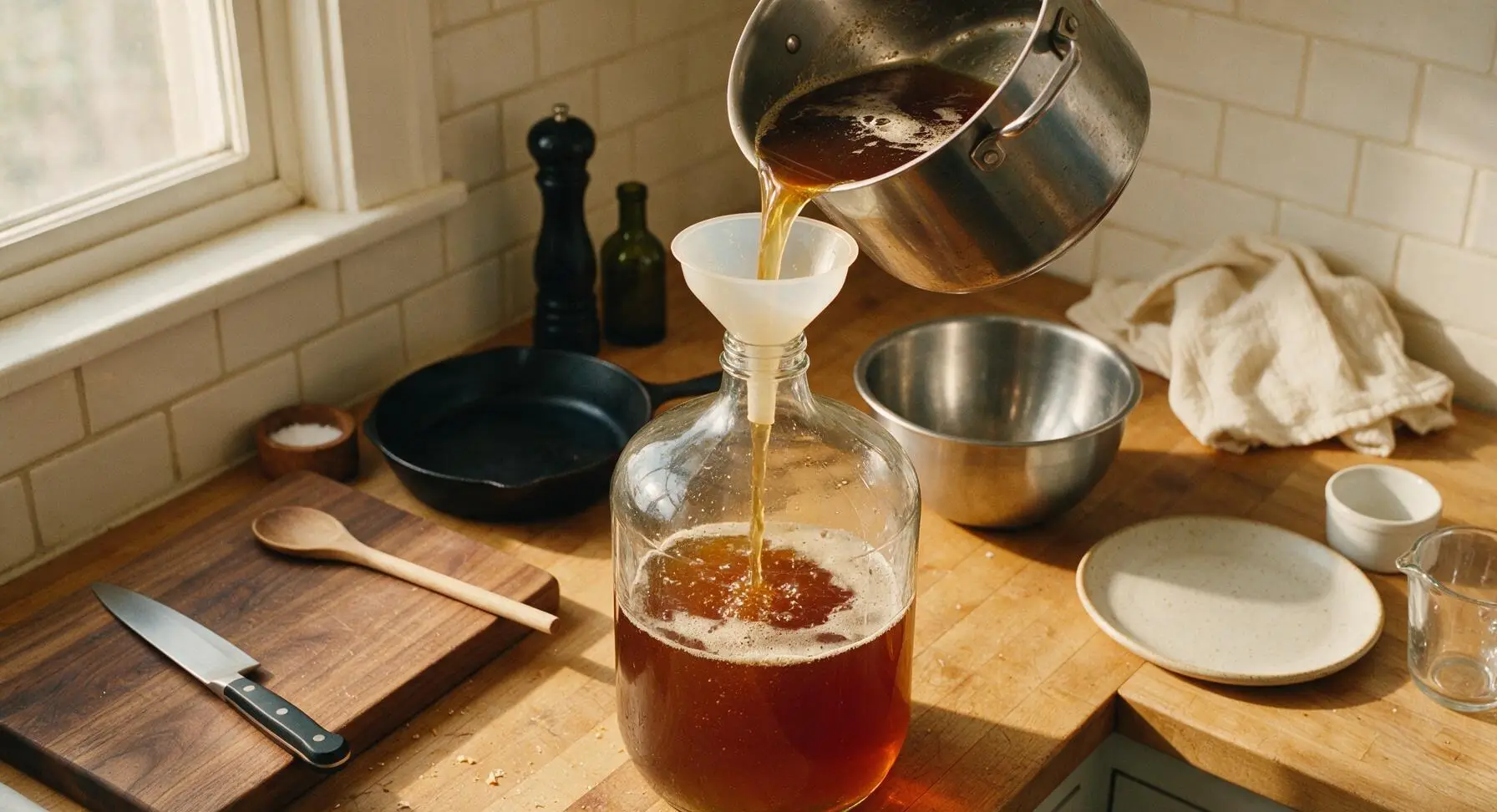
Step 6
step6:Transfer Wort to Carboy
7

Pitch Yeast and Seal

Sprinkle the full packet of Bavarian lager yeast evenly across the surface of the wort in the carboy—do not stir, as the yeast will hydrate and sink on its own. Seal the carboy neck with a sanitized rubber stopper, then insert the water-filled 3-piece airlock into the stopper. Move the carboy to a cool, dark space held at a steady 12C (54F) for 2 weeks of primary fermentation.
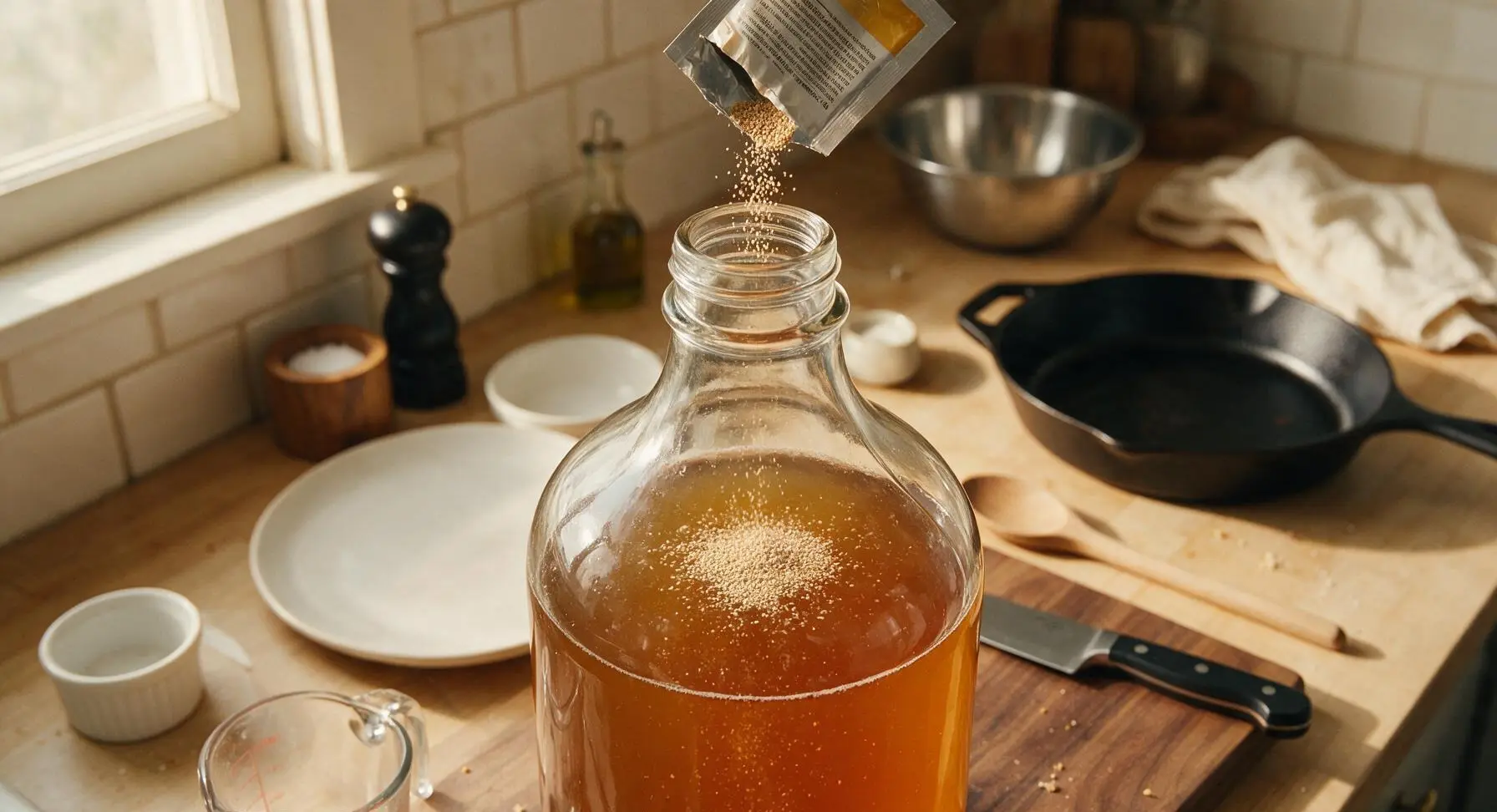
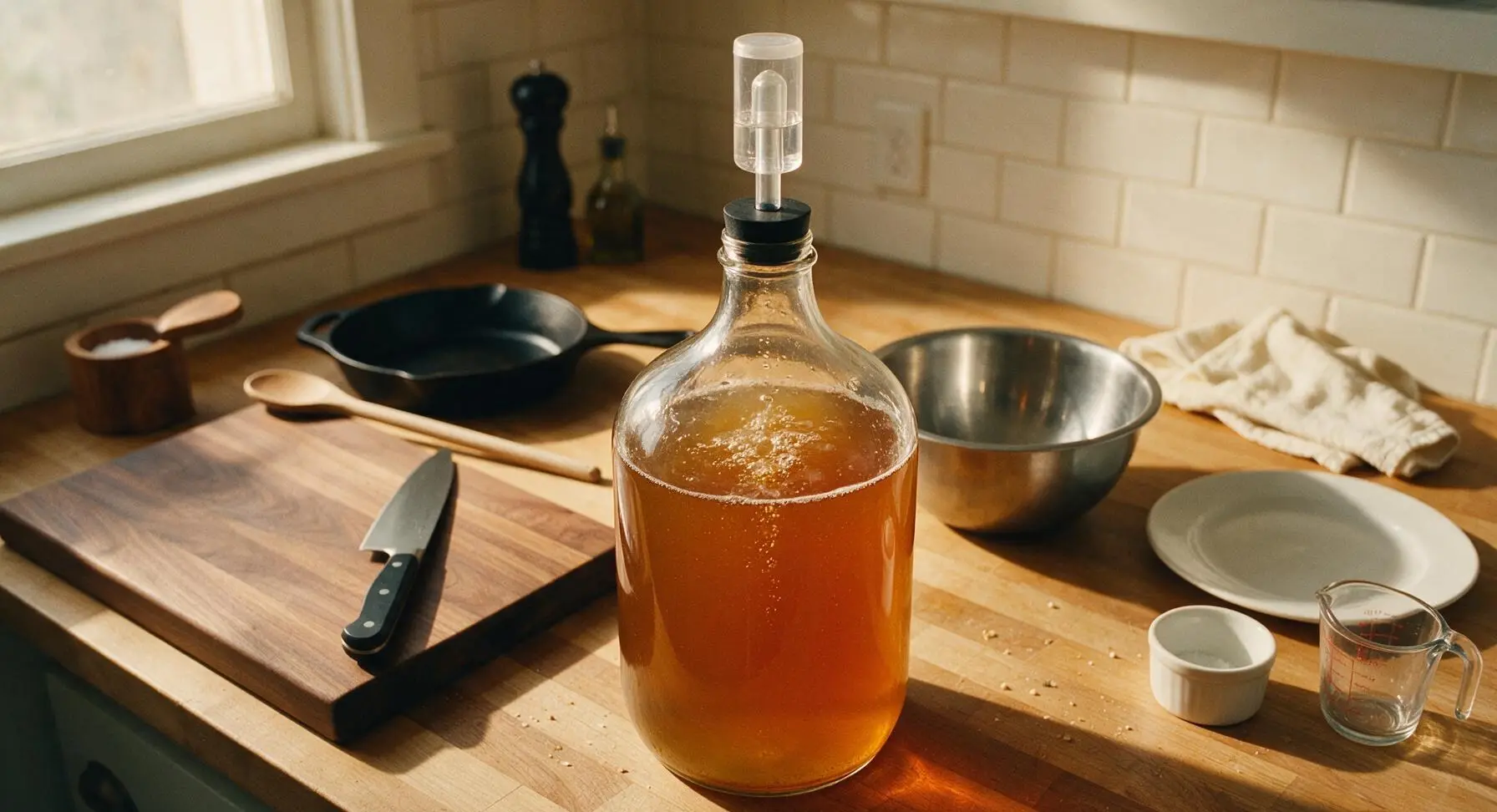
Step 7
step7:Pitch Yeast and Seal
Step 7
step7:Pitch Yeast and Seal
8

Bottle and Carbonate

After 3 total weeks of fermentation and conditioning, dissolve 12g of priming corn sugar in 30ml of boiled, cooled water, and add to a sanitized bottling bucket. Siphon the clear, finished bock into the bucket, stirring gently to evenly distribute the sugar. Fill sanitized amber glass bottles, cap tightly, and store at 18C for 2 weeks to allow natural carbonation to develop before chilling to 4C for serving.
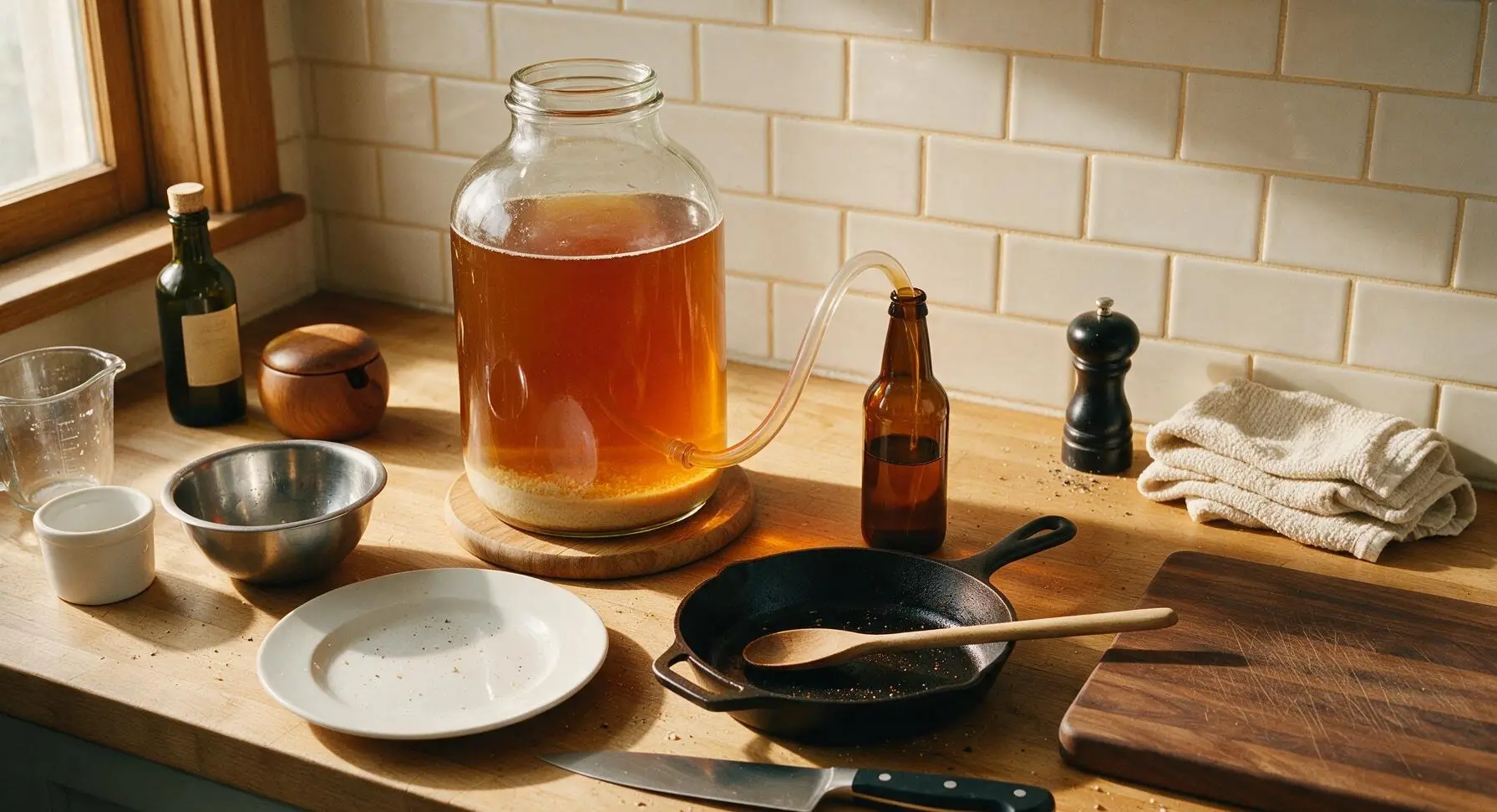
Step 8
step8:Bottle and Carbonate

Tips

1.Sanitize every tool that touches cooled wort with a no-rinse brewing sanitizer: wild yeast and ambient bacteria will create sour, off-flavors in your finished bock, so never touch cooled wort with unwashed or unsanitized equipment.
2.Maintain a gentle, not violent, boil: a hard, roiling boil that causes wort to overflow will boil off delicate hop aroma and can scorch malt sugars on the pot bottom, creating harsh, bitter flavors.
3.Keep fermentation temperatures steady: Bavarian lager yeast is highly sensitive to temperature swings, so hold the carboy at a consistent 12C (54F) during primary fermentation for a clean, smooth bock without fruity or solvent-like off-notes.


✨ You May Also Like

Drinks & Beverages
🍜 Mexico

A bright, balanced tequila-based cocktail with zesty fresh lime, smooth orange liqueur, and a signature salt rim, perfect for warm summer sipping.

⏱️ 5 minutesDrinks & Beverages ★ 4.9
Drinks & Beverages
🍜 United States

Thick, creamy, nostalgic classic vanilla milkshake with a rich, smooth texture, topped with whipped cream and a cherry for cool, sweet refreshment.

⏱️ 5 minutesDrinks & Beverages ★ 4.7
Drinks & Beverages
🍜 United States

A bright, golden strong ale with fruity banana-clove notes, subtle hop spice, and soft carbonation, brewed in classic Trappist Tripel tradition.

⏱️ 2 hours aDrinks & Beverages ★ 4.5
Drinks & Beverages
🍜 United States

A frothy, nostalgic American soda fountain treat pairing bubbly cold root beer with creamy vanilla ice cream, perfect for cooling down at warm weather gatherings.

⏱️ 20 minuteDrinks & Beverages ★ 4.8
Drinks & Beverages
🍜 United States

Tart, funky, effervescent American Wild Ale is a complex fruity craft beer brewed with wild yeast, delivering bright, zesty notes perfect for warm-weather sipping.

⏱️ 2 hours aDrinks & Beverages ★ 4.4
Drinks & Beverages
🍜 United States

Bright, bubbly copycat of the iconic American caramel cola, balanced with citrus and warm spice, perfect for sipping ice-cold on hot days.

⏱️ 15 minuteDrinks & Beverages ★ 4.8

Bock:Frequently Asked Questions

1.Can I substitute dry light pilsner malt extract for the liquid version if that’s what I have on hand? ▾
Absolutely—you can swap them 1:1 by weight, but liquid pilsner malt extract delivers a softer, fresher, more authentic bready backbone true to traditional Bavarian bock. If you use dry extract, add an extra 2 ounces of crushed 10L Munich malt to boost toasty depth, and stir thoroughly during the boil to avoid clumps that cause off-flavors.
2.Do I have to use Bavarian lager yeast, or can I use standard ale yeast as a shortcut? ▾
For that signature clean, smooth, non-fruity bock profile, Bavarian lager yeast is always the best pick. Ale yeast ferments warmer and produces brighter, fruitier esters that clash with the rich malt character. If you must substitute, use a neutral ale yeast and ferment 5–10°F cooler than its recommended range to minimize unwanted fruity notes.
3.How do I keep the caramel notes from making the bock taste overly sweet or cloying? ▾
Stick strictly to the measured amount of 60L caramel malt—adding extra will quickly overpower the subtler toasty Munich malt character that makes this style so cozy. Your early-boil Hallertau noble hop additions deliver just enough soft, floral bitterness to cut through rich malt sweetness, creating that balanced, smooth finish without any harsh, sharp bite.
4.What fermentation temperature will give me the most authentic Bavarian bock flavor? ▾
Pitch your Bavarian lager yeast at 48–52°F, and hold that steady for the first 2–3 weeks of primary fermentation. Slowly ramp the temp 2–3°F per day up to 60°F for a 3–5 day diacetyl rest, then cold condition the beer at 34–38°F for a minimum of 4 weeks to lock in that ultra-clean, warming finish.
5.Is it okay to use pre-crushed Munich and caramel malt instead of crushing it myself? ▾
Pre-crushed malt works perfectly as long as it was milled within the last 2–3 months and stored in a cool, airtight, dark container. Older pre-crushed malt loses its bright toasty, caramel aroma and can taste stale. If you crush your own right before steeping, aim for a coarse crack, not a fine powder, to avoid harsh astringent flavors.
6.How long do I need to let this bock age before it’s ready to drink? ▾
Traditional Bavarian bock benefits from extended conditioning to let its malt and hop notes meld seamlessly. After fermentation and cold conditioning, let bottled or kegged bock rest for a minimum of 6 weeks at 50–55°F cellar temperature before sampling. It will develop even richer, rounder toasty caramel notes for up to 6 months if stored out of direct light.

Comments (3)

3 days ago

OMG, this traditional Bavarian bock lager recipe is an absolute game changer! I brewed a batch for our annual neighborhood fall potluck last weekend, and the 90 minute cook time was so easy to schedule around my weekend errands. Every single person at the potluck was raving about how smooth, malty, and perfectly balanced it turned out. I was a little nervous nailing the authentic flavor profile since I’ve only brewed 3 or 4 small batches before, but the step-by-step instructions were so clear even for a medium-difficulty recipe. Will absolutely be adding this to my regular homebrew rotation!

2 days ago

Wait, quick question — how long did you let yours ferment after the 1.5 hour cook time? I’m prepping to make this for my husband’s birthday tailgate in a month and want to make sure I time it perfectly so it’s ready to go!

yesterday

Great question! For that classic rich, smooth bock flavor, we recommend 2-3 weeks of primary fermentation at 50-55°F followed by 4-6 weeks of cold lagering. If you’re crunched for time for the tailgate, you can get away with 2 weeks of primary and 2 weeks of lagering, but the extra cold time really cuts down on any off-flavors and makes it taste just like what you’d get at a Bavarian beer hall!

1 week ago

Really solid recipe overall! The 90 minute cook time was totally spot on, I didn’t have to rush any of the mash steps or cut corners on the boil. I knocked off one star because I wish there was a quick note about adjusting hop amounts if you’re using pellet hops vs whole leaf — mine came out just a touch more bitter than I prefer for a traditional smooth bock. That said, it was still SO good! My father-in-law, who’s a diehard German beer fan that visits Bavaria every other year, said it tasted exactly like the bocks he drinks at the small town breweries over there.

5 days ago

Thanks so much for the honest feedback, we really appreciate it! That’s such a great callout about hop differences — whole leaf hops generally have 10-15% lower alpha acid utilization than pellets, so you can cut pellet hop amounts by that margin if you prefer a softer, less bitter finish. We’re adding that note to the recipe card this week, so thanks again for pointing it out!

2 hours ago

I’ve been nervous to try homebrewing for ages because I thought all beer recipes were super high effort and way too complicated, but this medium-difficulty bock was totally approachable! I knocked out the 90 minute cook time last night after work, and it fit perfectly between making spaghetti for the kids and getting them through their bedtime routine. Can’t wait to taste it once it’s done carbonating — already planning to bring a growler to our extended family dinner next month to show off my new homebrewing skills!



