
Doppelbock
intro
Traditional Bavarian strong lager with deep toasty malt sweetness, subtle dark fruit notes, and a smooth warming finish, perfect for slow sipping on cold winter nights.
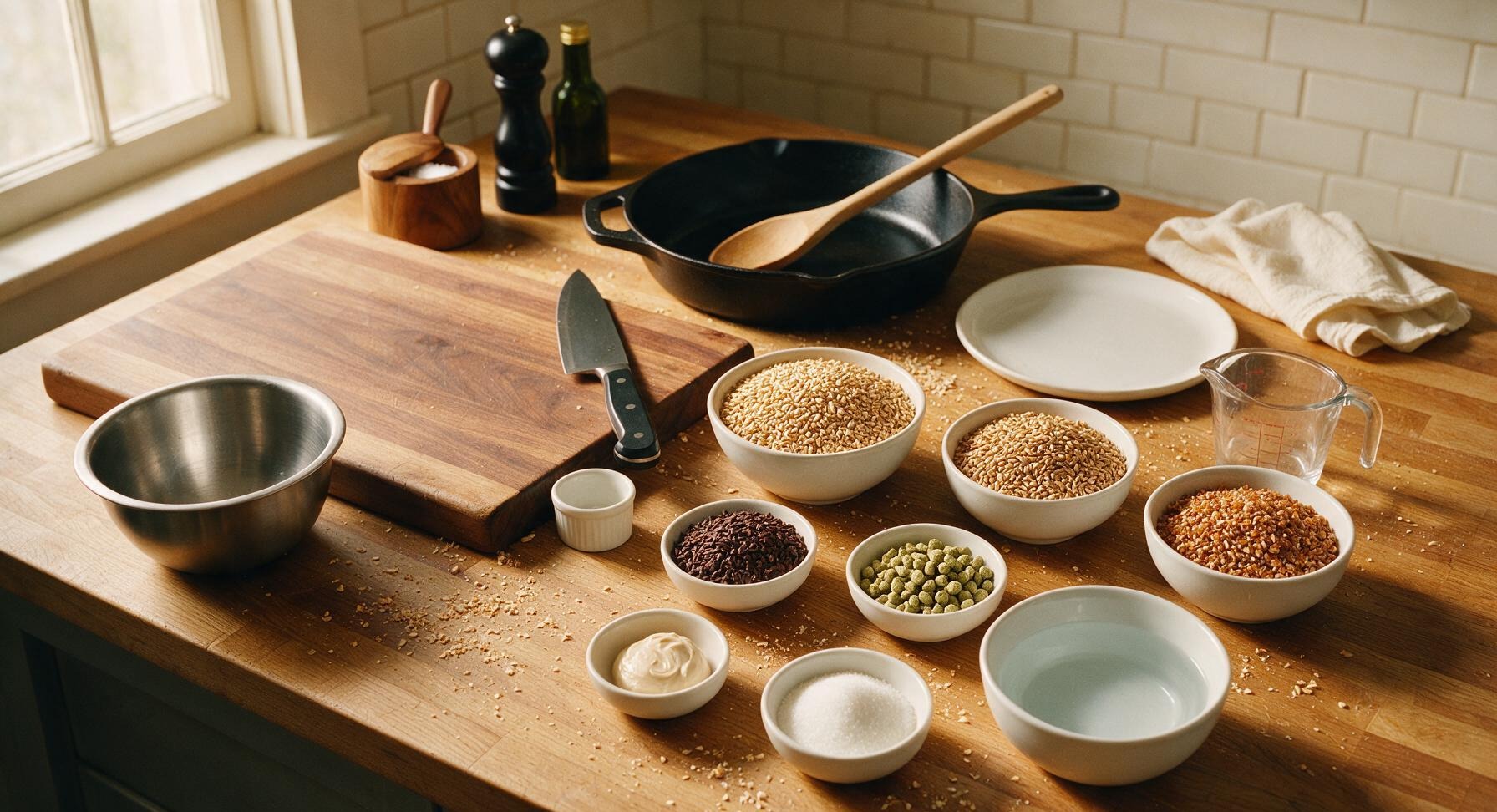
Ingredients
Steps
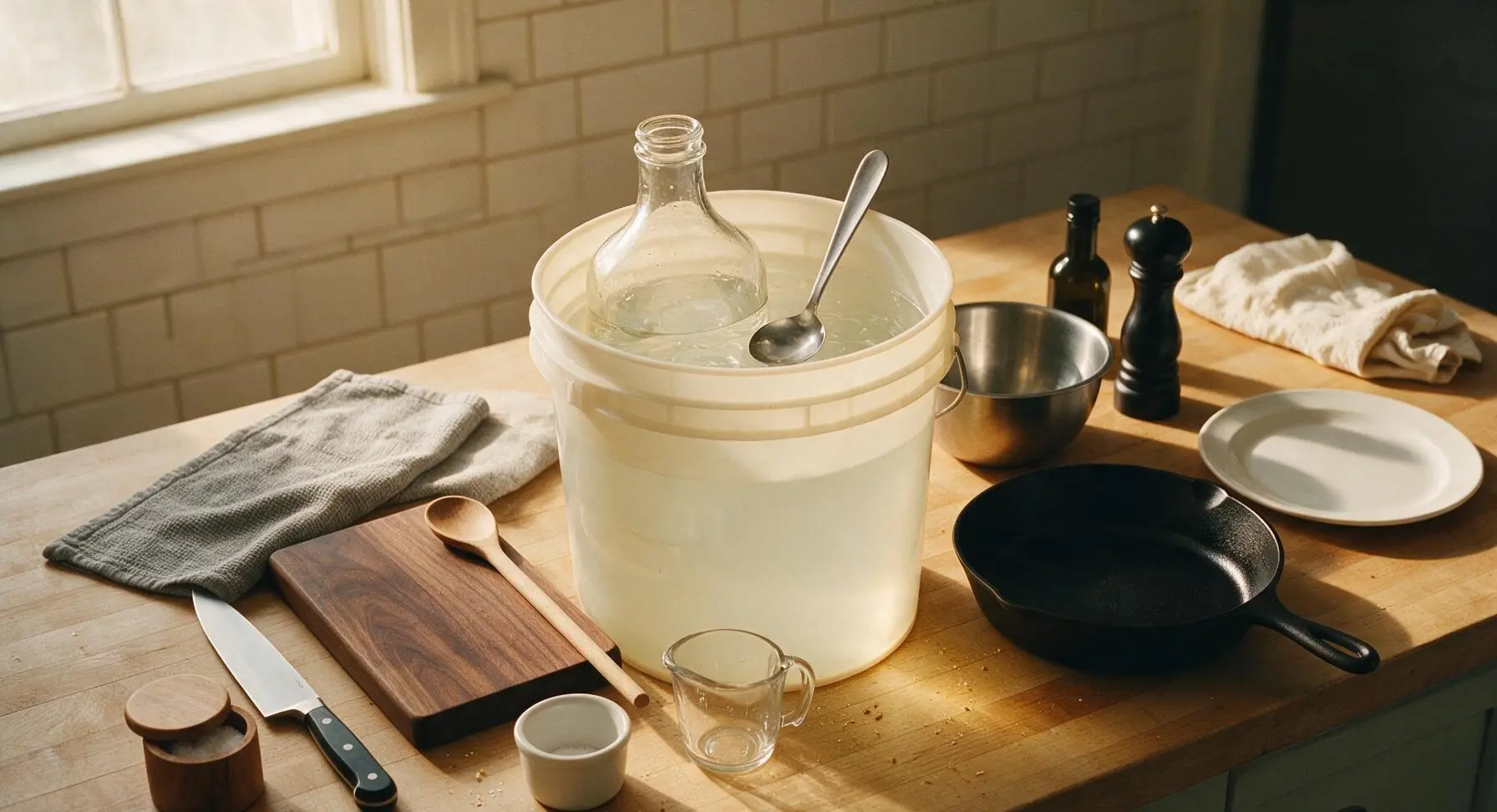
Sanitize Brewing Equipment
Fill the 5-gallon translucent sanitizing bucket with 4L of cool water and no-rinse brewing sanitizer per package directions. Submerge the fermentation jug, airlock, stirring spoon, siphon, tubing, bottling bucket, and bottle caps completely for 2 full minutes. Remove items and let air dry on the clean counter; do not wipe with a towel to avoid introducing bacteria. All surfaces that will touch cooled wort must be fully sanitized to prevent off-flavors.
Heat Mash Water
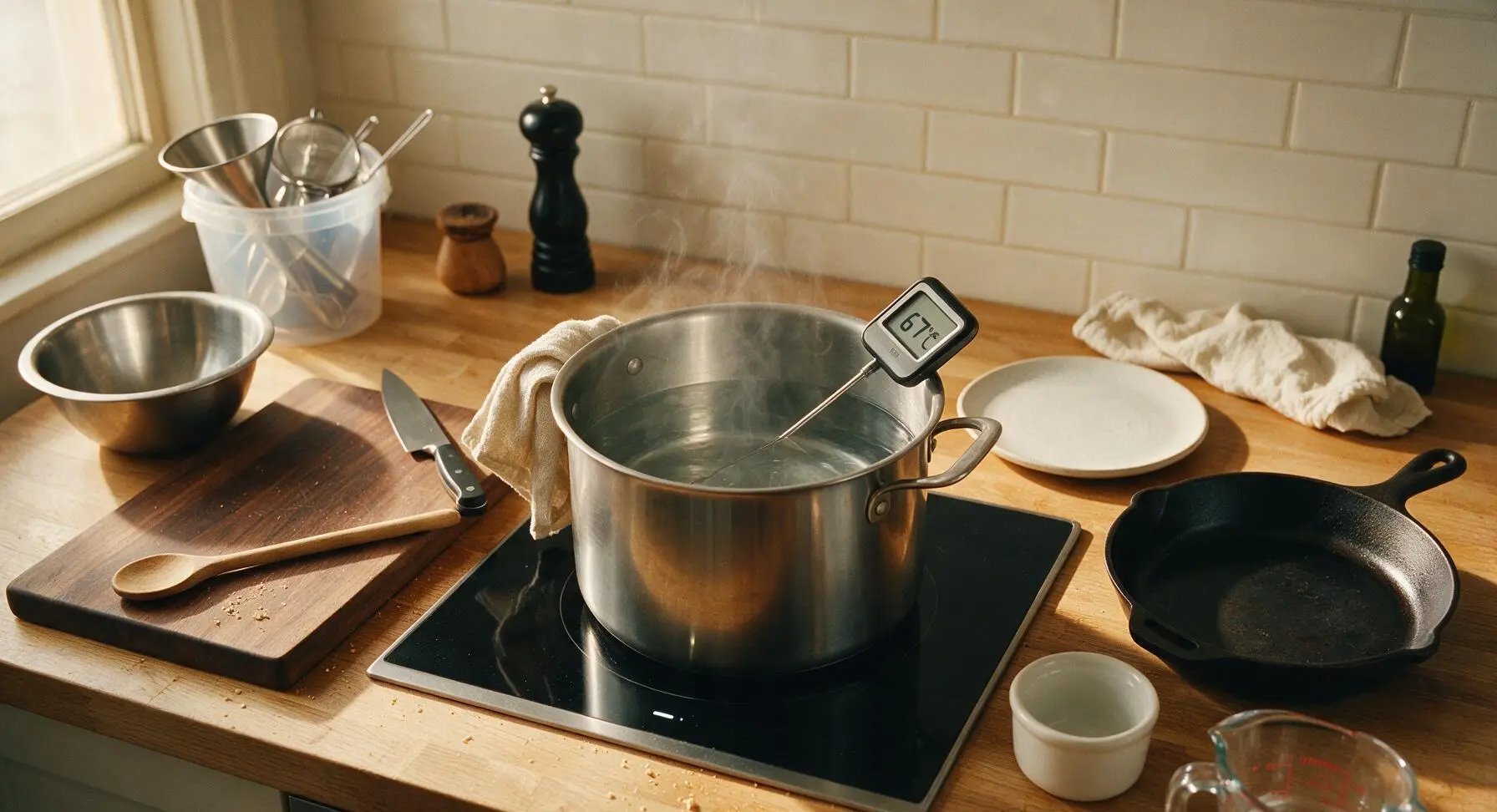
Place the 1-gallon polished stainless steel brew pot on the flush induction stovetop set into the counter center, add 3L of filtered water, and heat to exactly 67°C (153°F). Clip the digital instant-read thermometer to the pot rim to monitor temperature, adjusting heat as needed to hold steady; do not let water exceed 70°C, as higher temperatures extract harsh tannins from grain husks.
Mash the Grain Bill
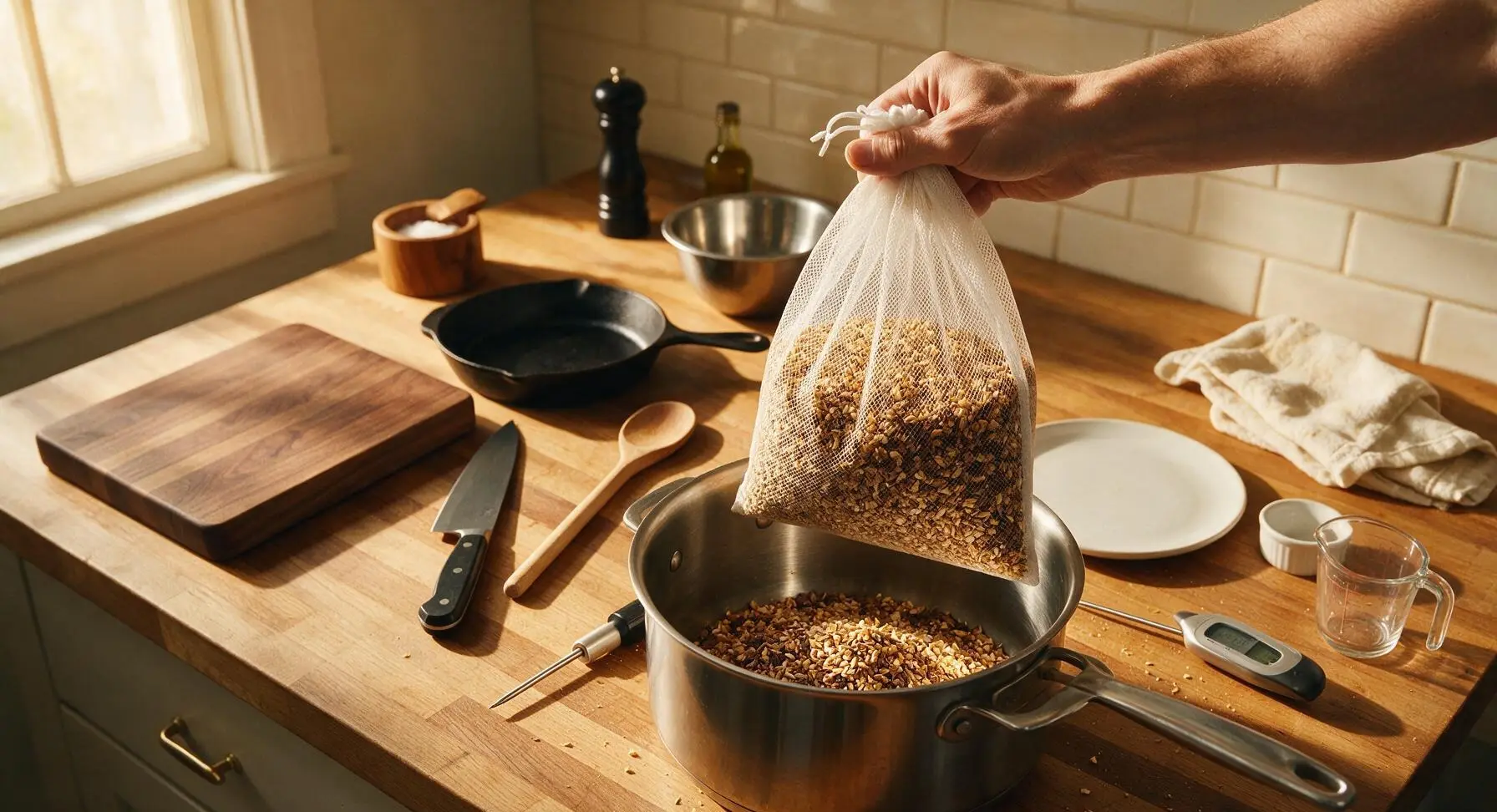
Combine all crushed malts (2-row pale, Munich, caramel, chocolate) in the white nylon mesh grain bag, tie the drawstring loosely, and lower the bag fully into the 67°C water. Cover the pot with its stainless lid, hold temperature steady at 65-68°C for 60 minutes, checking every 10 minutes with the thermometer and adjusting heat as needed. The wort will develop a rich, sweet, toasty aroma and deep amber hue as grain starches convert to fermentable sugar.
Sparge and Boil Wort
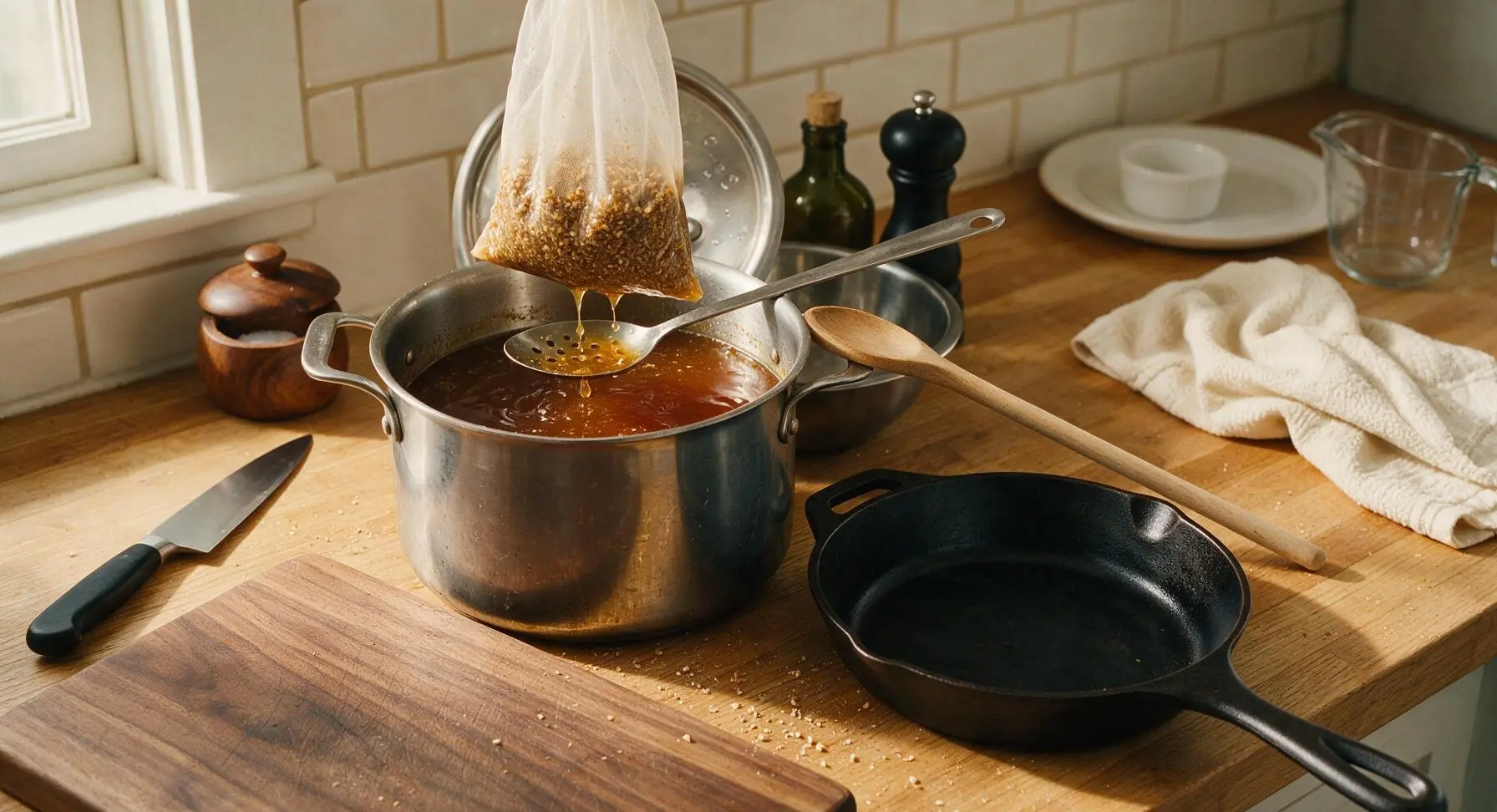
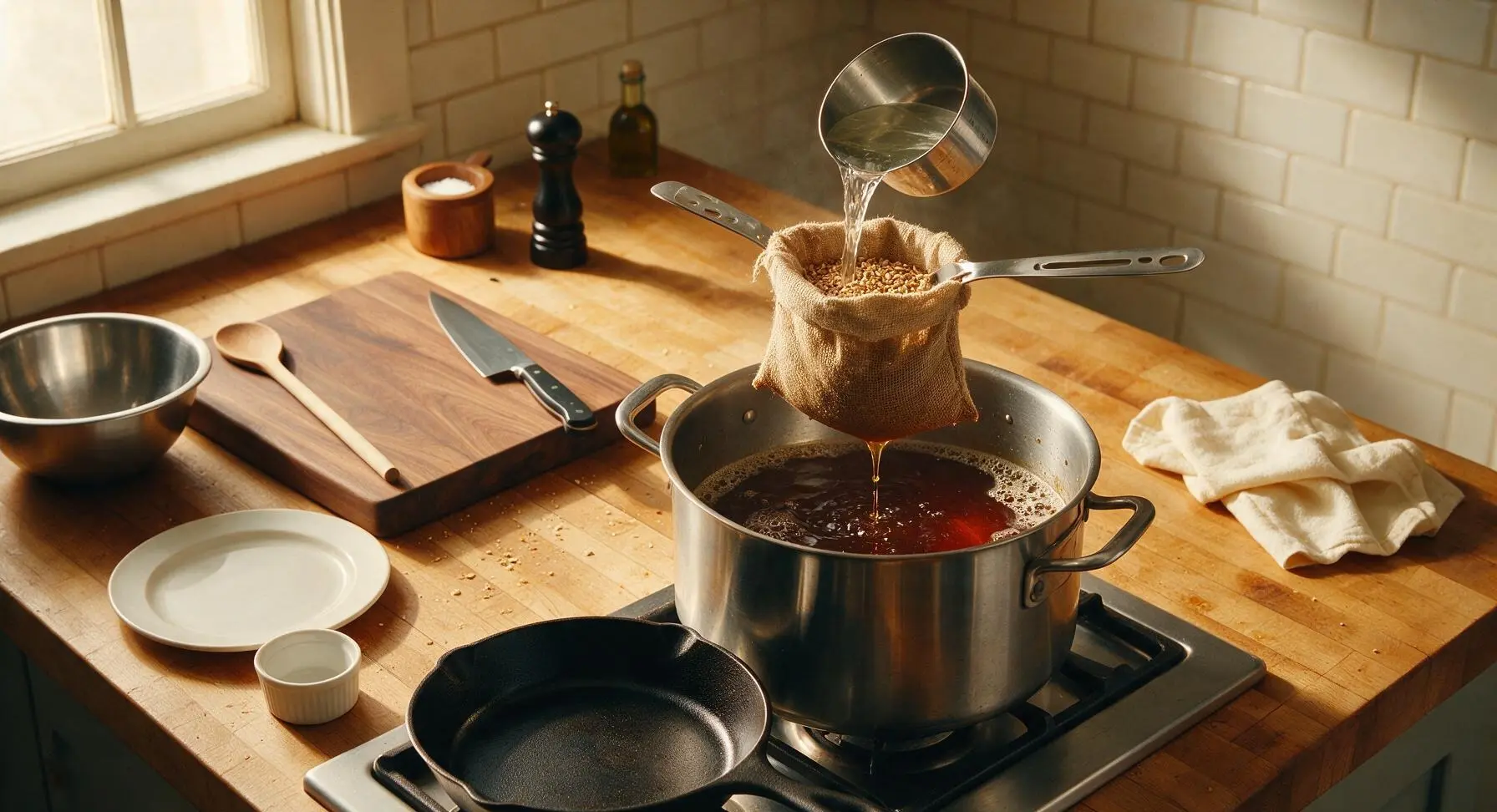
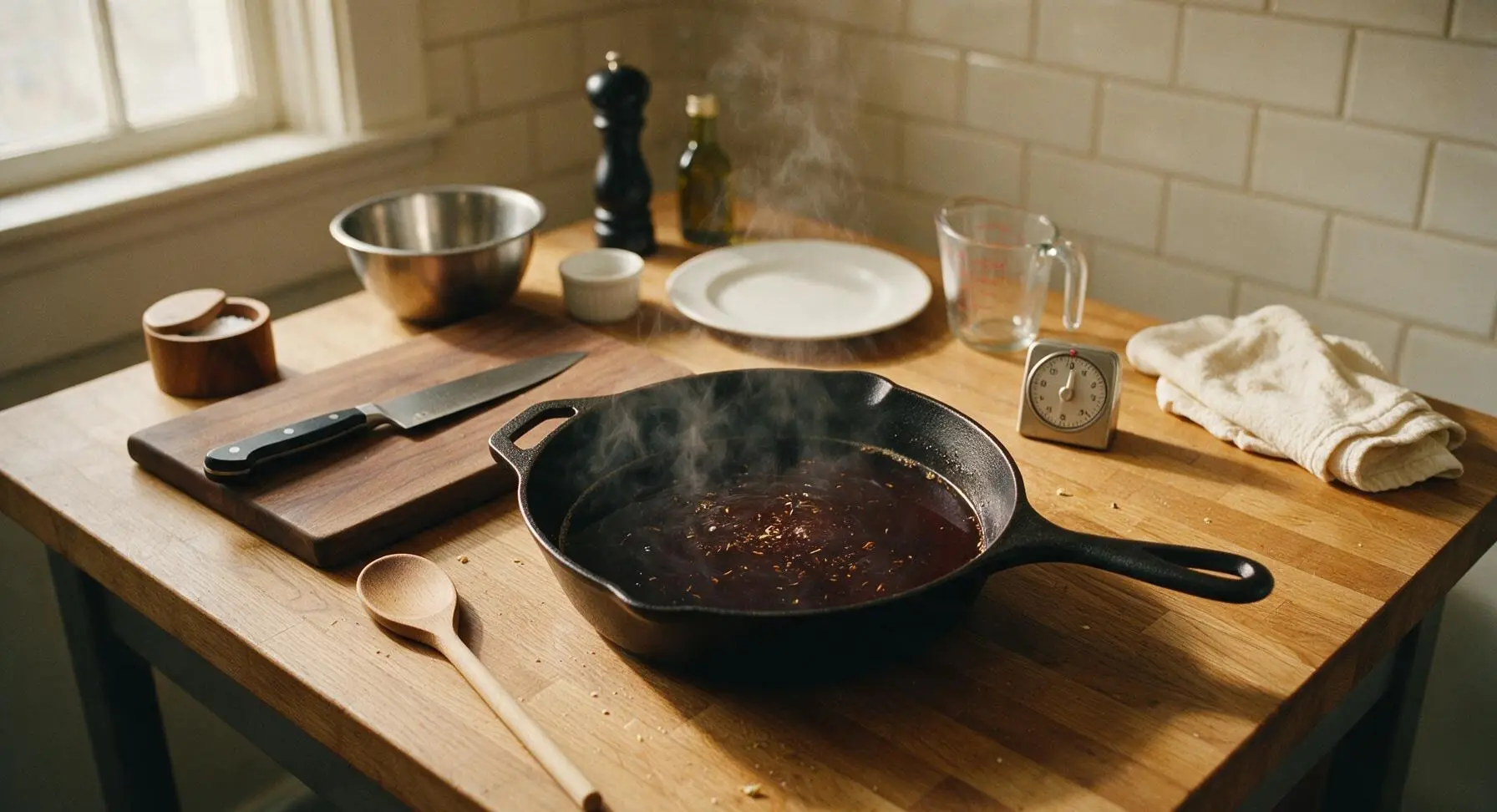
Let the grain bag drain fully over the pot (do not squeeze the bag, to avoid astringent off-flavors), then slowly pour 1L of 77°C (170°F) filtered water over the grain bag from the stainless steel measuring cup to rinse remaining sugars from the grains. Discard spent grains, then bring the collected wort to a steady rolling boil over high heat, starting a 60-minute timer once a full boil is reached.
Add Hops on Schedule
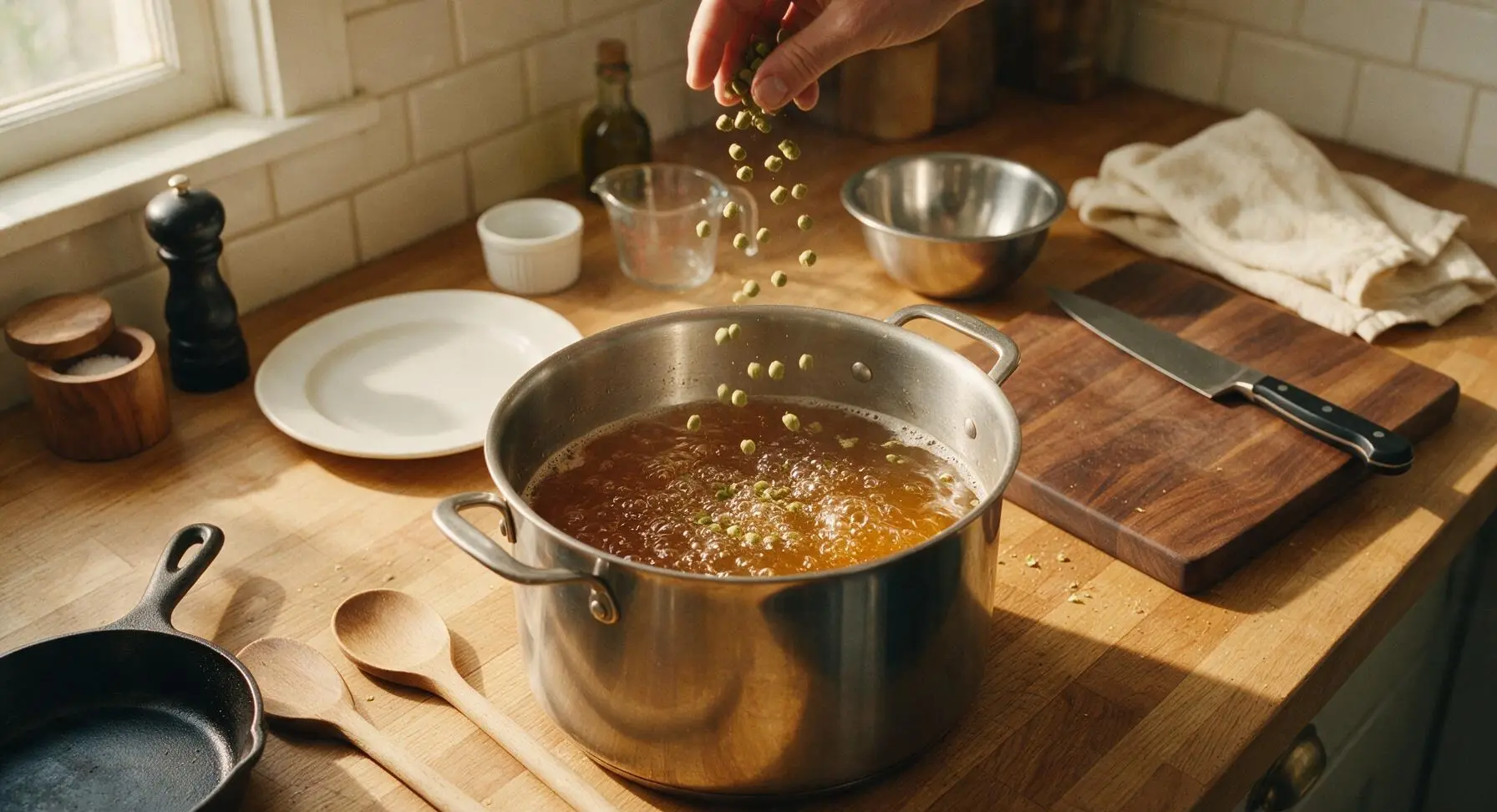
Once the wort reaches a rolling boil, add 10g of Hallertau hop pellets at the start of the 60-minute boil for balanced bittering. Add the remaining 4g of Hallertau hops during the final 5 minutes of the boil to preserve delicate floral hop aroma. Stir gently with the slotted steel spoon after each addition, adjusting heat to maintain a steady but non-violent boil to prevent boilovers.
Cool and Pitch Yeast
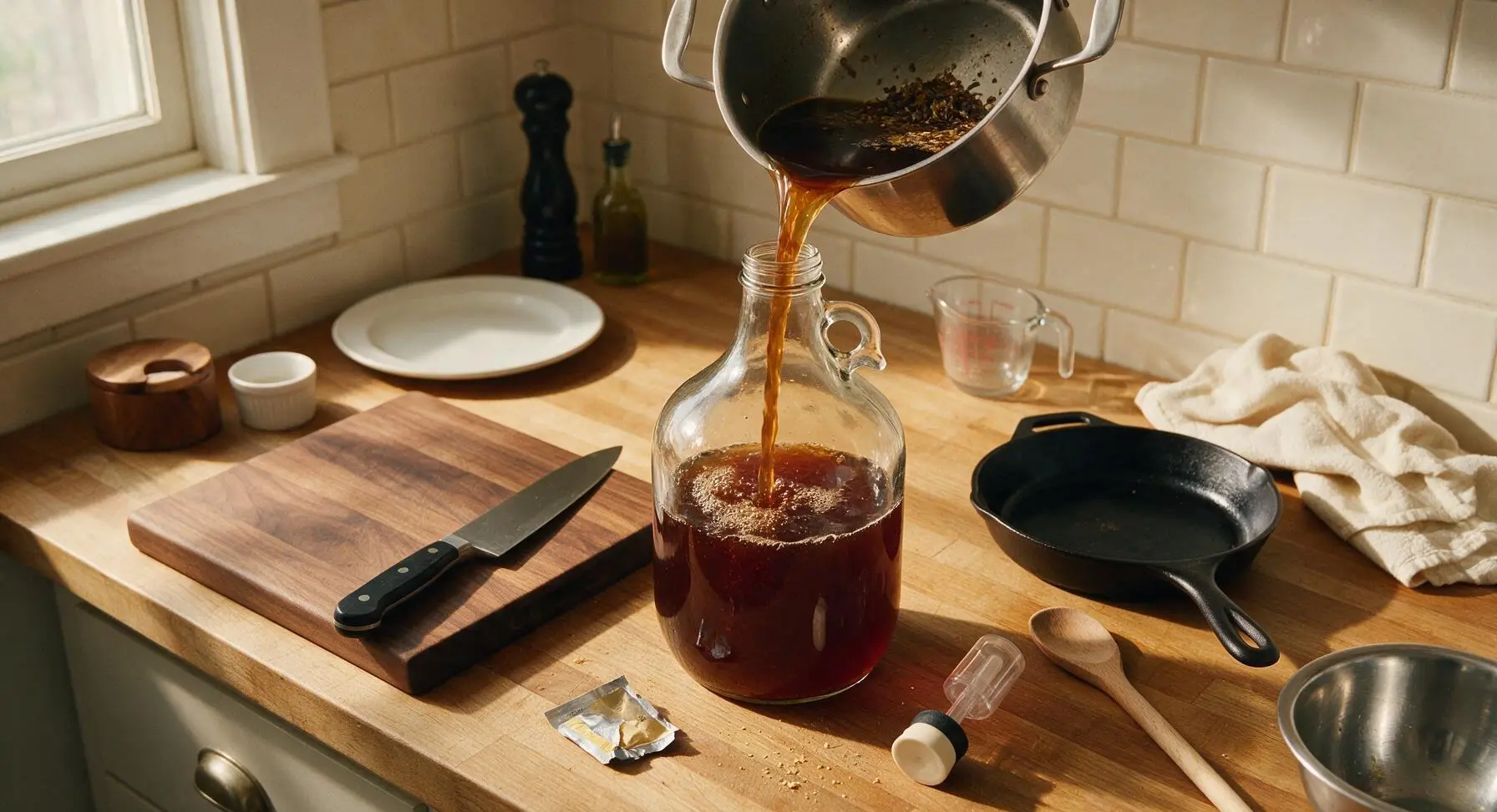
Remove the pot from heat immediately at the end of the boil. Set the pot in an ice bath in the sink to cool wort to 21°C (70°F) within 30 minutes to reduce contamination risk. Pour the cooled wort into the sanitized 1-gallon glass fermentation jug, sprinkle the full packet of Bavarian lager yeast over the wort surface, then seal the jug with the rubber stopper and airlock filled halfway with sanitizer solution.
Ferment and Lager Beer
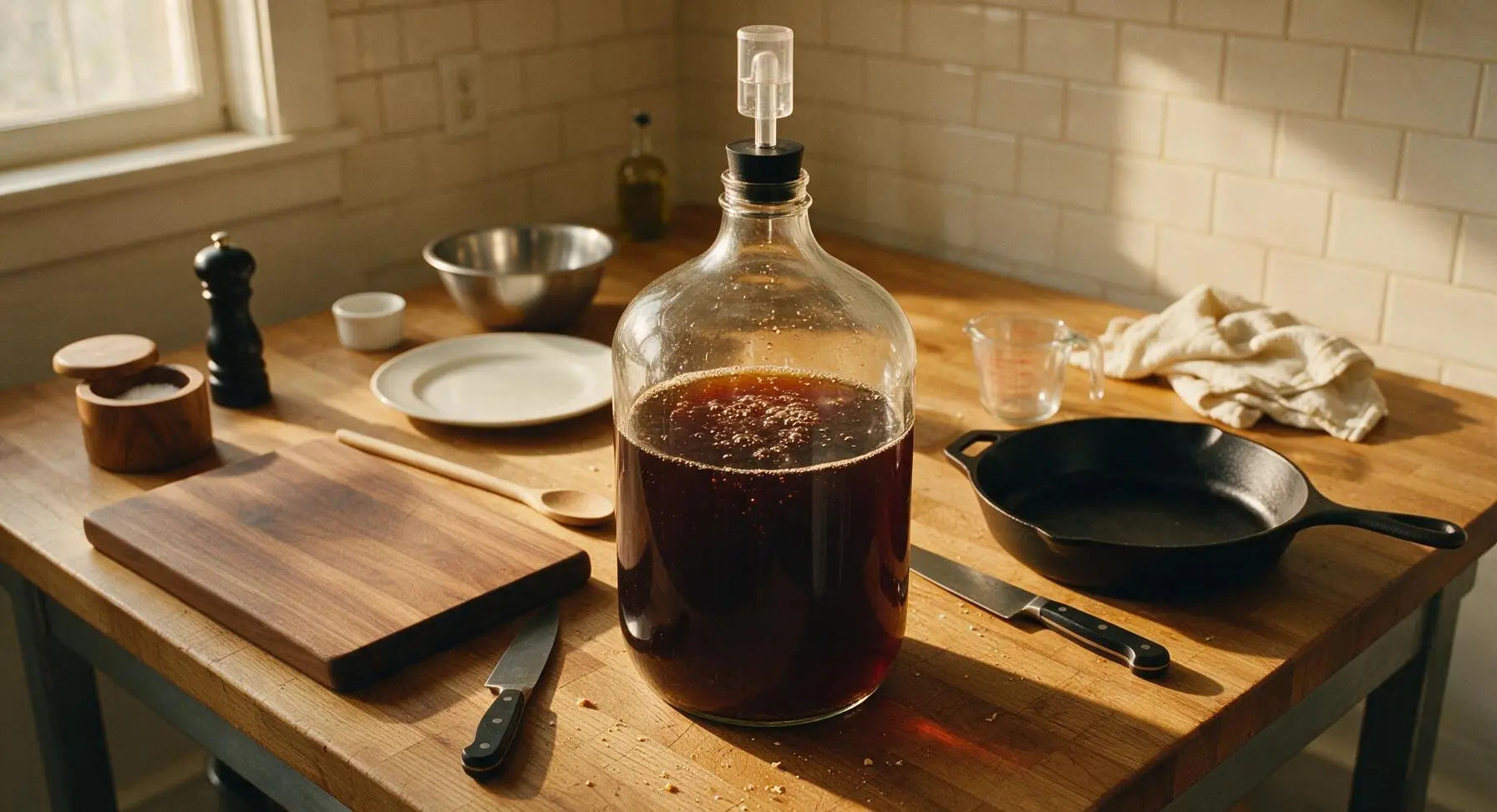
Move the sealed fermentation jug to a dark, temperature-stable space held at 12°C (54°F) for 2 weeks of primary fermentation, until no more bubbles rise through the airlock. After primary fermentation completes, move the jug to a 4°C (39°F) cold space (refrigerator or root cellar) for 4 weeks of lagering, which smooths harsh flavors and clarifies the beer from hazy to bright, clear mahogany.
Bottle and Carbonate
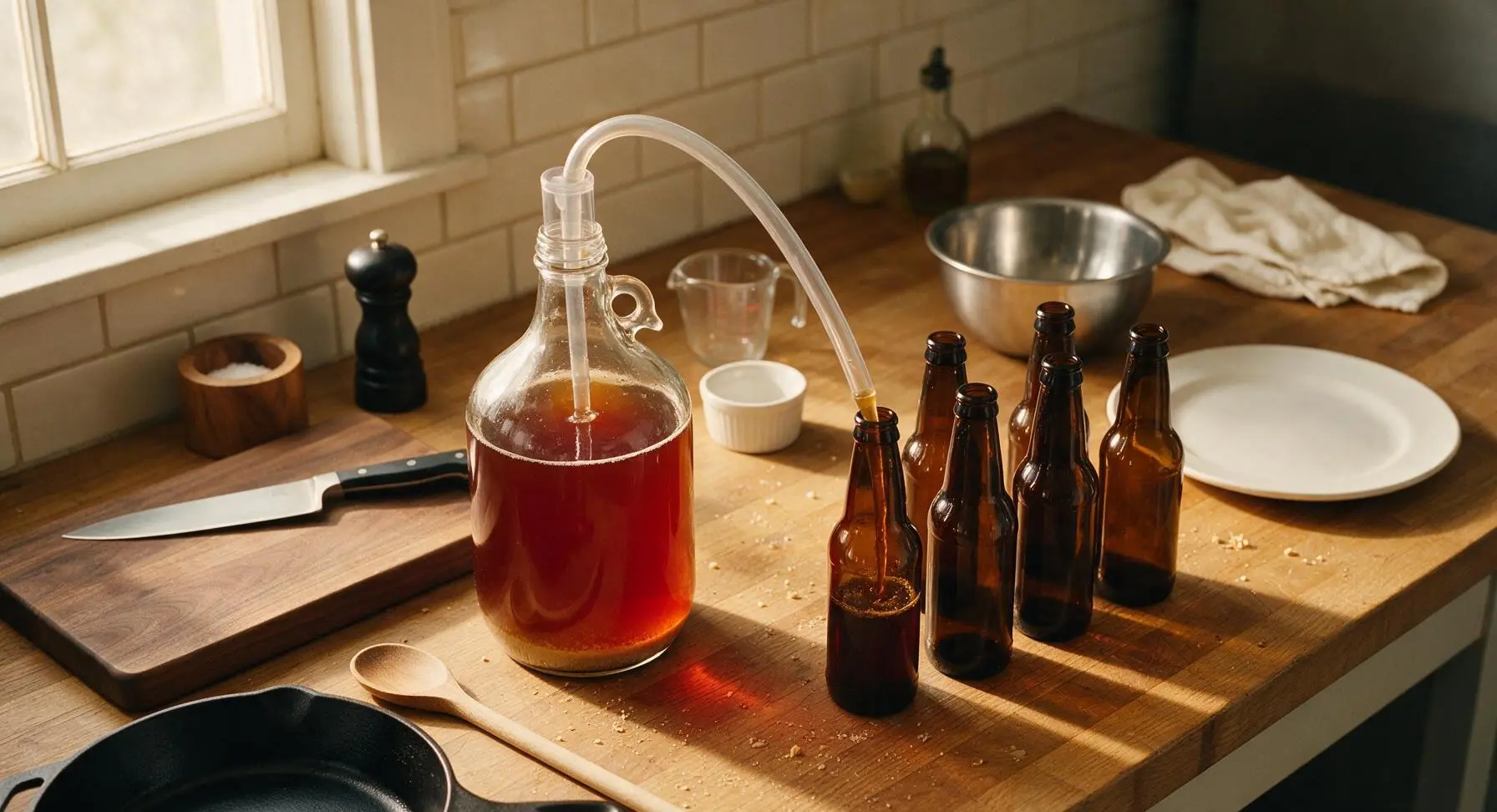
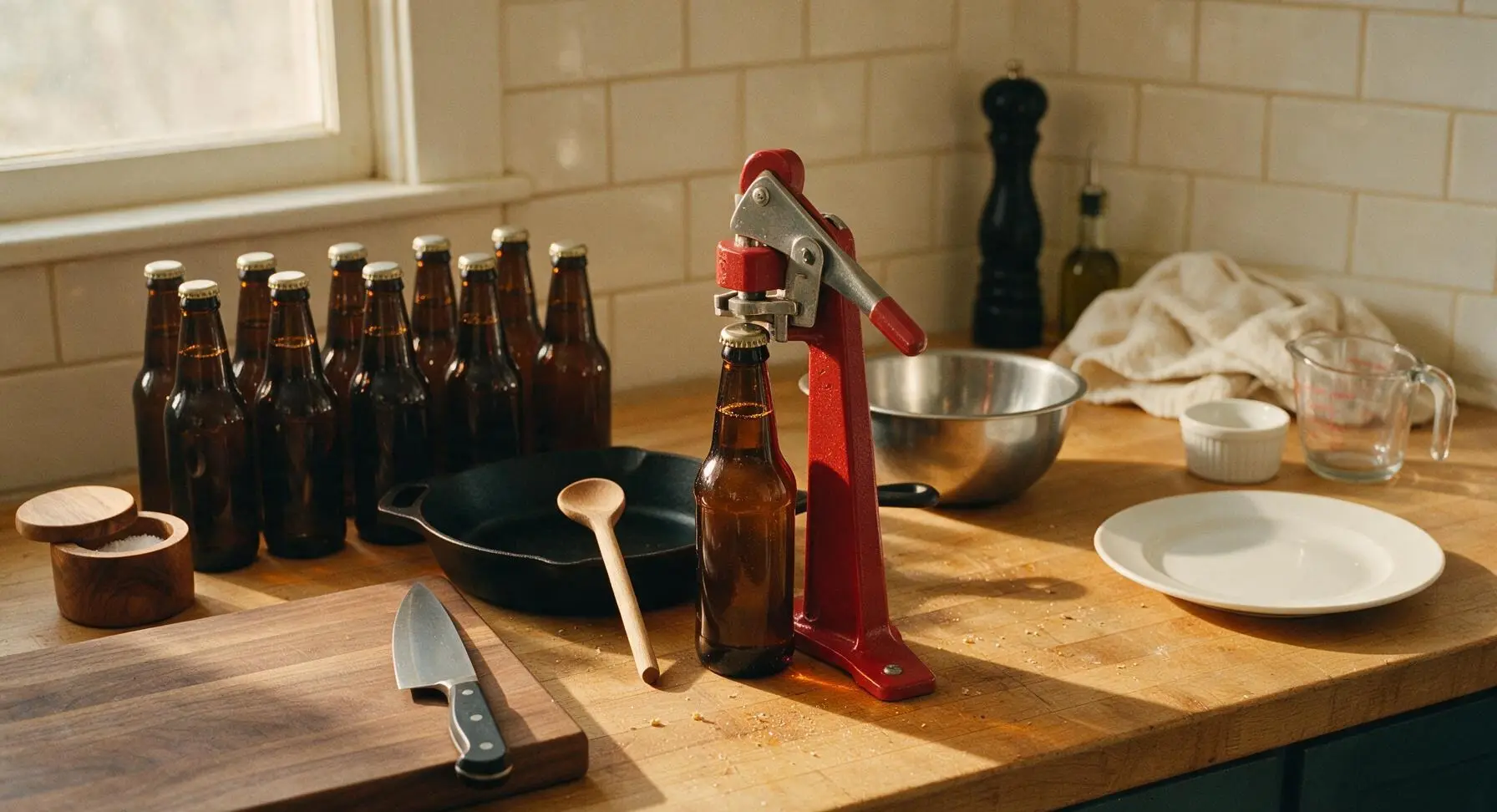
Dissolve 28g of corn sugar in 50ml of boiling water, cool, and add to the bottom of the sanitized bottling bucket. Use the auto-siphon to transfer fully clarified, lagered beer from the fermentation jug into the bottling bucket, mixing gently to evenly distribute priming sugar. Fill each sanitized 12oz amber bottle to 2cm below the rim, cap tightly with the bench capper, and let bottles condition at 18°C (65°F) for 2 weeks to build natural carbonation before chilling to serve.
Tips
2.Maintain strict temperature control during fermentation: lager yeast is extremely sensitive to heat, and temperatures above 14°C (57°F) will produce off-flavors like green apple, buttered popcorn, or solvent-like notes that cannot be fixed later.
3.Be patient during lagering: the 4-week cold conditioning period is not optional—it allows harsh yeast byproducts to break down, resulting in the clean, smooth, mellow flavor that makes Doppelbock so drinkable despite its high alcohol content.






OMG, this doppelbock recipe is an absolute game changer! I’ve tried 3 other Bavarian doppelbock recipes over the last 2 years and none of them nailed that rich, toasty, slightly sweet malty flavor like this one. I brought a growler to our neighborhood potluck last weekend and people were begging me for the recipe all night. My brother in law who’s a total craft beer snob said it tasted better than the stuff we had on our Munich trip a couple years back. Only note is make sure you don’t rush the boil step, that’s where all that deep caramel flavor comes from! 10/10 will be brewing this every fall from now on.
I was so intimidated to try this because the difficulty is marked hard, but I followed the steps exactly and it turned out SO good! My whole family was shocked I made a beer this smooth at home. It’s got that perfect rich, bready note without being too heavy, and it pairs amazing with the pretzels and obatzda I made for our Sunday family dinner. My kids even thought the whole brewing process was super cool to watch (don’t worry, they didn’t taste any!)
Solid recipe, but I wish there was a note about adjusting water profile for people with super hard tap water out here in Arizona. My first batch came out a little more minerally than I wanted, but I adjusted for the second round and it was chef’s kiss. Next time I’m gonna add a tiny bit of chocolate malt to amp up that roasty note a touch more.
Y’all, I brewed this for our annual fall tailgate and it was a total hit! I was worried a strong beer like this wouldn’t be for everyone, but even my friends who only drink light seltzers were coming back for refills. It’s so smooth you barely notice how strong it is, which is dangerous tbh. Game changer for my fall hosting rotation for sure.
Tried this last weekend and I’ve got to say, the malt ratio is spot on. I’ve had a lot of commercial doppelbocks that don’t have that balanced, not-too-sweet finish this recipe gets. My only small gripe is that the hop addition timing felt a little off to me, I added a half ounce more of Hallertau at 60 minutes to get a touch more bitterness to cut the sweetness, and that was perfect for my taste.
Pro tip for newbies: don’t skip the wort chiller step if you have one! I tried to cut corners my first go and my cooling time was way too long, I ended up with a slight off flavor from that. Second batch I did exactly what the recipe said, used my immersion chiller to get it down to pitching temp fast, and it came out perfect. My roommate said it’s the best homebrew I’ve ever made.
This is such a cozy, robust beer! I poured a glass last night after a long hike and it hit every single spot. The notes of dark fruit and toasted bread are so warm, it’s perfect for cold Colorado evenings. I already sent the recipe to my whole homebrew club, I know a bunch of them are gonna want to test it out.
Wait, I know this is a beer recipe, but has anyone tried using this doppelbock to make beer cheese? I made a batch last week, then used a cup of it in my go-to beer cheese dip for taco night and OMG, it was insane. The deep malty flavor made the dip taste so much richer than when I use regular lager. My kids devoured the pretzel bites with that dip and kept asking for more!
I was so nervous to tackle this as my very first all-grain brew, but the step by step instructions were so clear! I was worried I’d mess up the mash temp, but I kept it steady like the recipe said and my hydrometer reading was spot on when I was done with the boil. I can’t wait to try it once it’s done conditioning, I already have a feeling it’s gonna be great.
Really solid traditional recipe, no weird extra add-ins that don’t belong in a classic doppelbock. I appreciate that it sticks to the traditional Bavarian ingredients instead of throwing in random trendy hops or adjuncts like so many other recipes online these days. I’ll be brewing this again for Oktoberfest next year for sure.