
Double Bock
intro
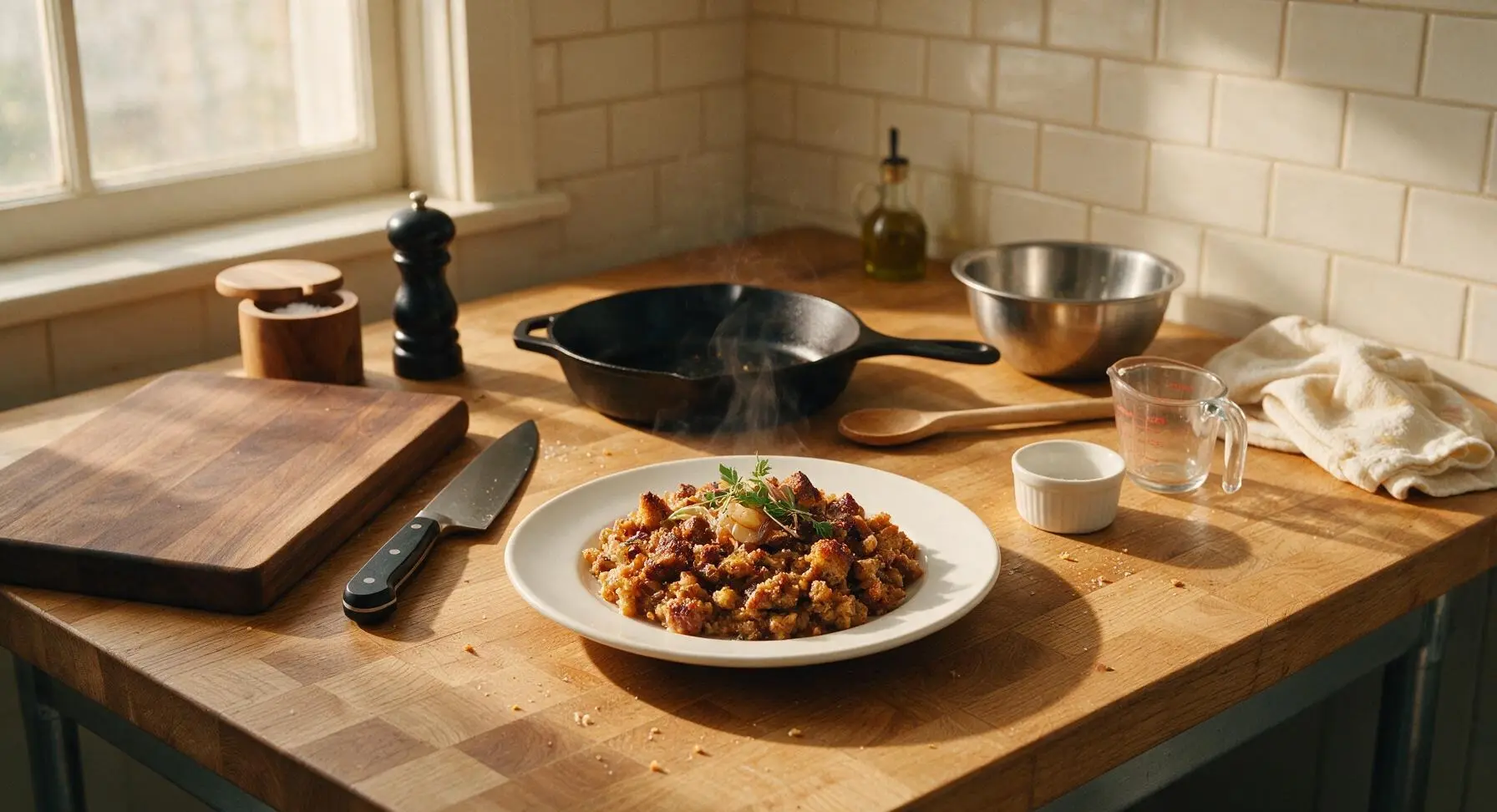
Rich, toasty homemade Double Bock with notes of dark bread, caramel, and subtle dried fruit, a smooth 8% ABV sipper perfect for cold winter evenings.
Ingredients
Steps
Sanitize Brewing Equipment
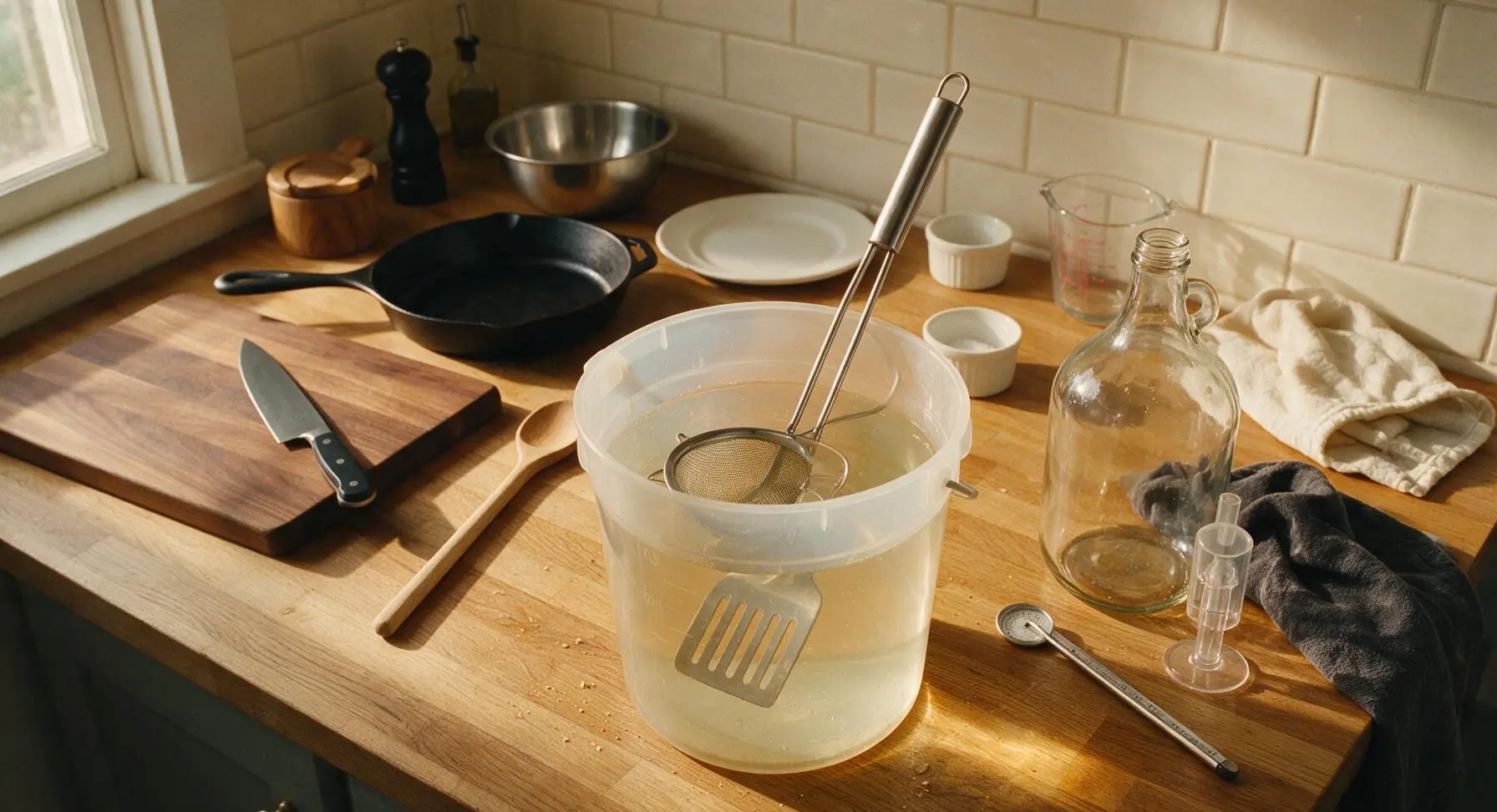
Fill the 10L translucent sanitizer bucket with 4L cool filtered water and the recommended amount of iodophor sanitizer concentrate from the oak jar. Submerge the mash paddle, strainer, fermentation carboy, airlock, and thermometer for 2 full minutes, then lift out and air-dry on the clean counter surface. Ensure no suds remain on equipment—residual sanitizer can create off-flavors in finished beer.
Heat Mash Water
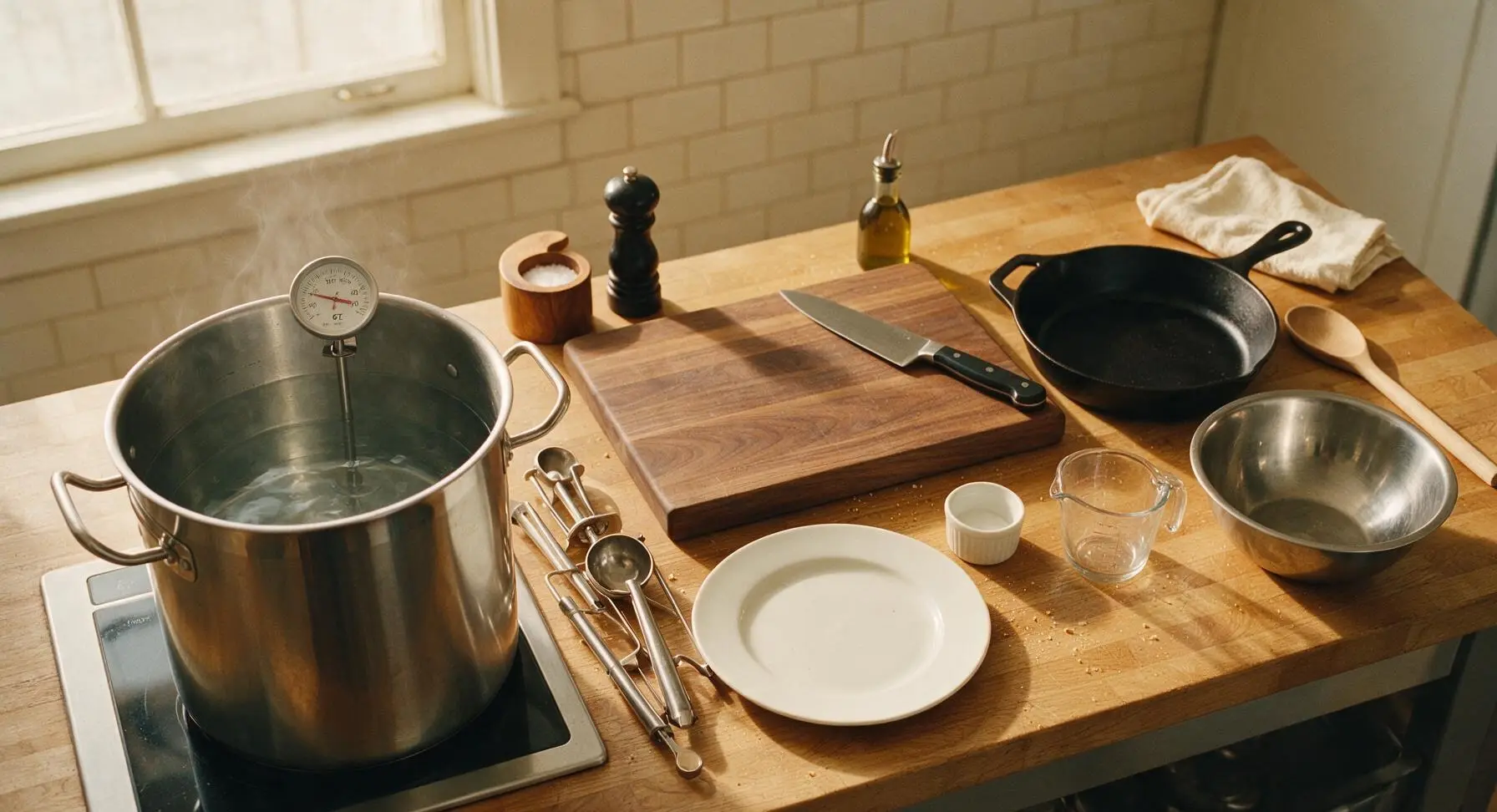
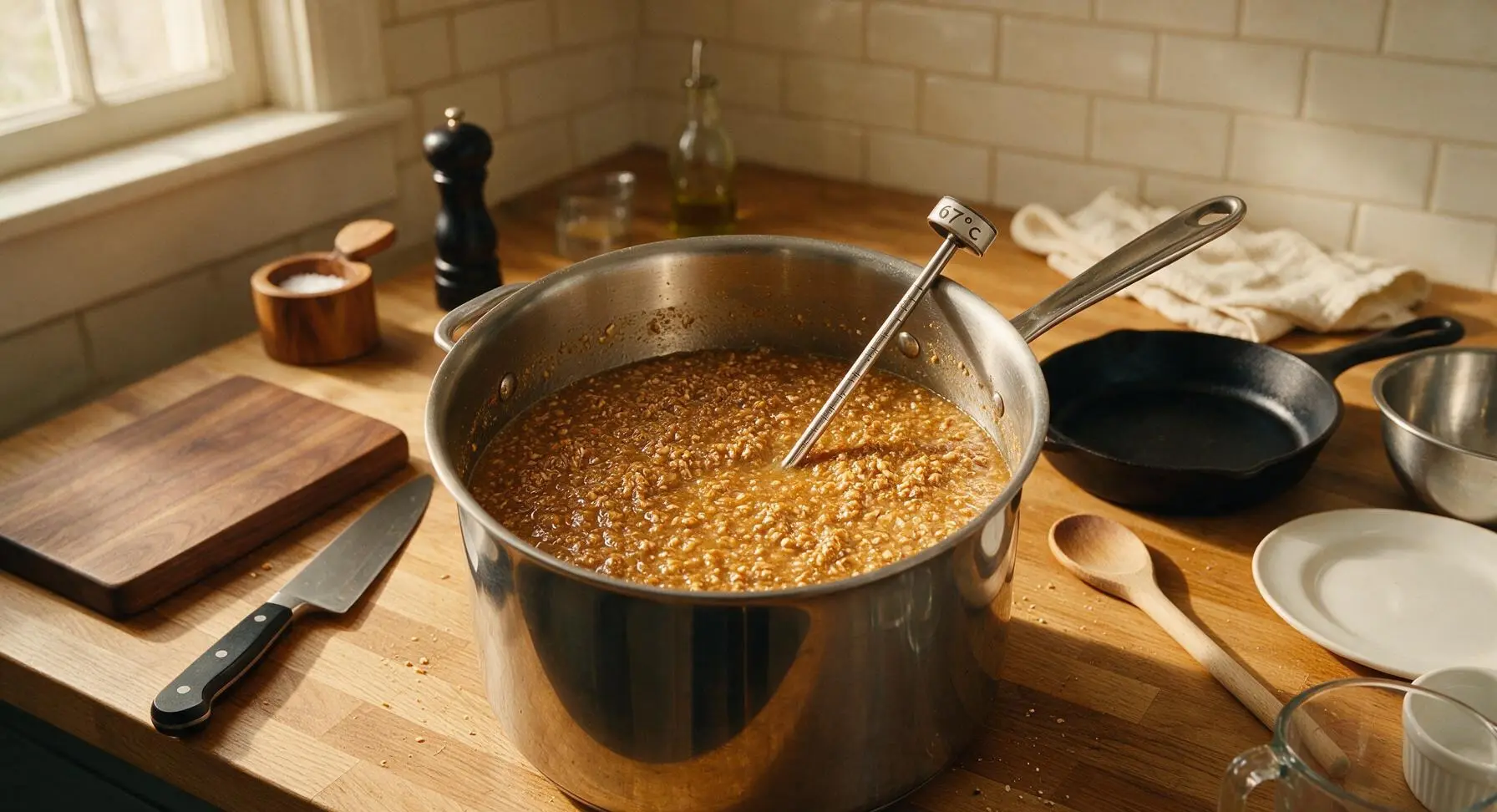
Pour 3L of filtered water into the 5-gallon stainless steel brew kettle, set it on the left-side induction cooktop, and heat over medium power. Clip the dial-face thermometer to the kettle rim to monitor temperature, heating until the water reaches a steady 67C (153F). Do not boil the water at this stage, as excess heat will destroy the malt enzymes needed for sugar conversion.
Mash the Crushed Grains
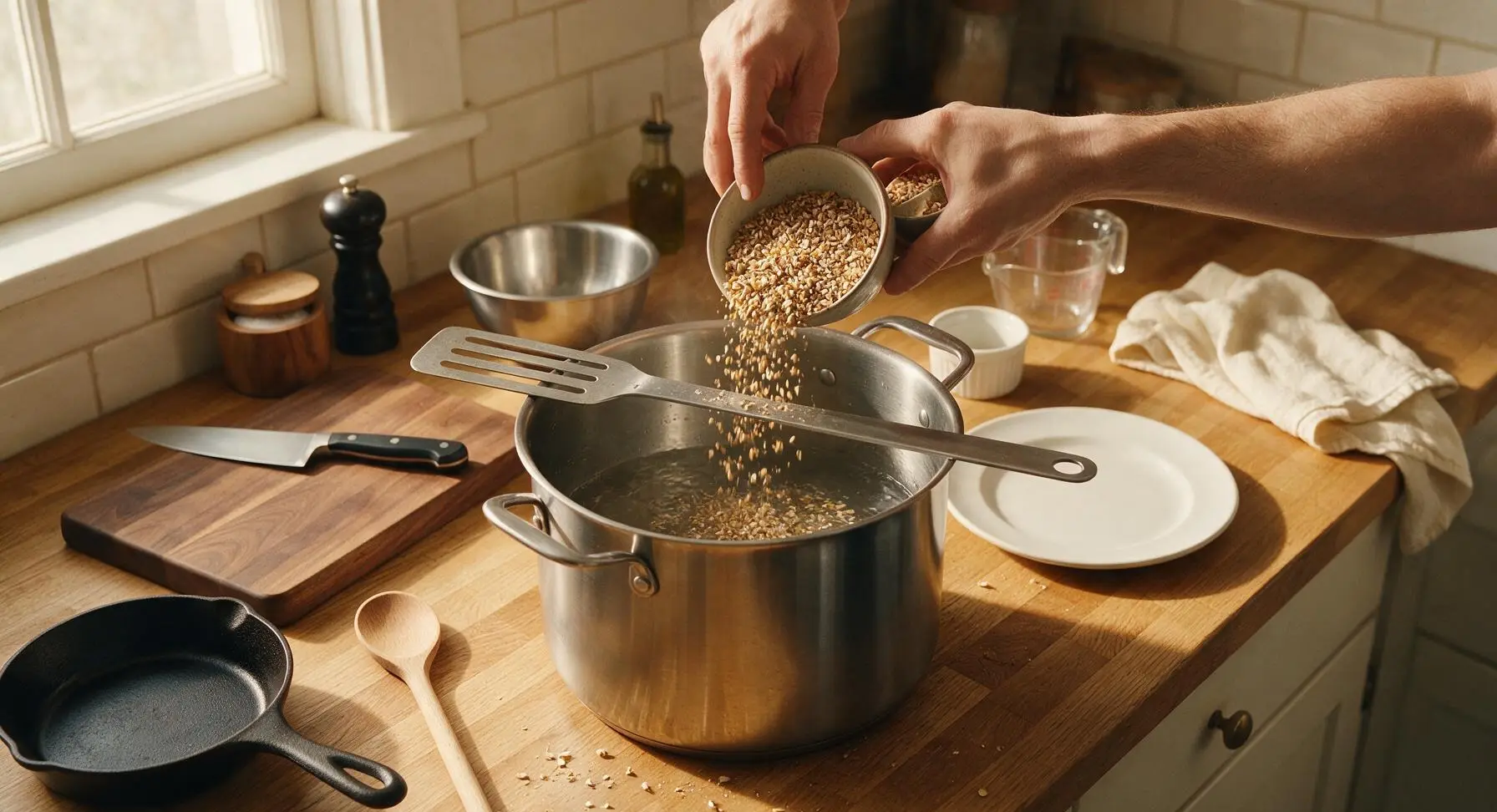
Slowly pour all measured crushed malts (Pilsner, Munich, caramel 60, chocolate) into the heated water, stirring thoroughly with the slotted mash paddle to break up any dry clumps of grain. Cover the kettle with its lid and hold the temperature steady at 65-68C (149-154F) for 60 minutes, adjusting induction heat as needed. The mash will smell strongly of warm, toasted bread as sugars are extracted from the grains.
Strain Sweet Wort
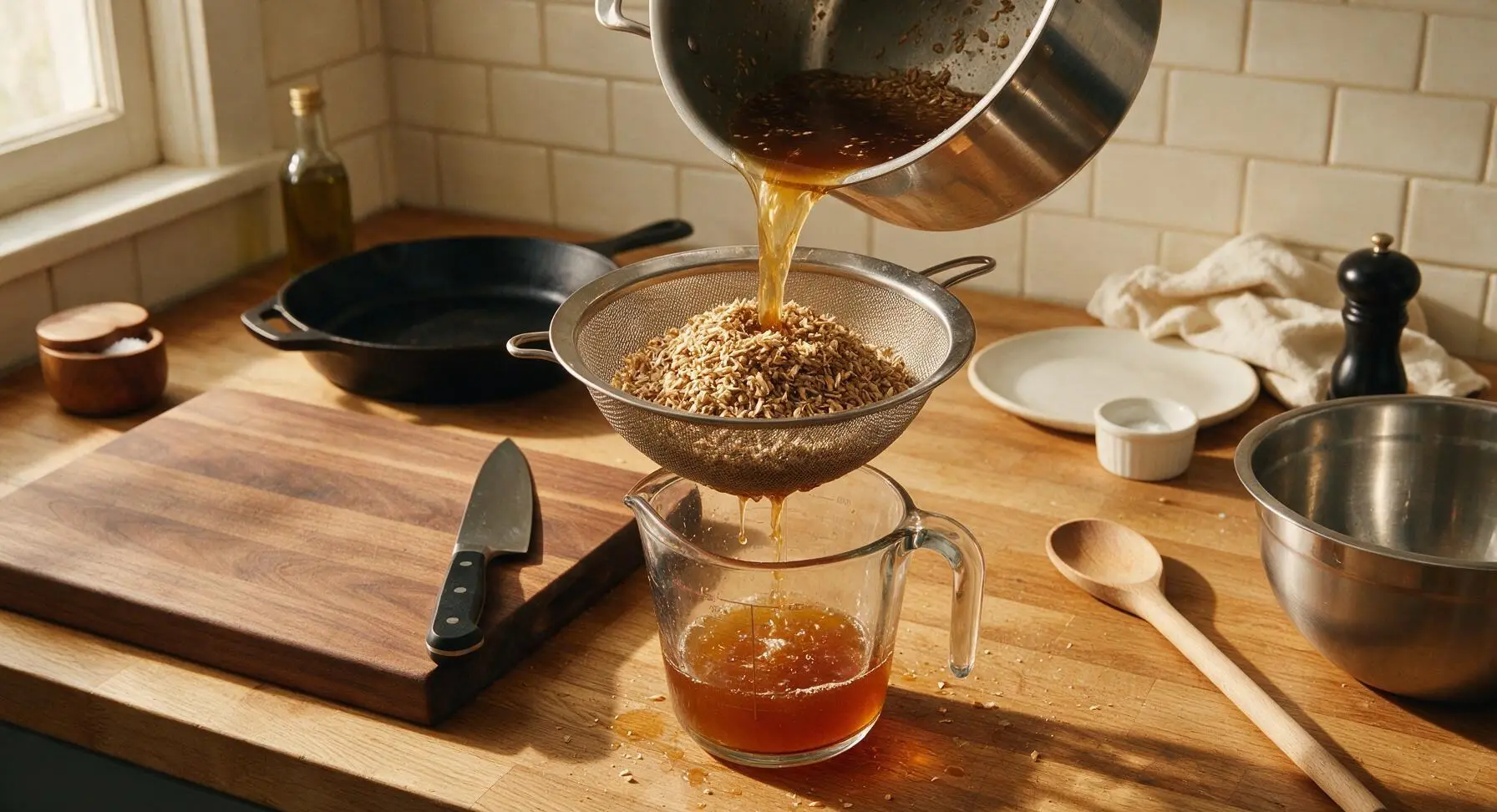
Set the fine-mesh stainless steel strainer over the stainless steel measuring cup, then slowly pour the entire contents of the mash kettle through the strainer to separate the sweet, sugar-rich liquid (called wort) from the spent grain husks. Slowly pour 1L of 77C (170F) filtered water over the grain trapped in the strainer to rinse out remaining sugars, collecting all runoff wort. Spent grains can be composted after draining fully.
Bring Wort to Boil
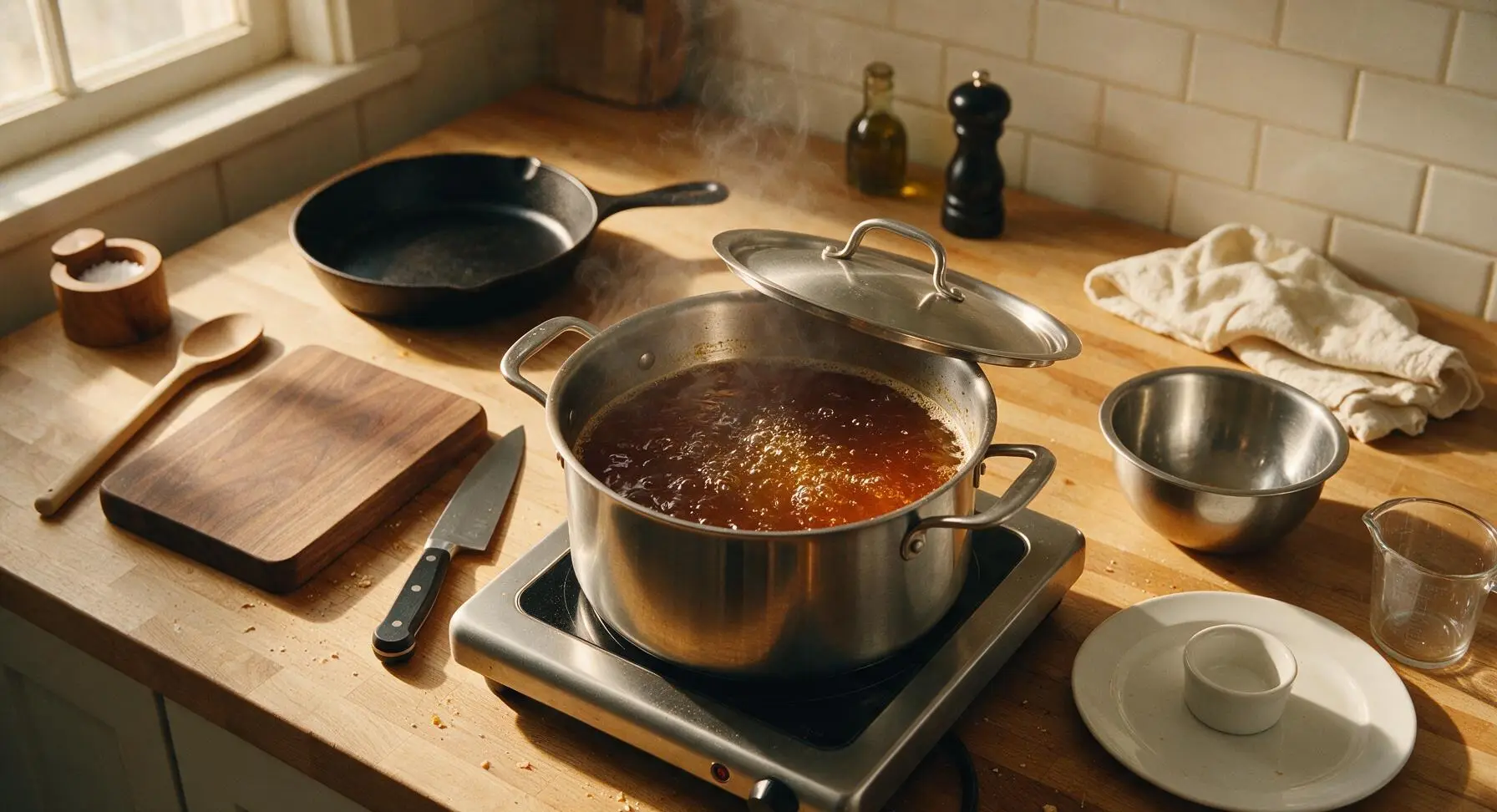
Pour all collected strained wort back into the cleaned brew kettle, return to the induction burner, and bring to a gentle rolling boil over medium-high heat. Maintain a steady, non-violent boil for 60 full minutes, adjusting heat as needed to prevent sticky wort from boiling over the kettle rim. The wort will darken slightly and develop a rich, caramelized aroma as it boils.
Add Hops and Nutrient
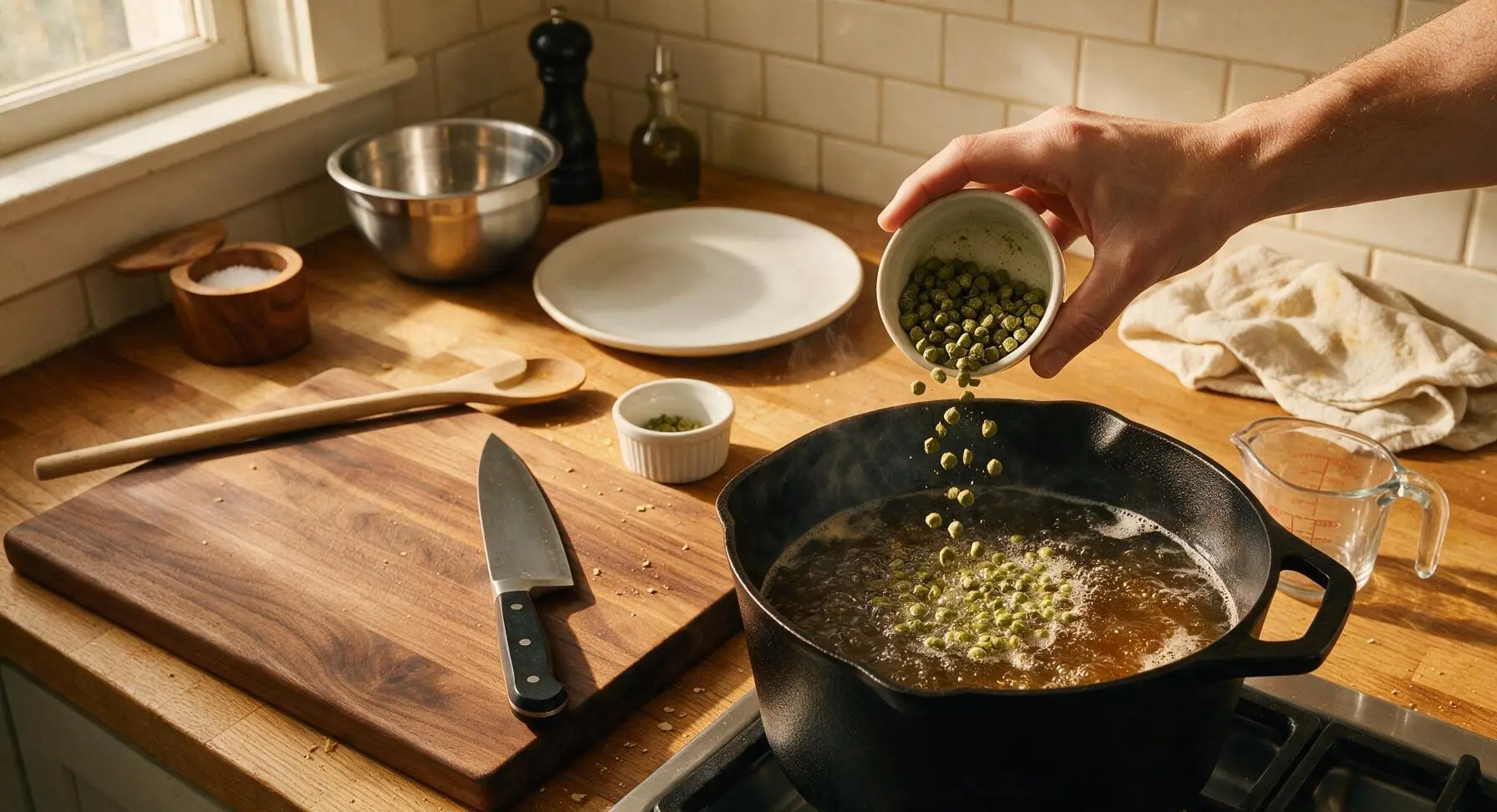
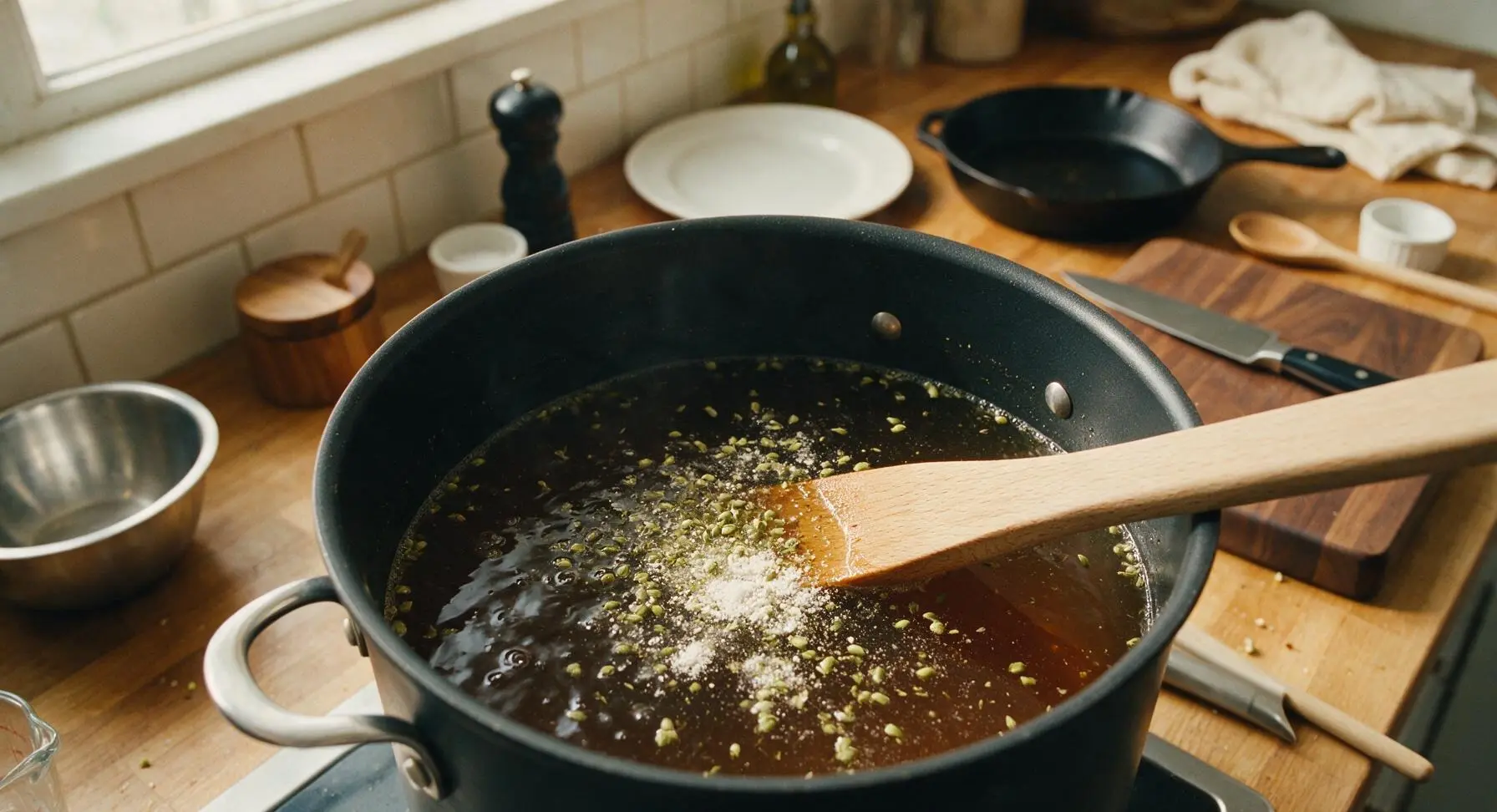
Add 7g (0.25 oz) of Hallertau hops immediately once the boil starts to provide subtle, balanced bittering. With 10 minutes remaining in the 60-minute boil, add the remaining 7g (0.25 oz) of Hallertau hops and 1 tsp of yeast nutrient, stirring gently with the mash paddle to incorporate. Avoid adding late hops earlier, as this will cook off their delicate spicy, floral aroma.
Cool and Pitch Yeast
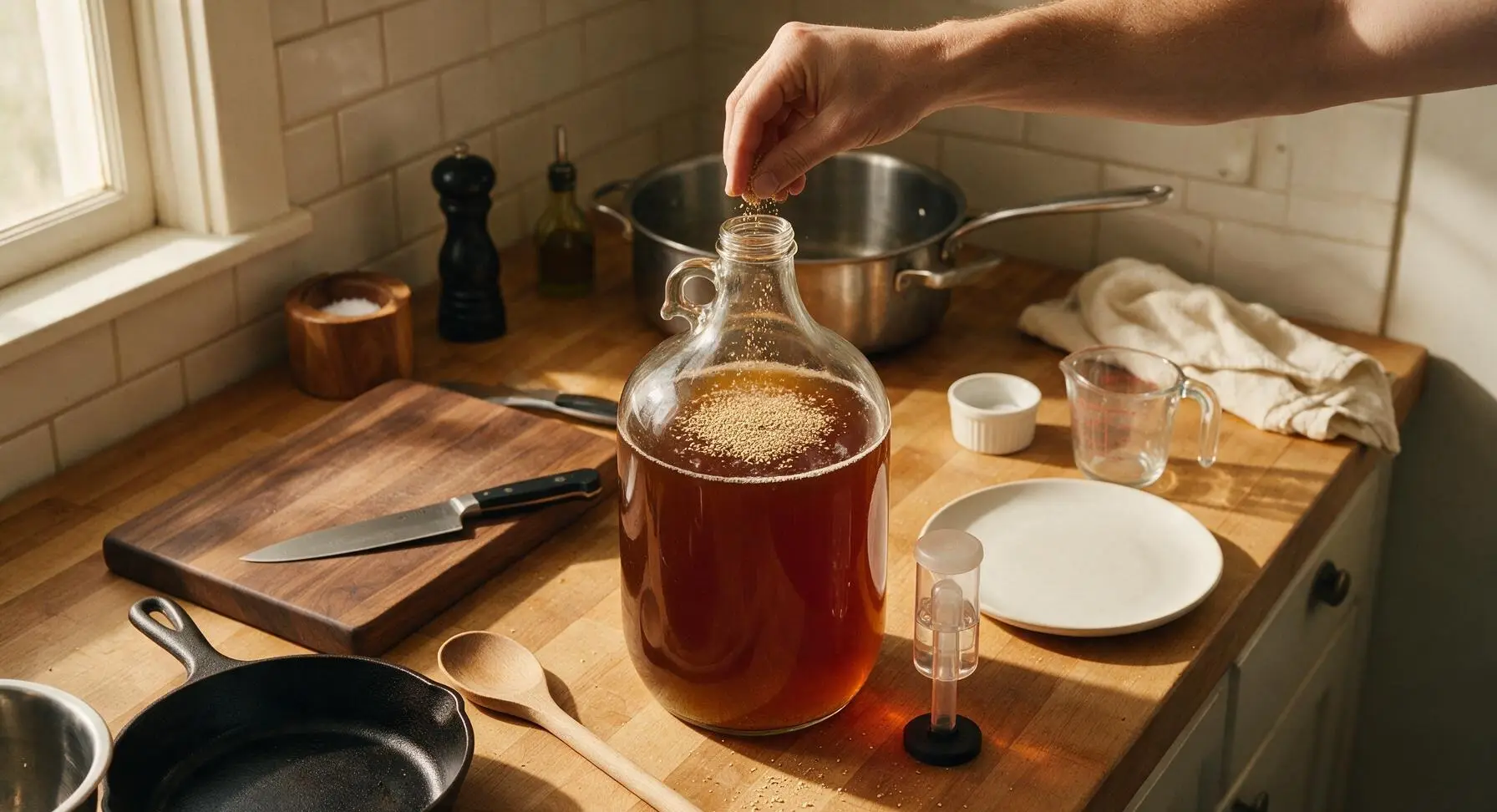
Once the 60-minute boil finishes, remove the kettle from heat and cool the wort as quickly as possible to 18C (65F) using an ice bath set up outside the frame. Pour the cooled, clear wort into the sanitized glass carboy, then sprinkle the entire packet of Bavarian lager yeast evenly over the wort surface. Seal the carboy with the sanitized rubber stopper, and fill the airlock halfway with sanitizer solution before fitting it into the stopper hole.
Ferment to Finish
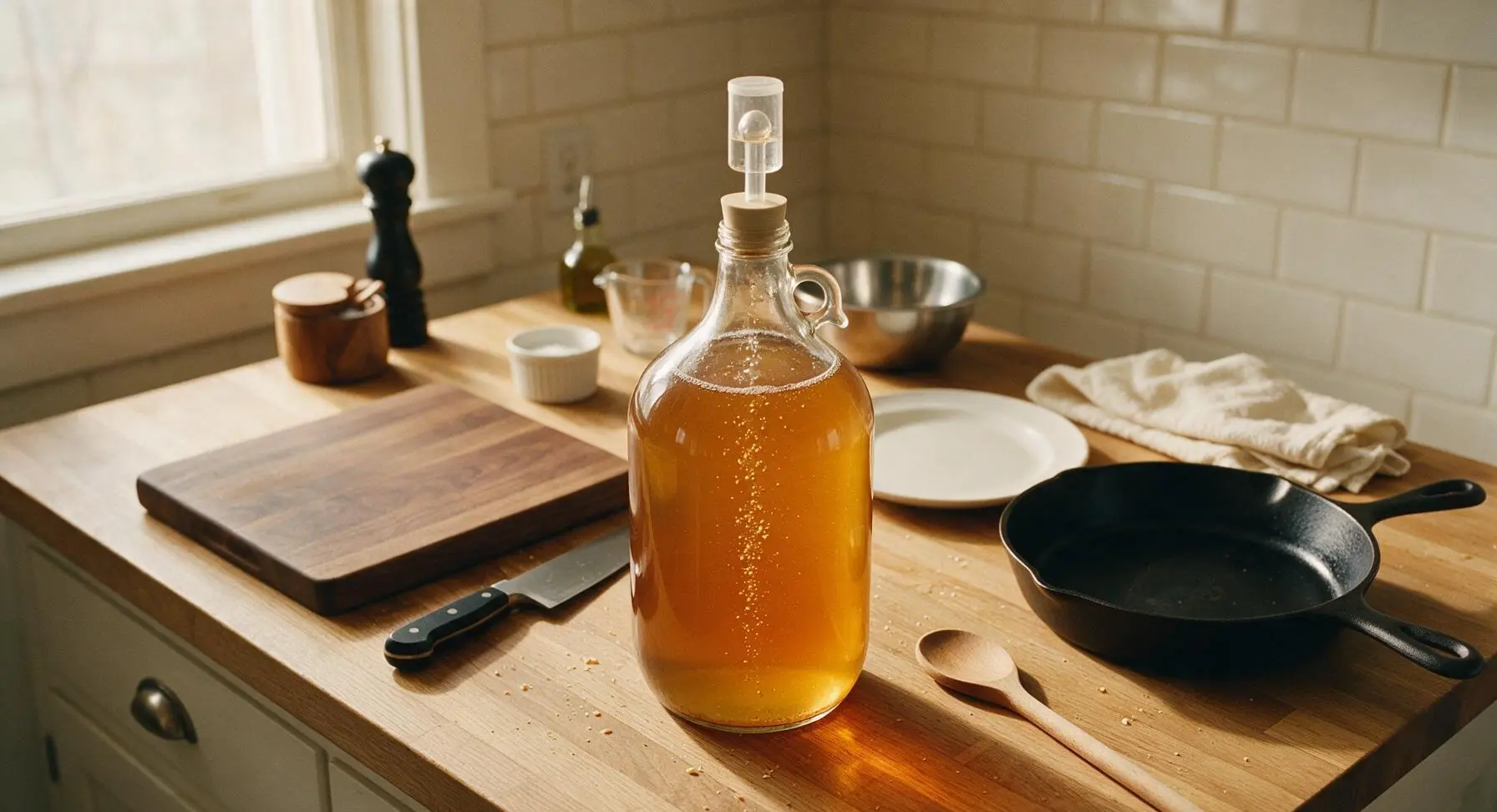
Move the sealed carboy to a dark, cool space held at a steady 12-13C (54-55F) for 2 weeks of primary fermentation, until bubbling in the airlock slows to 1 bubble per minute. After primary fermentation, move the carboy to a 16C (61F) space for a 1-week diacetyl rest to smooth off-flavors, then cold condition at 4C (39F) for 4 full weeks before serving chilled in steins.
Tips
2.Hold mash temperature within the 65-68C range: This temperature window creates the balanced, toasty malt profile classic to Double Bock; temperatures above 70C produce overly sweet, thick beer, while temperatures below 63C create a thin, dry, watery finish.
3.Do not rush the cold conditioning phase: The 4-week cold hold at 4C smooths harsh alcohol notes, drops sediment for crystal-clear beer, and creates the signature silky mouthfeel—young, unconditioned bock will taste sharp, yeasty, and unbalanced.






Just bottled my first batch following this recipe last weekend and cracked one open last night — OMG, that deep malty sweetness with that subtle bread crust note is exactly what I’ve been chasing in a doppelbock! Way better than the store-bought stuff I’ve been wasting money on. Brought a six pack to my buddy’s cookout and everyone was asking for the recipe. Total game changer for my homebrew setup!
I was super intimidated to try a stronger beer style since I’ve only done IPAs and cream ales before, but the step-by-step instructions here were so easy to follow! Cook time was exactly as listed, no weird surprise steps. My husband said it tastes just like the doppelbock we had on our trip to Munich a few years back. We’re bringing a growler to our family Thanksgiving dinner next month, can’t wait for everyone to try it.
Solid base recipe, but I dialed back the Munich malt by a half pound and added a touch of dark cocoa nibs at the end of the boil for a little extra depth. Turned out fantastic, super smooth, no harsh alcohol burn even at 8% ABV. Will definitely be making this again this winter.
Help! I’m 20 minutes into the boil and I just realized I forgot to pick up the Hallertau hops the recipe calls for. Can I substitute Cascade hops I have left over from my last IPA batch? I don’t want to run to the homebrew store this late.
Made this for our college football tailgate last weekend and it was a massive hit. Everyone kept saying it was better than the craft beer we usually stock up on for game day. Only note: it is STRONG, so make sure you warn your friends before they start chugging them like light beer! Had a couple people feeling it way faster than they expected.
SO good! I was worried the 2.5 hour cook time would be a drag on my Saturday, but it flew by while I was jamming to music and prepping my brew day snacks. The final beer has that perfect rich, toasty flavor with zero off-flavors, which I was worried about since my last strong beer had a weird fusel alcohol taste. Will be adding this to my regular rotation.
Took me a second to get the mash temp dialed in right, I ran a little low at first and added some hot water to bump it up, and the final product still turned out amazing. Got that classic dark fruit, raisin-like note that I love in a good doppelbock. Already ordered more malt to make a second batch before the holiday season hits.
My adult kids came over to help me brew this last month and we had the best time. We just tapped the keg last night and they both loved it — my son said it’s better than the expensive imported doppelbock he buys at the specialty liquor store. Already planning a brew day with them next month to make a second batch.
Wait, this says medium difficulty — is this actually doable for someone who has never homebrewed before? I got a starter kit for my birthday and I want to pick something impressive but not impossible for my first ever batch.
Brewed this to bring to my neighborhood potluck a couple weeks ago and I can’t believe how many people asked for the recipe! I even had a couple neighbors who say they ‘don’t like dark beer’ go back for second glasses. It’s smooth enough that it doesn’t scare off people who usually drink light lagers, but has enough depth to satisfy serious beer fans. 10/10.
Made this last winter and it was my go-to sipper for sitting by the fire pit on cold nights. It’s got that perfect warm, bready flavor that hits so good when it’s 20 degrees outside. I’m brewing a double batch this weekend so I have enough to last all winter long.
I swapped in a little smoked malt for 8 oz of the base malt to give it a subtle campfire note, and it paired insanely well with the brats and sauerkraut I made for our last BBQ. Highly recommend that tweak if you like a little smoky flavor in your beer.
Wait, does this need to be fermented in a temperature-controlled fridge? My apartment stays around 72-74 degrees this time of year, and I don’t have a dedicated fermentation chamber yet. Don’t want to waste all that good malt!
I’ve brewed probably 20 different doppelbock recipes over the last 10 years of homebrewing, and this one is easily top 2. It’s traditional, no weird gimmicky add-ins, just straight up rich, malty, perfectly balanced bock that tastes like it came straight from a Bavarian monastery. Absolute home run.
I pre-measured all my grains and hops the night before brew day so the whole process went super smoothly! The cook time was spot on, no delays, and I was cleaned up and done in right around 3 hours total including prep. The beer turned out so smooth, I’m already prepping ingredients for my next batch to have on hand for holiday parties.
I was worried this would be super expensive to make because it’s a double bock, but all the ingredients were way cheaper than buying imported doppelbock from the liquor store, and it tastes way better! I split the cost with my roommates and we have 5 gallons of amazing beer for like 30 bucks total. Unbeatable value.
I accidentally let my mash go 20 minutes longer than the recipe said because I got caught up watching my football game, and honestly? It still turned out perfect. That rich, toasty malt flavor came through so strong, no weird off tastes at all. Super forgiving recipe for when you get distracted on brew day.
I just took my first hydrometer reading after 2 weeks of fermentation and it’s sitting at 7.8% ABV, which is almost exactly what the recipe estimates! It already tastes amazing, I can’t wait to get it bottled and conditioned. Quick question: can I add a vanilla bean to the secondary ferment for a little extra flavor, or will that mess up the traditional profile?