
Double Pilsner
intro
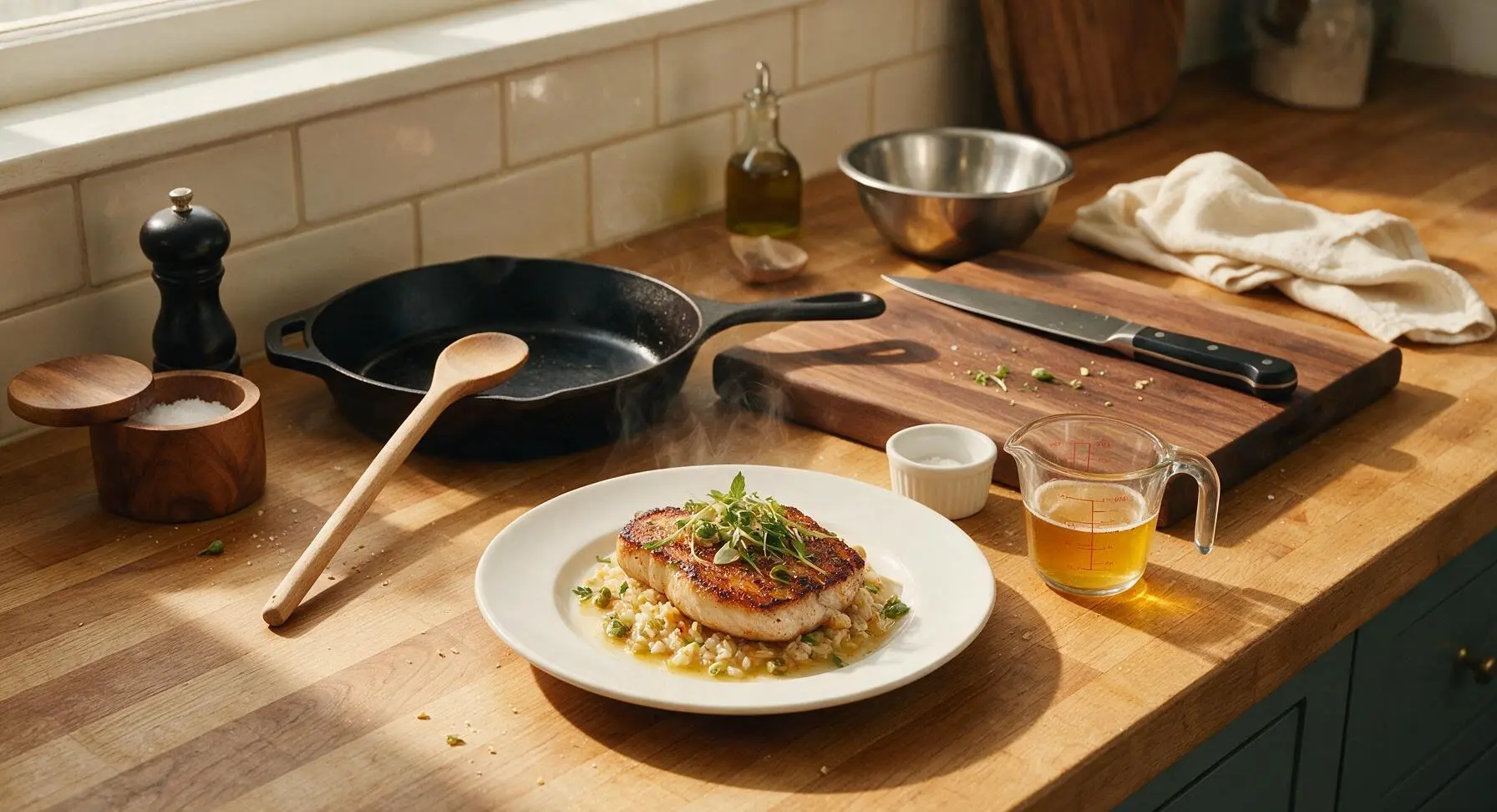
Bright, hop-forward double pilsner with bready malt notes, a crisp dry finish, and soft carbonation. This 7% ABV lager is cold, refreshing, and built for slow summer sipping.
Ingredients
Steps
Sanitize Brewing Gear
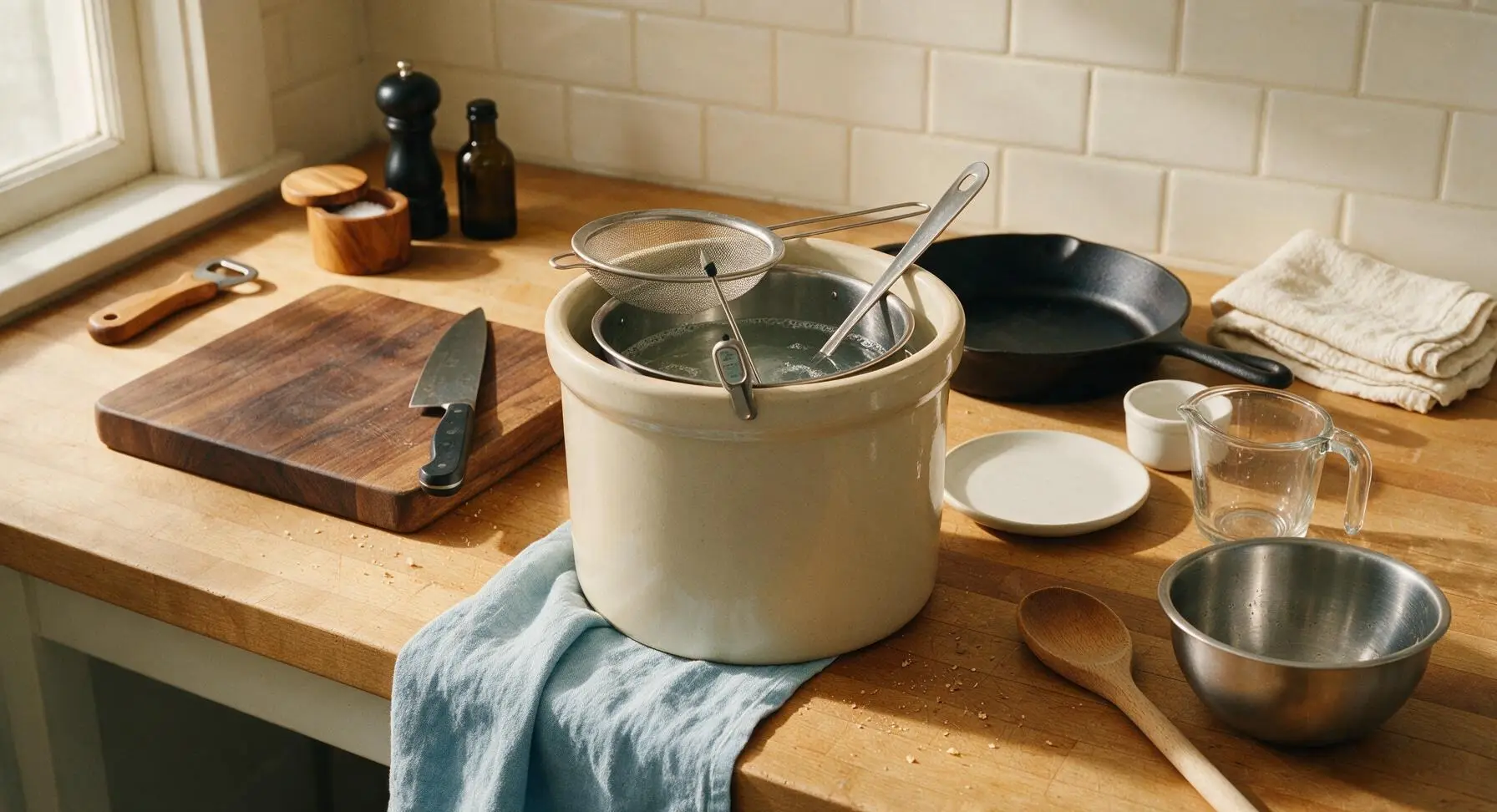
Fill the fixed matte cream ceramic crock with food-grade no-rinse sanitizer mixed per package directions. Submerge the stock pot, stirring spoon, thermometer, strainer, carboy, auto-siphon, tubing, prep bowl, and bottles for 2 minutes, then remove and air dry on the clean counter. Ensure no residual suds remain, as sanitizer residue creates off-flavors in finished beer.
Heat Mash Water
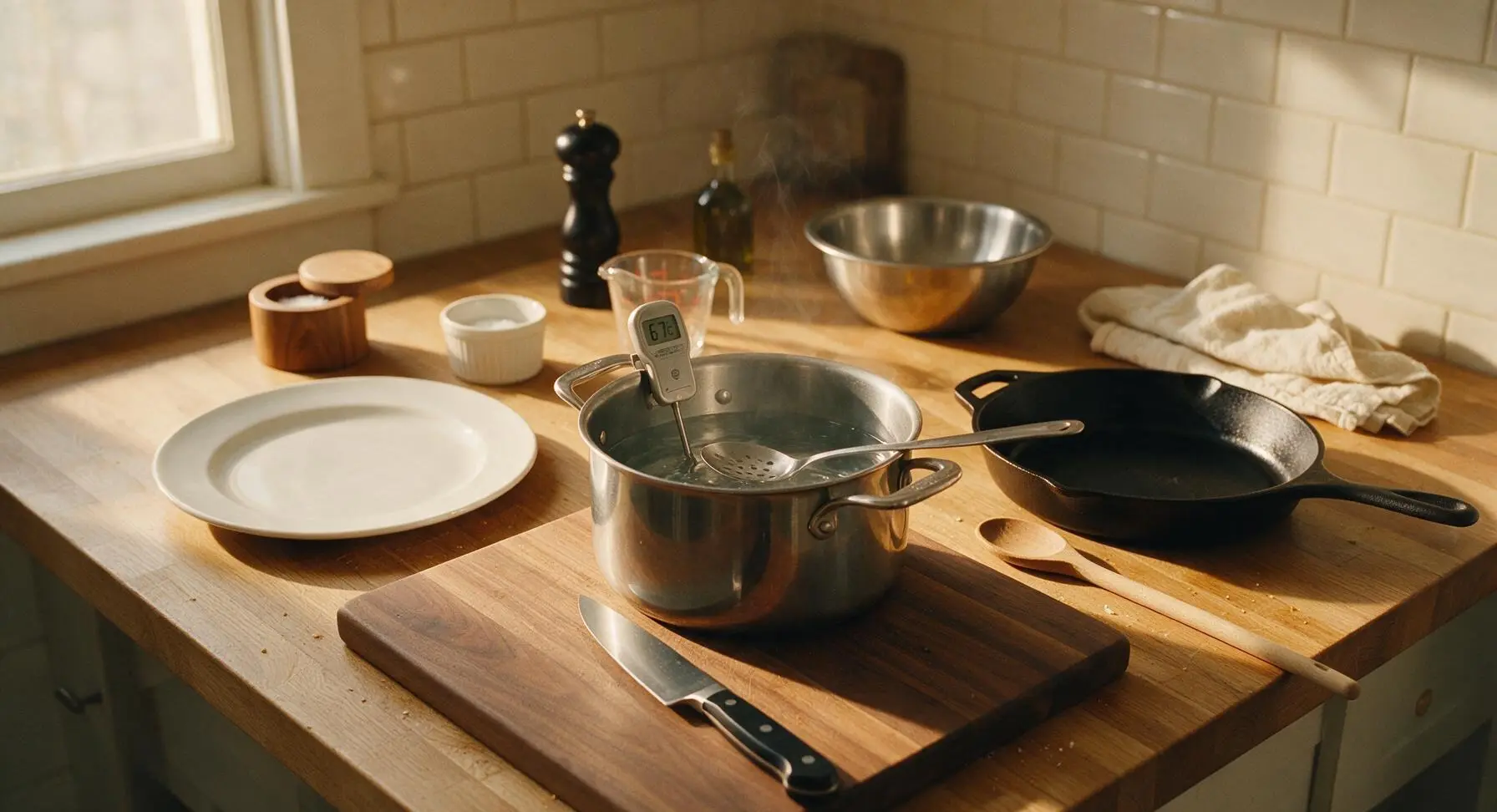
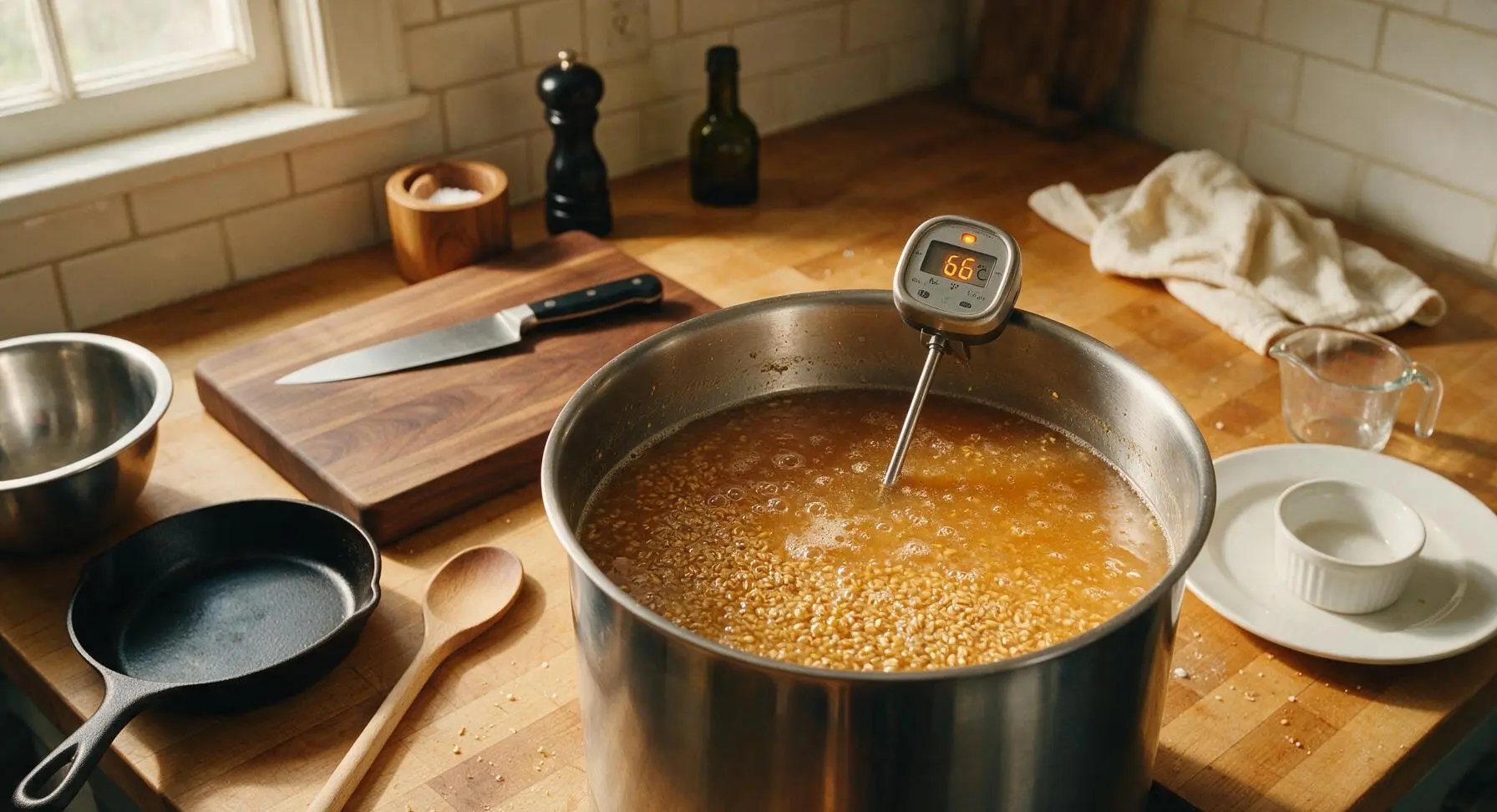
Pour 3L of filtered cold water into the sanitized stainless steel stock pot, crush 1 campden tablet and add it to the water to remove chlorine and chloramine. Place over medium heat, clipping the digital thermometer to the pot rim to monitor temperature. Heat until water reaches a steady 67C (153F), adjusting burner heat as needed to hold temperature.
Mash the Grains
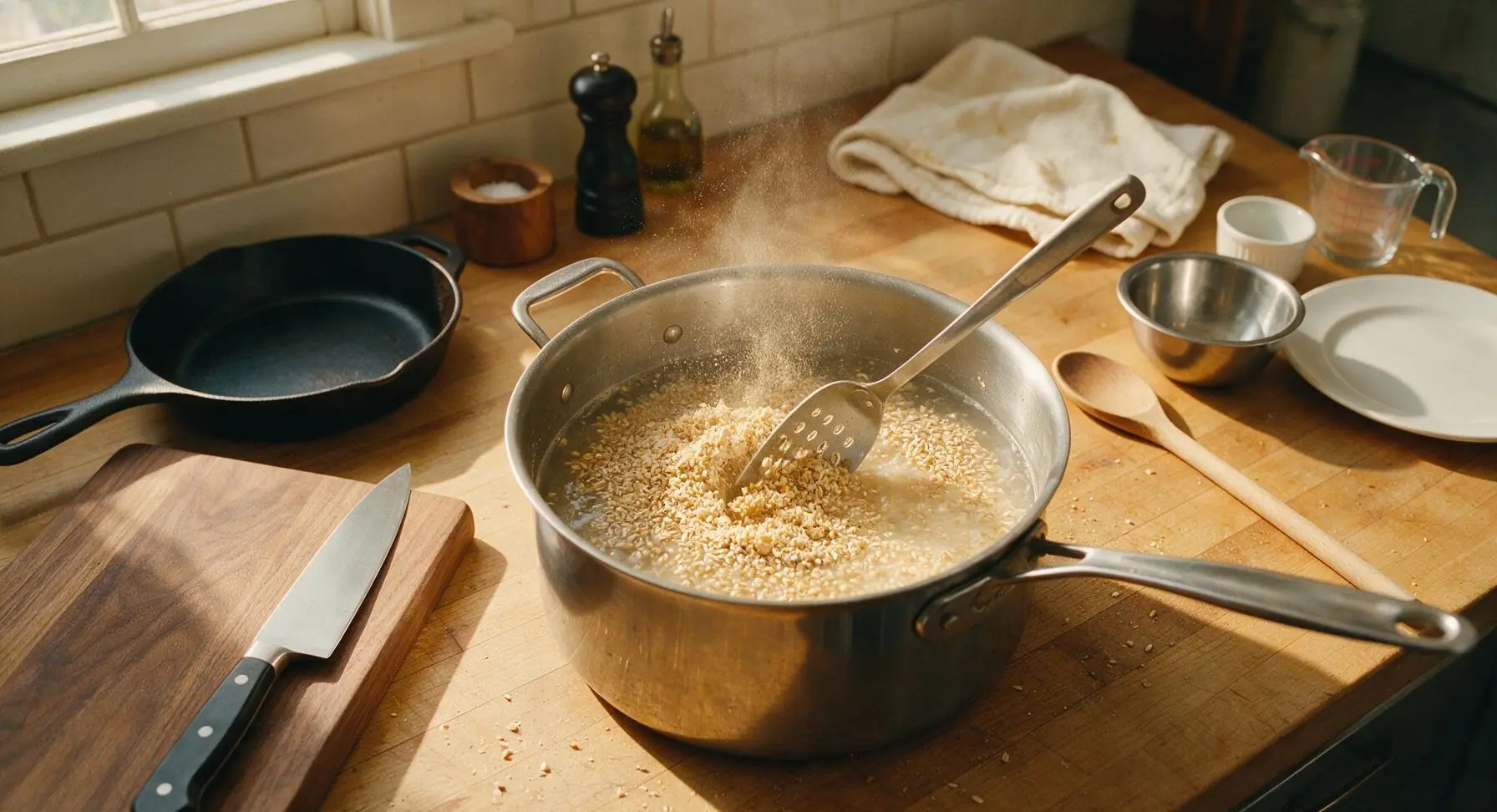
Slowly stir all crushed 2-row and Pilsner malt into the 67C water, mixing thoroughly with the slotted spoon to break up any dry clumps of grain. Cover the pot with its lid, hold temperature steady at 65-68C for 60 minutes, stirring every 15 minutes to prevent hot spots. The finished mash will smell sweet and bready, with a thick, porridge-like consistency.
Boil the Wort
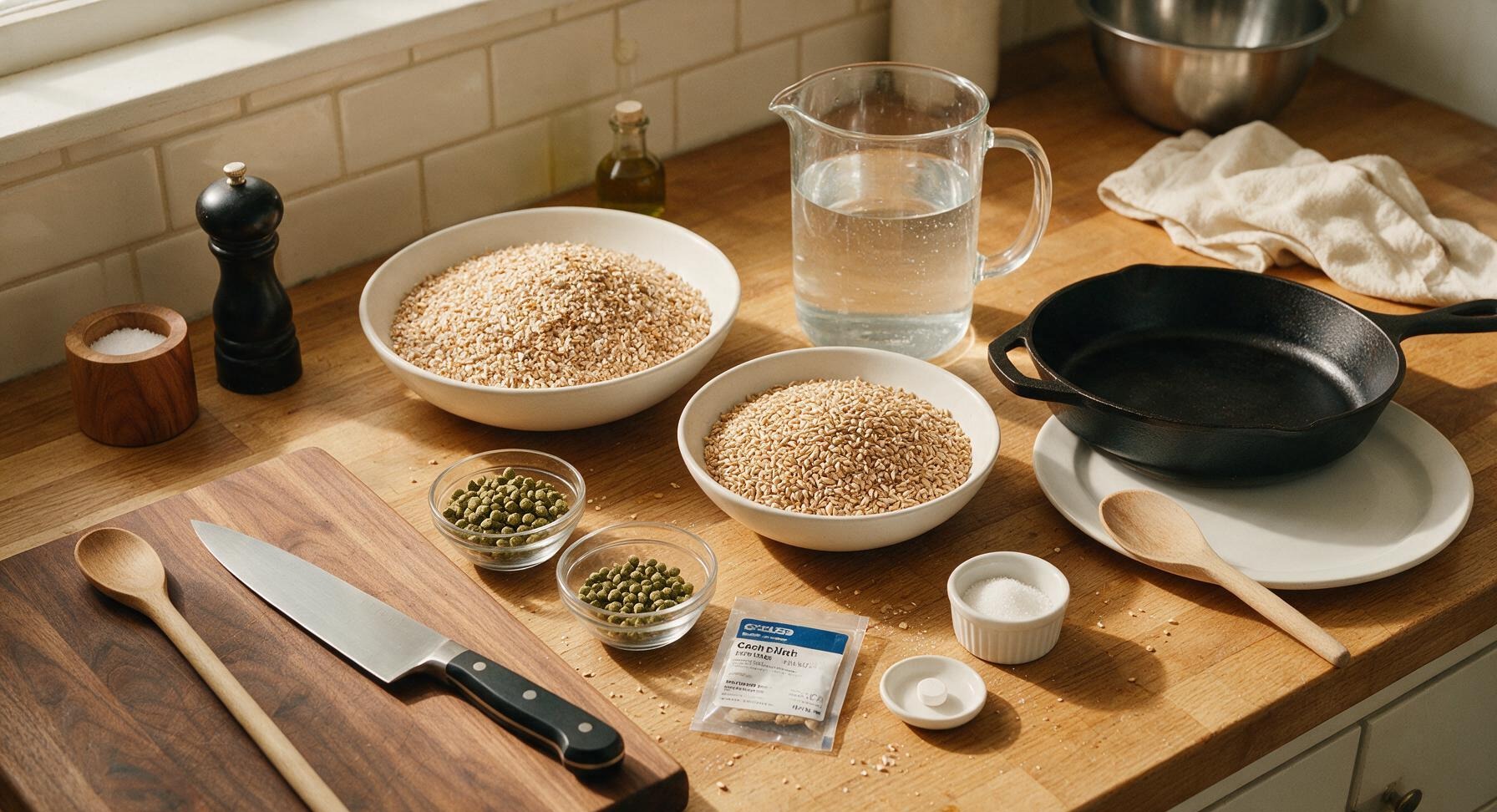
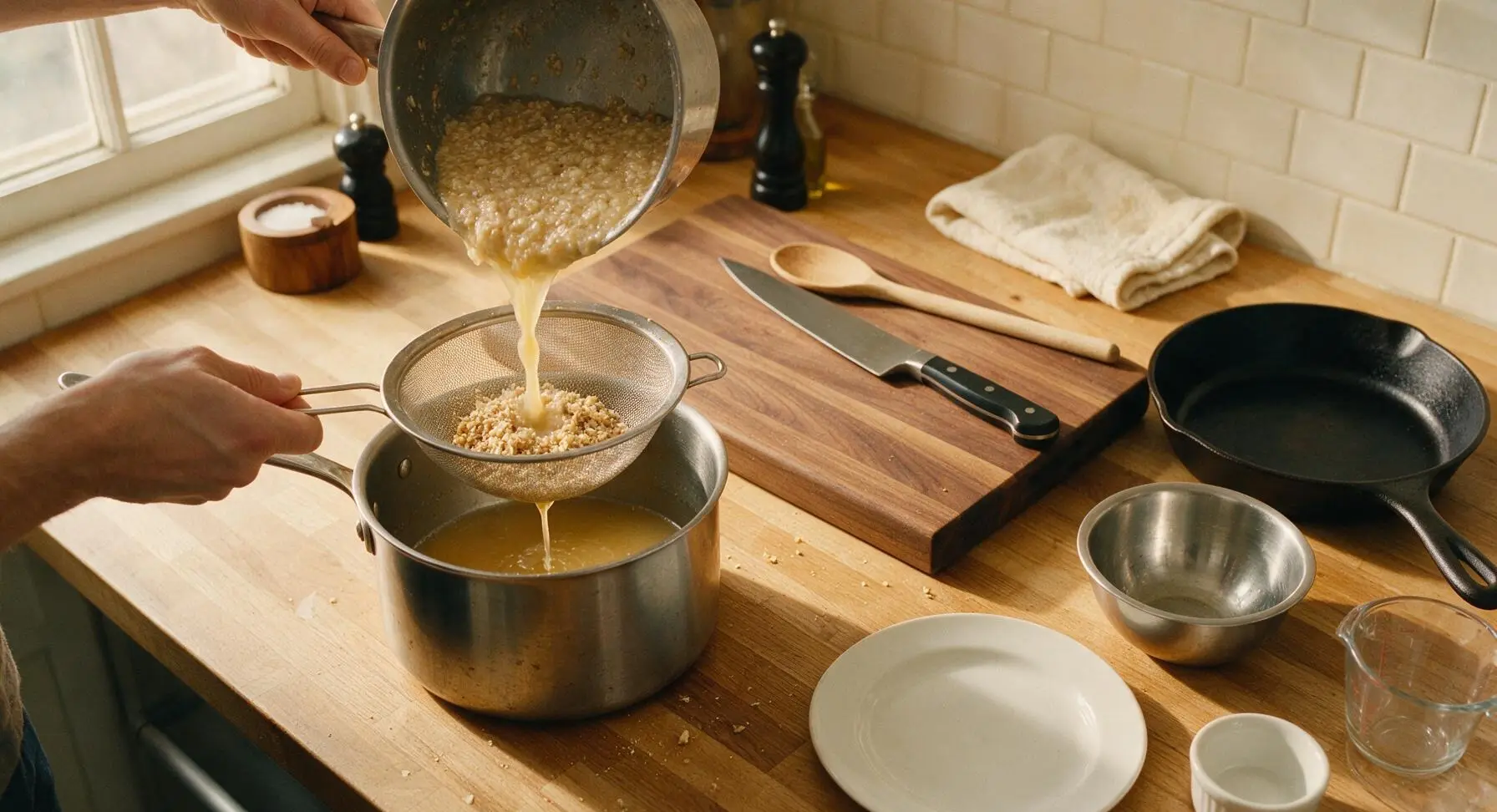
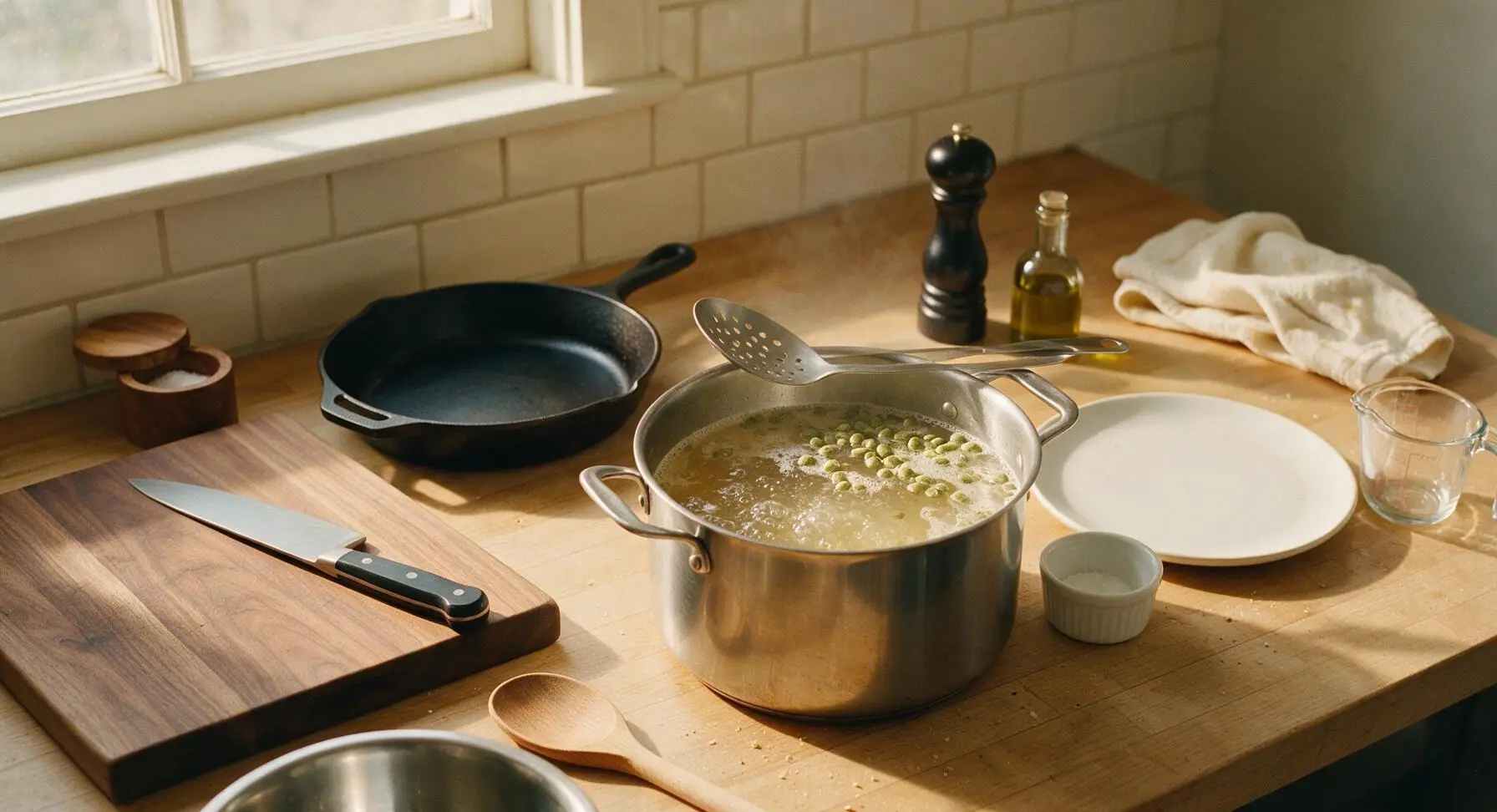
Pour the finished mash through the fine stainless steel strainer to separate the sweet, amber liquid (wort) from spent grain, returning the strained wort to the stock pot. Bring wort to a gentle rolling boil (100C/212F). Once boiling starts, add 20g of Hallertau Mittelfruh hops and set a 60-minute timer. Maintain a steady, non-violent boil, stirring occasionally to prevent boilovers. At the 45-minute boil mark, add 7g of Czech Saaz hops for flavor. At the 59-minute boil mark, add the remaining 8g Hallertau and 7g Saaz hops for bright, fresh aroma.
Cool and Pitch Yeast
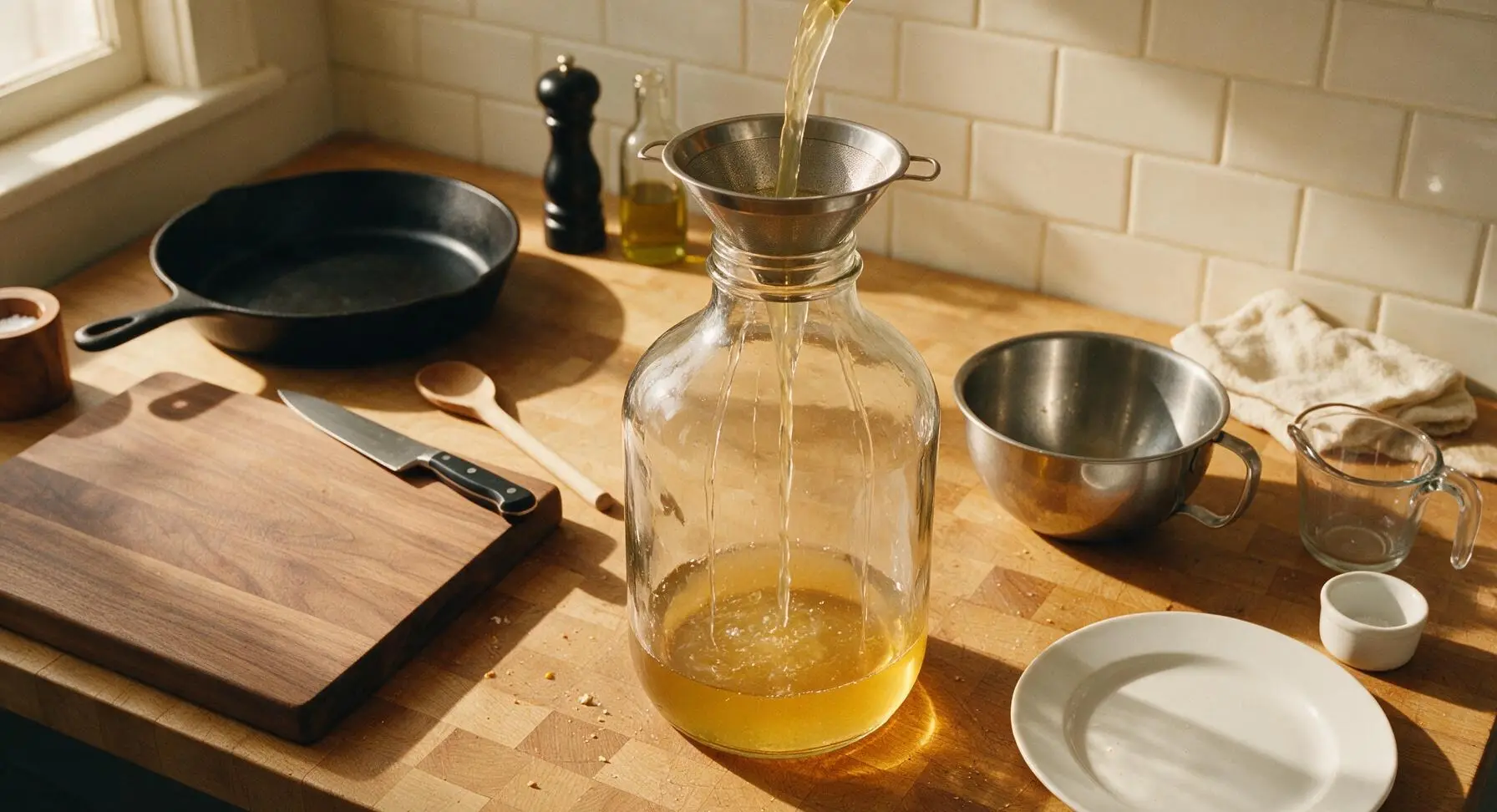
Remove the pot from heat immediately after the 60-minute boil. Set the pot in a sink of ice water to cool wort quickly to 18C (65F), stirring occasionally to speed cooling (do not splash, as this can introduce bacteria). Once cooled, pour wort through the clean strainer into the 1-gallon glass carboy, topping up to the 3.8L (1 gallon) mark with remaining cold filtered water if needed. Sprinkle the entire packet of Czech lager yeast over the wort surface, then seal the carboy with a sanitized airlock filled halfway with sanitizer solution.
Ferment the Beer
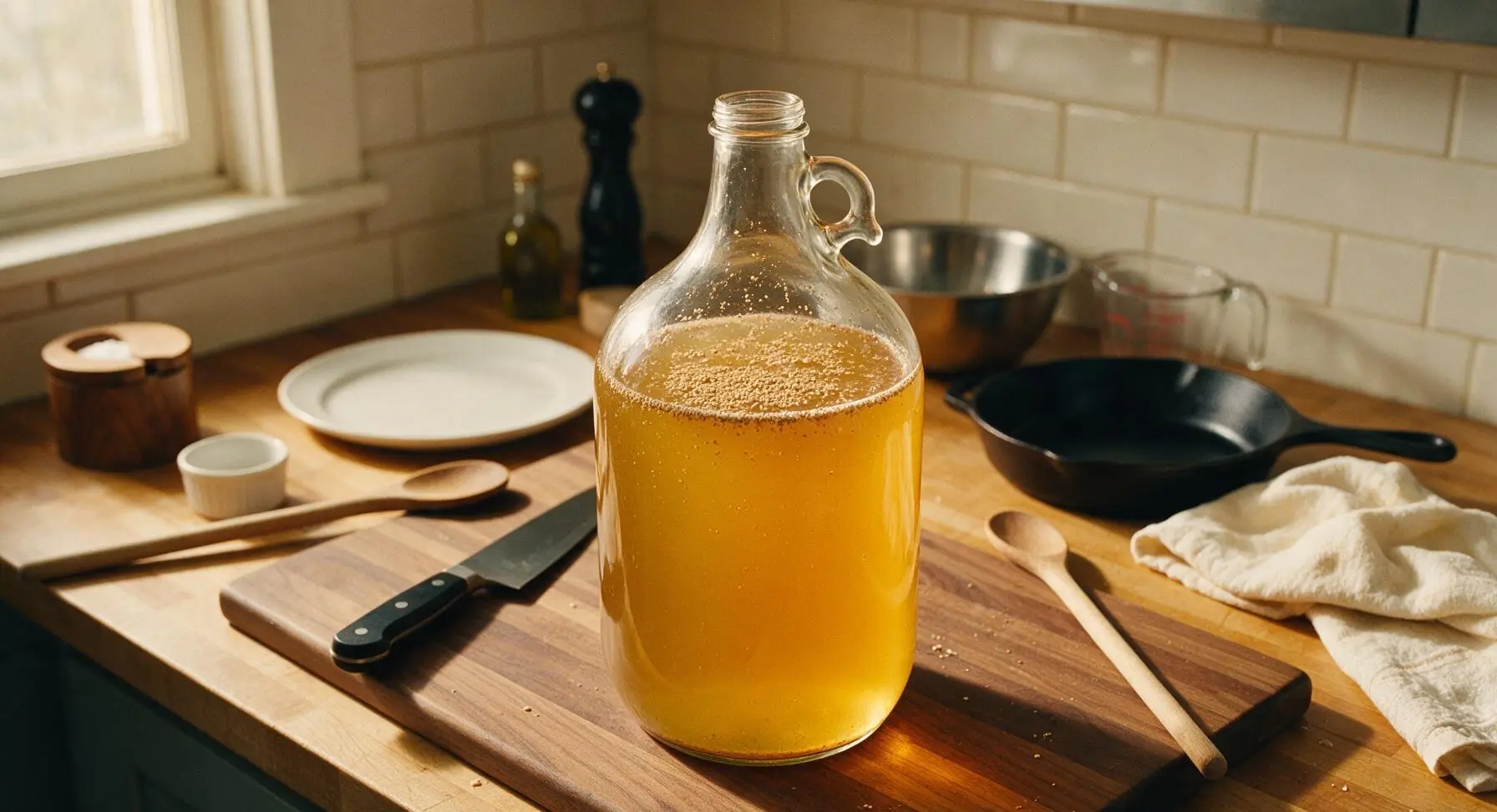
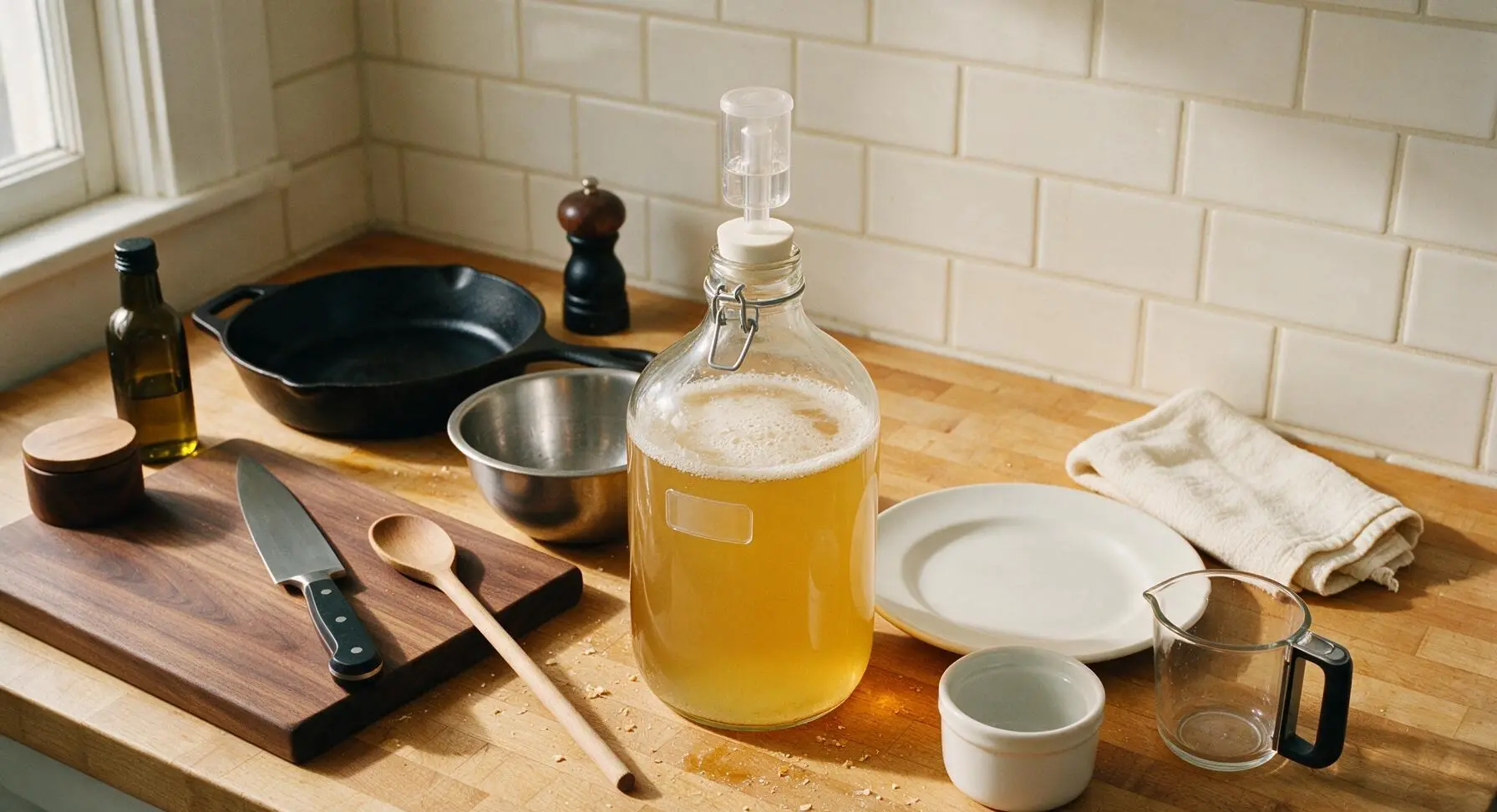
Move the sealed carboy to a dark, temperature-stable spot held at 12-13C (54-55F) for 2 weeks, until primary fermentation completes (no bubbles rise through the airlock for 3 consecutive days). After primary fermentation, leave the beer undisturbed at the same temperature for an additional 2 weeks to condition, letting yeast sediment settle to the bottom of the carboy for a crystal-clear finished beer.
Bottle with Priming Sugar
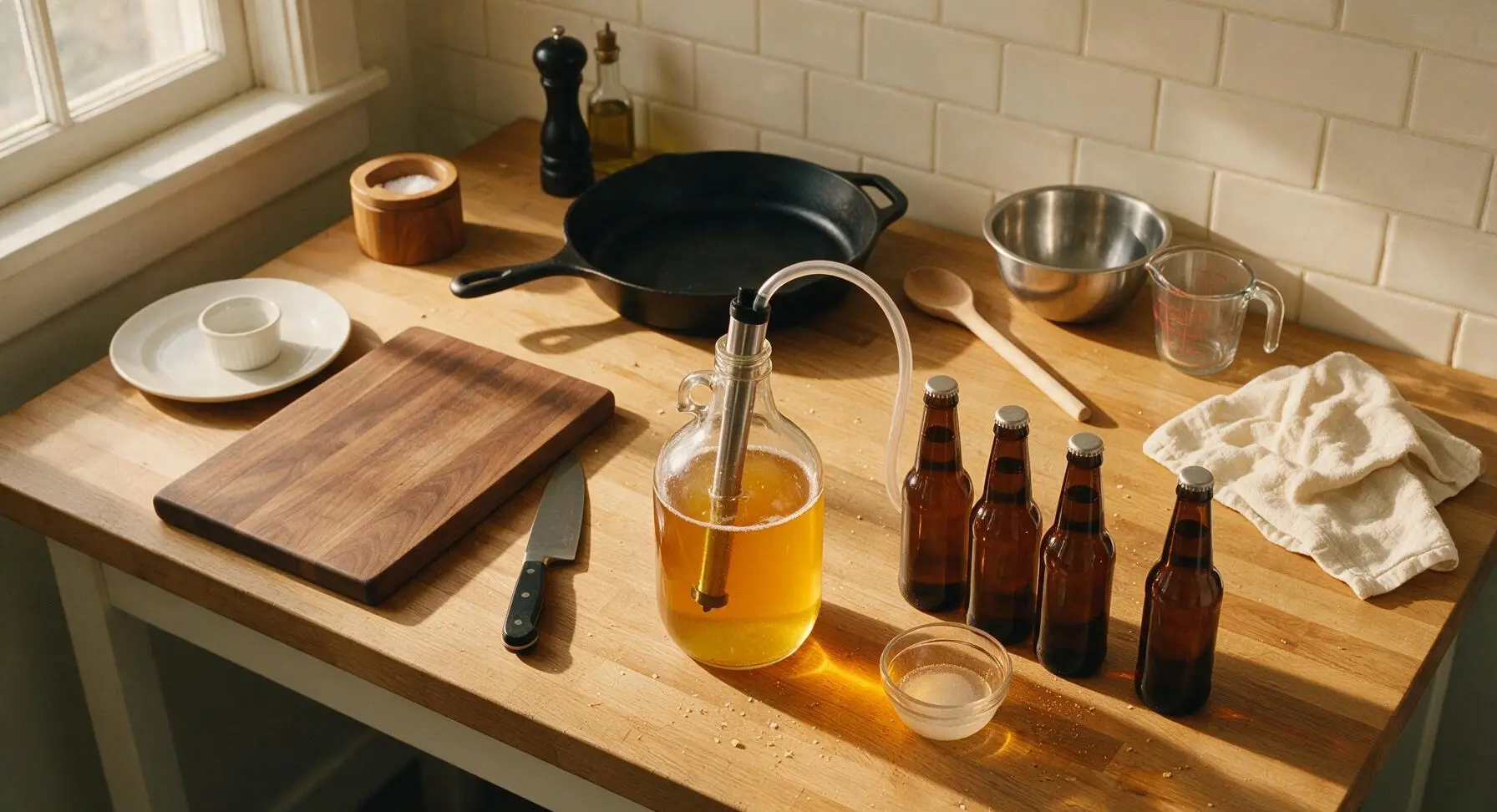
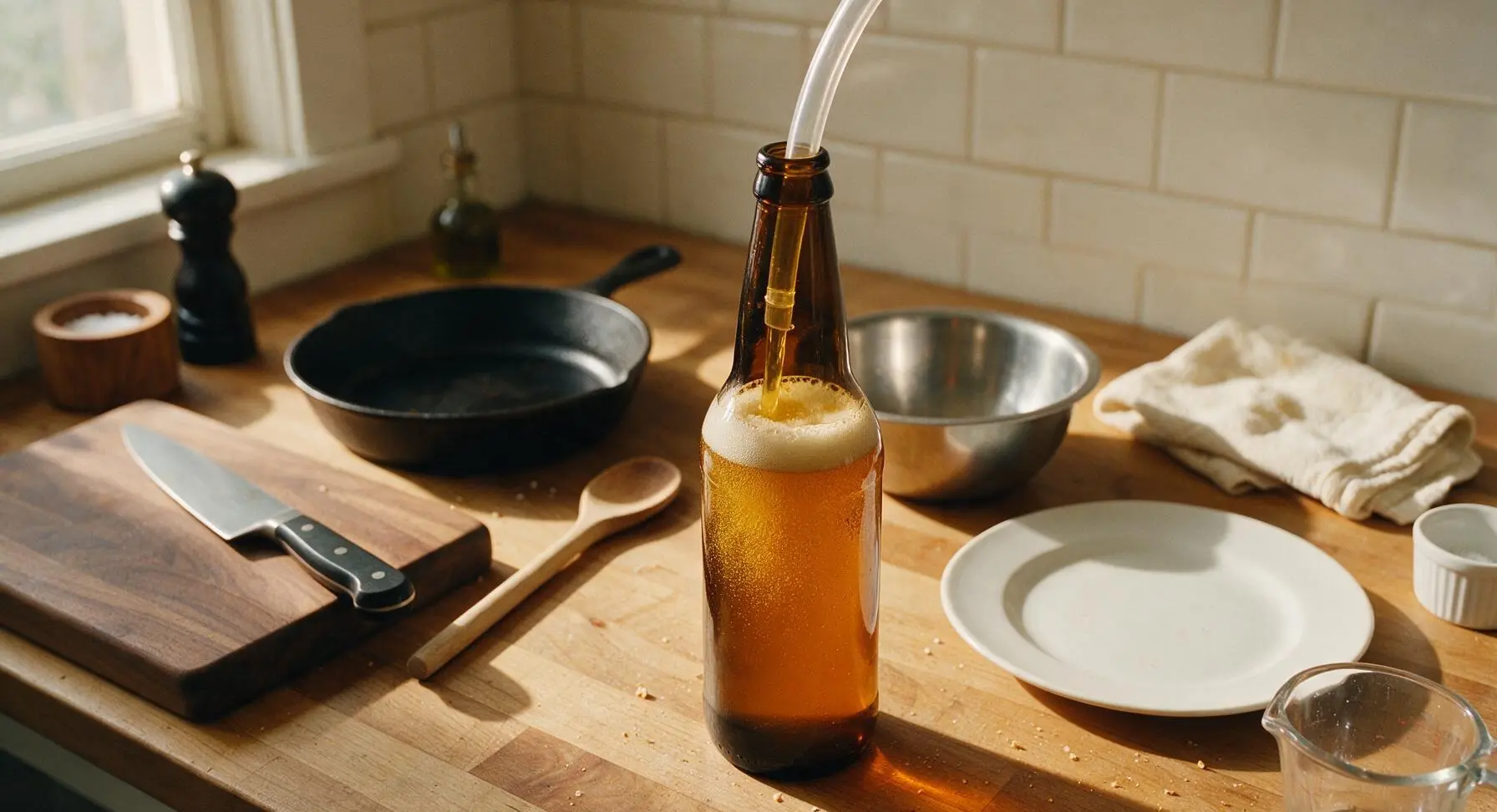
Boil 30g of priming corn sugar in 60ml of water for 5 minutes, then let cool to room temperature and pour into the small clear glass prep bowl. Use the auto-siphon and vinyl tubing to siphon clear, settled beer from the carboy, gently mixing with the priming sugar solution to distribute evenly. Siphon the primed beer into sanitized amber glass bottles, leaving exactly 2cm of headspace at the top of each bottle to allow for carbonation.
Cap and Condition
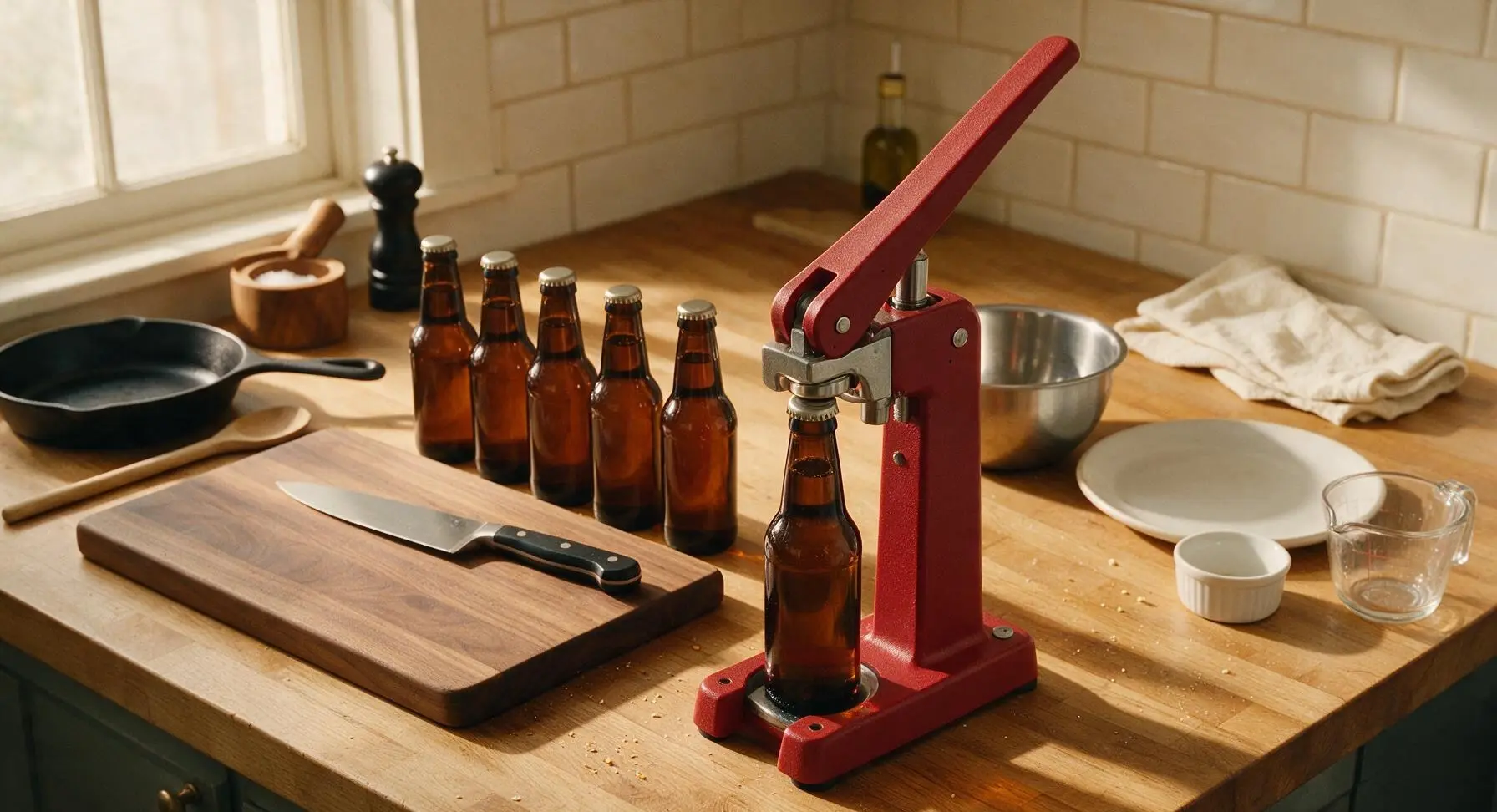
Place sanitized metal crown caps on each filled bottle, then use the matte red bench capper to crimp caps tightly onto each bottle neck, ensuring an airtight seal. Store bottles upright in a dark spot at 18C (65F) for 2 weeks to let natural carbonation develop, then chill bottles for a minimum of 48 hours before pouring to serve.
Tips
2.Hold mash temperature strictly between 65-68C: this range creates the dry, crisp finish classic to pilsners, while temperatures above 70C produce a sweeter, heavier beer that lacks the clean, refreshing profile of a double pilsner.
3.Chill carbonated bottles for a full 48 hours before opening: warm or under-chilled beer will foam excessively when poured, and cold temperatures amplify the bright noble hop spice and soft bready malt flavors that define this style.






OMG, this double pilsner recipe is a total game changer! I brought a batch to our neighborhood potluck last weekend and everyone was begging for the recipe. It’s got that perfect crisp, hoppy kick without being too bitter – even my partner who usually only drinks light lagers was going back for refills all afternoon. The end result is SO good, I’m already planning to brew a double batch for our fall camping trip. 10/10!
Solid double pilsner recipe! I’m pretty new to home brewing so the medium difficulty rating had me super nervous going in, but the step-by-step instructions were straightforward enough that I only messed up one short temperature hold during the mash. The end result is SO good, super smooth, way better than the mass-produced pilsners I usually grab for game nights with my roommates. Next time I’ll nail that mash temp to get an even cleaner, crisper finish.
I’ve heard nothing but rave reviews about this double pilsner, quick question before I fire up the brew kettle this afternoon – can I swap the suggested Saaz hops for a different variety if my local homebrew shop is out? I’ve got some leftover Hallertau from a Märzens lager I made last month and don’t want to make a 45 minute drive just for one bag of hops.
My husband and I brewed this for our annual backyard summer cookout and it was a total smash! Even my 19-year-old cousin who only drinks hard seltzers tried a cup out of curiosity and said it was way smoother and less bitter than he expected beer to be. We did a 4 week cold crash before force carbonating and it came out perfectly crystal clear, no weird skunky or off flavors at all. This is an absolute new staple in our home brew rotation!