
Eisbock
intro
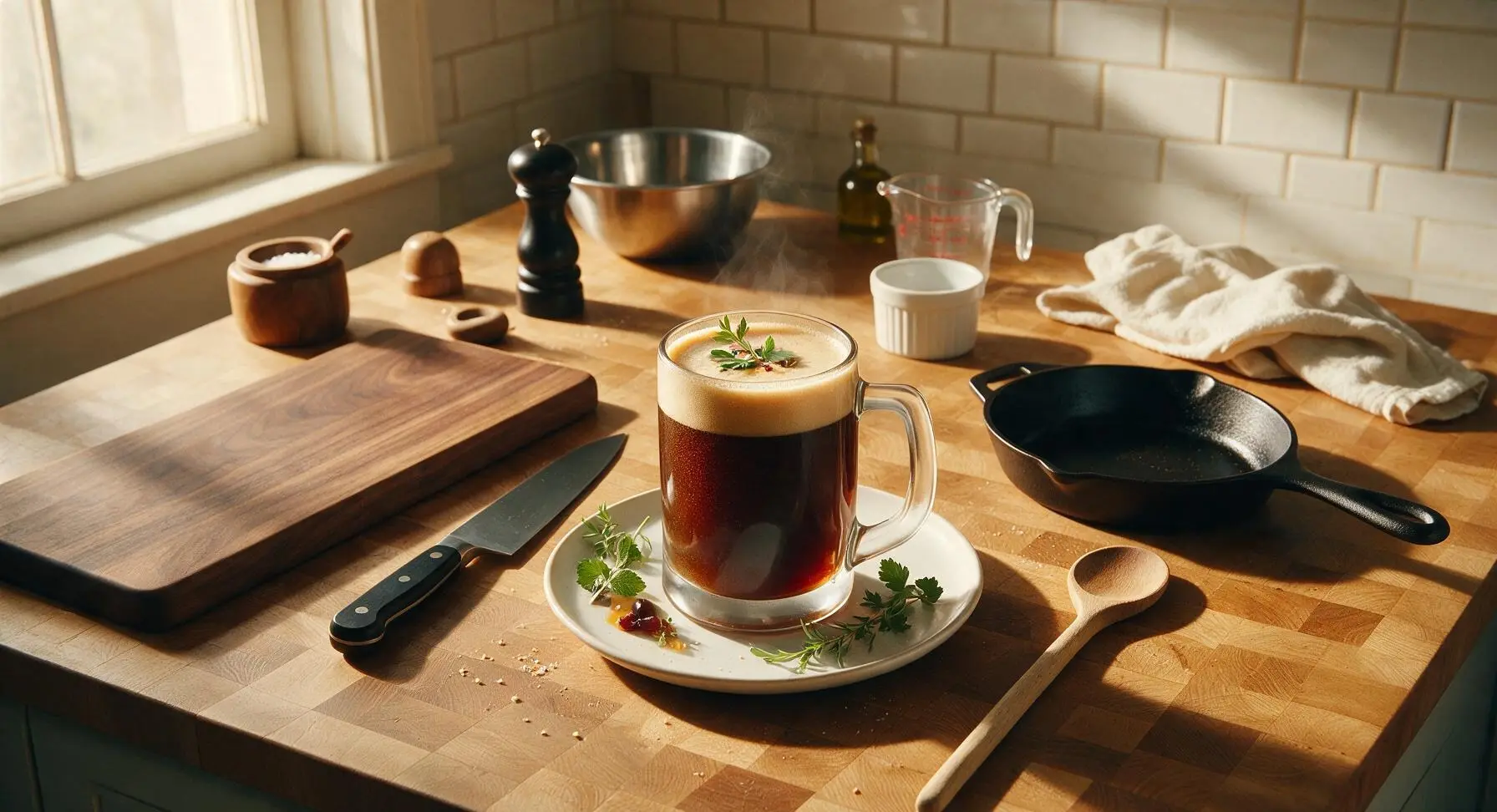
Velvety, intensely malty Bavarian Eisbock is a concentrated, high-strength sipping beer made via gentle freeze distillation, with deep toffee, dark fruit, and smooth warming notes perfect for cold winter evenings.
Ingredients
Steps
Sanitize All Equipment
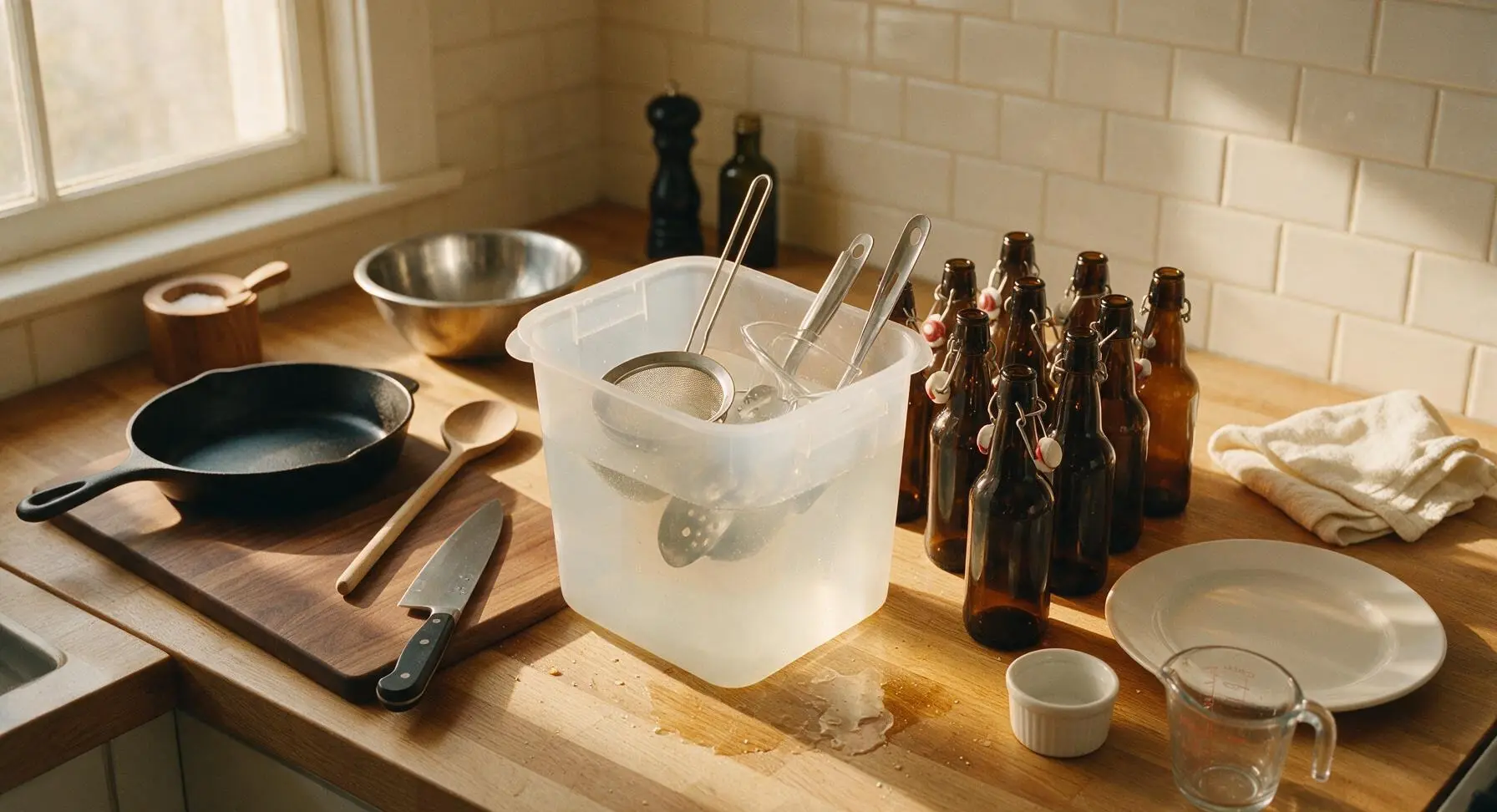
Mix 1 tablespoon of no-rinse brewing sanitizer with 4L of cool tap water in the frosted 4L freezer container. Submerge the fine-mesh strainer, slotted spoon, and glass funnel in the sanitizer solution for 60 seconds, then swish the solution inside each swing-top bottle to sanitize interiors. Remove all items, shake off excess sanitizer (do not rinse, as the solution is no-rinse formulated), and air dry for 2 minutes on the clean counter. This step prevents bacterial growth or off-flavors in the finished concentrated beer.
Pour Base Beer
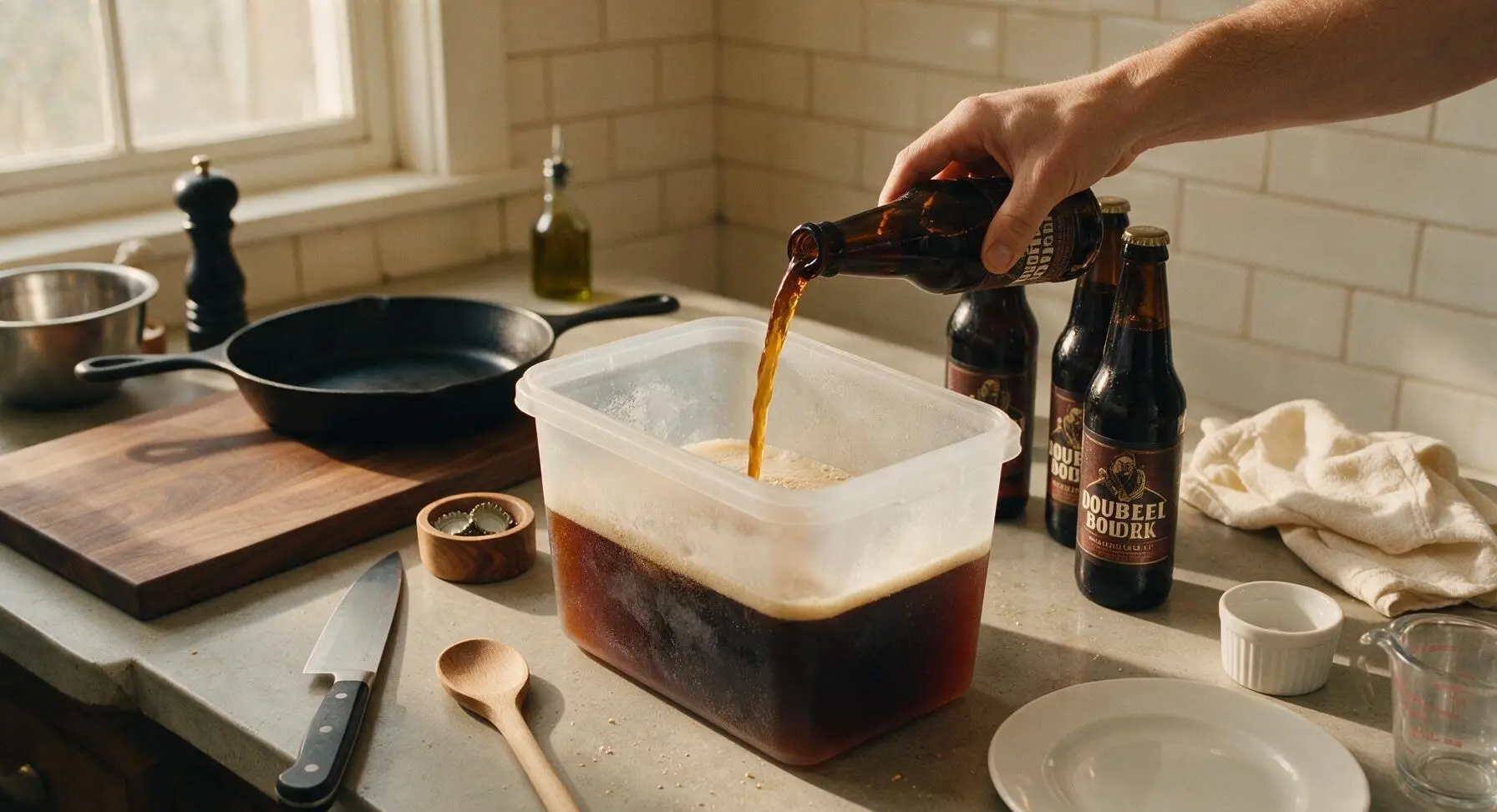
Once all equipment is fully air-dried, open the doppelbock bottles one at a time using the acacia wood bottle opener, pouring all 3L of beer slowly down the interior side of the sanitized freezer container to minimize foaming. Leave 5cm of empty headspace at the top of the container to allow for expansion as the beer freezes. Seal the container tightly with its white screw-top lid.
Partially Freeze Beer
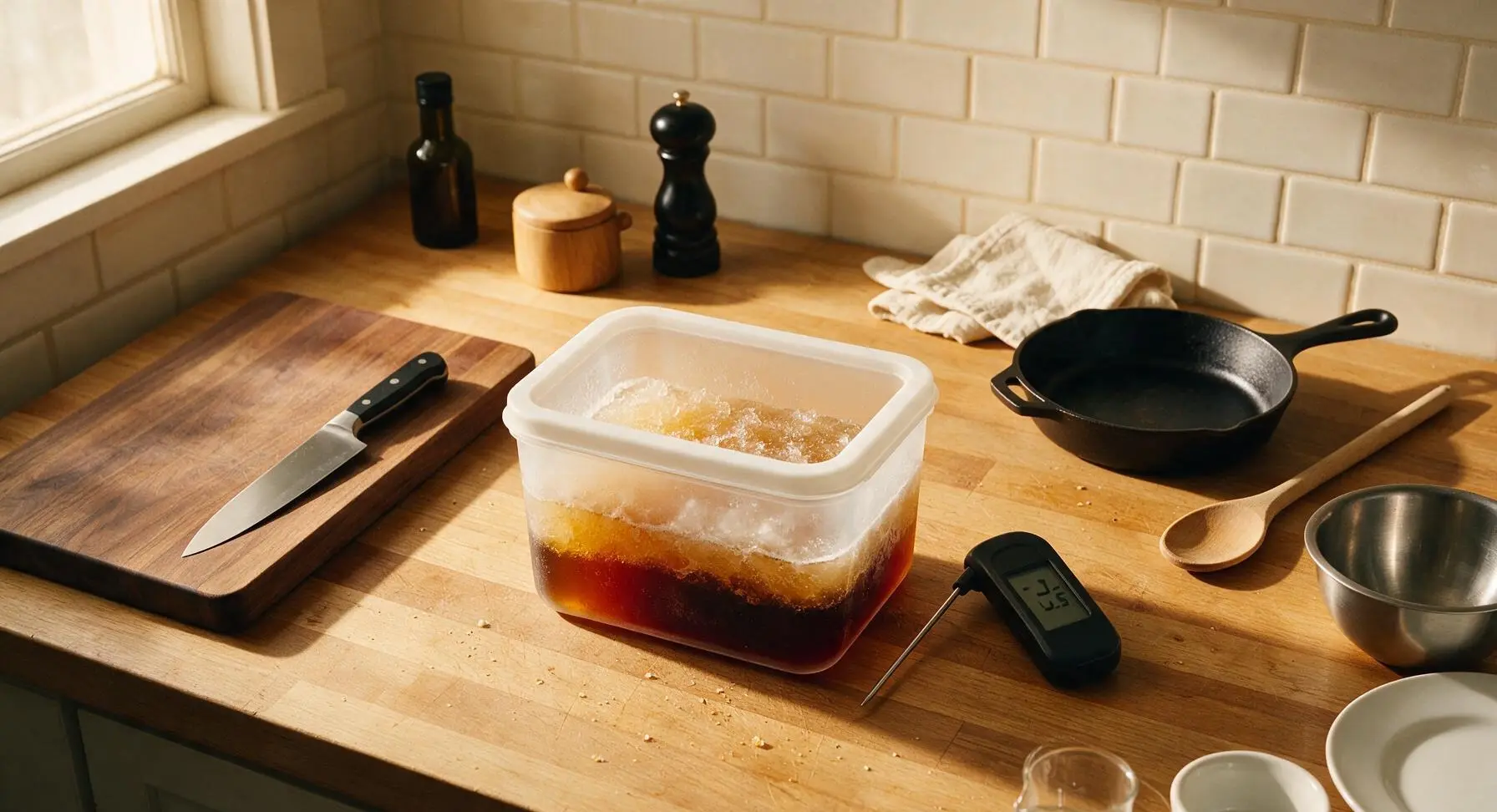
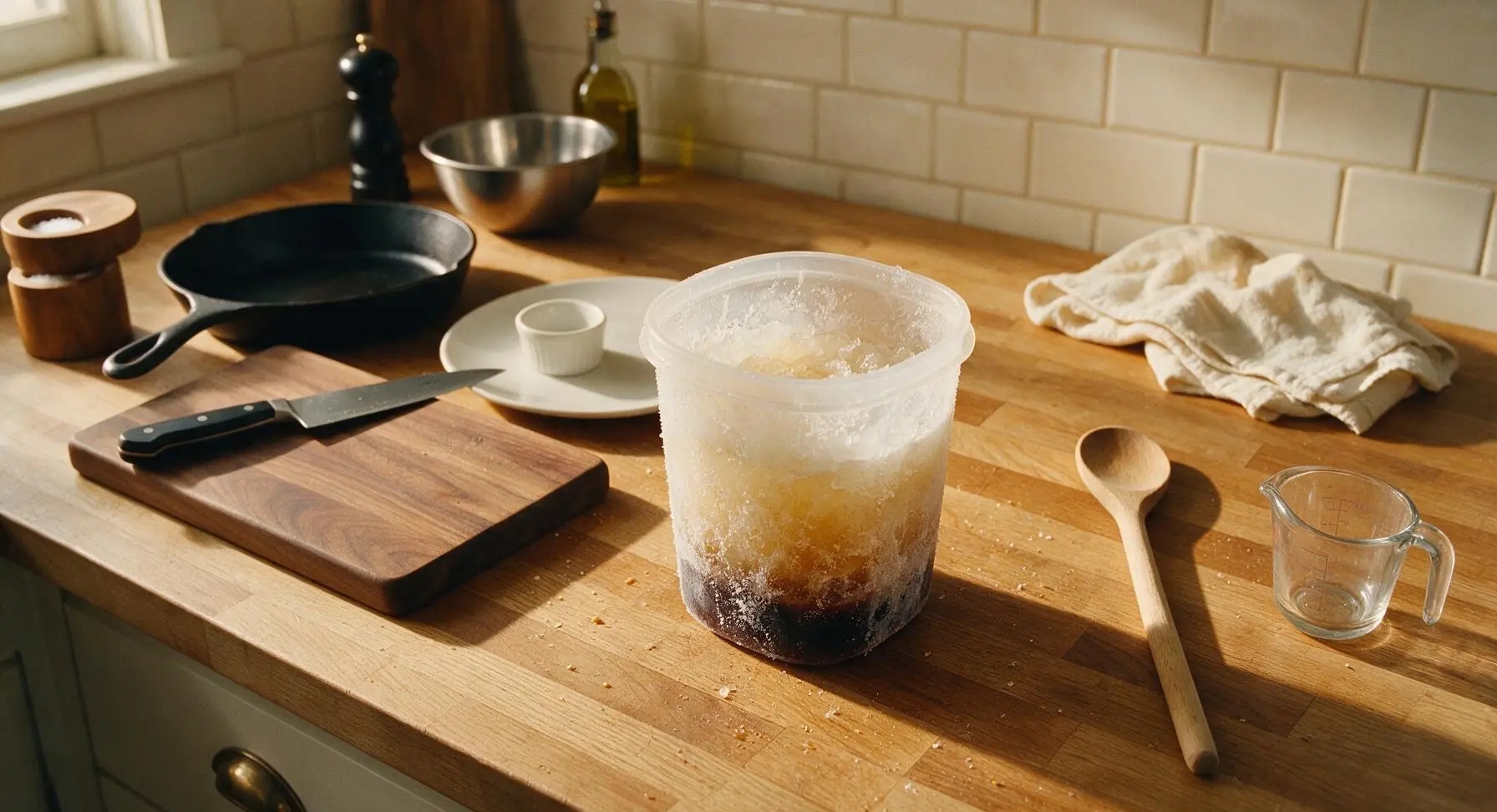
Place the sealed container of beer in the coldest part of your freezer (set to -18°C / 0°F) for 18-22 hours. Check progress periodically: the beer is ready when 30-40% of the volume has frozen into a slushy, crystalline ice mass, leaving dark, syrupy unfrozen liquid below. Use the digital thermometer to confirm the liquid portion reads -3°C to -4°C (27-25°F); do not let the entire volume freeze solid, as this prevents proper separation.
Separate Ice Crystals
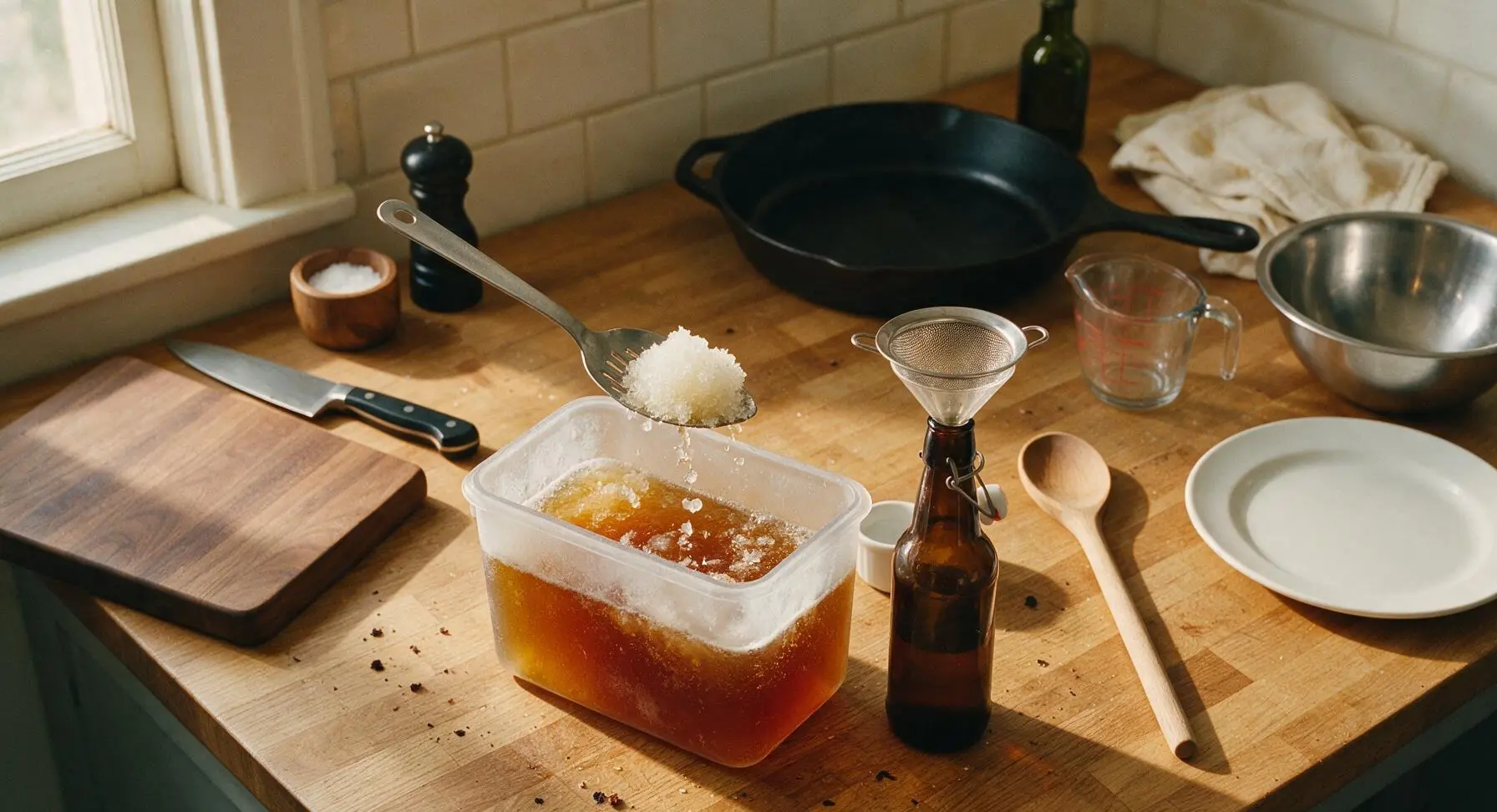
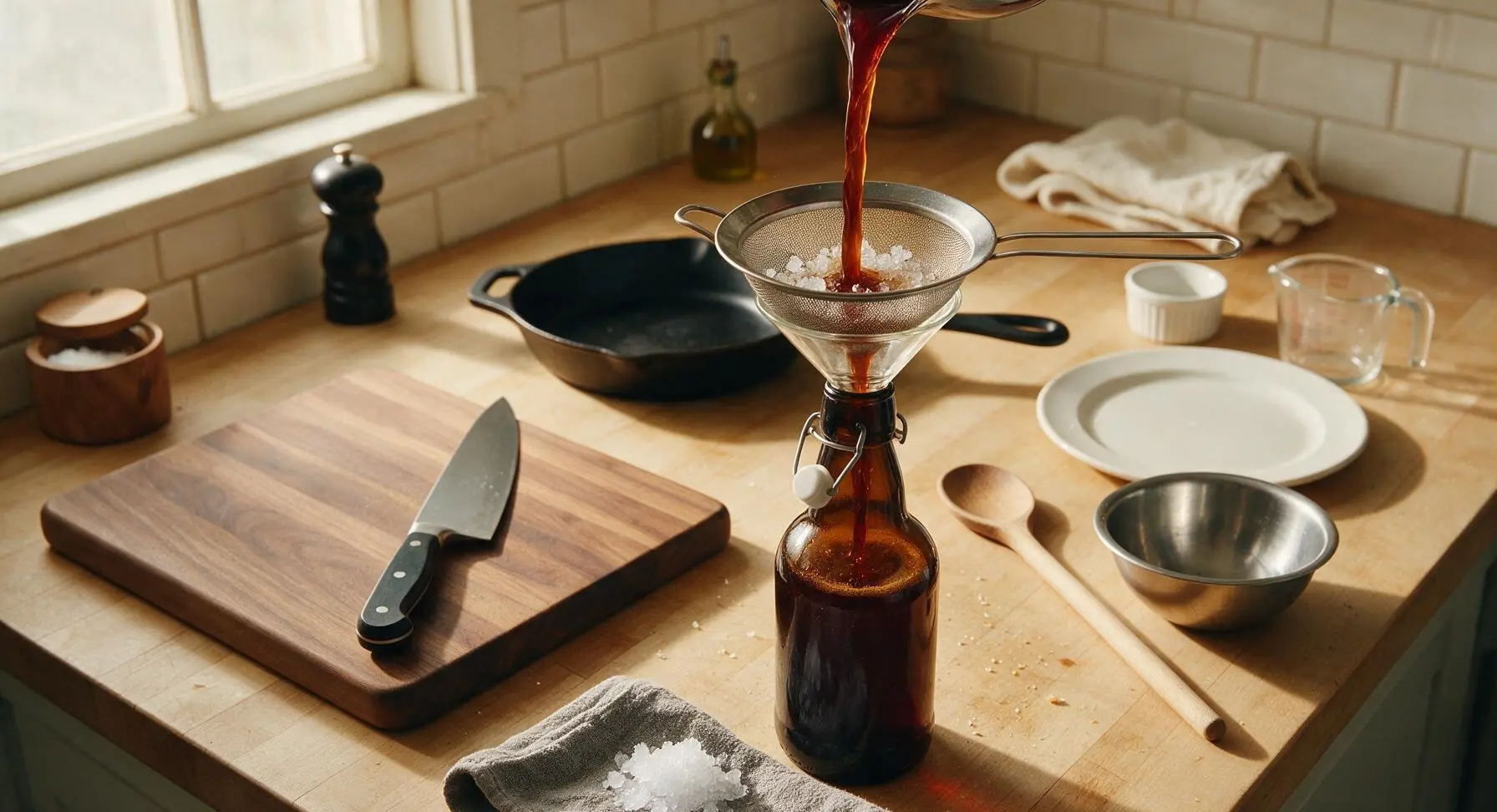
Set the sanitized fine-mesh strainer atop the sanitized glass funnel, which rests in the neck of the first amber swing-top bottle. Remove the lid from the partially frozen container. Use the slotted stainless steel spoon to scoop out all floating, opaque white ice crystals (composed almost entirely of frozen water) from the beer, setting discarded ice aside. Once large ice chunks are removed, slowly pour the remaining dark, concentrated beer through the strainer to catch any stray small ice crystals, filling each swing-top bottle to leave 3cm of headspace.
Seal Bottles Airtight
Once all concentrated beer is transferred to the swing-top bottles, wipe the bottle necks clean with a corner of the kitchen towel, then fasten the stainless steel swing clasps tightly to create a fully airtight seal. Let the sealed bottles rest in your refrigerator at 4°C (39°F) for 24 hours to allow carbonation to redistribute and flavors to mellow into a smooth, balanced profile. Do not store bottles at room temperature, as the higher alcohol content can lead to over-carbonation if left warm.
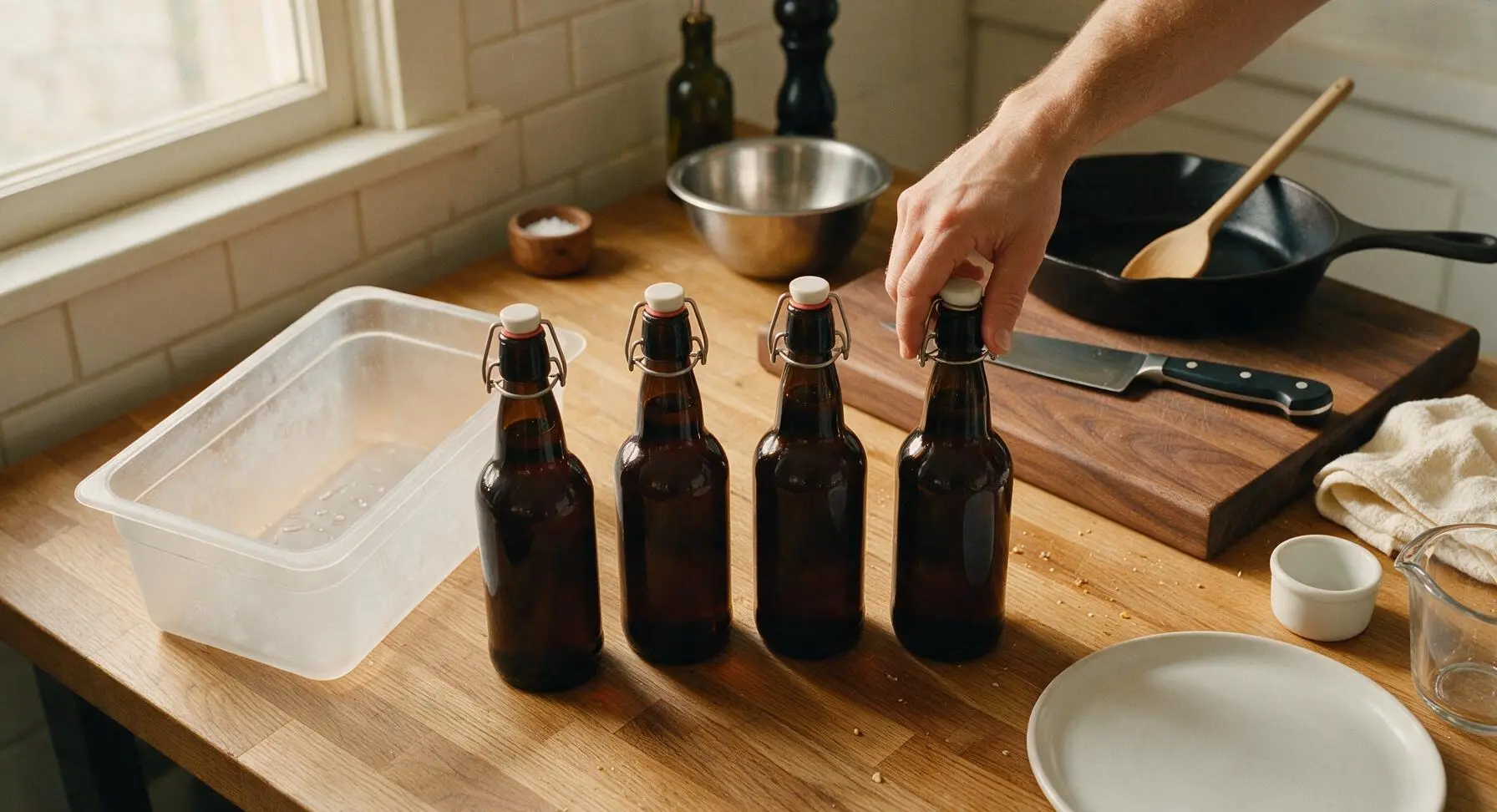
Chill to Serving Temp
After the 24-hour conditioning period, leave the sealed bottles in the refrigerator for an additional 2 hours to bring the Eisbock to the ideal serving temperature of 7-10°C (45-50°F). Avoid serving ice-cold, as overly cold temperatures will mute the rich malt, toffee, and dark plum notes that define classic Eisbock.
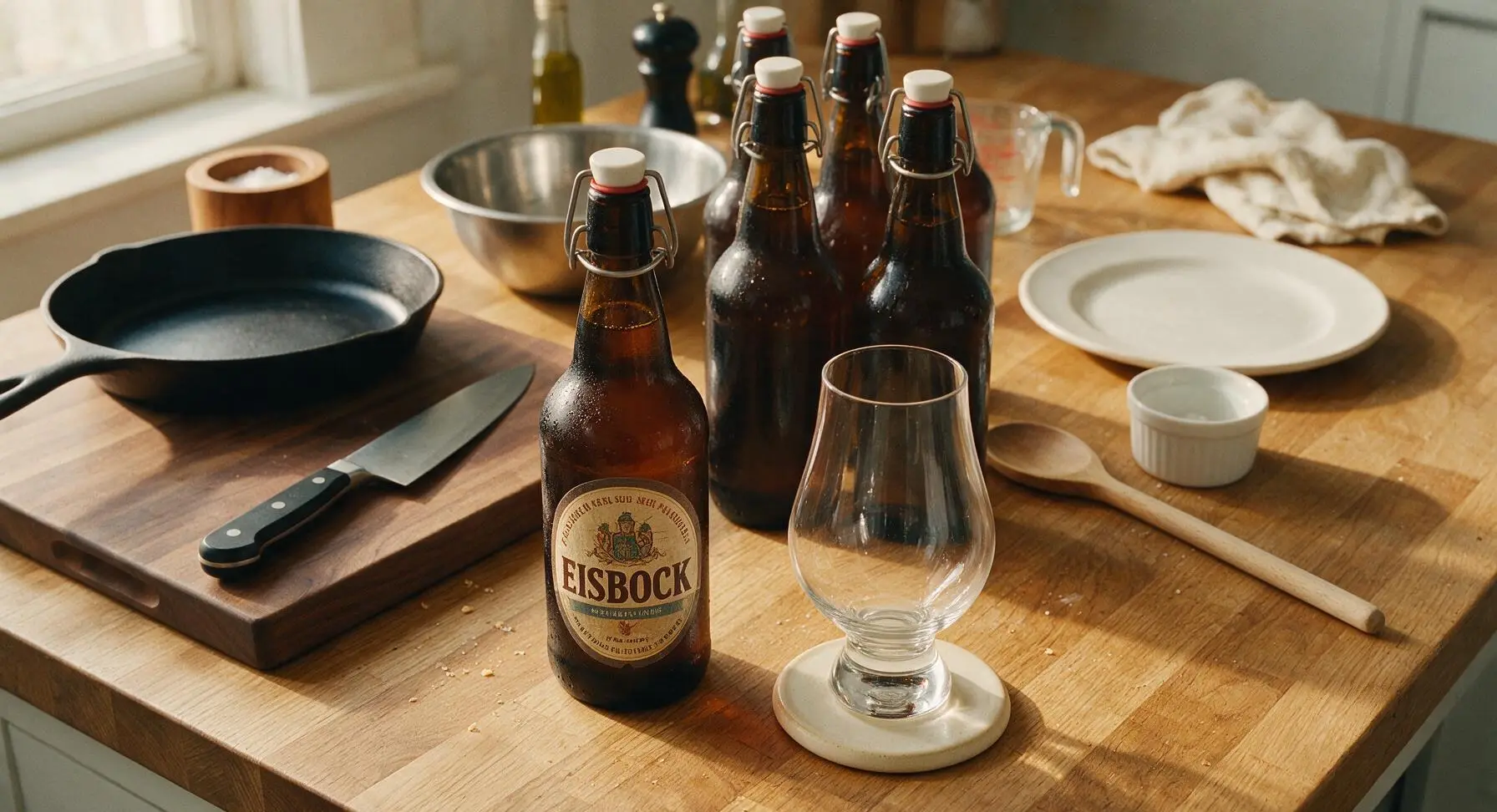
Pour and Serve
Unclasp the swing top, and pour the chilled Eisbock slowly down the side of the tilted tulip glass to preserve carbonation, then straighten the glass gradually to build a 1cm thick tan head. Serve immediately; traditional Eisbock requires no garnish, though a single thin strip of orange peel can be added for bright citrus contrast if desired.
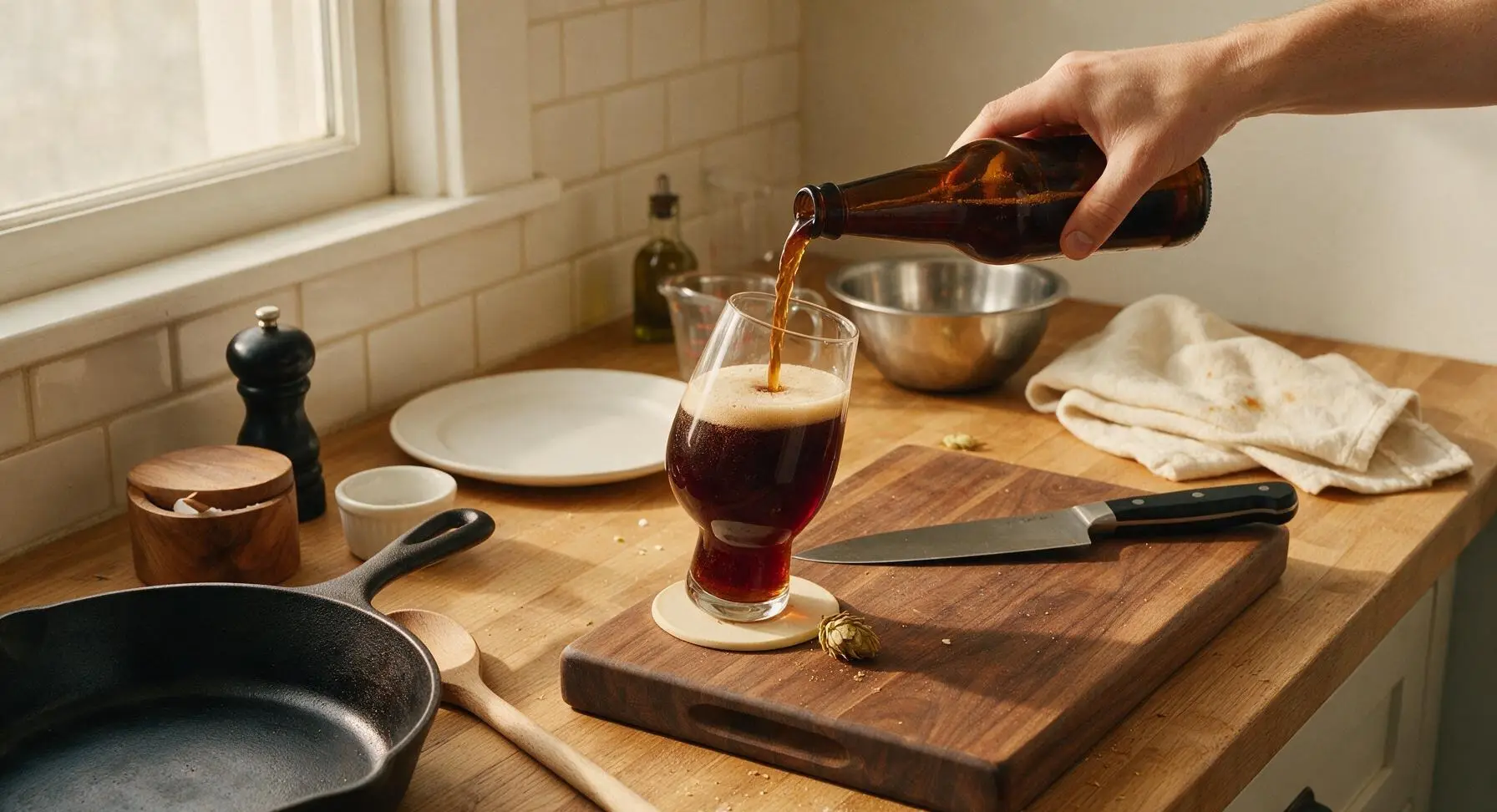
Tips
2.Always use no-rinse brewing sanitizer instead of regular dish soap: soap residue leaves a distinct soapy aftertaste in finished beer, and can strip away the natural remaining carbonation in unpasteurized doppelbock, leading to a flat final drink.
3.Choose a low-bitterness, malt-forward doppelbock as your base: freeze concentration amplifies all flavors equally, so a hop-heavy, bitter doppelbock will produce an unpleasantly harsh, astringent Eisbock. Look for bottles with tasting notes of toffee, bread crust, dark fruit, or caramel for the best results.






OMG y’all, I’ve been trying to nail a proper eisbock for literal years and this recipe is a total game changer! I was worried the 46 hour inactive freezing and conditioning time would be a pain to plan around for my small homebrew setup, but it was so low-effort once I got the initial prep steps done. Brought a sample to our neighborhood potluck last weekend and every single homebrew fan there was begging for the link. SO good, even my partner who usually hates heavy dark beers went back for a second small pour. 10/10, will absolutely make this again for our next backyard cookout.
First time making any kind of concentrated beer at home, and I was so intimidated by the medium difficulty rating but the clear step-by-step instructions made this totally doable! My husband is obsessed with all things Bavarian, so I made this for his birthday dinner paired with homemade bratwurst and sauerkraut, and he said it tasted better than the eisbock we had on our trip to Munich a couple years ago. Only tiny complaint is I wish I’d made a double batch, because it was gone in two nights when our friends stopped by to watch the Premier League soccer game.
Solid, reliable recipe, but a quick heads up for anyone new to brewing eisbock: make sure you leave tons of headspace in your freezing vessel! I messed up and filled my food-grade bucket too close to the top, and when the liquid started expanding as it partially froze, a little bit seeped out onto my freezer shelf. Total sticky, malty mess to clean up, but the end product still turned out great once I got that sorted. Next time I’m going to let it condition an extra 3 days because I love how smooth it gets when those rich, toasty malty flavors mellow out a bit.