
Gruit
intro
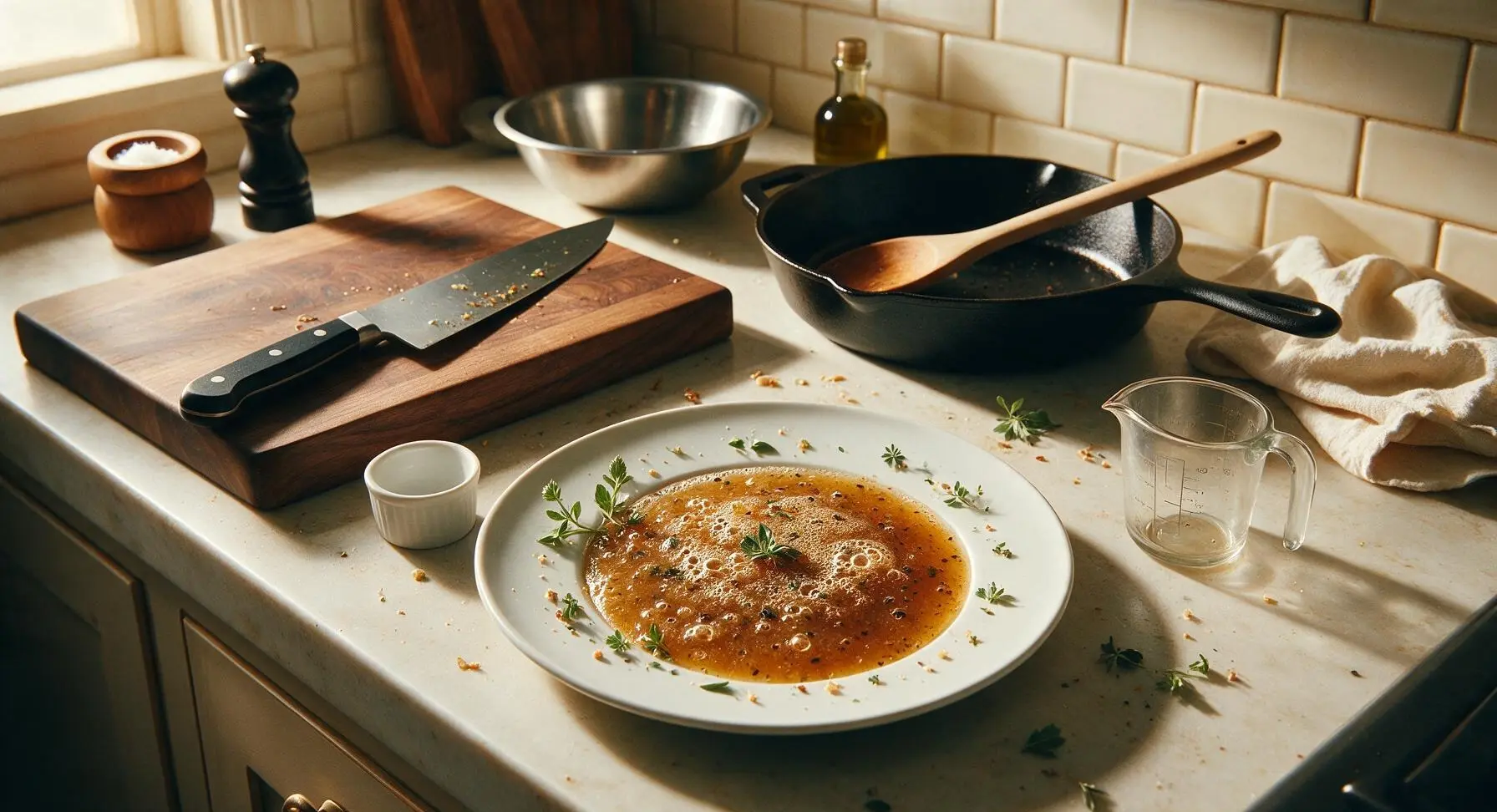
A historic hop-free herbal ale brewed with traditional Northern European botanicals, gruit offers earthy, aromatic, softly carbonated sips perfect for cool autumn gatherings.
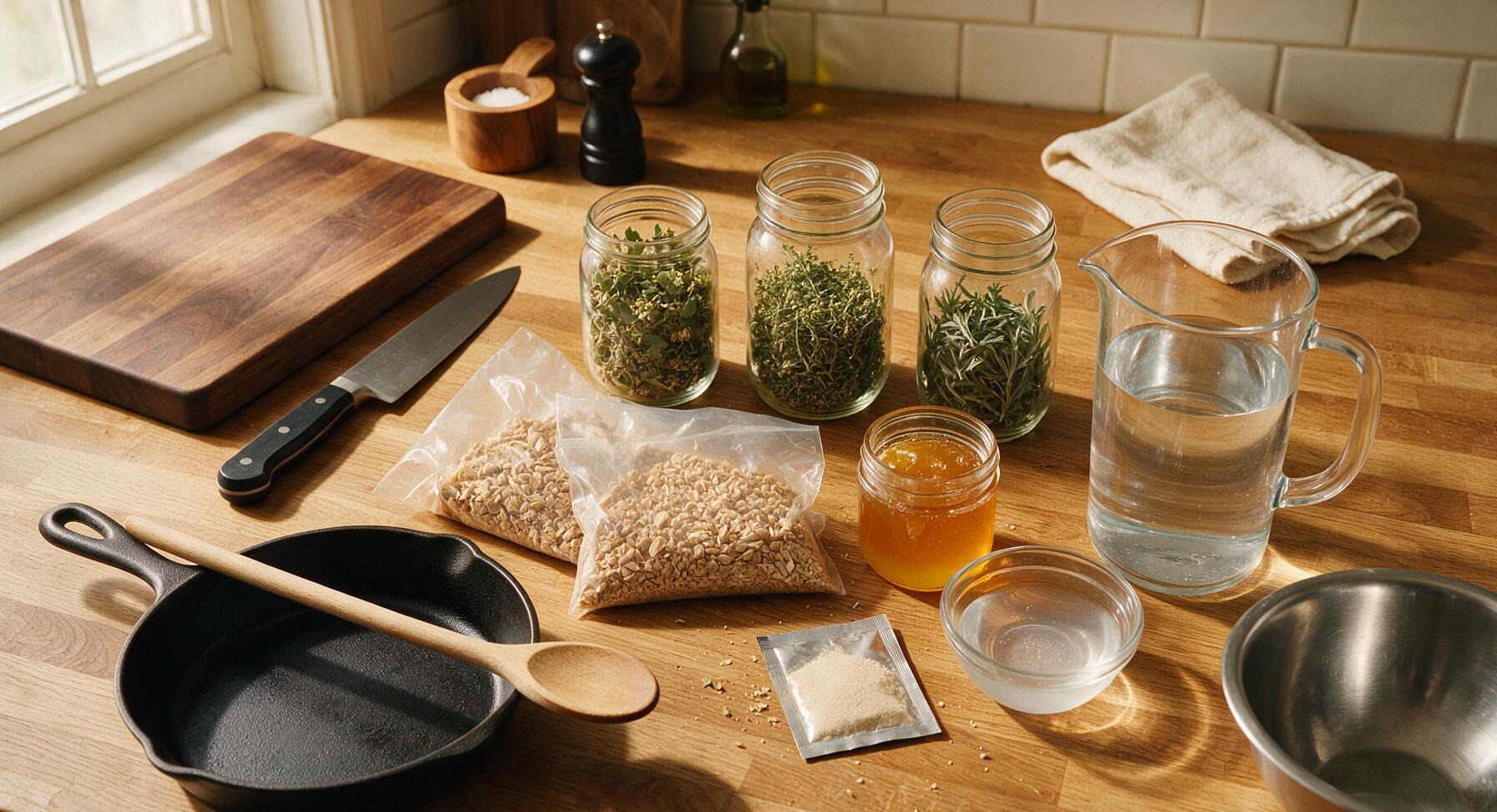
Ingredients
Steps
Sanitize Brewing Equipment
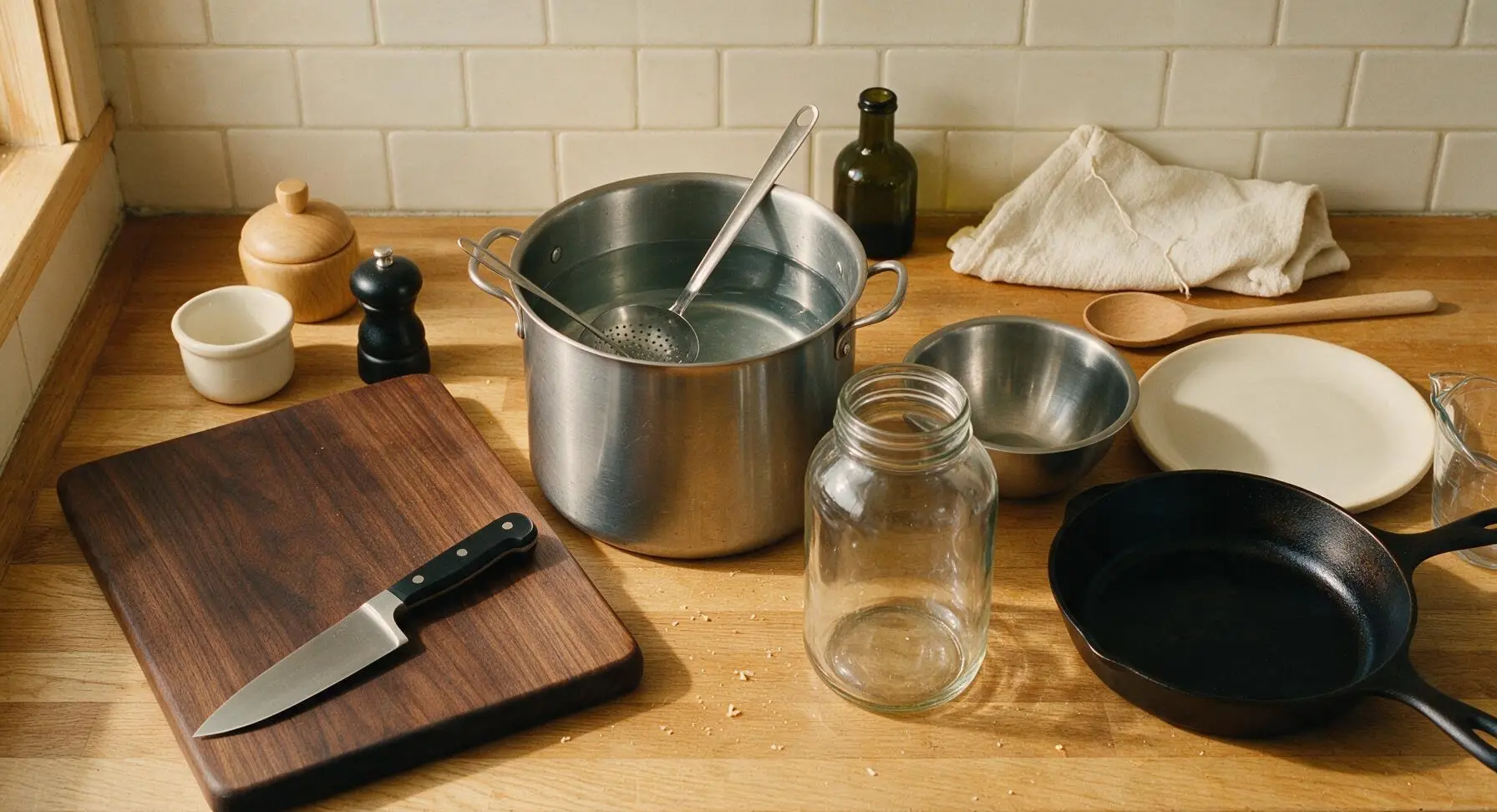
First, mix 1 tablespoon of no-rinse brewery sanitizer with 4L (1 gallon) of cool water in the 8-quart stock pot. Submerge the stirring spoon, strainer, fermentation jug, airlock, rubber stopper, auto-siphon, and swing-top bottles for 2 minutes, then remove and air-dry on the clean counter. Do not towel-dry, as this can introduce bacteria. All surfaces that touch cooled wort must be fully sanitized to prevent off-flavors.
Heat Wort Base
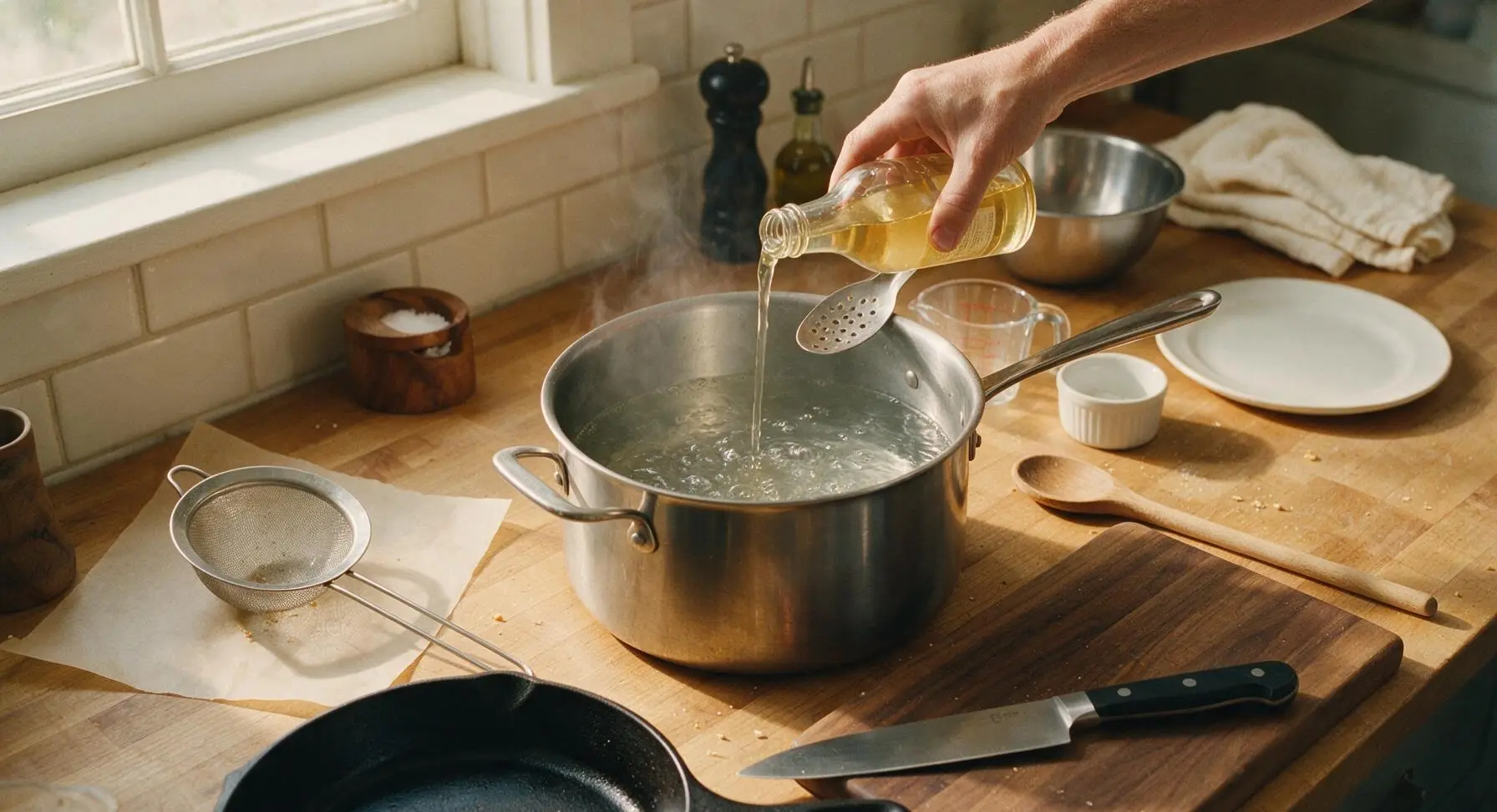
Pour 3 liters (12 cups) of filtered water into the sanitized stock pot, place over medium heat, and bring to a gentle rolling boil (100°C/212°F). Slowly whisk in the 450g light dried malt extract, stirring constantly with the stainless steel slotted spoon until fully dissolved, with no clumps sticking to the pot bottom. Reduce heat to maintain a low, steady boil for 10 minutes.
Add Gruit Herbs
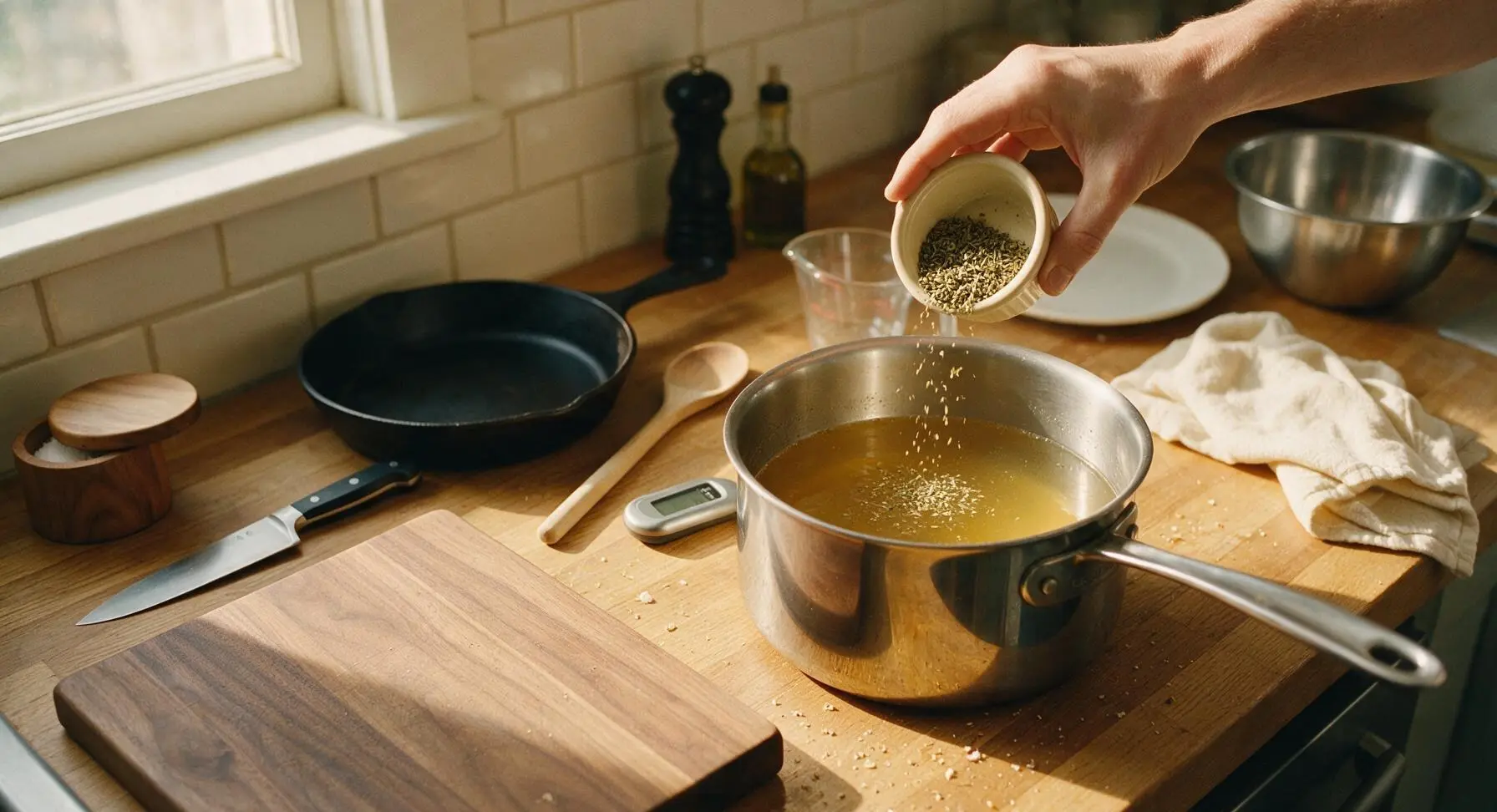
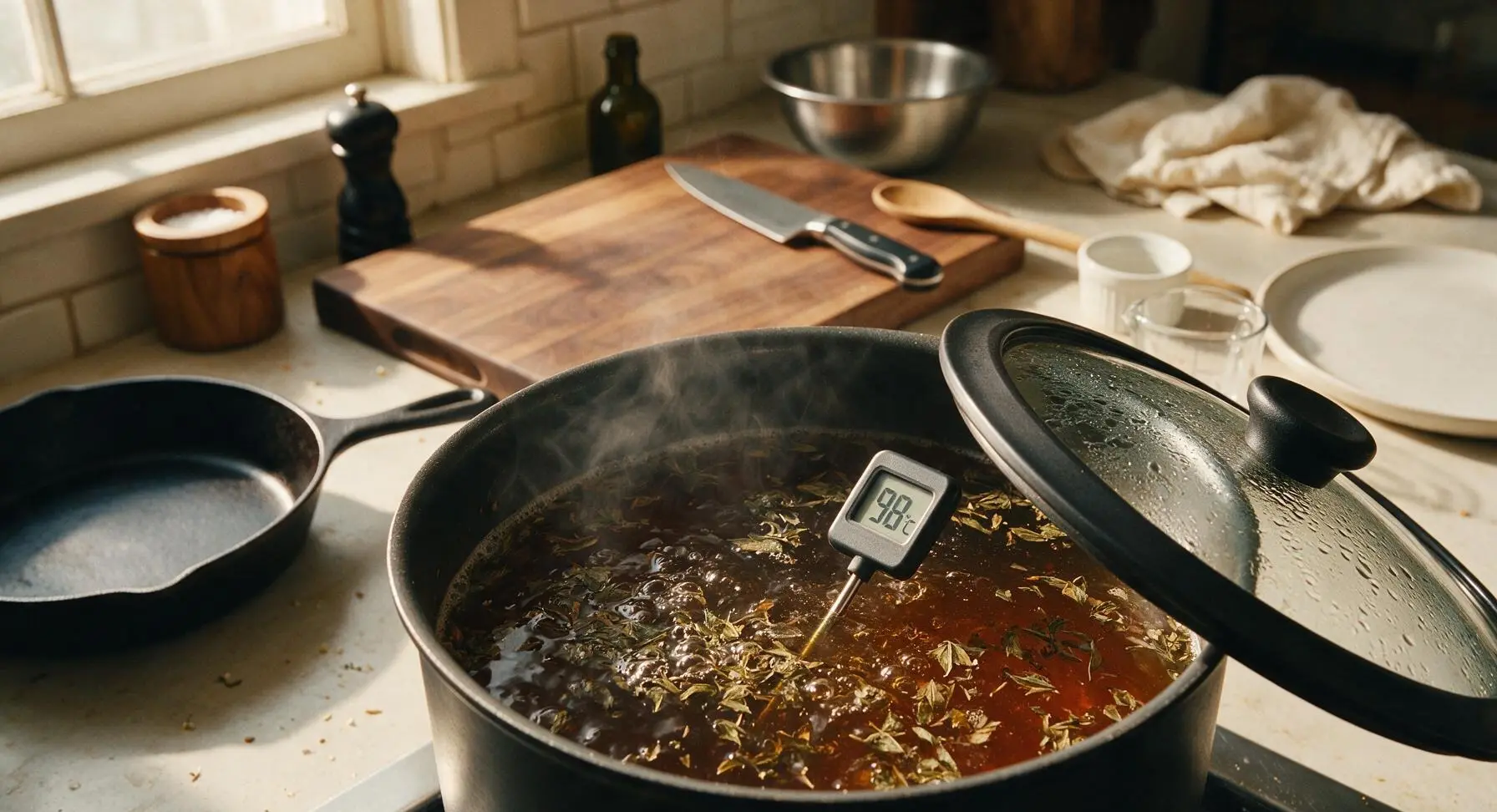
Once the malt extract has boiled for 10 minutes, add the measured sweet gale, yarrow, and mugwort to the pot, stirring to fully submerge all herbs. Maintain the low boil for 20 minutes to extract bitter, aromatic compounds from the herbs. Do not boil at a hard roll, as this will drive off delicate herbal aromas. Use the thermometer to confirm temperature holds steady at 95-100°C (203-212°F) during this step.
Strain and Cool Wort
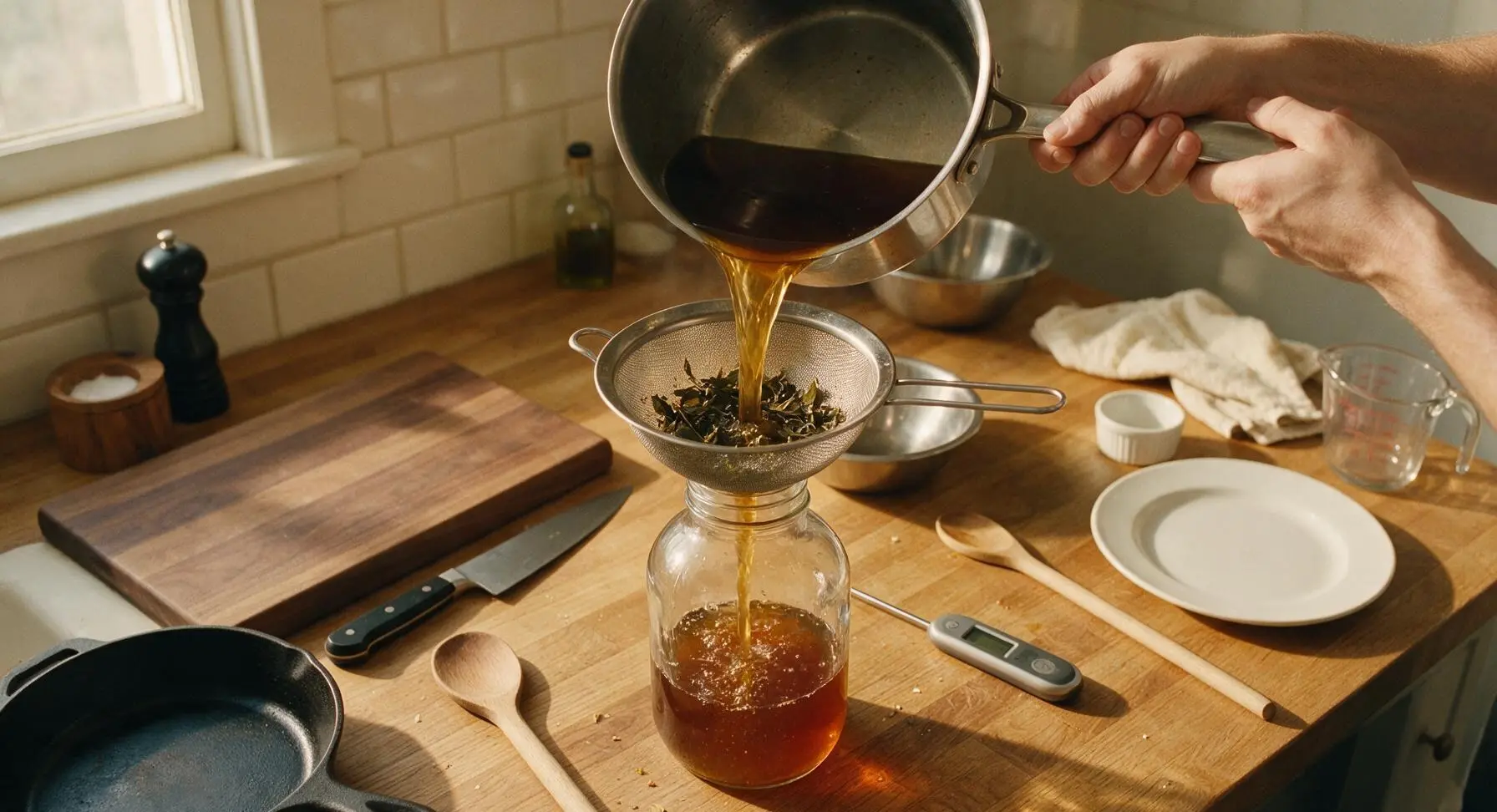
After 20 minutes of steeping, remove the pot from heat. Place the fine-mesh strainer over the top of the sanitized 1-gallon glass fermentation jug. Carefully pour the hot herb and wort mixture through the strainer to catch all dried herb solids, leaving clear, deep amber wort in the jug. Top up the jug with the remaining 800ml of cool filtered water to bring total volume to 1 gallon, then let the wort cool to 21-24°C (70-75°F), approximately 40 minutes at cool room temperature.
Pitch the Yeast
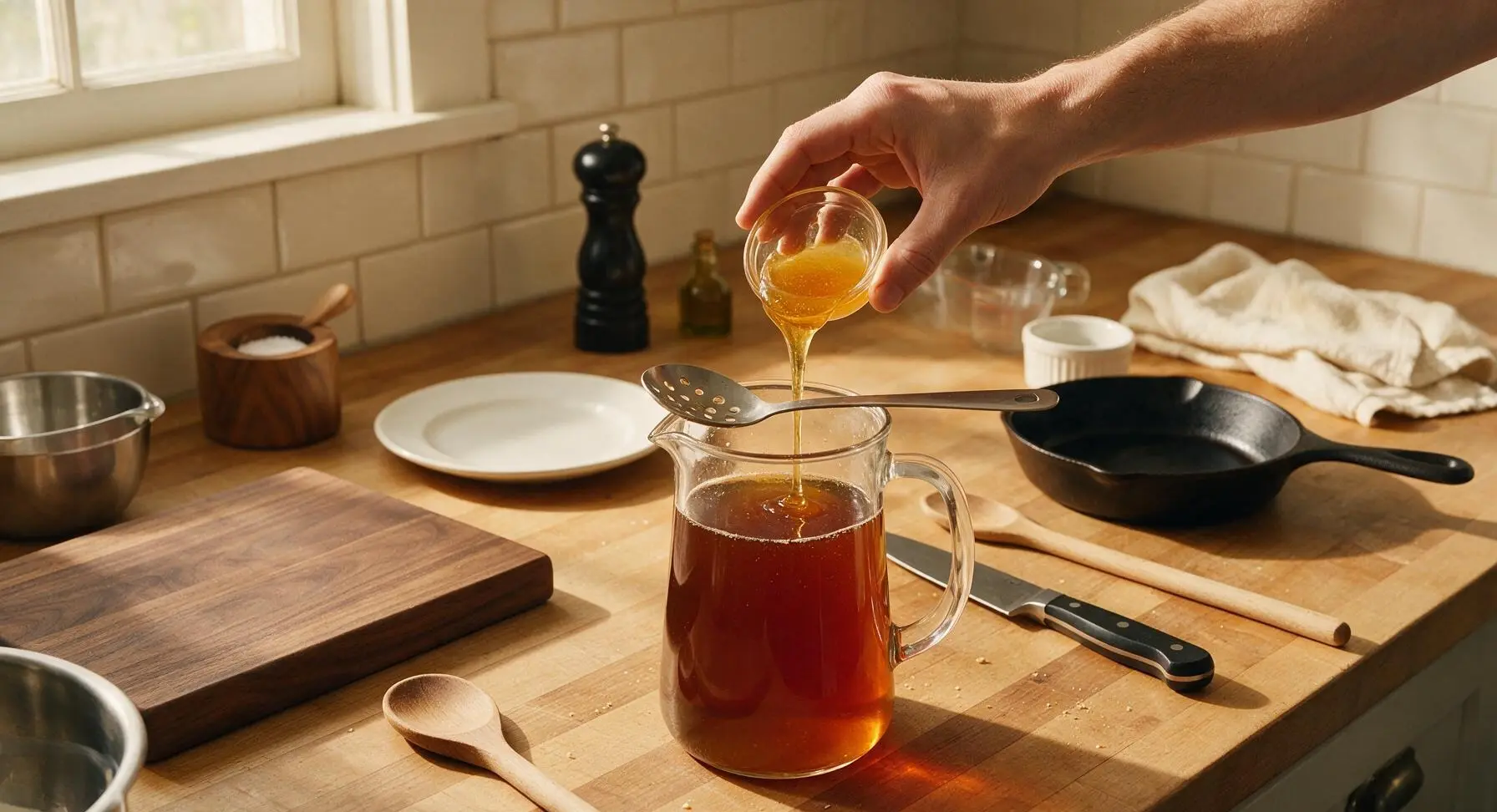
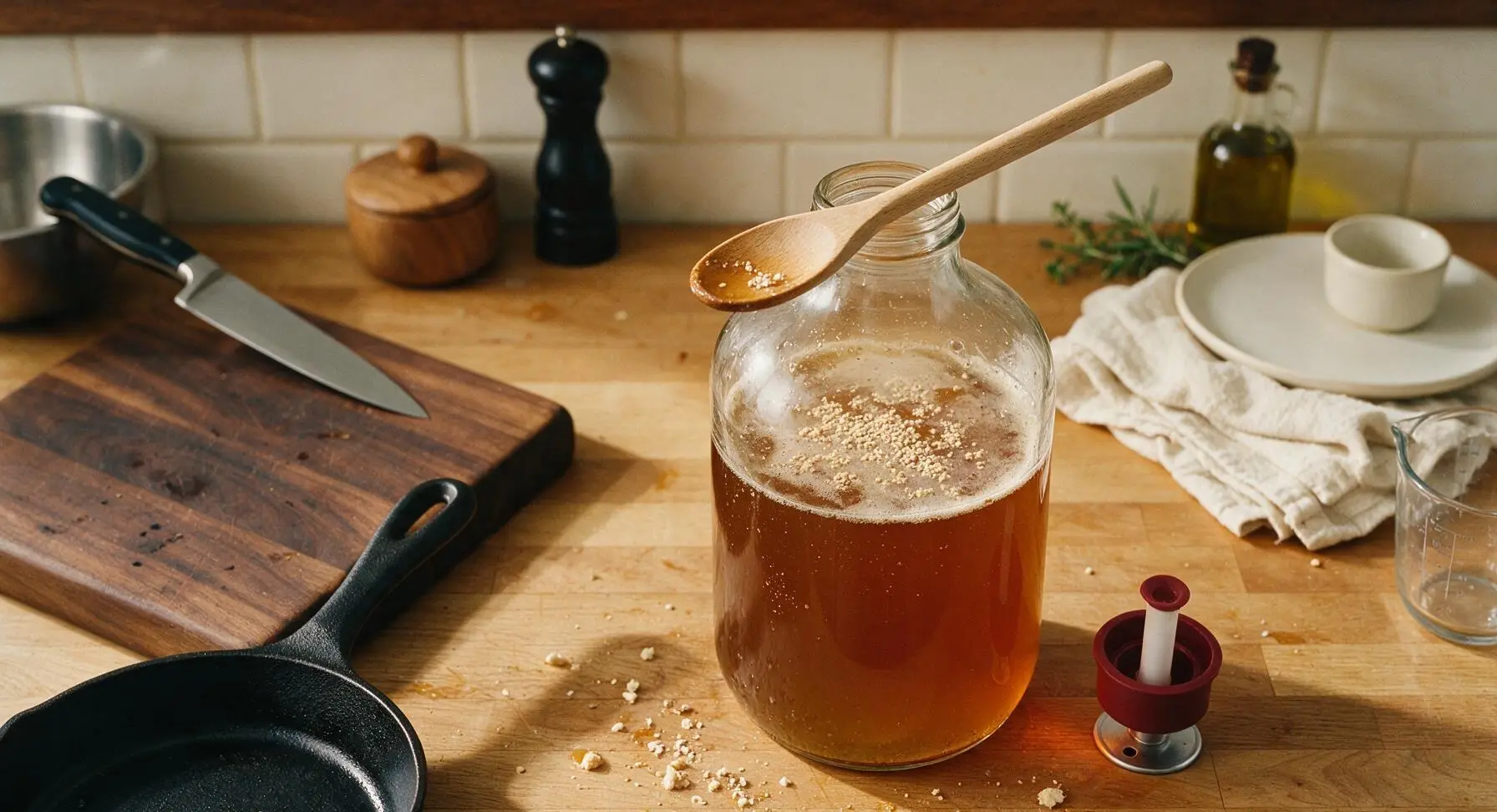
Once the wort has cooled to the correct 21-24°C (70-75°F) range (confirm with the thermometer), pour 60ml (4 tbsp) of raw wildflower honey into the wort, stirring gently with the sanitized spoon to dissolve. Sprinkle the entire 5g packet of champagne yeast evenly over the wort surface. Do not stir the yeast in; let it rehydrate on the surface for 10 minutes before sealing.
Seal for Fermentation
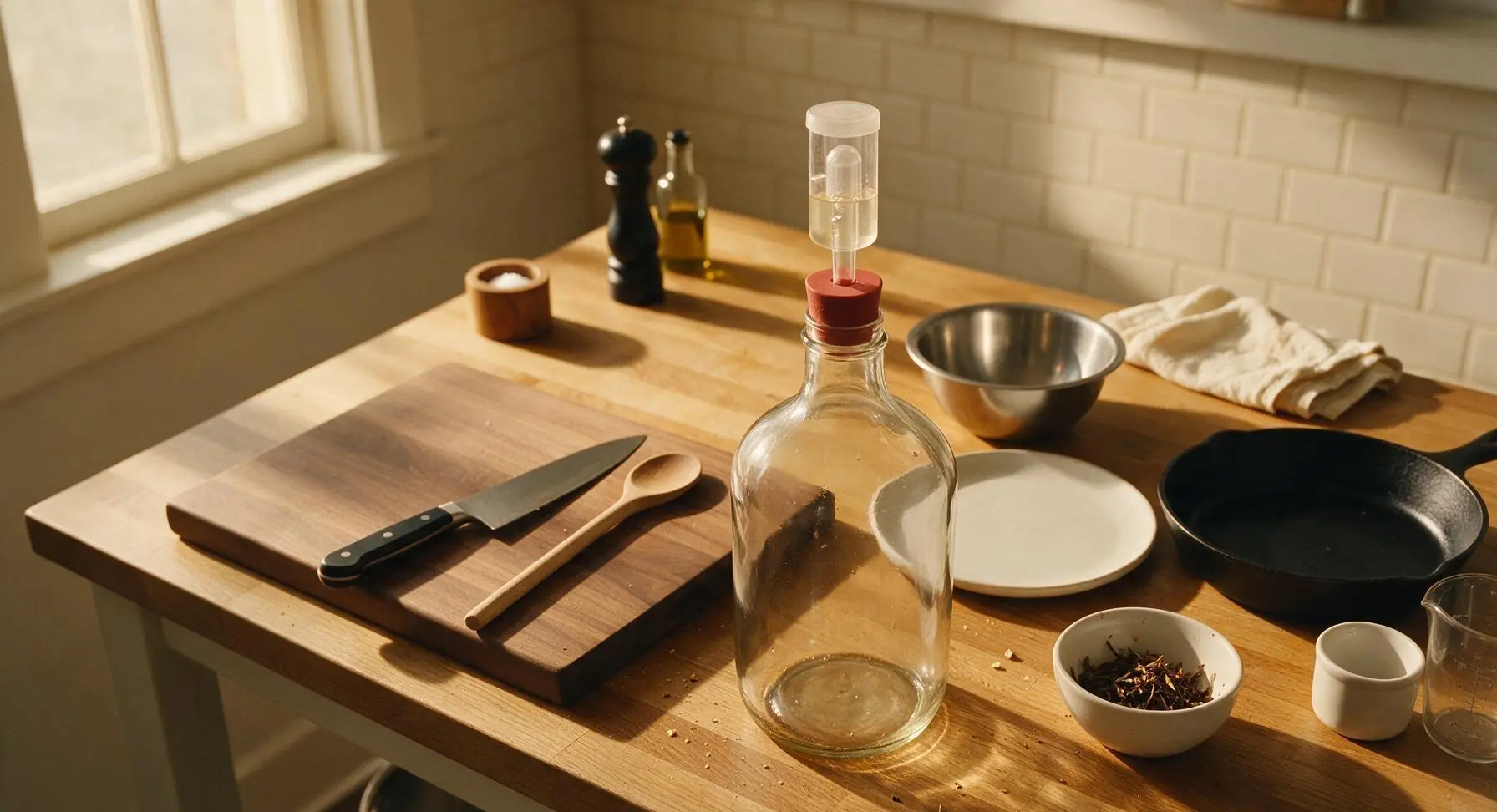
After 10 minutes of yeast rehydration, give the wort one gentle stir to incorporate the yeast, then fit the rubber stopper and 3-piece airlock into the jug neck. Pour 1 tablespoon of sanitizer solution into the airlock to create a sterile barrier that allows carbon dioxide to escape without letting bacteria or wild yeast in. Place the jug in a dark, cool spot (18-21°C/65-70°F) to ferment for 7 days, until bubbling slows to 1 bubble per minute.
Bottle for Carbonation
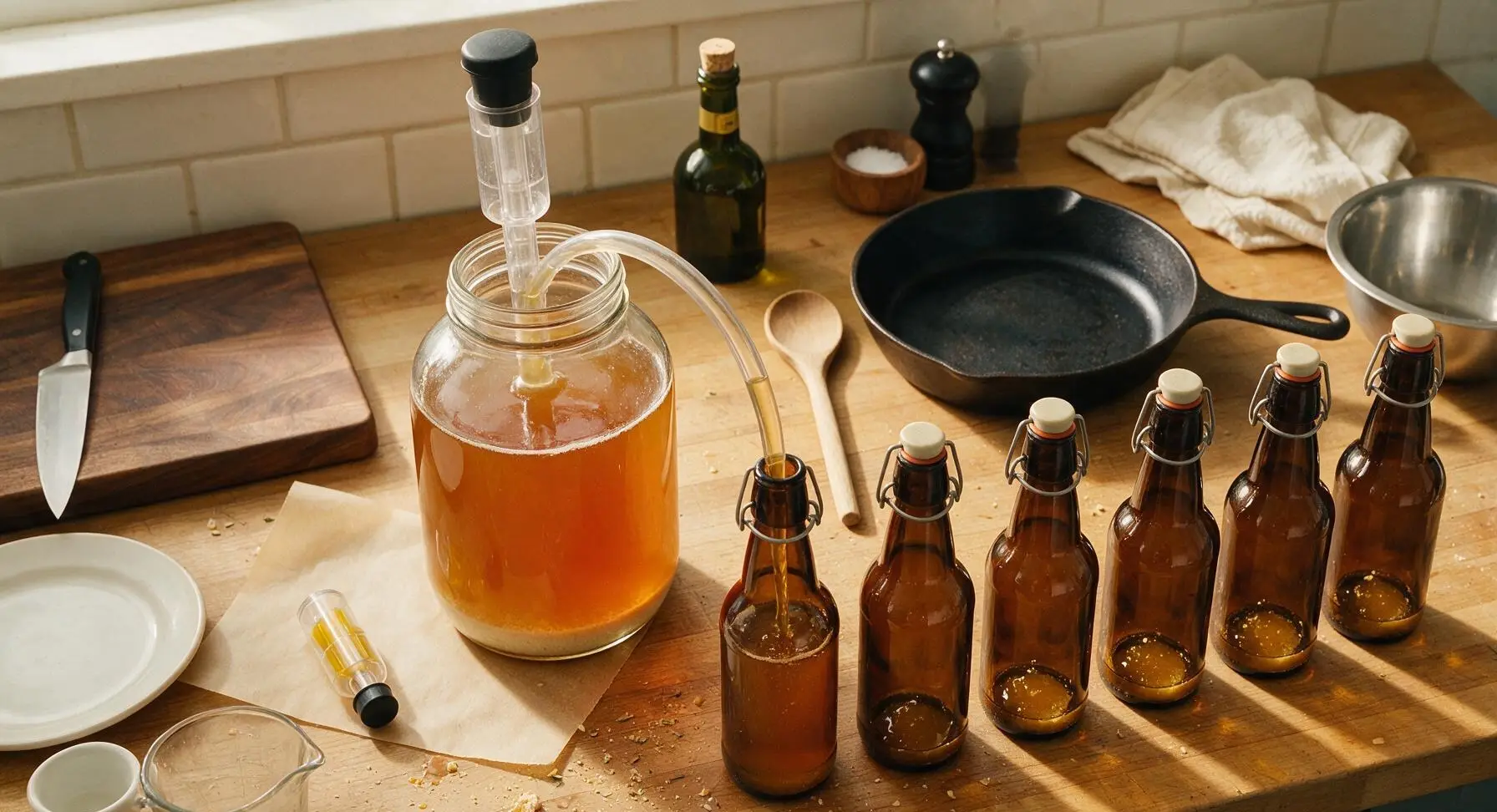
After 7 days of primary fermentation, add 1 tsp of raw honey to each sanitized swing-top bottle to prime carbonation. Use the sanitized auto-siphon to transfer finished gruit from the fermentation jug into each bottle, leaving 2cm of headspace at the top of each bottle. Seal swing-top lids tightly, then store bottles in the same cool dark spot for 3 more days to build natural carbonation.
Chill and Serve
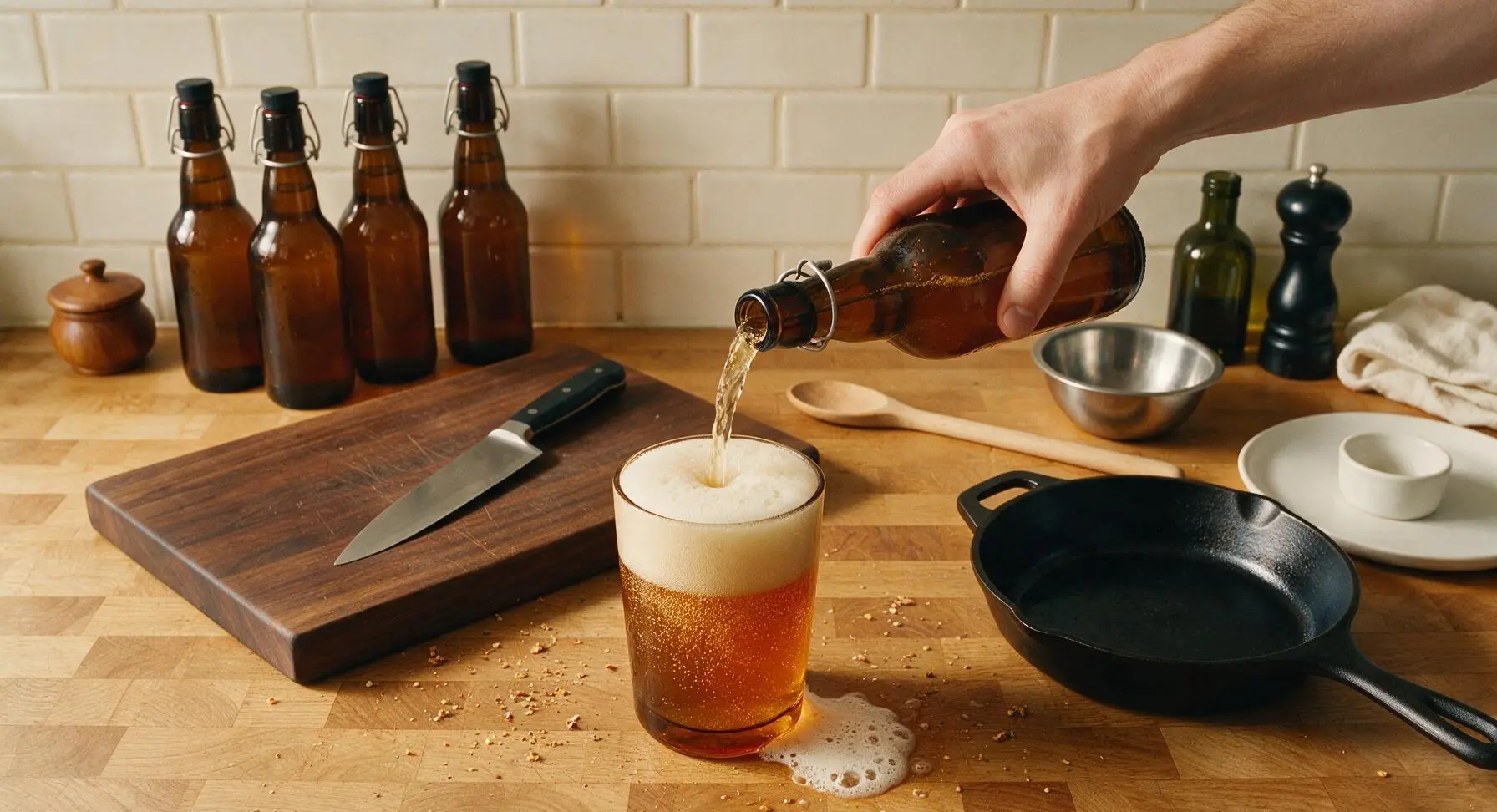
After 3 days of bottle carbonation, move bottles to the refrigerator to chill for at least 4 hours before serving. Pour slowly into a thick-walled tumbler, leaving a small amount of pale yeast sediment at the bottom of the bottle to avoid cloudiness. The finished gruit will have bright, herbaceous, slightly bitter flavor with subtle earthy notes and soft carbonation.
Tips
2.If you cannot source dried sweet gale (the core traditional gruit botanical), substitute a 1:1 mix of dried heather tips and bog myrtle. Avoid adding hops, as this will turn the brew into a standard hopped beer rather than authentic, historic gruit.
3.When pouring finished carbonated gruit, pour slowly down the side of the glass to preserve carbonation, and stop pouring when you see pale yeast sediment approaching the bottle neck. This sediment adds unwanted cloudiness and a harsh, bitter off-flavor if mixed into the poured beer. Note that total inactive fermentation time is 10 days (7 days primary, 3 days bottle conditioning) before the gruit is ready to chill and serve.






OMG, I’ve been wanting to try hop-free brewing forever because hops give my partner terrible migraines, and this recipe was such a game changer! The herbal balance is so cozy, not bitter at all, we brought a growler to our family dinner last weekend and even my hop-head brother asked for a second pour. 10/10 will make again!
Really solid base recipe! First batch turned out pretty tasty, though I think I overdid the bog myrtle a little so it had a faint pine-sol aftertaste oops. Has anyone tried adding a little honey to the secondary to round that out?
My book club did a historical drinks night and I brought this gruit, everyone was obsessed! None of us had ever tried ale without hops before and we all loved how the different herbs gave it such a complex, earthy flavor. Already got three text requests for the recipe this morning!
Taste was great, but I’m confused about the fermentation temp note? My house runs a little cool (around 62F) and my first batch took way longer to start bubbling than the timeline suggested. Did I mess up?
Just finished the boil for my first ever batch of any kind of homebrew, let alone gruit! The whole house smells amazing, like a walk in the woods mixed with fresh bread. My kids kept wandering into the kitchen asking what the yummy smell was, haha. Fingers crossed fermentation goes smooth!
Absolute banger of a recipe! I foraged all my own herbs for this—local yarrow, dried wild rose hips, and a little sagebrush instead of bog myrtle since I couldn’t find any nearby. Turned out so smooth, it was the star of our camping trip last weekend. Who needs hops anyway?
Made this for my local homebrew club’s historical beer night and took home second place! The only tweak I made was adding a small handful of dried elderberries to give it a little deeper color and faint fruity note. Super accessible for new brewers too, I already passed the recipe along to three new members who’ve never tried anything outside standard hopped beers.
Quick question for folks who’ve made this: can I swap the barley malt for sorghum syrup to make this gluten free? I’ve been dying for a good GF beer option that doesn’t taste like seltzer with added flavoring.
Wait so no hops at all? I thought all beer needed hops to be beer? This sounds wild, I’m gonna pick up the herbs this weekend and make a batch for my Super Bowl party next month. How long does this stay good in bottles if I cap them right?
Just poured my first glass after 3 weeks of conditioning and WOW, this is SO good. It’s way lighter and more aromatic than any hopped beer I’ve had lately, I’m already planning my next batch with different herbs to bring to our neighborhood potluck next month. Game changer for anyone who gets tired of super bitter IPAs!