
Kriek

title 1
Kriek
⏱️ cook time 45 minutes
🍽️ servings 8
⚡ Difficulty medium

intro

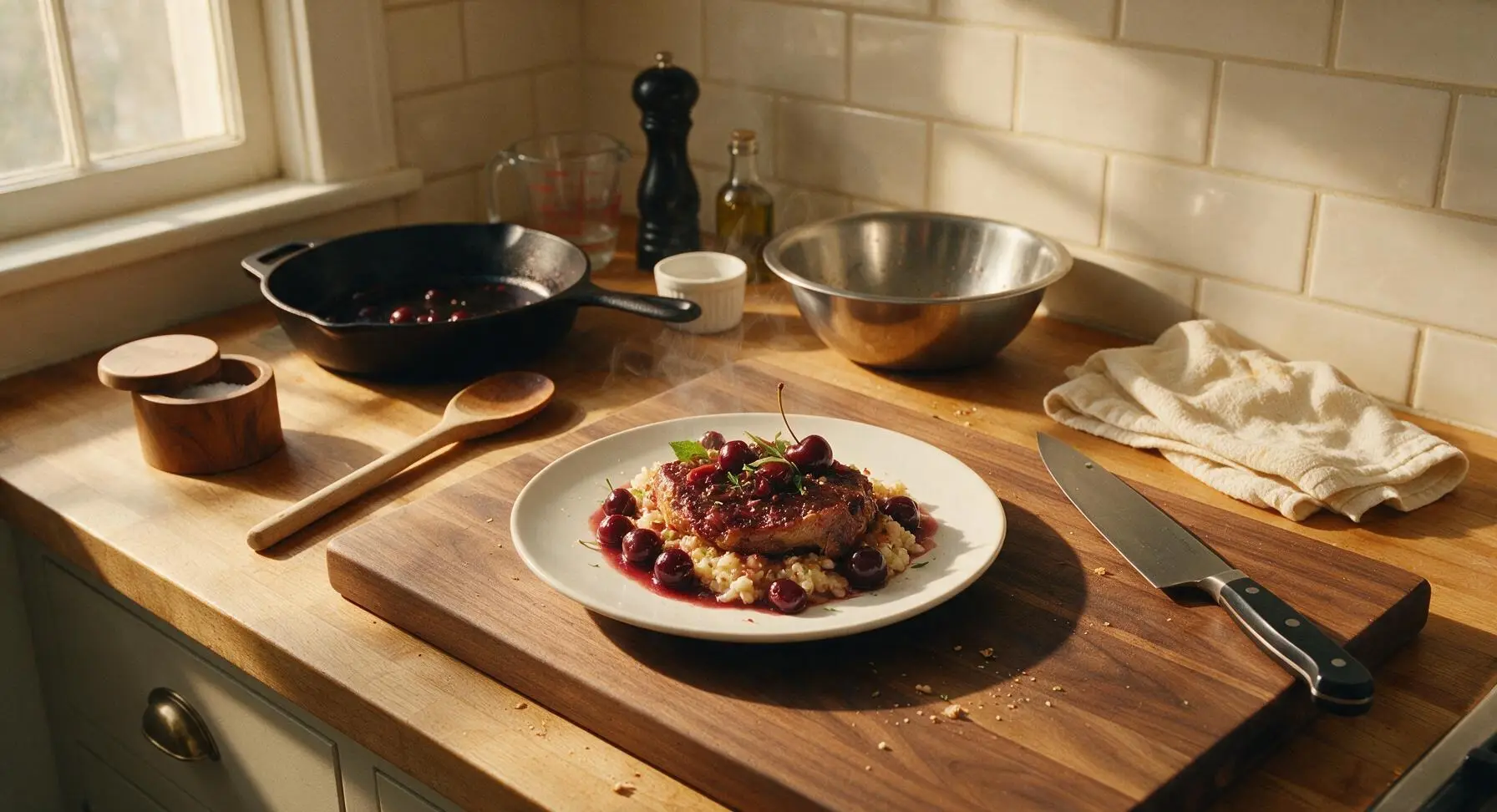
Tart, effervescent, and deeply fruity, homemade Kriek balances bright sour cherry flavor with soft fermented notes for a refreshing cold drink ideal for summer gatherings.

Ingredients
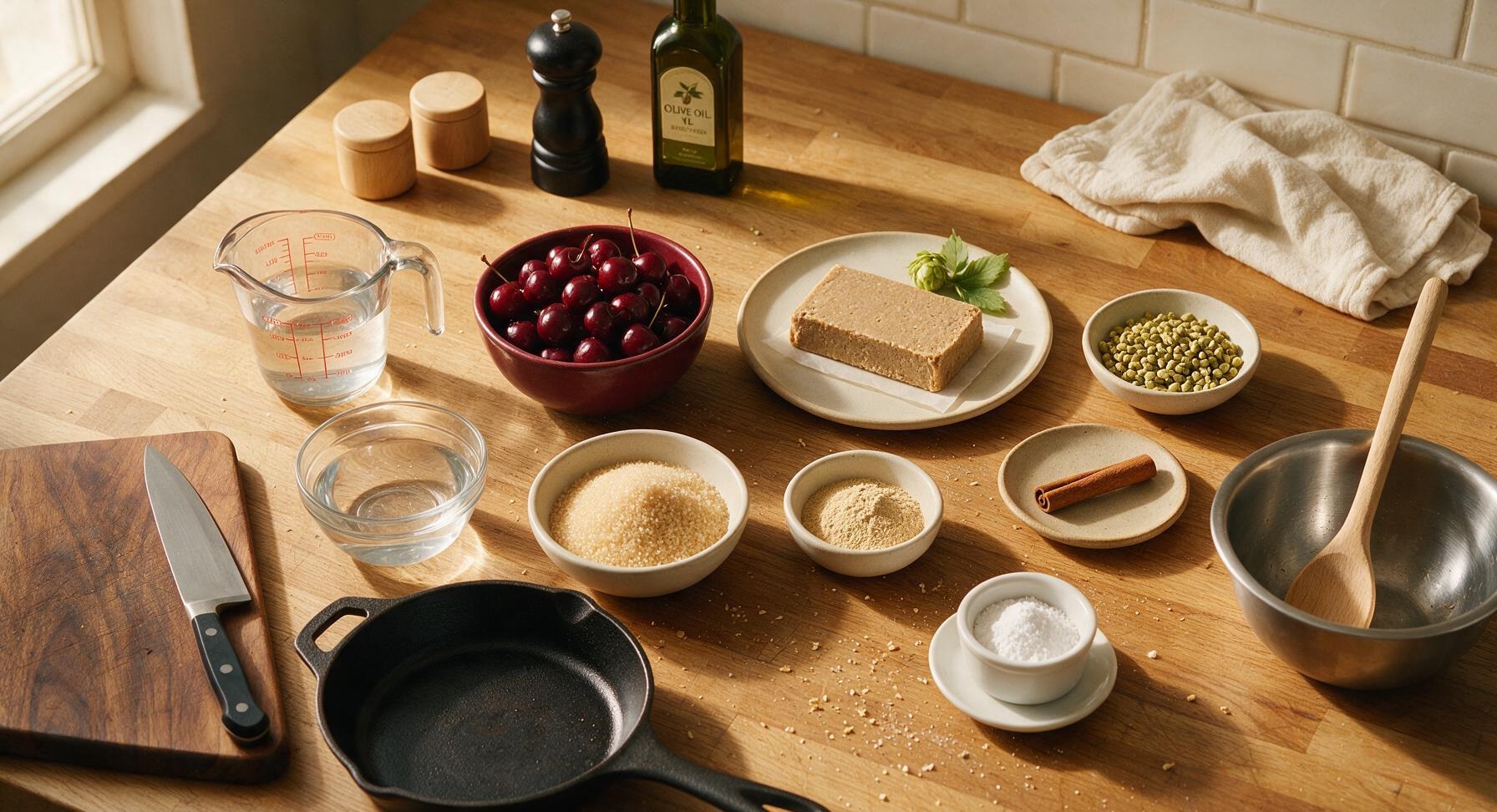
Filtered cold water 1 gallon (3.8L)
Fresh sour (Morello) cherries 2 lbs (900g)
Light pale liquid malt extract 2 lbs (900g)
Hallertau noble hops 1 oz (28g)
Belgian lambic-style brewing yeast 1 packet (11g)
Raw cane sugar 1/4 cup (50g)
Whole cinnamon stick 1 (3g)
No-rinse food-grade sanitizer 1 tbsp (15ml)

Steps

1

Sanitize Brewing Gear

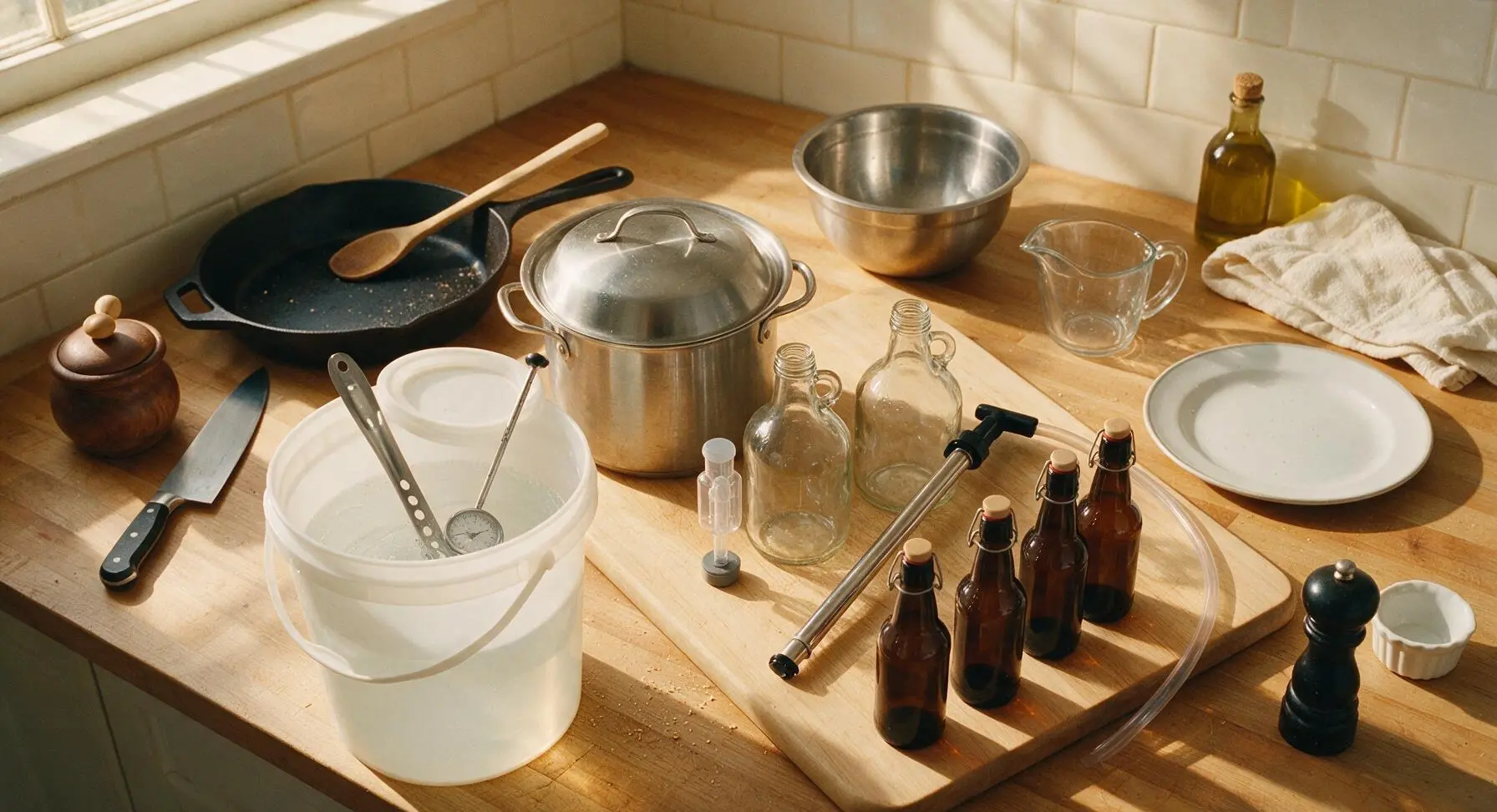
Mix 1 tablespoon no-rinse food-safe sanitizer with 1 gallon of cool water in the 5-gallon sanitizing bucket. Submerge the stock pot, stirring spoon, thermometer, both carboys, airlock, auto-siphon, and swing-top bottles for 2 full minutes. Remove items and air-dry completely on the maple cutting board; do not towel-dry, as this can introduce bacteria or lint that ruins fermentation. All surfaces that touch cooled wort must be fully sanitized to prevent off-flavors.
Step 1
step1:Sanitize Brewing Gear
2

Pit Fresh Cherries

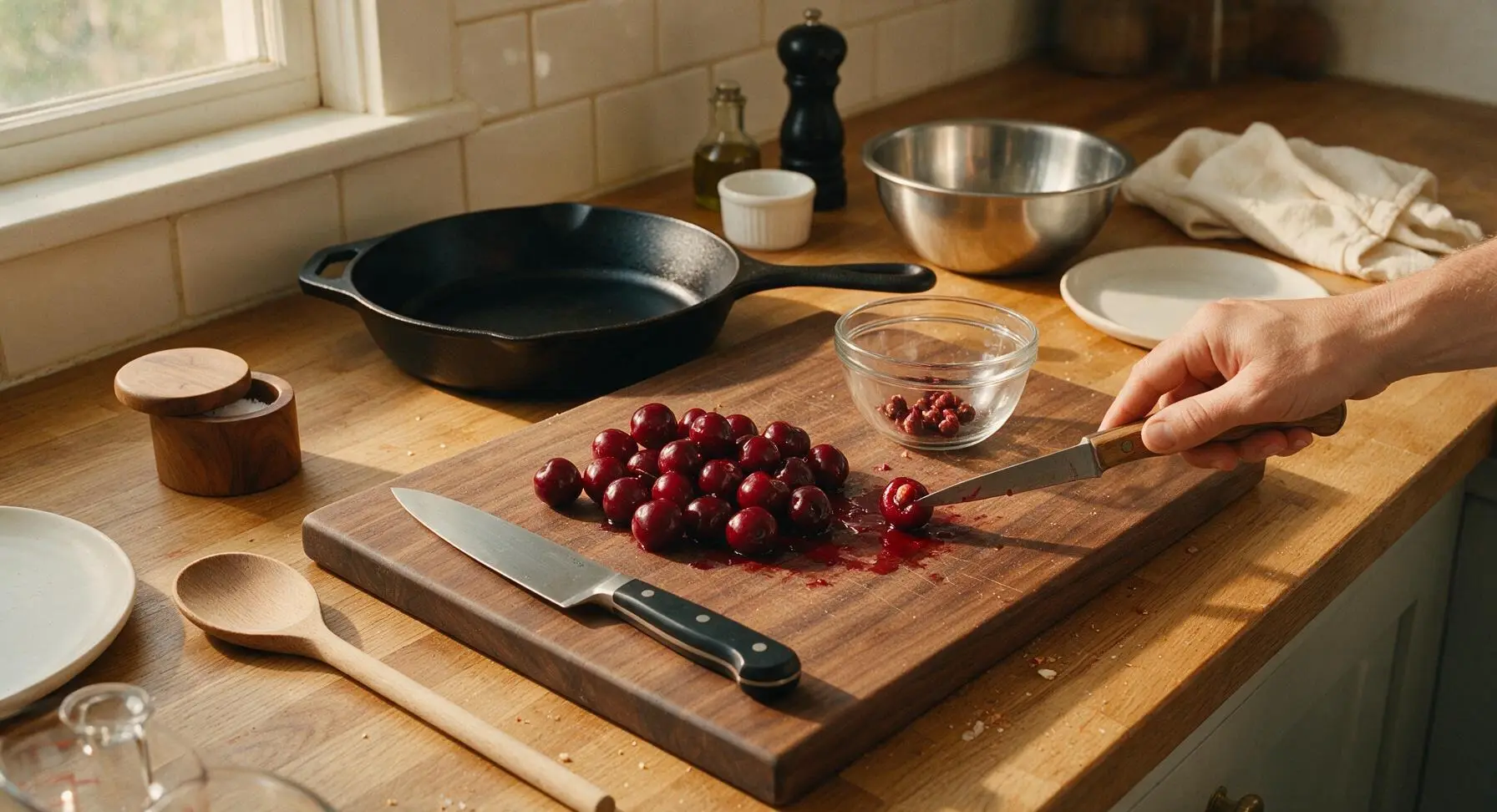
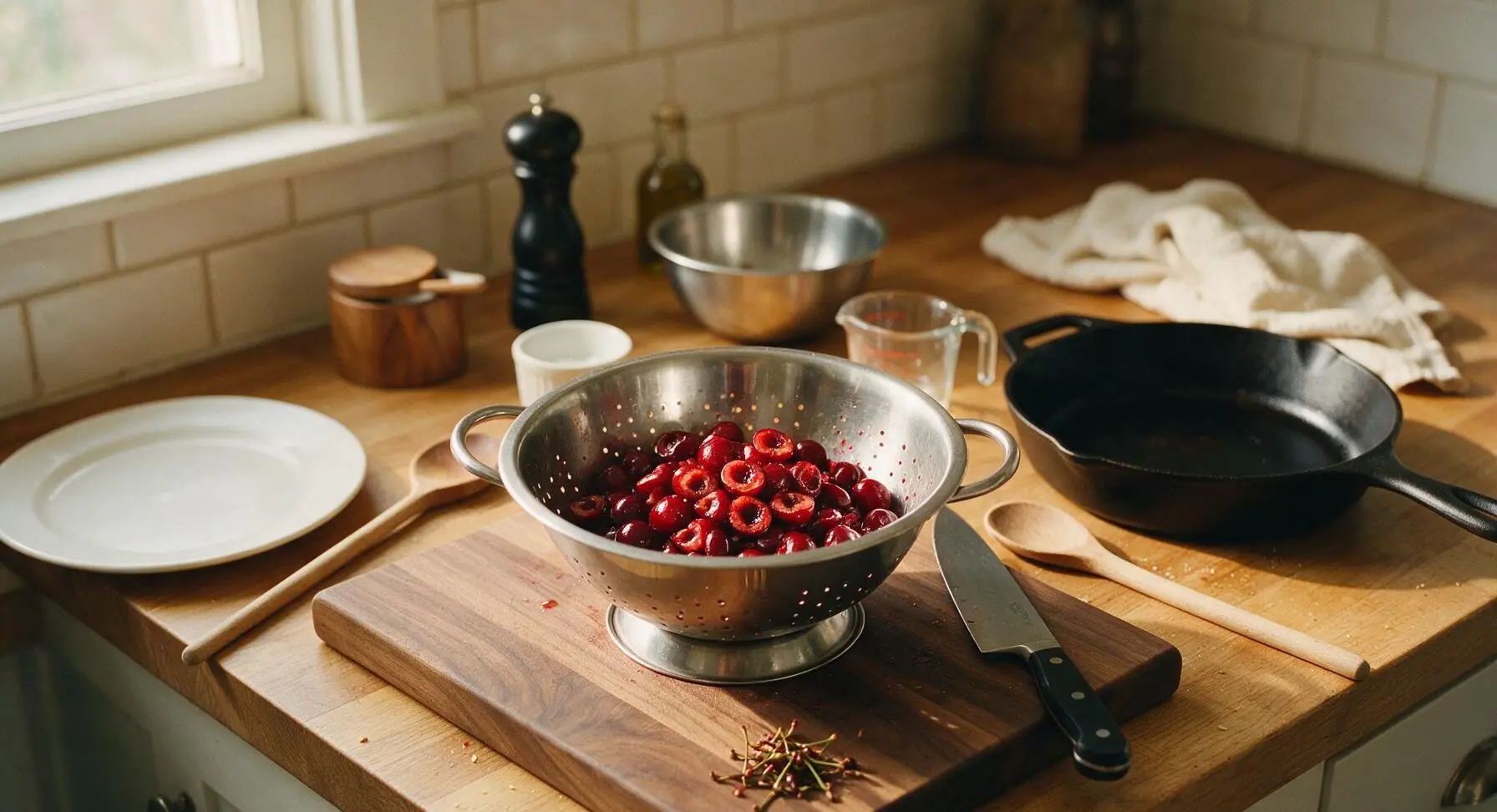
Place 2 lbs of fresh sour cherries in the stainless steel colander, and rinse under cool running water to remove any dirt or debris. Transfer rinsed cherries to the maple cutting board, and use the paring knife to cut each cherry in half and remove the pit, collecting pits in the small clear glass prep bowl. Retain all cherry juice that releases during cutting, and leave cherry skins fully intact for deep color and flavor. Set pitted cherries aside.
Step 2
step2:Pit Fresh Cherries
Step 2
step2:Pit Fresh Cherries
3

Boil the Wort Base

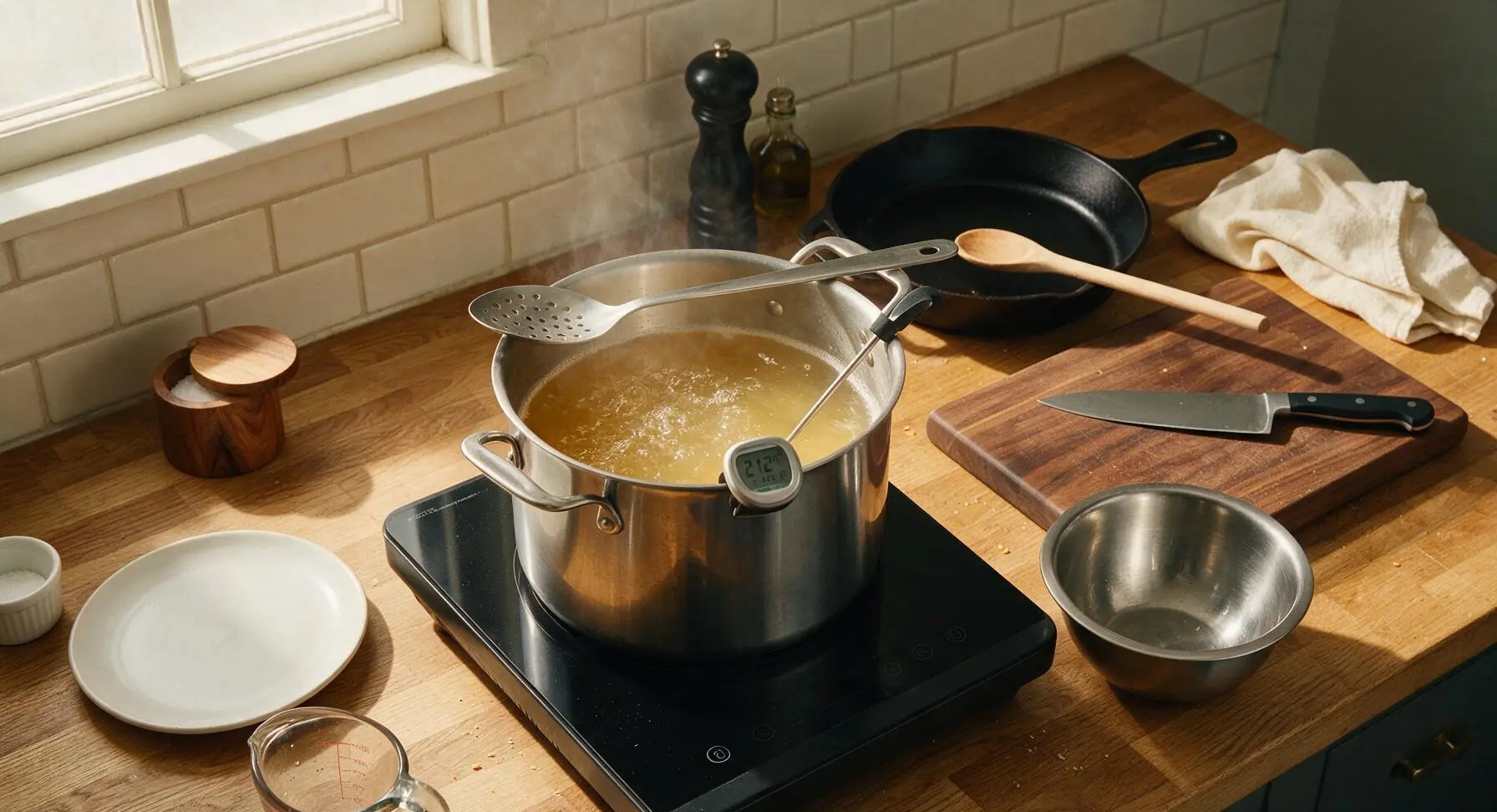
Pour 3 quarts of filtered water into the 8-quart stainless steel stock pot, set on the matte black induction burner, and bring to a rolling boil (212°F / 100°C) over medium-high heat. Slowly stir in 2 lbs of light liquid malt extract with the slotted stainless steel spoon until fully dissolved, with no clumps sticking to the pot bottom. Once the wort returns to a rolling boil, add 0.75 oz of Hallertau hops, set a timer for 45 minutes, and maintain a gentle steady boil, stirring occasionally to prevent boil-overs.
Step 3
step3:Boil the Wort Base
4

Add Cherries and Spice

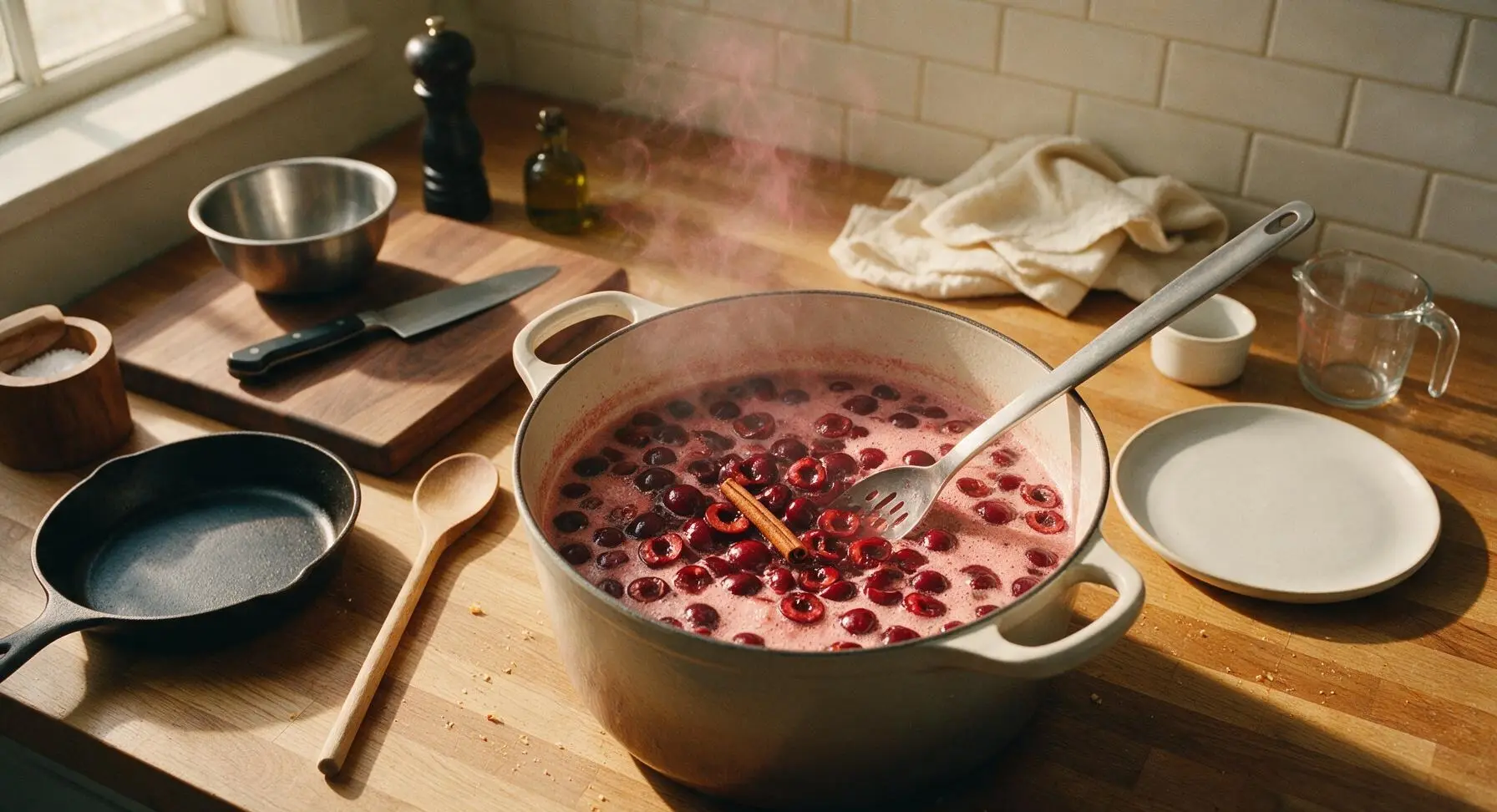
When the 45-minute boil timer shows 5 minutes remaining, add all pitted sour cherries, collected cherry juice, the whole cinnamon stick, and the remaining 0.25 oz of Hallertau hops to the boiling wort. Stir once to fully submerge all cherry halves, then continue boiling for the final 5 minutes. The wort will shift from pale gold to a soft pink-red hue as cherry juice infuses into the base.
Step 4
step4:Add Cherries and Spice
5

Cool and Pitch Yeast

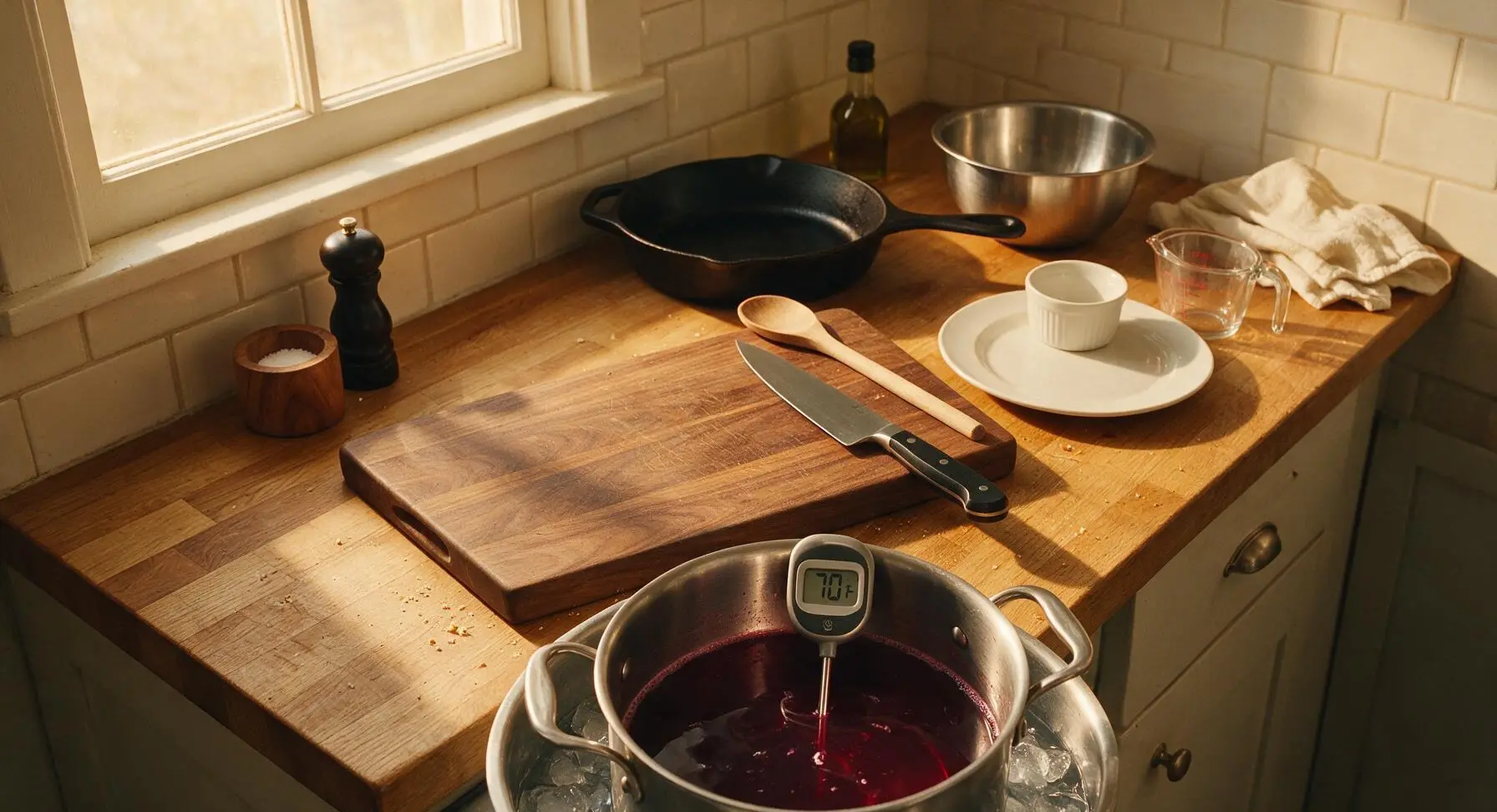
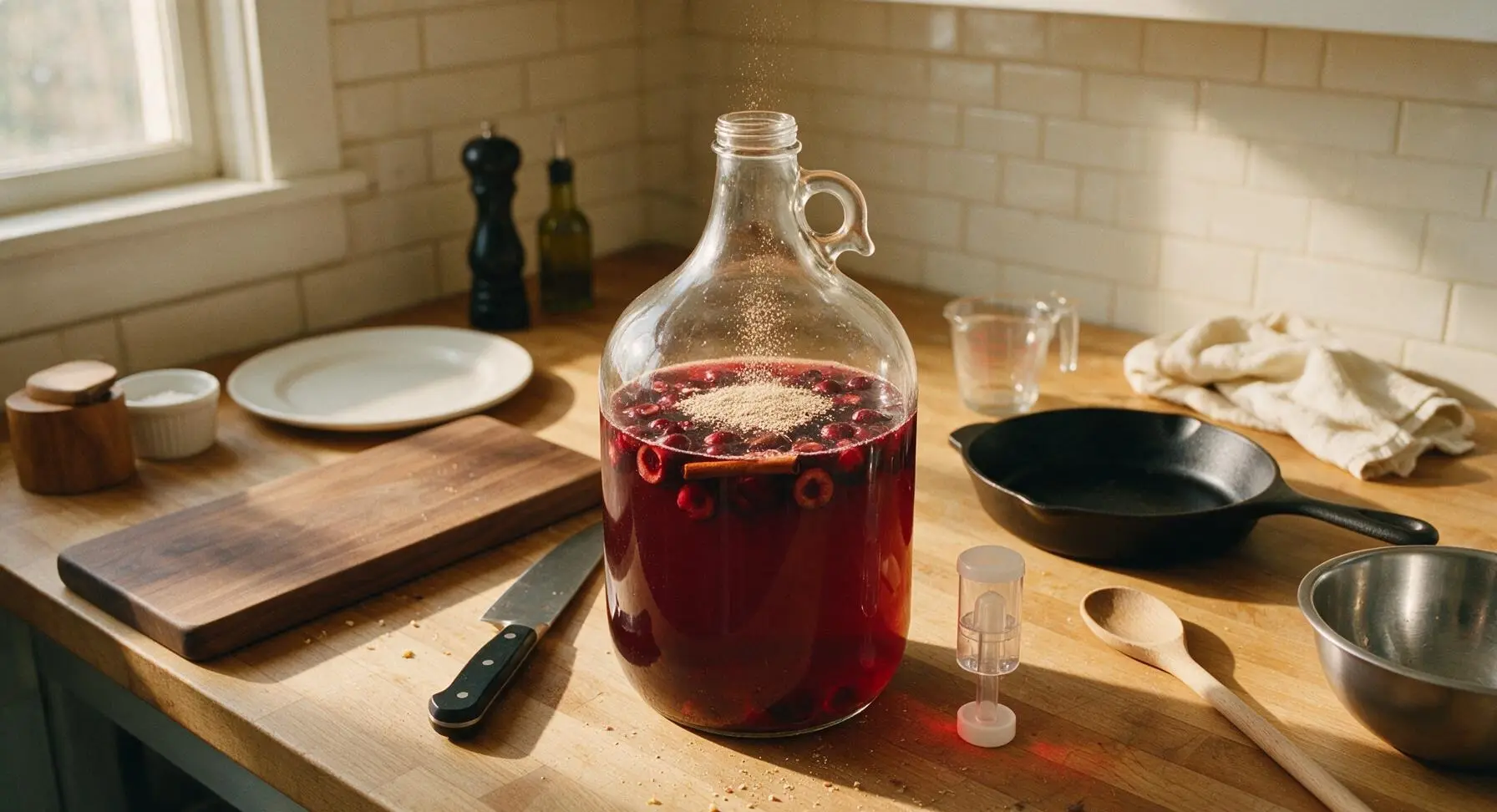
Turn off the induction burner, and carefully move the stock pot to an ice water bath to cool the wort quickly to 70°F (21°C), checking temperature regularly with the digital thermometer – this takes approximately 15 minutes. Do not let the wort sit at warm temperatures for longer than 30 minutes, as this risks bacterial growth. Once cooled, pour the entire wort, cherries, and cinnamon stick into one of the sanitized 1-gallon glass carboys, top with remaining filtered water to reach the 1-gallon mark, then sprinkle the full 11g packet of lambic yeast over the liquid surface. Fit the airlock into the carboy neck, filled halfway with clean sanitizer solution.
Step 5
step5:Cool and Pitch Yeast
Step 5
step5:Cool and Pitch Yeast
6

Complete Primary Ferment

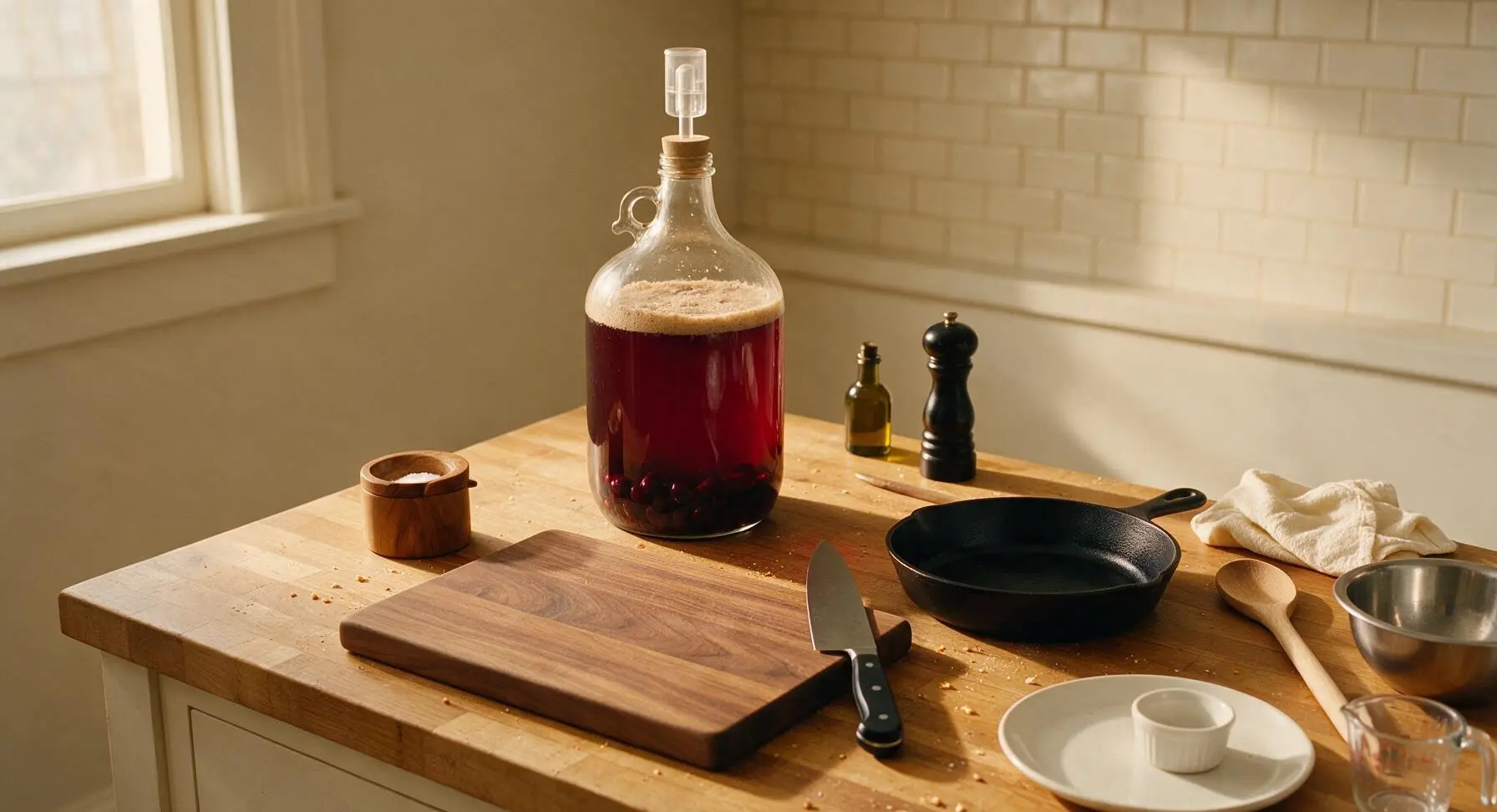
Move the sealed carboy to a cool, dark spot on the back of the counter, kept at a steady 65-70°F (18-21°C) away from direct sunlight. Leave to ferment for 7 full days. You will see consistent bubbles rising through the airlock within 24-48 hours, as yeast converts sugar to alcohol and carbon dioxide. Primary fermentation is slowing when bubbles slow to 1 every 30 seconds, and most cherry solids will have sunk to the bottom of the carboy.
Step 6
step6:Complete Primary Ferment
7

Rack to Secondary

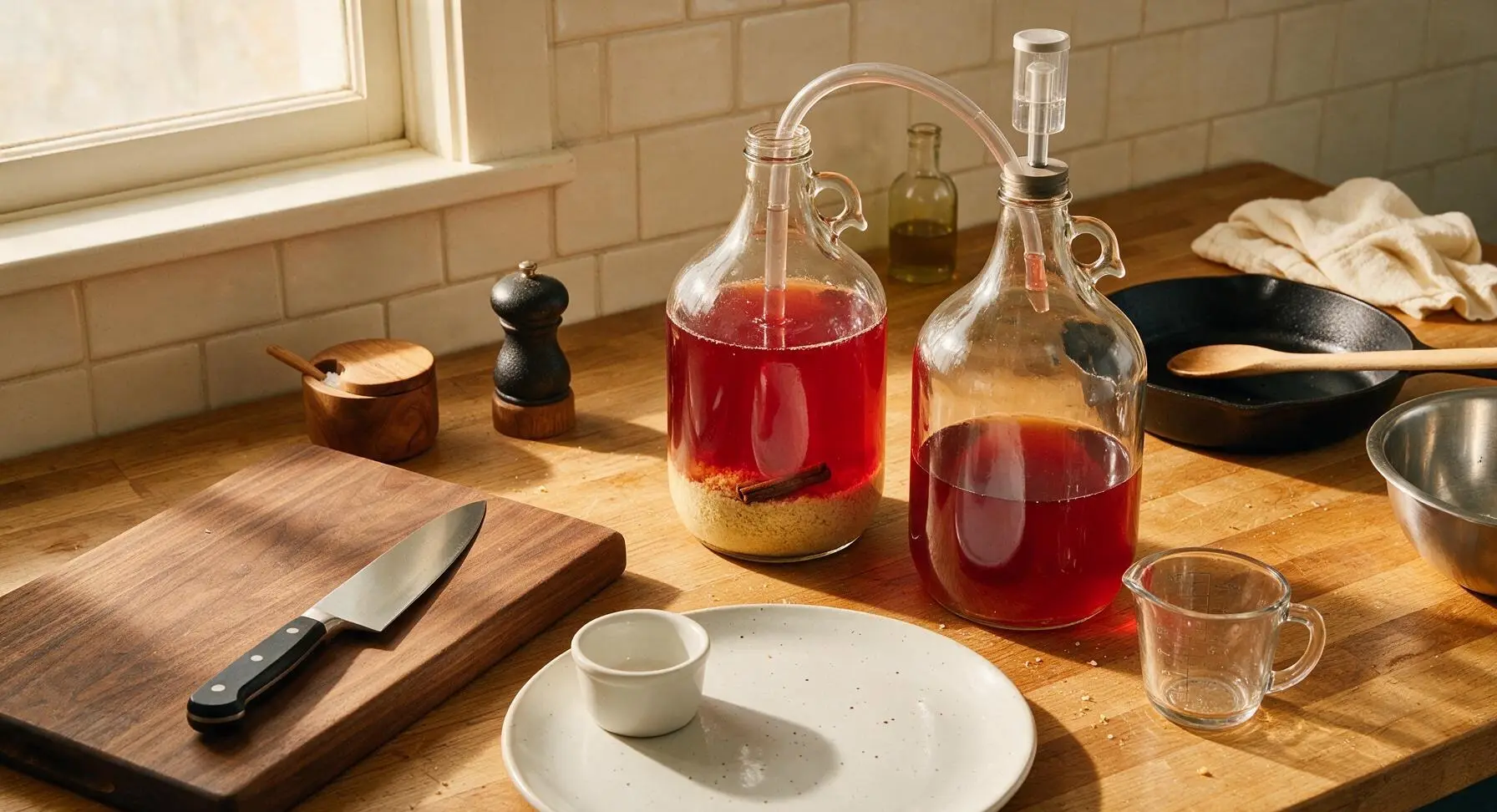
After 7 days of primary fermentation, sanitize the auto-siphon and second 1-gallon carboy. Use the siphon to transfer the bright, clear ruby Kriek off the thick layer of pale yeast sediment (trub) at the bottom of the first carboy, leaving the sediment, cinnamon stick, and any floating hop debris behind. Dissolve 1/4 cup raw cane sugar in 2 tablespoons of warm sanitized water, stir into the racked Kriek, then re-seal the second carboy with the airlock. Leave for 7 more days at the same 65-70°F temperature to deepen cherry flavor and build gentle carbonation.
Step 7
step7:Rack to Secondary
8

Bottle and Chill

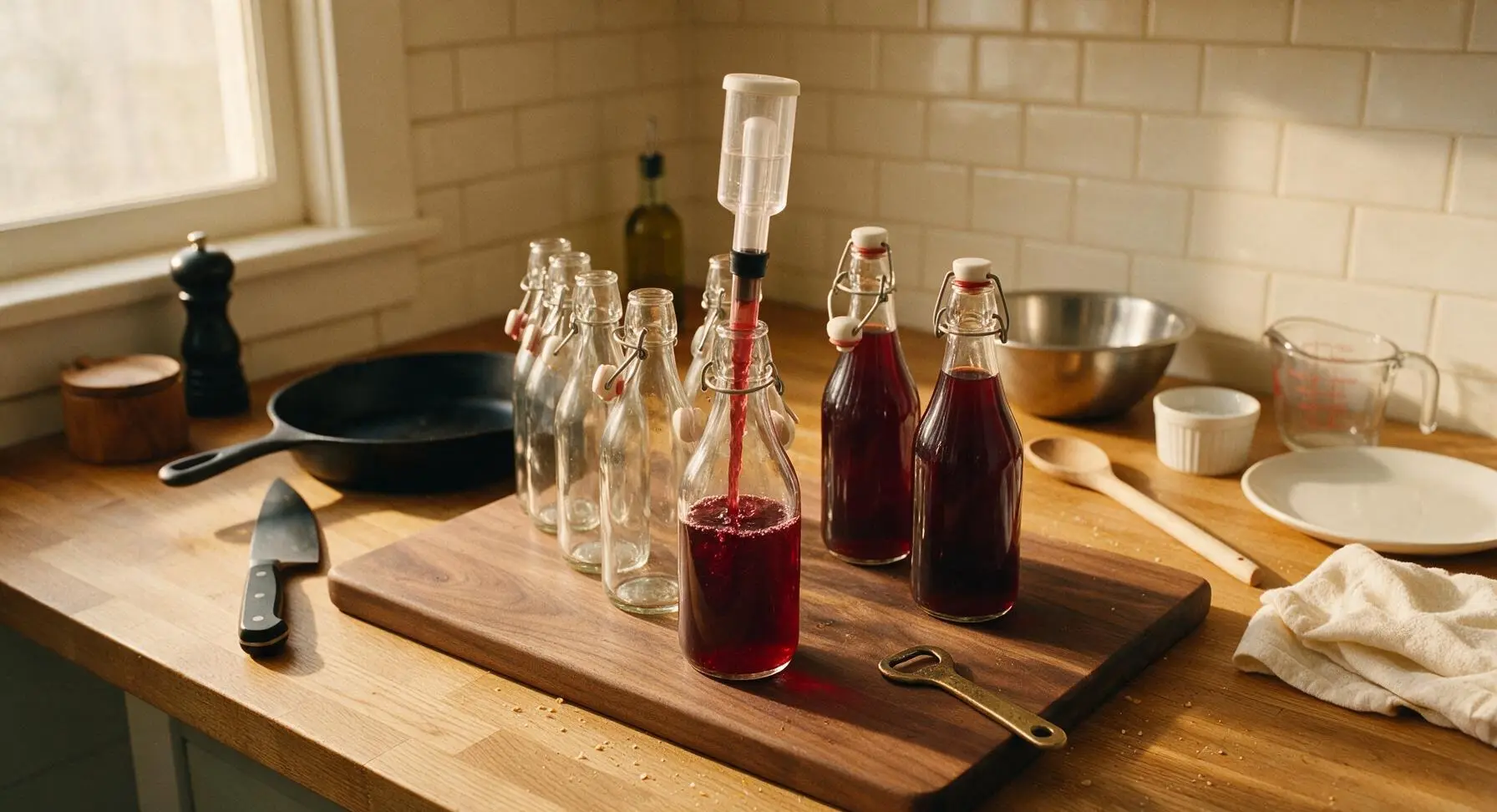
Sanitize all 8 swing-top glass bottles, then use the auto-siphon to transfer the finished Kriek into each bottle, leaving exactly 1 inch of headspace below the lid to allow for carbonation. Seal swing-top lids tightly, and store bottles upright in a cool dark spot for 3 days to build final carbonation. After 3 days, move all bottles to the refrigerator to chill for a minimum of 24 hours before serving.
Step 8
step8:Bottle and Chill

Tips

1.Use only fresh or frozen unsweetened sour (Morello) cherries for authentic Kriek flavor: sweet eating cherries will create a cloying, unbalanced drink, as they lack the bright tartness that cuts through malt sweetness and yeast funk. If fresh cherries are out of season, unsweetened frozen sour cherries work exactly as well with no flavor loss.
2.Never skip sanitizing every surface that touches cooled wort: even a tiny amount of residual soap, food debris, or wild bacteria will create off-flavors like vinegar, rotten fruit, or plastic that can ruin an entire batch. No-rinse brewing sanitizer is inexpensive, requires no rinsing, and eliminates 99% of common fermentation issues.
3.Pour chilled Kriek slowly down the side of the tulip glass, leaving the last 1/4 inch of liquid in the bottle: this leaves any fine settled yeast sediment at the bottom of the bottle, preventing a cloudy, bready aftertaste and keeping the beer bright, clear, and true to its cherry flavor.


✨ You May Also Like

Drinks & Beverages
🍜 Mexico

A bright, balanced tequila-based cocktail with zesty fresh lime, smooth orange liqueur, and a signature salt rim, perfect for warm summer sipping.

⏱️ 5 minutesDrinks & Beverages ★ 4.9
Drinks & Beverages
🍜 United States

Thick, creamy, nostalgic classic vanilla milkshake with a rich, smooth texture, topped with whipped cream and a cherry for cool, sweet refreshment.

⏱️ 5 minutesDrinks & Beverages ★ 4.7
Drinks & Beverages
🍜 United States

A bright, golden strong ale with fruity banana-clove notes, subtle hop spice, and soft carbonation, brewed in classic Trappist Tripel tradition.

⏱️ 2 hours aDrinks & Beverages ★ 4.5
Drinks & Beverages
🍜 United States

A frothy, nostalgic American soda fountain treat pairing bubbly cold root beer with creamy vanilla ice cream, perfect for cooling down at warm weather gatherings.

⏱️ 20 minuteDrinks & Beverages ★ 4.8
Drinks & Beverages
🍜 United States

Tart, funky, effervescent American Wild Ale is a complex fruity craft beer brewed with wild yeast, delivering bright, zesty notes perfect for warm-weather sipping.

⏱️ 2 hours aDrinks & Beverages ★ 4.4
Drinks & Beverages
🍜 United States

Bright, bubbly copycat of the iconic American caramel cola, balanced with citrus and warm spice, perfect for sipping ice-cold on hot days.

⏱️ 15 minuteDrinks & Beverages ★ 4.8

Kriek:Frequently Asked Questions

1.Can I use sweet cherries instead of fresh Morello sour cherries for this Kriek recipe? ▾
Stick to fresh Morello sour cherries for the most authentic, bright tart profile if you can. If you can’t find them, substitute 3 parts fresh sweet dark cherries mixed with 1 part unsweetened tart cherry juice concentrate to match the required sourness. Skip canned cherries packed in heavy syrup—they add cloying, unbalanced sweetness that ruins fermentation and mutes Kriek’s signature bright tang.
2.Can I substitute dry pale malt extract for the light pale liquid malt extract in this recipe? ▾
Yes, you can substitute dry light pale malt extract at a ratio of 1 pound dry extract for every 1.2 pounds of liquid extract called for, to match the sugar content and soft malt profile. Stick to very pale, neutral dry malt extract—darker crystal or roasted extracts add caramel or toasty notes that overpower the bright cherry and clean fermented flavor of traditional Kriek.
3.Why does the recipe call for Hallertau noble hops specifically, instead of other common hop varieties? ▾
Hallertau noble hops have a mild, subtly herbal, soft floral bitterness that doesn’t overpower the delicate sour cherry and gentle fermented notes that define traditional Kriek. Bolder, high-alpha hops like Cascade or Citra add sharp pine or citrus flavors that clash with the fruit and lambic yeast profile, so stick to this mild variety for authentic, balanced results.
4.Can I use regular tap water instead of filtered cold water for this recipe? ▾
It’s best to use filtered cold water, because standard tap water often contains chlorine or chloramine that reacts with yeast and hops to create plastic-like, medicinal off-flavors in finished Kriek. If you only have tap water, leave it uncovered on the counter for 24 hours to let chlorine dissipate, or add a tiny amount of brewing-grade Campden tablet to neutralize stubborn chloramine.
5.How long does this Kriek need to ferment before it’s ready to drink? ▾
Primary fermentation with the recipe’s Belgian lambic-style brewing yeast takes 7 to 10 days at a steady 65–70°F, after which you’ll add pitted cherries for a 2–3 week secondary ferment to extract deep, bright fruit flavor. After bottling, let it condition for another 2 weeks to build that signature soft effervescence before chilling and serving.
6.Do I need specialized professional homebrewing equipment to make this Kriek at home? ▾
You don’t need fancy professional brewing gear, but a few low-cost basics are non-negotiable: a food-grade 5-gallon fermentation bucket with an airlock, a siphon for racking, no-rinse brewing sanitizer, and swing-top glass bottles for carbonation. All of these are available at local homebrew shops, and you can reuse them for future beer, cider, or even kombucha batches.
7.Do I need to pit the sour cherries before adding them to the fermentation vessel? ▾
Yes, always pit your sour cherries before adding them to secondary fermentation. Cherry pits contain amygdalin, which breaks down into harsh, bitter almond-like off-flavors (and trace amounts of cyanide) when steeped in fermenting beer for weeks. A cheap handheld cherry pitter makes this job quick, and you’ll skip unpleasant, astringent bitter notes in your finished Kriek.
8.Can I add extra sour cherries for a more intense fruit flavor, or will that ruin fermentation? ▾
You can add up to 1 extra pound of pitted sour cherries per 5-gallon batch without ruining fermentation, as long as you freeze and thaw them first to break down cell walls for better flavor extraction. Adding more than that introduces too much extra sugar, leading to over-carbonation, thin body, or sharp, unbalanced tartness that overwhelms the soft malt and hop notes.
9.What’s the best way to store finished Kriek to keep it fresh, tart, and bubbly? ▾
Store fully conditioned, bottled Kriek in a cool, dark spot like a basement or closet away from direct sunlight and big temperature swings, which can cause off-flavors or over-carbonation. Once chilled, it will stay crisp, tart, and perfectly bubbly for up to 6 months, though it tastes best within the first 3 months for the brightest, freshest cherry flavor.

Comments (11)

2 days ago

OMG I’ve been wanting to make traditional kriek forever and this recipe was so straightforward! The sour cherry punch is perfectly balanced, not too tart, not too sweet. Brought a growler to my friend’s potluck last weekend and everyone was begging for the recipe. Total game changer for homebrewers who don’t want to mess with super fancy equipment.

1 week ago

Tried this last month for our family BBQ and it was a HIT. My dad who swears only imported Belgian kriek is good said this was just as good as the stuff he paid $12 a bottle for on his trip to Brussels. Will absolutely be making a double batch next time, SO good.

just now

Okay, heads up for new brewers: make sure you pit all your cherries properly! I missed a few pits and got a tiny bit of that bitter almond edge, but it was still totally drinkable. Super excited to tweak this to my taste next batch, maybe add a little extra vanilla?

2 hours ago

Wait, quick question! I don’t have a dedicated fermentation chamber, can I still make this? My apartment stays a pretty consistent 68-70 degrees year round, will that mess up the souring process?

30 minutes ago

Great question! That consistent temperature range is actually perfect for this recipe — you don’t need a fancy fermentation chamber as long as you avoid big temperature swings above 75 or below 60. Just make sure to keep it out of direct sunlight and you’ll be golden!

yesterday

Made this for my husband’s birthday since he’s obsessed with sour beers, and he said it’s better than any of the craft brewery versions we’ve bought! Even my teen who hates beer tried a sip and said it tasted like fancy cherry soda (don’t worry, I didn’t let her have more than a taste lmao).

5 minutes ago

That’s such a fun birthday idea! My partner’s birthday is next month and I’ve been waffling on what to make him — this is definitely going on the list now, thanks for the inspo!

3 days ago

So I messed up and added the cherries a week earlier than the recipe said, is my whole batch ruined? It’s been bubbling fine but I’m panicking a little because I spent like $30 on good sour cherries for this.

2 days ago

No need to panic! Adding the cherries a little early won’t ruin the batch, you might just get a slightly brighter, more forward cherry flavor instead of the deeper, more integrated fruit note the traditional timeline gives. Just taste it every few days once you hit the original recommended racking time to make sure it doesn’t get too tart, and you’ll be all set.

1 week ago

If you’re in Georgia, hit up the farmers markets in late June for the best sour cherries! I used foraged wild cherries from my parents’ farm north of Atlanta and the depth of flavor is unreal. This recipe is a new staple in my summer brew rotation.

5 days ago

Oh thanks for the tip! I’m in Atlanta and I’ve been struggling to find good sour cherries that aren’t the sad grocery store ones. I’ll definitely be hitting up the markets next June to make a batch!

2 weeks ago

Quick hack: I used frozen pitted sour cherries from the grocery store because fresh ones were out of season, and it still turned out amazing! Saved me so much time pitting, I didn’t notice a flavor difference at all.

1 week ago

Love that hack! Frozen cherries work perfectly for this recipe since they’re picked and frozen at peak ripeness, and the freeze-thaw cycle actually helps break down the fruit to release more juice and flavor during fermentation. Great call!

5 days ago

Wait, how long does this keep for once it’s bottled? I want to make a big batch for our annual fall camping trip but I’m worried it’ll go bad or get too sour if I make it too early.

3 days ago

I bottled a batch of this last year and kept it in a cool dark closet for 6 months, it was actually even better than when I first bottled it! The sourness mellowed a little and the cherry flavor got smoother.

2 days ago

That’s spot on! When bottled and stored correctly (cool, dark place, consistent temperature), this kriek will keep for up to 8 months, and many people find the flavor improves with 1-3 months of bottle aging. Just make sure you use proper pressure-rated bottles to avoid any exploding bottle mishaps!

1 week ago

Just pulled my first batch out of the fermenter yesterday and OH MY GOD it’s so good. I added a tiny bit of orange zest during secondary fermentation and it adds the best little bright citrus kick to cut the cherry tartness. 10/10, would recommend that tweak.

5 days ago

Wait, how much orange zest did you add? I love that idea, I’m a sucker for cherry and orange flavor combos but I don’t want to add so much it tastes like a hard seltzer or something lol.

3 days ago

I only added the zest of one small navel orange for a 5 gallon batch! It’s super subtle, just a little background zing, no overpowering citrus flavor at all. I’d start with that and add more next batch if you want it stronger.

3 days ago

Okay so I followed the recipe exactly but my final beer is way more carbonated than I expected, like almost gushes when I open a bottle. Did I do something wrong? It tastes great, just way fizzier than the kriek I’ve had at bars.

2 days ago

That happened to me my first time making this too! I accidentally added too much priming sugar when I was bottling. Next time cut the priming sugar by about a quarter if you like a softer carbonation level, that worked perfectly for me.

yesterday

That’s the most common reason for over-carbonation! It can also happen if you bottle a little too early before fermentation is fully finished, so always double check your final gravity reading before bottling to make sure it’s stable for 2-3 days in a row. If your current bottles are extra fizzy, just open them really slowly over a sink and chill them extra cold before opening to cut down on the gushing!



