
Lambic
intro
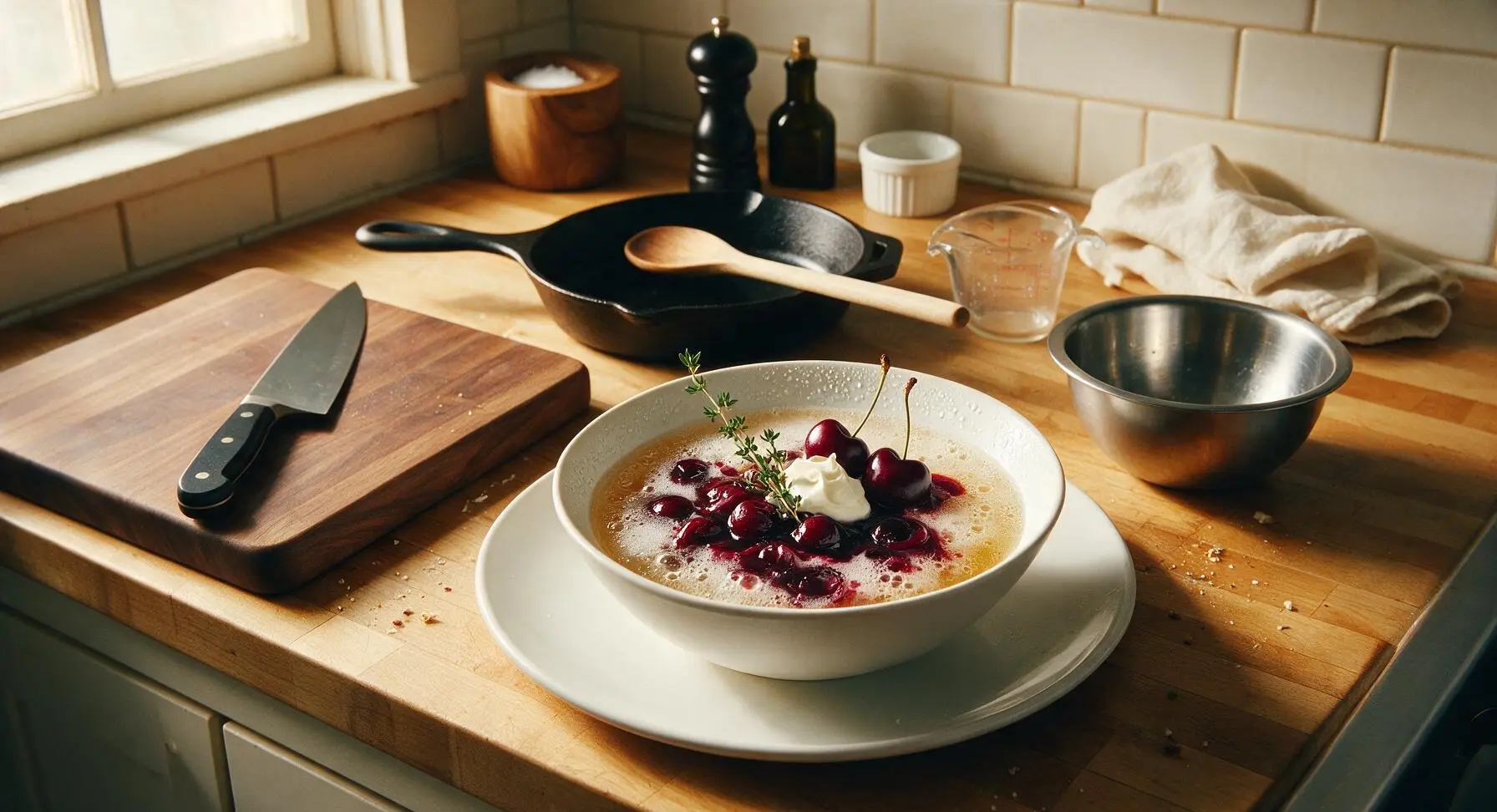
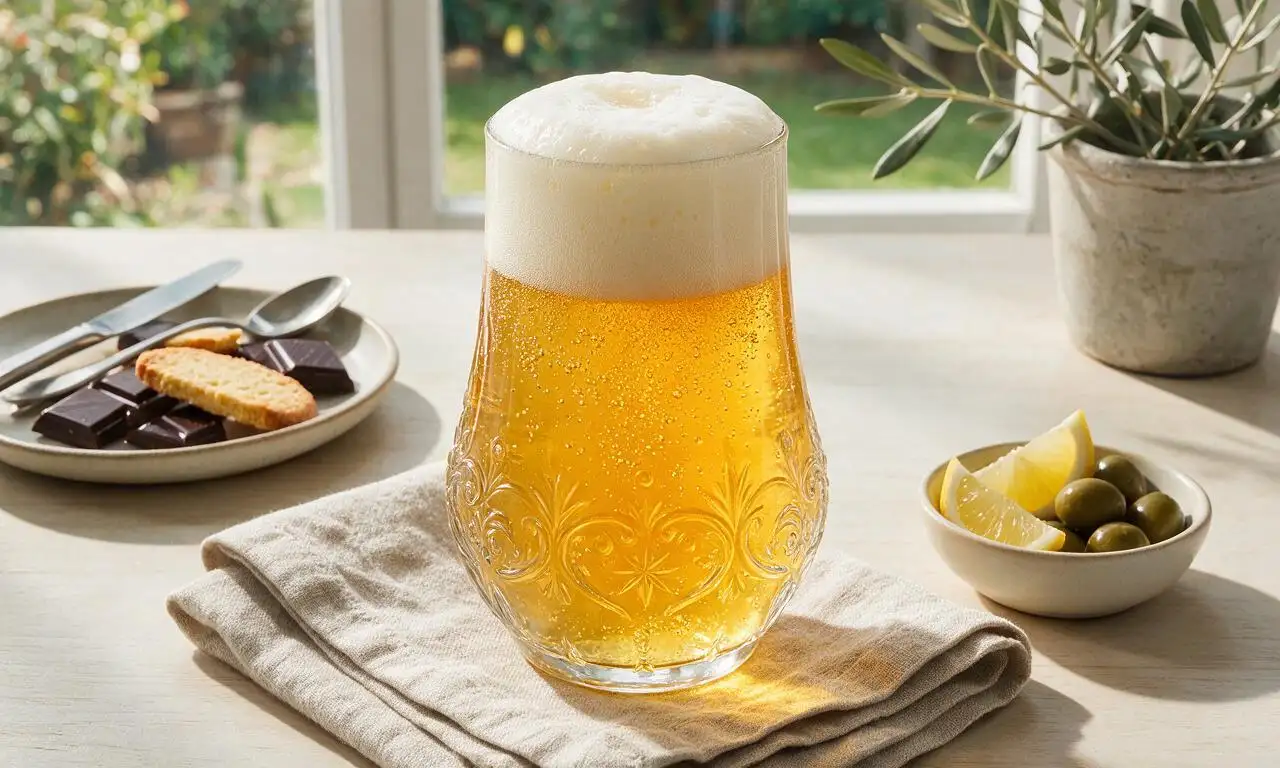
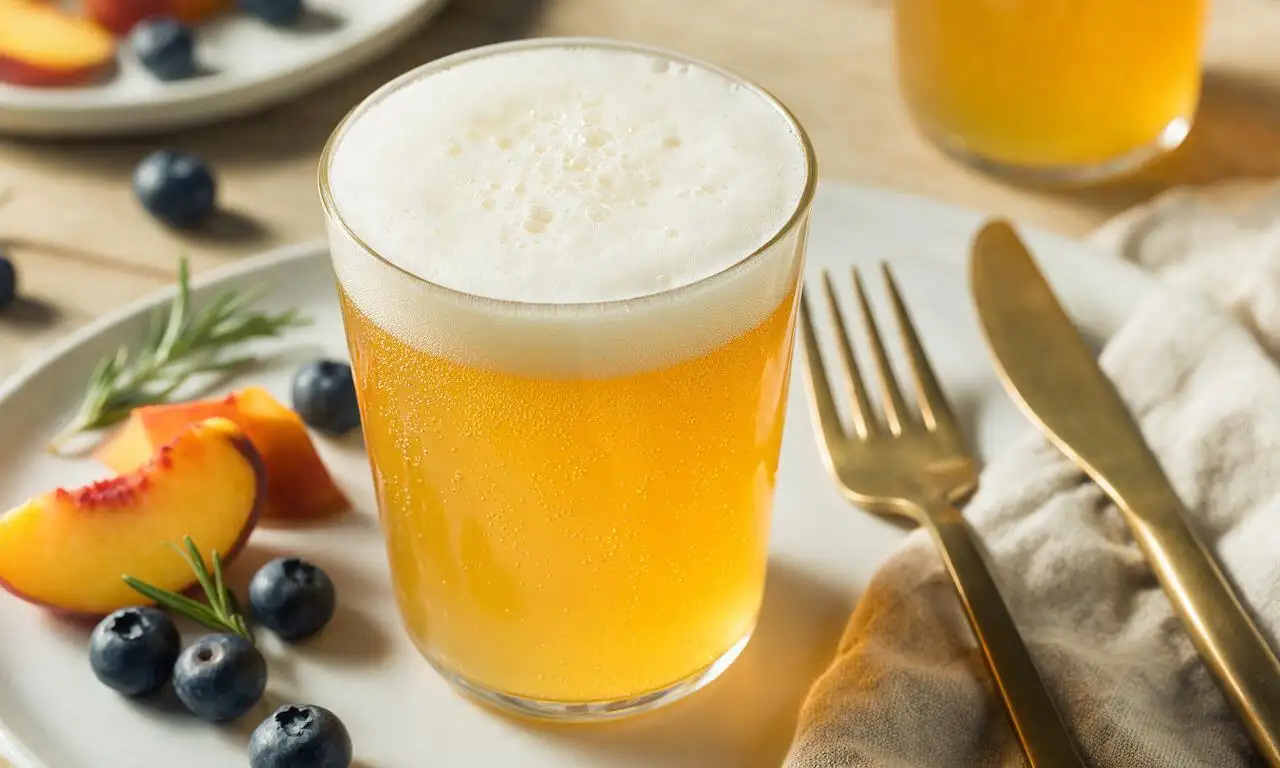
Tart, effervescent, cherry-kissed lambic is a funky sour wheat beer with a dry, bright finish, perfectly chilled for sipping alongside smoky grilled food on warm summer days.
Ingredients
Steps
Sanitize Brewing Gear
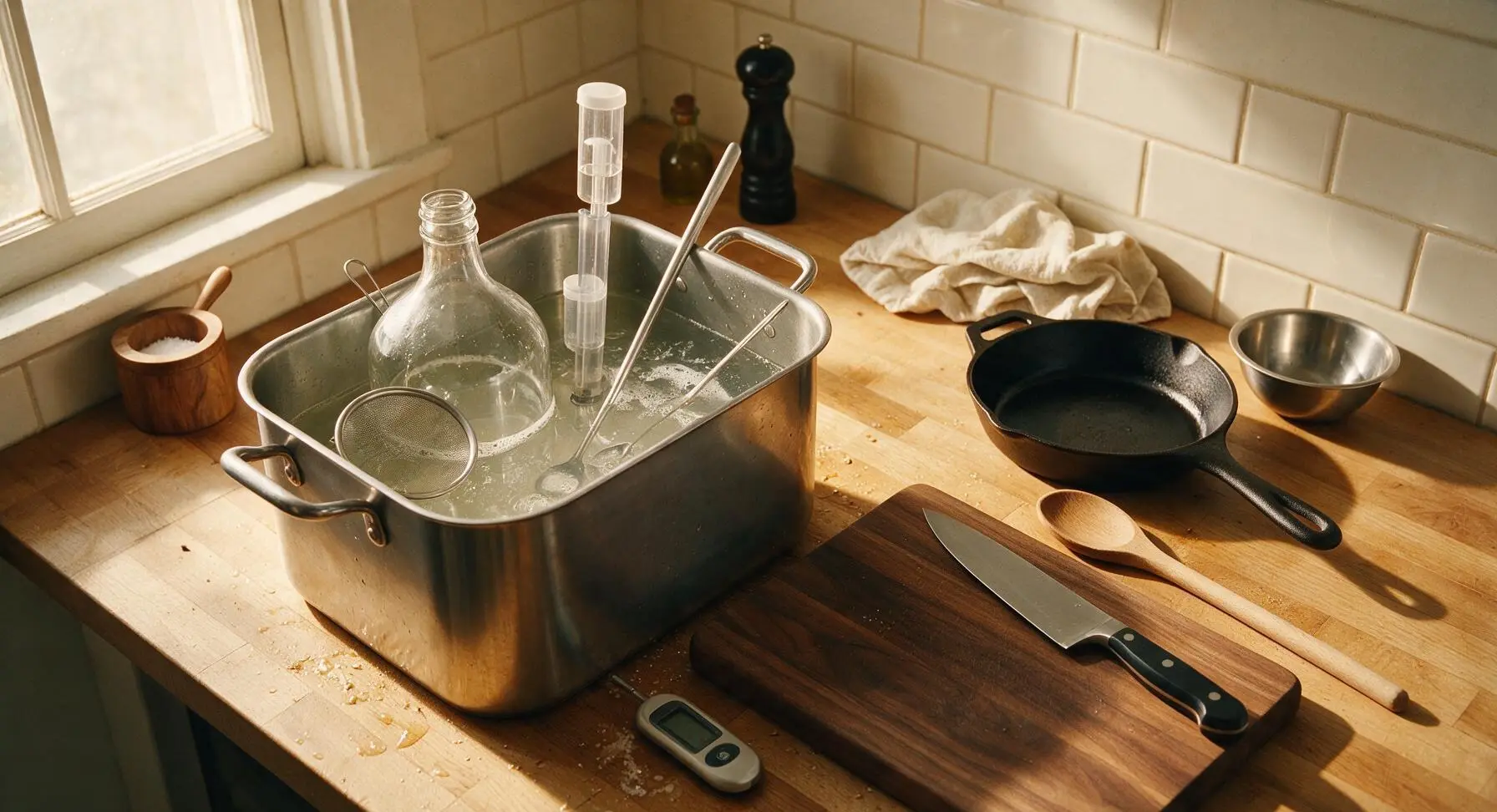
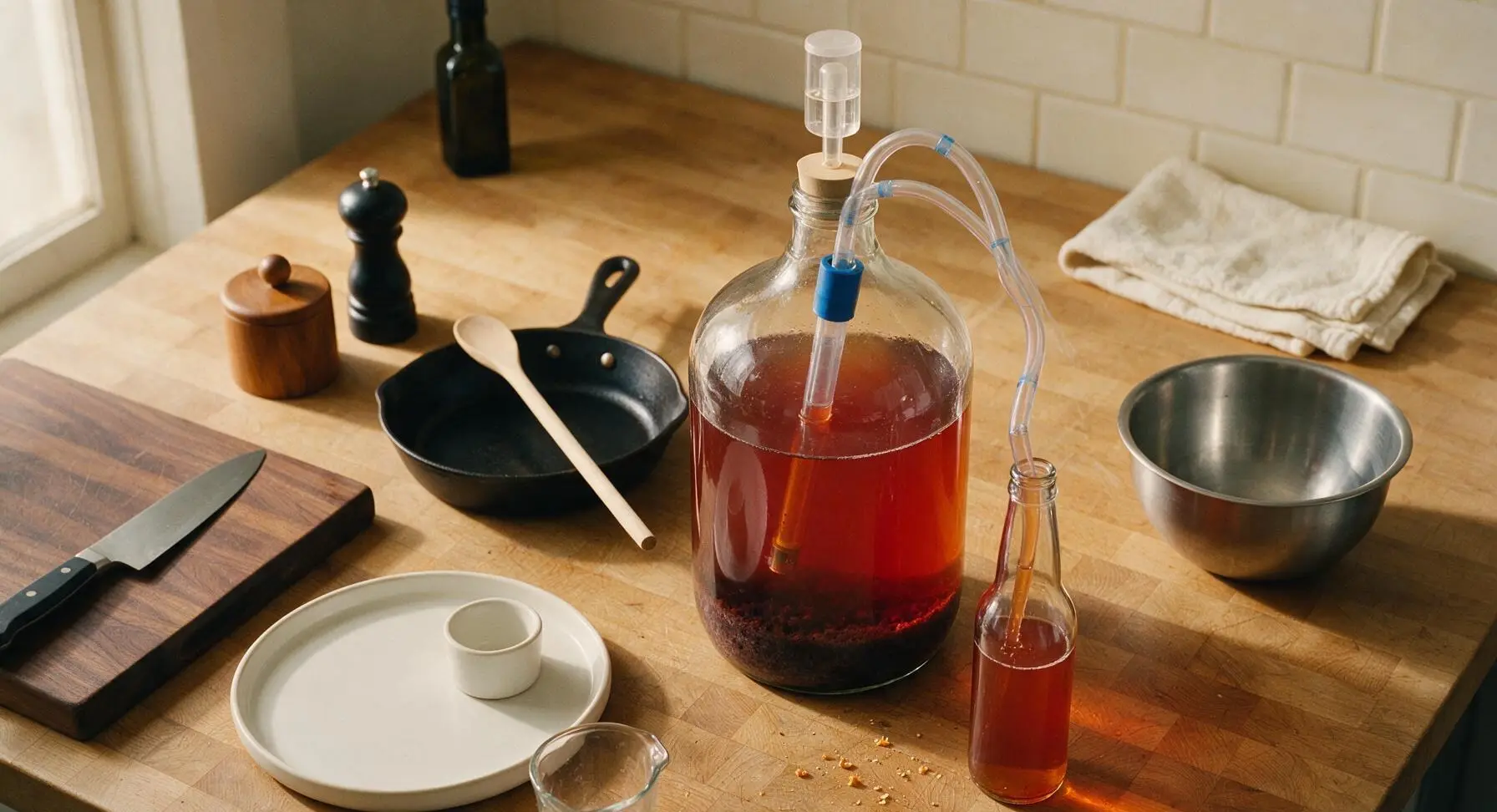
First, mix no-rinse brewery sanitizer according to package directions in the stainless steel brew pot. Submerge all tools that will contact cooled wort (stirring spoon, thermometer, fine-mesh strainer, glass carboy, auto-siphon, airlock, beer bottles) in the sanitizer solution for 1 full minute, then set items on the clean counter surface to air dry completely. Never wipe sanitized surfaces with a cloth, as this introduces unwanted bacteria, and ensure no residual sanitizer pools in tool crevices.
Mash the Grain Bill
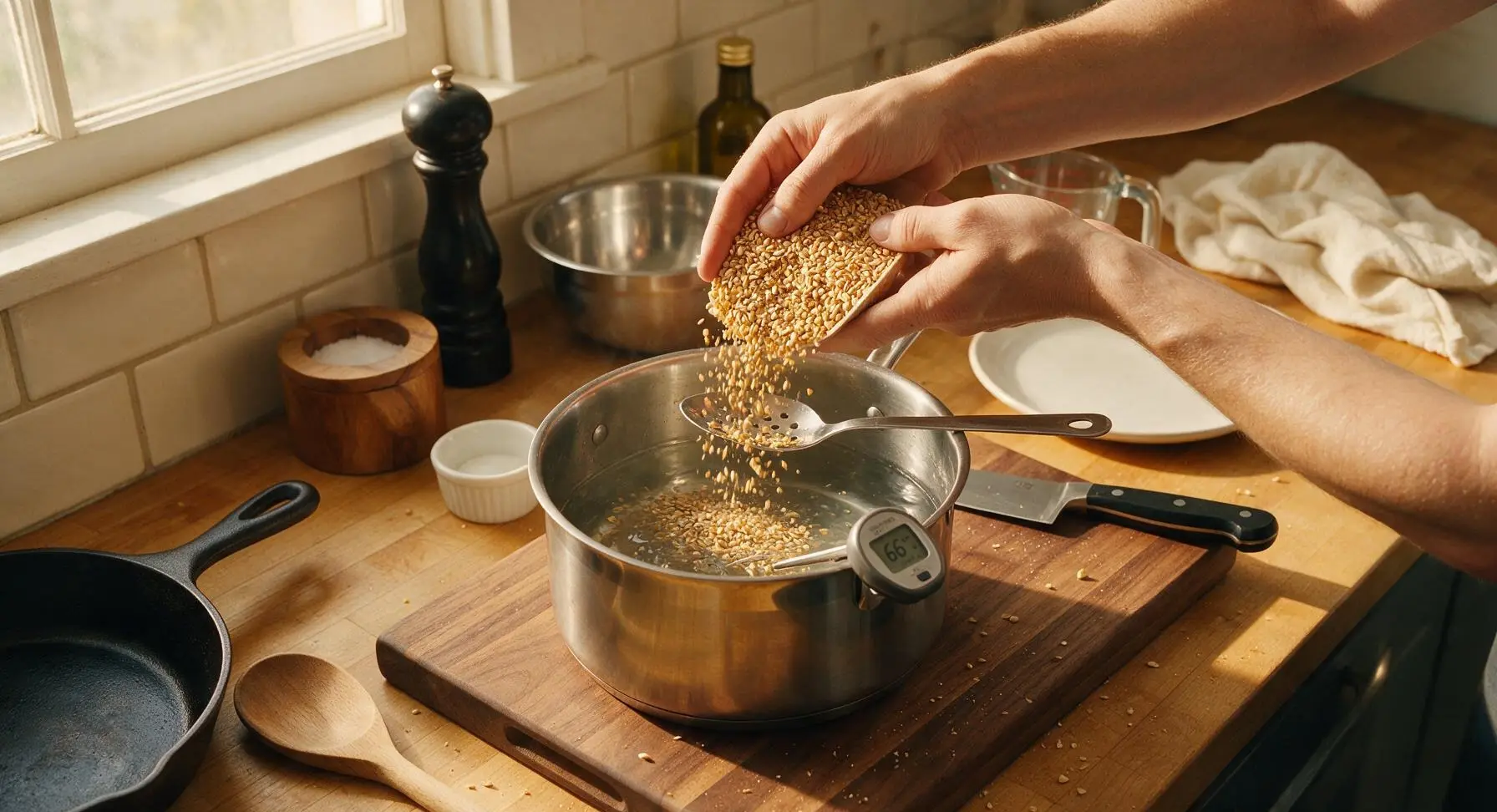
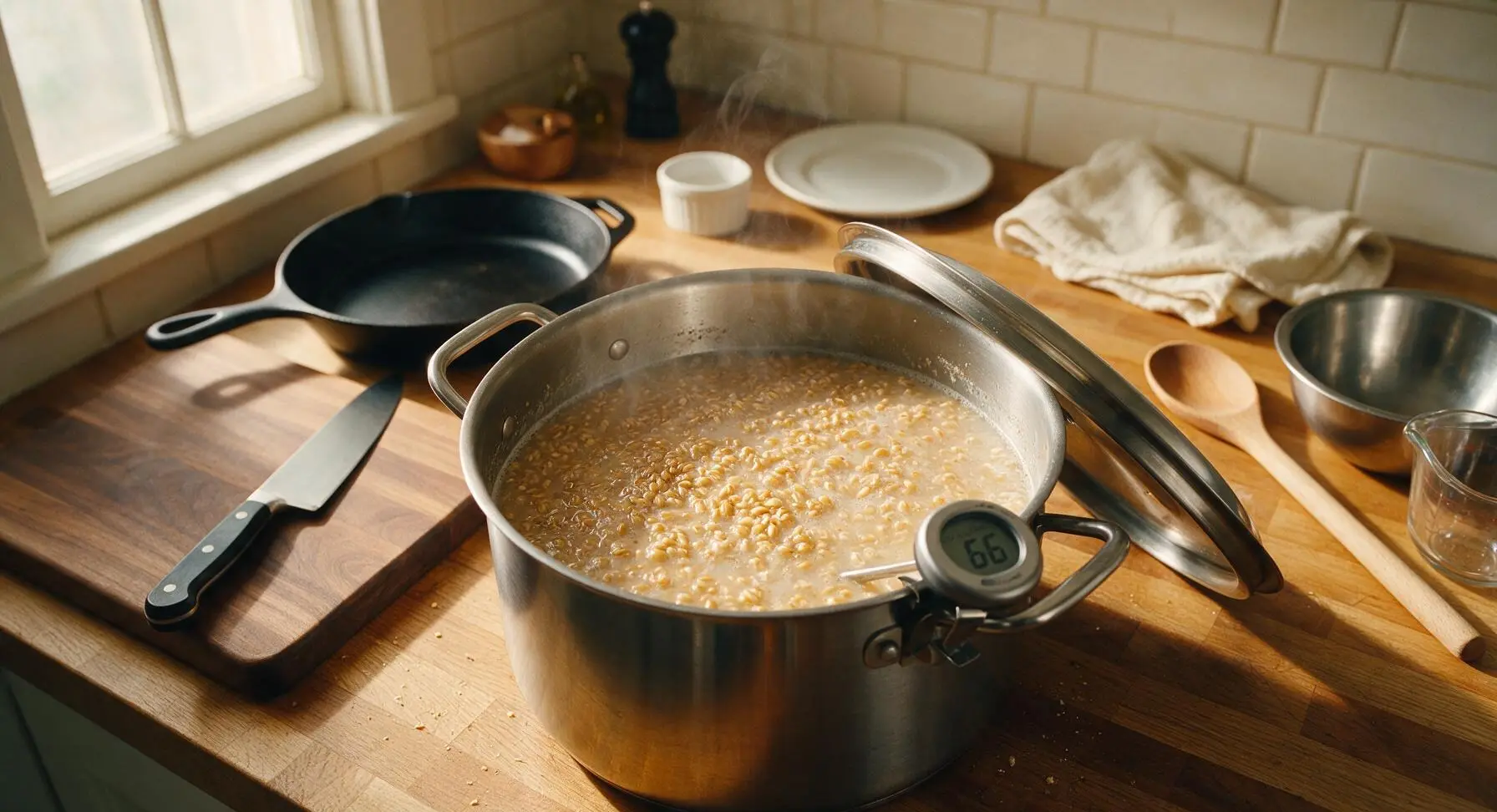
Pour 2.5L of filtered water into the sanitized brew pot, and heat to 66°C (151°F), monitoring temperature with the clip-on digital thermometer. Add crushed pilsner malt and unmalted wheat, stirring thoroughly with the slotted stainless steel spoon to eliminate dry clumps. Hold the temperature steady at 66°C for 60 minutes, covering the pot with its lid and adjusting stovetop heat as needed. During this time, grain enzymes convert starches to fermentable sugar, creating a sweet, cloudy liquid called wort.
Strain the Sweet Wort
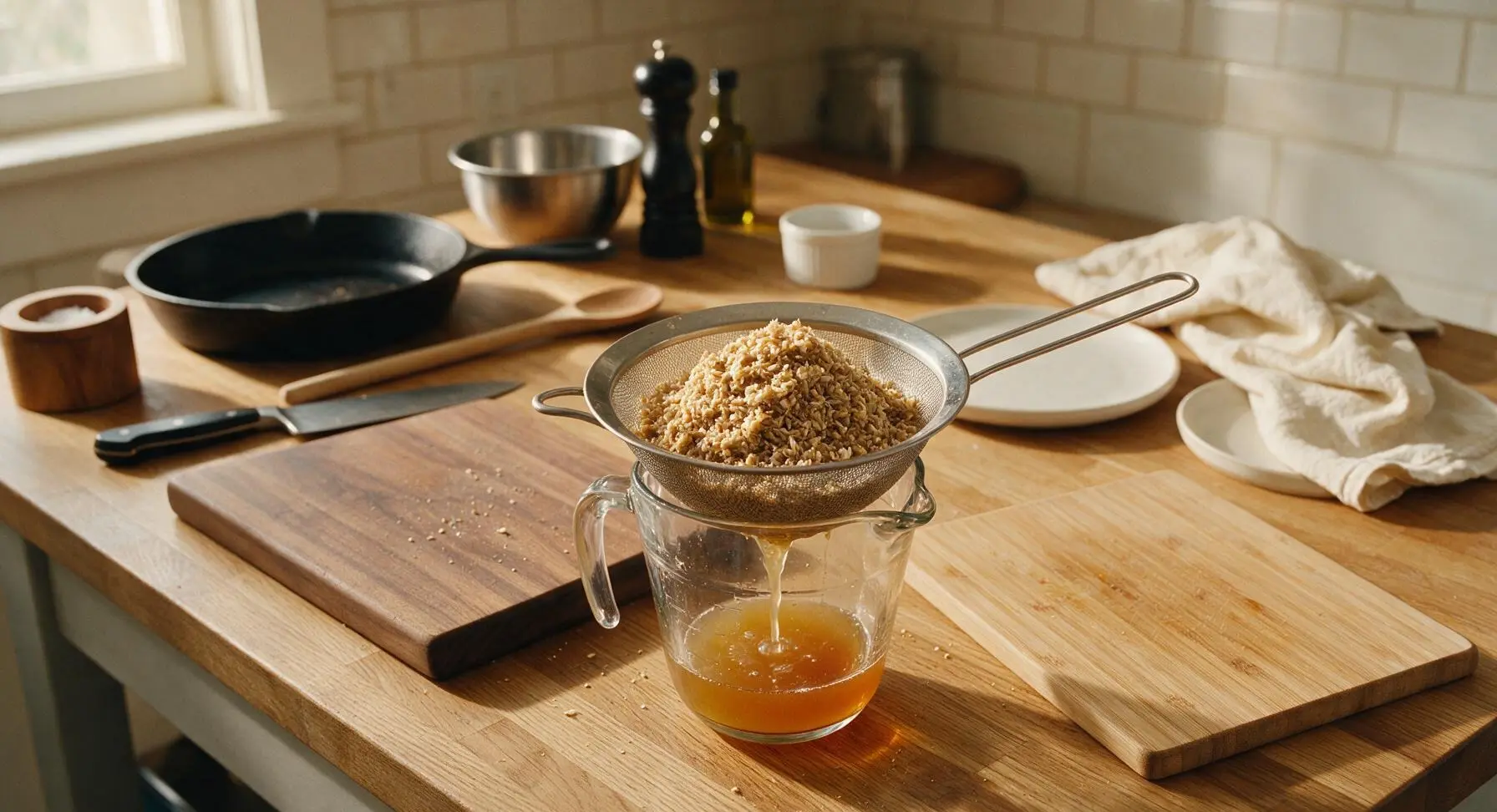
After the 60-minute mash, set the fine-mesh stainless steel strainer over the glass measuring cup. Slowly pour the mash through the strainer to separate the sweet wort from the spent grain solids. Pour the remaining 1.5L of 77°C (170°F) filtered water over the spent grains in the strainer to rinse residual sugar (a step called sparging), collecting all drained liquid in the measuring cup. Discard the spent grains once fully drained.
Boil Wort With Hops
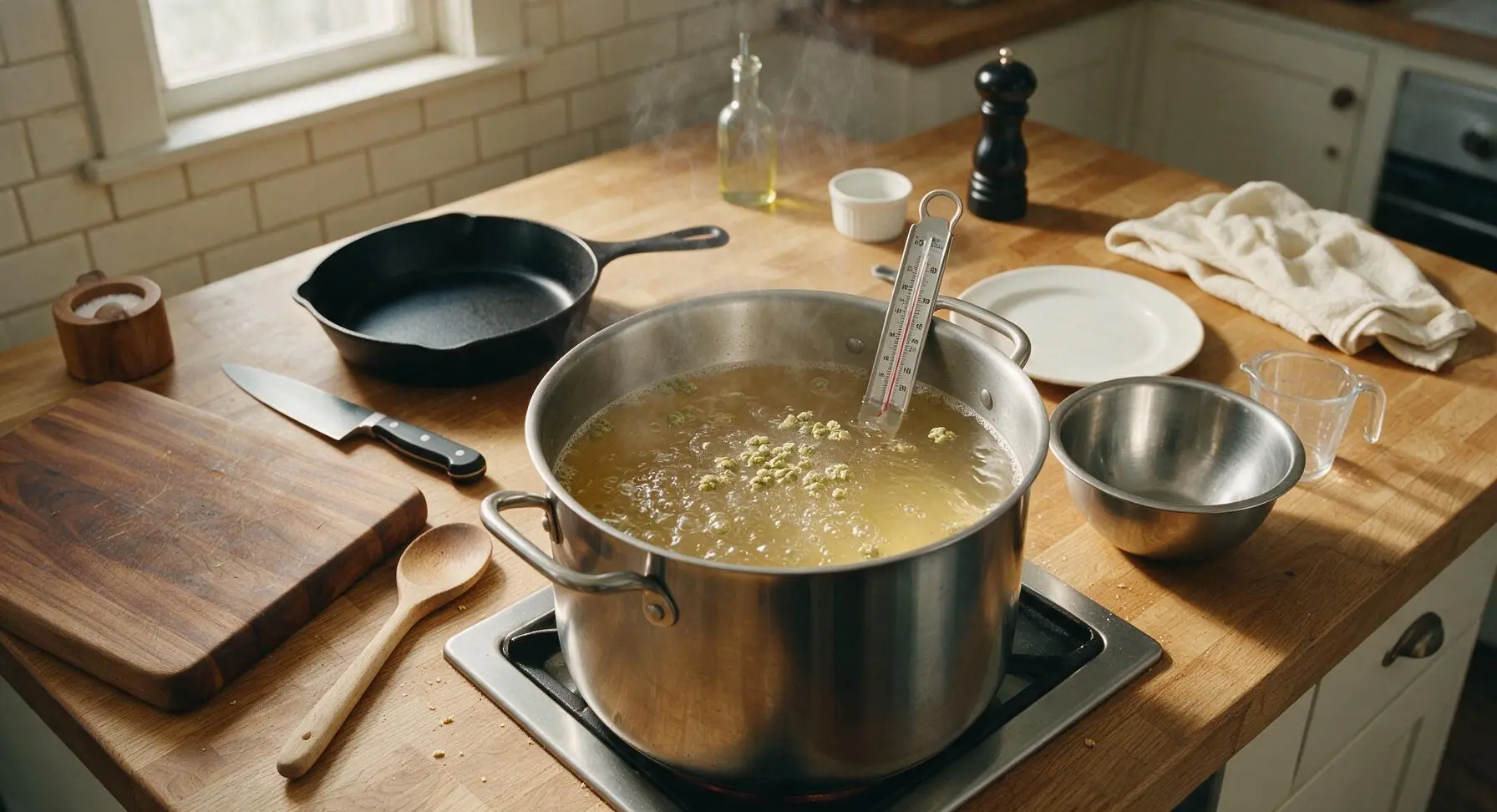
Pour the collected strained wort back into the clean brew pot, and bring to a gentle, rolling boil over medium-high heat. Once a steady boil is reached, add the aged Saaz hops, stirring to submerge them. Maintain a steady rolling boil for 90 minutes, leaving the pot lid slightly ajar to allow unwanted volatile compounds to escape. Adjust heat as needed to prevent boilovers; the wort will darken slightly to a pale straw-gold color as it boils.
Cool Wort Quickly
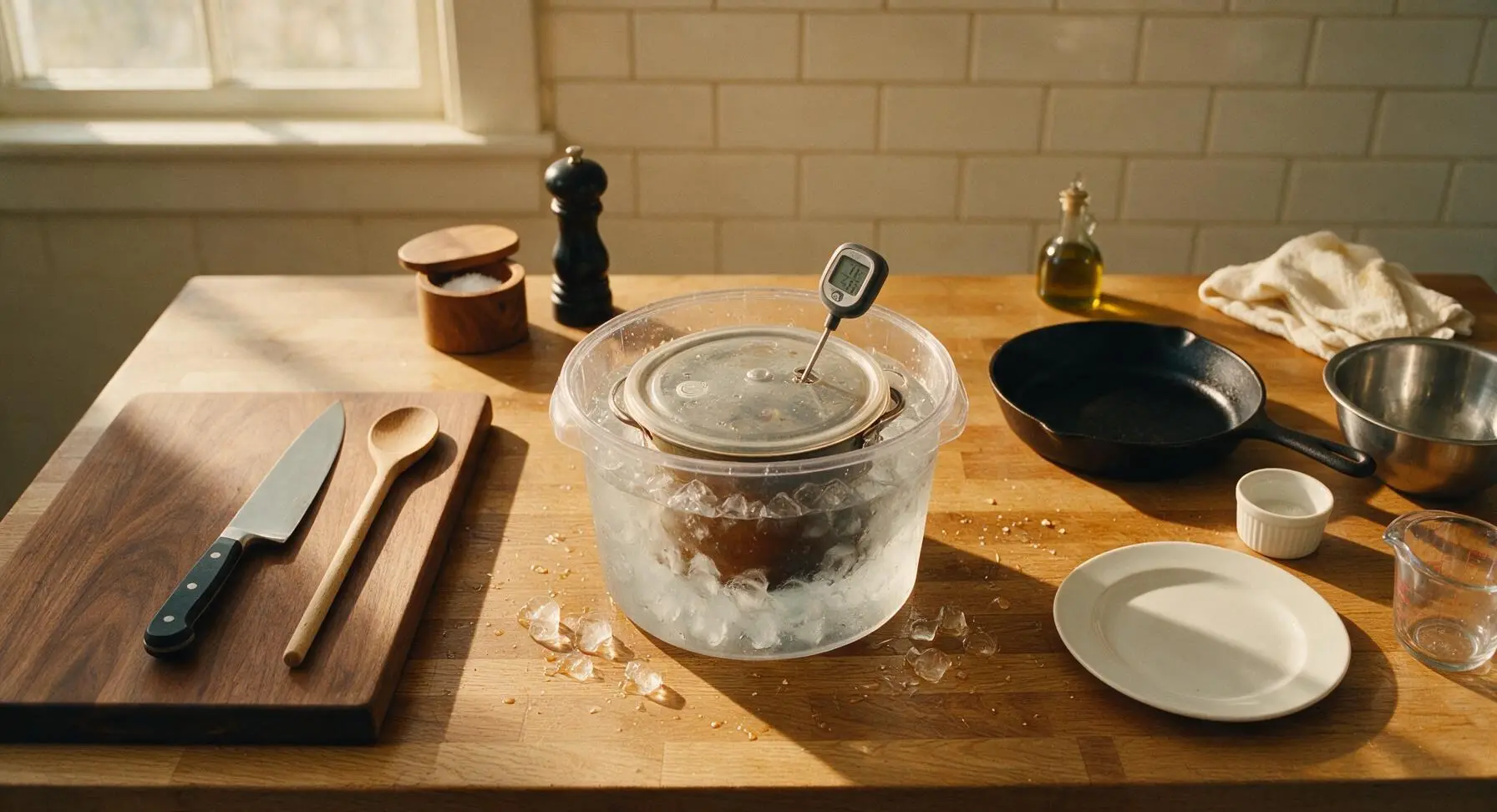
After the 90-minute boil, immediately remove the pot from heat. Seal the pot tightly with its lid, then set the pot inside the large clear plastic ice tub filled with ice water (placed on the center of the counter) to cool the wort to 21°C (70°F) within 30 minutes maximum. Rapid cooling prevents unwanted bacterial growth and reduces harsh off-flavors from sediment. Do not open the pot lid while cooling to avoid airborne contamination.
Transfer to Carboy
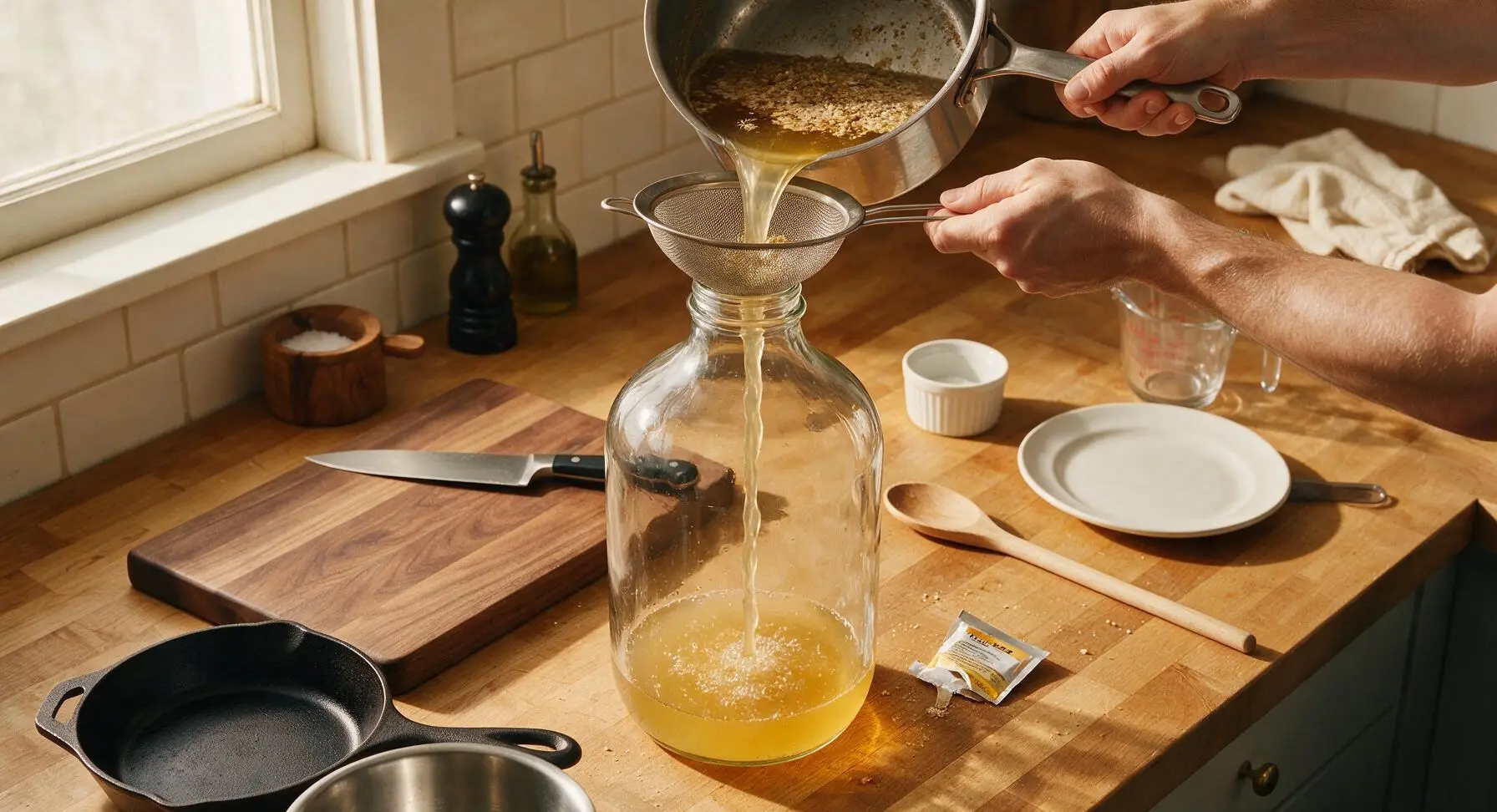
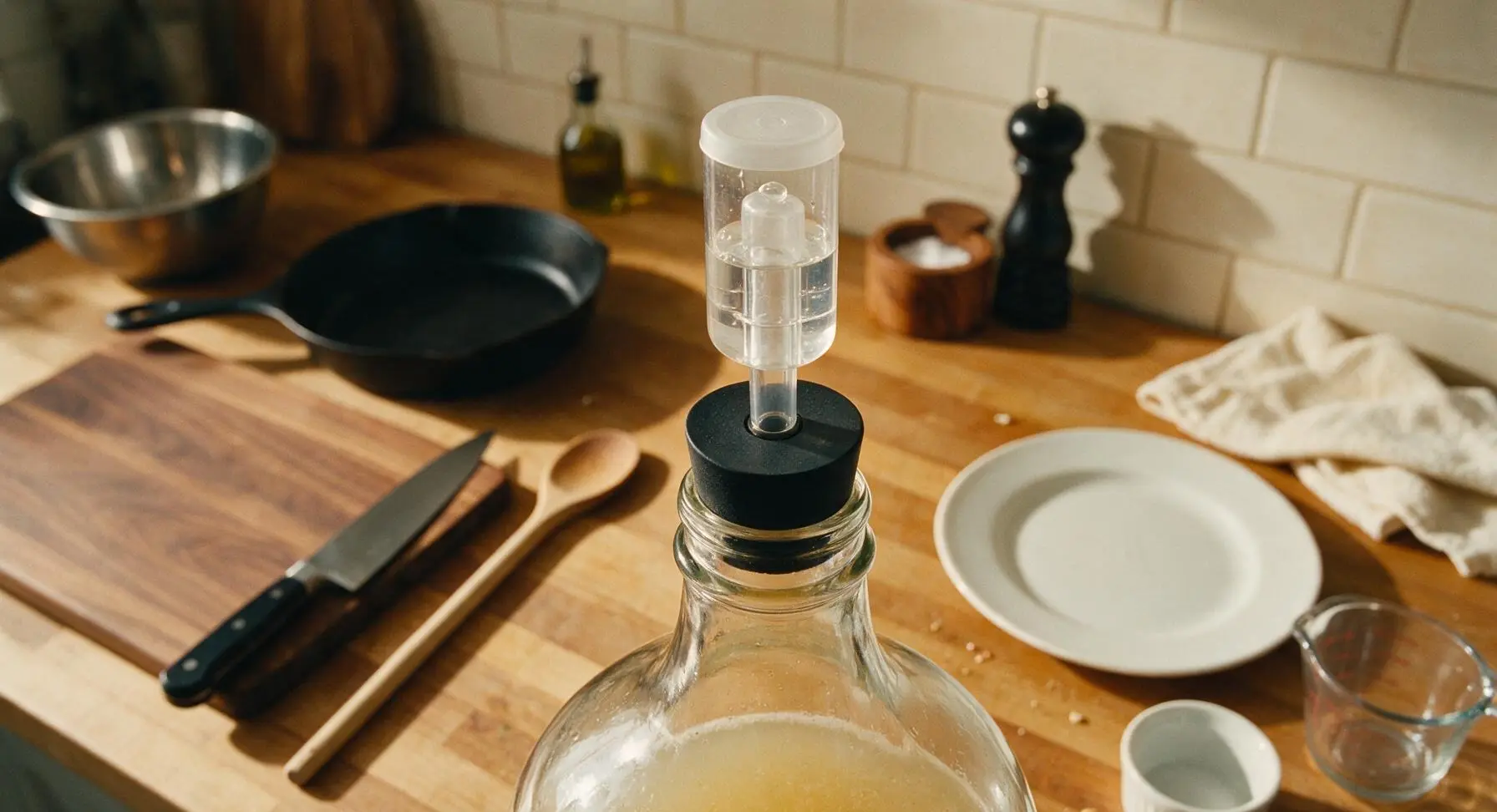
Once the wort reaches exactly 21°C (70°F), remove the pot from the ice bath. Carefully pour the cooled wort through the sanitized fine-mesh strainer into the sanitized glass carboy, leaving any thick, protein-rich sediment (called trub) at the bottom of the pot. Sprinkle the entire packet of mixed lambic yeast culture directly onto the wort surface; do not stir. Seal the carboy neck with a sanitized rubber stopper, then fit the airlock (half-filled with sanitizer solution) into the stopper hole.
Add Sour Cherries
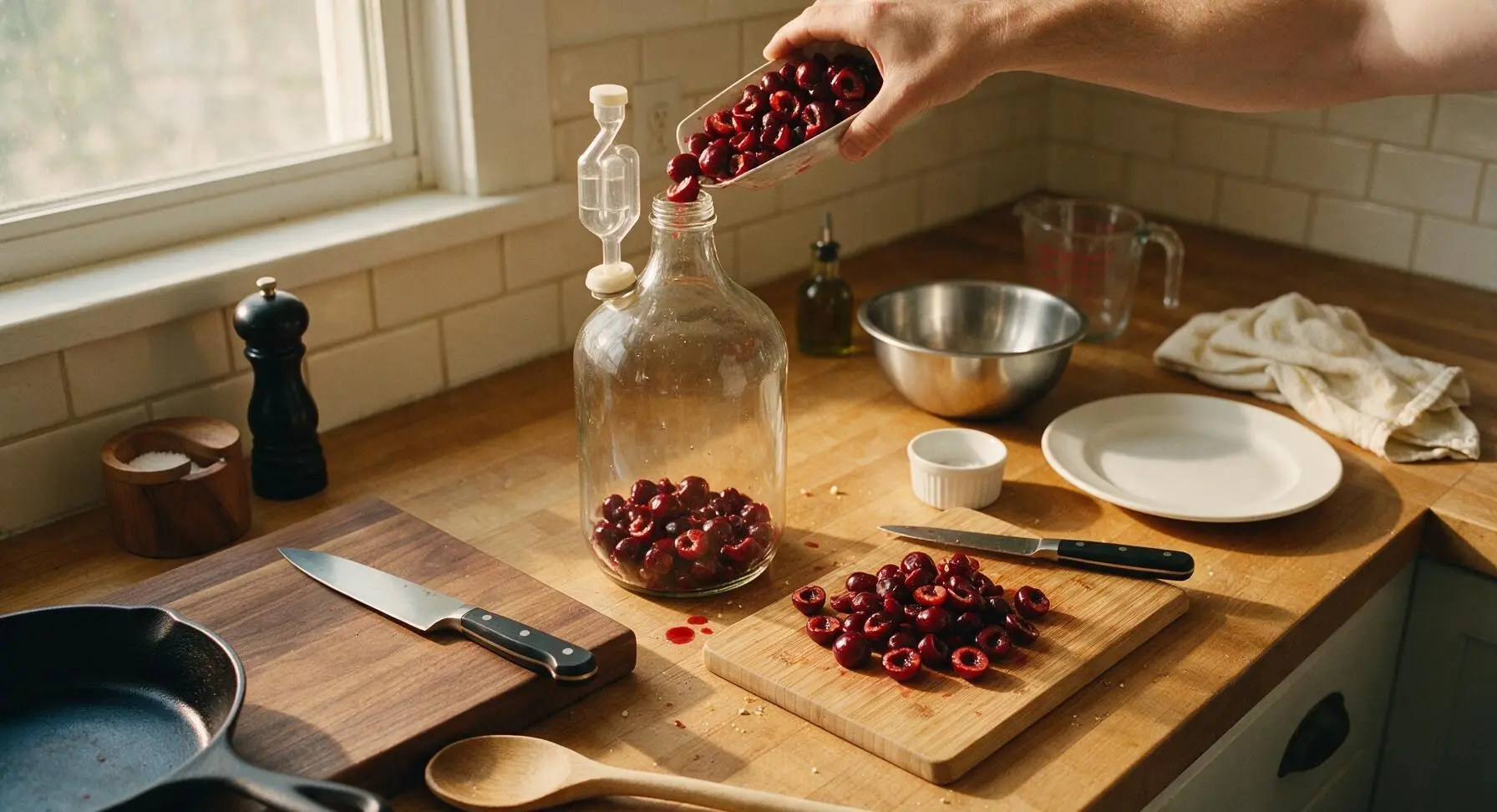
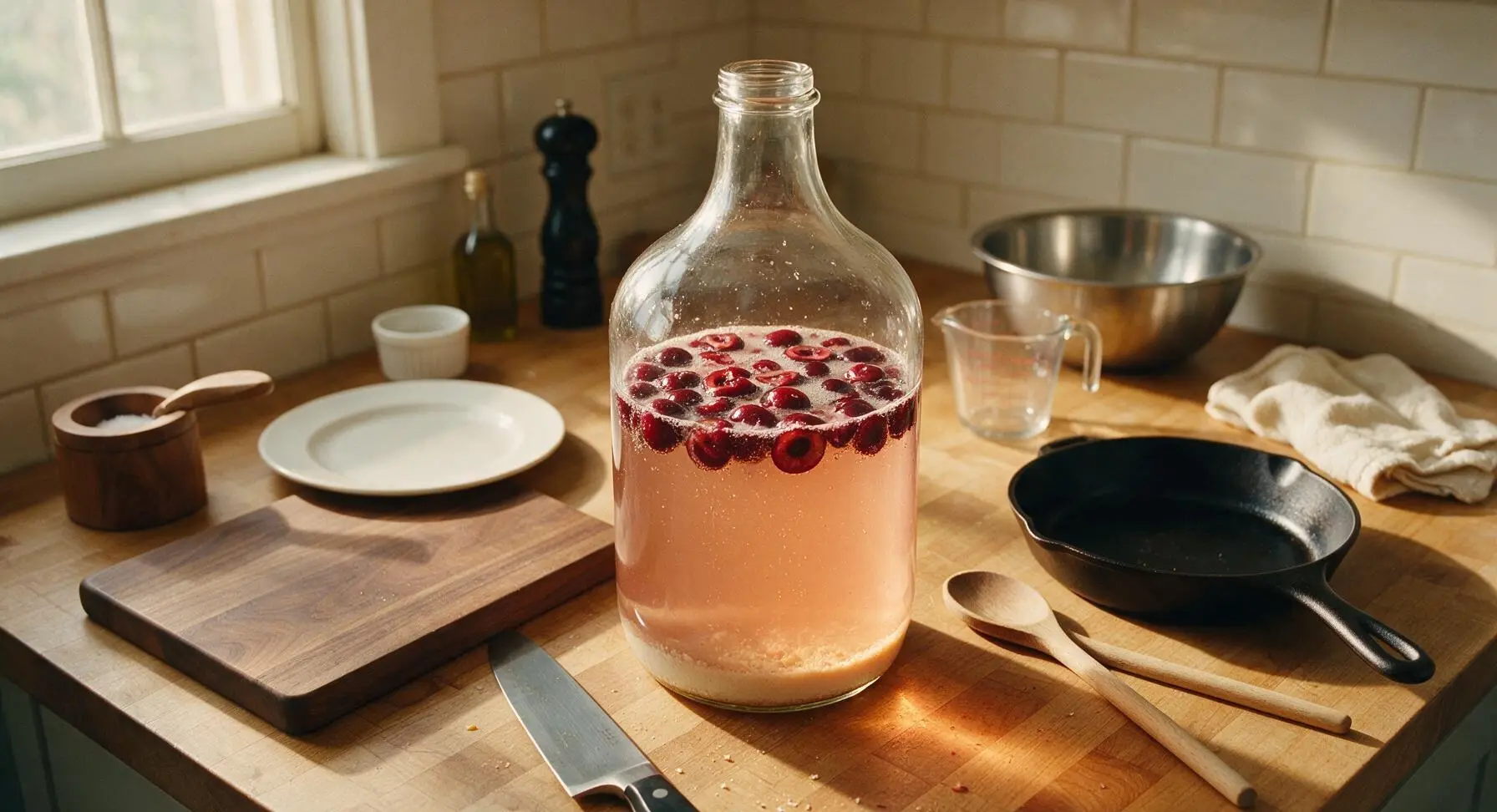
After 7 days of primary fermentation held at 18-21°C (65-70°F), when bubbling in the airlock slows to 1 bubble every 30 seconds, sanitize the paring knife and bamboo cutting board. Halve the pitted sour cherries, then carefully add them directly to the carboy. Reseal the airlock, and return the carboy to a cool, dark spot to continue fermenting for 8-12 weeks. The mixed culture will develop the lambic’s signature tart, funky flavor, while the cherries impart a bright, fruity depth.
Bottle and Condition
After 8-12 weeks of fermentation, when the beer is completely still (no bubbles rising, airlock inactive for 3 consecutive days), sanitize the auto-siphon and glass beer bottles. Siphon the clear, ruby-gold lambic off the fruit and yeast sediment into sanitized bottles, leaving 2cm of headspace at the top of each bottle. Seal bottles tightly with crown caps, and let condition at room temperature for 2 additional weeks to build natural carbonation, then chill to 4°C (39°F) before serving.
Tips
2.Never rush fermentation: lambic requires 8-12 weeks of slow, cool (18-21°C) fermentation to develop its signature complex, balanced tartness. Fermenting at warmer temperatures or bottling too early leads to harsh, vinegary off-flavors or over-carbonated bottles that can burst under pressure.
3.Do not substitute standard ale yeast or bread yeast for the lambic-specific mixed culture: the blend of Brettanomyces, Lactobacillus, and Pediococcus bacteria in the specialized culture is required to create the dry, earthy, tart profile that defines lambic, rather than producing a plain, sweet wheat beer.

OMG, I’ve been trying to nail a homebrew lambic for literal years and this recipe is a total game changer! I brought the first batch to our neighborhood potluck last weekend and everyone was begging for the recipe — even my buddy who swears he hates sours went back for a second pour. The cherry note is perfectly balanced, not too sweet, not too tart. Only heads up is don’t skimp on the souring time, I almost rushed it and thank goodness I waited. 10/10, will brew again for our summer cookouts!
Okay, full transparency: I’m a total homebrew newbie and I was intimidated by the hard difficulty rating, but I took the plunge last week and my batch just finished carbonating! It’s so smooth, the wheat base gives it that lovely fluffy mouthfeel and the cherry comes through like fresh summer fruit, not that fake syrup junk you get in some store-bought sours. My partner said it tastes better than the $18 lambic we splurged on for our anniversary last year. Knocked one star off because the 2.5 hour cook time felt a little long on a weeknight when I was juggling making dinner too, but it was 100% worth every minute.
Tweaked this a little to use fresh sour cherries I foraged last weekend out near Mount Rainier instead of frozen, and holy cow it’s chef’s kiss. I added a tiny bit of orange zest during secondary too, which complements the cherry so nicely. Already planning a double batch to stock the cooler for our upcoming camping trip with friends — nothing hits after a long hike like a cold, tart homemade beer. Will report back how the double batch turns out!