
Maibock
intro
Traditional bright golden Bavarian spring lager, with rich bready malt sweetness, subtle noble hop spice, and a smooth, crisp finish perfect for early spring gatherings.
Ingredients
Steps
Sanitize Brewing Equipment
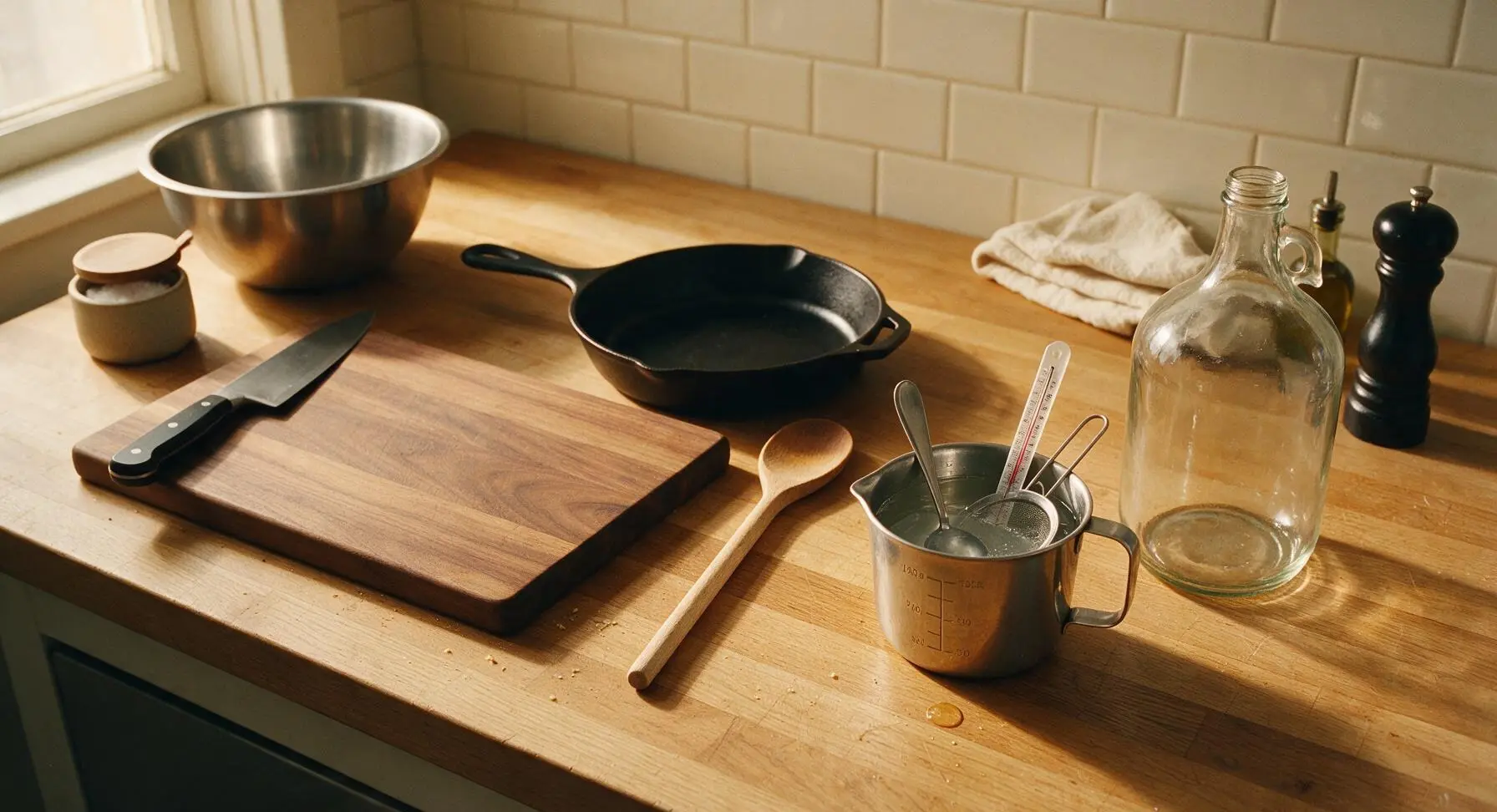
Mix 1 quart of cold water with 1/4 teaspoon no-rinse food-grade brewer's sanitizer in the 1-quart stainless steel measuring cup. Submerge the stirring spoon, thermometer, strainer, auto-siphon, airlock, and carboy neck in the solution for 2 full minutes. Drain fully; no rinsing is needed, as residual sanitizer is flavorless and will not affect fermentation. Ensure every surface that will touch cooled wort is fully sanitized to prevent sour or musty off-flavors.
Heat Mash Water
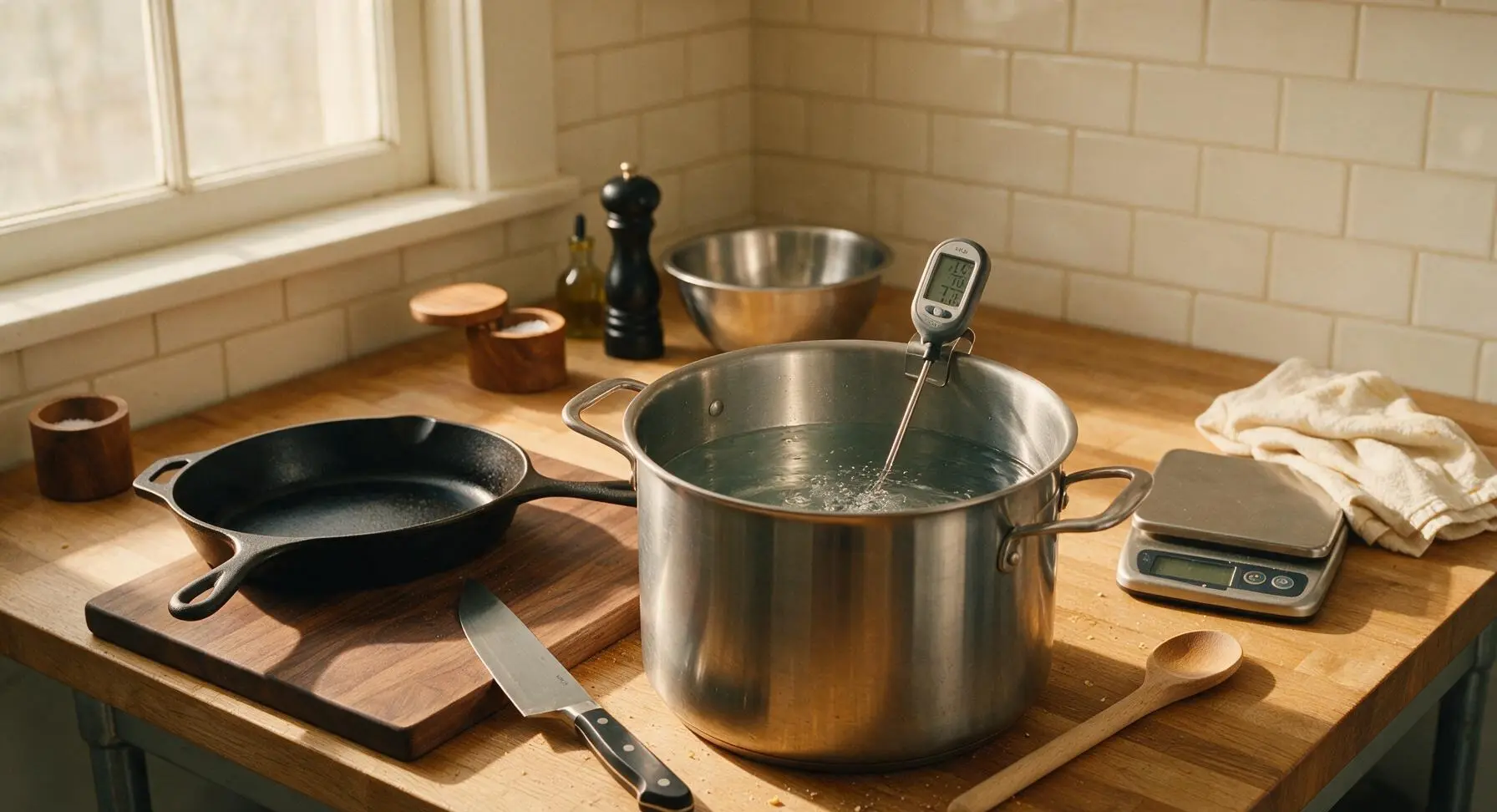
Pour 3 quarts (0.75 gallons) of cold filtered water into the 2-gallon stainless steel brew kettle. Clip the digital thermometer to the kettle rim so the probe is fully submerged, then place over medium-high heat. Warm the water to exactly 152°F (67°C), adjusting heat as needed to hold temperature steady; do not bring to a boil at this stage.
Mash the Grains
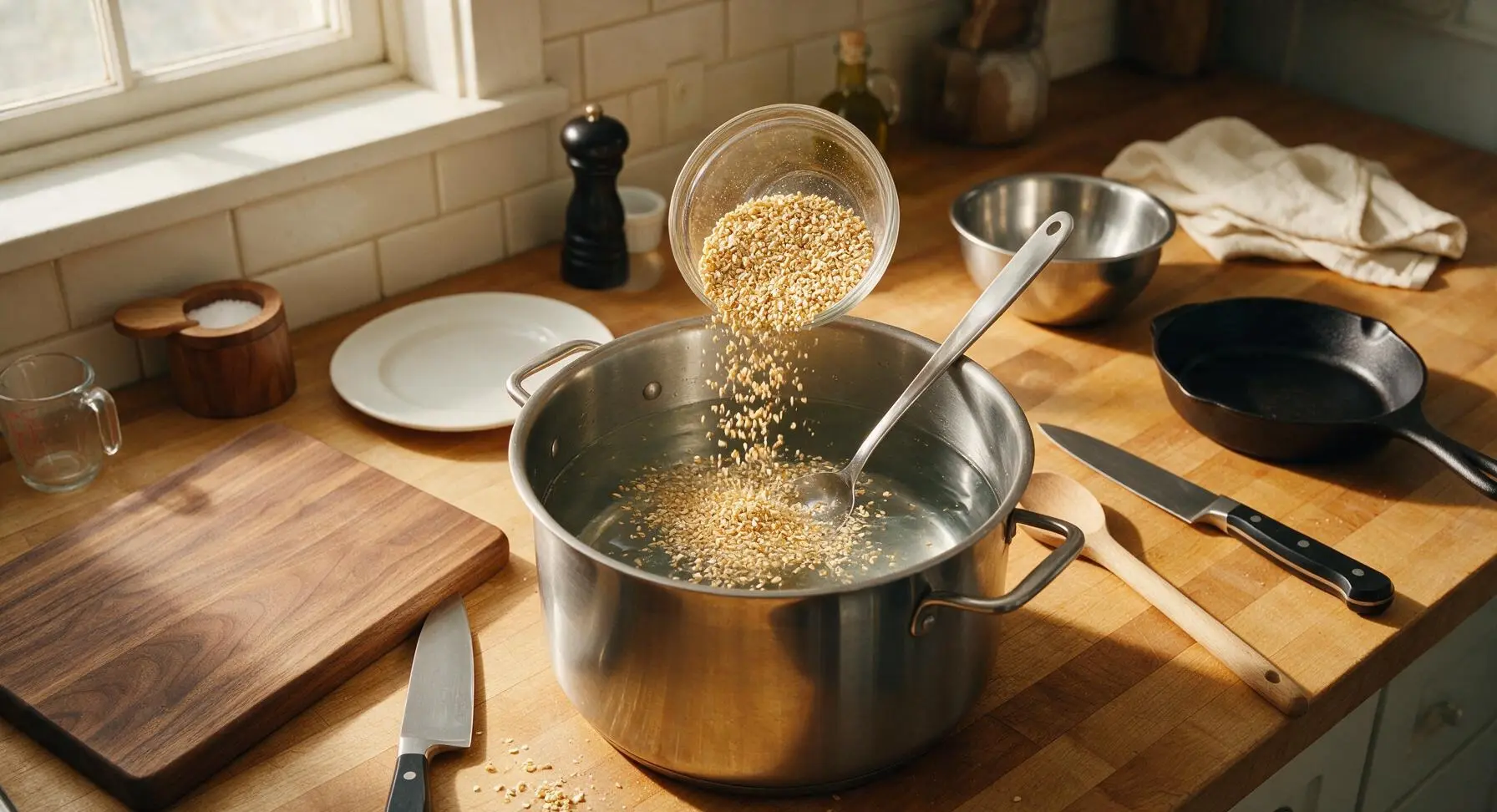
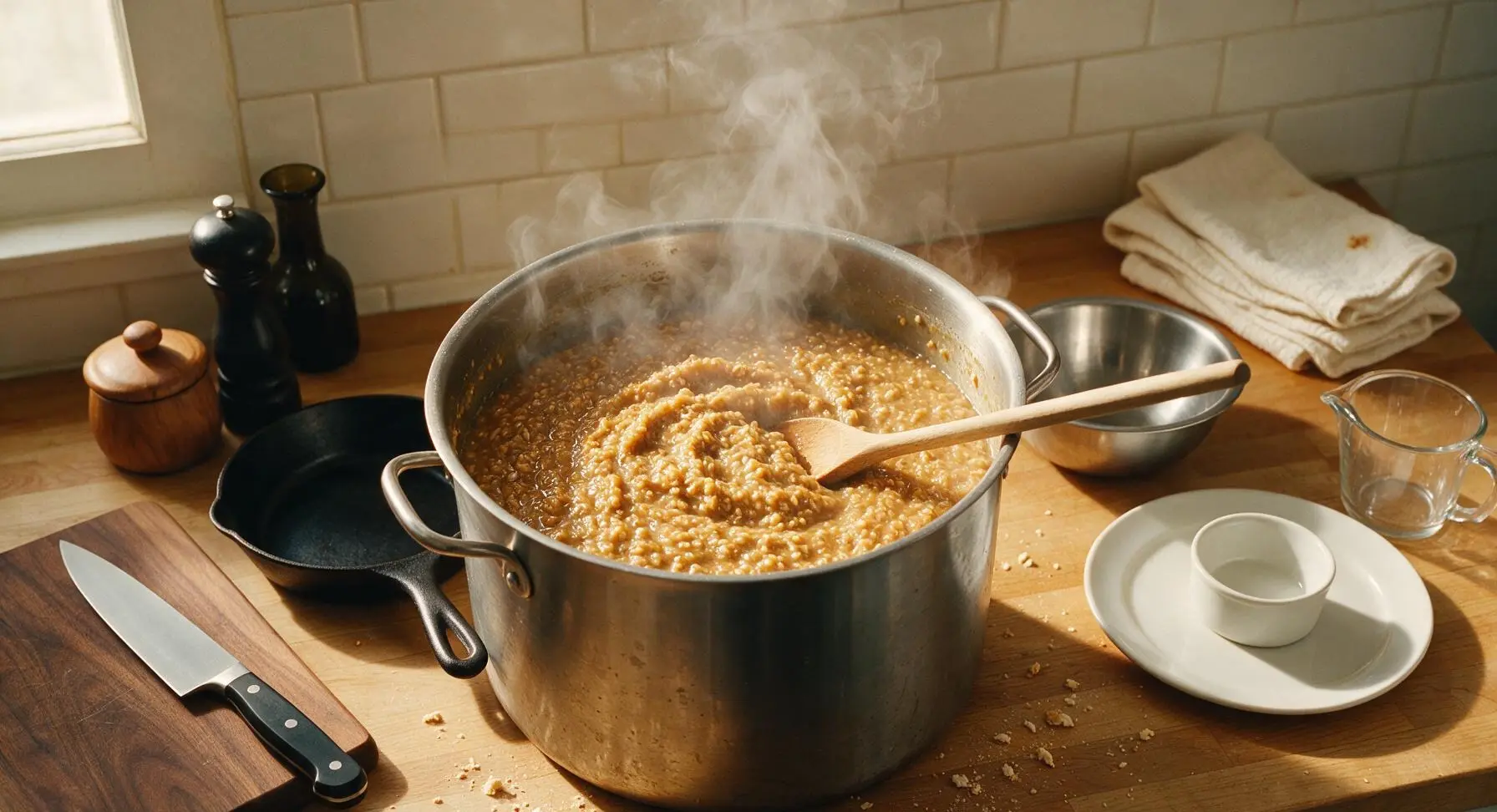
Slowly pour the measured Pilsner and Munich malt into the 152°F water, stirring continuously with the long stainless steel spoon to break up all dry grain clumps. Cover the kettle, hold the temperature steady at 148–152°F (64–67°C) for 60 minutes. During this rest, grain starches will convert to sweet, fermentable sugar, and the mash will smell warm and bready, like fresh baked bread crust.
Strain Sweet Wort
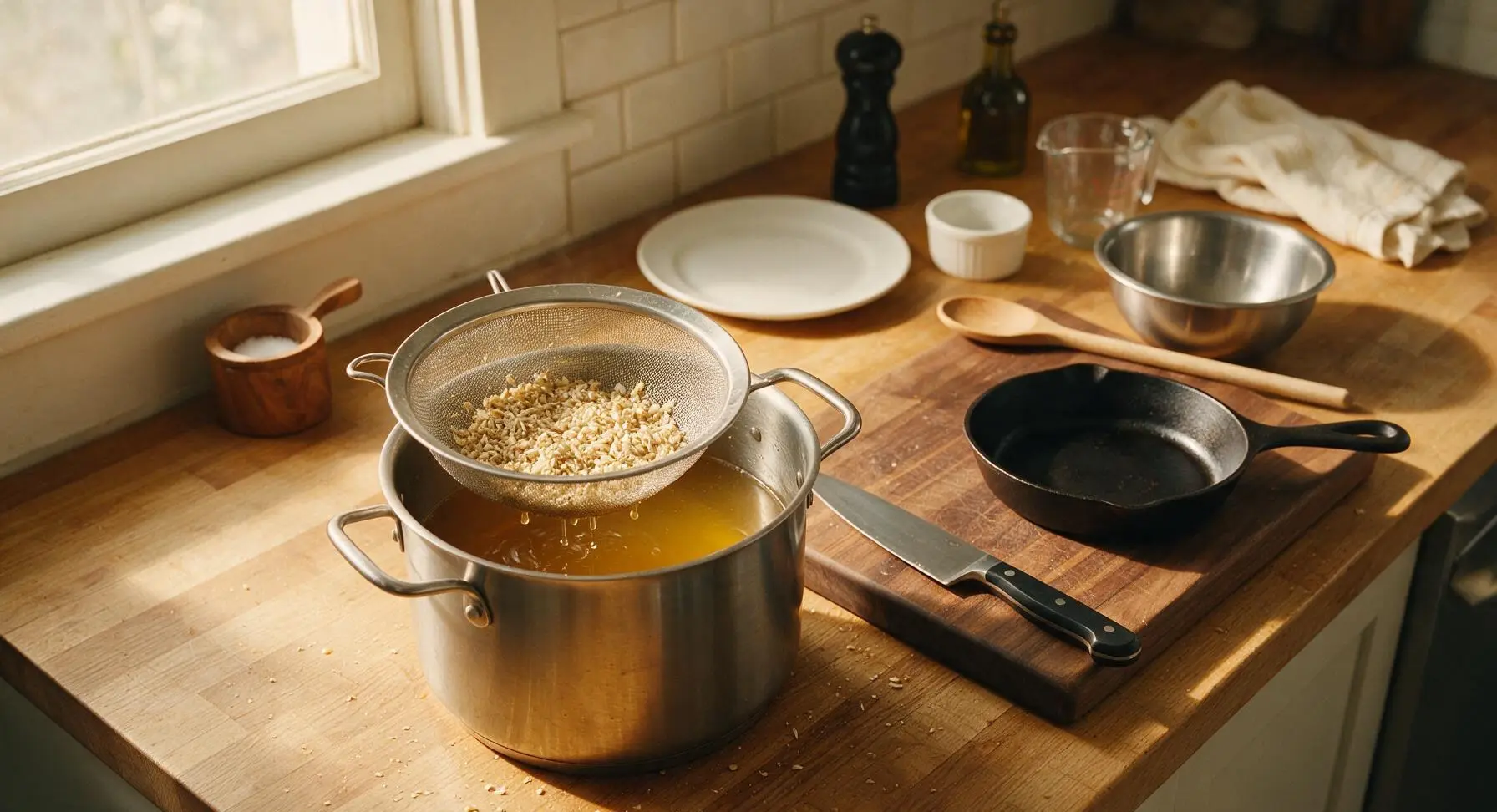
After the 60-minute mash rest, set the fine-mesh stainless steel strainer over the brew kettle, then slowly pour the mash through the strainer to separate the sweet, sugary liquid (wort) from the damp spent grains. Rinse the grains with 2 quarts (0.5 gallons) of 170°F (77°C) filtered water poured slowly over the grain bed to extract remaining sugar, collecting all wort back in the brew kettle. Spent grains can be composted or added to homemade bread dough.
Boil and Add Hops
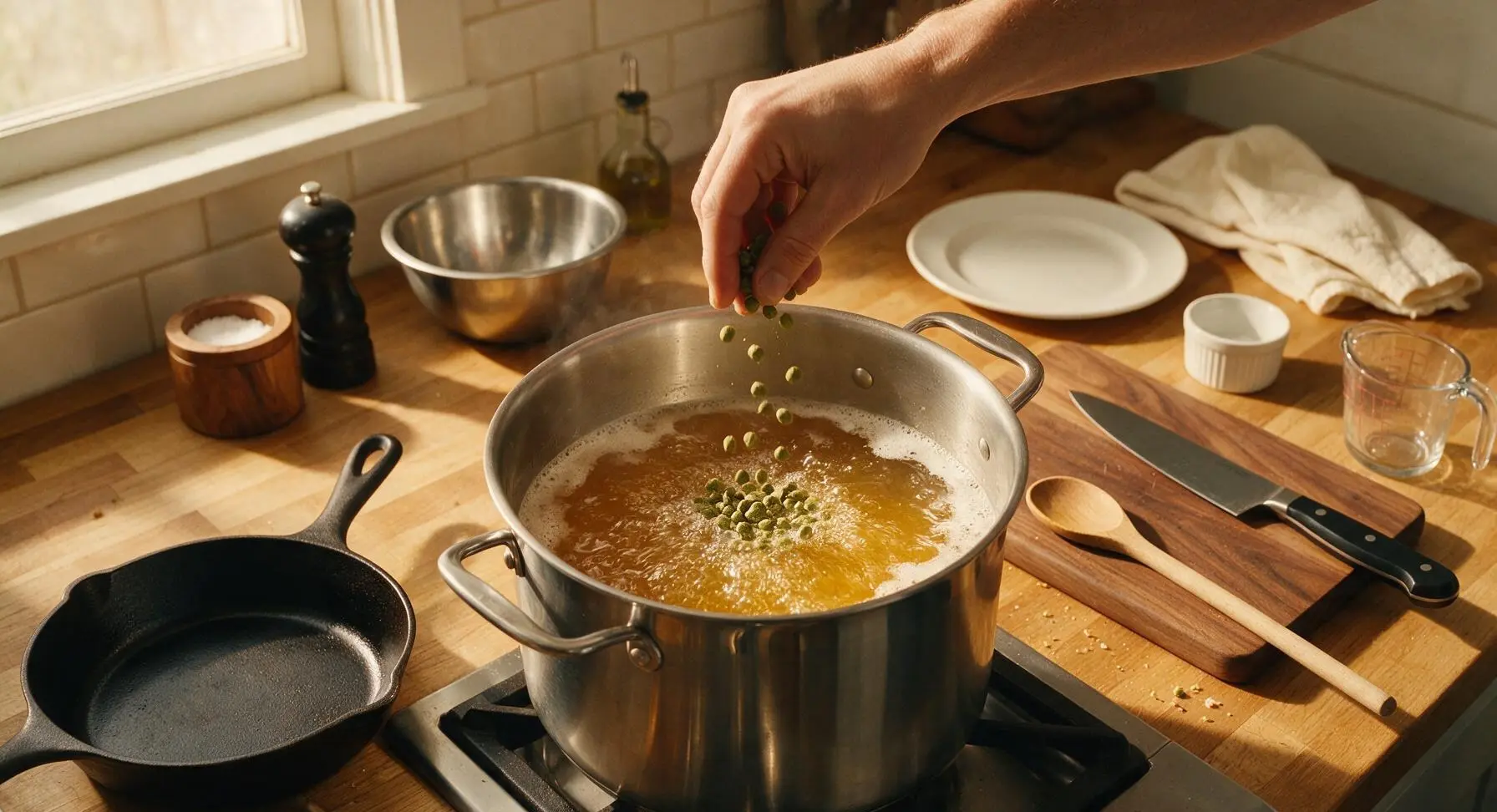
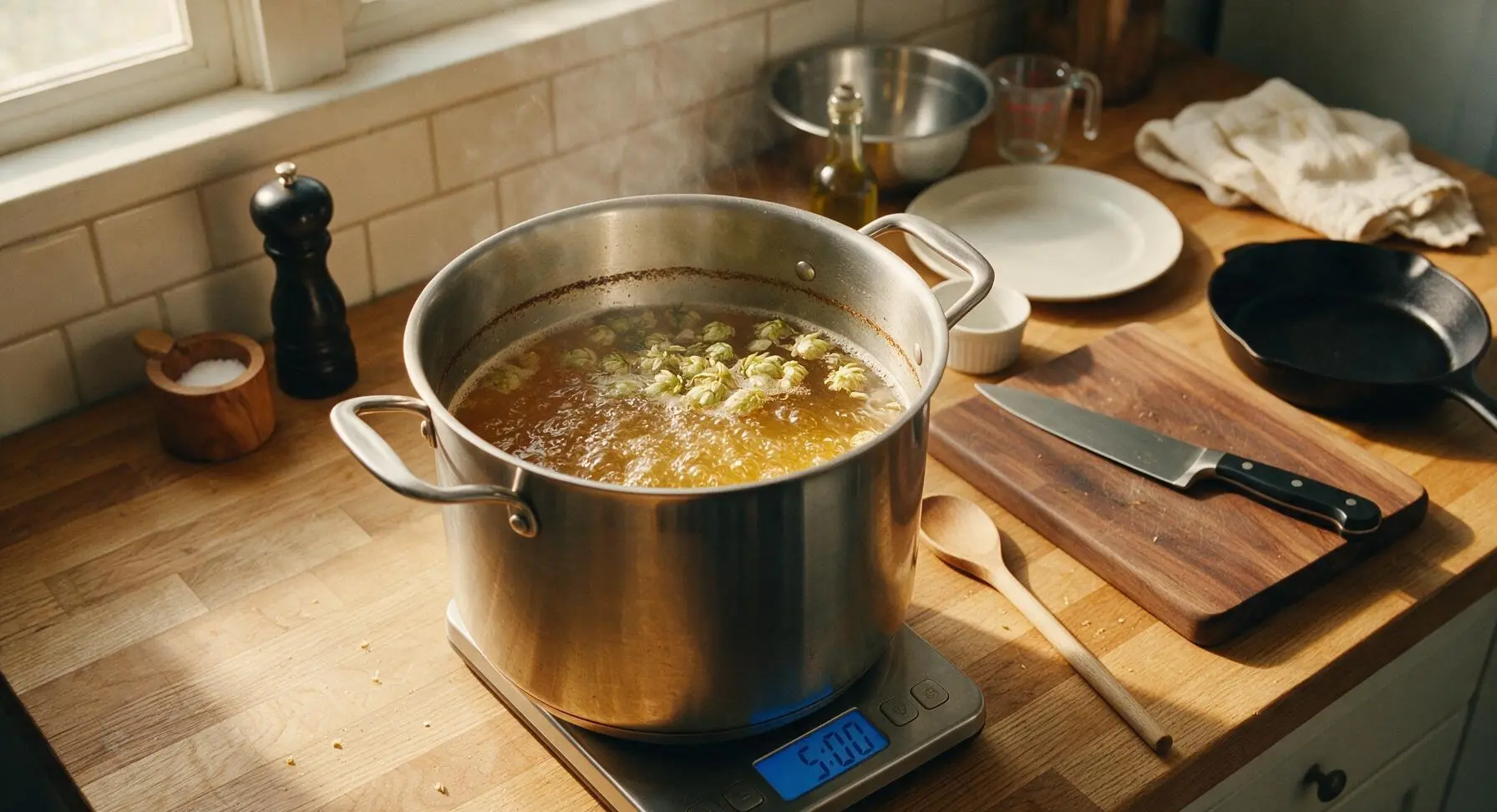
Bring the collected wort to a gentle rolling boil (212°F / 100°C) over high heat, watching closely to prevent boilovers. Once a steady boil is reached, set a timer for 60 minutes. Add 0.2 oz of Hallertau hops at the start of the boil for balanced bitterness, add 1/4 of a whirlfloc tablet with 15 minutes remaining to clarify the final beer, then add the remaining 0.1 oz Hallertau hops and all 0.1 oz Saaz hops with 5 minutes remaining to preserve bright, floral, spicy hop aroma. Leave the kettle uncovered during the boil to allow unwanted volatile off-flavors to evaporate.
Cool and Pitch Yeast
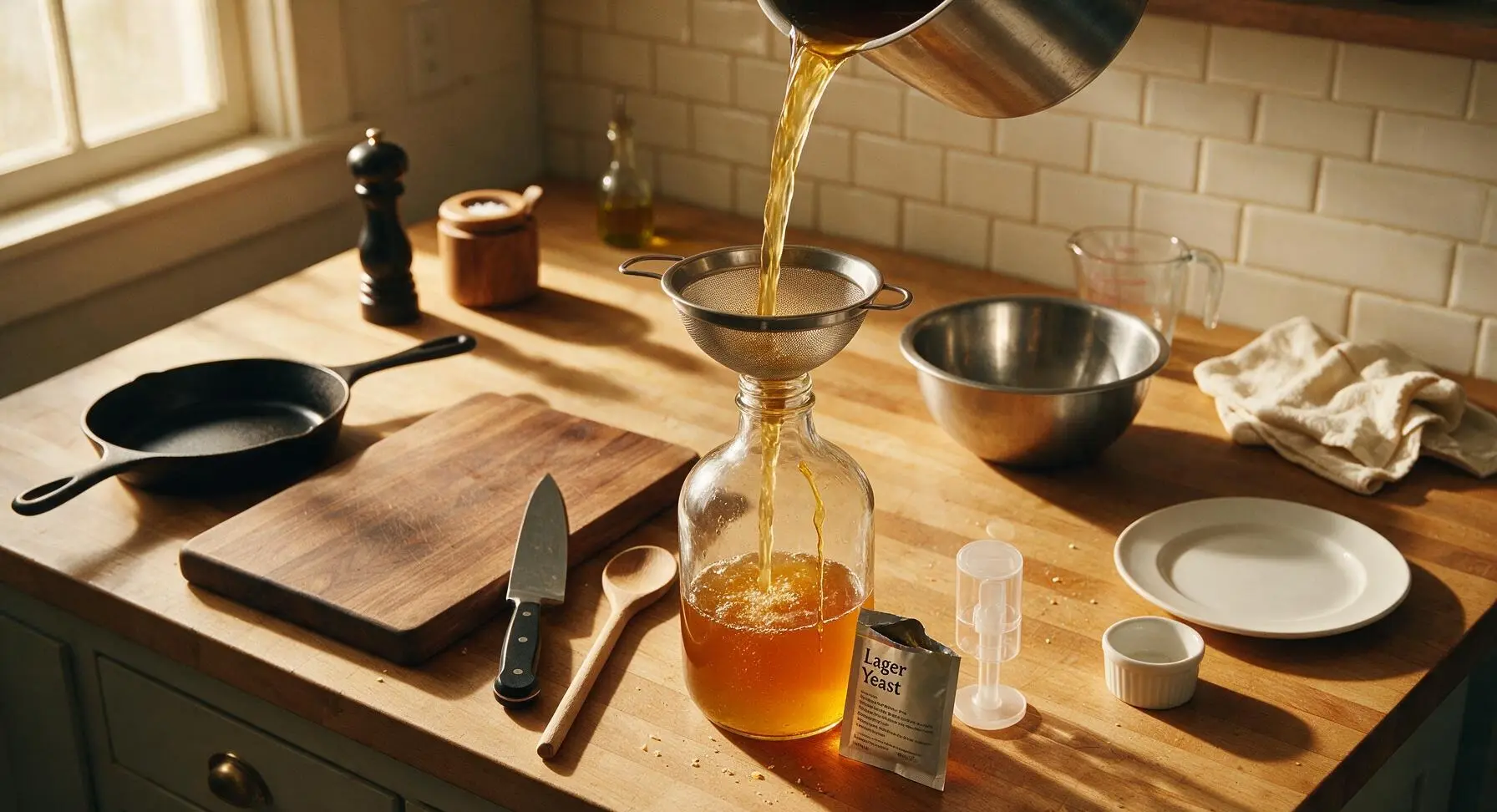
When the 60-minute boil ends, immediately remove the kettle from heat and set it in a sink filled with ice water to chill the wort as quickly as possible to 65°F (18°C), about 15–20 minutes. Once cooled, pour the wort through the sanitized strainer into the 1-gallon glass carboy, add the measured yeast nutrient, then sprinkle the Bavarian lager yeast over the wort surface. Seal the carboy with a sanitized rubber stopper, then insert the 3-piece airlock filled halfway with sanitizer solution.
Ferment and Condition
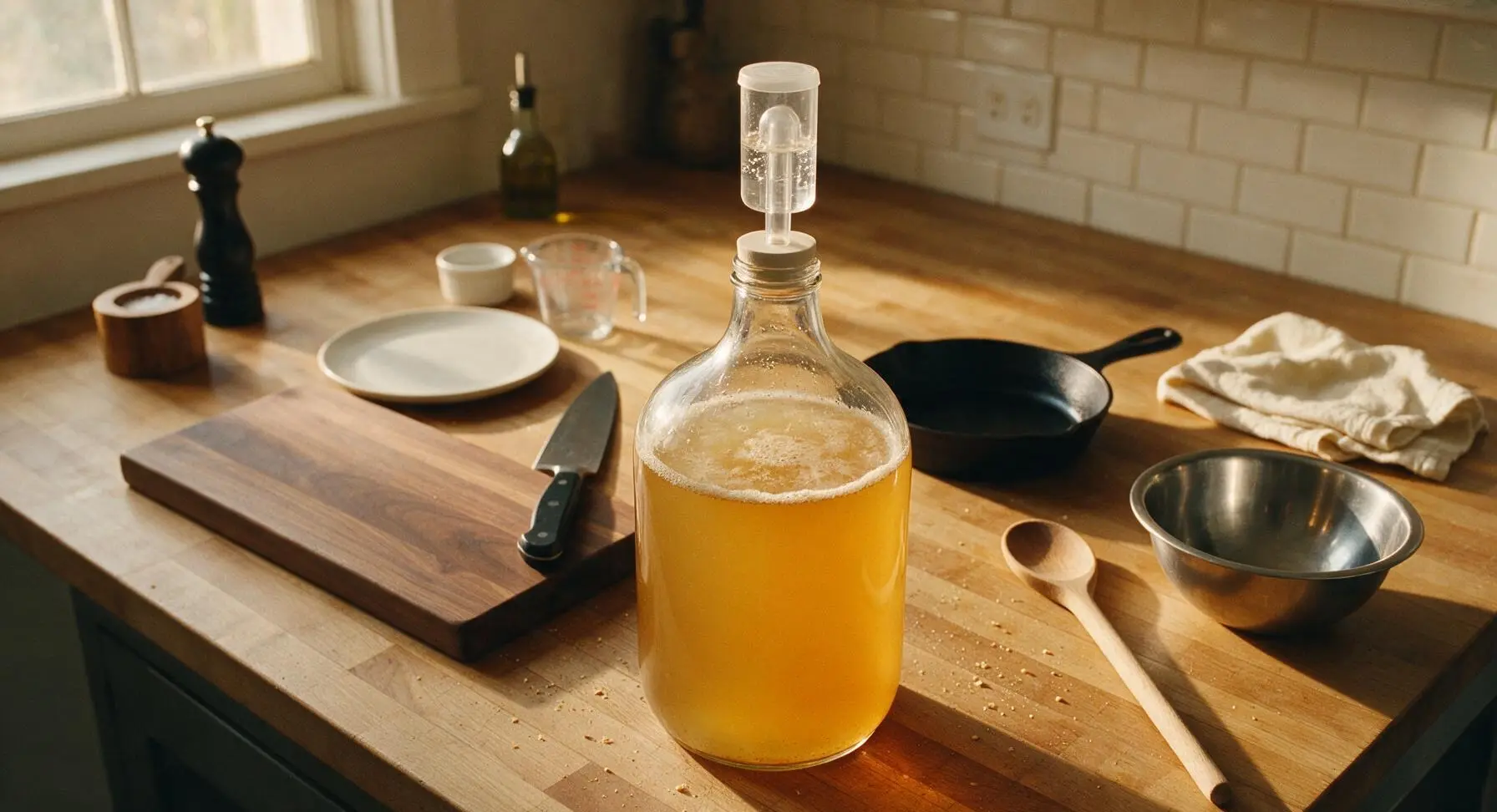
Move the sealed carboy to a dark, temperature-controlled space held steady at 50°F (10°C) for primary fermentation, about 2 weeks, until no more bubbles rise through the airlock. After primary fermentation, slowly lower the storage temperature by 2–3°F per day until reaching 38°F (3°C), then hold for 2 additional weeks (lagering) to let the beer mellow, clarify, and develop its signature smooth, clean flavor. Avoid opening the carboy during this time to prevent oxidation.
Carbonate and Serve
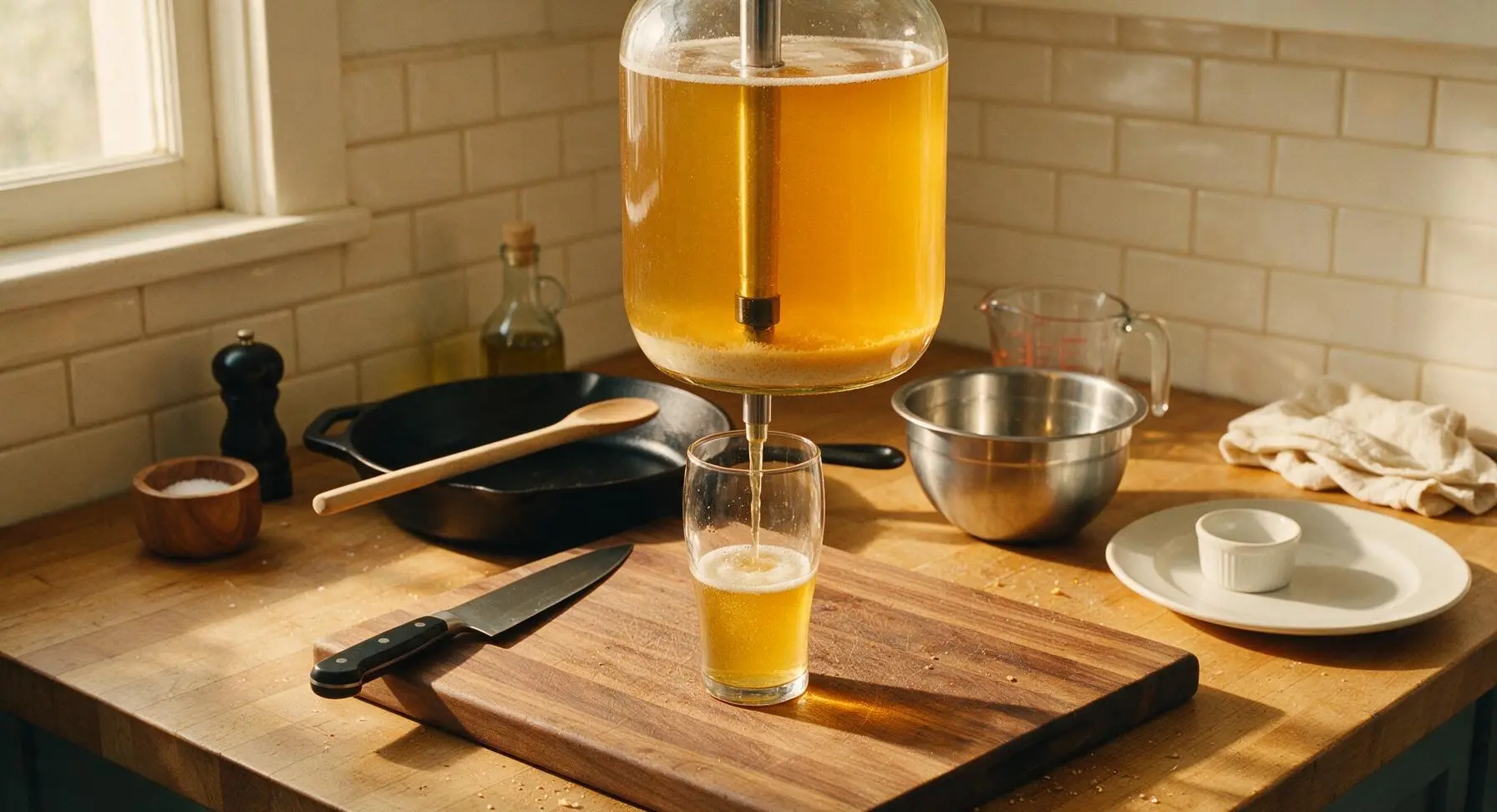
Once lagering is complete, use the sanitized auto-siphon to transfer clear, bright Maibock into sanitized sealable glass bottles, adding 1/2 teaspoon of corn sugar per 12oz bottle to create natural carbonation. Seal bottles tightly and let rest at room temperature for 1 week to carbonate, then chill for 48 hours before serving. Pour slowly into a tall pilsner glass, leaving any thin layer of settled yeast at the bottom of the bottle for the clearest, brightest flavor.
Tips
2.Avoid temperature swings during fermentation: Lager yeasts are sensitive to sudden temperature changes, which can create harsh, solvent-like off-flavors. Use a temperature-controlled fermentation chamber or cool basement to hold a steady 50°F during primary ferment for the cleanest flavor.
3.Don't rush the lagering phase: The 2-week cold rest at near-freezing temperatures allows young, green beer flavors to soften, yeast to settle out for a crystal-clear appearance, and the signature smooth, balanced Maibock character to develop. It pairs beautifully with grilled bratwurst, roasted asparagus, and soft pretzels at early spring gatherings.






Just cracked open my first bottle from the batch I brewed with this recipe two weeks ago and OMG, that crisp, slightly sweet malt flavor with the subtle noble hop bite is spot on for classic maibock! Brought a few cold ones to our weekend camping trip and my buddies were begging for the recipe. Total game changer for my homebrew setup, SO good, already planning my second batch.
I was nervous to try a lager since I’ve mostly done ales before, but the difficulty level marked medium felt totally doable as a casual homebrewer. The cook time was spot on too, didn’t have any weird lulls or rushed steps. My kids loved helping me measure out the malt and add the hops, and my husband said it’s better than the maibock we get at our local German restaurant — huge win for our weekly family dinner nights!
Tweaked the hop schedule just a tiny bit to add a little extra Hallertau at whirlpool, and this still turned out absolutely perfect. Great base recipe if you like to experiment a little, too! Did a 6 week lagering period after primary and it came out crystal clear, no off flavors at all. I keep a six pack stashed in the fridge for meal prep nights when I don’t feel like mixing up a fancy cocktail, it pairs perfectly with just about any quick weeknight dinner.
Wait, quick question—this is my first ever lager attempt, do I really need to do a diacetyl rest? I’ve seen mixed advice online and don’t want to mess up the batch I started yesterday. The steps so far have been super easy to follow, just hung up on that one part!
Served this maibock at our Memorial Day backyard cookout last weekend and it was a total hit! Juicy burgers, brats, and this cold homemade lager? Can’t beat that combo. Even my brother-in-law who swears he only drinks fancy imported beer went back for three refills.
I don’t have a dedicated lagering fridge right now—will this still turn out okay if I use a temperature-controlled fermentation bucket kept at a steady 50 degrees? I really don’t want to drop $200 on a new fridge just for one batch, but I’ve been craving homemade maibock for months.
The 1 hour 15 minute cook time on this is no joke, super straightforward mash and boil schedule that didn’t leave me running around the garage scrambling like some other lager recipes I’ve tried. Didn’t have a single stuck mash, efficiency was right where I wanted it on the first try.
I brought a growler of this maibock to our office potluck last week and everyone lost their minds! I’ve only been homebrewing for 6 months so I was low-key nervous to share, but even our boss who is a total beer snob asked for the recipe. Total win for my amateur homebrew reputation.
Quick heads up for anyone brewing this in a super dry climate like Arizona—you might need to add a little extra sparge water to hit your target pre-boil volume, I lost way more to evaporation than I expected during the boil on my first try. Still turned out amazing, just a little lower yield than I planned for!
Tried this recipe last month and it’s easily the best lager I’ve ever made at home. My kids even made little custom labels for the bottles as a Father’s Day gift for my dad, he called me after he tried the first one to say it’s better than the maibock he drank when he visited Germany years ago. Total core memory moment for sure.
Wait, I just finished bottling my batch and I noticed it’s a little cloudier than the maibock I see at the store—did I do something wrong? I followed all the steps exactly as written, waited the full lagering time, but it’s not that crystal clear color I was expecting. It still tastes great, just not as pretty!