
Munich Dunkel
intro
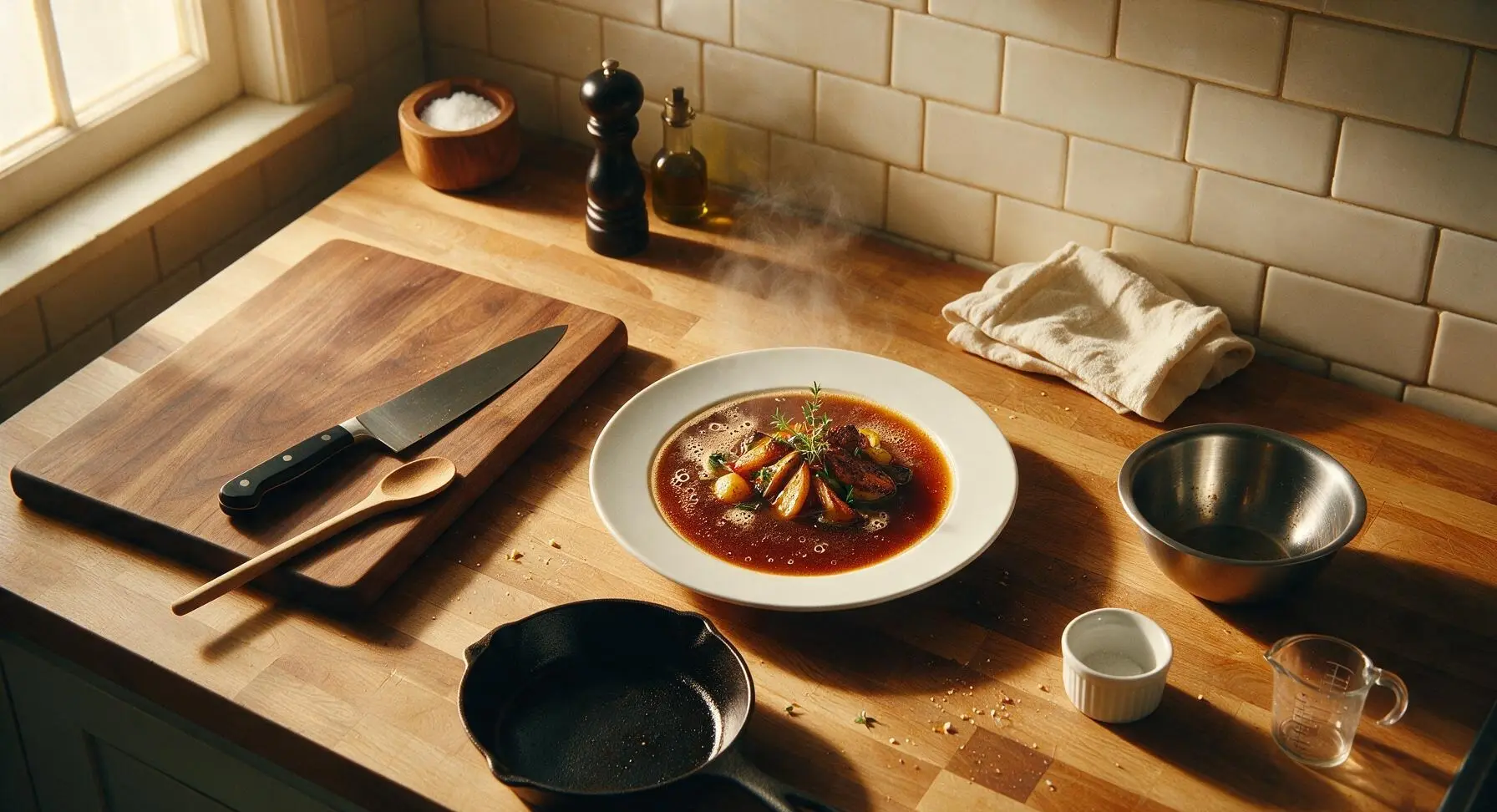
Traditional smooth, malty Bavarian dark lager with notes of toasted bread, subtle dark chocolate, and light caramel, boasting a clean, crisp finish perfect for pairing with hearty autumn fare.
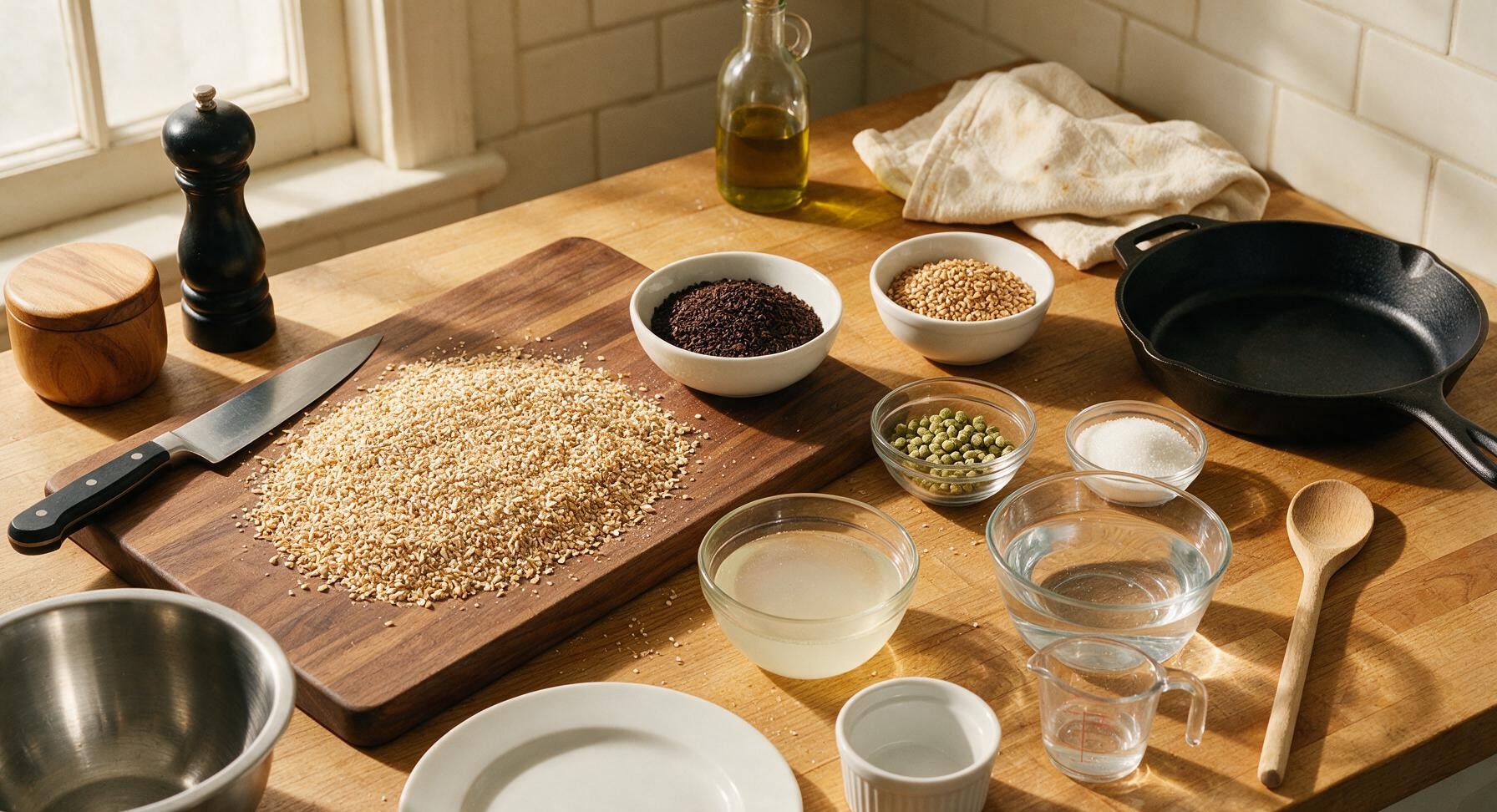
Ingredients
Steps
Sanitize Brewing Equipment
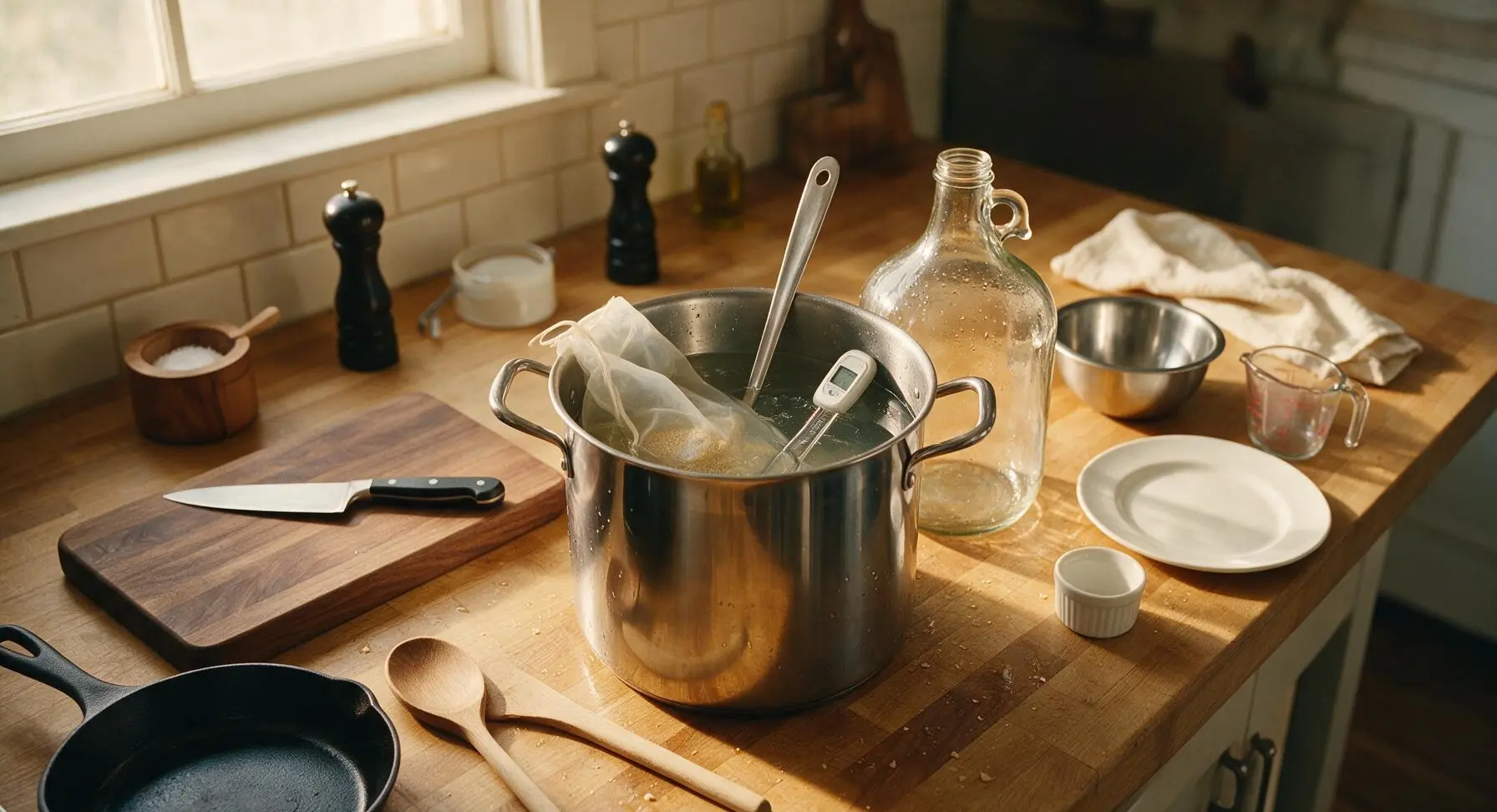
Mix 1 tablespoon no-rinse brewing sanitizer with 1 gallon of cool water in the 2-gallon brew pot. Submerge the grain bag, stirring spoon, thermometer, auto-siphon, airlock, and glass carboy for 2 minutes, then drain completely (no rinsing needed). All surfaces that will touch cooled wort must be sanitized to prevent bacterial growth and off-flavors. Visual cue: equipment glistens with sanitizer solution, no visible dust or old residue.
Heat Mash Water
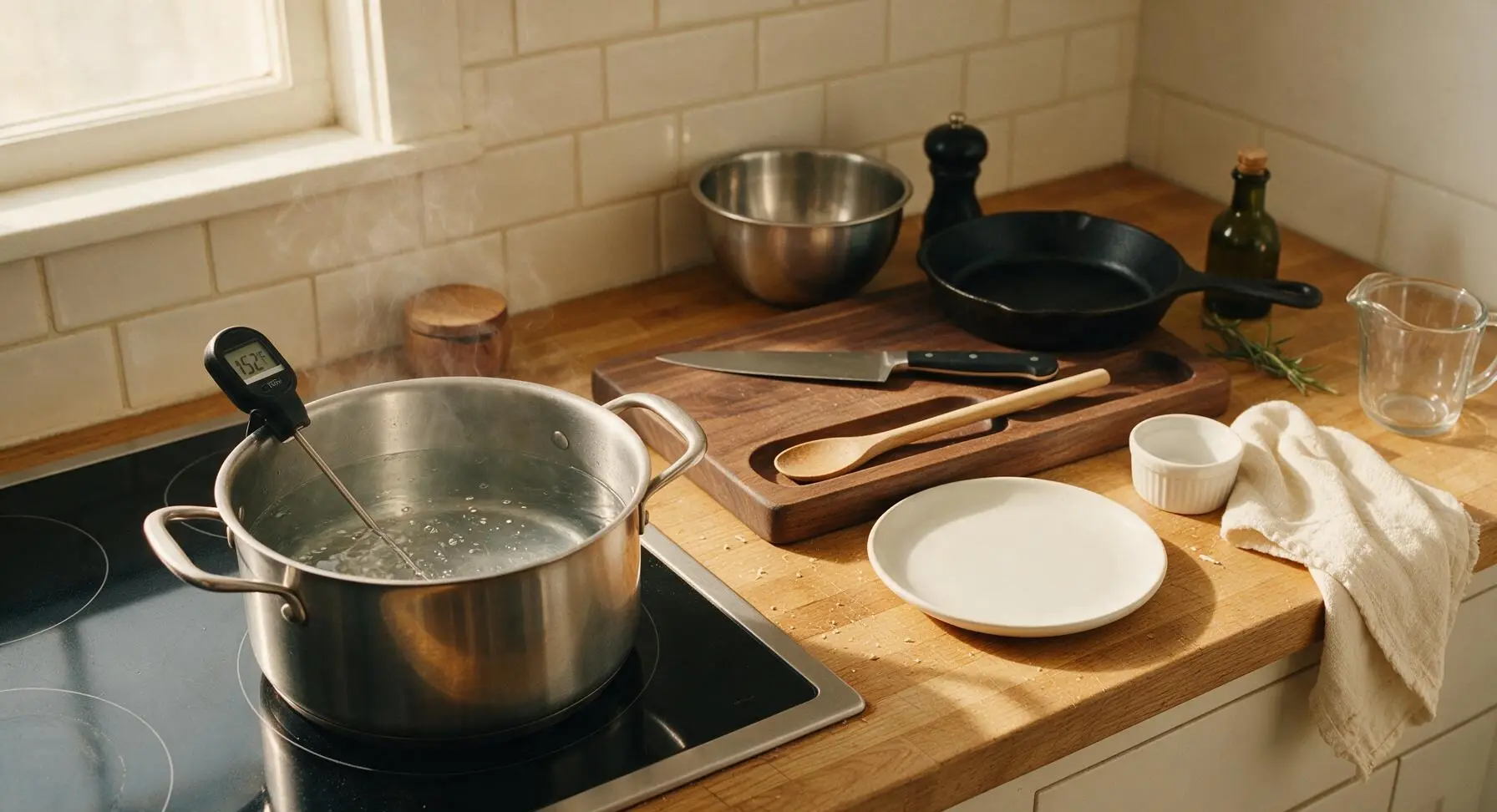
Pour 1 gallon of filtered cold water into the sanitized brew pot, set on the left induction cooktop over medium heat. Clip the digital thermometer to the pot side, and heat the water to exactly 152°F (67°C). Adjust heat to hold a steady temperature once reached; do not bring to a boil. Visual cue: small pinprick bubbles rise slowly from the pot bottom, thin steam curls gently from the surface.
Mash the Grains
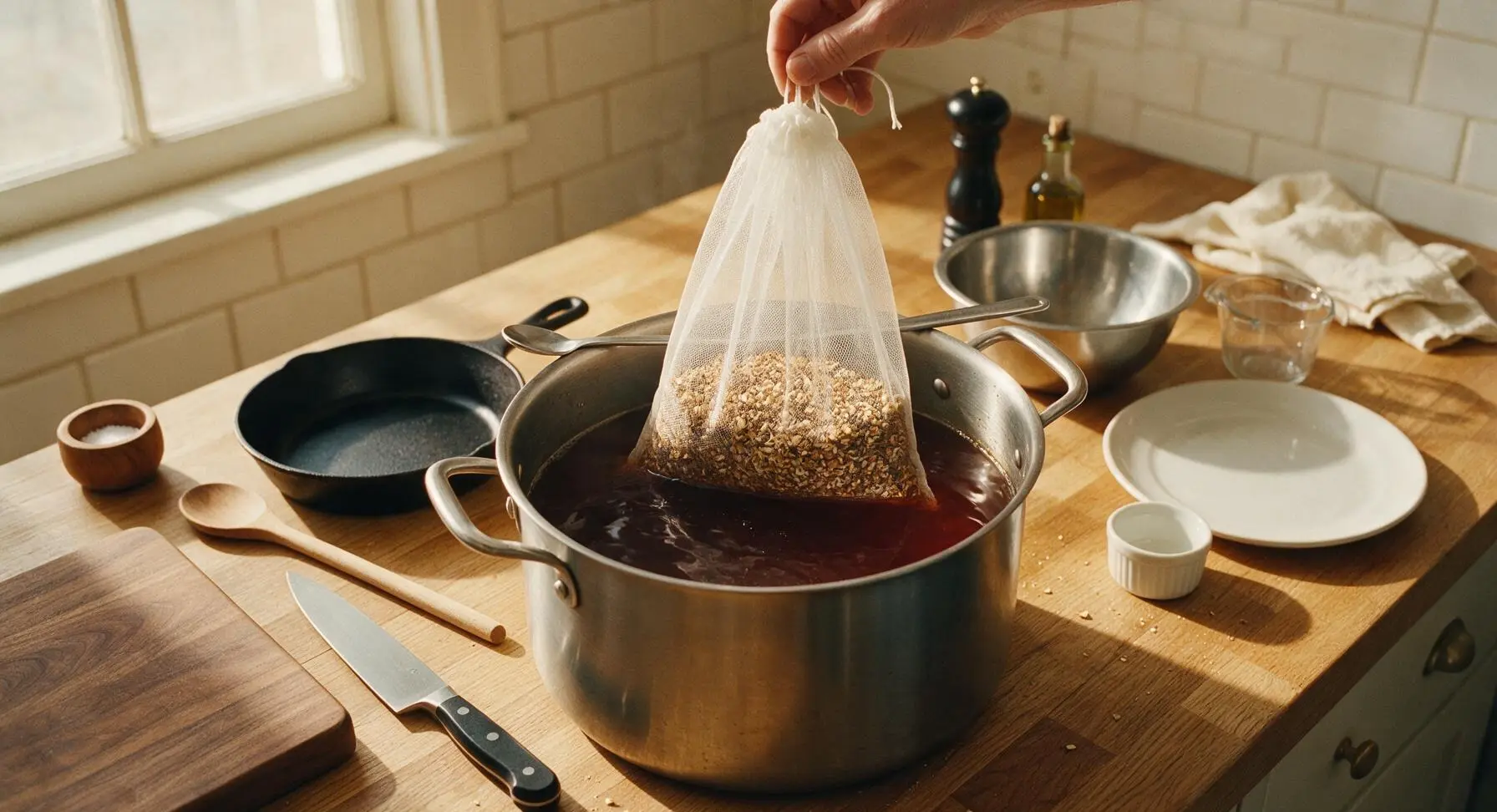
Place all crushed malts (Munich 10L, Carafa Special II, Carapils) into the nylon mesh grain bag, tie the drawstring top loosely to leave room for grain expansion. Lower the bag into the 152°F water, ensuring all grains are fully submerged. Cover the pot, hold temperature steady at 148-152°F for 60 minutes, agitating the bag gently every 15 minutes to break up dry clumps. Visual cue: the water turns a deep, opaque ruby-brown as grain sugars extract into the liquid.
Sparge and Bring to Boil
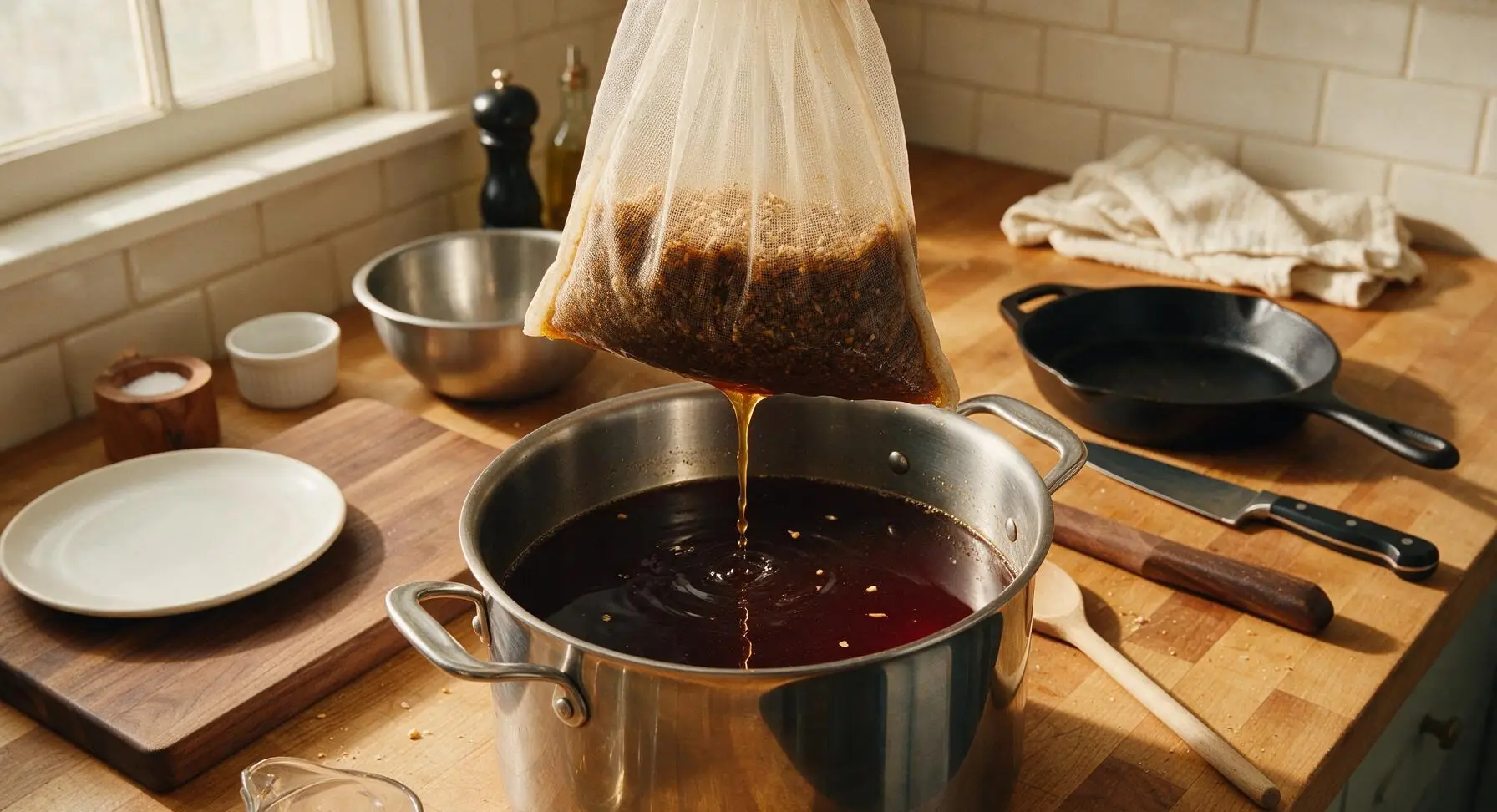
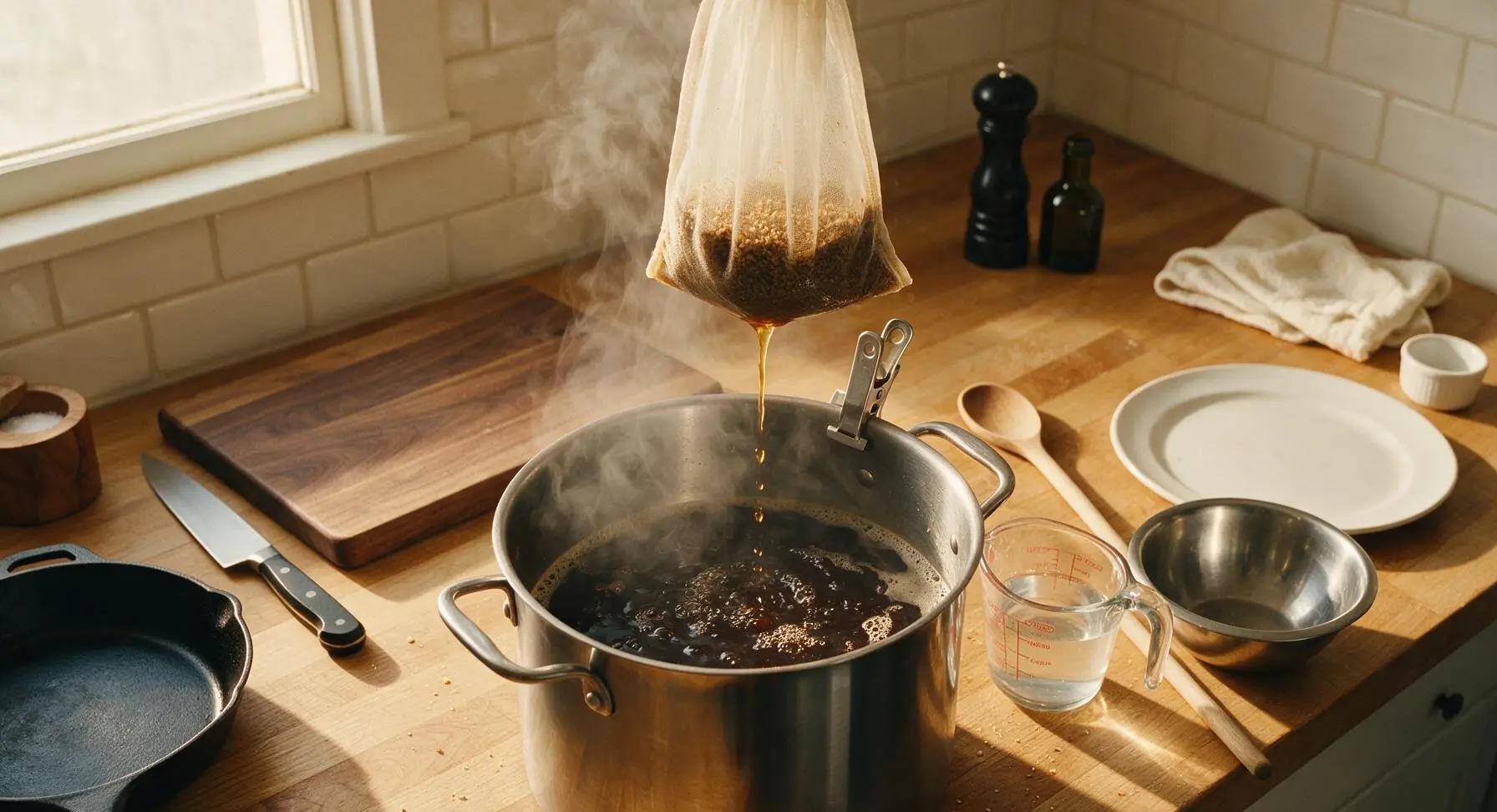
Lift the grain bag out of the pot, let it drain fully over the pot for 5 minutes (do not squeeze the bag, as this extracts harsh tannins). Slowly pour 0.5 gallons of 170°F filtered water over the grain bag to rinse remaining sugars into the pot (this process is called sparging). Discard spent grains, then turn induction heat to high to bring the collected wort to a gentle rolling boil. Visual cue: wort bubbles steadily across the entire surface, without violent splashing.
Add Hops and Boil
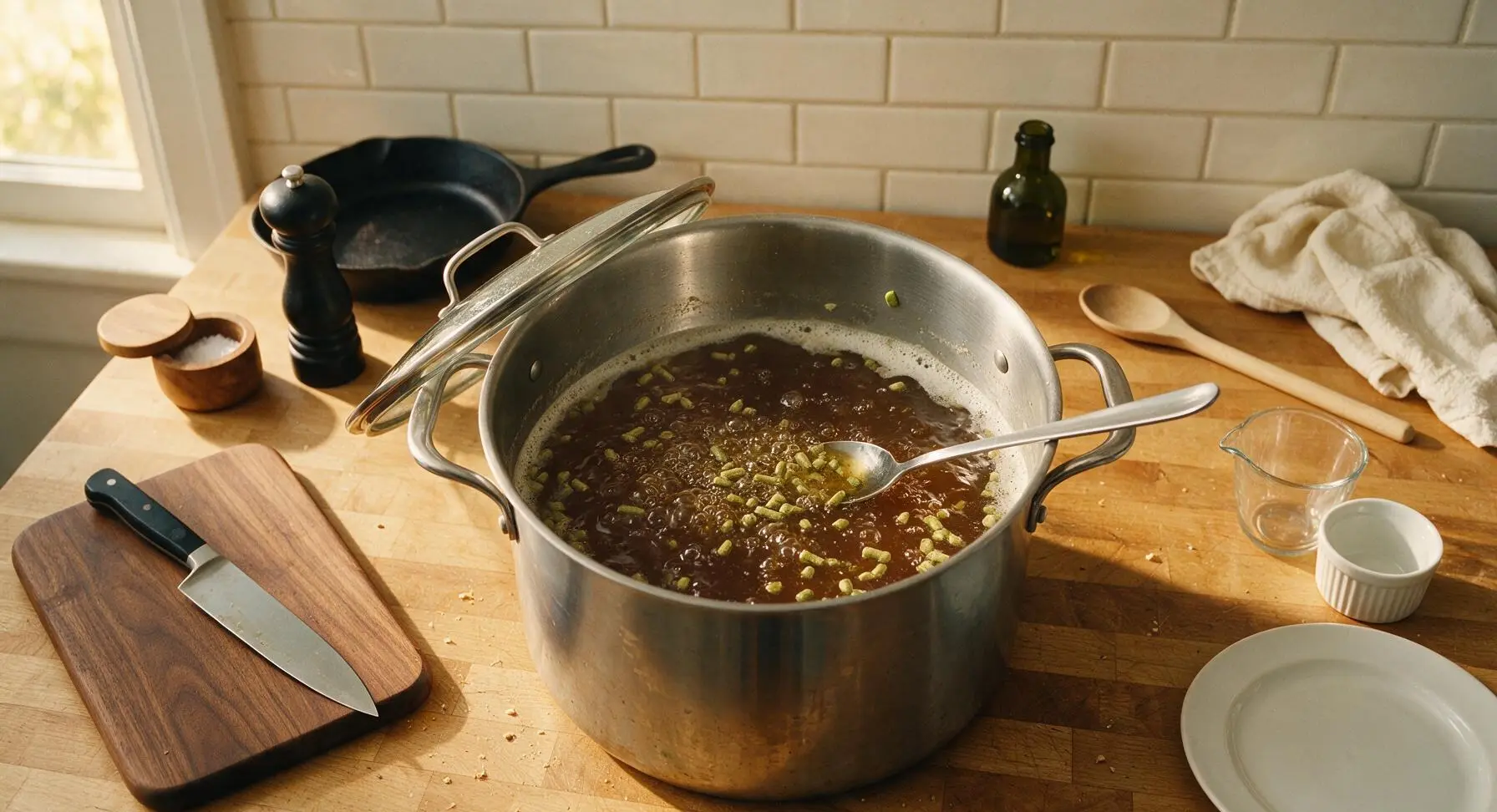
Once the wort reaches a steady rolling boil, add 0.5 oz of Hallertauer Mittelfrueh hop pellets. Set a timer for 60 minutes, maintain a gentle rolling boil, adjusting heat as needed to prevent boil-overs. Keep the pot uncovered during the boil to allow volatile sulfur compounds to escape, which prevents off-flavors. Visual cue: pale green hop pellets swirl in the dark wort, light surface foam forms and dissipates as the boil progresses.
Cool and Transfer Wort
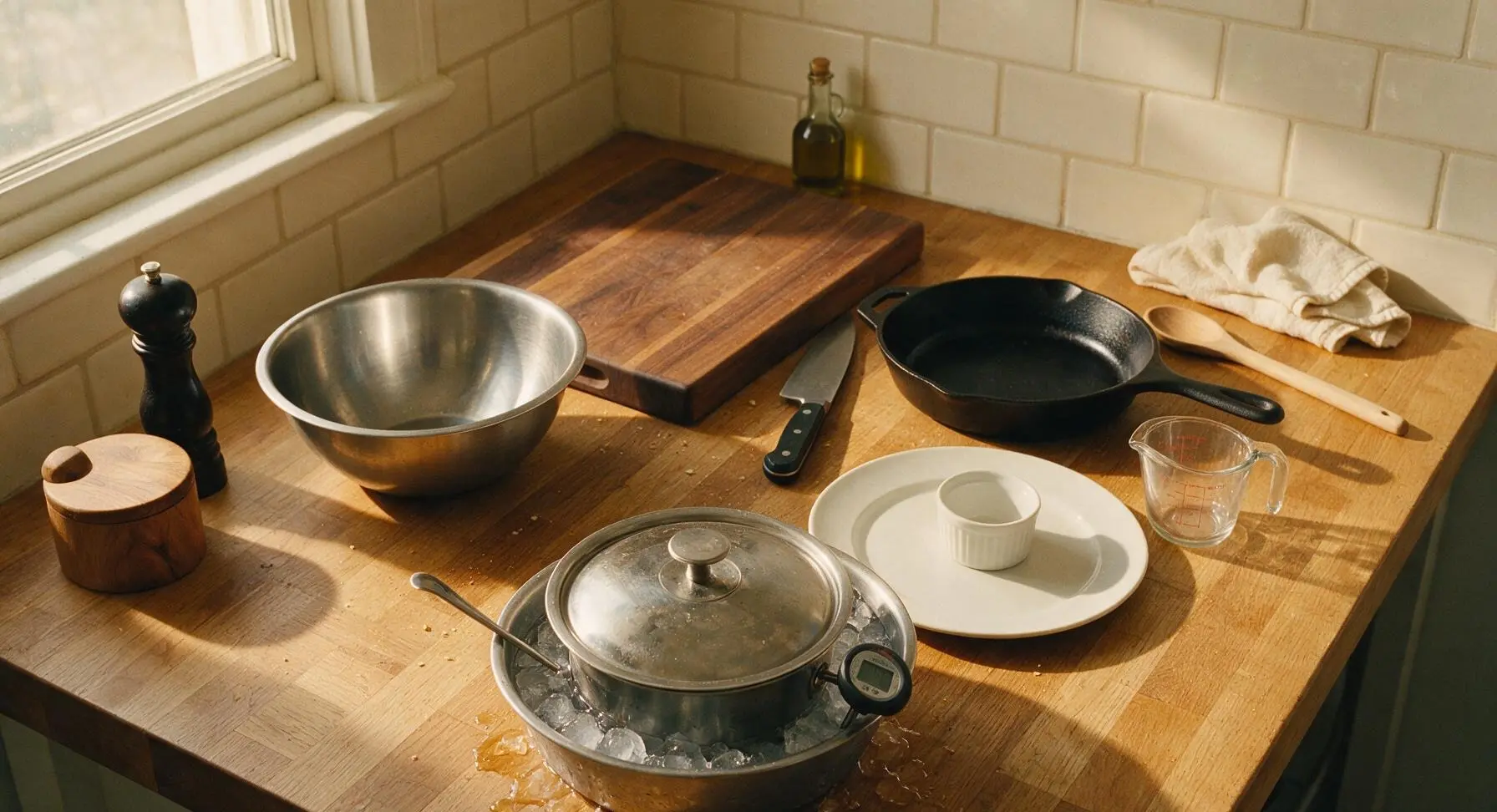
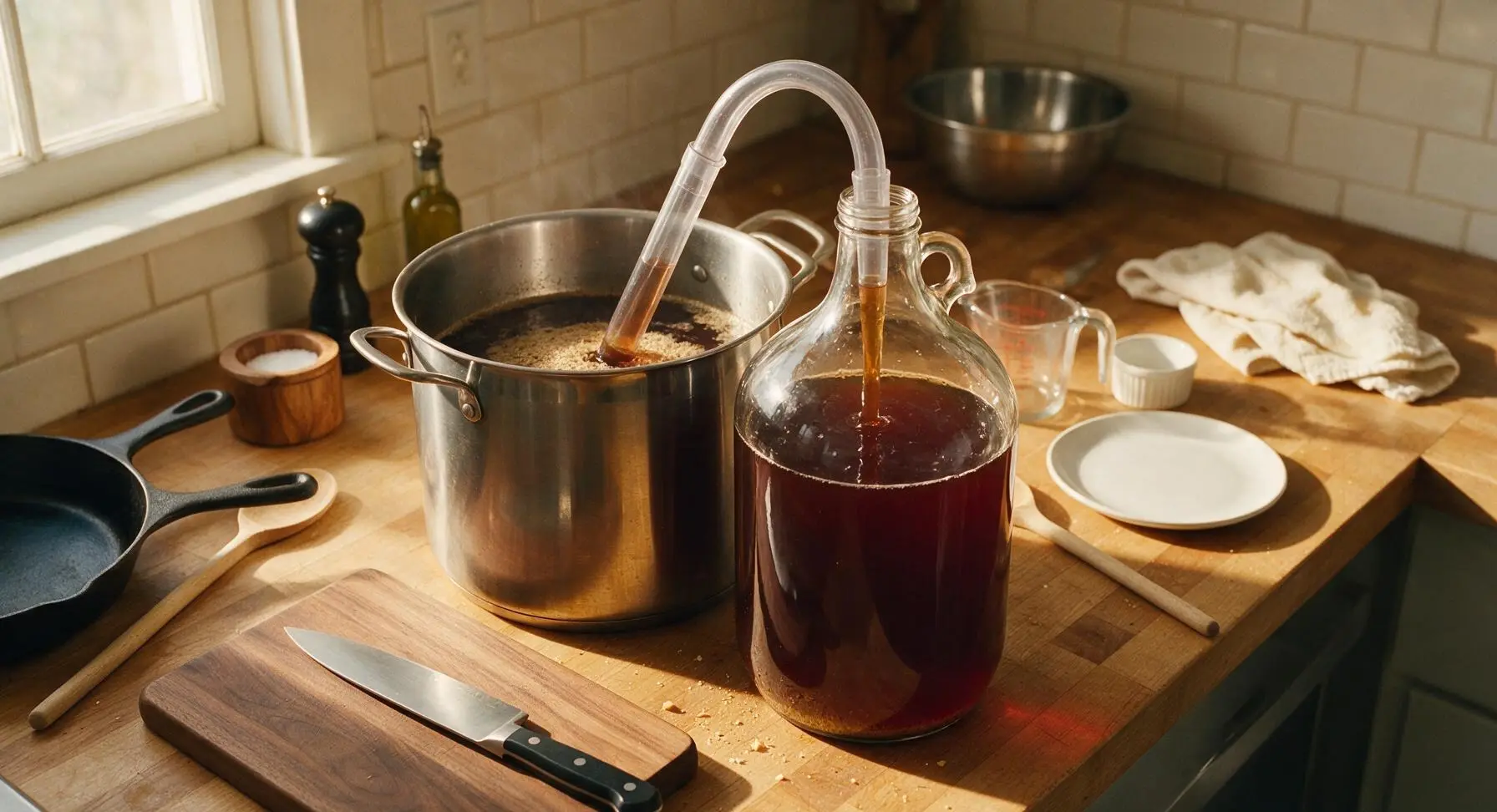
After the 60-minute boil completes, turn off the heat. Cover the pot, and set it in a sink filled with ice water to cool the wort quickly to 65°F (18°C) (roughly 20 minutes). Once cooled, use the sanitized auto-siphon to transfer clear wort into the sanitized 1-gallon glass carboy, leaving all heavy hop sediment (trub) behind in the brew pot. Visual cue: wort is no longer steaming, feels cool to the touch, flows clear into the carboy.
Pitch Yeast and Ferment
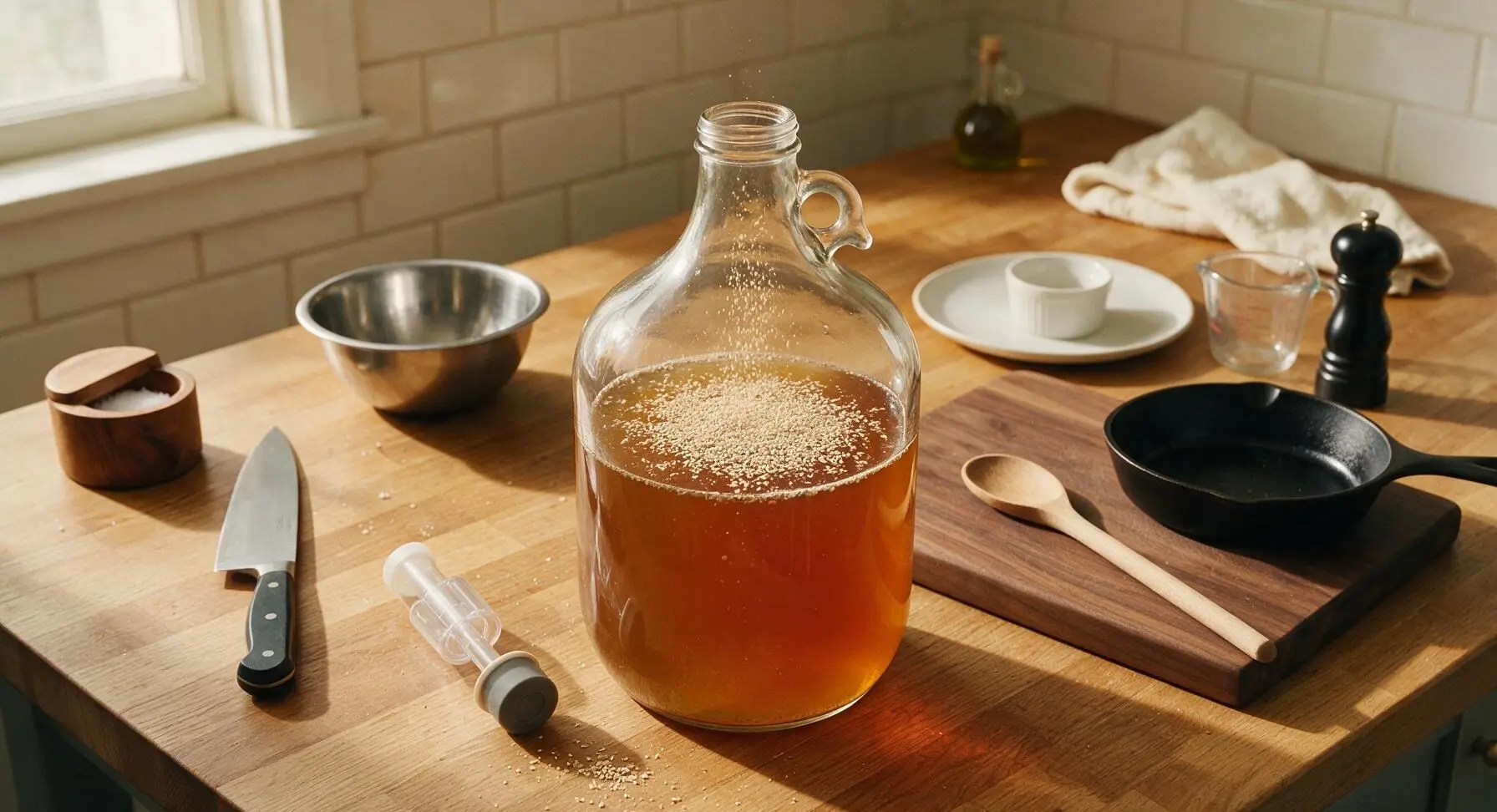
Sprinkle the entire packet of Bavarian W-34/70 lager yeast evenly over the surface of the cooled wort in the carboy. Seal the carboy neck with the sanitized rubber stopper, insert the 3-piece airlock filled halfway with sanitizer solution. Store the carboy in a dark, temperature-controlled space held at 50-55°F (10-13°C) for 2 weeks, until bubbling in the airlock slows to less than 1 bubble per minute. Visual cue: small bubbles rise steadily through the airlock for the first 3-5 days of active fermentation.
Bottle and Condition Beer
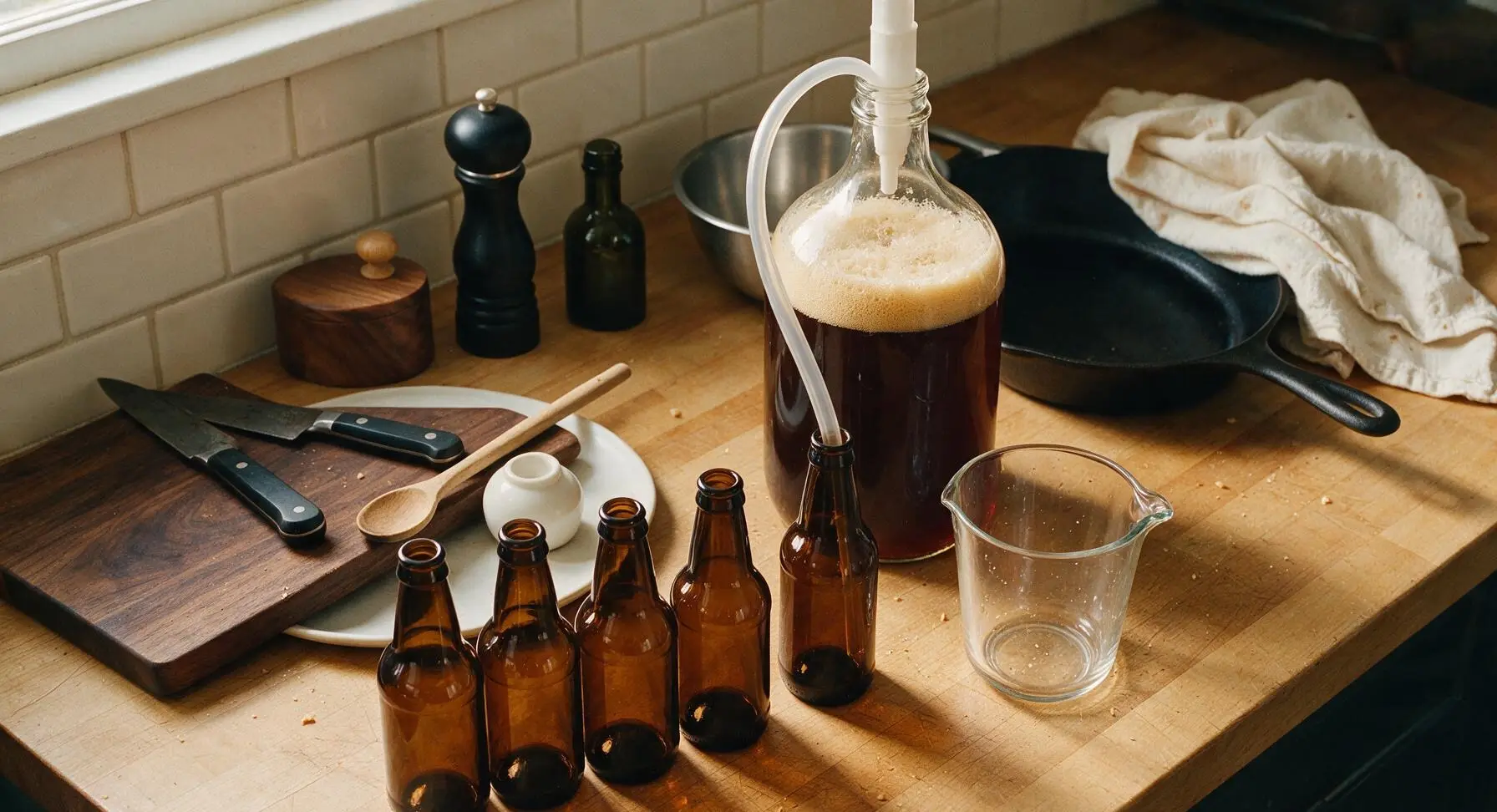
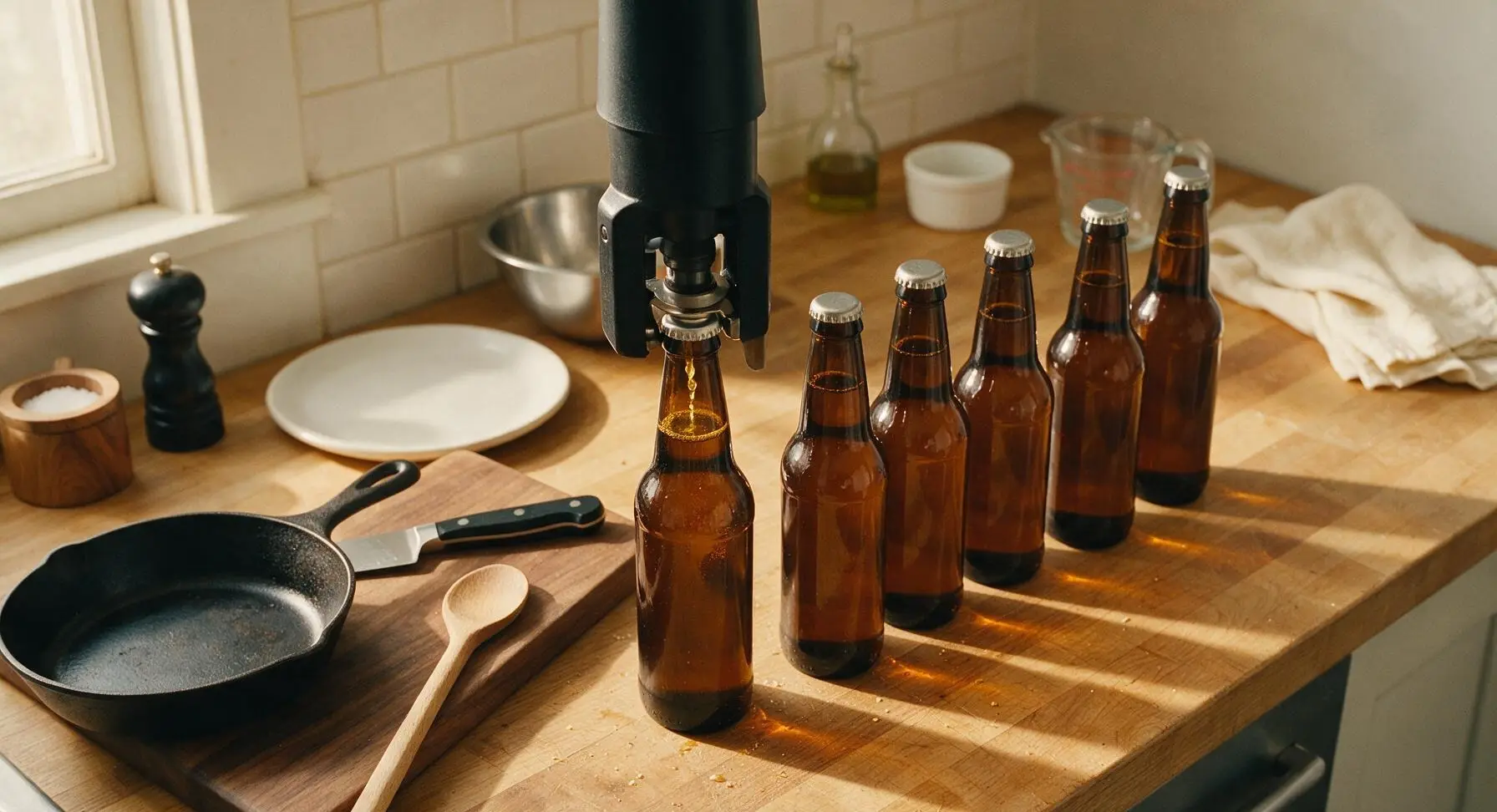
After 2 weeks of primary fermentation, dissolve 1 oz of corn sugar in ¼ cup boiling water, cool completely, and pour gently into the glass carboy. Stir very slowly with the sanitized long stainless steel spoon to evenly distribute the priming sugar, taking care not to splash and introduce oxygen. Siphon beer into sanitized 12oz glass bottles, cap tightly with the bottle capper, and store at 65°F (18°C) for 2 more weeks to carbonate and condition. Chill for 24 hours before serving. Visual cue: finished beer is brilliantly clear, pouring with a tight, long-lasting tan head.
Tips
2.Hold lager fermentation steady at 50-55°F (10-13°C) for the full two weeks; temperatures above 60°F will produce fruity, solvent-like off-flavors that clash with the beer’s clean, crisp profile. A cool basement or temperature-controlled mini fridge works perfectly for this.
3.Use dehusked Carafa Special II malt instead of standard black patent or roasted barley to achieve the beer’s signature deep ruby-brown color without adding burnt, acrid notes that overpower the soft toast and light caramel flavors from the Munich malt base.






OMG this Munich Dunkel recipe is an absolute game changer! I brewed this for our weekend neighborhood cookout and every single person was asking for the recipe. It’s got that perfect rich, malty sweetness without being heavy, exactly like the ones I had when I visited Munich a few years back. Cook time was totally manageable even as someone who’s only been homebrewing for 6 months, too! 10/10 will be making this again for our fall tailgate.
SO good! I made this last week for my book club potluck and even my friends who only drink light lagers loved it. The only tweak I made was adding a tiny extra splash of vanilla bean at the end, which gave it such a nice warm note. My only note is that the instructions for the mash temp were a little tricky to nail at first, but once I got it steady it turned out perfect.
My whole family went crazy for this! I brewed a batch to have on hand for our Sunday family dinners and it pairs so perfectly with bratwurst and sauerkraut, it’s like we’re at a beer hall in our own dining room. Cook time was exactly 2 hours as stated, no surprises, which I love when I’m juggling cooking and watching the kids on the weekend.
Made this with my roommates for our pre-game party last weekend and it was such a hit! We were worried it would be too complicated for our tiny apartment kitchen setup, but the steps were super straightforward even with our cheap equipment. Tastes way better than the overpriced craft dunkels we buy at the liquor store down the street, for real.
I’ve tried so many Munich Dunkel recipes over the years and this is hands down the most authentic one I’ve made at home. The balance of toasty malt and that subtle hint of chocolate is exactly what I look for in this style. No weird bitter aftertaste, just smooth, drinkable perfection. Already planning my next batch.
Made this for a pool day with friends last weekend and it went down way too easy in the Florida heat! I was worried a dark beer would feel too heavy for 90 degree weather, but it’s crisp enough to sip all afternoon. Only reason it’s not 5 stars is I messed up the first batch by letting the temp get too high during the mash, totally my bad though.
Took this to my local homebrew meetup last week and won 2nd place in the lager category! Can’t believe this recipe is free online, it’s better than a lot of the paid recipe kits I’ve bought. The medium difficulty rating is totally fair—if you’ve done a couple extract brews before you’ll have no problem nailing this.
My husband has been getting into homebrewing lately so I grabbed this recipe for him to try for our Labor Day cookout, and OMG it was so good! Even my teen sons who usually only drink seltzer snuck a couple sips (don’t worry, it was just a tiny taste!) and said it tasted like the fancy root beer we get at the German restaurant downtown, but for grown ups. Will definitely be adding this to our regular rotation.
This was my first ever homebrew attempt and it turned out okay! The 2 hour cook time was easy to follow, but I struggled a little with the cooling step before pitching yeast—ended up with a slightly weird aftertaste, but I think that’s just user error. I’ll give it another shot in a couple weeks now that I know what to expect, I bet it’ll be way better next time.
Brought a growler of this to my office potluck last week and people were raving! I loved that it wasn’t super bitter like a lot of craft beers, so even the people who say they ‘don’t like beer’ had a glass and went back for more. The medium difficulty felt totally doable even for someone like me who only brews once every couple months for events.
Paired this dunkel with my famous smoked carnitas tacos for taco night last week and the combo was UNREAL. The malty sweetness cuts through the spice of the salsa perfectly, I’m never going back to drinking plain old lime seltzer with tacos again. 10/10, total game changer combo.