
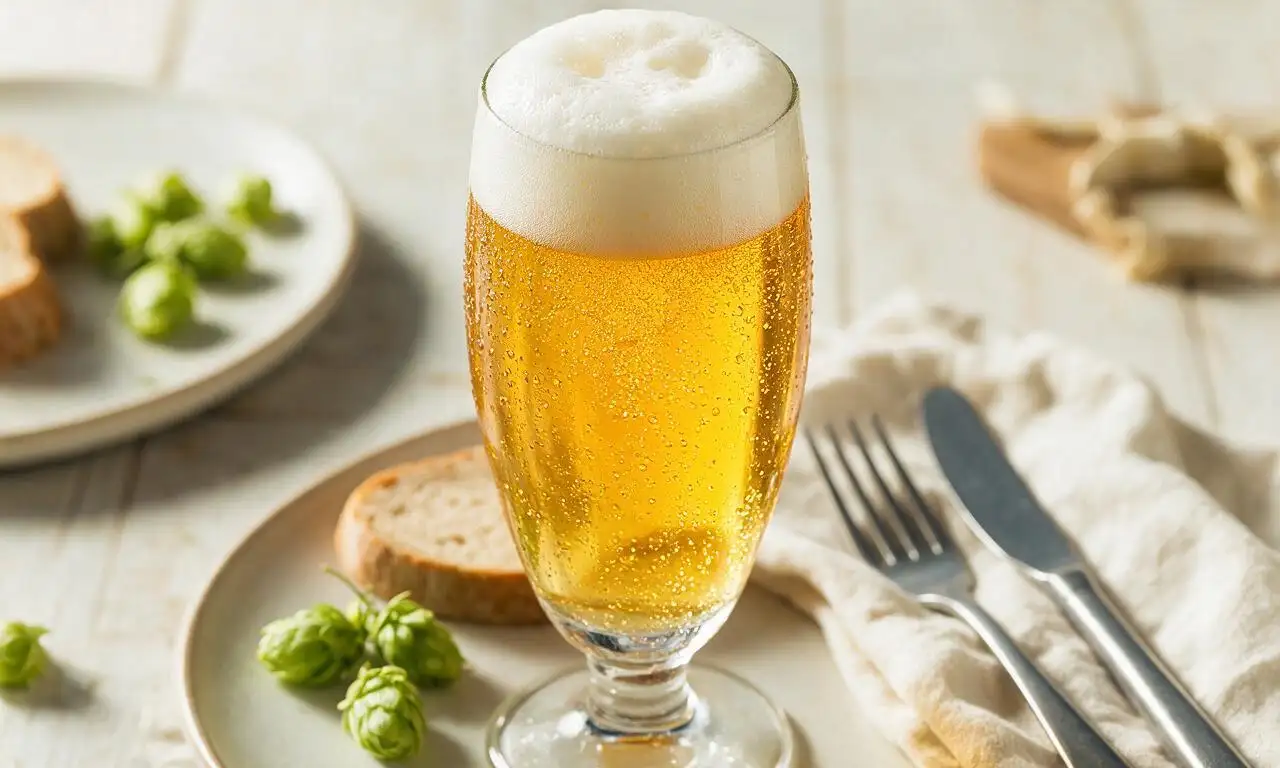
Pilsner

title 1
Pilsner
⏱️ cook time 90 minutes active prep, 5 weeks total from start to serving
🍽️ servings 8
⚡ Difficulty medium

intro

Crisp, golden homemade German-style Pilsner with bready malt notes and bright noble hop flavor, served ice-cold for refreshing warm-weather sipping.

Ingredients

Crushed German 2-row Pilsner malt 907g (2 lbs)
Hallertau Mittelfrueh noble hops 28g (1 oz)
German lager yeast (W34/70 strain) 11g (1 standard packet)
Filtered soft water 5L (1.3 gallons)
Corn priming sugar (dextrose) 28g (2 tablespoons)

Steps

1

Prep and mash malt

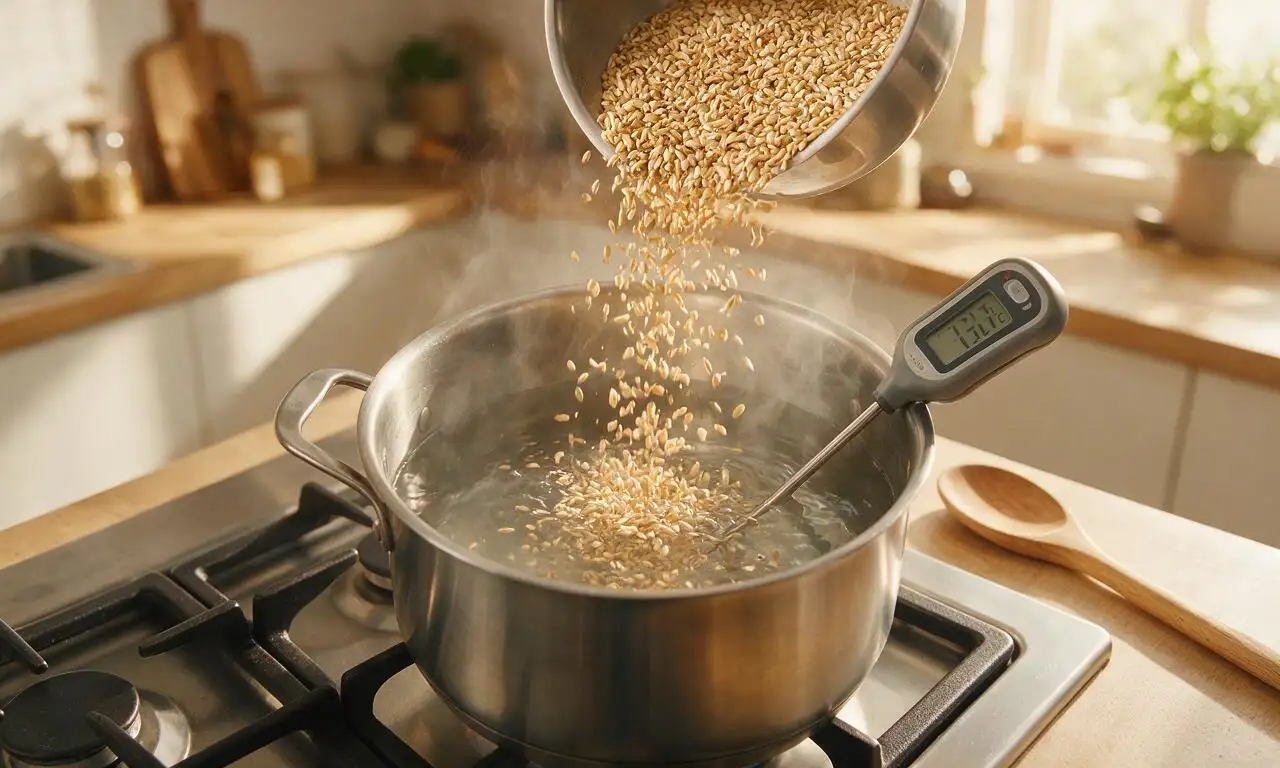
Heat 3 liters of filtered soft water to 67°C (153°F) in a large, sanitized stockpot over medium heat. Slowly stir in 907g of freshly crushed German pilsner malt to avoid dry clumps, then hold the temperature steady at 67°C for 60 minutes, keeping the pot covered to retain heat, to convert grain starches to fermentable sugar.
Step 1
step1:Prep and mash malt
2

Strain collected wort

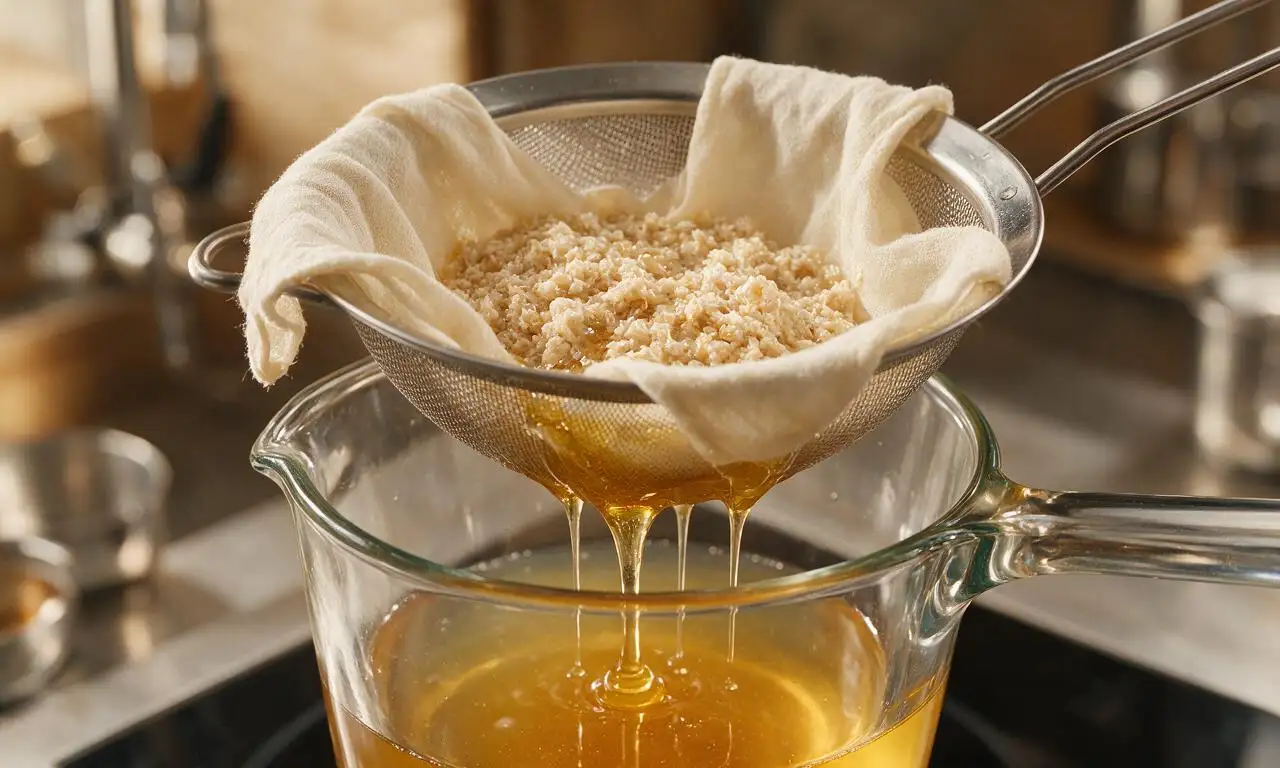
Set a fine-mesh strainer lined with sanitized cheesecloth over a second large pot. Slowly pour the mashed grain and liquid through the strainer to separate spent grain from the sweet, golden wort. Gently pour 1 liter of 77°C (170°F) filtered water over the grain bed to rinse residual sugars, collecting all runoff to yield ~3.8 liters of clear wort.
Step 2
step2:Strain collected wort
3

Boil and add hops

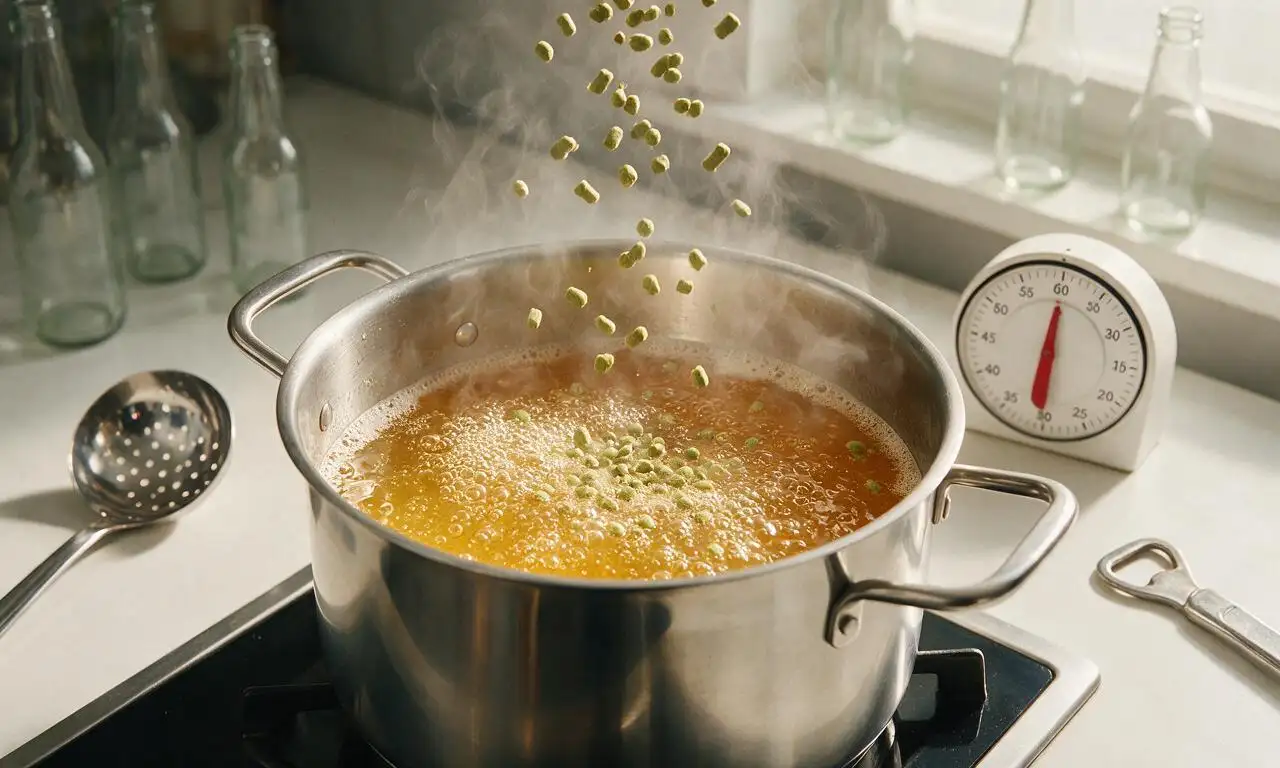
Bring the collected wort to a gentle rolling boil over medium-high heat, maintaining a steady, non-violent boil for 60 minutes total. Add 18g of Hallertau hops at the start of the boil for clean bitterness, add 7g of hops with 15 minutes remaining in the boil for smooth, spicy flavor, and add the final 3g of hops immediately after turning off the heat for bright, floral aroma.
Step 3
step3:Boil and add hops
4

Cool and pitch yeast

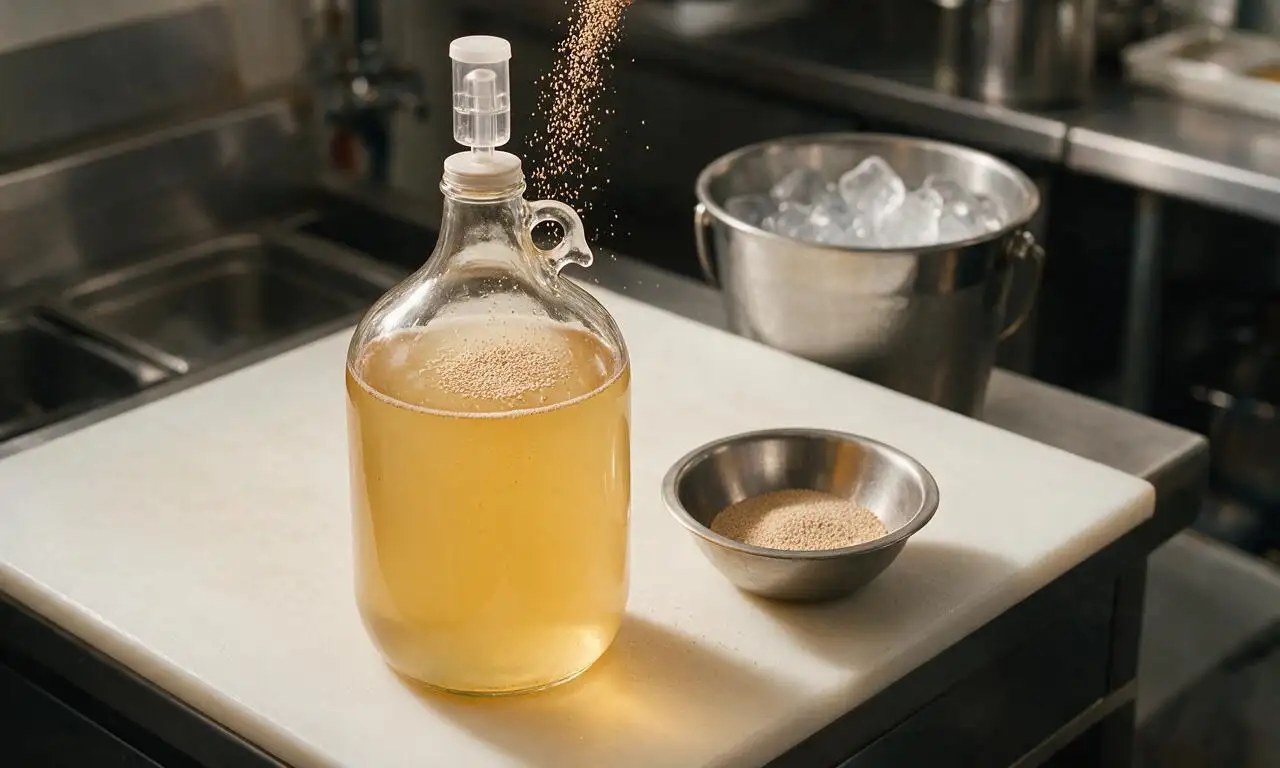
Move the pot of boiled wort off the heat, and submerge the pot base in an ice water bath to rapidly cool the wort to 12°C (54°F) over approximately 20 minutes, stirring gently every 5 minutes to speed cooling. Pour the cooled wort into a sanitized 1-gallon glass fermentation jug, sprinkle the full 11g packet of German lager yeast over the wort surface, and seal the jug with a sanitized airlock half-filled with clean water.
Step 4
step4:Cool and pitch yeast
5

Ferment and condition

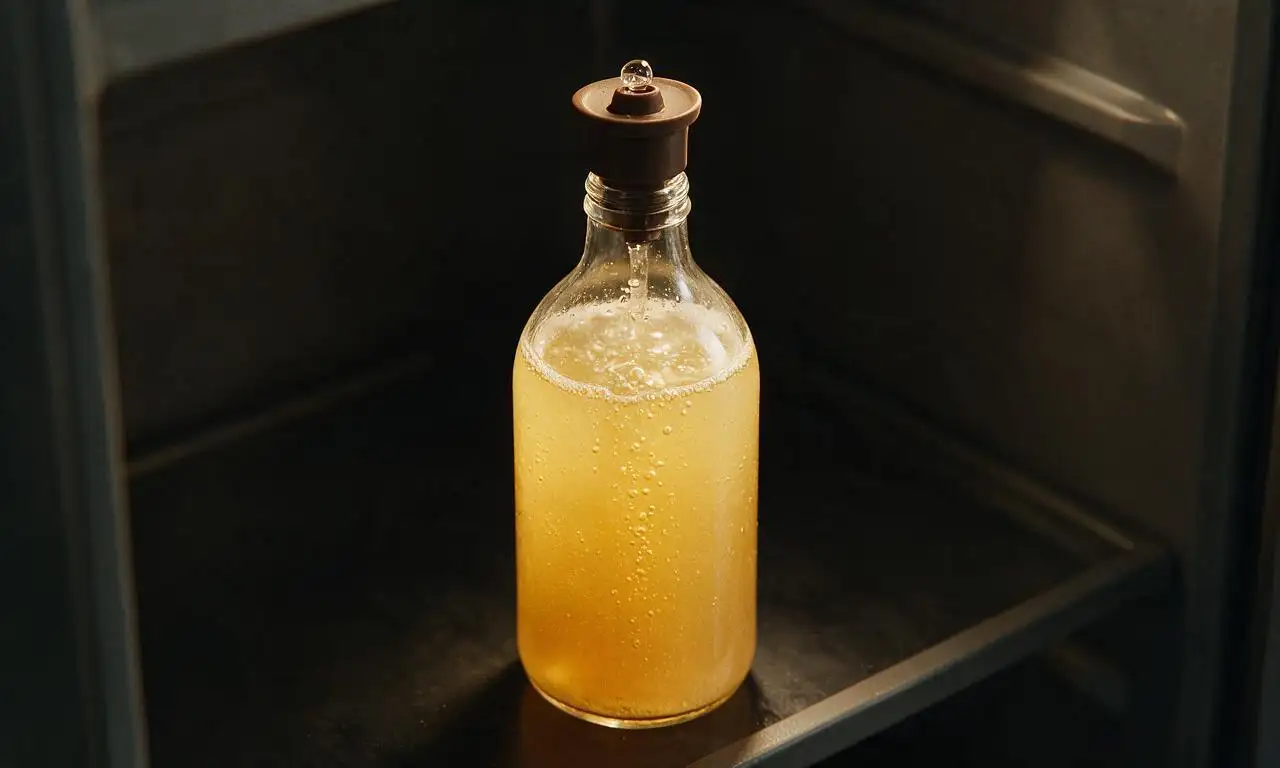
Place the sealed fermentation jug in a temperature-controlled space held steady at 12°C (54°F) for 2 weeks, until bubbling in the airlock slows to less than 1 bubble per minute. After 2 weeks of primary fermentation, raise the space temperature to 18°C (64°F) for 3 days to allow yeast to process buttery off-flavors, then move the jug to a 4°C (39°F) refrigerator for 1 week of cold conditioning to smooth flavor and clarify the beer.
Step 5
step5:Ferment and condition
6

Carbonate and serve

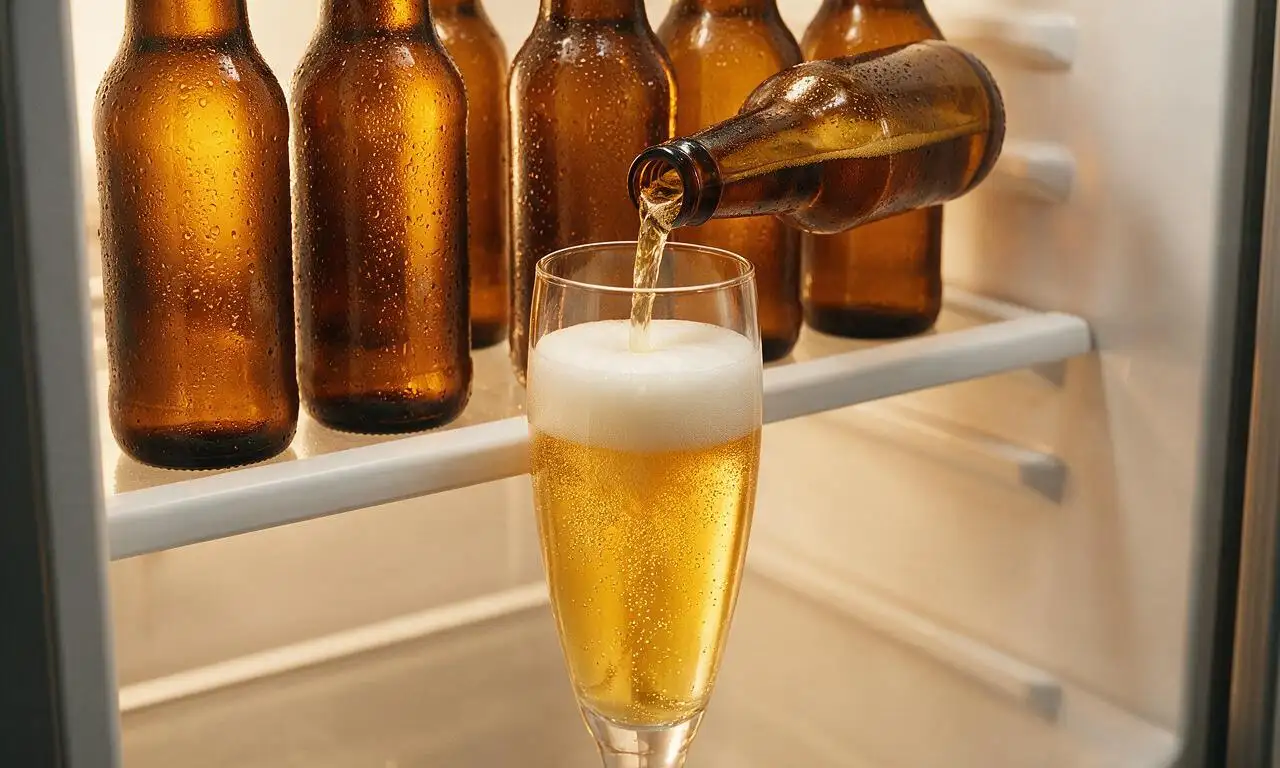
Boil 28g (2 tablespoons) of corn sugar in 120ml (1/2 cup) of water over high heat for 5 minutes, then cool the sugar solution to room temperature and add it to a sanitized 1-gallon bottling bucket. Siphon the cold conditioned pilsner into the bucket, stir very gently to mix evenly, then fill sanitized 500ml glass bottles, cap tightly, and store at 18°C (64°F) for 2 weeks to build natural carbonation. Chill bottles to 3°C (38°F) for 24 hours before serving.
Step 6
step6:Carbonate and serve

Tips

1.Sanitize every piece of equipment that touches cooled wort or finished beer with no-rinse brewing sanitizer; wild bacteria or stray yeast will create sour, off-flavors that ruin pilsner’s clean profile.
2.Hold fermentation temperatures steady at 12°C (54°F) for the first two weeks; temperatures above 15°C (59°F) produce harsh, fruity off-flavors out of place in a classic pilsner.
3.Don’t rush the cold conditioning step: the week of cold storage helps yeast settle for a crystal-clear beer and softens harsh hop notes for that signature smooth pilsner taste.


✨ You May Also Like

Drinks & Beverages
🍜 Mexico

A bright, balanced tequila-based cocktail with zesty fresh lime, smooth orange liqueur, and a signature salt rim, perfect for warm summer sipping.

⏱️ 5 minutesDrinks & Beverages ★ 4.9
Drinks & Beverages
🍜 United States

Thick, creamy, nostalgic classic vanilla milkshake with a rich, smooth texture, topped with whipped cream and a cherry for cool, sweet refreshment.

⏱️ 5 minutesDrinks & Beverages ★ 4.7
Drinks & Beverages
🍜 United States

A bright, golden strong ale with fruity banana-clove notes, subtle hop spice, and soft carbonation, brewed in classic Trappist Tripel tradition.

⏱️ 2 hours aDrinks & Beverages ★ 4.5
Drinks & Beverages
🍜 United States

A frothy, nostalgic American soda fountain treat pairing bubbly cold root beer with creamy vanilla ice cream, perfect for cooling down at warm weather gatherings.

⏱️ 20 minuteDrinks & Beverages ★ 4.8
Drinks & Beverages
🍜 United States

Tart, funky, effervescent American Wild Ale is a complex fruity craft beer brewed with wild yeast, delivering bright, zesty notes perfect for warm-weather sipping.

⏱️ 2 hours aDrinks & Beverages ★ 4.4
Drinks & Beverages
🍜 United States

Bright, bubbly copycat of the iconic American caramel cola, balanced with citrus and warm spice, perfect for sipping ice-cold on hot days.

⏱️ 15 minuteDrinks & Beverages ★ 4.8

Pilsner:Frequently Asked Questions

1.Why is soft filtered water specified for this German-style pilsner instead of regular tap water? ▾
Great question! Classic German Pilsners get their signature clean, crisp bite from soft, low-mineral water. Hard, high-mineral tap water can make noble hop flavor taste harsh and astringent, while chlorinated tap water causes stale, medicinal off-flavors. Filtered soft water lets delicate bready malt and bright hop notes take center stage without distraction.
2.Can I substitute a different hop variety if I can’t find Hallertau Mittelfrueh? ▾
Hallertau Mittelfrueh is the classic noble hop for this style, but if you can’t source it, use other German noble hops like Tettnang or Spalt as a 1:1 swap. Skip bold, high-alpha American hops—they’ll overpower the soft, floral, slightly spicy noble hop profile that defines a traditional German Pilsner and throw the whole balance off.
3.What makes the W34/70 German lager yeast a good pick for this recipe? ▾
The W34/70 strain is a reliable workhorse German lager yeast that ferments cleanly at proper lager temperatures, producing minimal fruity or spicy off-notes that would muddle the pilsner’s crisp profile. It ferments fully for a dry, refreshing finish, complements the core ingredients perfectly, and is very forgiving for new homebrewers.
4.Why do we use corn priming sugar (dextrose) instead of regular table sugar for carbonation? ▾
Corn priming sugar, or dextrose, is 100% fermentable and ferments completely cleanly without leaving the faint cidery off-flavors that table sugar (sucrose) can sometimes contribute in small batches. It creates the tight, long-lasting foamy head traditional to German Pilsners, without adding unwanted sweetness or off-flavors.
5.How cold do I need to ferment this pilsner to get authentic results? ▾
For W34/70 yeast, hold fermentation steady between 50–55°F (10–13°C) for the first 7–10 days of primary fermentation, then let it slowly rise to 60°F (15°C) for a 2–3 day diacetyl rest. Avoid fermenting too warm—this causes fruity, solvent-like off-flavors that ruin the clean, crisp profile you want.
6.Do I need a lagering period after primary fermentation, and how long should it last? ▾
Yes, a cold lagering period is key for that smooth, polished German pilsner taste! After primary fermentation and diacetyl rest, drop the temperature to 35–40°F (2–4°C) and hold it for 3–6 weeks. This slow cold conditioning mutes harsh off-flavors, clarifies the beer to bright golden clarity, and creates a smoother, more balanced sip.
7.Can I use pre-crushed Pilsner malt instead of crushing it right before brewing? ▾
Pre-crushed malt works in a pinch, but for the freshest, brightest bready malt flavor, crush your German 2-row Pilsner malt right on brew day. Pre-crushed malt stales faster as its inner grain is exposed to oxygen, leading to dull, cardboard-like off-flavors if it’s been shelf-stored for more than a few weeks.
8.What’s the ideal serving temperature for this homemade German Pilsner? ▾
Serve this pilsner ice cold, between 38–42°F (3–6°C), just like you’d get at a traditional German biergarten. Don’t serve it so cold that it numbs your taste buds entirely, though—this range keeps it crisp and refreshing for warm-weather sipping, while still letting subtle malt and hop notes come through.
9.How do I avoid making a hazy pilsner instead of the classic clear golden version? ▾
First, avoid splashing wort during transfers to cut down on chill haze. After primary fermentation, complete the full cold lagering period at 35–40°F to drop sediment and yeast out of suspension. You can also add a small amount of Irish moss during the last 15 minutes of the boil to help proteins clump and settle for crystal clarity.
10.What bitterness level should I target for a traditionally balanced German Pilsner? ▾
Aim for 35–40 IBUs, with most of your Hallertau Mittelfrueh added early in the boil for clean, rounded bitterness, plus a small late addition for bright, floral noble hop aroma. Don’t overdo bitterness—German Pilsners are crisp and hoppy, not aggressively bitter, so the bready malt backbone should still shine.
11.How long will this homemade pilsner stay fresh once it’s bottled and carbonated? ▾
When stored in a cool, dark place away from direct sunlight and temperature swings, this pilsner will stay fresh and crisp for 4–6 months after bottling. The delicate noble hop flavor will fade fastest, so drink it within that window for the brightest, most authentic taste. Warm storage speeds up staling dramatically.
12.Why does this recipe only use German 2-row Pilsner malt instead of adding specialty malts? ▾
Traditional German Pilsners rely almost entirely on high-quality German 2-row Pilsner malt for that soft, bready, slightly honeyed malt backbone, without heavy roasted or caramel malts to weigh it down. Even small amounts of darker or crystal malts will cover up delicate noble hop character and make the beer feel too heavy for the style.

Comments (11)

1 week ago

OMG, this recipe is a total game changer! I’ve been messing around with homebrewing for 2 years and could never nail that crisp, clean German pilsner taste I get at my local biergarten. Followed the directions exactly, waited the full 5 weeks, and brought a growler to our neighborhood potluck last weekend—people were begging for the recipe! So much better than the over-hopped IPAs I usually make. 10/10 will brew again.

5 days ago

Wait, did you do a diacetyl rest? I messed up my first batch last year by skipping that step and it tasted like buttered popcorn lmao. Wondering if that’s the secret here?

3 days ago

Great question! The cold conditioning step in week 4 helps clean up any diacetyl notes, but if your fermentation space runs cooler, a 2-day diacetyl rest at 62°F after primary fermentation definitely doesn’t hurt! So glad you loved the batch, HoppyHiker88!

2 days ago

Wait, hold up—90 minutes active prep is way shorter than the other pilsner recipes I’ve tried! I usually carve out a whole Saturday for brew days, so this is perfect for squeezing in after my kid’s soccer practice. Quick question: can I swap the Hallertau hops for Saaz if that’s what I have in my pantry already?

yesterday

Great question! Saaz will work in a pinch, but it’ll lean a little more Czech pilsner style with that earthier, spicier note. If you want that classic bright, floral German pils punch, Hallertau is worth grabbing on your next homebrew supply run!

2 weeks ago

Brewed this for our college football tailgate last month and it was a HIT. Crisp, refreshing, not too bitter—went perfect with brats and potato salad. My buddies kept asking if I snuck it in from a German import shop. SO good, already have my second batch fermenting in the closet right now.

3 days ago

Okay, full transparency: this was my FIRST ever homebrew attempt, I was so nervous I’d mess it up! The directions were super clear even for a total newbie, and I just tapped my first keg last night. It’s not perfect—mine’s a little cloudier than the photo—but it tastes amazing? My husband said it’s better than the pilsners we order at our favorite downtown bar. Already told my brother we’re brewing a second batch together for his cookout next month!

2 days ago

Welcome to the homebrew club! Cloudy is totally normal for your first batch, it just means you might have a little sediment from not cold crashing long enough. It’ll still taste great, promise!

yesterday

Yay, so stoked your first batch turned out! The cloudiness is totally harmless, like Mike said—if you want it crystal clear next time, try cold crashing for 3 full days at 35°F before bottling/kegging. Have fun brewing with your brother!

5 days ago

Only giving 4 stars because the 5 week wait is TORTURE. I get that good beer takes time, but I was checking my fermentation chamber every single day like a kid waiting for Christmas. End result was chef’s kiss though—super clean, that perfect noble hop bite, no weird off flavors. Brought a six pack to my in-laws’ family dinner and my father-in-law (who only drinks fancy imported German beer) asked for a second bottle immediately. Win in my book.

3 days ago

LMAO I feel that! I had to stick my carboy in the back of the garage so I’d stop staring at it during the conditioning phase. Totally worth the wait though, right?

1 week ago

Pro tip for anyone brewing this in a hot climate like me: make sure you keep your fermentation temp steady around 50°F, I had my first batch get a little too warm the first week and it had a weird fruity off note. Adjusted my temp controller for the second batch and it came out perfectly crisp, just like the recipe says. Served it at our backyard pool party last weekend and it was gone in 45 minutes flat.

2 hours ago

I don’t even drink beer that often but my partner loves pilsners so I decided to try this for his birthday. I was convinced I’d mess up the bottling step and have exploding bottles everywhere, but the step-by-step for priming sugar was so easy to follow! He was so shocked I made it from scratch, said it tastes exactly like the beer he drank when he visited Munich a few years ago. Will absolutely be making this again for our summer cookouts.

30 minutes ago

That’s such a sweet birthday surprise! So glad the bottling steps felt approachable—exploding bottles are every new brewer’s worst nightmare, so we made extra sure to spell out the priming sugar measurements clearly. Cheers to you two!

30 minutes ago

Wait, how much does this usually cost to make? I’ve been wanting to get into homebrewing but I’m worried about dropping a ton of money on supplies upfront. This recipe looks way more doable than the all-grain setups I’ve been watching tutorials for, just trying to crunch numbers before I dive in.

5 minutes ago

If you already have a basic brew kettle and fermenter, the ingredients for this run me about $35 total for a 5 gallon batch, which is way cheaper than buying imported pilsner by the six pack! I grabbed a beginner kit off Facebook Marketplace for like $80 when I started, no need to buy all new fancy stuff.

just now

Great question! As HomebrewHubby mentioned, ingredient costs are super reasonable for this batch, usually $30-$40 depending on where you source your hops and malt. If you’re just starting, extract versions of this recipe (we linked the extract option in the notes!) cut down on equipment costs a ton too. Let us know if you give it a shot!

2 hours ago

I’ve brewed a lot of pilsners over the last 8 years, and this recipe is easily top 3. The mash temp recommendation is spot on for that light, dry finish that makes German pilsners so drinkable. I brought a growler to my weekly trivia night last week and my whole team was raving, even the guy who swears he only drinks hazy IPAs. Game changer for people who say they don’t like craft beer.

30 minutes ago

Wait were you the guy who brought that pilsner to trivia at the Logan Square bar last week? If so, that was YOURS? I had two cups and asked the bartender where they got it, lmao. Small world!

yesterday

Brewed this back in June, let it condition for an extra week because I went on vacation, and honestly? The extra time made it even better. Cracked open a bottle last night while watching the sunset over the gulf, and it was the perfect post-fishing treat. Crisp, not heavy, super refreshing for 90 degree weather. My kid even said the house smelled like ‘fancy bread’ while I was brewing, which is a win in my book.

5 minutes ago

Does this scale down well for 1 gallon batches? I live in a tiny apartment and don’t have space for a full 5 gallon carboy right now, but I’ve been dying to make a good pilsner. I tried scaling down another recipe once and the hop ratios were totally off, ended up way too bitter.

just now

It scales down great! For a 1 gallon batch, cut all ingredient measurements by 1/5 (we even added a quick 1-gallon measurement toggle at the top of the recipe card now!) and keep an eye on your boil time to make sure you don’t lose too much volume to evaporation on a smaller stove top. Let us know how it turns out!



