
Schwarzbier
intro
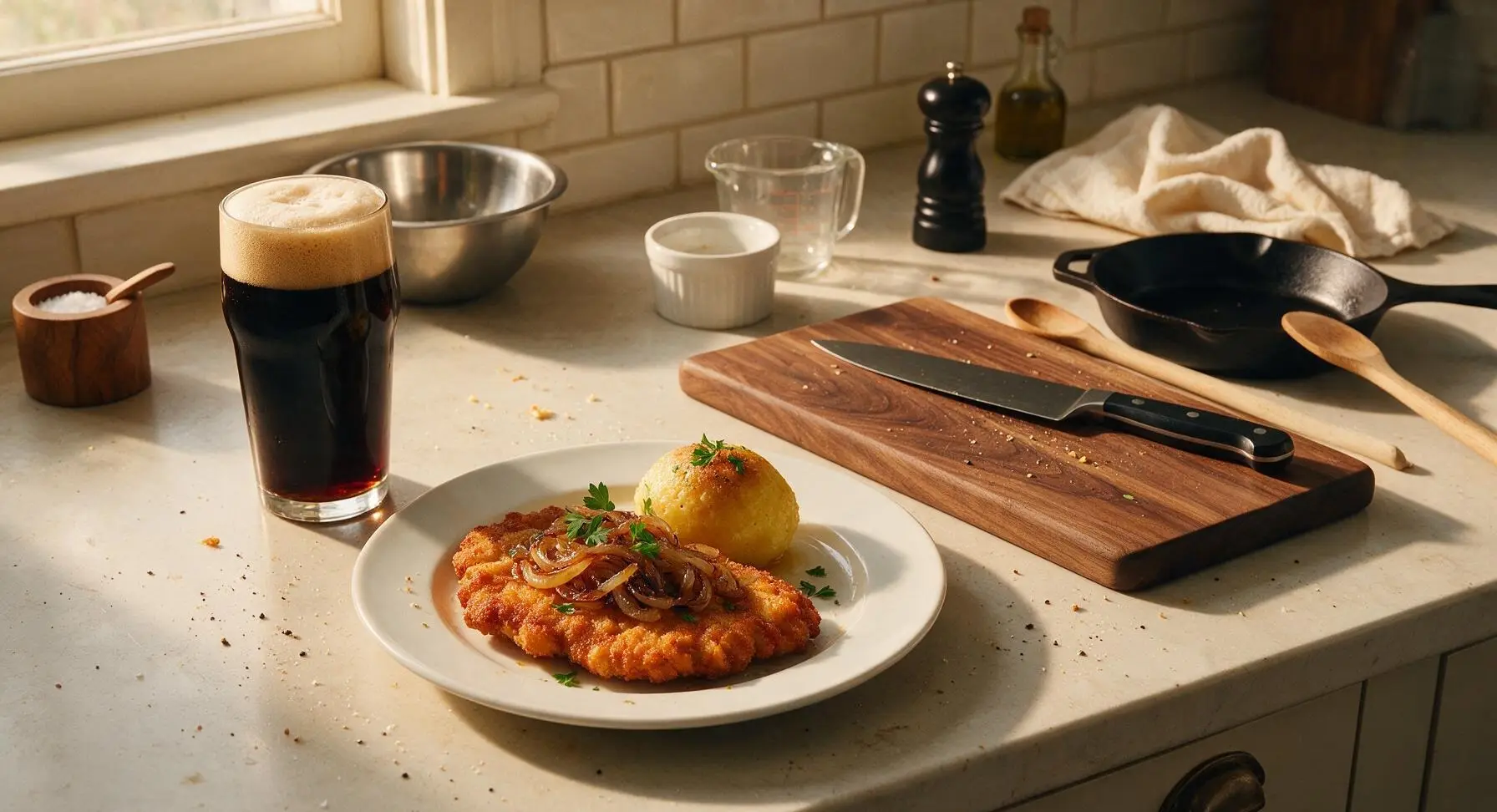
Smooth, roasty-malty Thuringian-style German black lager with subtle coffee and chocolate notes, crisp clean finish, lighter than stout, perfect for pairing with grilled and smoked foods.
Ingredients
Steps
Sanitize All Equipment
Mix 1 tablespoon of no-rinse brewing sanitizer with 5 gallons of cool filtered water in the 8-gallon stainless steel brew kettle. Submerge every tool that will contact cooled wort: grain steeping bag, stirring spoon, thermometer, carboy, auto-siphon, bottling bucket, bottling wand, and bottle caps, and let soak for 2 full minutes. Drain all tools thoroughly; no rinsing is needed, as residual sanitizer is flavorless and food-safe. Visual cue: all contact surfaces glisten evenly with sanitizer, no visible dust, residue, or water spots remain.
Steep Specialty Grains
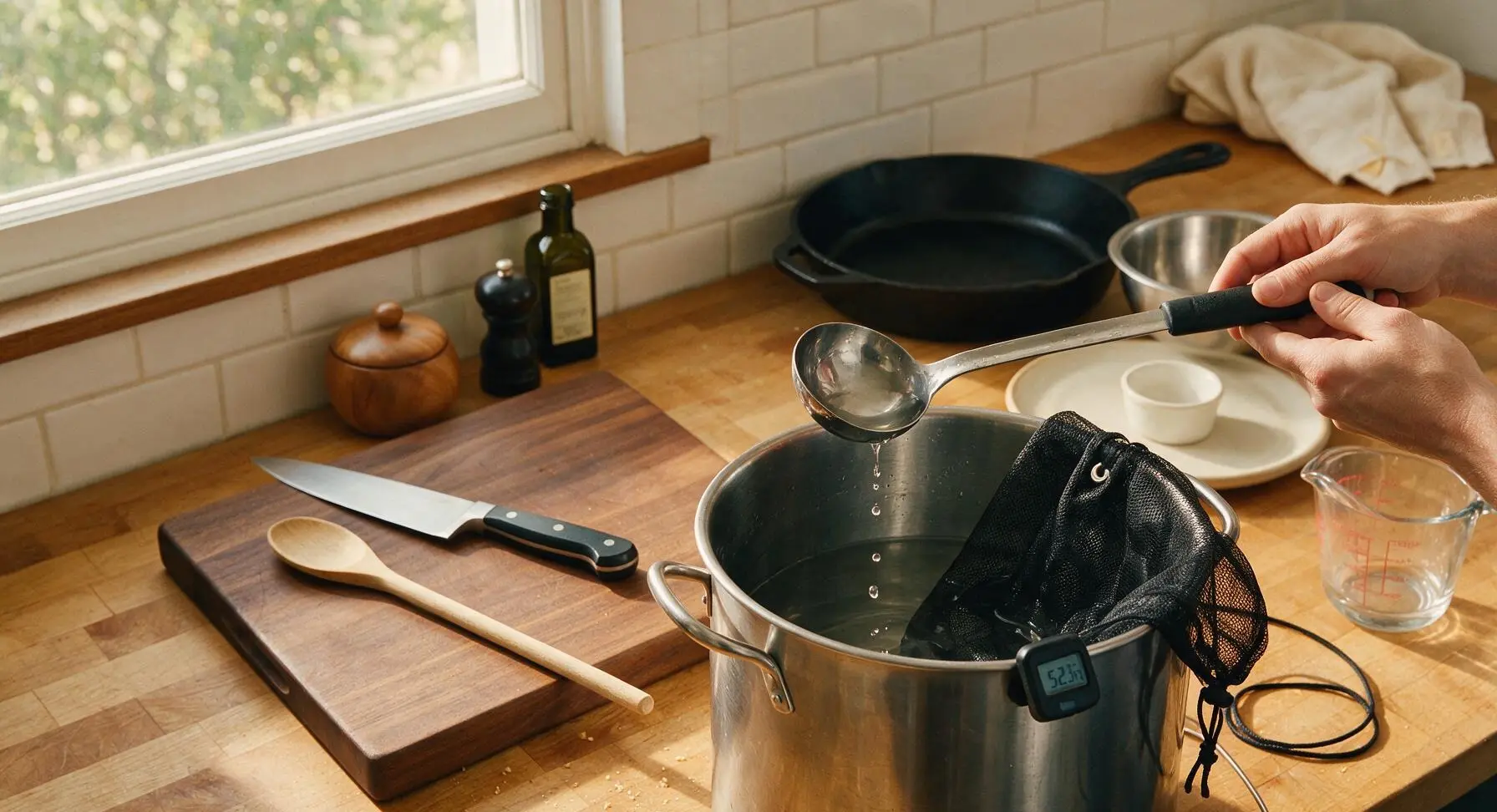
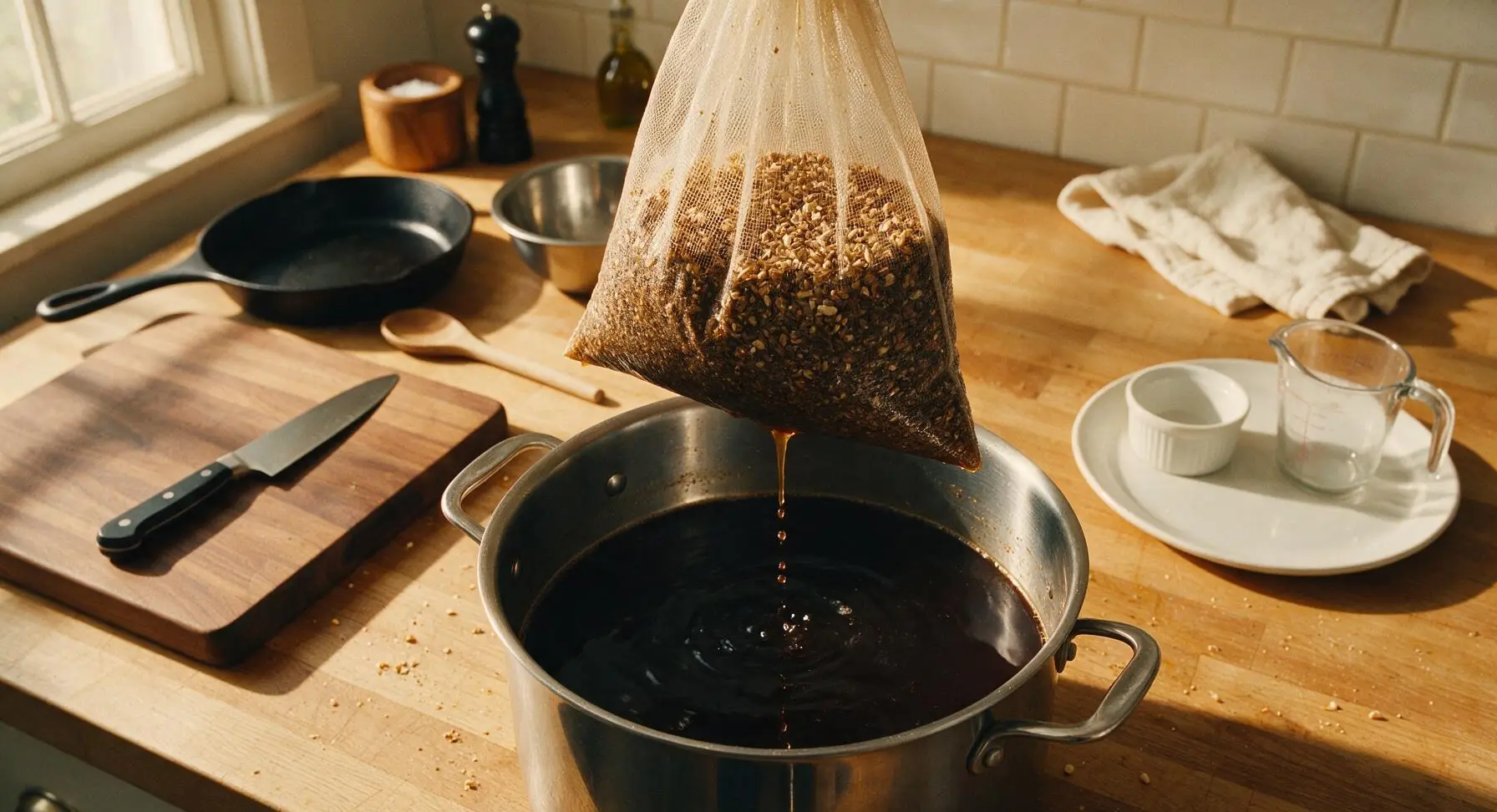
Pour 2.5 gallons of cold filtered water into the sanitized brew kettle, set over medium heat. Place all crushed specialty malts (chocolate, Carafa III, Munich) into the fine mesh grain bag, tie the top loosely, and submerge fully once the water reaches 150°F. Hold the temperature steady between 150–155°F for 30 minutes, never letting the water reach a boil, as boiling dark malts releases harsh astringent flavors. The water will darken to a deep ruby-brown as malts release roasty, chocolatey notes. After 30 minutes, lift the grain bag and let it drain fully over the kettle—do not squeeze the bag, as this also pulls out harsh tannins.
Add Extract and Boil
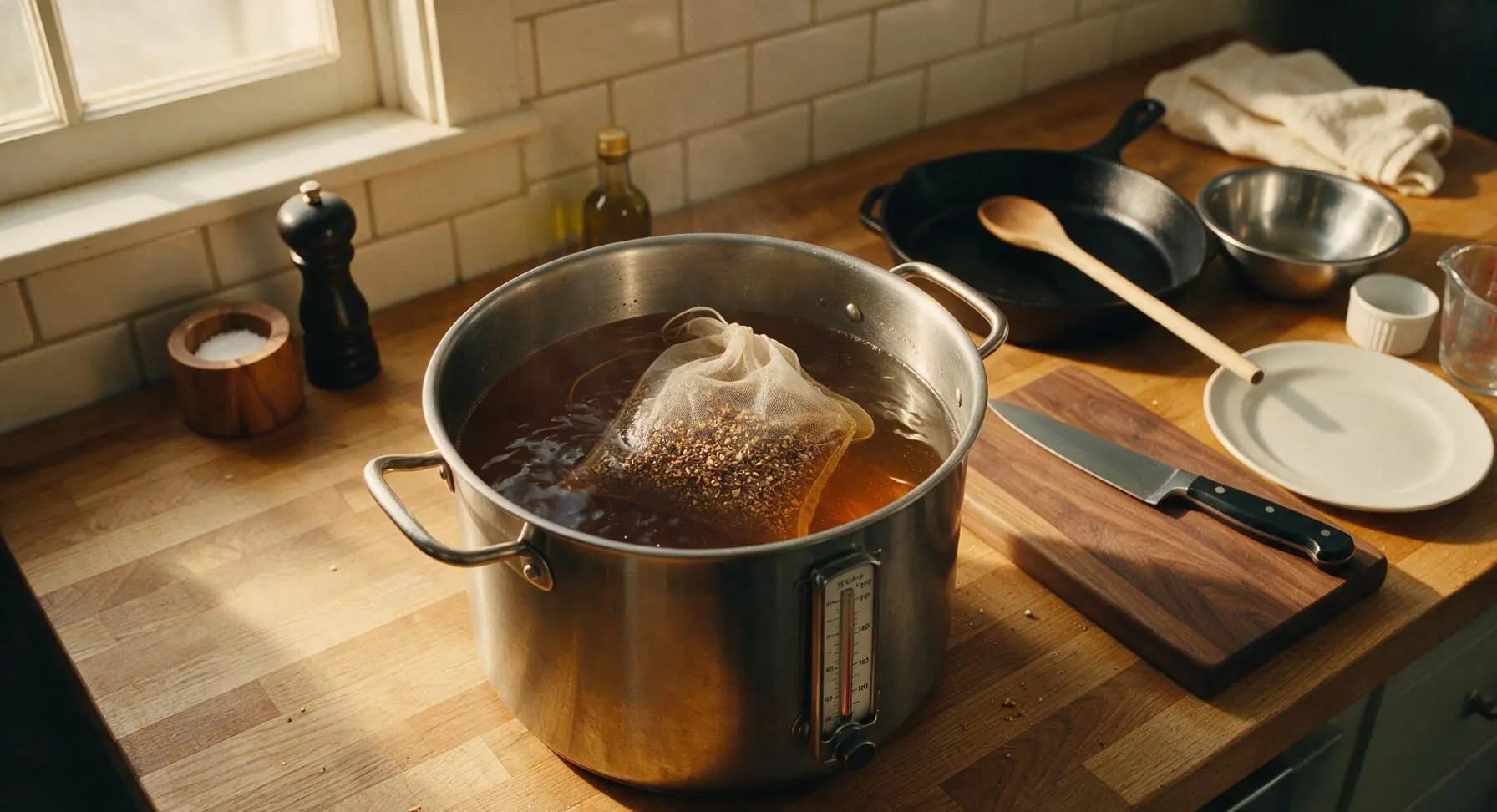
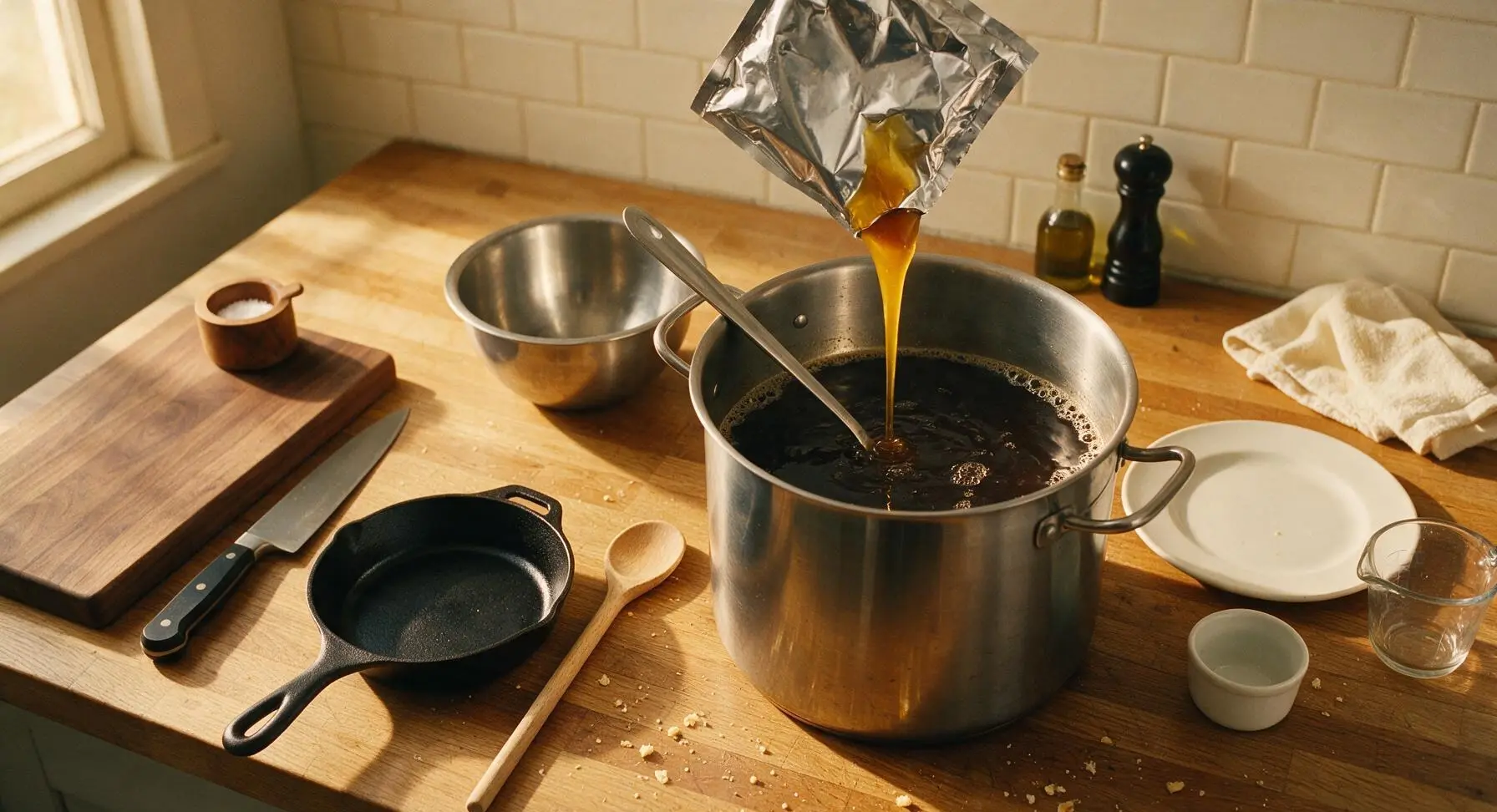
Remove the kettle from heat briefly, pour in the full 6.6 lbs of light pilsner liquid malt extract, and stir constantly with the long stainless steel spoon until the extract is fully dissolved, with no thick clumps stuck to the kettle bottom. Return the kettle to medium-high heat and bring to a gentle rolling boil, watching closely for the first 10 minutes to prevent sticky wort boilovers. Maintain a steady, non-violent rolling boil for 60 minutes total, adjusting heat as needed to keep bubbles from spilling over the kettle rim.
Add Hops and Clarifier
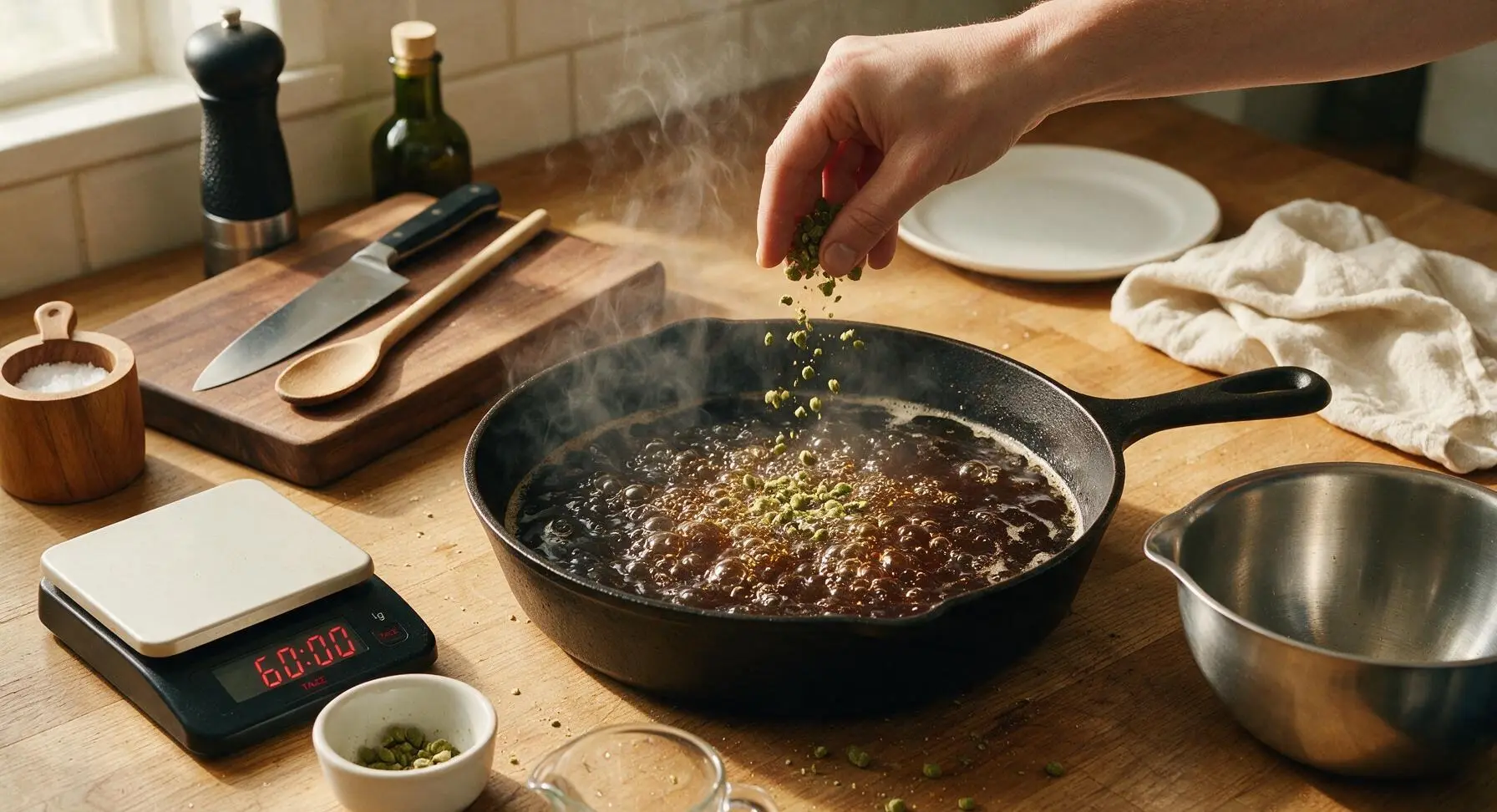
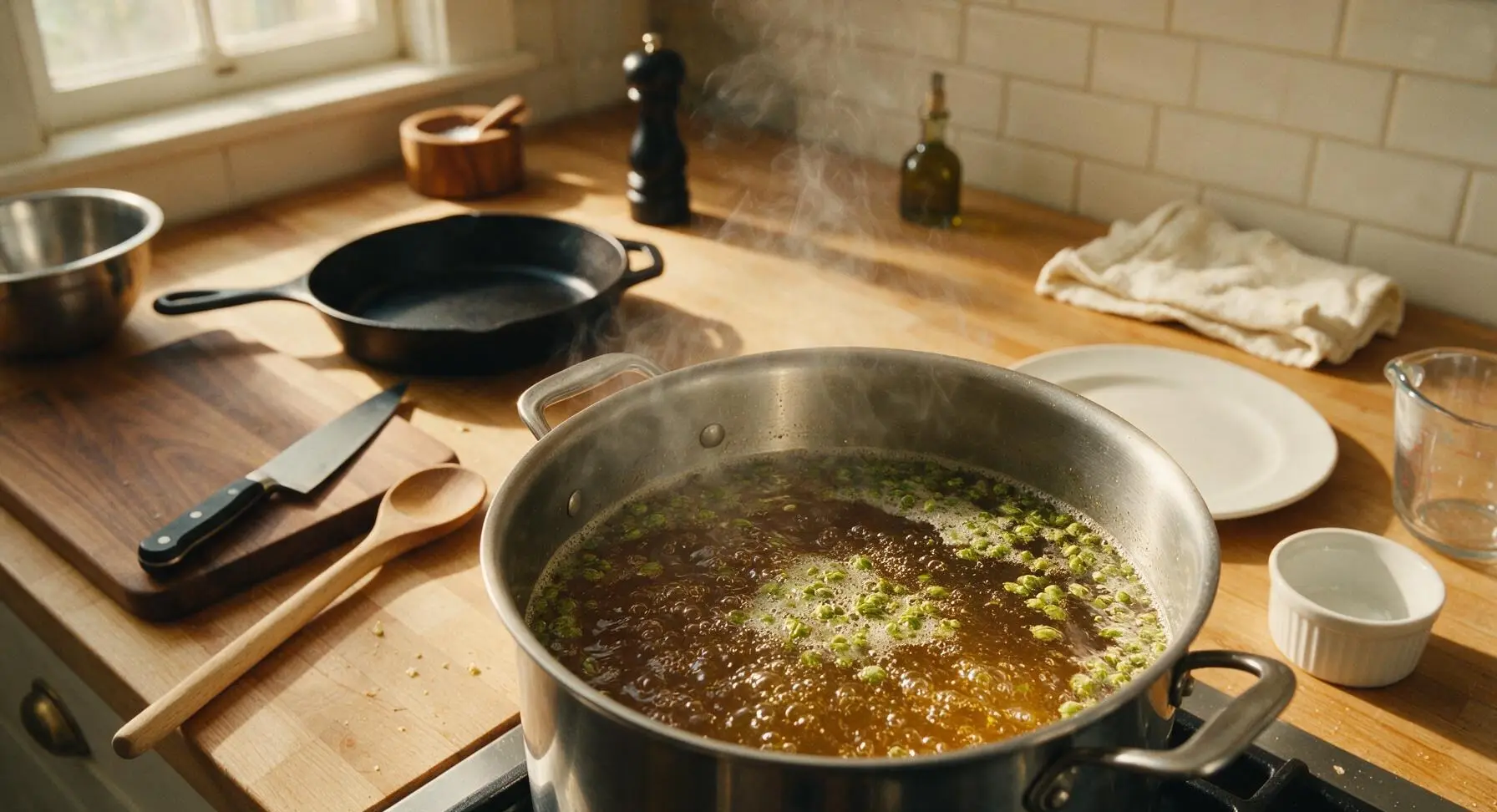
Once the wort reaches a steady rolling boil, start the 60-minute timer on the digital kitchen scale. Add 1 oz of Hallertau Mittelfrueh hops immediately (60-minute addition) for soft, balanced bittering. Add the remaining 0.5 oz of Hallertau hops when 15 minutes remain on the timer for bright, spicy noble hop aroma. Stir in 1 tablespoon of Irish moss when 10 minutes remain on the timer to help proteins clump together and produce a clear, bright finished beer. Avoid adding hops earlier than scheduled to prevent grassy, harsh off-flavors.
Cool and Pitch Yeast
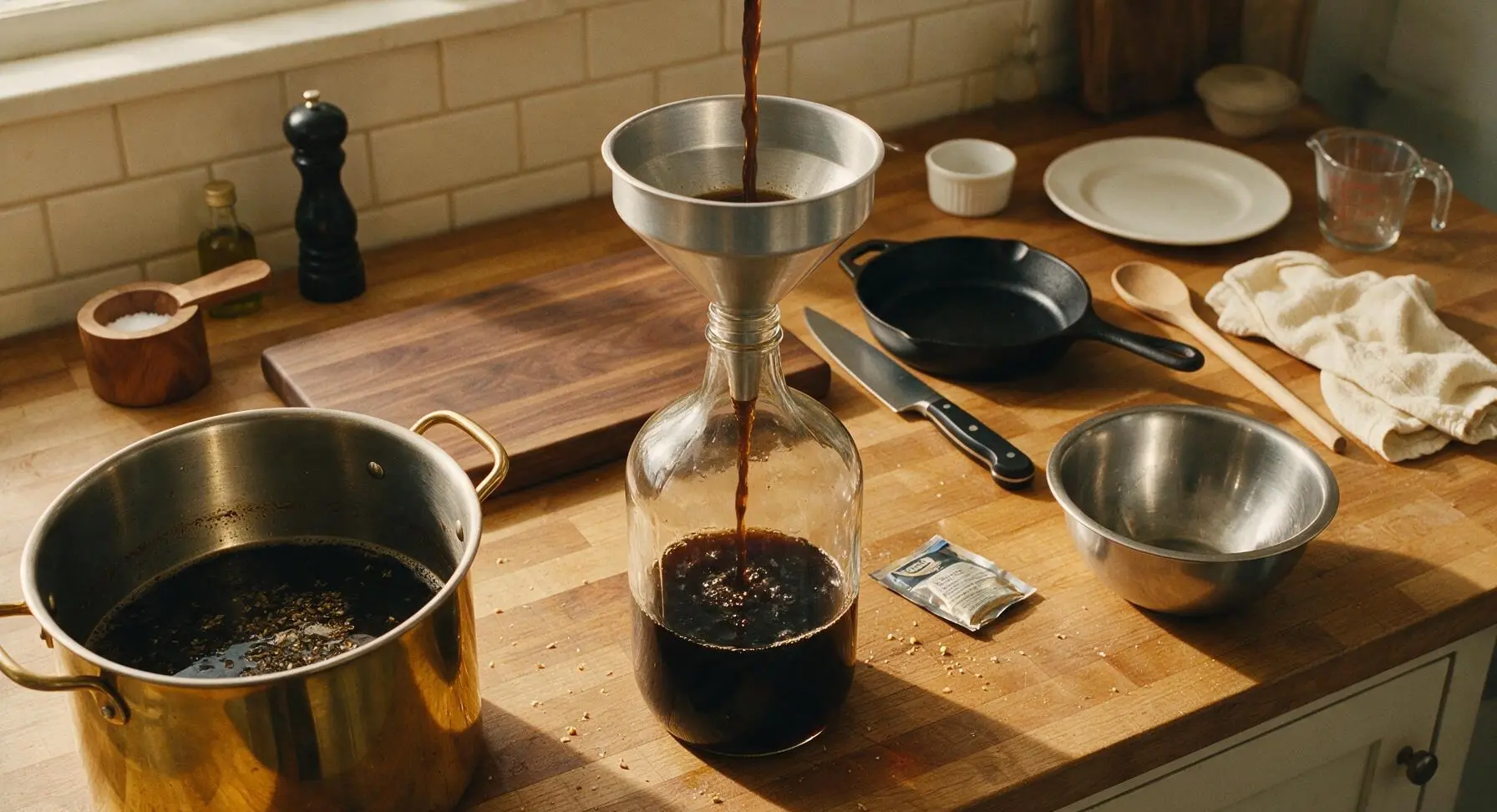
When the 60-minute boil ends, turn off the heat and cover the kettle. Move the kettle to a clean sink filled with ice water to chill the wort quickly to exactly 65°F, which takes roughly 20–25 minutes. Once cooled, pour the wort into the sanitized 5-gallon glass carboy, top up with cold filtered water to reach the 5-gallon volume mark, and swirl the carboy gently for 30 seconds to aerate the wort for healthy yeast. Sprinkle the full packet of German lager yeast across the wort surface, seal the carboy with a sanitized airlock filled to the line with sanitizer, and move the carboy to a dark, temperature-controlled space held steady at 50–55°F for primary fermentation.
Monitor Fermentation
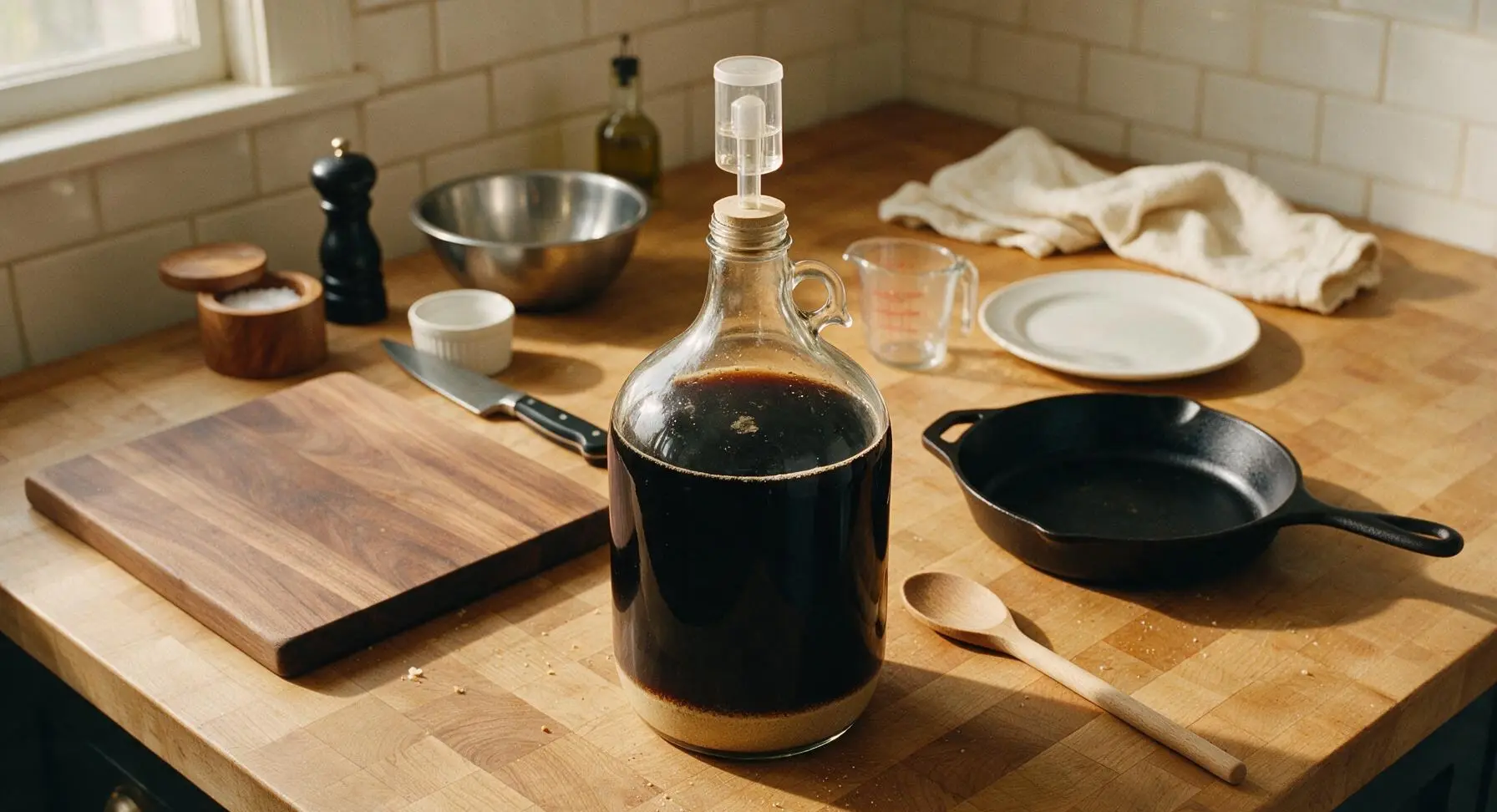
Check the carboy airlock daily for the first 3–5 days: steady bubbles will pass through the airlock as yeast converts sugar to alcohol and carbon dioxide. After 2 weeks held at 50–55°F, when airlock bubbling stops completely and the previously cloudy wort starts to clear, slowly raise the storage temperature to 60°F for a 3-day diacetyl rest, which lets yeast clean up buttery off-flavors. Visual cue for finished fermentation: the beer is dark and nearly clear, with a thin, even layer of pale tan yeast sediment settled firmly at the bottom of the carboy.
Bottle With Priming Sugar
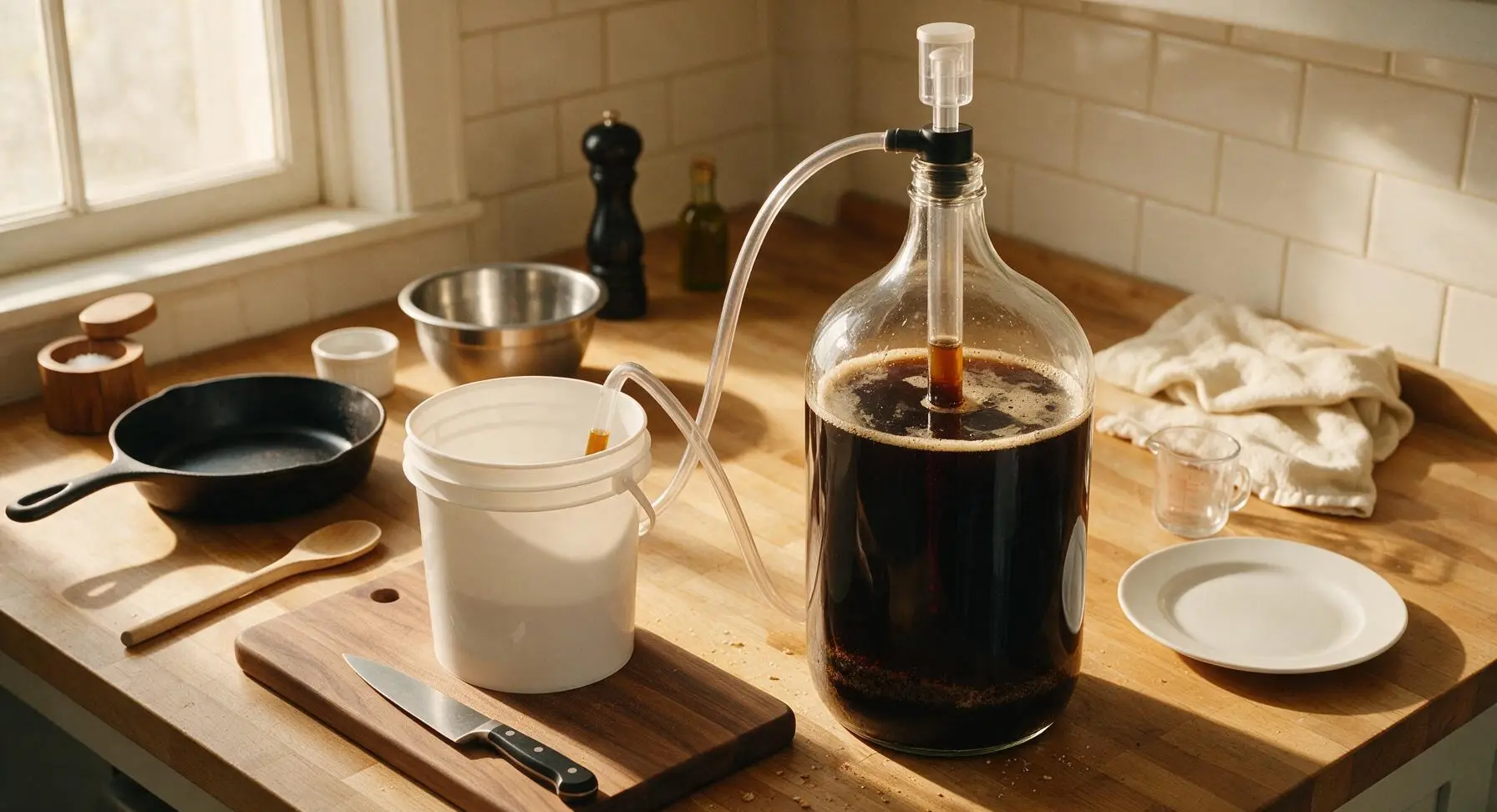
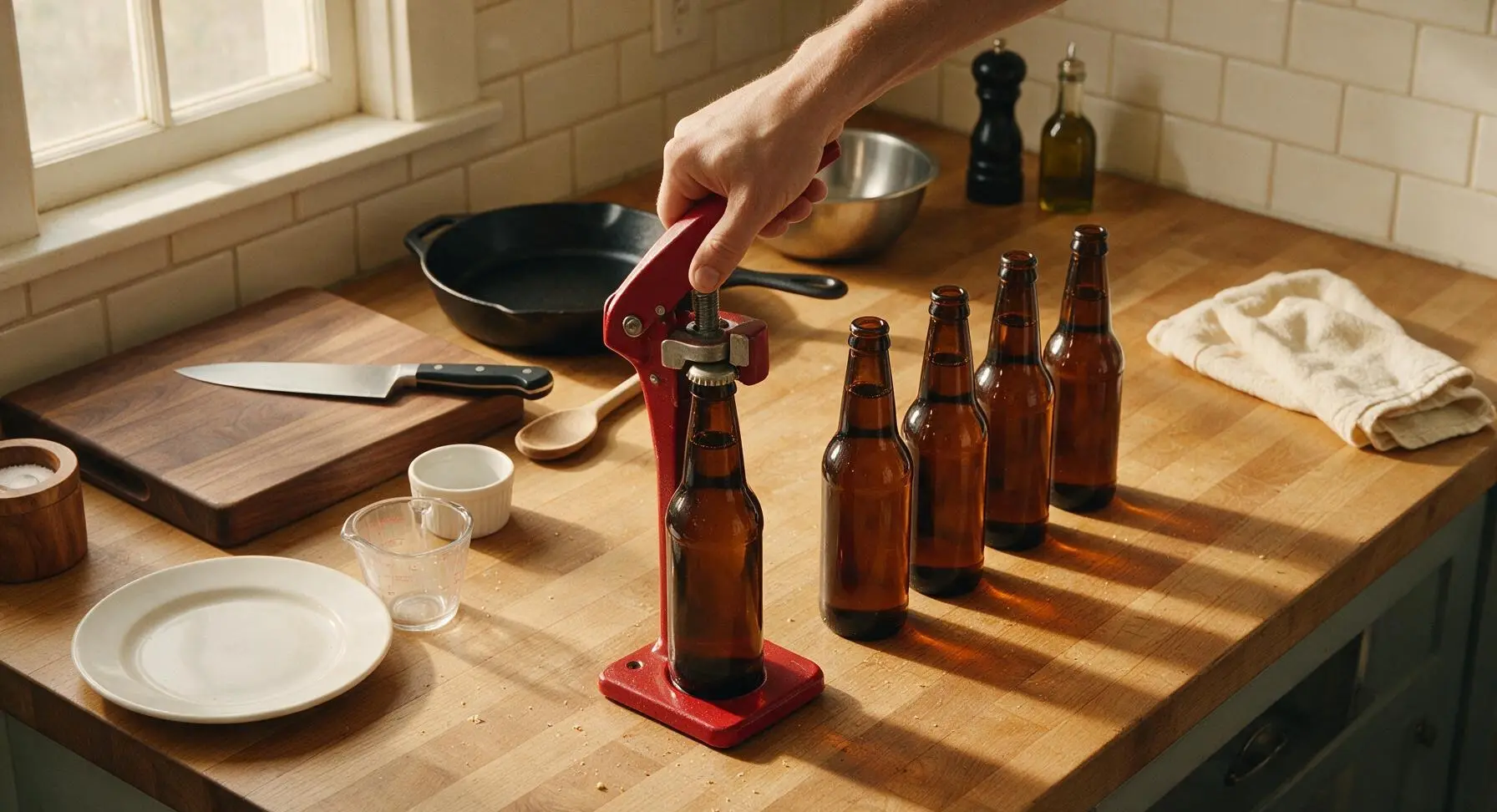
Boil 5 oz of corn priming sugar in 1 cup of filtered water for 5 minutes, let cool completely, and pour into the sanitized white plastic bottling bucket. Use the food-grade auto-siphon to transfer fully fermented beer from the carboy into the bottling bucket, siphoning slowly to avoid disturbing the yeast sediment at the carboy bottom, and stir gently to mix beer evenly with the priming sugar. Attach the stainless steel bottling wand to the bucket spigot, fill each sanitized amber 12oz bottle to 1 inch below the rim, then use the red metal bottle capper to crimp a sanitized cap onto each bottle. Store bottles upright in a dark, 65°F space for 3 weeks to carbonate fully.
Chill and Serve
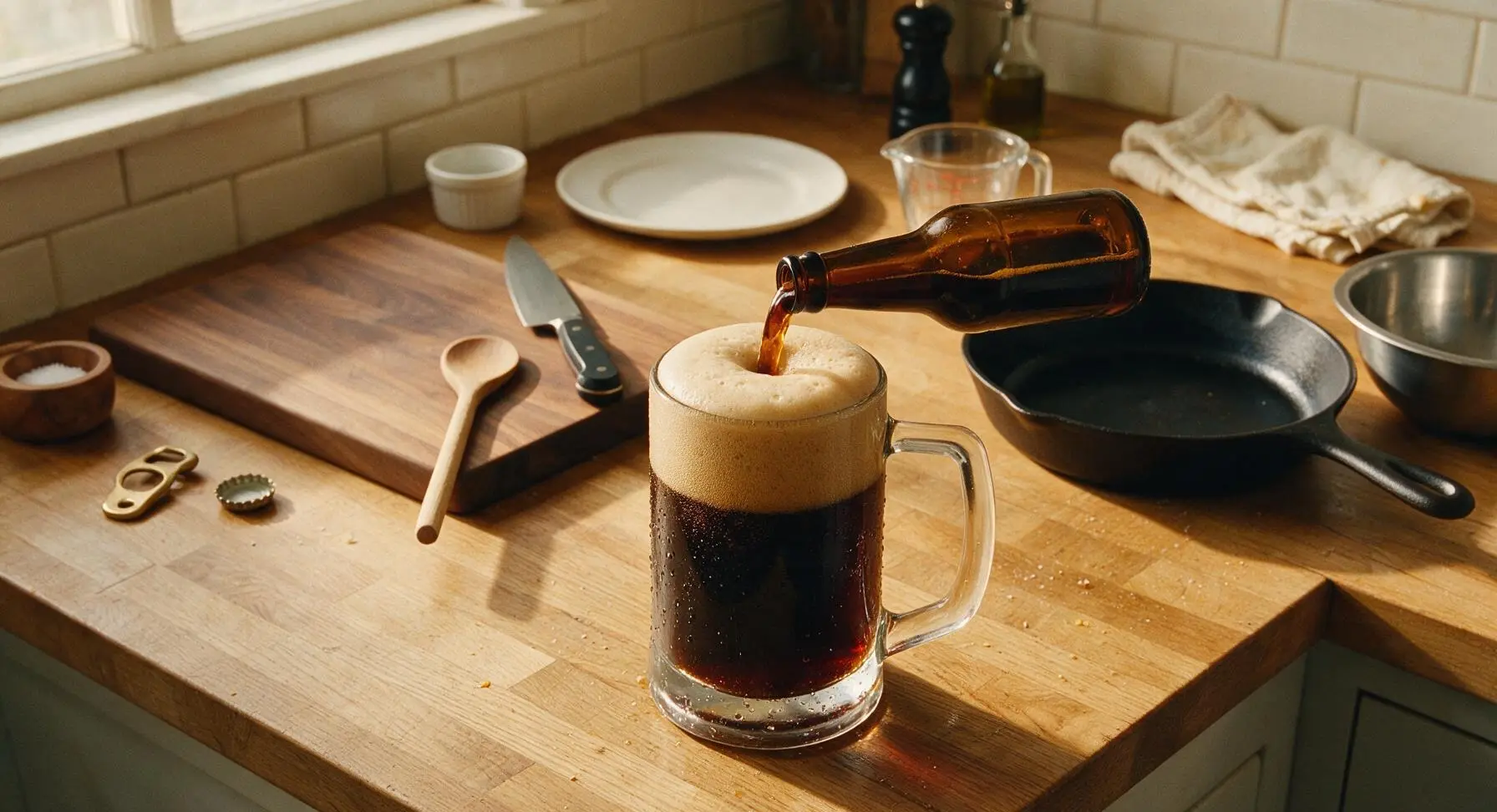
After 3 weeks of bottle conditioning, move bottles to the refrigerator to chill for at least 24 hours to 40–45°F, the ideal serving temperature for Schwarzbier. Pour slowly into the 0.5L beer stein held at a 45-degree angle, then straighten the glass as it fills to build a 1-inch thick tan head. The finished beer will carry soft notes of dark roasted coffee, bittersweet chocolate, fresh baked rye bread, and subtle spicy Hallertau hop, with a crisp, dry finish that feels far lighter than heavy stouts or porters.
Tips
2.Maintain a steady 50–55°F fermentation temperature for lager yeast: temperatures above 60°F during primary fermentation will produce fruity, estery off-flavors that don’t belong in a clean, crisp Schwarzbier.
3.Never squeeze the grain bag after steeping: squeezing pushes bitter tannins from the grain husks into the wort, creating a dry, astringent aftertaste that overpowers the soft malt character. Let the bag drain naturally for 2 minutes instead.
OMG, I’ve been chasing that perfect smooth, roasty Schwarzbier I tried at a German beer garden in Austin last year and this recipe is a total game changer! I knocked out the 1 hour active boil last Saturday, let it ferment and condition for the full 4 weeks, and cracked my first test bottle last night — it’s SO good. It’s not overly bitter, and that subtle dark chocolate note is absolute perfection. I brought a 6 pack to our neighborhood potluck over the weekend and all my buddies were begging for the recipe. Even my wife, who usually turns her nose up at dark beer, said she’d drink a full pint of this!
I was so nervous to try my first lager since every homebrewing group online says they’re way trickier than the ale recipes I’m used to, but this medium-difficulty guide was so straightforward! My brother and I split the work for the active boil on a rainy Sunday a couple weeks back, and we’re just about 2 weeks into fermentation right now. The small sample we pulled for a gravity test smelled incredible, like fresh sourdough rye and faint cocoa. I can’t wait to bottle these up for our annual family camping trip up north next month! Fingers crossed the carbonation turns out right.
Total game changer! I brought a full growler of this Schwarzbier to my office holiday potluck a couple weeks back and it was gone in 20 minutes flat. People were actively choosing it over the fancy imported craft beer our boss brought in, which felt like a huge win. My only tiny note: my first batch came out a little fizzier than I expected, so next time I’ll dial back the priming sugar just a touch to nail that super smooth traditional German lager mouthfeel.
Quick question for folks who’ve made this a couple times — has anyone tried adding a tiny bit of smoked malt to the grain bill? I love that classic rauchbier note but I don’t want to overpower the smooth, toasty Schwarzbier base. Also, for any fellow small-space dwellers out there: the 1 hour boil is totally manageable on a standard apartment stovetop, no crazy oversized brew kettle required! That was a huge win for my tiny Brooklyn kitchen, where I barely have counter space to chop veggies let alone run a full homebrew setup.